• Skip to primary navigation
  • Skip to main content
  • Skip to primary sidebar

Earth Wise

A look at our changing environment.

  • Home
  • About Earth Wise
  • Where to Listen
  • All Articles
  • Show Search
Hide Search
You are here: Home / Archives for microalgae

microalgae

Fuel From Coffee Grounds | Earth Wise

December 8, 2022 By EarthWise Leave a Comment

Creating fuel from coffee waste

The world drinks a lot of coffee.  Americans alone consume 400 million cups a day.  Each cup of coffee results in about half an ounce of coffee grounds.  Adding that up, this country produces over 6,000 tons of coffee grounds each day.  While coffee grounds are not particularly harmful, that is an awful lot of waste that mostly ends up in landfills or is incinerated.

Researchers at Aston University in the UK have developed a method of producing high-quality biodiesel fuel from coffee grounds.  Their study was published in the journal Renewable and Sustainable Energy Reviews.

The technique consists of growing a particular species of microalgae (Chlorella vulgaris) directly on spent coffee grounds.  The coffee grounds provide both the nutrients for the microalgae and a structure upon which it can grow.   Exposing the algae to light for 20 hours a day and dark for just four hours a day produced the best quality biodiesel.

Microalgae is well-known as a feedstock for biodiesel production.  Previously, it has been grown on materials like polyurethane foam or nylon which don’t provide any nutrients.   Using the coffee grounds as the substrate for growth means that no external nutrients are needed.

The resultant enhanced biodiesel produces minimal emissions and good engine performance and meets both US and European specifications.  This feedstock for producing biodiesel is ideal since it doesn’t require any competition with food crops and instead makes use of a widely available waste product.  The hope is that it may reduce the cutting down of palm trees to extract oil for biofuel.  In southeast Asia, this has been a major source of deforestation and increased greenhouse gas emissions.

**********

Web Links

Aston University researchers ‘feed’ leftover coffee grounds to microalgae to produce low emission biodiesel

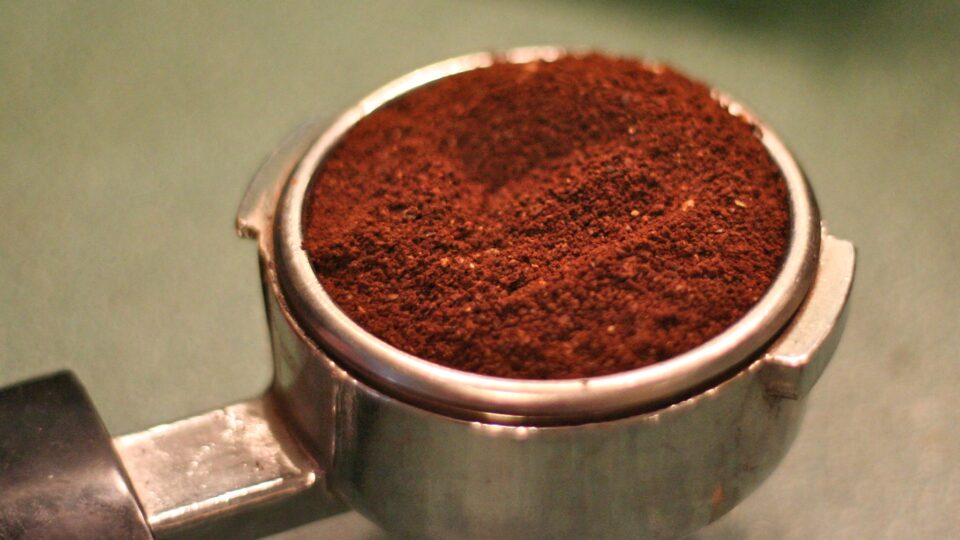
Photo, posted October 13, 2007, courtesy of David Joyce via Flickr.

Earth Wise is a production of WAMC Northeast Public Radio
Onshore Algae Farms | Earth Wise

November 9, 2022 By EarthWise Leave a Comment

According to some estimates, food production will need to increase by 50% by 2050 in order to feed a projected global population of 10 billion people.  How can this be achieved?  

One solution, according to researchers at Cornell University, could be to grow nutritious and protein-dense microalgae in seawater-fed onshore aquaculture systems.

According to the research, which was recently published in the journal Oceanography, growing algae onshore could close a projected gap in society’s future nutritional demands while also improving environmental sustainability.  

Climate change, environmental degradation, limited arable land, and lack of freshwater will all constrain the amount of food that can be grown in the coming decades.  Wild fish stocks are already heavily exploited, and there are limits to how much finfish, shellfish, and seaweed aquaculture can be produced in the coastal ocean. 

As a result, the researchers argue for expanding algae production in onshore aquaculture facilities.  The research team’s models found that the best locations for onshore algae farming facilities are along the coasts of the Global South, including desert environments. 

Algae can grow as much as ten times faster than traditional crops.  Algae can also be produced in a manner that is more efficient than agriculture in its use of nutrients.  In addition to its high protein content, algae also provides nutrients lacking in vegetarian diets, such as essential amino acids, minerals, and omega-3 fatty acids.

Algae could become the breadbasket of the Global South.

**********

Web Links

Onshore algae farms could feed the world sustainably

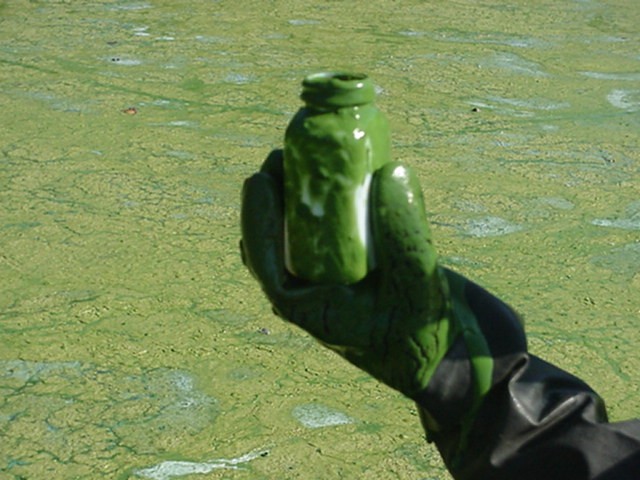
Photo, posted June 17, 2011, courtesy of NOAA Great Lakes Environmental Research Laboratory via Flickr.

Earth Wise is a production of WAMC Northeast Public Radio
Climate Resilient Microalgae | Earth Wise

July 21, 2022 By EarthWise Leave a Comment

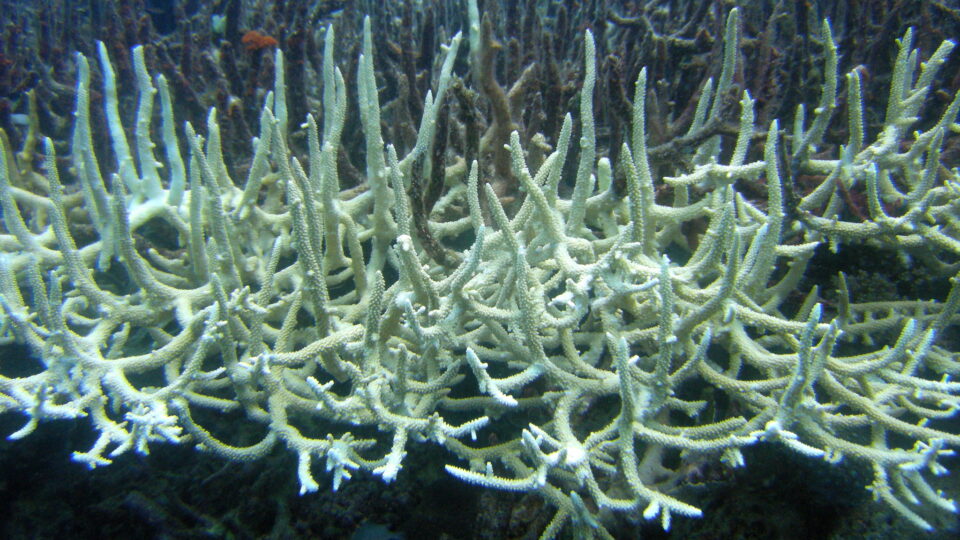
The plight of the world’s coral reefs has been a growing environmental crisis for many years.  Coral reefs provide sustenance and income to half a billion people, are major tourist attractions, protect coastlines, and are important centers of biodiversity.   And because of the warming climate as well as other effects of human activity, more than half of the world’s coral reefs are under stress.

The primary threat is coral bleaching, which is the disruption of the symbiotic relationship between coral polyps (which are tiny animals) and the heavily pigmented microalgae that live within the coral structures and provide most of the energy for the polyps. When corals are stressed, often because water temperatures are too high, they expel the microalgae within them.  The structures then become transparent, leaving only the white skeletal corals.  Bleached corals aren’t dead, but they are at great risk of starvation and disease until and unless new symbiont algae are acquired.

A new study by scientists at Uppsala University in Sweden investigated how different species of coral symbiont algae react to temperature stress.  They discovered differences among symbiont cells that enable the prediction of how temperature stress tolerant the cells are.  Such predictive ability could provide the means to identify and select more temperature-tolerant coral symbionts that could conceivably be introduced into coral host larvae in order to make corals more robust against climate change.

The research has a ways to go, but the new tools may help coral reef monitoring and increase the speed at which reef restoring efforts can create stocks of climate-resistant symbionts.

**********

Web Links

Climate resilient microalgae could help restore coral reefs

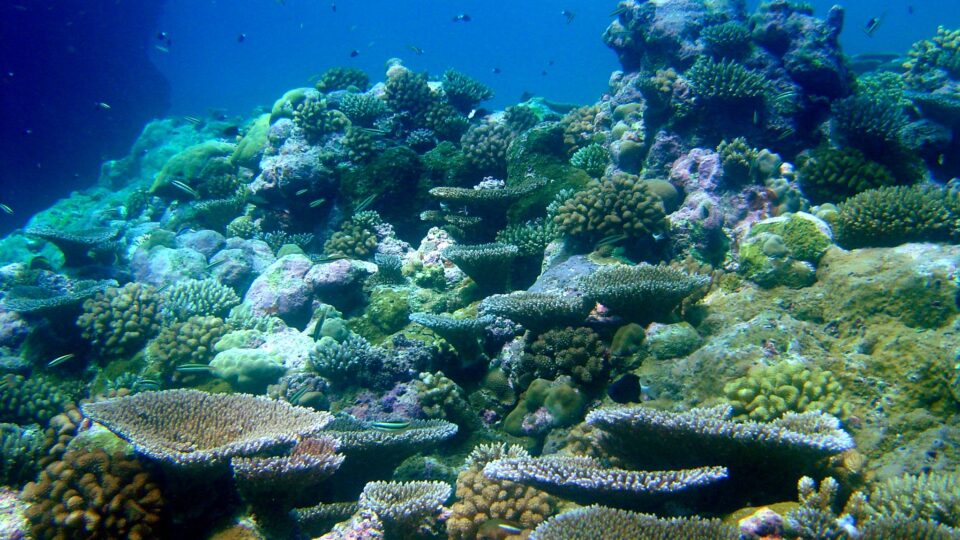
Photo, posted September 28, 2009, courtesy of Matt Kieffer via Flickr.

Earth Wise is a production of WAMC Northeast Public Radio.

Less Phytoplankton In The Gulf Of Maine | Earth Wise

July 20, 2022 By EarthWise Leave a Comment

The Gulf of Maine is changing

Phytoplankton, also known as microalgae, are the base of the marine food web and also play a key role in removing carbon dioxide from the air.  They are eaten by primary consumers like zooplankton, small fish, and crustaceans. 

Phytoplankton, like land plants, absorb carbon dioxide from the atmosphere and use photosynthesis to grow.  Then they become a food source for other organisms and ultimately for people who depend upon marine ecosystems.   If phytoplankton productivity is disrupted, there can be adverse effects on regional fisheries and the communities that depend on them.

The Gulf of Maine is becoming warmer and saltier, because of ocean currents pushing warm water into the gulf from the Northwest Atlantic.  These temperature and salinity changes have led to a significant decrease in the productivity of phytoplankton.   According to a new paper from scientists at Bigelow Laboratory of Ocean Sciences in Maine, phytoplankton are about 65% less productive in the gulf than they were 20 years ago.

The study’s results come from the analysis of the Gulf of Maine North Atlantic Time Series, a 23-year sampling program of the temperature, salinity, chemical, biological, and optical measurements of the gulf.  The scientists refer to what they describe as a giant windmill effect happening in the North Atlantic, which is changing the circulation of water coming into the Gulf of Maine.  In the past, inflows from the North Atlantic brought water from the Labrador Current, which made the gulf cooler and fresher.  The new circulation is making the water warmer and saltier.

These changes have significant implications for higher marine species, fisheries, the lobster industry, and other activities in the states that border the Gulf of Maine.

**********

Web Links

NASA-funded Study: Gulf of Maine’s Phytoplankton Productivity Down 65%

Photo, posted November 15, 2015, courtesy of Paul VanDerWerf via Flickr.

Earth Wise is a production of WAMC Northeast Public Radio.

Heat-Resistant Coral | Earth Wise

June 23, 2020 By EarthWise Leave a Comment

heat resistant coral

Coral reefs are in decline all over the world.  Corals are under increasing pressure as water temperatures rise and the frequency and severity of coral bleaching events increase.  Nowhere is this more evident than in Australia’s Great Barrier Reef system, where severe bleaching events have happened in three of the past five years. Long-term prospects for the survival of the world’s largest reef system are now considered to be poor.

A team of scientists at Australia’s national science agency – the Commonwealth Scientific and Industrial Research Organization – along with the Australian Institute of Marine Science and the University of Melbourne have successfully produced in a laboratory setting a coral that is more resistant to increased seawater temperatures.

The team made the coral more tolerant to temperature-induced bleaching by bolstering the heat tolerance of the microalgae symbionts that live inside the coral tissue.  They isolated the microalgae from coral and cultured it in the laboratory using a technique called “directed evolution”.  Over the course of four years, they exposed the microalgae to increasingly warmer temperatures.  When the heat-adapted strain of algae was reintroduced into coral larvae, the newly established coral-algal symbiosis was more heat tolerant than the original one.  The heat-tolerant microalgae are better at photosynthesis and improve the heat response of the coral animal.

The next step is to further test the algal strains in adult colonies across a range of coral species.  This groundbreaking research provides a promising and novel tool to increase the heat tolerance of corals and might potentially lead to a way to save the Great Barrier Reef as the world continues to warm.

**********

Web Links

Scientists successfully develop heat resistant coral to fight bleaching

Photo, posted September 22, 2010, courtesy of NOAA via Flickr.

Earth Wise is a production of WAMC Northeast Public Radio.

A Better Way To Farm Algae

March 7, 2017 By EarthWise

https://earthwiseradio.org/wp-content/uploads/2017/03/EW-03-07-17-A-Better-Way-to-Farm-Algae.mp3

Microalgae biofuels may provide a viable alternative to fossil fuels.  Algae efficiently use CO2 and can produce biomass very quickly.  Some species can double their mass in as little as 6 hours.   Such single-celled organisms are amenable to high-throughput techniques to evolve new strains, unlike terrestrial biomass sources like corn which can take years to modify.

[Read more…] about A Better Way To Farm Algae

Primary Sidebar

Recent Episodes

  • An uninsurable future
  • Clean energy and jobs
  • Insect declines in remote regions
  • Fossil fuel producing nations ignoring climate goals
  • Trouble for clownfishes

WAMC Northeast Public Radio

WAMC/Northeast Public Radio is a regional public radio network serving parts of seven northeastern states (more...)

Copyright © 2026 ·