• Skip to primary navigation
  • Skip to main content
  • Skip to primary sidebar

Earth Wise

A look at our changing environment.

  • Home
  • About Earth Wise
  • Where to Listen
  • All Articles
  • Show Search
Hide Search
You are here: Home / Archives for maldives

maldives

Redefining the perfect beach

April 30, 2025 By EarthWise Leave a Comment

Resort developers are rethinking what constitutes a perfect beach

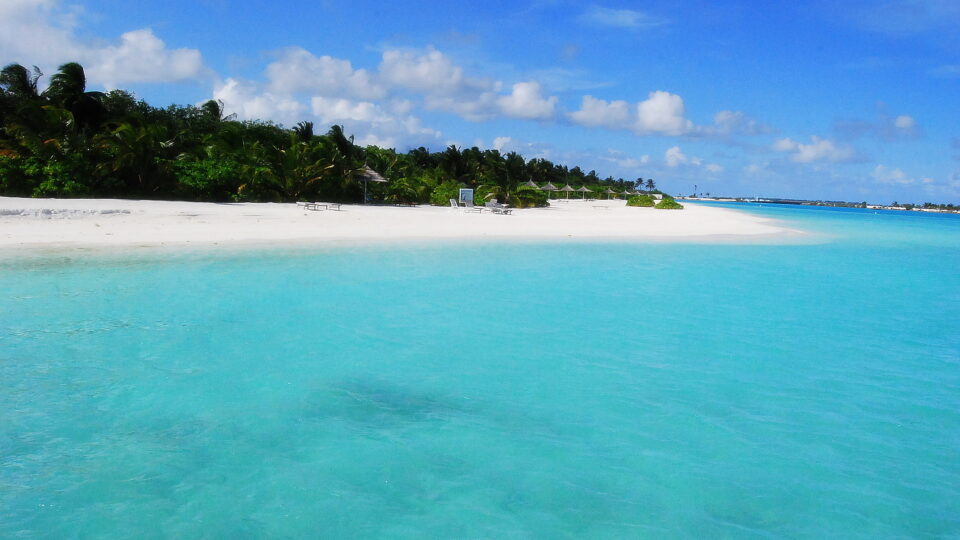
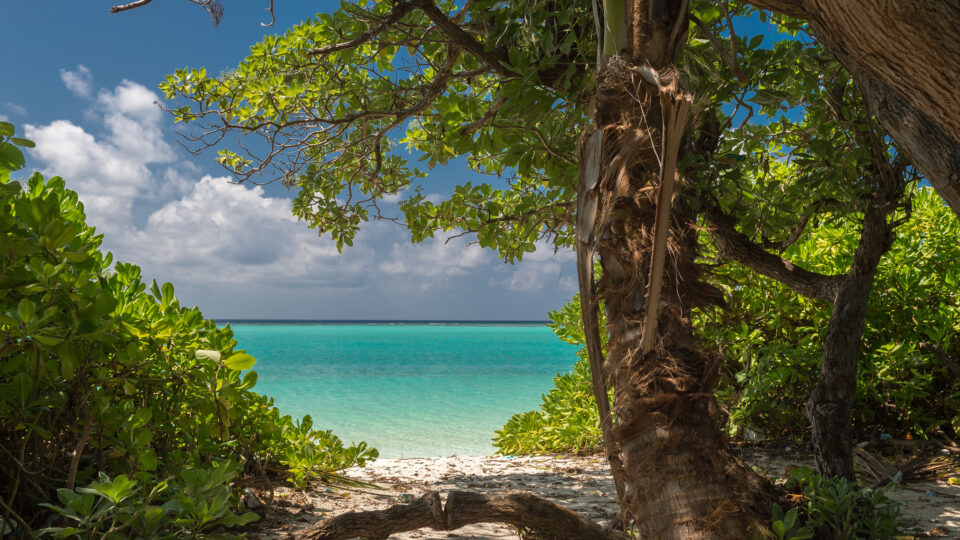
The iconic image of the “perfect” tropical beach is fine white sand, a few coconut palm trees, a gently sloping beach, and unobstructed views of the blue sea.  This image came about to a great extent from fascination with Polynesian scenery at the time of World War II.   And because of this imagery, beach resorts around the world have tried to achieve this look, often by reengineering and altering natural ecosystems to meet this artificial standard of perfection.

But natural tropical and subtropical beaches with their mangrove forests and seagrass meadows are complex ecosystems that support biodiversity, provide protection from storms, and capture carbon in significant amounts from the atmosphere.

With all this relandscaping of beaches, by the end of the 20th century, 35% of the world’s mangrove forests and 29% of its seagrasses were gone.  Mangroves sequester 10 times more carbon than mature tropical forests and sea grass can pull in up to 15 times as much.

In recent years, some resort developers are starting to embrace having beachscapes in their more natural states.  They are planting or preserving native vegetation and allowing sea grass to flourish.  The Six Senses Laamu resort in the Maldives, a major luxury tourist destination, was a trendsetter in this way. 

Coconut palms do little to prevent sand erosion, block wind, or even provide much shade.  In a warming world with increasingly powerful storms, they offer little protection for the world’s beaches.  They are not even native to the Caribbean, where they are now ubiquitous, having been introduced by Europeans.

Many resort developers are now rethinking the description of the perfect beach.

**********

Web Links

Your Resort’s ‘Perfect’ Beach Is a Lie

Photo, posted March 2, 2011, courtesy of Breezy Baldwin via Flickr.

Earth Wise is a production of WAMC Northeast Public Radio
Mangrove forests and rising seas

December 6, 2024 By EarthWise Leave a Comment

Mangrove forests are drowning in the Maldives

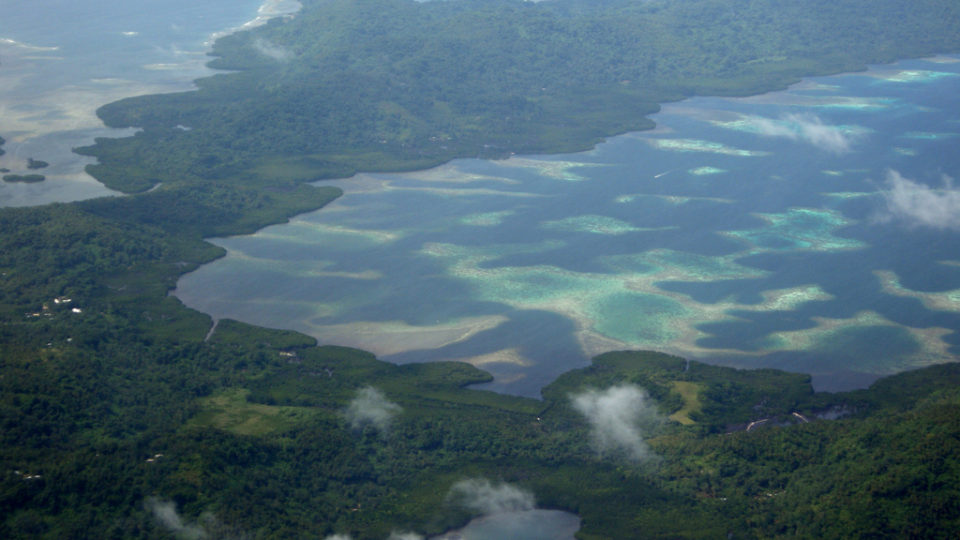
Mangrove forests play a vital role in the health of our planet.  They protect coastal regions by acting as natural barriers against storms, erosion, and flooding. The intricate root systems of mangrove forests, which allow the trees to handle the daily rise and fall of tides, also serve as biodiversity hotspots, attracting fish and other species seeking food and shelter from predators.

But mangrove forests around the world are under increasing threat from deforestation, coastal development, and climate change.  In fact, according to a new study led by researchers from Northumbria University in England, the mangrove trees in the Maldives are actually drowning. 

The research, which was recently published in the journal Scientific Reports, found that sea levels around the Maldives rose more than 1.18 inches per year from 2017 to 2020.  An unusually intense climate phenomenon, known as the Indian Ocean Dipole, occurred toward the end of this period, causing warmer sea surface temperatures and an increase in sea level in the Western Indian Ocean. 

While mangrove forests can naturally keep pace with gradually rising seas, this rate of sea level rise was too fast.  The rising sea level meant that seawater effectively flooded mangrove forests, causing many trees to lose their resilience and die.  Some islands in the Maldives have lost more than half of their mangrove cover since 2020.

Since mangrove forests also store massive amounts of carbon, the research team fears that the loss of mangrove forests could release large amounts of carbon, further accelerating climate change.

The researchers warn that the findings in the Maldives could have implications for coastal ecosystems around the world.

**********

Web Links

“Drowning” mangrove forests in Maldives signal global coastal threat

Photo, posted February 11, 2015, courtesy of Alessandro Caproni via Flickr.

Earth Wise is a production of WAMC Northeast Public Radio
Floating cities

June 6, 2024 By EarthWise Leave a Comment

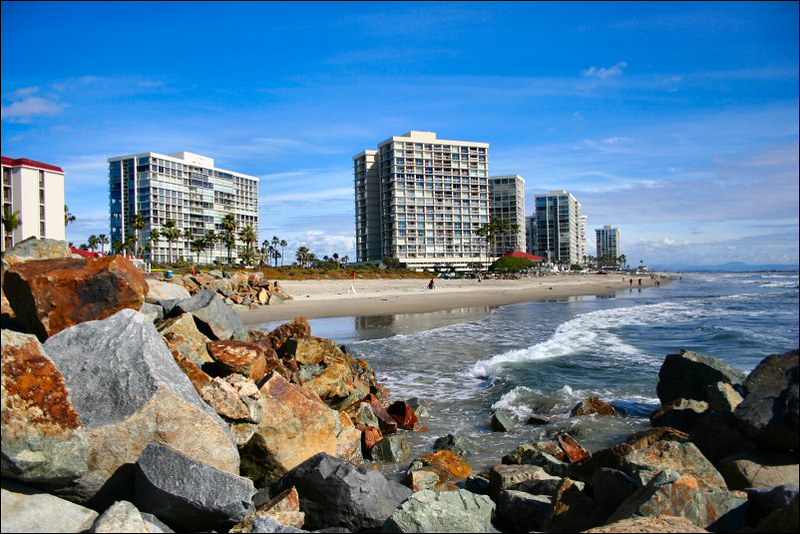
About 40% of the world‘s population lives in coastal regions.  People really like ocean-front property.  But worldwide, rising sea levels mean that more and more people want to live on land that may someday be swallowed up by the sea.

One possible solution to the problem is to build cities on top of the water.  It sounds pretty futuristic and impractical, but it is starting to happen.  There have long been floating communities in places like the Netherlands, but these are for the most part clusters of houseboats moored close together.

But there are far more ambitious projects underway.  The Maldives Floating City, already under construction, will eventually have 5,000 houses located in a lagoon that is a 15-minute boat ride from the capital city of Male.  The housing units will be tethered to the lagoon floor and linked together. 

A new project, located off Busan, South Korea, will combine high and low technology to create a large-scale, on-water town, that can house more than 10,000 people.

The town will be built on enormous concrete platforms suspended on the water.  The platforms float because they are rounded hexagonal boxes that are buoyed up by Archimedes’’ principle.  They can’t sink.  Such structures will attract marine life, providing places for oysters and mussels, for example, to grow. 

The initial development will cover 15 acres and the infrastructure will handle power, water, waste, and even some food.  The goal is even to produce enough energy to provide some to the nearby community.  A bridge will link the community to the land.

The project is scheduled to be completed in 2028.  Future expansion could end up housing 150,000 people.

Floating cities could soon no longer be exotic or futuristic.

**********

Web Links

Are Floating Cities the Solution to Rising Seas?

Photo, posted June 5, 2012, courtesy of Raymond Bucko via Flickr.

Earth Wise is a production of WAMC Northeast Public Radio
Floating Homes In The Netherlands | Earth Wise

January 24, 2022 By EarthWise Leave a Comment

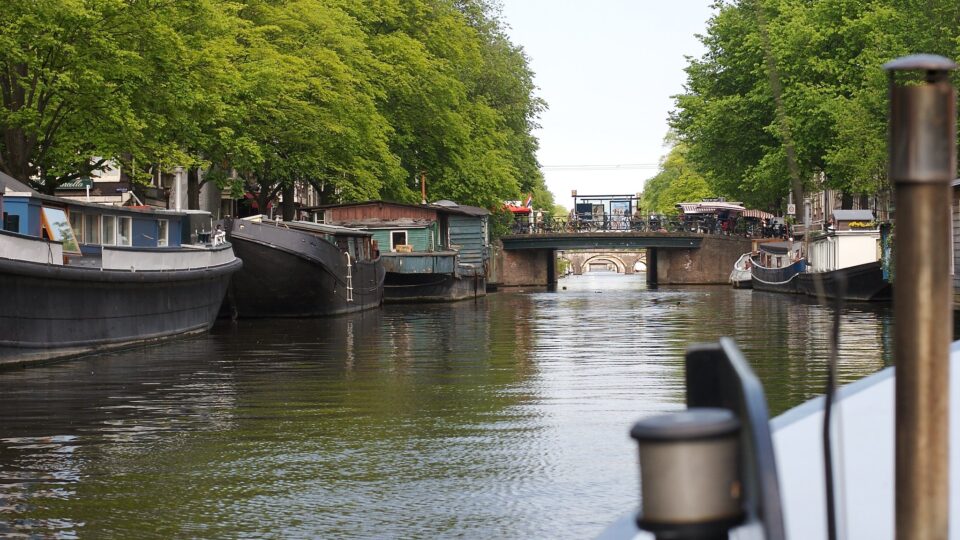
The Netherlands is a country that is largely built on reclaimed land and a third of it remains below sea level.  The Dutch have long experience with dealing with rising waters.  The city of Amsterdam has almost 3,000 houseboats in its canals.

As sea levels continue to rise across the globe, it is no surprise that the Dutch have taken the lead in creating communities composed of floating houses and buildings.

A floating house is a structure fixed to the shore, often resting on steel poles, and usually connected to the local sewer system and power grid.  They are much like ordinary houses except that instead of a basement, they have a concrete hull that acts as a counterweight, allowing them to remain stable in the water.

The ones in the Netherlands are often prefabricated, square-shaped, three-story townhouses.  Rotterdam, which is 90% below sea level, is home to the world’s largest floating office building as well as a floating farm.

Floating buildings have their challenges, not the least of which are the effects of severe wind and rainstorms, or even the passing of large ships which can make the buildings rock.  Infrastructure like electricity and sewer service is not that simple to implement for the buildings.  But the benefits of floating buildings may outweigh the costs.

For cities facing worsening floods and a shortage of buildable land, floating homes are a potential solution for expanding urban housing in the age of climate change.  Dutch engineers are spearheading floating building projects in Britain, France, and Norway, as well as in threatened island locations like French Polynesia and the Maldives.

**********

Web Links

Embracing a Wetter Future, the Dutch Turn to Floating Homes

Photo, posted May 23, 2007, courtesy of Jeff Hutchison via Flickr.

Earth Wise is a production of WAMC Northeast Public Radio.

Rising Seas In The Maldives | Earth Wise

May 24, 2021 By EarthWise Leave a Comment

Rising seas are threatening the Maldives

The Republic of Maldives is an archipelago in the Indian Ocean, southwest of Sri Lanka and India and about 400 miles from the Asian mainland.  It is one of the world’s most geographically dispersed sovereign states, the smallest Asian country by land area, and, with a little over 500,000 inhabitants, the second least populous country in Asia.  With its spectacular scenic beauty, it is also a premier tourist attraction.

With more than 80% of its 1,190 coral islands standing less than 1 meter above sea level, the Maldives has the lowest terrain of any country in the world.  As a result, the Maldives is particularly vulnerable to the sea level rise associated with climate change.

Some studies predict a grim future for the Maldives as well as other low-lying islands.  One study concluded that the islands could become uninhabitable by 2050 as wave-driven flooding becomes more common and freshwater becomes limited.

The Maldives government has explored plans to purchase land on higher ground in other countries.  Planners are also working to enhance the resilience of the country’s current islands.   An example is Hulhumalé, a newly constructed artificial island northeast of the country’s capital, Malé.

Construction of Hulhumalé began in 1997 and it now covers 1.5 square miles, making it the fourth largest island in the Maldives.  Its population is now more than 50,000, with more than 200,000 expected to eventually move there.  The new island, built by pumping sand from the seafloor onto a coral platform, rises about 2 meters above sea level.  The extra height could make the new island a refuge for Maldivians driven off lower-lying islands by the rising seas.

**********

Web Links

Preparing for Rising Seas in the Maldives

Photo, posted June 15, 2009, courtesy of Elena N via Flickr.

Earth Wise is a production of WAMC Northeast Public Radio.

Tourism And Greenhouse Gas Emissions

June 29, 2018 By EarthWise Leave a Comment

https://earthwiseradio.org/wp-content/uploads/2018/05/EW-06-29-18-Tourism-and-Greenhouse-Gas-Emissions.mp3

Tourism is a significant contributor to global gross domestic product.  Furthermore, it is growing at an annual rate of 4%, more than many other economic sectors.  There are many places around the world where it is the largest industry.  But until recently, there really wasn’t very good information about its carbon footprint.

[Read more…] about Tourism And Greenhouse Gas Emissions

Drowning Atolls

June 15, 2018 By EarthWise Leave a Comment

https://earthwiseradio.org/wp-content/uploads/2018/06/EW-06-15-18-Drowning-Atolls.mp3

The rising seas represent an existential threat to low-lying atoll islands and that threat now appears to the more imminent than previously thought.

[Read more…] about Drowning Atolls

Primary Sidebar

Recent Episodes

  • An uninsurable future
  • Clean energy and jobs
  • Insect declines in remote regions
  • Fossil fuel producing nations ignoring climate goals
  • Trouble for clownfishes

WAMC Northeast Public Radio

WAMC/Northeast Public Radio is a regional public radio network serving parts of seven northeastern states (more...)

Copyright © 2025 ·