• Skip to primary navigation
  • Skip to main content
  • Skip to primary sidebar

Earth Wise

A look at our changing environment.

  • Home
  • About Earth Wise
  • Where to Listen
  • All Articles
  • Show Search
Hide Search
You are here: Home / Archives for maintenance

maintenance

New Orleans is sinking

August 14, 2025 By EarthWise Leave a Comment

As climate change accelerates, rising sea levels are putting coastal communities at greater risk of flooding and storm surge. Driven by melting glaciers and warming oceans, global sea levels are rising at an increasing rate. For low-lying cities like New Orleans, even small increases can have serious consequences. And that risk is compounded by another factor: the land itself is sinking.

Much of New Orleans already sits at or below sea level, and parts of the city and its surrounding wetlands are gradually sinking. While most of the city remains stable, a new study by researchers from Tulane University suggests that sections of the region’s $15 billion post-Katrina flood protection system may require ongoing upgrades to keep pace with long-term subsidence.

The study, recently published in the journal Science Advances, used satellite data to track changes in ground elevation across Greater New Orleans between 2002-2020.  The researchers found that some areas – including neighborhoods, wetlands, and even concrete floodwalls – are sinking by more than an inch each year. In some spots, the land is dropping by nearly two inches annually.

Alarmingly, some of the concrete floodwalls and levees built to protect the city after Hurricane Katrina are themselves sinking. In a few cases, they are losing elevation faster than sea levels are rising, reducing their capacity to block storm surges.

The study highlights how satellite monitoring can play a critical role in guiding infrastructure maintenance and urban planning – not just in New Orleans – but in vulnerable coastal cities around the world.

**********

Web Links

Vertical land motion in Greater New Orleans: Insights into underlying drivers and impact to flood protection infrastructure

Photo, posted September 22, 2010, courtesy of U.S. Army Corps of Engineers via Flickr.

Earth Wise is a production of WAMC Northeast Public Radio

Saharan dust and solar power

May 29, 2025 By EarthWise Leave a Comment

The world is a big place but even things that are far away can have serious local consequences.  The effects of distant Canadian wildfires on air quality in Florida is a good example.

Europe is increasingly becoming reliant on solar energy to meet its targets for climate change mitigation and energy security.   According to new research by four Hungarian universities, mineral dust carried on the wind from the Sahara Desert is not only reducing electricity generation from solar power across Europe but it is also making it harder to predict what gets generated.

The Sahara releases billions of tons of fine dust into the atmosphere each year.  Tens of millions of tons reach European skies where the tiny particles scatter and absorb sunlight, reduce the amount of light reaching the surface, and even promote cloud formation.   All of these things reduce the output of photovoltaic systems.

In addition, conventional weather forecasting tools don’t consider the effects of Saharan dust events, so that scheduling of solar power for the energy system becomes less reliable.  Incorporating these events into new forecast models will be essential.

Apart from the atmospheric effects of the dust, there are also long-term impacts due to dust contaminating and eroding the physical infrastructure of solar panels thereby further reducing their efficiency and increasing maintenance costs.

Over time, south-to-north transport of Saharan dust is likely to become more pronounced due to a steeper thermal gradient.  Currently, the quantities of atmospheric dust, the dynamics of its transport, and the physical properties of the dust itself are not very well understood.  Understanding these things will be crucial for Europe’s energy future.

**********

Web Links

The shadow of the wind: photovoltaic power generation under Europe’s dusty skies

Photo, posted March 11, 2023, courtesy of Mark Wordy via Flickr.

Earth Wise is a production of WAMC Northeast Public Radio
Empire Wind moves forward

February 13, 2025 By EarthWise Leave a Comment

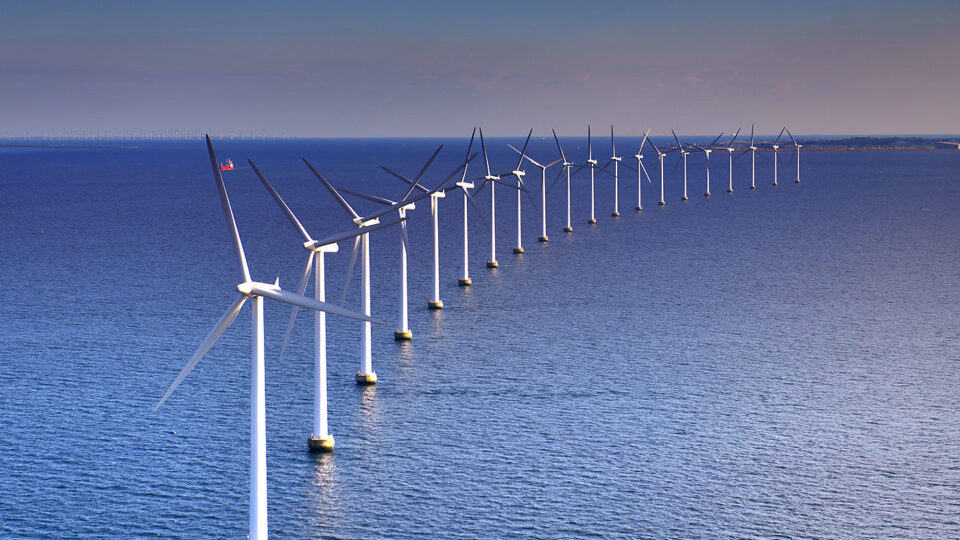
Empire Wind, an offshore wind project, is moving forward

Empire Wind 1, the first offshore wind project that will connect to the New York City grid, has received the financing needed to move forward.  Equinor, the Norwegian state-owned multinational energy company developing the project, closed on a more than $3 billion financing package.

The wind farm will span 80,000 acres in an area 15-30 miles southeast of Long Island.  When completed, it will have a capacity of 810 megawatts.  Equinor has executed a Purchase and Sale Agreement with the New York State Energy Research and Development Authority to purchase power from Empire Wind 1 for 25 years at a strike price of $155/MWh. The operations and maintenance hub for Empire Wind 1 will be at the South Brooklyn Marine Terminal.  Commercial operation is expected by 2027.

The previously-planned Empire Wind 2 project was terminated a year ago because of inflation, interest rates, and supply chain disruptions.  More broadly, the U.S. offshore wind industry has been struggling for the past year. 

With the return of President Donald Trump to the White House, there is much greater uncertainty facing the industry.  As a result of the election, Attentive Energy, a planned 3-gigawatt wind project off the coasts of New York and New Jersey has been put on pause.  Trump’s public disdain for offshore wind energy is likely to create a major slowdown in the growth of the offshore wind pipeline.  On the other hand, the new administration is less likely to have much influence on projects already in progress including 4 gigawatts under active construction and more than 50 gigawatts in other stages of development.

**********

Web Links

Empire Wind 1 secures $3B+ financing package, enters ‘full execution mode’

Photo, posted May 2, 2022, courtesy of California Energy Commission via Flickr.

Earth Wise is a production of WAMC Northeast Public Radio

Floating Sea Farms | Earth Wise

October 18, 2023 By EarthWise Leave a Comment

Researchers at the University of South Australia have designed a self-sustaining solar-driven system that turns seawater into fresh water and grows crops without any involvement.  In theory, such a system could help address the growing problems of freshwater shortages and inadequate food supplies as the world’s population continues to increase.

The system can be described as a vertical floating sea farm.  It is made up of two chambers:  an upper layer similar to a greenhouse and a lower chamber for water harvesting.

Clean water is supplied by an array of solar evaporators that soak up seawater, trap the salts in the evaporator body and, heated by the sun, release clean water vapor into the air which is then condensed on belts that transfer the water into the upper plant growth chamber.

The researchers tested the system by growing broccoli, lettuce and bok choi on seawater surfaces without maintenance or additional clean water irrigation.  The system was powered entirely by solar light.

The design is only a proof-of-concept at this point.   The next step is to scale it up using an array of individual devices to increase plant production. 

The futuristic potential for such technology would be huge farm biodomes floating on the ocean.  The UN estimates that by 2050, nearly 2.5 billion people are likely to experience water shortages while the global supply of water for irrigation is expected to decline by 19%.  Nearly 98% of the world’s water is in the oceans.  Harnessing the sea and the sun to address growing global shortages could be the way to go.

**********

Web Links

Floating sea farms: a solution to feed the world and ensure freshwater by 2050

Photo, posted February 11, 2015, courtesy of Ed Dunens via Flickr.

Earth Wise is a production of WAMC Northeast Public Radio
Electric Cars Getting Cheaper | Earth Wise

April 12, 2023 By EarthWise Leave a Comment

Electric cars are getting cheaper

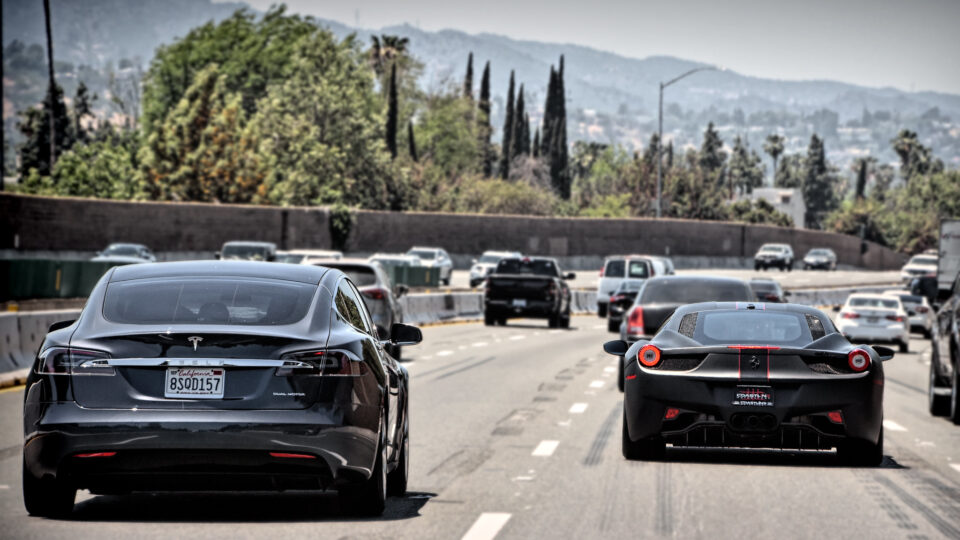
A sticking point for buying electric cars has always been that they are typically more expensive than equivalent gasoline-powered cars.  But increasing competition, government incentives, and falling prices for lithium and other battery materials is changing the equation.  In fact, the tipping point when electric cars are as cheap or even cheaper than internal combustion cars is likely to happen this year for many cars and, in fact, has already happened for some.

Battery production is ramping up for Tesla, General Motors, Ford, and others, creating cost savings from mass production. Companies manufacturing batteries in the United States are receiving government subsidies as part of a drive to establish a domestic supply chain and reduce dependence on China.  Before anyone cries foul, it should be noted that globally, oil companies received a trillion dollars in subsidies last year.  The Inflation Reduction Act is making it cheaper for automakers to build electric cars (provided they do it in the United States using US materials) and cheaper for consumers to buy them because of tax credits.

Multiple companies have lowered the price of their electric vehicles in recent months, including both the Tesla Model 3 and Model Y, which are the best-selling electric cars in the United States. GM’s electric Equinox crossover will start at about $30,000, which is still about $3,400 more than the gas-powered version.  But once the electric vehicle tax credit is figured in, it will actually be cheaper.

Electric cars are already cheaper to own and operate because of the much lower cost of powering with electricity instead of gas as well as the greatly reduced maintenance costs for the vehicles.  Once the purchase price of these cars is less than that of gas-powered cars, the economics becomes a no-brainer.

**********

Web Links

Electric Vehicles Could Match Gasoline Cars on Price This Year

Photo, posted May 11, 2021, courtesy of Chris Yarzab via Flickr.

Earth Wise is a production of WAMC Northeast Public Radio

Electric Mail Trucks | Earth Wise

January 26, 2023 By EarthWise Leave a Comment

The USPS is electrifying its fleet

The US Postal Service recently announced that it plans to buy at least 66,000 electric vehicles by 2028.  With more than 231,000 total vehicles, the Postal Services operates one of the largest civilian vehicle fleets in the world.

Last February, the Postal Service announced a plan to replace up to 165,000 older mail trucks, many of which are as much as 30 years old.  The gas-powered trucks get an estimated 8.6 miles per gallon when air conditioning is running.  The plan was for only 10% of the new trucks to be electric, citing the high upfront costs of electric vehicles even though they generally make up the difference by saving on fuel and maintenance costs over time. 

Facing strong criticism from the Biden administration, the Postal Service shifted course and in July announced that 40% of the new trucks would be electric. With passage of the Inflation Reduction Act in August, the Postal Service received $3 billion for fleet electrification and has once again changed its plans.  It also announced that it intends to stop buying gas-powered delivery trucks altogether after 2026.

As part of the new plan, the Postal Service plans to upgrade hundreds of facilities across the country to accommodate electric vehicles.  This will include installing chargers and streamlining delivery operations to reduce unnecessary trips.

The Postal Service is no alone in working to clean up its fleets.  FedEx says it plans to completely electrify its pickup and delivery fleet by 2040.  Amazon has ordered 100,000 electric vans from the start-up company Rivian.

Electrifying the postal delivery system makes abundant sense.  Postal routes are predictable and there is ample charging time to meet the power needs of the fleet.

**********

Web Links

Your Mail Truck Is Going Electric

Photo, posted January 18, 2017, courtesy of Rusty Clark via Flickr.

Earth Wise is a production of WAMC Northeast Public Radio.

Cheaper Electric Cars | Earth Wise

January 18, 2022 By EarthWise 1 Comment

Electric vehicles will soon be less expensive than gasoline cars

The price of the batteries that power electric cars has fallen by about 90% since 2010.  This continuing trend will eventually make EVs less expensive than gas cars.

For many years, researchers have estimated that when battery packs reach the price of $100 per kilowatt-hour of energy storage, electric cars will cost about the same as gasoline-powered vehicles.  In 2021, the average price of lithium-ion battery packs fell to $132 per kilowatt-hour, down 6% from the previous year.  According to analysts, batteries should hit the average of $100 as soon as 2024.

It is not the case that as soon as the $100 level is reached, EVs will abruptly reach cost parity.  Across different manufacturers and vehicle types, the price shift will occur at different rates.  However, by the time batteries reach $60 a kilowatt-hour, EVs will be cheaper than equivalent gasoline models across every vehicle segment.

It is not known exactly when EVs will cost less than gasoline models, but there is little doubt that this point is coming.  We have only been talking about the purchase price of a new vehicle.  When one looks at the total cost of ownership of a vehicle, including fuel, insurance, maintenance, and depreciation, it is a different story.

Because of savings on fuel and maintenance, EVs are already in many if not most cases cheaper to own than gas-powered cars.  The Department of Energy provides an online calculator to help consumers estimate the cost differences between gasoline and electricity.

In any case, the number of electric cars on the market is increasing and the number of gas-powered cars will be shrinking.  Sooner or later, we will all drive electric.

**********

Web Links

Inside Clean Energy: Batteries Got Cheaper in 2021. So How Close Are We to EVs That Cost Less than Gasoline Vehicles?

Photo, posted July 29, 2017, courtesy of Steve Jurvetson via Flickr.

Earth Wise is a production of WAMC Northeast Public Radio.

The Potential For Solar Canals In California | Earth Wise

April 29, 2021 By EarthWise Leave a Comment

Covering California's aqueducts with solar panels could advance renewable energy and water conservation

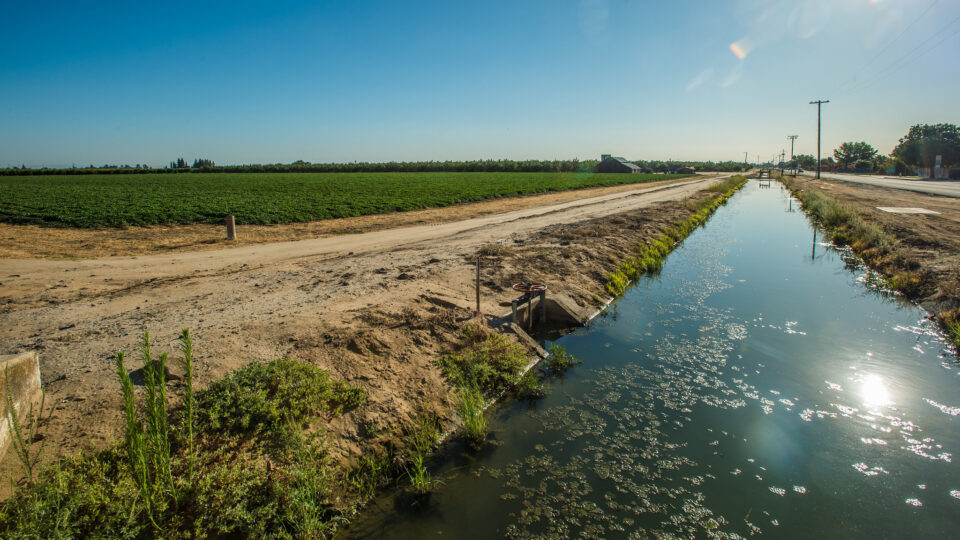
California’s network of almost 4,000 miles of aqueducts is the world’s largest water conveyance system.  It serves the state’s Central Valley which produces a quarter of America’s food.  About 20% of the nation’s groundwater demand is pumped from Central Valley aquifers.

A recent study by the University of California Santa Cruz and UC Merced has determined that covering these aqueducts with solar panels could be an economically feasible way to advance both renewable energy and water conservation.  California’s aqueducts might more properly be called canals because they are located at ground level.  

The concept of solar canals has been gaining increasing interest around the world as the changing climate leads to more droughts in many regions.  Placing solar panels above the canals can shade them to help prevent water loss through evaporation.  In addition, some types of solar panels can work better situated over canals because the cooler environment improves their operation.  In addition to the increased solar panel output and the water evaporation savings, shade from solar panels could help control the growth of aquatic weeds, which are a costly canal maintenance issue.

Spanning canals with solar panels can be accomplished either by using steel trusses or suspension cables, either of which is more expensive to build than ordinary ground-mounted solar panel supports.  But the research study showed how the benefits of solar canals combine to outweigh the added costs for cable-supported installations.

Apart from the economic benefits of a solar canal system, producing solar energy in the canal system could eliminate the use of 15-20 diesel-powered irrigation pumps, helping to reduce air pollution in a region with some of the nation’s worst air quality.

Solar canals could be a real winner.

**********

Web Links

New analysis shows potential for ‘solar canals’ in California

Photo, posted July 23, 2015, courtesy of Lance Cheung / USDA via Flickr.

Earth Wise is a production of WAMC Northeast Public Radio.

A High-Tech Fire Alarm | Earth Wise

July 23, 2020 By EarthWise Leave a Comment

In recent years, wildfires have been a global problem, notably in California, Brazil, and Australia.  It has become increasingly important to be able to respond to new fires as soon and as quickly as possible.  Such response can make the task of extinguishing them easier, thereby reducing the amount of damage and the loss of property and life.

Traditional methods for detecting forest fires include satellite monitoring, ground patrols, and watch towers, all of which have high labor and financial costs but suffer from low efficiency.  Remote sensing technologies are becoming increasingly common but rely on batteries for power, requiring servicing in remote locations to replace depleted batteries.  Solar cells represent an alternative to batteries, but it is challenging to use them in forests because of shading and foliage coverage.

A team of researchers at Michigan State University has developed a remote forest fire detection and alarm system powered by nothing more than the movement of tree limbs in the wind.  The device is known as an MC-TENG, which is an acronym for multilayered cylindrical triboelectric nanogenerator.  The triboelectric effect is a phenomenon where certain materials become electrically charged when they separate from a second material with which they were previously in contact.  In the new device, two cylindrical sleeves fit within one another – one anchored and the other free to slide.  The device is tied to a tree branch and when the branch sporadically moves in the wind, electricity is generated and stored in a carbon-nanotube-based micro supercapacitor.  This powers a sensing system that can continuously monitor environmental conditions without requiring any maintenance.

A combination of carbon monoxide and temperature sensors provides a high-tech fire alarm that can operate continuously in the most remote forest.

**********

Web Links

Self-Powered Alarm Fights Forest Fires, Monitors Environment

Photo, posted August 3, 2012, courtesy of Lukas Schlagenhauf via Flickr.

Earth Wise is a production of WAMC Northeast Public Radio.

Hyping Electric Cars | Earth Wise

March 13, 2020 By EarthWise Leave a Comment

During this year’s Super Bowl, at least three car companies – GM, Porsche, and Audi – ran commercials for plug-in cars.  This is a sign that automakers are ramping up their efforts to persuade the public that electric cars really are the future.

The auto industry is investing billions of dollars to develop electric vehicles, spurred by stricter emissions rules in places like California and concerns about climate change.  In fact, more than 100 new plug-in models are expected to become available in the United States over the next five years.

In Europe, electric cars are increasingly popular.  Norwegians, for example, buy more electric cars than gas cars.  And several European countries have banned the sale of gas cars starting in 2025.

But in the US, enthusiasm for electric cars has been slow to build.  Automakers sold fewer than 330,00 electric vehicles in the US in 2019 and more than half of those were from Tesla, which actually does not even advertise its vehicles.

The auto industry spent nearly $9 billion in national and local advertising in the US last year, but less than half a percent of that went toward promoting electric vehicles.

A big part of the problem is that car dealers are not very enthusiastic about selling electric cars, which require far less maintenance than conventional cars and have far fewer costly replacement parts to sell.   As a result, the industry’s efforts to speed the transition to electric cars has been ambivalent at best.

World-wide, Tesla has sold about a million cars, mostly in the past 4 years, so there is clearly a growing demand for electric vehicles.  It is up to the rest of the industry to create demand for the new cars they have committed to produce.

**********

Web Links

Super Bowl Ads Hyped Electric Cars. But Will Anyone Buy Them?

Photo, posted October 6, 2018, courtesy of Mike Fonseca via Flickr.

Earth Wise is a production of WAMC Northeast Public Radio.

Solar Plus Storage In The Caribbean

November 22, 2018 By EarthWise Leave a Comment

https://earthwiseradio.org/wp-content/uploads/2018/11/EW-11-22-18-Solar-Plus-Storage-in-Caribbean.mp3

The Caribbean is home to nearly 30 island nations and more than 7,000 individual islands with a combined population of around 40 million.  All of the islands are susceptible to disasters such as hurricanes that can leave residents without electrical power for extended periods of time.

[Read more…] about Solar Plus Storage In The Caribbean

Capital Region Community Solar

May 22, 2017 By EarthWise

https://earthwiseradio.org/wp-content/uploads/2017/05/EW-05-22-17-Capital-Region-Community-Solar.mp3

Community solar is a cooperative enterprise in which customers can make use of the output of a large local array of solar panels when they are not able to install a solar power system on their own property.  The customers of a community solar system can offset as little or as much of their electrical usage as they want by participating in a community solar program.

[Read more…] about Capital Region Community Solar

Sponsoring National Parks

June 13, 2016 By WAMC WEB

https://earthwiseradio.org/wp-content/uploads/2016/05/EW-06-13-16-National-Parks-Sponsors.mp3

Everybody loves national parks. They offer scenic wonders, opportunities to commune with nature, and a chance to get away from the pervasive commercialization that fills our lives.  But that may soon change.

[Read more…] about Sponsoring National Parks

Primary Sidebar

Recent Episodes

  • An uninsurable future
  • Clean energy and jobs
  • Insect declines in remote regions
  • Fossil fuel producing nations ignoring climate goals
  • Trouble for clownfishes

WAMC Northeast Public Radio

WAMC/Northeast Public Radio is a regional public radio network serving parts of seven northeastern states (more...)

Copyright © 2025 ·