• Skip to primary navigation
  • Skip to main content
  • Skip to primary sidebar

Earth Wise

A look at our changing environment.

  • Home
  • About Earth Wise
  • Where to Listen
  • All Articles
  • Show Search
Hide Search
You are here: Home / Archives for locations

locations

New nuclear power for New York

July 9, 2025 By EarthWise Leave a Comment

New nuclear power plant is coming in New York

Nuclear power has been around since the 1950s, but it has fallen out of favor in recent decades, in part due to a couple of traumatic disasters at nuclear power plants.  In fact, only two new nuclear power plants have been built in the US in the past 30 years, and they took a very long time and an enormous amount of money to build.

However, in recent times there has been a great deal of developmental work on nuclear power.  Such newer technologies as small modular reactors, molten salt reactors, light water reactors, and more hold promise for safer, less expensive, and higher performance nuclear power.

In late June, New York Governor Kathy Hochul announced that she has instructed the New York Power Authority to develop and construct a zero-emission advanced nuclear power plant in Upstate New York.  The plant is to produce 1 GW of power, about half of what the decommissioned Indian Point Power Plant produced when it provided significant amounts of power to New York City residents.

Renewed interest in nuclear power has emerged in part because of the soaring electricity demand from AI data centers.  Companies like Amazon, Google, and Microsoft have all begun investing in nuclear power for this reason.

NYPA is instructed to begin evaluating technologies, business models, and locations for the new power plant and will seek to secure key partnerships needed for the project.  As things stand, it is not known what technology the plant will use, where in Upstate New York it will be located, how much it will cost to build, who will pay for it, and how long it will take to build. 

**********

Web Links

New York Again Embraces Nuclear Power With Plans to Build New Plant

Photo courtesy of Constellation Energy.

Earth Wise is a production of WAMC Northeast Public Radio

Slow-moving landslides

October 17, 2024 By EarthWise Leave a Comment

Landslides are mass movements of rock, earth, or debris down a slope.  They can be initiated by rainfall, snowmelt, changes in water level, erosion by streams, earthquakes, volcanic activity, or by various human activities.  Most landslides we hear about are sudden events that can cause all sorts of calamities.  But not all landslides are rapid occurrences.  There are also slow-moving landslides.

A new study by the University of Potsdam in Germany has found that as urban centers in mountainous regions grow, more people are building homes on steeper slopes prone to slow-moving landslides.  Slow-moving landslides can move as little as one millimeter a year and up to as much as three meters per year.  Locations with slow-moving landslides can seem safe to settle on; in some cases, the movement itself can be inconspicuous or even completely undetected.

Slow slides can gradually produce damage in houses and other infrastructure and there can also be sudden acceleration from heavy rain or other influences.

The study compiled a new database of nearly 8,000 slow-moving landslides with areas of at least 25 acres located in regions classified as “mountain risk.”  Of the landslides documented, 563 are inhabited by hundreds of thousands of people.  The densest settlements on slow-moving landslides are in northwestern South America and southeastern Africa. 

In all regions of the study, urban center expansion was associated with an increase in exposure to slow-moving landslides.  As cities expand in mountainous areas, people are moving into unsafe areas, but poorer populations may have few other options.

**********

Web Links

Slow-moving landslides a growing, but ignored, threat to mountain communities

Photo, posted March 4, 2015, courtesy of Flickr.

Earth Wise is a production of WAMC Northeast Public Radio

Elephants have names

July 11, 2024 By EarthWise Leave a Comment

Elephants are considered to be very smart creatures.  They have the largest brain of any land animal and have three times as many neurons as humans.  Of course, a lot of that brain hardware is needed to control those big elephant bodies, but elephants have also demonstrated impressive mental capabilities on many occasions.

A new study by an international team headed by researchers from Colorado State University has found that elephants call each other by name and respond when they hear others call their name.

The researchers analyzed hundreds of elephant calls recorded over more than a year in Kenya.  With machine learning techniques, they were able to identify specific sounds that elephants made when calling each other.  When the researchers played recordings of these sounds, the elephants responded to the sound of their own name by calling back or moving toward the loudspeaker.  Their response to other names was much less enthusiastic.

Very few animals use names at all, and, in most cases, it is more a matter of imitation.  For example, dolphins refer to other dolphins by mimicking their unique sounds.

These findings at least suggest that elephants may be capable of abstract thought and perhaps may have a vocabulary beyond names for each other.  The researchers are investigating whether elephants can identify food, water, or locations using their calls.  The great hope is that it might ultimately be possible to communicate with elephants directly.  It would be wonderful to be able to alert them to poachers or other threats.  The lead author of the study said that he would like to be able to tell elephants things like “Do not come here.  You’re going to be killed if you come here.”

**********

Web Links

Elephants Have Names for Each Other, Study Finds

Photo, posted April 24, 2016, courtesy of Neil Ransom via Flickr.

Earth Wise is a production of WAMC Northeast Public Radio

Floating Offshore Wind | Earth Wise

April 21, 2022 By EarthWise Leave a Comment

Floating offshore wind becoming a reality

According to a new report by the Global Wind Energy Council, floating offshore wind technology is on track to grow from a miniscule market to a substantial contribution to the world’s energy supply over the next decade.  Furthermore, the United States represents one of the countries with the greatest potential.

Wind power is stronger and steadier in the ocean than on land, so the use of offshore wind is rapidly expanding.  However, because most installations are based on fixed structures attached to the sea bottom, they cannot be installed in very deep or complex seabed locations.

Floating offshore wind is based on structures that are anchored to the seabed only by means of flexible anchors, chains, or steel cables.  Apart from making it feasible to place wind turbines in deeper and more distant locations, floating turbines and platforms can also be built and assembled on land and then towed to the offshore installation site.

The floating offshore wind industry is currently in a pre-commercial phase but has great potential.  Many offshore locations with great potential in terms of their wind resources are unsuitable for conventional installations either because of the depth of the seabed or its complex structure.  This is particularly true of the waters off the coasts of California, Oregon, and the Gulf Coast, which otherwise offer excellent wind resources.

There are many issues to deal with in expanding the use of floating offshore wind, including transporting the power to shore and the ability of the local power grids to handle the incoming power.  On the other hand, distantly placed floating offshore wind reduces environmental concerns and eliminates issues associated with the visual impact of wind farms for coastal residents.

**********

Web Links

What’s the potential of floating offshore wind?

Photo, posted May 10, 2015, courtesy of Olin Gilbert via Flickr.

Earth Wise is a production of WAMC Northeast Public Radio.

Floating Homes In The Netherlands | Earth Wise

January 24, 2022 By EarthWise Leave a Comment

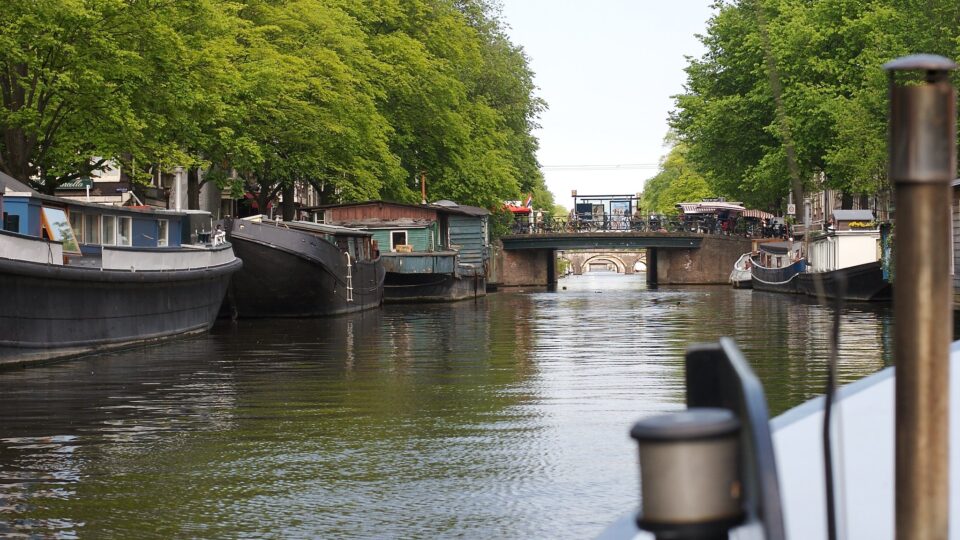
The Netherlands is a country that is largely built on reclaimed land and a third of it remains below sea level.  The Dutch have long experience with dealing with rising waters.  The city of Amsterdam has almost 3,000 houseboats in its canals.

As sea levels continue to rise across the globe, it is no surprise that the Dutch have taken the lead in creating communities composed of floating houses and buildings.

A floating house is a structure fixed to the shore, often resting on steel poles, and usually connected to the local sewer system and power grid.  They are much like ordinary houses except that instead of a basement, they have a concrete hull that acts as a counterweight, allowing them to remain stable in the water.

The ones in the Netherlands are often prefabricated, square-shaped, three-story townhouses.  Rotterdam, which is 90% below sea level, is home to the world’s largest floating office building as well as a floating farm.

Floating buildings have their challenges, not the least of which are the effects of severe wind and rainstorms, or even the passing of large ships which can make the buildings rock.  Infrastructure like electricity and sewer service is not that simple to implement for the buildings.  But the benefits of floating buildings may outweigh the costs.

For cities facing worsening floods and a shortage of buildable land, floating homes are a potential solution for expanding urban housing in the age of climate change.  Dutch engineers are spearheading floating building projects in Britain, France, and Norway, as well as in threatened island locations like French Polynesia and the Maldives.

**********

Web Links

Embracing a Wetter Future, the Dutch Turn to Floating Homes

Photo, posted May 23, 2007, courtesy of Jeff Hutchison via Flickr.

Earth Wise is a production of WAMC Northeast Public Radio.

How Green Are Electric Cars? | Earth Wise

April 12, 2021 By EarthWise Leave a Comment

Electric cars are becoming even greener

Environmental groups, governments, and automakers are all promoting electric vehicles as an important technology to combat climate change.  For example, GM plans to stop selling gas-powered cars by 2035 and Volvo intends to be all-electric by 2030.

There are still those who question how green electric vehicles actually are.  All products and technologies do have their environmental impacts.  In general, today’s electric cars produce significantly fewer planet-warming emissions than gas-powered cars, but there are factors that affect the results for specific vehicles.

The biggest issue is the source of electricity used to charge up the cars.  In places where coal still provides a substantial fraction of electric generation, electric cars don’t fare as well.  But coal’s contributions to the grid are declining rapidly and even cleaner fossil fuels like natural gas are gradually being replaced by green generation from wind and solar power.  If the grid was entirely carbon-free, then there would be no emissions associated with operating the vehicle.

MIT has created an interactive online tool that incorporates a comprehensive set of factors contributing to the emissions associated with cars:  what it takes to manufacture the cars, how much gasoline conventional cars burn, and where the electricity to charge electric vehicles comes from.

The tool provides information like the average amount of carbon dioxide emitted for every mile driven over a car’s lifetime. 

Results will vary with location and various other vehicle factors, but in the great majority of cases, electric cars are much greener than gasoline cars, and as the grid becomes greener, the cars will become greener as well.

**********

Web Links

CarbonCounter 2021

How Green Are Electric Vehicles?

Photo, posted January 29, 2020, courtesy of Tony Webster via Flickr.

Earth Wise is a production of WAMC Northeast Public Radio.

Tracking Endangered Species From Space | Earth Wise

March 4, 2021 By EarthWise Leave a Comment

Using satellites to monitor endangered species

Scientists at the University of Bath and the University of Oxford in the UK have developed a technique for remotely surveying elephants and other wildlife using satellite images and deep learning.  The technique has the same accuracy as human counts done on the ground or from low-flying airplanes.

The new computer algorithm can analyze high-resolution satellite images and detect African elephants in both grasslands and forests.  Previous techniques for monitoring wildlife from space were limited to homogenous habitats, such as the case of tracking whales in the open ocean.

On-the-ground or airplane surveys to monitor animal numbers are expensive and time-consuming.  Satellites can collect nearly 2,000 square miles of imagery in a few minutes thereby eliminating the risk of double counting and reducing a process that previously took weeks to just a few days.  The use of satellites also eliminates the logistical problems of monitoring species populations that cross international borders.

Accurate monitoring is important for efforts to save endangered species.  There are only 40,000 – 50,000 African elephants left in the wild.  It is essential to know where the animals are and how many there are in various locations. The new method is able to count elephants in mixed ecosystems, such as savannah and forests, where tree cover would previously have made satellite tracking difficult.

With satellite imagery resolution increasing every few years, it should be possible to see ever-smaller things in greater detail.  The new algorithm works well for elephants; it may eventually become practical to track animals as small as an albatross from space.

**********

Web Links

A New Way to Track Endangered Wildlife Populations from Space

Photo, posted March 15, 2008, courtesy of Michelle Gadd/USFWS via Flickr.

Earth Wise is a production of WAMC Northeast Public Radio.

Carbon In The Ocean | Earth Wise

October 13, 2020 By EarthWise Leave a Comment

carbon uptake by the ocean

New research from the University of Exeter in the UK reveals that the world’s oceans soak up more carbon than previously believed.  Previous estimates of the movement of carbon between the atmosphere and the oceans did not account for the temperature differences between the water’s surface and a few meters below.

The new model includes this factor and finds that there is a significantly higher flux of carbon into the oceans.

The study calculated carbon dioxide fluxes from 1992 to 2018 and found that at certain times and locations there was up to twice as much CO2 contained in the ocean as determined from previous models.

The temperature differences between the surface of the ocean and the water at a depth of a few meters is important because the amount of carbon dioxide that can be absorbed in water depends very strongly on the temperature of the water.   Anyone with a home soda maker knows this well as the devices always work much better with refrigerated water than room temperature water.

The difference in ocean carbon dioxide uptake measured from satellite data and calculated in the new modeling amounts to about 10% of global fossil fuel emissions, so it is a very significant revision.  The revised estimate for carbon dioxide uptake actually agrees much better with an independent method for calculating the amount of carbon dioxide in the oceans.  Those measurements came from a global ocean survey performed by research ships over decades.

Now that two so-called big data estimates of the ocean sink for CO2 agree pretty well, there is greater confidence that we understand this important aspect of the planet’s carbon cycle.

**********

Web Links

Ocean carbon uptake widely underestimated

Photo, posted December 30, 2012, courtesy of Jerome Decq via Flickr.

Earth Wise is a production of WAMC Northeast Public Radio.

Storing CO2 Underground | Earth Wise

February 19, 2020 By EarthWise Leave a Comment

carbon dioxide and storage

Capturing the carbon dioxide emitted from power plants and factories and safely storing it so it can’t enter the atmosphere has long been an attractive and desirable goal.  Even though the use of renewable energy sources has been expanding rapidly, it will still be a long time before fossil fuel plants go away entirely.

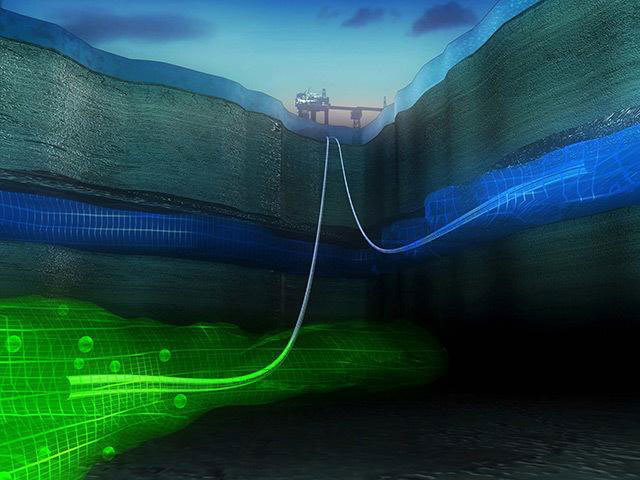
The most widely considered method of carbon capture and storage is underground storage.  The idea is to send the carbon dioxide through a pipeline to a place where underground rock formations can store it safely and permanently.  Typically, it would be pumped deep underground – often more than half a mile down – and the site would be monitored to make sure the CO2 doesn’t leak back up to the atmosphere or into the water table.

A new study looked at how much carbon dioxide the suitable geological formations on Earth can store.  The conclusion of the study is that drilling about 12,000 carbon storage wells globally could provide enough capacity to store 6 to 7 billion tons of CO2 a year by 2050.  That is about 13% of global emissions.

Drilling 12,000 wells is equivalent to the amount of oil and gas drilling that has taken place just in the Gulf of Mexico over the last 70 years.  The study identified locations worldwide that could handle the pressures associated with storing injected carbon dioxide.

So far, less than two dozen projects exist that capture and store carbon dioxide from fossil fuel plants.  In total, these plants can capture about 36 million tons a year, which is far less than what is needed.  But the new study at least shows that finding places to put captured carbon is not a problem.

**********

Web Links

Ample Geological Capacity Exists to Store Large Quantities of Captured CO2

Photo courtesy of Equinor.

Earth Wise is a production of WAMC Northeast Public Radio.

Powering Africa With The Sun

December 3, 2018 By EarthWise Leave a Comment

https://earthwiseradio.org/wp-content/uploads/2018/12/EW-12-03-18-Powering-Africa-With-The-Sun.mp3

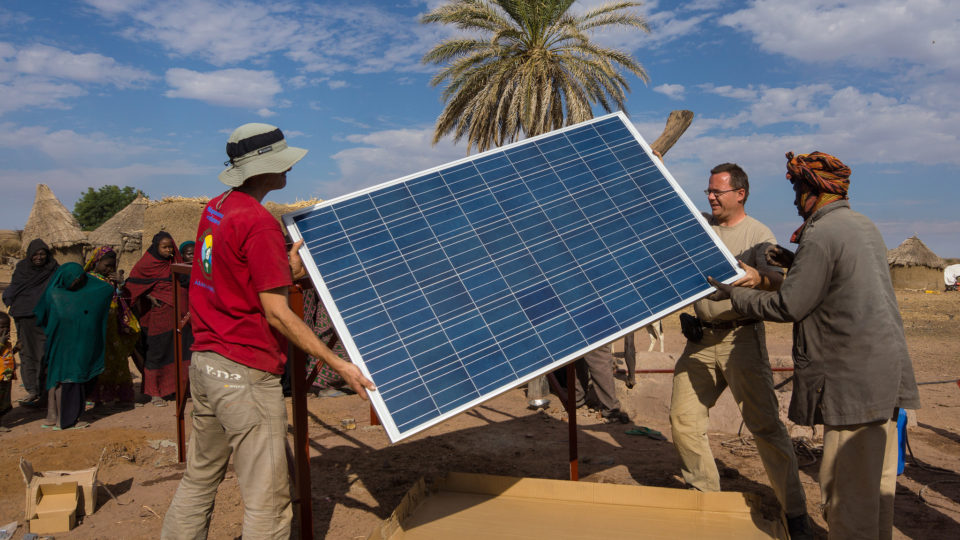
There are roughly 600 million people in sub-Saharan Africa who currently live without electric power.  Putting in the infrastructure to supply power to these people in their various countries has been a major economic and logistical challenge.

[Read more…] about Powering Africa With The Sun

Primary Sidebar

Recent Episodes

  • An uninsurable future
  • Clean energy and jobs
  • Insect declines in remote regions
  • Fossil fuel producing nations ignoring climate goals
  • Trouble for clownfishes

WAMC Northeast Public Radio

WAMC/Northeast Public Radio is a regional public radio network serving parts of seven northeastern states (more...)

Copyright © 2026 ·