• Skip to primary navigation
  • Skip to main content
  • Skip to primary sidebar

Earth Wise

A look at our changing environment.

  • Home
  • About Earth Wise
  • Where to Listen
  • All Articles
  • Show Search
Hide Search
You are here: Home / Archives for limestone

limestone

AI and greener cement

July 28, 2025 By EarthWise Leave a Comment

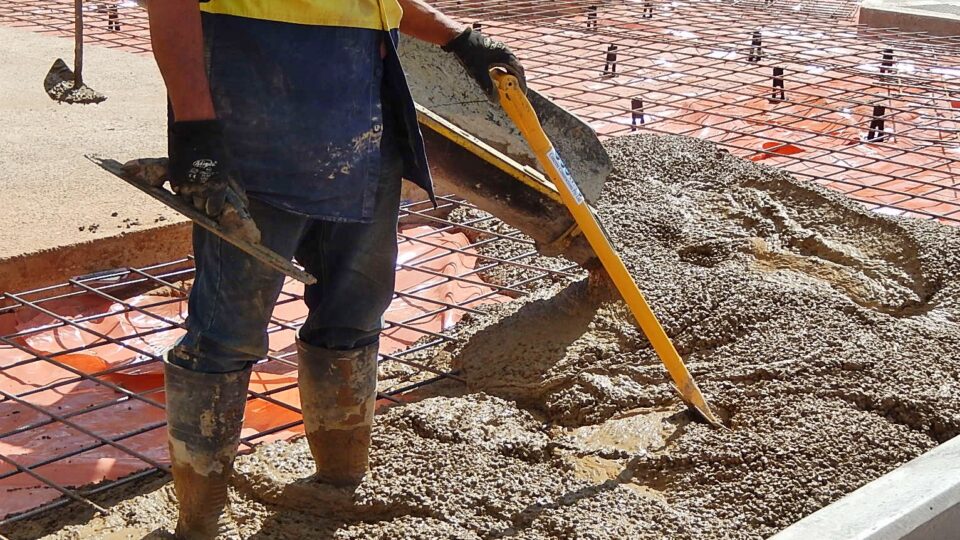
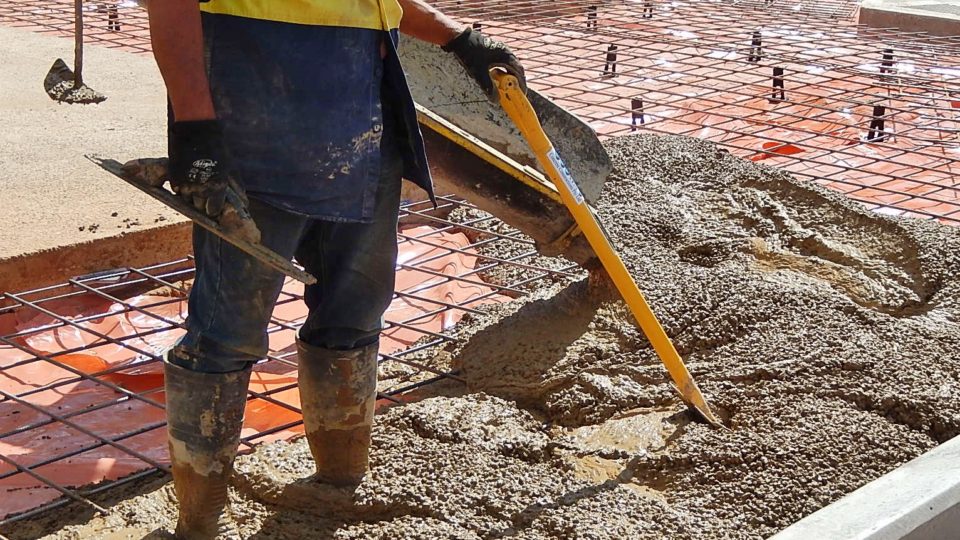
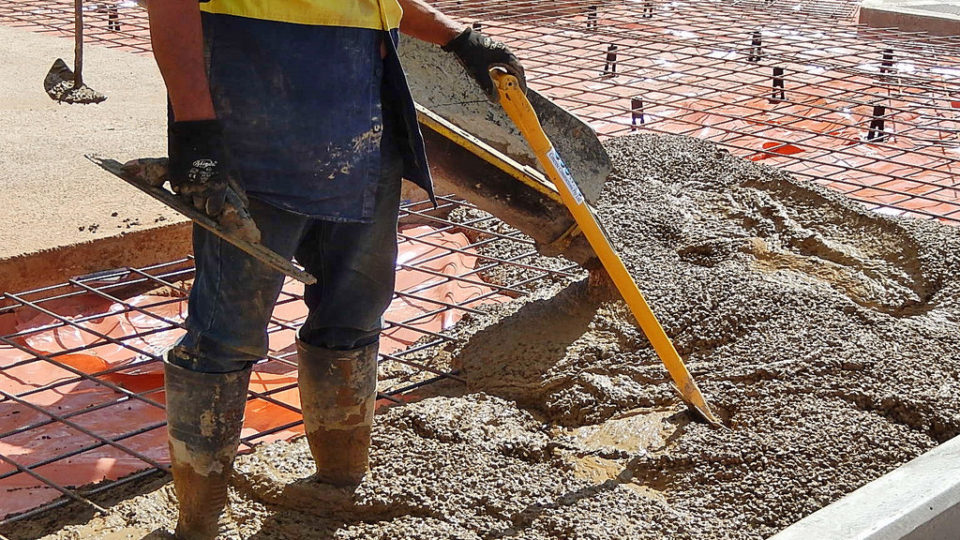
Cement pretty much holds the modern world together.  The amount of cement required to create our infrastructure is almost incomprehensible.   By weight, humanity consumes more cement than food, about 3 pounds per person per day.  The cement industry produces around eight percent of global CO2 emissions, which is more than the aviation industry.  So, if the amount of emissions produced making concrete could be reduced by even a few percent, it would make a significant impact.

Cement plants utilize rotary kilns heated to 2,500 degrees Fahrenheit to burn ground limestone down to a substance called clinker.  That energy-intensive combustion process emits large amounts of carbon dioxide.  However, the combustion process accounts for much less than half of the emissions associated with making concrete.  The majority comes from the raw materials needed to produce clinker.

One strategy to reduce concrete emissions is to modify the cement recipe itself, replacing some of the clinker with alternative materials.  Some producers already make use of materials like slag from iron production and fly ash from coal-fired power plants.   

A team of researchers at the Paul Scherrer Institute in Switzerland is making use of machine learning to simulate and optimize cement formulations that would emit significantly less CO2 while maintaining the same high level of mechanical performance.  This AI-based approach eliminates time-consuming experiments and conventional complex simulations.

The Scherrer Institute seeks to discover new materials and the effort has already yielded some promising candidates.  The next steps will be testing some of these recipes in the laboratory. 

**********

Web Links

AI paves the way towards green cement

Photo, posted July 3, 2007, courtesy of Tim Shortt via Flickr.

Earth Wise is a production of WAMC Northeast Public Radio

Self-healing concrete

June 25, 2025 By EarthWise Leave a Comment

Concrete is the most widely used building material on Earth.  It has a dangerous and costly flaw:  it cracks easily.  Cracks in concrete can lead to inconvenient damage or to catastrophic structural failures such as collapses of buildings, bridges, or highways.

Concrete is made by mixing crushed stone and sand with powdered clay and limestone and adding water.  The mixture hardens and once set becomes extremely strong.  However, natural forces like freeze-thaw cycles, drying shrinkage, and heavy loads can cause cracks.  Even very tiny cracks can allow liquids and gases to seep into embedded steel reinforcements causing corrosion and weakness. 

For over 30 years, researchers have investigated microbe-mediated self-healing concrete.  It involves introducing microbial healing agents into cracks and injecting nutrients for the healing agents to produce repair materials.  It is not a very practical solution.

Researchers at Texas A&M University have developed a technique inspired by the behavior of lichen systems. Their system, like lichen, uses a combination of cyanobacteria which turns air and sunlight into food, and filamentous fungi, which produces minerals that seal the cracks. 

In lab tests, the paired microbes were able to grow and produce crack-filling minerals even in challenging environments such as concrete.  If it is possible to produce concrete that can heal itself, it would significantly reduce maintenance costs, extend its longevity, and even protect lives through increased safety.

**********

Web Links

Cracking the Code: Deciphering How Concrete Can Heal Itself

Photo, posted May 21, 2009, courtesy of DesignMag via Flickr.

Earth Wise is a production of WAMC Northeast Public Radio

Ocean geoengineering

October 24, 2024 By EarthWise Leave a Comment

A start-up company is exploring ocean geoengineering

As greenhouse gas emissions continue to be dangerously large and the perils of climate change are increasingly apparent, the world is increasingly exploring ways to deliberately intervene in climate systems.  A number of these ideas involve introducing substances into the atmosphere, but there are also ways to tinker with the oceans.

The oceans naturally absorb about a third of the carbon dioxide that humans pump into the atmosphere, mostly by burning coal, gas, and oil.  People are exploring ways to get the ocean to take up even more of the carbon dioxide.  One approach that is gaining traction is known as alkalinity enhancement.  By adding limestone, magnesium oxide, or other alkaline substances to rivers and oceans, it changes their chemistry and makes them soak up more carbon dioxide.

This approach has been around for a while as a way to mitigate acid rain in rivers and has been very successful.  A start-up company in Canada called CarbonRun is building a machine that grinds up limestone and will release the powder it produces into a local river in Nova Scotia.  The limestone in the river will be naturally converted into a stable molecule that will eventually be washed into the seas, where it should remain for thousands of years.

Expanding this approach to oceans faces many challenges including the costs and complexities of obtaining, processing, and transporting vast amounts of limestone to where it is to be released.  There are also potential environmental issues to grapple with.  But CarbonRun and others are moving forward with testing the approach.

In any event, the biggest barrier to ocean alkalinity enhancement is proving that it works.  That effort is underway.

**********

Web Links

They’ve Got a Plan to Fight Global Warming. It Could Alter the Oceans.

Photo, posted May 27, 2007, courtesy of John Loo via Flickr.

Earth Wise is a production of WAMC Northeast Public Radio

Ecofriendly Glass

October 2, 2024 By EarthWise Leave a Comment

Designing and producing ecofriendly glass

Glass has been used for thousands of years to make everything from windows to bottles to microscope slides.  For all that time, most glass has been in the form of soda lime silicate glass, which is made by melting quartz sand with carbon-based ingredients – soda ash and limestone – at high melting temperatures of about 2600 degrees Fahrenheit.

The process results in substantial carbon emissions.  Worldwide, glass manufacturing produces over 86 million tons of carbon dioxide per year.  Most of that comes from burning fuel to reach the high temperatures needed to make the glass, but about a quarter of it comes from the decomposition of the carbon-based materials used.

Researchers at Penn State University have developed an entirely new type of glass that represents an alternative to soda lime glass.  The glass – that they call LionGlass – eliminates the use of carbonate batch materials and has a melting temperature 700 degrees lower than traditional glass.   The new material has the potential to cut the carbon footprint of glass manufacturing in half.  It is also 10 times more crack-resistant than ordinary glass, which would enable light weighting of glass products, lowering the emissions associated with transporting glass and glass products.

Recently, Penn state has entered into a partnership with the Italian company Bormioli, one of the world’s leading glass manufacturers that specializes in high-end packaging for fragrances, cosmetics, and tableware.  By focusing on a smaller, high-end market, the focus can be on fine-tuning the glass and determining the feasibility of scaling it up further for other uses.

**********

Web Links

Ecofriendly glass invented at Penn State secures partner for product development

Photo, posted December 26, 2005, courtesy of Lachlan Hardy via Flickr.

Earth Wise is a production of WAMC Northeast Public Radio
Recycling cement

June 21, 2024 By EarthWise Leave a Comment

Recycling concrete may have a future

Concrete is the second-most-used material on the planet.  Only water is used more.  Producing concrete is responsible for 7.5% of human-produced carbon dioxide emissions.  So, finding a cost-effective way to reduce these emissions is a major challenge in the face of ever-growing global demand for concrete.

Researchers at Cambridge University have found that used cement is an effective substitute for lime flux, which is an essential material used in steel recycling that results in a waste product called slag.  When lime is replaced with used cement, the end product instead is recycled cement that can be used to make new concrete.

The process does not add any significant costs to concrete or steel production and significantly reduces the emissions associated with both.

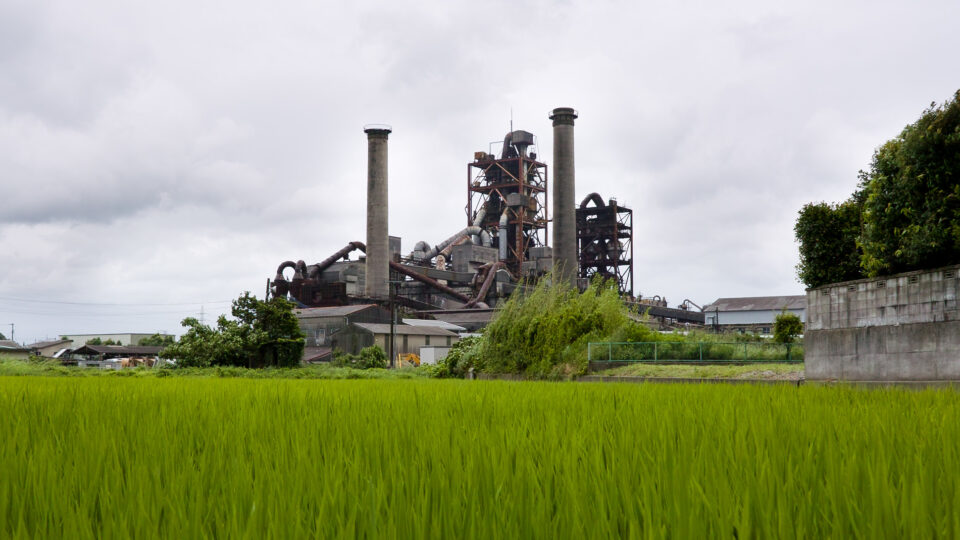
Concrete is made from sand, gravel, water, and cement.  Cement is made by a process called clinkering, in which limestone and other materials are heated to 2,600 degrees Fahrenheit.  The process converts the materials into cement but releases large amounts of CO2 as limestone decarbonates into lime. 

Cambridge researchers found that using cement clinker and iron oxide instead of lime works well in steel recycling.  Crushing old concrete and taking out the sand and stone results in a cement that is reactivated by the recycling furnace to produce a material with excellent properties. 

Recent tests by the Materials Processing Institute showed that recycled cement can be produced at scale in an electric arc furnace.  Ultimately, this method could produce zero emission cement if the electricity for the furnace comes from renewable sources.

**********

Web Links

Cement recycling method could help solve one of the world’s biggest climate challenges

Photo, posted July 18, 2011, courtesy of Kenta Mabuchi via Flickr.

Earth Wise is a production of WAMC Northeast Public Radio

Lithium in Arkansas

April 11, 2024 By EarthWise Leave a Comment

New method being explored to tap lithium deposits in Arkansas

There are more and more electric cars on the road and utilities are installing record amounts of battery storage to back up solar and wind power generation.  Both of these things currently use lithium-ion batteries so the need for them keeps growing.

There is actually plenty of lithium in the world.  Sources of more than 100 million tons have been identified, which is enough to meet the projected needs for decades.  But lithium is not easy, cheap, or environmentally friendly to extract.  It is either blasted out of rocks that are then roasted at 2000-degree temperatures, or it is extracted from brine in places like the high Andes where it leaves behind toxic residues.  Ramping up lithium production could greatly diminish the environmental benefits derived from green technologies.

A technique called direct lithium extraction, or DLE, may be a possible solution.  The lithium is pulled out of brine while leaving other dissolved compounds behind.  It is being tested in many places around the world and appears to offer the lowest negative impacts of available extraction technologies.

The Salton Sea area in California has rich deposits of lithium and is a good candidate for DLE.  But conditions may be even better in Arkansas whose Smackover Formation is a brine-rich expanse of limestone. 

The area was a productive oil field a hundred years ago and then undertook brine-processing in the 1950s to extract bromine.  So, the area already has industrial infrastructure and no new land would need to be cleared.

The former oil fields of Arkansas may become an important domestic source of lithium.

**********

Web Links

In Rush for Lithium, Miners Turn to the Oil Fields of Arkansas

Photo, posted February 26, 2021, courtesy of Ivan Radic via Flickr.

Earth Wise is a production of WAMC Northeast Public Radio
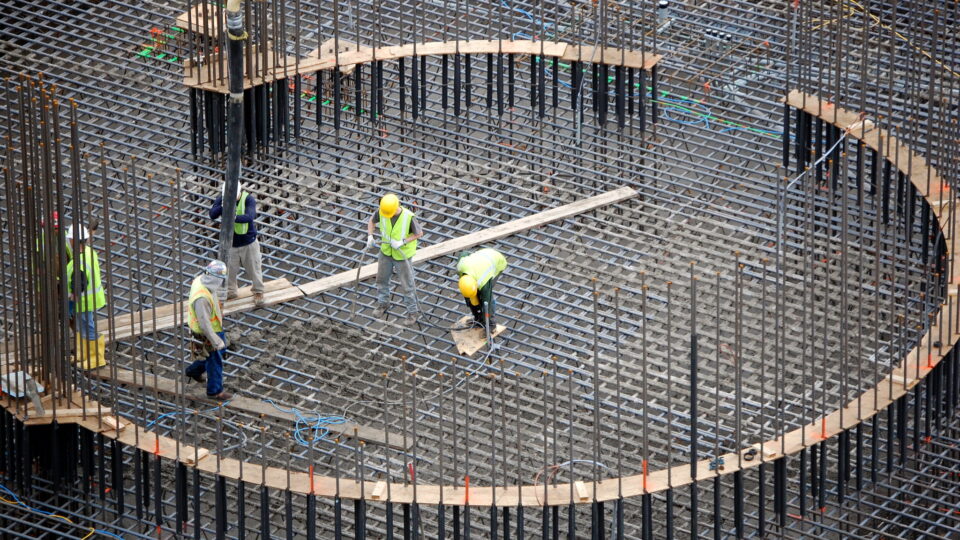
Concrete And Carbon | Earth Wise

May 8, 2023 By EarthWise Leave a Comment

How to reduce the carbon emissions associated with concrete

After water, concrete is the world’s second most consumed material.  It is the cornerstone of modern infrastructure.  Its production accounts for 8% of global carbon dioxide emissions.  The carbon dioxide is a result of chemical reactions in its manufacture and from the energy required to fuel the reactions.

About half of the emissions associated with concrete come from burning fossil fuels to heat up the mixture of limestone and clay that ultimately becomes ordinary Portland cement.  These emissions could eventually be eliminated by using renewable-generated electricity to provide the necessary heat.  However, the other half of the emissions is inherent in the chemical process.

When the minerals are heated to temperatures above 2500 degrees Fahrenheit, a chemical reaction occurs producing a substance called clinker (which is mostly calcium silicates) and carbon dioxide.  The carbon dioxide escapes into the air.

Portland cement is then mixed with water, sand, and gravel to produce concrete.  The concrete is somewhat alkaline and naturally absorbs carbon dioxide albeit slowly.  Over time, these reactions weaken the concrete and corrode reinforcing rebar.

Researchers at MIT have discovered that the simple addition of sodium bicarbonate (aka baking soda) to the concrete mixture accelerates the early-stage mineralization of carbon dioxide, enough to make a real dent in concrete’s carbon footprint.  In addition, the resulting concrete sets much more quickly.  It forms a new composite phase that doubles the mechanical performance of early-stage concrete.

The goal is to provide much greener, and possibly even carbon-negative construction materials, turning concrete from being a problem to part of a solution.

**********

Web Links

New additives could turn concrete into an effective carbon sink

Photo, posted April 4, 2009, courtesy of PSNH via Flickr.

Earth Wise is a production of WAMC Northeast Public Radio
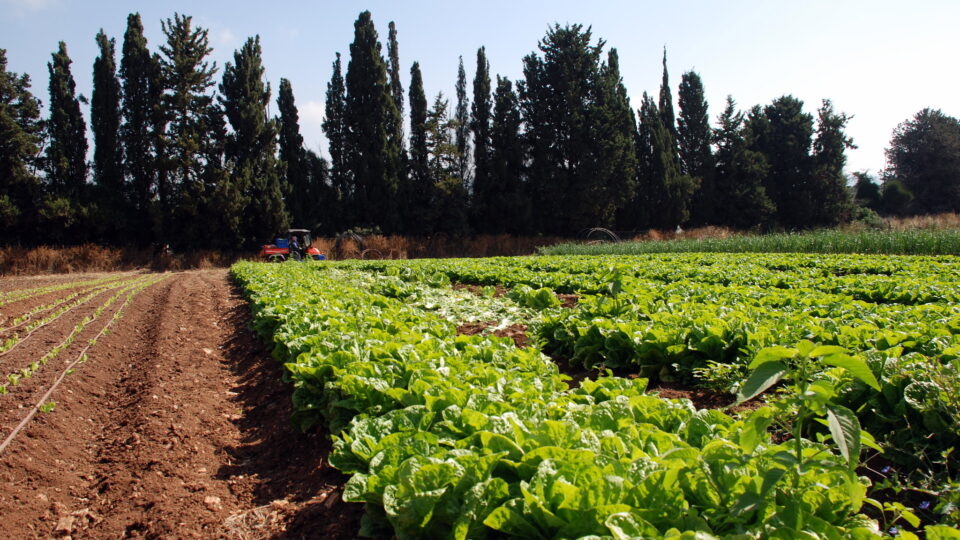
Rock Dust And Carbon | Earth Wise

May 25, 2022 By EarthWise Leave a Comment

Adding basalt rock dust to crop fields helps fight climate change

According to a new study by Cardiff University in the UK, Britain could achieve nearly half of the carbon removal needed to meet its climate goals by adding basalt rock dust to crop fields.  The process is known as enhanced weathering and has been the subject of ongoing research in the U.S. at Cornell University and the University of California, as well as in the UK, Canada, and Australia.

Adding rock dust to agricultural lands speeds up the chemical reactions that lock up carbon in soil.  Basalt contains magnesium, calcium, and silica, among other components.  When basalt is pulverized and applied to soils, magnesium and calcium are released and dissolve in water as it moves through the soil.  The minerals in the soil react with the water, and the carbon that would otherwise end up in the atmosphere instead forms bicarbonates, which can hang around in water for thousands of years.  It can also eventually make its way to the oceans where it precipitates out as limestone and can stay on the seafloor for millions of years.

Basalt is a waste stream byproduct of mining and manufacturing and is found all over the world.  Mining waste is the largest waste stream in the world, so there is no shortage.

According to the U.N. Intergovernmental Panel on Climate Change, applying rock dust to agricultural lands on a global basis could theoretically remove 2 to 4 billion tons of carbon dioxide from the air each year, which is between 34-68% of the global greenhouse gas emissions produced by agriculture annually.

The added rock dust would in fact be good for the soil and for crops.  Whether the economics of producing and transporting it make sense remains to be determined.

**********

Web Links

Adding Rock Dust to Farmland Could Get UK Almost Halfway to Its Carbon Removal Goal

Photo, posted April 24, 2011, courtesy of the State of Israel via Flickr.

Earth Wise is a production of WAMC Northeast Public Radio.

Reducing Emissions From Cement Manufacturing | Earth Wise

December 7, 2021 By EarthWise Leave a Comment

How to reduce the emissions from manufacturing cement

Cement is the basic ingredient of concrete, which is the most widely used construction material in the world.  About 8% of global carbon dioxide emissions are associated with cement production.

More than half of these emissions come from making clinker, which is a major component of cement produced by heating ground limestone and clay to a temperature of over 2500 degrees Fahrenheit.  Some of the emissions come from burning fossil fuels to heat the materials, but much of them come from the chemical reaction that creates the clinker.

The Portland Cement Association, which represents 92% of US cement manufacturing capacity, has recently released its “Roadmap to Carbon Neutrality”, which lays out a plan to reach carbon net zero across the cement and concrete value chain by 2050.

The plan includes the greater use of alternative fuels to reduce emissions from energy use.  It also involves the adoption of newer versions of cement such as Portland limestone cement, which reduces CO2 levels.  The industry has already reduced emissions by some shifting to Portland limestone cement, but it still only represents a small fraction of cement production.

The most significant strategy would be the adoption of carbon capture, utilization, and storage (or CCUS) technologies.  The idea is to capture the CO2 generated in the production of clinker and inject it into the fresh concrete.  It would actually be permanently sequestered in the concrete and would not be released even if a structure is demolished in the future.

It will take a combination of technologies and initiatives for the cement industry to reduce its emissions.  Fortunately, the industry appears to be committed to that goal.

**********

Web Links

US cement manufacturers release their road map to carbon neutrality by 2050

Photo, posted March 26, 2014, courtesy of Michael Coghlan via Flickr.

Earth Wise is a production of WAMC Northeast Public Radio.

Emissions-Free Cement

October 29, 2019 By EarthWise Leave a Comment

The production of cement – which is the world’s leading construction material – is a major source of greenhouse gas emissions, accounting for about 8% of global man-made emissions. 

Cement production produces carbon dioxide in two ways:  from a key chemical process and from burning fuel to produce the cement.  The process of making “clinker” – the key constituent of cement – emits the largest amount of CO2.  Raw materials, mainly limestone and clay – are fed into huge kilns and heated to over 2,500 degrees Fahrenheit, requiring lots of fossil fuel.  This calcination process splits the material into calcium oxide and CO2.  The so-called clinker is then mixed with gypsum and limestone to produce cement.

A team of researchers at MIT has come up with a new way of manufacturing cement that greatly reduces the carbon emissions.  The new process makes use of an electrolyzer, where a battery is hooked up to two electrodes in water producing oxygen at one electrode and hydrogen at the other.  The oxygen-evolving electrode produces acid and the hydrogen-evolving electrode produces a base.  In the new process, pulverized limestone is dissolved in the acid at one electrode and calcium hydroxide precipitates out as a solid at the other.

High-purity carbon dioxide is released at the acid electrode, but it can be easily captured for further use such as the production of liquid fuels or even in carbonated beverages and dry ice.  The new approach could eliminate the use of fossil fuels in the heating process, substituting electricity generated from renewable sources. 

The process looks to be scalable and represents a possible approach to greatly reducing one of the perhaps lesser known but nevertheless very significant sources of greenhouse gas emissions.

**********

Web Links

New approach suggests path to emissions-free cement

Photo, posted March 26, 2014, courtesy of Michael Coghlan via Flickr.

Earth Wise is a production of WAMC Northeast Public Radio.

Greener Concrete

August 23, 2018 By EarthWise 1 Comment

https://earthwiseradio.org/wp-content/uploads/2018/07/EW-08-23-18-Greener-Concrete.mp3

The battle to reduce carbon emissions is heavily focused on electricity generation, transportation, buildings, and agriculture, which collectively account for more than 75% of the total.  However, there are other sources of carbon emissions that cannot be ignored.  Among industrial activities, the production of cement is responsible for 7% of industrial energy use and is the second largest industrial emitter of carbon dioxide.  Making cement accounts for about 7% of global emissions.

[Read more…] about Greener Concrete

Bermuda Roofs

September 22, 2017 By EarthWise Leave a Comment

https://earthwiseradio.org/wp-content/uploads/2017/09/EW-09-22-17-Bermuda-Roofs.mp3

The North Atlantic island of Bermuda is a popular tourist attraction with its pink sand beaches, turquoise water, and pastel-colored cottages with white limestone roofs.   The stepped white roofs are not just picturesque, they are highly functional.

[Read more…] about Bermuda Roofs

Primary Sidebar

Recent Episodes

  • An uninsurable future
  • Clean energy and jobs
  • Insect declines in remote regions
  • Fossil fuel producing nations ignoring climate goals
  • Trouble for clownfishes

WAMC Northeast Public Radio

WAMC/Northeast Public Radio is a regional public radio network serving parts of seven northeastern states (more...)

Copyright © 2025 ·