• Skip to primary navigation
  • Skip to main content
  • Skip to primary sidebar

Earth Wise

A look at our changing environment.

  • Home
  • About Earth Wise
  • Where to Listen
  • All Articles
  • Show Search
Hide Search
You are here: Home / Archives for landowners

landowners

Transmission Lines And Wildlife Habitat Connectivity | Earth Wise

April 14, 2021 By EarthWise Leave a Comment

Using transmission lines to build wildlife habitat connectivity

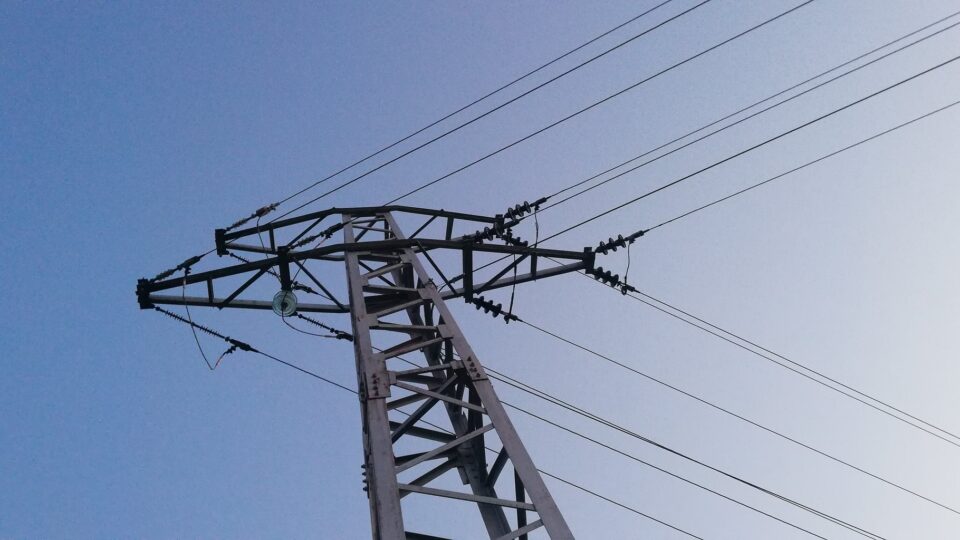
Electrical transmission lines and their support towers tend to be a blight on the landscape but are something modern society cannot avoid.  Power transmission networks – with towers every 200 meters or so of line – are in place throughout the world’s developed nations.  Another common feature of developed nations is the fragmentation of animal species caused by human activity breaking up their natural habitats.

It is important for biodiversity conservation for animals to get their environments connected.   It turns out that transmission line infrastructure can provide an important tool for reconnecting wildlife habitats.

In a study conducted in Spain’s Andalusia region, scientists planted native shrubs and seedlings under six towers along power lines running through cereal cropland.  The area of each tower base was 100 square meters.

Compared to four control sites, the researchers measured increased population density and diversity among arthropods and small mammals observed in the four-year study. 

Enhancing connectivity through networks of habitat corridors or stepping-stone patches has become a key concept in conservation biology and landscape ecology.  Renting or buying large parcels of land to connect protected natural areas to one another would be cost prohibitive but planting suitable native shrubs and other flora under existing transmission line networks can provide many of the same benefits.

In general, power companies pay rent to landowners – often farmers or agribusinesses – for the rights to place towers on their land.  Because it is difficult to work the areas under towers with farm equipment, that space is typically unused, which opens the door to low-cost efforts by environmentalists.

**********

Web Links

Electrical transmission lines have power to enhance habitat connectivity for wildlife

Photo, posted April 29, 2018, courtesy of Georgi Todorov/digitalnovas.com via Flickr.

Earth Wise is a production of WAMC Northeast Public Radio.
Cities And Monarch Butterflies

August 13, 2019 By EarthWise Leave a Comment

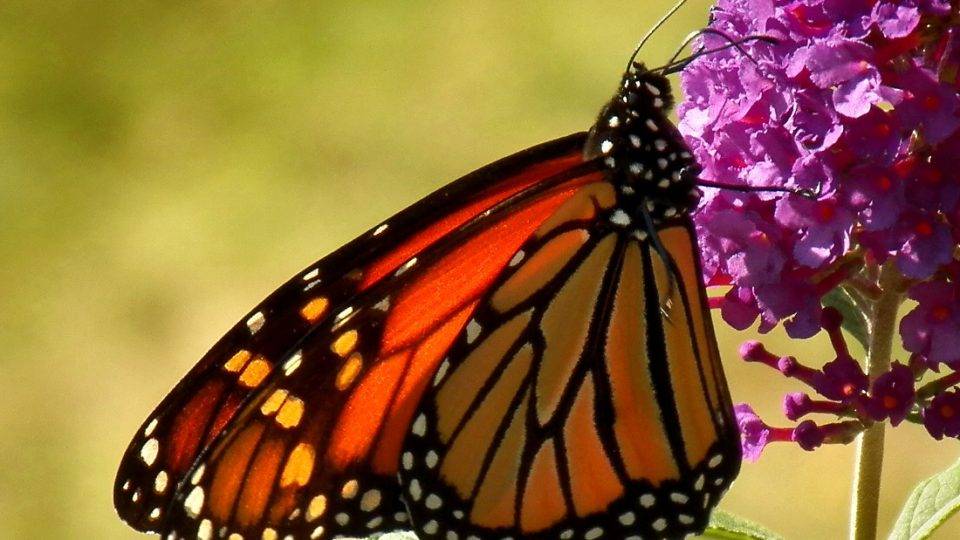
Monarchs are some of the most well-known butterflies in the U.S.   It is well-known that populations of the iconic orange-and-black butterflies have been in a steep decline for the last 20 years.  In fact, the Monarch population has declined by 80% over that period.

Milkweed, the only plant that Monarchs can lay their eggs on, continues to disappear across the United States and with it, the butterflies can disappear too.

Two new studies published in the journal Frontiers of Ecology and Evolution show that one of the most important things that can be done to save the Monarchs is to plant milkweed in cities.

We tend to think of cities as being the enemy of nature.  But metropolitan areas actually matter for wildlife conservation and that is especially true for pollinators like butterflies that can actually survive with very small patches of habitat.

The new study estimates the amount of habitat in cities that is available to Monarchs and other pollinators and how much more can potentially be added.  It looked at cities from the Monarch’s point of view by identifying the best places and most effective ways to engage land owners to transform low-quality green space – such as lawns – into high-quality homes for butterflies and other wildlife.

Just because urban dwellers can plant milkweed doesn’t always mean that they will.  There has to be a public perception that milkweed and other native flowers are acceptable and beautiful elements in home landscaping.  It will require some shifting of societal norms of what is desirable in neighborhood gardens in order for cities to be able to do their part in protecting butterflies and other species struggling in the modern world.

**********

Web Links

Cities are Key to Saving Monarch Butterflies

Photo, posted August 31, 2012, courtesy of Chris via Flickr.

Earth Wise is a production of WAMC Northeast Public Radio.
Wildlife Corridors

December 28, 2016 By EarthWise

https://earthwiseradio.org/wp-content/uploads/2016/12/EW-12-28-16-Wildlife-Corridors.mp3

It is widely thought that we are in the midst of the 6th great mass extinction of species on Earth and, unlike the previous ones that were caused by things like asteroid impacts or ice ages, this one is caused by us.  Our impact on the climate, on natural resources, on landscapes and habitats, and more, has wreaked havoc on ecosystems across the globe.

[Read more…] about Wildlife Corridors

Primary Sidebar

Recent Episodes

  • An uninsurable future
  • Clean energy and jobs
  • Insect declines in remote regions
  • Fossil fuel producing nations ignoring climate goals
  • Trouble for clownfishes

WAMC Northeast Public Radio

WAMC/Northeast Public Radio is a regional public radio network serving parts of seven northeastern states (more...)

Copyright © 2026 ·