• Skip to primary navigation
  • Skip to main content
  • Skip to primary sidebar

Earth Wise

A look at our changing environment.

  • Home
  • About Earth Wise
  • Where to Listen
  • All Articles
  • Show Search
Hide Search
You are here: Home / Archives for lake erie

lake erie

Harmful algal blooms and climate change

September 5, 2025 By EarthWise Leave a Comment

Harmful algal blooms are occurring more frequently as the climate warms

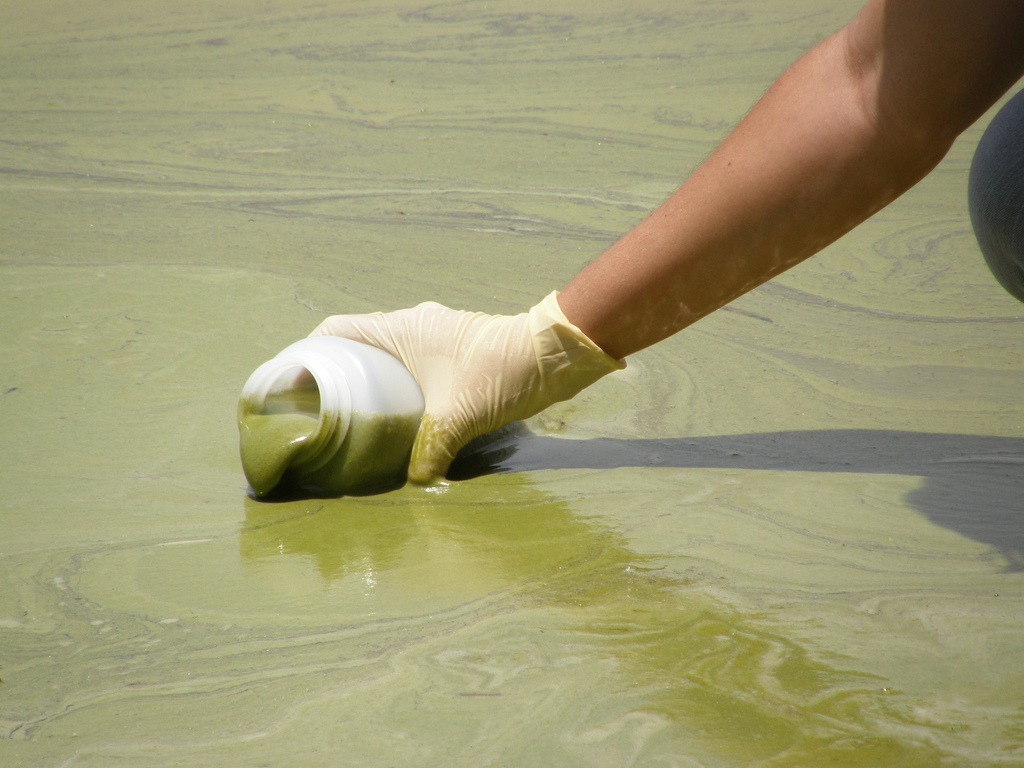
An algal bloom is a rapid increase in the density of algae in an aquatic system.  Harmful algal blooms occur when bodies of water get overloaded with nitrogen and phosphorus runoff from agriculture and other human activities. These excess nutrients can facilitate the out-of-control growth of cyanobacteria, also known as blue-green algae. 

Some species of blue-green algae produce a toxin called microcystin.  These toxins pose a serious health hazard to people, animals, and the environment.  Microcystin affects liver function and can cause death in animals, as well as humans in rare instances.  A notable incident occurred in the summer of 2014, when cyanobacteria contamination in Lake Erie left 500,000 residents in Ohio and Michigan without water for 72 hours and sickened more than 100 people. 

According to a study led by researchers from Carnegie Science, as climate change warms the earth, higher-latitude regions will be at a greater risk for microcystin produced by algal blooms.  The study found water temperatures of 68 to 77 degrees Fahrenheit as being at the greatest risk for developing dangerous levels of microcystin. 

In the study, which was published in the journal Nature Water, the research team also demonstrated that the areas most susceptible to high toxin concentrations will continue to move northward. And in some areas, researchers say the relative risk of exceeding water quality guidelines will increase by up to 50% in the coming decades.

The research team hopes its findings raise more awareness about water sustainability, and the need to focus on the quality of the water as much as the quantity of water. 

**********

Web Links

Geographic redistribution of microcystin hotspots in response to climate warming

Photo, posted October 27, 2010, courtesy of Nara Souza / Florida Fish and Wildlife Commission via Flickr.

Earth Wise is a production of WAMC Northeast Public Radio
Protection From Toxic Algae

March 28, 2019 By EarthWise Leave a Comment

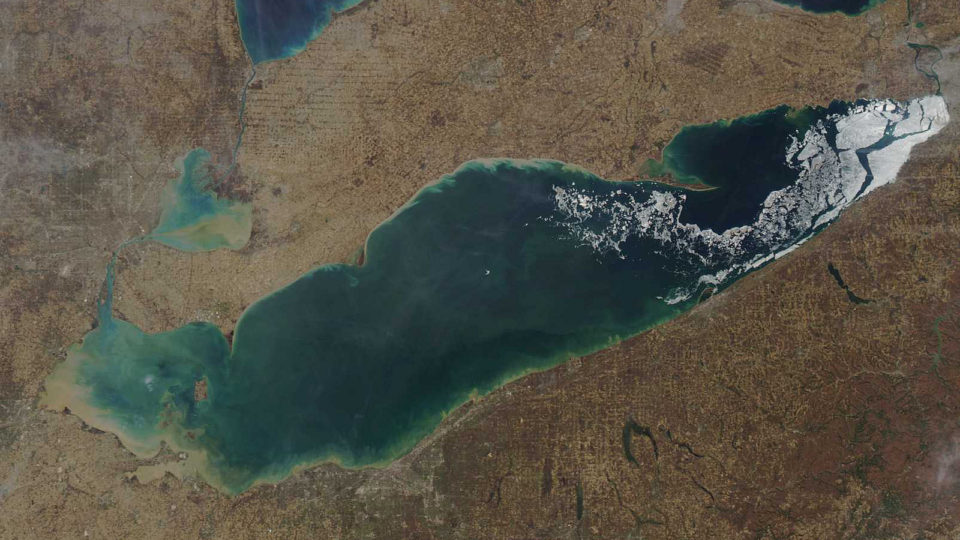
Toxic algal blooms have been a growing problem in recent years associated with warming waters and nutrient-rich agricultural runoff in lakes, rivers, and oceans.  In 2014, an algal bloom in Lake Erie left half a million residents of Toledo, Ohio without safe drinking water for three days.

The most common toxic substance released by algal blooms in the lake is called microcystin, which is closely linked to liver cancer and other diseases.  Toxicologists measure microcystin and other contaminants using the metric of parts per billion.  The EPA recommends that young children not drink water containing more than 0.3 parts per billion and adults no more than 1.6 parts per billion of microcystin.

Scientists at the University of Toledo have been working on developing a biofilter that uses naturally occurring Lake Erie bacteria to remove microcystin released by algal blooms and thereby reduce or eliminate the use of chlorine and other chemicals.

They have successfully isolated a number of types of bacteria that degrade microcystin toxin at a daily rate of up to 19 parts per billion.  To their knowledge, such bacteria have not been previously used to fight algal blooms in other parts of the world.  Based on the recorded toxin levels in Lake Erie in recent years, the bacteria would be able to effectively remove microcystin from water supplies.  None of the 13 bacterial isolates they found have any association with human disease so their use in future water-purifying biofilters should not pose a public health concern.

The researchers are now developing and testing biofilters, which are water filters containing the specialized bacteria that will degrade the toxins from lake water as it flows through the filter.

**********

Web Links

Scientists advance new technology to protect drinking water from Lake Erie algal toxins

Photo, posted April 30, 2014, courtesy of NOAA via Flickr.

Earth Wise is a production of WAMC Northeast Public Radio.

A Trillion Ton Iceberg

July 24, 2017 By EarthWise

https://earthwiseradio.org/wp-content/uploads/2017/07/EW-07-24-17-A-Trillion-Ton-Iceberg.mp3

Back in February, we did a story about a rapidly-growing crack in the fourth-largest ice shelf in Antarctica.  At that time, the crack in the Larsen C ice shelf was more than 100 miles long and was growing at a pace of about 5 football fields a day.

[Read more…] about A Trillion Ton Iceberg

Preventing Toxic Algal Blooms

May 12, 2016 By WAMC WEB

https://earthwiseradio.org/wp-content/uploads/2016/05/EW-05-12-16-Preventing-Toxic-Algal-Blooms.mp3

We have talked about the growing problem of toxic algal blooms on a number of occasions.  The increasing occurrence of these blooms has been associated with rising temperatures and carbon dioxide levels as well as the presence of wastewater nutrients and agricultural fertilizers in rivers, lakes and reservoirs.  The most notable incident occurred in the summer of 2014, when algae contamination in Lake Erie left 400,000 residents in Ohio and Michigan without water for 72 hours.

[Read more…] about Preventing Toxic Algal Blooms

Primary Sidebar

Recent Episodes

  • An uninsurable future
  • Clean energy and jobs
  • Insect declines in remote regions
  • Fossil fuel producing nations ignoring climate goals
  • Trouble for clownfishes

WAMC Northeast Public Radio

WAMC/Northeast Public Radio is a regional public radio network serving parts of seven northeastern states (more...)

Copyright © 2026 ·