• Skip to primary navigation
  • Skip to main content
  • Skip to primary sidebar

Earth Wise

A look at our changing environment.

  • Home
  • About Earth Wise
  • Where to Listen
  • All Articles
  • Show Search
Hide Search
You are here: Home / Archives for hungry

hungry

Food Waste And The Environment | Earth Wise

November 25, 2022 By EarthWise Leave a Comment

It is tragic that 31% of the world’s food production goes uneaten.  About 14% isn’t distributed after it is harvested.  Another 17% ends up wasted in retail or by consumers.  Worldwide, the amount of food that is wasted is enough to feed more than a billion people while at least 828 million people continue to be affected by hunger.  To make matters worse, food waste accounts for 8 to 10% of global greenhouse gas emissions, which is at least double that of aviation.  Food waste, rotting away in landfills, produces methane gas, a major source of global warming.

Around the world, there are efforts being launched to try to improve the situation.  California now has a law that requires grocery stores to donate edible food that would otherwise be disposed of or they face fines.  The state’s cities and counties are required to reduce the amount of organic waste going into landfills by 75% by 2025 and compost it instead.

In London, grocers no longer put date labels on fruits and vegetables because the labels were leading people to trash perfectly good food.  France now requires supermarkets and large caterers to donate food that is still safe to eat.

South Korea has little space for landfills.  So, the country has been campaigning against throwing away food for 20 years.  Nearly all organic waste in the country is turned into animal feed, compost, or biogas.  Koreans even have to pay for throwing out food waste.  There are now trash bins equipped with electronic sensors that weigh food waste.

All of these things can help.  There is no single magic bullet for reducing food waste, but it is essential to do for so many reasons.

**********

Web Links

Inside the Global Effort to Keep Perfectly Good Food Out of the Dump

Photo, posted November 30, 2020, courtesy of Marco Verch via Flickr.

Earth Wise is a production of WAMC Northeast Public Radio

A Miracle Tree | Earth Wise

September 27, 2022 By EarthWise Leave a Comment

Pongamia could be a miracle tree

The world needs to be fed without destroying the environment.   We need to grow more trees to store more carbon on earth and reduce the amount in the atmosphere.  But meanwhile, we decimate rainforests to produce palm oil and grow soybeans.

A startup company in California called Terviva thinks they have a solution.  It’s called pongamia, which is an ordinary looking tropical tree.  It produces beans packed with protein and oil, much like soybeans.  However, it has the potential to produce much more nutrition per acre than soybeans and it is hardy enough to grow on pretty much any kind of land without the use of pesticides, fertilizers, or irrigation.  In short, it is a miracle crop for a hot and hungry planet that is running out of fertile farmland and fresh water.

Pongamia is not a new or rare tree.  It is common in India but grows all over the world.  It is often planted as an ornamental here in the U.S.

The initial idea for making use of the hardy tree was to use its oil as a biofuel.  The seeds of pongamia are known to have a bitter taste and disagreeable odor, which is why the seeds or oil were never used for human or animal feed.  However, Terviva has developed a way to de-bitter pongamia oil.  Once this is done, it becomes a golden-colored substitute for olive oil. It also has enormous potential as a protein for plant-based milks and meats, since it contains all nine essential amino acids.

Terviva has raised more than $100 million to further develop pongamia and is now partnering with Danone, a $25 billion multinational food company, to develop pongamia as a climate-friendly, climate-resilient, non-GMO alternative to soy and palm oil.

***********

Web Links

This super-tree could help feed the world and fight climate change

Photo, posted December 15, 2015, courtesy of Lauren Gutierrez via Flickr.

Earth Wise is a production of WAMC Northeast Public Radio

Marine Predation And Climate Change | Earth Wise

July 11, 2022 By EarthWise Leave a Comment

Climate change is taking a toll on forests, farms, freshwater resources, and economies all around the world.  But ocean ecosystems remain the center of global warming.

Despite their vast ability to absorb heat and carbon dioxide, oceans are warming.  In fact, according to scientists, the oceans have absorbed 90% of all the warming that has occurred during the past 50 years. 

The ocean’s surface layer, which is home to most marine life, takes most of this heat.  As a result, the top 2,300 feet of global ocean water has warmed approximately 1.5°F since 1901.

Well it turns out that a hotter ocean is also a hungrier ocean.  According to a new study recently published in the journal Science, researchers discovered that predator impacts in the Atlantic and Pacific oceans peak at higher temperatures.  The effects of more intense marine predation could disrupt ecosystem balances that have existed for millennia. 

An international research team led by the Smithsonian Institution and Temple University analyzed predator and prey data collected from 36 sites, running along the Atlantic and Pacific coasts from Alaska in the north to Tierra de Fuego at the tip of South America.  The research team found that, in warmer waters, predators’ more voracious appetites left outsized marks on the prey community.  Total prey biomass plunged in warmer waters when prey were left unprotected.  However, in the coldest zones, leaving prey exposed or protected made nearly no difference at all.  

As the oceans continue to warm, more intense predation will create winners and losers and could jeopardize the overall health of marine ecosystems.  

***********

Web Links

As the ocean heats up hungrier predators take control

Photo, posted July 14, 2017, courtesy of Jonathan Chen via Flickr.

Earth Wise is a production of WAMC Northeast Public Radio.

Foods of the Future? | Earth Wise

March 27, 2020 By EarthWise Leave a Comment

foods of the future

In a world where many go hungry in the context of rapidly changing environments, many experts contend that alternative food sources will be necessary to solve global food security problems.  So-called novel food sources are central to this conversation, defined as foods with no history of consumption in a region – or perhaps anywhere.

Three popular examples are lab-grown meat, insect farming, and seaweed aquaculture.  Each of these offer opportunities as well as challenges.

Lab-grown meat can refer to actual animal tissues raised in vats as well as the increasingly common cultured plant products made to resemble meat.  Lab-grown meat faces push back from the livestock industry that contends it should not be labeled as any kind of meat. While results to date are positive, barriers still remain including concerns over product taste, healthiness, and cost.  And while less land- and water-intensive than conventional livestock, cultured meat production is still energy intensive.

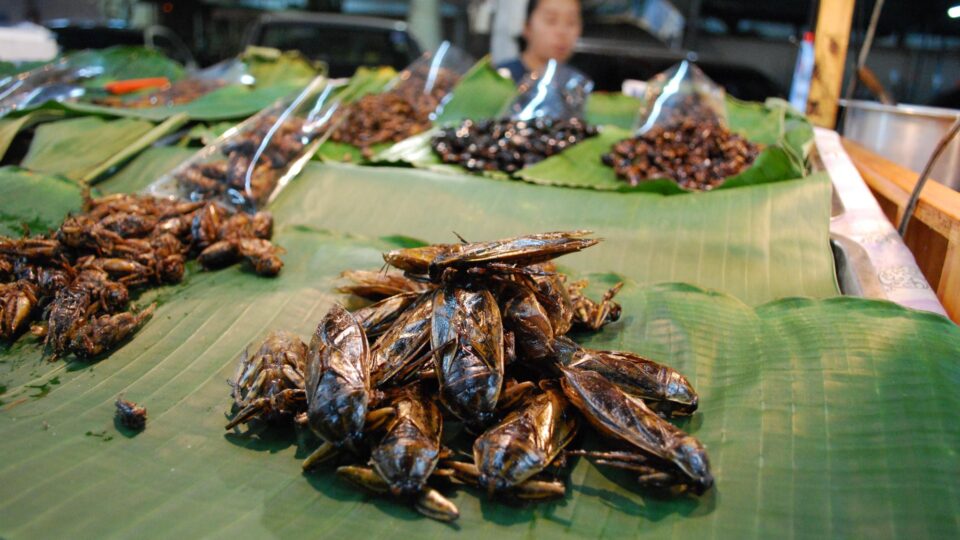
Insects do form a significant part of diets across the globe but have yet to be embraced in any substantial way in western cultures.  Nutritionally, numerous species of insects are rich in key proteins, micronutrients, and minerals.  But the “yuck factor” is a big barrier to cross.

Seaweed is a long-established part of many East Asian diets and has many potential dietary uses.  Several selectively bred varieties of seaweed supply a range of valuable nutrients.  Growing seaweed does not tax freshwater and terrestrial resources.  But intensively cultivated seaweeds would have potential negative effects on local marine ecosystems.

There is no single solution to complex issues like food security.  Novel foods may very well form part of the solution to a growing food crisis.

**********

Web Links

Insects, seaweed and lab-grown meat could be the foods of the future

Photo, posted March 12, 2009, courtesy of Flickr.

Earth Wise is a production of WAMC Northeast Public Radio.

Climate Change And Nutrients

August 15, 2019 By EarthWise Leave a Comment

Ending hunger isn’t a question of producing enough food.  Globally, enough food is produced to feed all 7.7 billion people on the planet.  But despite this, approximately 1 in 9 people go hungry.  Conflict, natural disasters, and extreme poverty are some of the main drivers of global hunger. 

Climate change is another.  The more frequent and intense extreme weather events increase food insecurity and malnutrition by destroying land, livestock, crops, and food supplies.  Climate change makes growing crops harder every year, especially for those who lack the tools and technology to adapt. 

But the challenge of reducing hunger and malnutrition is to not only produce foods that provide enough calories, but to also produce foods that make enough necessary nutrients widely available.  According to new research, climate change is projected to significantly reduce the availability of critical nutrients such as protein, iron, and zinc over the next 30 years.  The total impact of climate change could reduce global per capita nutrient availability of protein, iron, and zinc by 19.5%, 14.4%, and 14.6%, respectively.

While higher levels of carbon dioxide can boost growth in plants, wheat, rice, corn, barley, potatoes, soybeans, and vegetables are all projected to suffer nutrient losses of about 3% on average by 2050 due to the elevated CO2 levels.

The study, which was co-authored by an international group of researchers and published in the peer-reviewed journal, Lancet Planetary Health, represents the most comprehensive synthesis of the impacts of climate change on the availability of nutrients in the global food supply to date. 

Climate change is complicating the quest to end global hunger and malnutrition. 

**********

Web Links

Rising CO2, climate change projected to reduce availability of nutrients worldwide

Photo, posted April 30, 2015, courtesy of Flickr.

Earth Wise is a production of WAMC Northeast Public Radio.

Crop Diversity

March 22, 2019 By EarthWise Leave a Comment

A study at the University of Toronto suggests that on a global scale, we are growing more of the same kinds of crops, and this diminishing diversity presents major challenges for agricultural sustainability.

In some places, for example here in North America, crop diversity has actually increased.  Back in the 1960s, North Americans grew about 80 crops.  Now there are 93.

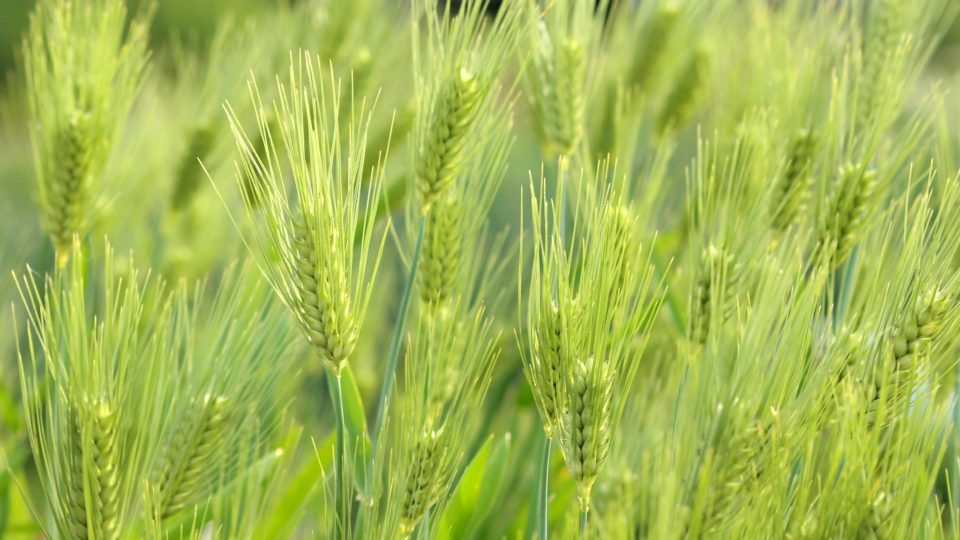
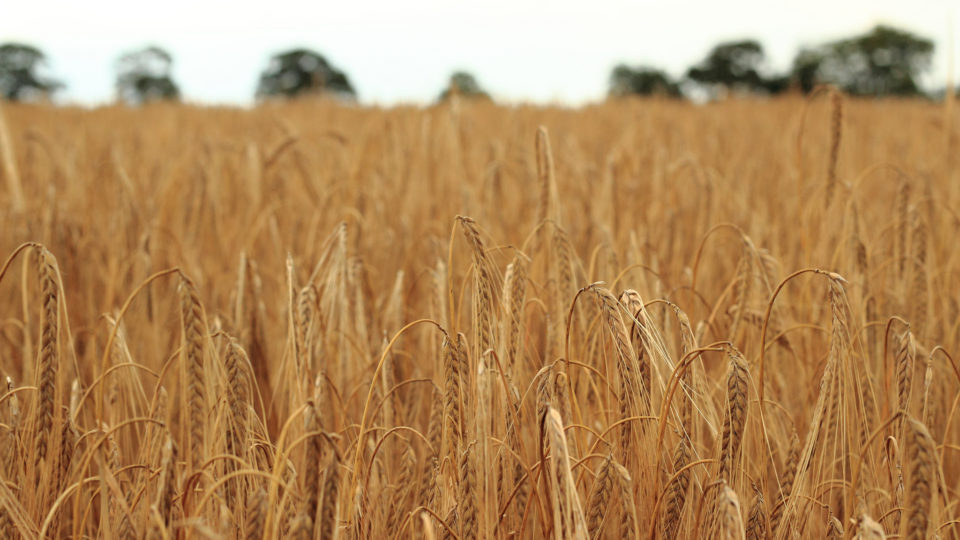
But on a global scale, more of the same kinds of crops are being grown on much larger scales.  Just four crops – soybeans, wheat, rice and corn – occupy nearly 50% of the world’s entire agricultural lands.  The remaining 152 crops cover the rest.  Large industrial farms often grow one crop species – usually just a single genotype – across thousands of acres of land.

This decline in global crop diversity is problematic in several ways.  On a cultural level, it threatens regional food sovereignty.  If regional crop diversity is threatened, it makes it more difficult for people to eat or afford foods that are culturally significant to them.

On an ecological level, the dominance by a few genetic lineages of crops makes the agricultural system increasingly susceptible to pests or diseases.  The deadly fungus that is threatening the world’s banana plantations is a prime current example.  The Irish potato famine in the 19th century is a tragic historical example.

As large industrial-sized farms in Asia, Europe and the Americas start to look more and more alike, the dangers of large monocultures of crops that are commercially valuable will only increase.  It will be important for global governments to consider the impact of policies that affect the diversity of the agricultural system and its sustainability in an increasingly hungry world.

**********

Web Links

A small number of crops are dominating globally. And that’s bad news for sustainable agriculture

Photo, posted August 13, 2012, courtesy of Alasdair McKenzie via Flickr.

Earth Wise is a production of WAMC Northeast Public Radio.

Primary Sidebar

Recent Episodes

  • An uninsurable future
  • Clean energy and jobs
  • Insect declines in remote regions
  • Fossil fuel producing nations ignoring climate goals
  • Trouble for clownfishes

WAMC Northeast Public Radio

WAMC/Northeast Public Radio is a regional public radio network serving parts of seven northeastern states (more...)

Copyright © 2025 ·