
• Skip to primary navigation
  • Skip to main content
  • Skip to primary sidebar

Earth Wise

A look at our changing environment.

  • Home
  • About Earth Wise
  • Where to Listen
  • All Articles
  • Show Search
Hide Search
You are here: Home / Archives for himalayas

himalayas

Red Pandas And Climate Change | Earth Wise

July 6, 2022 By EarthWise 2 Comments

Climate change threatening red panda populations

Red pandas are small mammals native to the mountainous forests of China, India, Nepal, Bhutan, and Myanmar.  Unlike their name suggests, they are not related to giant pandas.  In fact, red pandas are distant relatives of raccoons. Renowned for their tree-climbing abilities, red pandas live at moderately high elevations in the Himalayas where they forage widely for bamboo shoots and various fruits.

According to the International Union for the Conservation of Nature, red pandas are endangered.  Scientists estimate that there are less than 10,000 red pandas remaining in the wild today, and these numbers are continuing to fall. 

Habitat loss is the main threat to red panda’s survival.  Human expansion into the area, combined with the effects of climate change, has led to the fragmentation and loss of livable land.  Red pandas also face dangers from hunting and poaching.

According to new research recently published in the journal Landscape Ecology, human impacts are driving red pandas closer to extinction than previously thought.  Using GPS telemetry, a research team from the University of Queensland in Australia tracked red pandas in Nepal over a 12-month period.  The researchers found that human activities, such as infrastructure development, were causing red pandas to restrict their movements, which is further fragmenting their habitat and interfering with natural interactions between the animals. 

As the amount of wild forest dwindles, red pandas are being forced into situations where they must decide whether to live closer to predators or adapt to co-exist with humans.

The research team recommends minimizing human-induced disturbances in red panda habitats and to maintain habitat continuity in ecologically sensitive areas. 

**********

Web Links

Red pandas face a fractured future

IUCN: Red Panda

Photo, posted November 27, 2016, courtesy of Mathias Appel via Flickr.

Earth Wise is a production of WAMC Northeast Public Radio.
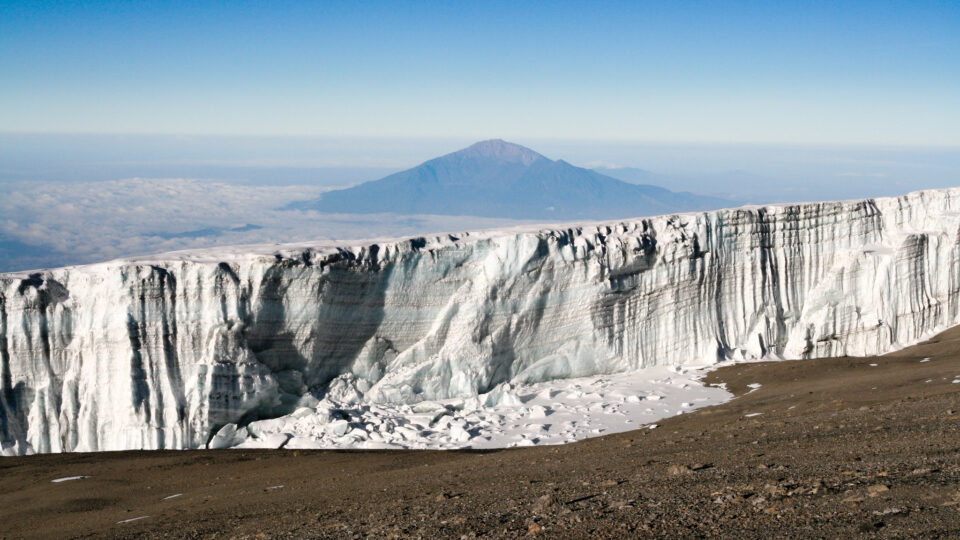
Disappearing Mountaintop Glacier Ice | Earth Wise

August 30, 2021 By EarthWise Leave a Comment

Climate changing is shrinking glaciers all around the world

A newly released study has found that mountaintop glacier ice in the tropics of all four hemispheres has diminished dramatically over the past 50 years.  Among the findings of the study, published in the journal Global and Planetary Change, are that a glacier near Puncak Jaya, in Papua New Guinea, lost about 93% of its ice between 1980 and 2018.  Between 1986 and 2019, the area covered by glaciers on top of Mt. Kilimanjaro in Africa decreased by nearly 75%.

The study combined NASA satellite imagery with data from ice cores drilled during field expeditions on tropical glaciers around the world.  The combination of measurements demonstrated that climate change is causing these glaciers to disappear and that the ice loss has accelerated in recent years.

The study looked at glacier ice in Kilimanjaro in Tanzania, the Andes in Peru and Bolivia, the Tibetan Plateau and the Himalayas, and ice fields in Papua, New Guinea.  Collecting ice cores from these places provides information on the climate in these regions over the centuries and millennia.  As snow falls on a glacier each year, it is buried and compressed to form layers that preserve the chemistry of snow, pollutants from the atmosphere, and biological material such as plants and pollen.

Glaciers in the tropics respond more quickly to climate change because they exist in the warmest areas of the world and survive only at very high altitudes. For many of these tropical glaciers, it is too late to prevent their demise.  It is not too late to attempt the slow down the buildup of greenhouse gases in the atmosphere that is causing the planet to warm, but we don’t have unlimited time to act.

**********

Web Links

Mountaintop glacier ice disappearing in tropics around the world

Photo, posted February 12, 2009, courtesy of Christoph Strassler via Flickr.

Earth Wise is a production of WAMC Northeast Public Radio.
Dust And Himalayan Glaciers | Earth Wise

December 14, 2020 By EarthWise Leave a Comment

Dust playing a major role in melting glaciers

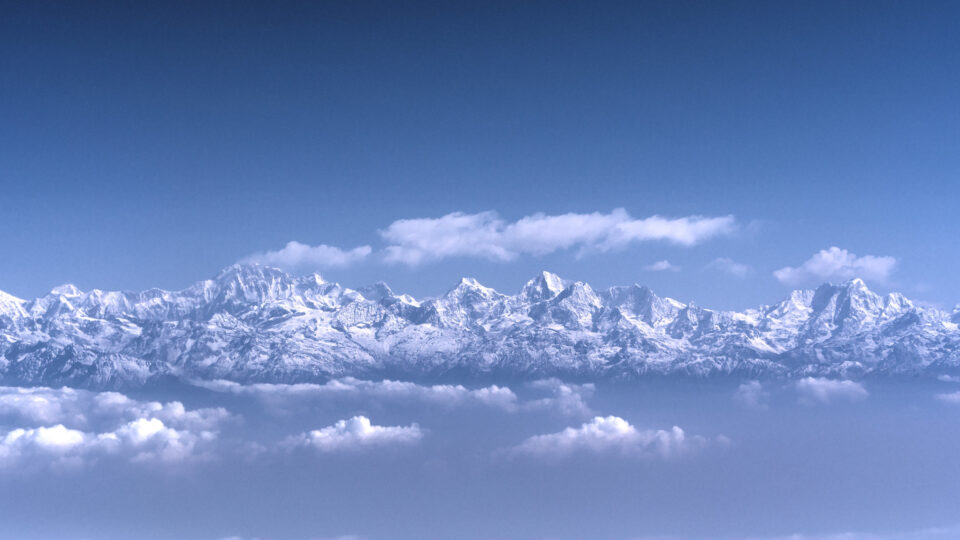
Glaciers in the Himalayas have been melting and retreating, as have glaciers around the world.  As is the case elsewhere, human-driven climate change is a major factor.  But at the lofty heights of the Himalayas, warming temperatures are not the biggest culprit.  Black carbon – released into the air by burning fossil fuels or biomass such as plants, trees, and shrubs – darkens the snow and causes it to absorb more of the sun’s heat.  A recent study by an international team of scientist has identified another important factor:  dust.

An estimated 5 billion tons of desert dust enters the Earth’s atmosphere every year.  Dust from places like Saudi Arabia gets picked up by spring winds and gets deposited on the western sides of mountains, where it can make the air 10 times more polluted than most European cities.  Dust blows across industrial and desert areas in the Indian subcontinent and the Middle East and lands in the Himalayas.  According to the new study, this dust is often the dominant cause of snow melt in those areas.

Desert dust causes snow melt in the same way that black carbon does.   Dirty snow absorbs sunlight more easily than clean snow.

Desert dust is a natural part of Earth’s systems, but the amount of it in the atmosphere has steadily increased since the Industrial Revolution, when humans greatly expanded into desert areas and broke through surface crust that held large amounts of dust in place.

There is not much we can do about desert dust, short of eliminating deserts.  But the disappearance of the Himalayan ice pack – which sustains over a billion people – can be mitigated by reducing greenhouse gas emissions to address climate change .

**********

Web Links

Himalayan glaciers melting because of high-altitude dust

Photo, posted March 13, 2018, courtesy of Sarunas Burdulis via Flickr.

Earth Wise is a production of WAMC Northeast Public Radio.

Coronavirus Shutdowns And The Environment | Earth Wise

May 11, 2020 By EarthWise Leave a Comment

coronavirus shutdown and the environment

Our stories often discuss how human activities change the natural environment.  With most of us confined to our homes, the lack of human activities is having profound effects on the environment.  We are talking about some of these this week.

The COVID-19 pandemic is a global catastrophe, but it has ironically been a boon for the environment.  By taking billions of people off the streets around the globe and slashing all forms of travel, the global environment has seen dramatic changes.

Sea turtles in many countries are prospering by not having to compete with humans for precious beach space.  Animals everywhere have more freedom to roam and are taking advantage of the opportunity. The Himalayas are visible from parts of India for the first time in decades.

Satellite imagery has shown dramatic drops in nitrogen dioxide emissions in China, where pollution from vehicles is a serious public health problem.  Similar reductions in air pollution are evident in India, Italy and even in Los Angeles.  The city that is notorious for its smog suddenly has pristine air.

In Venice, water in the canals has become clear in the absence of heavy boat traffic stirring up sediments from the bottom.  Wildlife that normally is invisible such as jellyfish are being spotted.

Not all the changes to animal behavior are desirable.  Some wildlife that have become dependent on humans as a source of food are becoming aggressive and are taking to the streets of cities to look for food.  Monkeys in Thailand are mobbing towns and brawling, hunting for things to eat.  Rats in New York City are fighting over suddenly meager food supplies.

In many ways, the natural world is reacting to much of humanity sheltering in place.

**********

Web Links

On Earth Day 2020, coronavirus shutdowns are a gift to the environment

Photo, posted April 2, 2020, courtesy of Flickr.

Earth Wise is a production of WAMC Northeast Public Radio.
Snowpack Loss

December 2, 2015 By WAMC WEB

https://earthwiseradio.org/wp-content/uploads/2015/12/EW-12-02-15-Snowpack-Loss.mp3

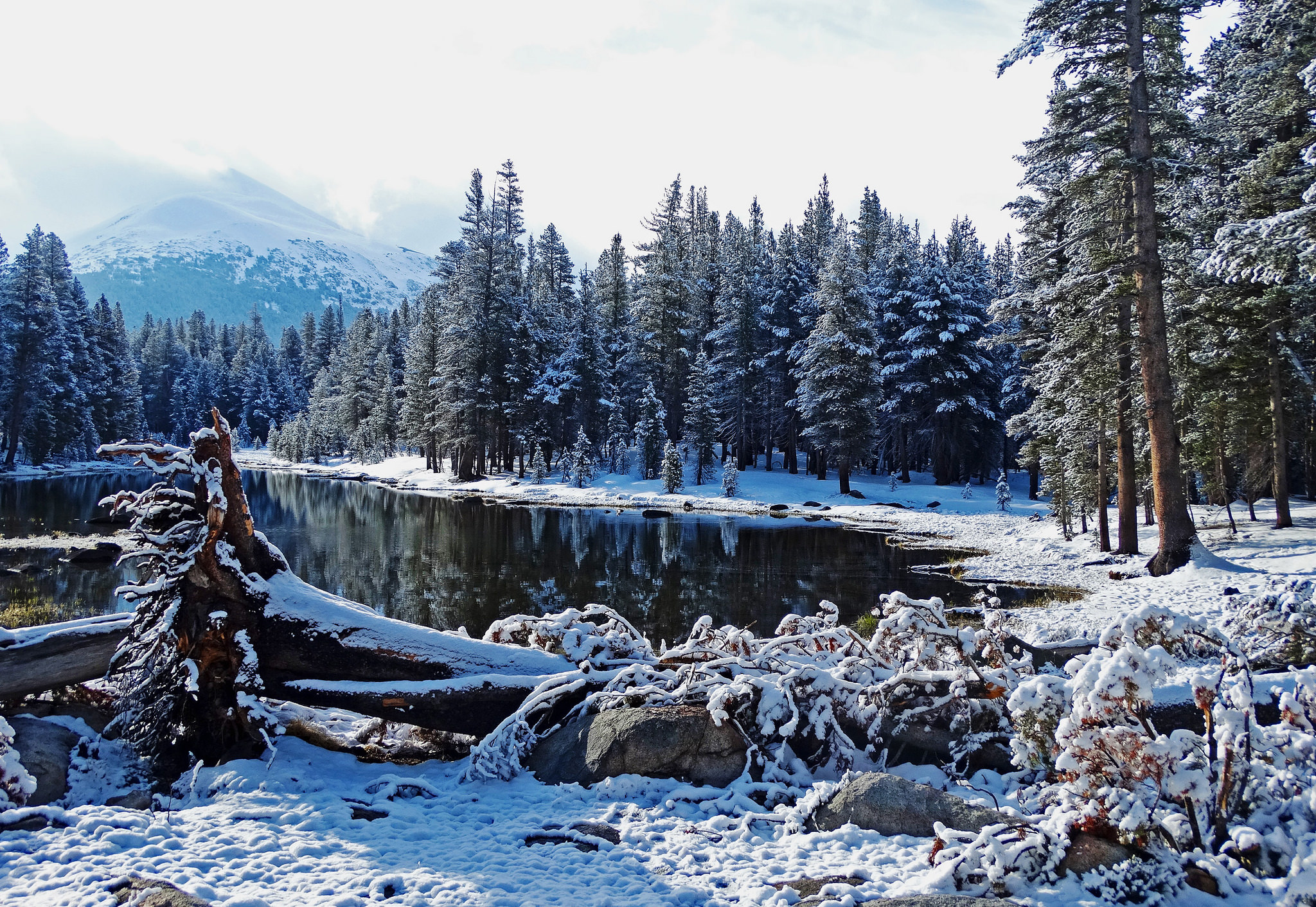
A recent study showed that this year the snowpack in California, which is suffering an ongoing drought as well as long-term warming, reached its lowest point in 500 years.   Snowmelt from the Sierra Nevada mountains fills reservoirs that provide a third of all of the drinking water for the state of California, as well as water used to fight fires and generate electricity.

[Read more…] about Snowpack Loss

Primary Sidebar

Recent Episodes

  • An uninsurable future
  • Clean energy and jobs
  • Insect declines in remote regions
  • Fossil fuel producing nations ignoring climate goals
  • Trouble for clownfishes

WAMC Northeast Public Radio

WAMC/Northeast Public Radio is a regional public radio network serving parts of seven northeastern states (more...)

Copyright © 2025 ·