• Skip to primary navigation
  • Skip to main content
  • Skip to primary sidebar

Earth Wise

A look at our changing environment.

  • Home
  • About Earth Wise
  • Where to Listen
  • All Articles
  • Show Search
Hide Search
You are here: Home / Archives for harsh conditions

harsh conditions

Antarctic greening

November 6, 2024 By EarthWise Leave a Comment

Antarctica is warming faster than the rest of the world

The Antarctic Peninsula, like other polar regions, is warming faster than the rest of the world.  Ocean heatwaves and ice loss are becoming more common and more severe.

New research by the universities of Exeter and Hertfordshire in the UK along with the British Antarctic Survey used satellite data to assess how much the Antarctic Peninsula has been greening in response to climate change.  The Antarctic Peninsula is an 800-mile extension of Antarctica toward the southern tip of South America.

The study found that the area of vegetation cover across the Peninsula increased from less than one square kilometer in 1986 to almost 12 square kilometers in 2021.  This greening trend accelerated by more than 30% in the period 2016-2021 relative to the entire 1986-2021 period.

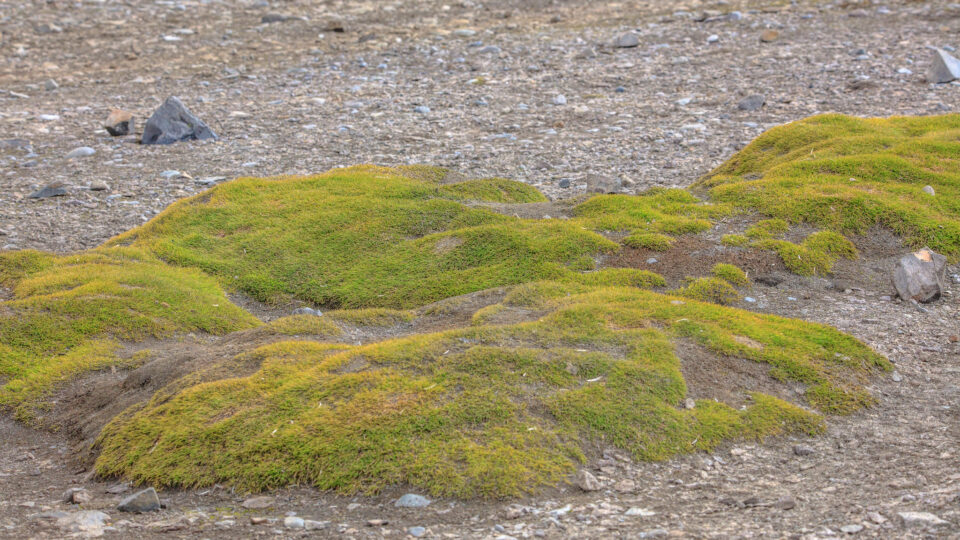
An earlier study also showed that the rates of plant growth on the Antarctic Peninsula has increased dramatically in recent decades.  The landscape is almost entirely dominated by snow, ice, and rock, with only a tiny fraction supporting plant life.  The plants found on the Peninsula – mostly mosses – grow in some of the harshest conditions on earth.  But that tiny fraction has greatly increased, showing that this isolated wilderness is being altered by climate change. 

The sensitivity of the Antarctic Peninsula’s vegetation to the changing climate is evident and as warming continues, there could be fundamental changes to the biology and landscape of this unique and vulnerable region.

**********

Web Links

Antarctic ‘greening’ at dramatic rate

Photo, posted June 2, 2018, courtesy of Murray Foubister via Flickr.

Earth Wise is a production of WAMC Northeast Public Radio
Sea Urchins And Climate Change | Earth Wise

August 1, 2022 By EarthWise Leave a Comment

Sea urchins thriving amidst a changing climate

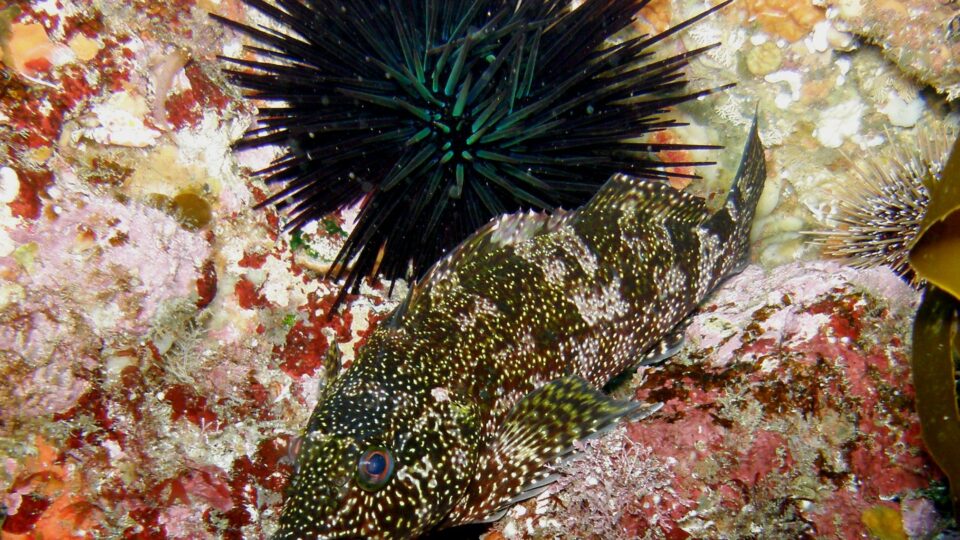
There is a thriving population of black sea urchins in bubbling volcanic vents off the coast of Ishia, a small island in the Gulf of Naples.  The oceanic environment there is very acidic, high in carbon dioxide, and very warm.   The environment represents a proxy for what is gradually happening to oceans around the world.

Researchers from the University of Sydney have determined that the ability of sea urchins to prosper in such an environment means that these animals, which are already abundant in the Mediterranean Sea are likely to spread further afield as oceans continue to warm and become more acidic.  The Mediterranean Sea is warming 20% faster than the global average.

Sea urchins are already an environmental problem in many places around the world.  When their numbers increase disproportionately, they decimate kelp forests and algae, leading to the demise of other species that depend on these things for food or shelter.  The result is something called an urchin barren, which is a rocky, sandy, urchin-filled seafloor devoid of other life.

Urchin barrens are increasingly common in many places, including the east coast of Australia and the coastline in the Americas stretching from Nova Scotia to Chile.

In Australia, for example, sea urchin populations have multiplied, and their range has expanded considerably, overgrazing kelp and damaging abalone and lobster farms.

Tests run by the Sydney researchers found that it is difficult to stress sea urchins.  They appear to tolerate conditions that other creatures simply cannot.   The only real positive is that understanding the urchins’ remarkable survival abilities might offer insights into adaptations that other animals might need in order to survive as the oceans become warmer and more acidic.

**********

Web Links

Colonising sea urchins can withstand hot, acidic seas

Photo, posted January 31, 2010, courtesy of Anna Barnett via Flickr.

Earth Wise is a production of WAMC Northeast Public Radio.

An Arctic Bus | Earth Wise

February 17, 2022 By EarthWise Leave a Comment

Developing a bus capable of navigating in the Arctic

People have built vehicles for all sorts of extreme environments.  There are deep-sea exploration vessels and there have been lunar and Mars rovers.  But one thing that hasn’t existed so far are buses to transport groups of people around in extreme conditions in the Arctic.  Engineers at two Russian Universities are developing a passenger bus for riding in the Far North.   The project is being funded by the Russian Federation Ministry of Science and Higher Education and the URAL Automobile Manufacturing Plant.

The requirements for the vehicle are daunting.  The bus must be operable at extreme temperatures – 60 below zero Fahrenheit and lower – and have no difficulties even in challenging off-road conditions.

Current Arctic crew buses are not capable of getting through snow blockages and the all-terrain tracked vehicles that can get through them do not have sufficient passenger capacity. In addition to being able to go through snowbanks, the bus should be able to float on water for an hour.

Apart from its ability to withstand harsh Arctic conditions, the bus will also have a quarters module.  This means that it will have an autonomous life-support system for passengers in case of emergency.  The quarters module will be designed to sustain up to 20 people for up to 24 hours.  The module might also be used to hold medical equipment, thereby enabling practitioners to reach remote settlements and treat patients. 

The first tests of prototypes for the bus will be conducted in the near future.  The project aims to have the new Arctic Bus design complete and ready for manufacture by the end of 2023 and it will go into production in 2024.

**********

Web Links

“Arctic Bus” Being Readied to Be Tested in the Far North

Photo, posted April 21, 2017, courtesy of Markus Trienke via Flickr.

Earth Wise is a production of WAMC Northeast Public Radio.

More Power From The Sea

November 1, 2017 By EarthWise Leave a Comment

https://earthwiseradio.org/wp-content/uploads/2017/11/EW-11-01-17-More-Power-from-the-Sea.mp3

The Okinawa Institute of Science and Technology or OIST has been working on ways to generate electricity from the ocean for five years.  Their initial project, known as “Sea Horse” uses submerged turbines anchored to the sea floor that convert the kinetic energy of sustained natural currents into useful electricity, which is then delivered by cables to the land.  The project has been successful and OIST is now planning the next phase.

[Read more…] about More Power From The Sea

Primary Sidebar

Recent Episodes

  • An uninsurable future
  • Clean energy and jobs
  • Insect declines in remote regions
  • Fossil fuel producing nations ignoring climate goals
  • Trouble for clownfishes

WAMC Northeast Public Radio

WAMC/Northeast Public Radio is a regional public radio network serving parts of seven northeastern states (more...)

Copyright © 2026 ·