• Skip to primary navigation
  • Skip to main content
  • Skip to primary sidebar

Earth Wise

A look at our changing environment.

  • Home
  • About Earth Wise
  • Where to Listen
  • All Articles
  • Show Search
Hide Search
You are here: Home / Archives for google

google

New nuclear power for New York

July 9, 2025 By EarthWise Leave a Comment

New nuclear power plant is coming in New York

Nuclear power has been around since the 1950s, but it has fallen out of favor in recent decades, in part due to a couple of traumatic disasters at nuclear power plants.  In fact, only two new nuclear power plants have been built in the US in the past 30 years, and they took a very long time and an enormous amount of money to build.

However, in recent times there has been a great deal of developmental work on nuclear power.  Such newer technologies as small modular reactors, molten salt reactors, light water reactors, and more hold promise for safer, less expensive, and higher performance nuclear power.

In late June, New York Governor Kathy Hochul announced that she has instructed the New York Power Authority to develop and construct a zero-emission advanced nuclear power plant in Upstate New York.  The plant is to produce 1 GW of power, about half of what the decommissioned Indian Point Power Plant produced when it provided significant amounts of power to New York City residents.

Renewed interest in nuclear power has emerged in part because of the soaring electricity demand from AI data centers.  Companies like Amazon, Google, and Microsoft have all begun investing in nuclear power for this reason.

NYPA is instructed to begin evaluating technologies, business models, and locations for the new power plant and will seek to secure key partnerships needed for the project.  As things stand, it is not known what technology the plant will use, where in Upstate New York it will be located, how much it will cost to build, who will pay for it, and how long it will take to build. 

**********

Web Links

New York Again Embraces Nuclear Power With Plans to Build New Plant

Photo courtesy of Constellation Energy.

Earth Wise is a production of WAMC Northeast Public Radio

Investing in carbon capture

January 22, 2025 By EarthWise Leave a Comment

The interests of billionaires seldom seem to coincide with our own.  In fact, they often seem to be quite the opposite.  But there are a number of billionaires who are trying to help the world combat climate change.  Yes, they want to make money doing it, but doing it is nevertheless in everyone’s interest.

A group headed by Bill Gates that included some of the wealthiest people from around the world met last summer in London to evaluate companies working to mitigate the effects of climate change.  These included companies developing carbon dioxide removal technologies.  Stripping carbon dioxide out of the atmosphere is an obvious way to deal with the fact that we continue to dump too much of it into the atmosphere –   obvious, but extremely difficult to do at any scale that makes a difference.

Companies working on carbon capture have raised more than $5 billion since 2018.  There are hundreds of companies working on it and investors include billionaires, venture capitalists, private equity firms, and major corporations.  Companies like Microsoft, Google, and United Airlines have committed billions of dollars to purchase removal credits:  payments to companies for removing carbon dioxide.

There are only a few dozen carbon removal facilities operational today and together they only capture a tiny fraction of the carbon dioxide humans release into the atmosphere.  The hope is that such facilities will scale up in size and number so that they will make a real dent in the problem.  But it will take many years at best, and the planet doesn’t have that much time.  To make a difference, carbon emissions must be reduced as quickly as possible.

**********

Web Links

The New Climate Gold Rush: Scrubbing Carbon From the Sky

Photo, posted April 19, 2020, courtesy of Greg Rubenstein via Flickr.

Earth Wise is a production of WAMC Northeast Public Radio

A giant solar project for Google

November 21, 2024 By EarthWise Leave a Comment

Google is investing heavily in solar power

One of the largest solar projects in the US has recently come online in Texas.  Three solar farms built side-by-side in Buckholts, Texas by SB Energy can provide 875 megawatts of electricity, nearly the size of a typical nuclear power plant.  The project will supply the largest solar energy purchase ever made by Google and the electricity generated will be used to power its new operations in the area.  Google will use about 85% of the project’s solar power for data centers in Ellis County and for cloud computing in the Dallas Region.

In total, Google has contracted with clean energy developers to bring more than 2,800 megawatts of new wind and solar projects to Texas.  Google expects to spend $16 billion through 2040 to purchase clean energy for its global operations.

According to the International Energy Agency, data centers’ total electricity consumption could reach more than 1,000 terawatt-hours in 2026, which is more than double the amount used in 2022.  One terawatt-hour is enough energy to power 70,000 homes for a year.  So, it is not surprising that large technology companies are investing heavily in energy technologies.

Google, Amazon, and Microsoft have all recently announced investments in nuclear energy to power data centers.  These companies all have made commitments to seek sources of carbon-free electricity to power their data centers and their increasing efforts in artificial intelligence.  Because of the rise of artificial intelligence, the large companies are not meeting their commitments to reduce their carbon emissions and are needing to greatly increase their efforts to obtain clean power.

**********

Web Links

One of the largest solar projects in the US opens in Texas, backed by Google

Photo, posted March 27, 2016, courtesy of Ben Nuttall via Flickr.

Earth Wise is a production of WAMC Northeast Public Radio

New approaches to nuclear power

November 18, 2024 By EarthWise 1 Comment

Researchers explore new approaches to nuclear power

The US is the world’s largest user of nuclear power.  Its 94 reactors supply nearly 19% of the country’s electricity. But the number of U.S. reactors has steadily fallen over the past 30 years and new nuclear power plants are a real rarity.  The reasons are a combination of perceived dangers following several nuclear accidents and the increasing costs associated with building plants that can meet a growing number of regulatory requirements.

There are recent developments associated with new advanced reactor technologies that may lead to a resurgence in the use of nuclear power.  Bill Gates’ energy company TerraPower is developing nuclear reactors that use sodium instead of water for cooling.  Such reactors operate at lower pressures and higher temperatures.  

Meanwhile, Kairos Power, a California-based energy company, has entered into an agreement with Google to build multiple small modular nuclear reactors that will supply electricity to that giant tech company.  The modular reactors use a molten-salt cooling system combined with a ceramic, pebble-type fuel in order to transport heat to a steam turbine to generate power.  The novel design of these reactors can reduce construction timelines, allow deployment in more places, and make final project delivery more predictable.

Surveys indicate that a majority of Americans favor the use of nuclear power, which has the advantages that it doesn’t create greenhouse gas emissions and can run 24-7.  But traditional nuclear power plants are too expensive and have too many potential problems.  These new nuclear power technologies may be the answer for allowing nuclear power to play an important role in the future energy system.

**********

Web Links

New nuclear clean energy agreement with Kairos Power

Photo, posted May 16, 2016, courtesy of Steve Jurvetson via Flickr.

Earth Wise is a production of WAMC Northeast Public Radio

Big Tech and emissions

September 23, 2024 By EarthWise Leave a Comment

Most of the well-known largest technology companies have established ambitious clean energy goals.  They are on record for achieving net-zero emissions for all their operations and supply chains in many cases by 2030.  As a result, they have been investing heavily in renewable energy in various ways.  Despite these lofty goals and sincere efforts, many of them are struggling to reduce emissions.  The reason is simple:  big data.

A good example is Google, which started investing in renewable energy in 2010 and since 2017 has been purchasing renewable energy on an annual basis to match the electricity consumption of its global operations. However, Google’s greenhouse gas emissions have increased nearly 48% since 2019.  This is primarily a result of data center energy consumption.

The expanding use of artificial intelligence technology is consuming large amounts of electricity.  For example, a single ChatGPT query uses nearly 10 times as much electrical energy as a traditional Google search.

Google is by no means unique in having this problem.  Microsoft’s carbon emissions have risen by nearly 30% since 2020.  Amazon is struggling to reach net-zero across its operations by 2040.

All of these companies are entering into large power agreements with renewable energy companies all across the country.  The AI arms race for more and more computational power is driving a race to install more and more large-scale renewable energy.   Power purchase agreements for solar power, wind power, and even geothermal power are becoming a major activity for most of the largest tech companies.

**********

Web Links

Can Google gobble up enough renewables?

Photo, posted February 12, 2023, courtesy of Geoff Henson via Flickr.

Earth Wise is a production of WAMC Northeast Public Radio

AI’s Environmental Footprint

March 13, 2024 By EarthWise Leave a Comment

AI is leaving a massive environmental footprint

Artificial intelligence is everywhere these days.  Some say it is the biggest development since the discovery of fire.  There is a lot of hype regarding AI, and it will be a while before the hype is sorted out from the reality.  But one thing that is certain is that AI is resource-intensive and has a large environmental footprint.

AI use directly produces carbon emissions from its consumption of non-renewable electricity and is also responsible for the consumption of billions of gallons of fresh water.

Various forms of AI run on many types of devices, but the kind of AI we hear about the most – such as ChatGPT – requires specialized computer equipment that runs in large cloud data centers.  There are roughly 10,000 such centers worldwide and more are under construction.  Estimates are that electricity consumption from data centers will double between 2022 and 2026 to a total of 1,000 terawatts, roughly as much electricity as all of Japan uses.

These estimates include all data center activities, not just AI.  Most operators of data centers don’t reveal what percentage of their energy use comes from AI.  One exception is Google, which says machine learning accounts for about 15% of its data center energy use.

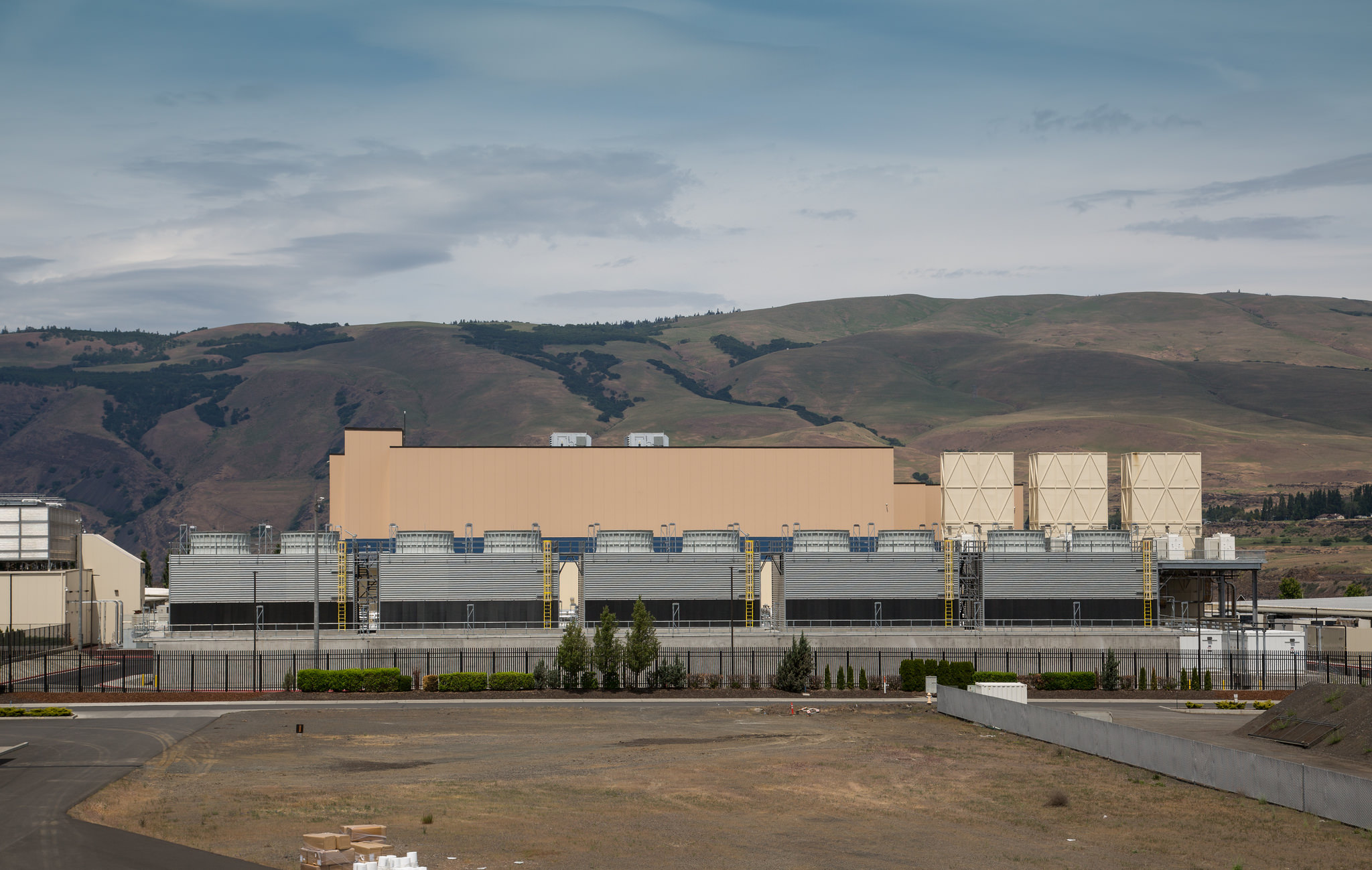
Data centers also consume a great deal of water to cool delicate electronics.  In 2022, Google’s data centers consumed about 5 billion gallons of fresh water.

AI has the potential to improve the efficiency of systems, improve climate models, and perhaps help develop new ways to help reduce humanity’s environmental footprint.  But at the moment, it represents an increasing burden on the environment that cannot just be ignored.

**********

Web Links

As Use of A.I. Soars, So Does the Energy and Water It Requires

Photo, posted January 23, 2023, courtesy of Aileen Devlin / Jefferson Lab via Flickr.

Earth Wise is a production of WAMC Northeast Public Radio

Chatbots Are Thirsty | Earth Wise

June 19, 2023 By EarthWise Leave a Comment

We hear a lot about artificial intelligence these days.  ChatGPT has found its way into education, technology, and many other aspects of life.  It and its brethren are a source of fascination, enthusiasm, and even fear.  Many of us have given queries to the bot to see what kind of results we can obtain.  But a recent study has found out something about AI systems that we probably didn’t know – they use up lots of fresh water.

According to researchers at the University of California, Riverside, running a few dozen queries on ChatGPT uses up about half a quart of fresh water from already overtaxed reservoirs.

Running artificial intelligence systems like ChatGPT relies on cloud computations done in racks of servers in warehouse-sized data processing centers.  Google’s data centers in the U.S. alone consumed nearly 3.5 billion gallons of fresh water in 2021 in order to keep their servers cool.

Data processing centers consume water in two ways.  They often draw much of their electricity from power plants that use large cooling towers that convert water into steam emitted into the atmosphere.  In addition, the servers themselves need to be cooled to keep running and are typically connected to cooling towers as well.

It isn’t going to be easy for AI systems to reduce their water use.  The study’s authors noted that people make use of AI at all hours of the day and night.  But a significant amount of AI activity is actually the training of the systems.  That could be scheduled for the cooler hours, when less water is lost to evaporation.

In an era of scarce fresh water and droughts, it is important to make AI less thirsty.

**********

Web Links

AI programs consume large volumes of scarce water

Photo, posted May 22, 2023, courtesy of Jernej Furman via Flickr.

Earth Wise is a production of WAMC Northeast Public Radio

Removing Microplastics with Magnetism

October 7, 2019 By EarthWise 2 Comments

A new method for removing microplastics from the oceans has emerged from, of all things, a science fair project.  An Irish 18-year-old named Fionn Ferreira developed his project for the annual Google Science Fair and it won the grand prize of $50,000 in educational funding.

The teenager was walking on the beach in his hometown and ran across a stone with oil and plastic stuck to it and became focused on the problem of microplastics increasingly entering the environment.

His idea was to make use of ferrofluids, which are nontoxic magnetic fluids made of oil and magnetite, which is an iron-based mineral.  In the presence of water, the ferrofluids attract microplastics because both have similar properties.

Ferreira added oil and magnetite to water and mixed in a solution of microplastic particles.  When the microplastics latched onto the ferrofluids, he dipped a magnet into the solution several times and the magnet removed both substances, leaving clear water.  After almost 1000 tests, he demonstrated the method to be 88% effective in removing a variety of microplastics from water; a result even better than his original hypothesis of an 85% removal rate.

Ferreira is planning to further his education at a prestigious chemistry institute in the Netherlands starting in the fall.

According to a recent study, Americans eat, drink and breathe between 74,000 and 121,000 microplastic particles each year and, if they drink bottle water only instead of tap water, an additional 90,000 particles.  So, a science fair project that might provide a way to get rid of most these things is definitely prize-worthy.

**********

Web Links

This Irish teenager may have a solution for a plastic-free ocean

Photo, posted April 25, 2016, courtesy of Boe Eide via Flickr.

Earth Wise is a production of WAMC Northeast Public Radio.

Climate Change And The Bottom Line

July 31, 2019 By EarthWise Leave a Comment

Large companies around the world are facing up to the fact that climate change could substantially affect their bottom lines within the next five years.  Shareholders and regulators have been applying pressure to companies to disclose the specific financial impacts they could face as the planet warms and companies are increasingly making those disclosures.

A non-profit charity called CDP (formerly known as the Carbon Disclosure Project) runs the global disclosure system for investors, companies, cities, states, and regions to manage their environmental impacts.  In 2018, more than 7,000 companies submitted reports to CDP and, for the first time, CDP explicitly asked firms to try to calculate how a warming planet might affect them financially.

Analysis of the reports from 215 of the world’s 500 largest corporations revealed that these companies alone potentially faced roughly $1 trillion in costs related to climate change in the decades ahead unless they took proactive steps to prepare. 

Climate-related risks range from extreme weather that could disrupt supply chains to stricter climate regulations that could hurt the value of coal, oil, and gas investments.  Technology companies like Google’s parent company, Alphabet, Inc., face increased costs to cool energy-hungry data centers as temperatures rise.

In all, the world’s largest companies estimated that at least $250 billion of assets may need to be written off or retired early as the planet heats up.  Previous studies, based on computer climate modeling, have estimated that the risks of global warming, if left unmanaged, could cost the world’s financial sector between $1.7 trillion to $24.2 trillion in net present value terms.

**********

Web Links

Companies See Climate Change Hitting Their Bottom Lines in the Next 5 Years

Photo, posted February 29, 2016, courtesy of Ben Nuttall via Flickr.

Earth Wise is a production of WAMC Northeast Public Radio.

Making Self-Driving Cars Safer

March 6, 2018 By EarthWise 1 Comment

https://earthwiseradio.org/wp-content/uploads/2018/02/EW-03-06-18-Making-Self-Driving-Cars-Safer.mp3

We hear quite a bit about self-driving cars these days.  More and more cars on the road have at least some ability to do things on their own (steer, brake, or park) and some can do much more.

[Read more…] about Making Self-Driving Cars Safer

Old-School Companies And Renewable Energy

April 12, 2016 By WAMC WEB

https://earthwiseradio.org/wp-content/uploads/2016/03/EW-04-12-16-Companies-and-Renewables.mp3

The biggest Internet companies have been embracing renewable energy for years now.  The company that bought the largest amount of clean energy last year was Google, which has three times the renewable capacity of the next biggest user.  Other familiar names in the top ten companies in total wind and solar capacity include Amazon, Facebook, Microsoft, and Apple.  These companies have been ahead of the pack in looking for sustainable ways to meet their substantial energy needs.

[Read more…] about Old-School Companies And Renewable Energy

Clean Energy And The Internet

February 4, 2016 By WAMC WEB

https://earthwiseradio.org/wp-content/uploads/2016/02/EW-02-04-16-Clean-Energy-and-the-Internet.mp3

A number of large Internet companies are being very proactive in the area of clean energy.  Companies like Google, Facebook, and Apple have invested billions on green energy solutions.   This isn’t just good citizenship and good publicity for progressive companies, it is an essential part of the global effort to reduce greenhouse emissions.

[Read more…] about Clean Energy And The Internet

The Fight Against Day Burners

February 2, 2016 By WAMC WEB

https://earthwiseradio.org/wp-content/uploads/2016/01/EW-02-02-16-Day-Burners.mp3

A U.S. Department of Energy webpage states that “about 10% of street lights are brightly lit during daytime and essentially waste electricity due to faulty photosensors.”  Such lights are called “day burners.” While some think the 10% figure is a slight overestimate, the electricity day burners waste is significant nonetheless.

[Read more…] about The Fight Against Day Burners

Primary Sidebar

Recent Episodes

  • An uninsurable future
  • Clean energy and jobs
  • Insect declines in remote regions
  • Fossil fuel producing nations ignoring climate goals
  • Trouble for clownfishes

WAMC Northeast Public Radio

WAMC/Northeast Public Radio is a regional public radio network serving parts of seven northeastern states (more...)

Copyright © 2026 ·