• Skip to primary navigation
  • Skip to main content
  • Skip to primary sidebar

Earth Wise

A look at our changing environment.

  • Home
  • About Earth Wise
  • Where to Listen
  • All Articles
  • Show Search
Hide Search
You are here: Home / Archives for genes

genes

Engineering plants to consume more carbon dioxide

January 23, 2025 By EarthWise Leave a Comment

The most abundant protein on the planet is an enzyme called ribulose-1,5-bisphosphate carboxylase/oxygenase, better known as RuBisCO.  Its critical role in photosynthesis makes life as we know it on earth possible.  What it does is convert carbon dioxide from the atmosphere into the organic matter contained in plants.

Getting plants to take up more carbon dioxide from the atmosphere is a key strategy for mitigating climate change.  Planting lots of trees is one way to do it.  Another is to get individual plants to capture more carbon dioxide.

Scientists at the University of Illinois have focused on getting plants to produce more RuBisCO which allows them to grow faster, consuming more carbon dioxide in the process.

Some plants are better than others at taking advantage of the earth’s rising carbon dioxide levels.  Among these are food crops like corn, sugarcane, and sorghum.  Such plants’ growth is not primarily limited by how much carbon dioxide is in the atmosphere but rather by how much RuBisCO is in their leaves.  The Illinois scientists tweaked genes in corn and sorghum to produce plants containing more RuBisCO.  Laboratory experiments on corn demonstrated faster corn growth.  Recent outdoor field experiments on sorghum demonstrated a 16% boost in its growth rate. 

Improving photosynthesis in this way is not only a potential strategy for increasing plants’ ability to combat climate change.  It is also a way to cope with the world’s increasing demand for food by producing crops that can grow larger and more quickly.

**********

Web Links

Scientists Engineer Crops to Consume More Carbon Dioxide

Photo, posted April 12, 2016, courtesy of K-State Research and Extension via Flickr.

Earth Wise is a production of WAMC Northeast Public Radio
Engineering Mosquitoes | Earth Wise

February 21, 2020 By EarthWise Leave a Comment

Engineering mosquitoes to repel disease

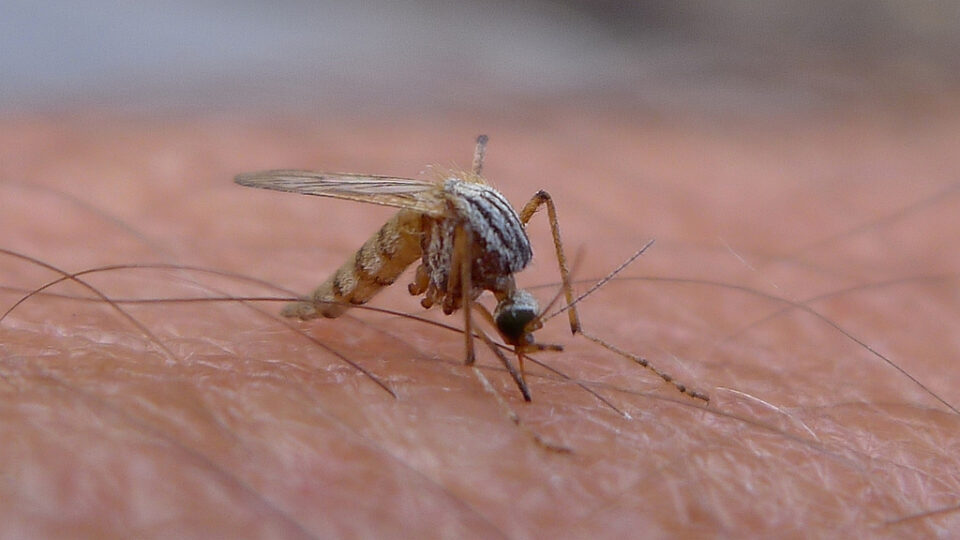
Tropical regions grapple with the spread of diseases – such as dengue, yellow fever, zika, chikungunya, and malaria – by mosquitoes.  A fairly successful strategy has been the Sterile Insect Technique, which is essentially insect birth control. The process involves rearing large quantities of sterilized male mosquitoes in dedicated facilities, and then releasing them to mate with females in the wild. As they do not produce any offspring, the insect population declines over time.

A problem with this approach is that while mosquitoes create health problems for people, they also play important roles in various ecosystems, such as providing food for bats and other animals.  Eliminating mosquito populations on a large scale can trigger major changes in ecosystems.

Recently, an international team of scientists has synthetically engineered mosquitoes that halt the transmission of the dengue virus.  They genetically engineered mosquitoes with an antibody “cargo” that gets expressed in the female mosquitoes that spread the dengue virus.  Once the female mosquito takes in blood, the antibody is activated which hinders the replication of the virus and prevents its dissemination throughout the mosquito, thereby preventing its transmission to humans. Essentially, what the researchers have done is transfer genes from the human immune system to confer immunity to mosquitoes.  The researchers are testing methods to neutralize mosquitoes against other viruses they spread.

This opens up a whole new approach to interrupt mosquito-borne human diseases.  Mosquitoes are among the deadliest killers on the planet because they are the messengers that transmit deadly diseases.  Until now, the only real solution has been to kill the messenger.  The new approach may be a better way to deal with a serious problem.

**********

Web Links

Mosquitoes engineered to repel dengue virus

Photo, posted June 20, 2014, courtesy of Flickr.

Earth Wise is a production of WAMC Northeast Public Radio.

The Bitter Truth About Caffeine

January 7, 2019 By EarthWise Leave a Comment

Coffee will be impacted by the changing climate

Black coffee has a bitter taste. Bitterness evolved as a natural warning system to protect the body from harmful substances.  By the logic of evolution, we should therefore want to spit coffee out, but obviously it doesn’t work that way.

Caffeine itself has a particularly bitter taste.  Surprisingly, a new study at Northwestern University has found that the more sensitive people are to the bitter taste of caffeine, the more coffee they drink. That sensitivity is actually a genetic variant.

So, one would think that people who are especially sensitive to the bitter taste of caffeine would drink less coffee.  The counter intuitive result suggests that coffee consumers acquire a taste or an ability to detect caffeine as a result of the learned positive reinforcement (in other words, the buzz) elicited by caffeine.  People with a heightened ability to taste coffee’s bitterness learn to associate good things with it.

The study also found in contrast that people sensitive to the bitter flavor of a different compound called 6-n-propylthiouracil (known as PROP)avoided coffee as well as red wine.

The study made use of applied Mendelian randomization, a technique commonly used in disease epidemiology, to test the causal relationship between bitter taste and beverage consumption in more than 400,000 men and women in the United Kingdom.

These results shed some light on the disdain many coffee drinkers have for decaf coffee.  It may not be just the lack of buzz that turns them off.  Some of them with the right genes may be missing that extra bit of bitterness that alerts them that something good is about to happen.

**********

Web Links

Why we shouldn’t like coffee, but we do

Photo, posted May 22, 2009, courtesy of Olle Svensson via Flickr.  

Earth Wise is a production of WAMC Northeast Public Radio.

Saving Wheat

July 3, 2018 By EarthWise Leave a Comment

https://earthwiseradio.org/wp-content/uploads/2018/07/EW-07-03-18-Saving-Wheat.mp3

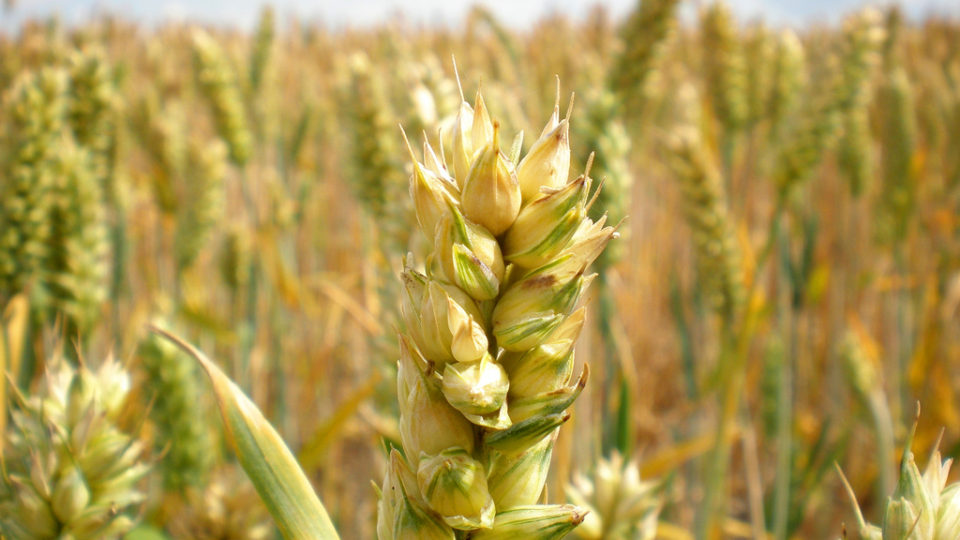
Rising temperatures, drought, pests and diseases are moving north into the U.S. heartland and are increasingly posing a threat to the wheat crop.  An insect called the Hessian fly is reducing crop yields by 10% a year in the Midwest.  Average temperatures in the Midwest have risen by 2 degrees since 2000, and periods of time between rainfalls is lengthening.  Conditions in some areas of the Midwest are getting to be more like those in the Middle East.

[Read more…] about Saving Wheat

Saving Chocolate

October 26, 2017 By EarthWise Leave a Comment

https://earthwiseradio.org/wp-content/uploads/2017/10/EW-10-26-17-Saving-Chocolate.mp3

On previous occasions, we have talked about the problems faced by the global banana industry, which is based almost entirely on a single cultivar, the Cavendish banana, which makes the industry extremely vulnerable to a single disease or blight that may arise.

[Read more…] about Saving Chocolate

Genetic Engineering And Conservation

September 8, 2017 By EarthWise

https://earthwiseradio.org/wp-content/uploads/2017/08/EW-09-08-17-GE-and-Conservation.mp3

Genetic engineering, or equivalently synthetic biology, is a multi-billion-dollar enterprise involved in pharmaceuticals, chemicals, biofuels and, of course, agriculture.  In these fields, it is already the source of a great deal of controversy.  But there is increasing interest in using synthetic biology (or synbio) technology as a tool for protecting the natural world, which is a prospect some find tantalizing and others find absolutely terrifying.

[Read more…] about Genetic Engineering And Conservation

Restoring The Taste Of Tomatoes

March 1, 2017 By EarthWise

https://earthwiseradio.org/wp-content/uploads/2017/03/EW-03-01-17-Restoring-the-Taste-of-Tomatoes.mp3

Over the years, tomatoes have been selectively bred for qualities such as size and firmness for shipping purposes and appearance, but selection for flavor has generally been overlooked.  Many of us find that the tomatoes we buy in the grocery store just don’t taste like they used to.  In fact, often they don’t taste like much of anything.  Comparing them to the delicious local-grown varieties we can find during the summer provides evidence for this conclusion.

[Read more…] about Restoring The Taste Of Tomatoes

De-Extinction: Opening Pandora’s Box

March 21, 2016 By WAMC WEB

https://earthwiseradio.org/wp-content/uploads/2016/03/EW-03-21-16-De-Extinction.mp3

De-extinction, or the act of bringing extinct species back from the dead, has been riding a wave of enthusiasm. Nearly 2 million people have watched Steward Brand’s TED talk on the topic, and Beth Shapiro’s book How to Clone a Mammoth has received rave reviews.

[Read more…] about De-Extinction: Opening Pandora’s Box

Primary Sidebar

Recent Episodes

  • An uninsurable future
  • Clean energy and jobs
  • Insect declines in remote regions
  • Fossil fuel producing nations ignoring climate goals
  • Trouble for clownfishes

WAMC Northeast Public Radio

WAMC/Northeast Public Radio is a regional public radio network serving parts of seven northeastern states (more...)

Copyright © 2026 ·