• Skip to primary navigation
  • Skip to main content
  • Skip to primary sidebar

Earth Wise

A look at our changing environment.

  • Home
  • About Earth Wise
  • Where to Listen
  • All Articles
  • Show Search
Hide Search
You are here: Home / Archives for fossil fuels

fossil fuels

Sodium-ion batteries

January 31, 2024 By EarthWise Leave a Comment

The transition away from fossil fuels is driving a rapidly increasing need for batteries.  Both electric vehicles and energy storage for the electric grid are enormous consumers of batteries.  At present, lithium-ion batteries are almost universally used for these purposes.  They have been getting better all the time and cheaper all the time and are likely to be the answer for the foreseeable future.  But they are not perfect.

Lithium is only found in a relatively small number of places and mining and extracting it is fairly expensive and environmentally unfriendly.  Lithium-ion batteries also frequently contain cobalt, which has its own set of problems.  There are also safety issues related to the flammability of lithium-ion batteries. 

As a result, there continue to be numerous efforts to identify and develop alternative battery technologies.  One of these is sodium-ion batteries, which are similar in many ways to lithium-ion batteries but in which sodium replaces lithium as the cathode material.

Sodium is extremely common – it’s found in ordinary salt – and sodium-ion batteries have a high energy density and are easy to produce.  They should have a long lifetime and have a more benign environmental impact than lithium-ion.  Many companies and researchers are working on sodium-ion batteries and are making good progress.

A study by Chalmers University in Sweden looked at the potential for sodium-ion batteries and found that the batteries are particularly promising for use in energy storage even in their current state of development and could eventually be used in cars.  Whether sodium-ion batteries can be good enough and cheap enough quickly enough to give lithium-ion a run for its money remains to be seen.

**********

Web Links

Resource-efficient and climate-friendly with sodium-ion batteries

Photo, posted March 12, 2013, courtesy of Chris Hunkeler via Flickr.

Earth Wise is a production of WAMC Northeast Public Radio

Airplanes, corn, and groundwater

January 11, 2024 By EarthWise Leave a Comment

Is replacing traditional jet fuel with ethanol a good idea for the climate?

The aviation industry wants to slash its greenhouse gas emissions.  One proposed strategy is to replace ordinary jet fuel with ethanol.  Ethanol in this country mostly comes from corn.  The airlines are enthusiastic about the idea; corn farmers are enthusiastic about the idea.  Ethanol suppliers are obviously enthusiastic about it.  But is it a good idea?

Today, nearly 40% of America’s corn crop is turned into ethanol.  Twenty years ago, the figure was around 10%.  The massive growth was the result of mandates for ethanol augmentation of gasoline for environmental reasons.

But the environmental benefits of corn ethanol have always been controversial at best when all the energy factors are considered. But apart from that, a very serious issue is that corn is a water-intensive crop, and it can take hundreds of gallons of water to produce a single gallon of ethanol.  As the climate warms and corn crops expand, groundwater in many corn-growing areas is being increasingly depleted and groundwater provides half our drinking water and meets far more than just the needs of corn farmers.

Corn farmers and ethanol producers see the rapid growth of electric vehicles as a threat to their lucrative business of supplying the auto fuel industry.  The ambitious goals of the airline industry to reduce its emissions would likely require nearly doubling ethanol production.

The situation is a powerful example of the tradeoffs that can arise as the world tries to make the transition away from fossil fuel.  Even green solutions can have their own environmental cost and sometimes that cost may be too steep.

**********

Web Links

Airlines Race Toward a Future of Powering Their Jets With Corn

Photo, posted September 2, 2007, courtesy of Rosana Prada via Flickr.

Earth Wise is a production of WAMC Northeast Public Radio
Global climate progress is too slow

December 28, 2023 By EarthWise Leave a Comment

According to a new report by the World Resources Institute, the world is making progress on climate, but the progress is not fast enough.  The report looked at 37 indicators of climate progress towards the goals set forth by the Paris Agreement.  In some areas, the progress has been substantial, but in six areas, the world has been moving in the wrong direction entirely.

The rapid growth of clean energy has brought the world to the brink of peak fossil fuels, but to avoid the catastrophic effects of warming, countries need to build out wind and solar power nearly twice as fast and shut down coal plants seven times faster.  There has been progress in curbing deforestation, but the world needs to stem forest loss four times more quickly.  More work is needed to clean up heavy industry and the consumption of meat needs to be limited more than the present level.

Areas where things are getting worse rather than better include the use of public funds and subsidies for preserving the use of fossil fuels.  Because of wars and supply shocks affecting energy markets, countries have actually ramped up fossil fuel subsidies to combat rising prices.

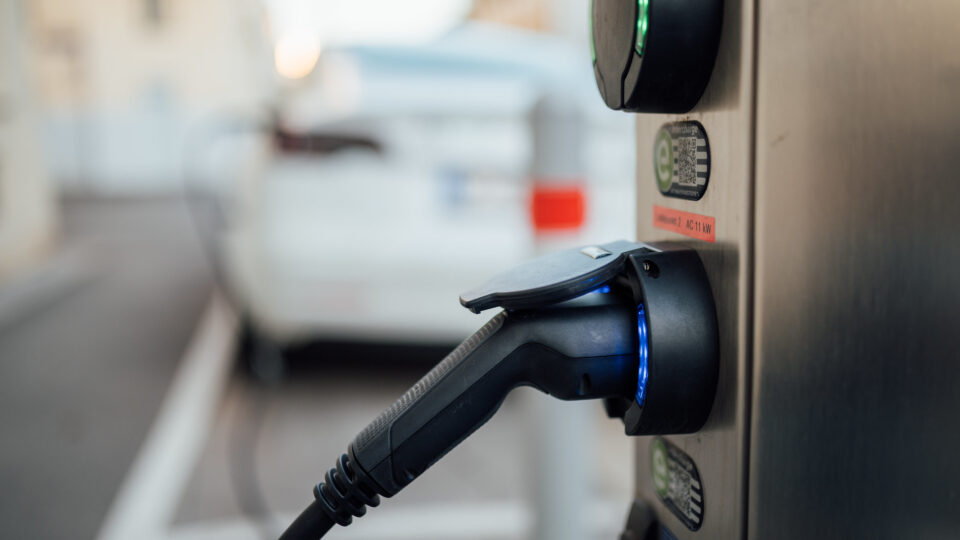
One area where the world is moving at the pace required to meet climate goals is in the sales of electric vehicles.  EVs accounted for 10% of car sales globally last year and if trends continue, they are predicted to account for more than 75% of cars sold by 2030.

The faster-than-predicted progress on electric cars demonstrates that transformative change is possible and could happen in other areas.

**********

Web Links

World Making Too Little Progress on Climate — Except on EV Sales, Report Finds

Photo, posted May 24, 2022, courtesy of Ivan Radic via Flickr.

Earth Wise is a production of WAMC Northeast Public Radio
Uncounted emissions

December 20, 2023 By EarthWise Leave a Comment

Most countries around the world have pledged to cut their carbon emissions to try to reduce the effects of climate change.  The extent to which countries are meeting their emission reduction goals has been the primary way of keeping score on their efforts.  But there is a major problem with this scorekeeping system: exporting fossil fuels does not count as part of a country’s contributions to emissions.

Exports of fossil fuel are the driving force of fossil fuel expansion around the world and a significant fraction of those exports come from powerful and wealthy nations that are essential to the effort to reduce carbon emissions.

Our own country is a prime example.  The U.S. is working to cut back its carbon emissions.  The Inflation Reduction Act is driving the reduction of domestic use of oil, gas, and coal and is providing subsidies for the use of heat pumps and the buildout of EV charging networks.  However, at the same time, U.S. production of fossil fuels is booming, driving substantial profits for that industry.  The result is that much of the expanding supply of fossil fuels is headed overseas.

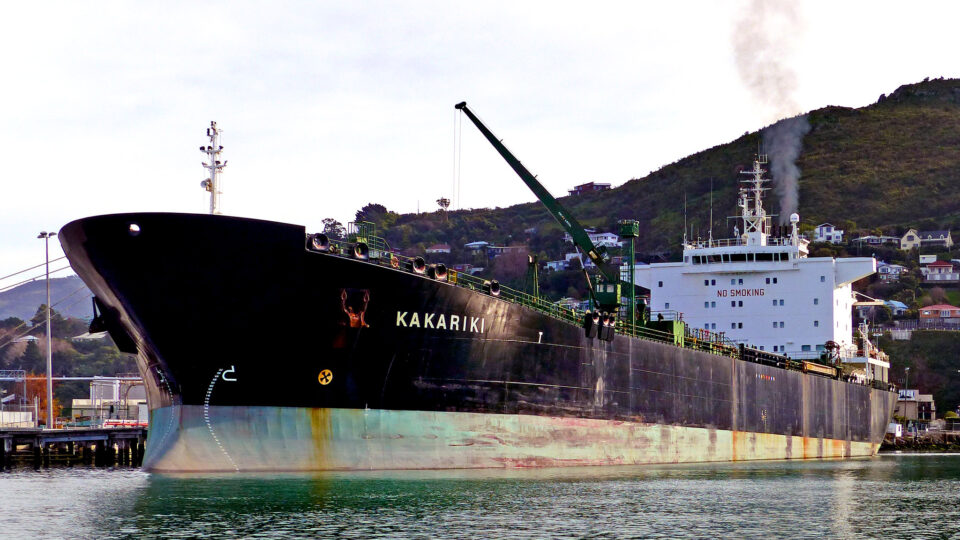
American liquified natural gas exports are growing rapidly.  Estimates are that by 2030, United States LNG exports will be responsible for more greenhouse gas emissions than every house, car, and factory in the European Union.  And, according to the UN emissions accounting system, none of those emissions will be attributed to the United States. 

The situation is rather disastrous.  Countries use this loophole to claim they are doing their part to reduce emissions, but the world is continuing to suffer the consequences.

**********

Web Links

Uncounted Emissions: The Hidden Cost of Fossil Fuel Exports

Photo, posted January 9, 2015, courtesy of Bernard Spragg via Flickr.

Earth Wise is a production of WAMC Northeast Public Radio
Are we really serious about eliminating fossil fuels?

December 15, 2023 By EarthWise Leave a Comment

Almost all the countries around the world have pledged to take action to reduce planet-warming emissions by expanding the use of renewable energy sources and phasing out fossil fuels.  But very few countries seem to be taking the fossil fuel phase-out seriously.

Almost all the top 20 fossil-fuel producing countries plan to produce more oil, gas, and coal in 2030 than they do today.  Countries are doubling down on fossil fuel production, which will make it virtually impossible to limit global warming to 2 degrees Celsius.

Despite having an administration that takes climate issues very seriously, the United States is now the world’s biggest crude oil producer and is ramping up exports of natural gas.  Brazil, under its environmental champion President da Silva, plans to increase oil production by 63% and more than double its gas output over the next decade.  India, which has promised to expand renewable energy production, will more than double its production of coal by 2030.  Canada, which has a net-zero commitment enacted as law, will boost its oil output by 25% in the next 12 years.  Meanwhile, countries like Saudi Arabia and Russia aren’t even pretending to make the transition away from fossil fuels.

Governments and citizens around the world may be serious about the climate crisis and are taking various actions.  But the world cannot address climate change without tackling its root cause.  The overwhelming force of greed and the power wielded by the fossil fuel industry has created a dynamic that is making real progress nearly impossible as fossil fuels continue to power the world.

**********

Web Links

Coming Soon: More Oil, Gas and Coal

Photo, posted June 22, 2020, courtesy of John Morton via Flickr.

Earth Wise is a production of WAMC Northeast Public Radio

Solar thermochemical hydrogen

November 23, 2023 By EarthWise Leave a Comment

For decades, there has been talk of the hydrogen economy in which hydrogen would take the place of fossil fuels in a wide range of domestic and industrial applications.  Over time, hydrogen’s potential advantages in some applications have diminished but it is still seen as perhaps the most promising way to decarbonize long-distance truck, ship, and plane transportation as well as many heavy-duty industrial processes.

Hydrogen is the most common element in the universe, but here on Earth, it is tightly bound up in chemical compounds, notably water and hydrocarbons.  Extracting hydrogen from these compounds takes lots of energy.  To date, most hydrogen is produced from fossil fuel sources, resulting in carbon dioxide emissions.  So-called green hydrogen is made by splitting up water into its component elements.

Getting hydrogen from water generally uses electrolysis, which requires lots of electrical power.  That is why it isn’t the standard way to produce hydrogen; it costs too much to pay for all that power.

MIT scientists have been developing a process to make solar thermochemical hydrogen, or STCH.  STCH uses the sun’s heat to split apart water and no other energy source.  An existing source of solar heat drives a thermochemical reaction in which a heated metal surface grabs oxygen from steam and leaves hydrogen behind.  MIT did not invent the concept; their efforts are to make it practical.

Previous STCH designs were only capable of using 7% of incoming solar heat to make hydrogen.  The MIT process may be able to harness up to 40% of the sun’s heat and therefore generate far more hydrogen. 

**********

Web Links

MIT design would harness 40 percent of the sun’s heat to produce clean hydrogen fuel

Photo, posted August 23, 2017, courtesy of Evan Lovely via Flickr.

Earth Wise is a production of WAMC Northeast Public Radio
Fossil-free fertilizer

November 9, 2023 By EarthWise Leave a Comment

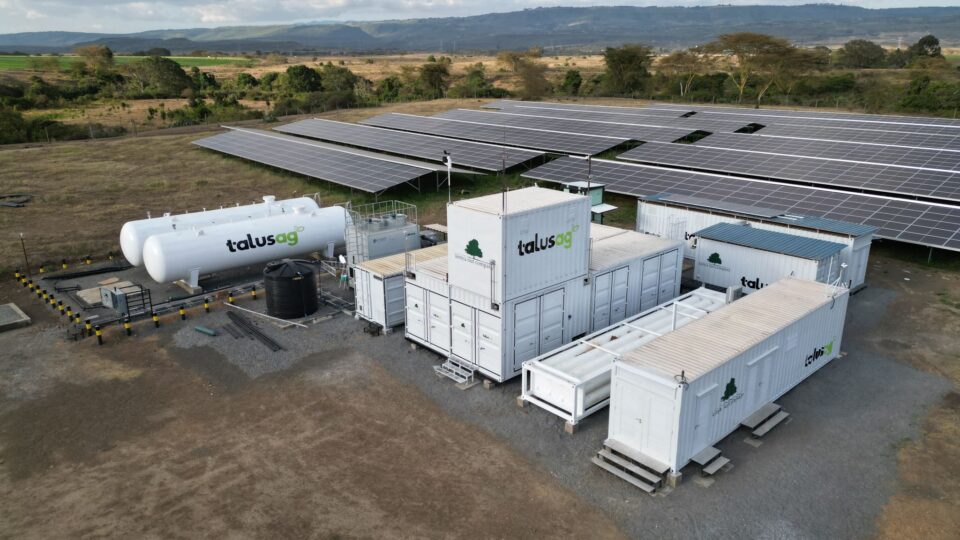
A fossil fuel-free ammonia plant in Kenya

Ammonia is a major industrial commodity.  About 70% of it is used to make fertilizer, with the rest for a wide range of industrial applications.  Ammonia is the starting point for all mineral nitrogen fertilizers. 

Typically, ammonia is a byproduct of isolating hydrogen from natural gas, which releases large amounts of carbon dioxide.  On a global scale, the climate impact of ammonia production is comparable to that of air travel.  The world needs more ammonia but really cannot afford the emissions that come with its production.

There are also political implications of ammonia production.  Because it relies so heavily on natural gas, ammonia supply is vulnerable to disruptions from events like the Russian invasion of Ukraine.  Sanctions imposed after the invasion have hindered fertilizer exports, driving up costs, especially in places like Africa.

A small fertilizer plant near Nairobi, Kenya will be the first farm in the world to produce its own nitrogen fertilizer on site that is free of fossil fuels.  The plant is being built by an American startup company Talus Renewables and will use solar power to strip hydrogen from water.  The hydrogen will then bond with nitrogen from the air to form liquid ammonia.  The plant will produce one ton of ammonia each day.

The typical bag of fertilizer in sub-Saharan Africa travels 6,000 miles to get there, which of course only adds to the environmental burden of using it as well as its cost.  By building a small green ammonia plant like the one coming online in Kenya, it is possible to locally produce a critical raw material in a carbon-free manner.

**********

Web Links

Farm in Kenya First to Produce Fossil-Free Fertilizer On Site

Photo courtesy of Talus Renewables via LinkedIn.

Earth Wise is a production of WAMC Northeast Public Radio

The right to not buy fossil fuels

November 6, 2023 By EarthWise Leave a Comment

Minnesota has been one of the most aggressive states in setting and realizing clean energy goals.  As of this year, Minnesota gets 55% of its energy from net zero carbon emission sources.  The state has goals of reaching 80% green energy by 2030, 90% by 2035, and 100% by 2040.  Recent legislation in Minnesota aims at further reducing carbon emissions and job creation in the clean energy sector.

All of this is very good news, but not for the neighboring state of North Dakota.  Minnesota getting all of its energy from clean energy sources means that it would no longer be a customer for the fossil fuel products of North Dakota.

North Dakota is known for its vast reserves of coal, oil, and natural gas and, apart from agriculture, the energy industry is the biggest moneymaker in the state.  Faced with the aggressive clean energy initiatives of its next-door neighbor, North Dakota has threatened to sue Minnesota. 

What would be the basis of such a lawsuit?  The argument would be that Minnesota’s clean energy goals would be in violation of interstate commerce laws and infringe upon North Dakota’s economic sovereignty.  The claim would be that the energy regulations in Minnesota unfairly discriminate against North Dakota’s energy products.

Minnesota, on the other hand, would defend its energy goals as a legitimate exercise of its own state sovereignty and a necessary response to the climate crisis.

The outcome of any legal battle that may take place will have far-reaching implications for Minnesota and North Dakota as well as for other states across the country that have clean energy initiatives.

**********

Web Links

North Dakota plans to sue Minnesota over its clean energy goals. What comes next?

Photo, posted June 8, 2019, courtesy of Tony Webster via Flickr.

Earth Wise is a production of WAMC Northeast Public Radio
Cleaner And Greener Steel | Earth Wise

August 14, 2023 By EarthWise Leave a Comment

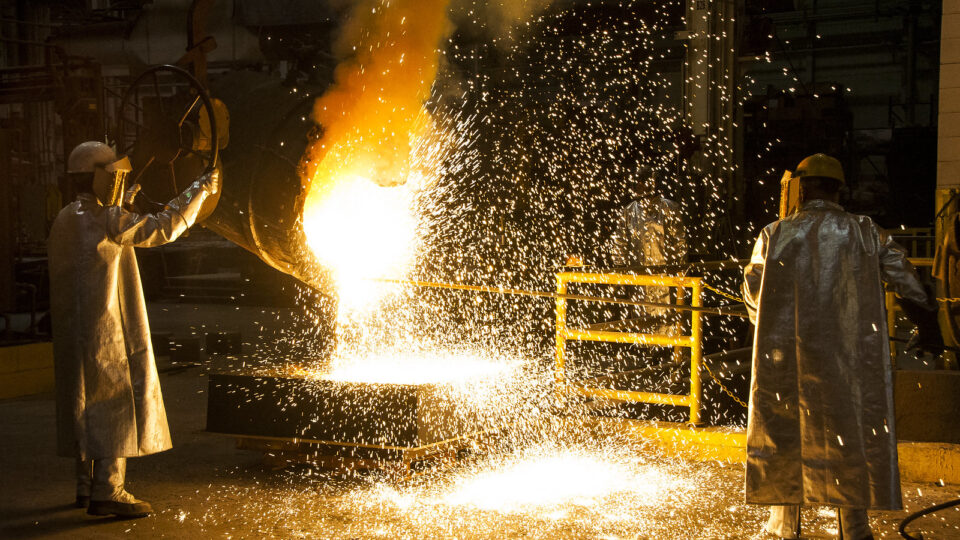
Researchers are developing a cleaner and greener steel

Producing construction materials like concrete and steel is a major contributor to greenhouse gas emissions.  Between 7 and 8% of emissions are due to steelmaking alone, which has been done pretty much the same way for more than a century.

Iron ore is smelted with high-carbon fuel and is turned into so-called pig iron in a blast furnace, which creates the key raw material for the steel industry.  The process uses huge amounts of energy (still often generated by burning fossil fuels) and releases carbon dioxide as a byproduct. 

The Department of Energy is sponsoring 40 projects at universities, national laboratories and companies in 21 states aimed at reducing industrial carbon pollution.  Ten of those projects are focused on decarbonizing iron and steel. These initiatives are part of the overall effort to move the nation towards a net-zero emissions economy by 2050.

A team headed by Case Western Reserve University that includes Lawrence Livermore National Laboratory, the University of Arizona, and steel company Cleveland-Cliffs Inc. has developed a promising new zero-carbon, electrochemical process for producing steel.

The process is a novel molten salt electrolysis method that is low-cost, capable of achieving high rates, and uses environmentally benign chemicals.  The process does not use carbon at all.  Using molten salts, electrochemistry can be performed at moderately high temperatures rather than the temperatures of nearly 3000 degrees Fahrenheit used for conventional steelmaking.  The goal is to enable steel production that is both economically viable at an industrial scale and that is environmentally sustainable.

**********

Web Links

Case Western Reserve leading research to develop zero-carbon, electrochemical process to produce iron metal as part of U.S. Department of Energy effort

Photo, posted January 11, 2017, courtesy of Kevin Casey Fleming via Flickr.

Earth Wise is a production of WAMC Northeast Public Radio

An Electric Cruise Ship | Earth Wise

July 31, 2023 By EarthWise Leave a Comment

Electrifying cruise ships

The shipping industry accounts for about 3% of global manmade greenhouse gas emissions.  In 2018, the International Maritime Organization, the UN body that regulates global shipping, set a target to cut the industry’s greenhouse gas emissions by at least half by 2050.

This goal has led to a variety of designs for eco-friendly ships, including car carriers, superyachts, and cargo ships with retractable sails.  But most of the designs still rely to at least some extent on engines that run on fossil fuels.

The Norwegian cruise ship company Hurtigruten has announced that it will build a zero-emissions electric cruise ship with retractable sails covered in solar panels.  The ship is expected to set sail in 2030.  Hurtigruten is a relatively small company, with a fleet of eight ships, each with a capacity of 500 passengers.  But the company hopes that its innovative plan will inspire the entire maritime industry.

The ship will predominantly run off of electric motors powered by 60 megawatt batteries that can be charged in port with renewable energy.  To reduce reliance on the battery, when it is windy, three retractable sails will rise out of the deck, reaching a maximum height of 164 feet.  The sails will be covered in solar panels that will generate energy to top off the batteries while sailing.

The ship will have 270 cabins to hold 500 passengers and 99 crew members.  The streamlined shape of the ship will result in less air resistance to further reduce energy use.

Hurtigruten already has a hybrid, battery-supported cruise ship and is currently in the process of converting its entire fleet to hybrid battery power.

**********

Web Links

An electric cruise ship with gigantic solar sails is set to launch in 2030

Photo, posted January 15, 2023, courtesy of Bernard Spragg via Flickr.

Earth Wise is a production of WAMC Northeast Public Radio

Renewables In China | Earth Wise

July 28, 2023 By EarthWise Leave a Comment

A couple of years ago, China set an ambitious goal for renewable energy capacity – which includes wind, solar, hydroelectric, and nuclear power – for it to exceed fossil fuel capacity by 2025.  According to a recent report by Reuters, China has hit this goal two years ahead of schedule.  Renewables now make up 50.9% of the country’s power capacity.

The rapid growth in renewable capacity has largely been driven by investments in wind and solar megaprojects in the sparsely populated west of the country that export power to the manufacturing centers in the east.  China’s most recent 5-year plan calls for 570 gigawatts of wind and solar power to be installed over that period, which more than doubles its installed capacity.  The plan makes use of what it called “clean energy bases”, which utilize sandy and rocky deserts, other types of barren lands, and wastelands left behind by coal mining.  The largest clean energy bases make use of vast deserts in Inner Mongolia and Gansu.

One cautionary note is that power capacity refers to the maximum amount of electricity that a power plant can produce under ideal conditions.  Thus, for example, it refers to how much electricity a solar farm can generate at noon on a cloudless day.  So, the new figures from China don’t necessarily reveal how much electricity China is actually drawing from renewables.  In reality, China still gets a great deal of its power from coal.

China is the world’s largest emitter of carbon dioxide – more than twice as much as the United States, albeit from nearly 4 times the population.  The rapid growth of renewables is at least moving that country in the right direction.

**********

Web Links

Fossil Fuels Now Account for Less Than Half of China’s Power Capacity

Photo, posted December 2, 2015, courtesy of IBM via Flickr.

Earth Wise is a production of WAMC Northeast Public Radio
Greenhouse Gas Emissions Are Still Increasing | Earth Wise

July 21, 2023 By EarthWise Leave a Comment

Greenhouse gas emissions are still rising

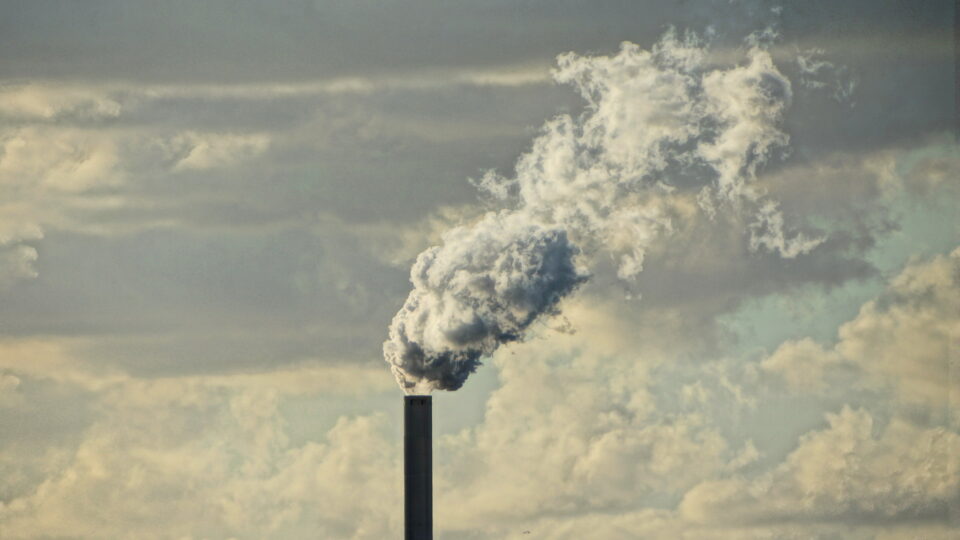
Recent research has found that the level of greenhouse gases emitted by human activity has reached an all-time high level of nearly 60 billion tons a year.  Despite increasing public attention, policy measures, and adoption of green technologies, the pace at which these changes have been taking place has simply not kept up with the ongoing burning of fossil fuels by increasingly industrialized societies.  The rate at which greenhouse gas emissions has increased over time has indeed slowed, but emissions need to start decreasing and as soon and as much as possible.

Human-induced warming has reached a ten-year average from 2013-2022 of 1.14 degrees Celsius above pre-industrial levels, up from a 1.07 degrees average between 2010-2019. 

Scientists have calculated a carbon budget that describes how much more carbon dioxide can be emitted before global warming exceeds the threshold of 1.5 degrees Celsius that is widely predicted to lead to potentially catastrophic changes to the climate.  In 2020, the Intergovernmental Panel on Climate Change calculated that the remaining carbon budget was about 500 billion tons of carbon dioxide.  Over the past three years, nearly half of that carbon budget has already been exhausted by the continuing onslaught of carbon emissions.

Researchers describe their study as a timely wake-up call that the pace and scale of climate action to date has been insufficient and that we need to change policy and approaches in light of the latest evidence about the state of the climate system.  Time is no longer on our side in trying to stave off the worst effects of climate change.

**********

Web Links

Greenhouse gas emissions at ‘an all-time high’, warn scientists

Photo, posted September 18, 2015, courtesy of In Hiatus via Flickr.

Earth Wise is a production of WAMC Northeast Public Radio

An Unwanted Temperature Threshold Is Approaching | Earth Wise

July 3, 2023 By EarthWise Leave a Comment

An alarming temperature threshold is approaching

According to the World Meteorological Organization, there is a 66% chance over the next five years that the Earth’s global temperature will exceed 1.5 degrees Celsius above pre-industrial levels for at least one year.

A combination of the continued accumulation of greenhouse gases in the atmosphere along with a looming El Niño condition will contribute to surging temperatures.  The WMO also reports that there is a 98% likelihood that at least one of the next five years will be the warmest on record and that the five-year period as a whole will be the warmest on record.

Reaching or surpassing the 1.5-degree threshold may only be temporary but would be the strongest indication yet of how quickly climate change is accelerating.   The 1.5-degree point is considered by many scientists to be a key tipping point, beyond which the chances of extreme flooding, drought, wildfires, heatwaves, and food shortages could increase dramatically.

The world has already seen about 1.2 degrees of warming as we continue to burn fossil fuels and produce enormous quantities of greenhouse gas emissions.  As recently as 2015, the WMO put the chance of breaching the 1.5-degree threshold as close to zero.

It is important to understand that the 1.5-degree temperature increase is an average for the entire planet.  Many individual locations around the world have been experiencing tremendously greater amounts of warming with record-breaking temperatures.

The 1.5-degree threshold is important, but it is not itself a tipping point.  There is still time to reduce global warming by moving away from fossil fuels and towards clean energy.  But the clock is ticking and so far, the world is not showing any urgency.

**********

Web Links

‘Sounding the alarm’: World on track to breach a critical warming threshold in the next five years

Photo, posted May 20, 2015, courtesy of Kevin Gill via Flickr.

Earth Wise is a production of WAMC Northeast Public Radio
Carbon-Negative Concrete | Earth Wise

June 6, 2023 By EarthWise Leave a Comment

Researchers exploring a carbon-negative concrete

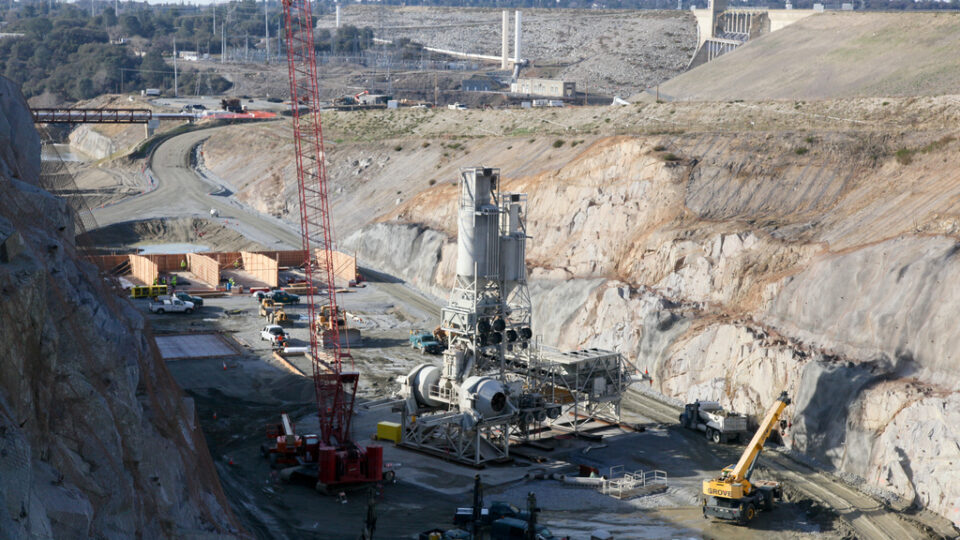
Concrete is a mainstay of modern civilization.  The world produces more than 4 billion tons of it each year and the process requires high temperatures, mostly obtained by burning fossil fuels.  The chemical reactions that produce concrete also produce large amounts of carbon dioxide.  In all, cement production is responsible for about 8% of total global carbon emissions by human activities.

This situation is the impetus for a wide range of research activities aimed at reducing the environmental impact of concrete production.  Researchers at Washington State University have recently developed a way of making carbon-negative concrete: a recipe for concrete that absorbs large amounts of carbon dioxide.

There have been attempts in the past to add biochar to concrete.  Biochar is a type of charcoal made from organic waste that sucks up carbon dioxide from the air.  In earlier attempts, even adding 3% of biochar would dramatically reduce the strength of the concrete.

The WSU researchers found that treating biochar with concrete washout wastewater makes it possible to add much more biochar to concrete without reducing its strength.  Mixing it with biochar adds calcium, which induces the formation of the mineral calcite, which in turn strengthens the concrete.

The researchers were able to add up to 30% biochar to their cement mixture.  Within a month, the resultant concrete was comparable in strength to ordinary concrete.  But at the same time, the biochar was able to absorb up to 23% of its weight in carbon dioxide from the air.  The new concrete is potentially the most environmentally friendly concrete ever developed.

**********

Web Links

Researchers develop carbon-negative concrete

Photo, posted January 31, 2012, courtesy of Michael J. Nevins / U.S. Army Corps of Engineers via Flickr.

Earth Wise is a production of WAMC Northeast Public Radio
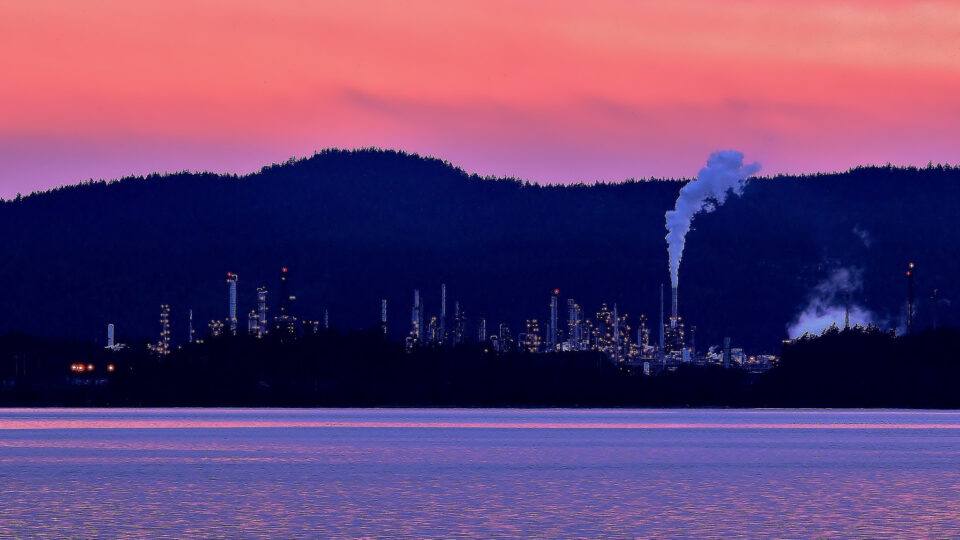
Greenhouse Gases Continue To Rise | Earth Wise

May 24, 2023 By EarthWise Leave a Comment

Greenhouse gases continue to rise

Despite all the focus on reducing emissions of greenhouse gases, there continues to be little progress toward actually accomplishing reductions.  A combination of growing populations, increasing industrialization in the developing world, and just plain reluctance on the part of many sectors of society to act, have all contributed to the continuing buildup of climate-altering gases in the atmosphere.

Levels of carbon dioxide, methane, and nitrous oxide – the three greenhouse gases produced by human activity that are the major contributors to climate change – all continued historically high rates of growth in 2022.

CO2 levels rose by 2.13 parts per million last year, roughly the same rate observed during the past decade.  The current level of 417 ppm is 50% higher than pre-industrial levels.  Increases of more than 2 ppm have occurred for 11 consecutive years.  Prior to 2013, there had never even been 3 years in row with increases of that size.

Methane levels increased by 14 parts per billion, the fourth largest increase over the past 40 years.  Methane levels in the atmosphere are now two-and-a-half times greater than their pre-industrial level. 

The third most significant greenhouse gas – nitrous oxide – also saw a large increase, reaching 24% above pre-industrial levels.

Carbon dioxide emissions are by far the most important contributor to climate change and the continuing widespread burning of fossil fuels is the primary source.  There are widespread intentions to reduce carbon dioxide emissions, but those intentions have not yet resulted in sufficient actions.

**********

Web Links

Greenhouse gases continued to increase rapidly in 2022

Photo, posted May 16, 2014, courtesy of Flickr.

Earth Wise is a production of WAMC Northeast Public Radio

Storing Carbon Dioxide In The Ocean | Earth Wise

May 11, 2023 By EarthWise 2 Comments

Storing carbon dioxide in the ocean

Reducing the amount of carbon dioxide entering the atmosphere means either shutting down emission sources (primarily curbing the use of fossil fuels) or capturing the CO2 as it is emitted.  Capturing carbon dioxide from smokestacks and other point sources with high concentrations is relatively efficient and can make economic sense.  Removing it from the air, which even at today’s dangerously high levels contains only 400 parts per million, is difficult and energy intensive.  And even when it is removed, it then must be stored somewhere.

Researchers at Lehigh University have developed a novel way to capture carbon dioxide from the air and store it in what is effectively the infinite sink of the ocean.  The approach uses an innovative copper-containing filter that essentially converts CO2 into sodium bicarbonate (better known as baking soda.)  The bicarbonate can be released harmlessly into the ocean.

This technique has produced a 300 percent increase in the amount of carbon dioxide captured compared with existing direct air capture methods.   It does not require any specific level of carbon dioxide to work.  The filter becomes saturated with the gas molecules as air is blown through it.  Once this occurs, seawater is passed through the filter and the CO2 is converted to dissolved bicarbonate.  Dumping it into the ocean has no adverse effect on the ocean.  It doesn’t change the salinity at all, and the stuff is slightly alkaline, which will help reduce ocean acidification.

Reusing the filter requires cleaning it with a sodium hydroxide solution, which can be created from seawater using electricity generated by waves, wind, or sun.

The filter, called DeCarbonHIX, is attracting interest from companies based in countries around the world.

**********

Web Links

Path to net-zero carbon capture and storage may lead to ocean

Photo, posted March 10, 2007, courtesy of Gail via Flickr.

Earth Wise is a production of WAMC Northeast Public Radio

Concrete And Carbon | Earth Wise

May 8, 2023 By EarthWise Leave a Comment

How to reduce the carbon emissions associated with concrete

After water, concrete is the world’s second most consumed material.  It is the cornerstone of modern infrastructure.  Its production accounts for 8% of global carbon dioxide emissions.  The carbon dioxide is a result of chemical reactions in its manufacture and from the energy required to fuel the reactions.

About half of the emissions associated with concrete come from burning fossil fuels to heat up the mixture of limestone and clay that ultimately becomes ordinary Portland cement.  These emissions could eventually be eliminated by using renewable-generated electricity to provide the necessary heat.  However, the other half of the emissions is inherent in the chemical process.

When the minerals are heated to temperatures above 2500 degrees Fahrenheit, a chemical reaction occurs producing a substance called clinker (which is mostly calcium silicates) and carbon dioxide.  The carbon dioxide escapes into the air.

Portland cement is then mixed with water, sand, and gravel to produce concrete.  The concrete is somewhat alkaline and naturally absorbs carbon dioxide albeit slowly.  Over time, these reactions weaken the concrete and corrode reinforcing rebar.

Researchers at MIT have discovered that the simple addition of sodium bicarbonate (aka baking soda) to the concrete mixture accelerates the early-stage mineralization of carbon dioxide, enough to make a real dent in concrete’s carbon footprint.  In addition, the resulting concrete sets much more quickly.  It forms a new composite phase that doubles the mechanical performance of early-stage concrete.

The goal is to provide much greener, and possibly even carbon-negative construction materials, turning concrete from being a problem to part of a solution.

**********

Web Links

New additives could turn concrete into an effective carbon sink

Photo, posted April 4, 2009, courtesy of PSNH via Flickr.

Earth Wise is a production of WAMC Northeast Public Radio

Seaweed On The Way | Earth Wise

April 28, 2023 By EarthWise Leave a Comment

Massive blob of sargassum heading towards the Gulf of Mexico

A type of seaweed called sargassum has long formed large blooms in the Atlantic Ocean.  It gets its name from the Sargasso Sea in the western Atlantic.  Since 2011, scientists have been tracking massive accumulations of the stuff each year that starts out off the coast of Africa and works its way across the Atlantic to end up in the Gulf of Mexico. 

The amount of sargassum present each year can shift depending on factors like changes in nutrients, rainfall, and wind conditions.  But since the 1980s, nitrogen content in the Atlantic has gone up by 45%.  This is likely due to human activities such as agriculture and fossil fuel production dumping materials into the rivers that feed into the ocean.

According to recent observations, the mass of seaweed now heading for Florida and other coastlines throughout the Gulf of Mexico may be the largest on record.  The giant blob of sargassum spans more than 5,000 miles in extent.  It is moving west and will pass through the Caribbean and up into the Gulf during the summer.  The seaweed is expected to become prevalent on beaches in Florida around July.

The seaweed provides food and protection for fishes, mammals, marine birds, crabs, sea turtles, and more.  But unfortunately, when sargassum hits the beaches, it piles up in mounds that can be difficult to walk through and eventually emits a gas that smells like rotten eggs.

Tourist destinations in the Caribbean region have their work cut out for them to remove seaweed that can pile up several feet deep.  For example, in Barbados, locals were using 1,600 dump trucks a day to clean their beaches.  Caribbean and Florida resorts spend millions of dollars each year to remove sargassum seaweed.

**********

Web Links

A 5,000-mile-wide blob of seaweed is headed for Florida, threatening tourism across the Caribbean

Photo, posted February 24, 2020, courtesy of Bernard Dupont via Flickr.

Earth Wise is a production of WAMC Northeast Public Radio

Powering Future Ships By Wind | Earth Wise

April 25, 2023 By EarthWise Leave a Comment

An innovative project out of the UK seeks to reduce carbon emissions at sea by retrofitting large ocean vessels with ultramodern wing-sails to reduce the amount of fuel required to travel the oceans.

Powering ships by wind is certainly nothing new.  However, almost every large ship today is powered entirely by fossil fuels.  A company called Smart Green Shipping has developed retrofit wing-sails called FastRigs that can be installed on existing vessels to reduce fuel consumption. They are also working on additional wind-based technology that can supply all the power required for ships.

FastRig technology is designed to be retrofitted to existing commercial vessels with available deck space – typically bulkers and tankers.  There are about 40,000 such ships that are suitable for conversion to this hybrid power system.  Installing FastRigs is estimated to reduce greenhouse gas emissions by at least 20%.

The company and the UK’s University of Southampton have been funded to investigate the potential of the technology to reduce emissions from existing ships.  The research project will develop software tools to investigate the complex interactions between the wing-sails and ship hydrodynamics to accurately assess the impact on vessel performance.  The software tools will be able to predict the fuel savings delivered by wing-sails.

Smart Green Technologies is developing technology for 100% renewable-powered, new-build ships.  The goal is to create quieter, emission-free ships in the future that do no harm to ocean environments and improve air quality in ports, towns, and cities.  Wind power harnessed using sophisticated digital software and advanced engineering represents a promising way to reduce fuel consumption and related emissions from large ocean vessels.

**********

Web Links

Future ships could be powered by wind to fight climate change

Photo, posted October 27, 2017, courtesy of Bernard Spragg via Flickr.

Earth Wise is a production of WAMC Northeast Public Radio

Sustainable Jet Fuel | Earth Wise

March 29, 2023 By EarthWise Leave a Comment

Experimenting with sustainable jet fuel

For several years, a few airlines, notably United here in the US, have been experimenting with the use of sustainable jet fuel.  Sustainable aviation fuel is made from such things as used cooking oil and agricultural waste.  It produces up to 80% fewer greenhouse gas emissions than conventional jet fuel. 

To date, when used it has been blended with fossil fuel jet fuel at a fairly low level.  United is the largest consumer of sustainable jet fuel in the US, but it accounts for less than one percent of the airline’s total fuel consumption.  Unfortunately, sustainable fuel can be as much as three times more expensive than conventional jet fuel.

Because of increasing governmental policy changes, technological breakthroughs, and climate commitments by airlines, efforts to increase the viability of sustainable jet fuel are ramping up.

Recently, United Airlines, Air Canada, Boeing, Honeywell, and JP Morgan Chase made initial contributions of $100 million to a new venture capital fund that will invest in sustainable fuel technology.  United expects the fund to grow to $500 million and make about two dozen investments over the next three years. 

Emissions from aviation contribute more than two percent of global greenhouse gas emissions each year.  Like many big companies, United Airlines has pledged to stop adding carbon emissions to the environment by 2050.  Unlike many, United has also pledged to eliminate emissions without using carbon offsets, which is effectively paying others to do their dirty work without cleaning up their own operations.

Multiple sustainable fuel companies in the US and abroad are working on a variety of ways to make aviation fuel from sustainable sources.

**********

Web Links

A Sudden Rush to Make Sustainable Aviation Fuel Mainstream

Photo, posted August 18, 2021, courtesy of Ronen Fefer via Flickr.

Earth Wise is a production of WAMC Northeast Public Radio

  • « Go to Previous Page
  • Page 1
  • Page 2
  • Page 3
  • Page 4
  • Page 5
  • Interim pages omitted …
  • Page 11
  • Go to Next Page »

Primary Sidebar

Recent Episodes

  • An uninsurable future
  • Clean energy and jobs
  • Insect declines in remote regions
  • Fossil fuel producing nations ignoring climate goals
  • Trouble for clownfishes

WAMC Northeast Public Radio

WAMC/Northeast Public Radio is a regional public radio network serving parts of seven northeastern states (more...)

Copyright © 2025 ·