• Skip to primary navigation
  • Skip to main content
  • Skip to primary sidebar

Earth Wise

A look at our changing environment.

  • Home
  • About Earth Wise
  • Where to Listen
  • All Articles
  • Show Search
Hide Search
You are here: Home / Archives for food webs

food webs

Insect declines in remote regions

October 29, 2025 By EarthWise Leave a Comment

Insects are declining even in remote regions

Insects play a crucial role in sustaining life on Earth.  They pollinate plants, recycle nutrients, and form the foundation of food webs in both terrestrial and freshwater ecosystems. Without insects, the rich biodiversity that supports our planet would not exist.

However, global studies show a widespread decline in both insect abundance and diversity. According to a new study by researchers from the University of North Carolina at Chapel Hill, insect populations are also shrinking in relatively undisturbed landscapes. 

The research team quantified the abundance of flying insects during 15 seasons between 2004 and 2024 in a subalpine meadow in Colorado, an area with decades of weather data and very little direct human activity. The results revealed an average annual decline of 6.6% in insect abundance, amounting to a 72% drop over the 20-year period. The study also linked these losses to rising summer temperatures.

Most previous studies of insect loss have focused on areas heavily influenced by agriculture or urbanization. This new research fills an important gap by showing that steep declines can occur even in pristine areas where human disturbance is minimal, suggesting that the changing climate may be a key driver. 

Mountain regions, which are home to many unique and locally-adapted species, are especially vulnerable. If these declines continue, the rich biodiversity found in high-altitude habitats could be in jeopardy.

The findings highlight the urgent need for broader and longer-term monitoring of insect populations and reinforce the importance of addressing climate change.  Even remote regions are not out of its reach.   

**********

Web Links

Long-term decline in montane insects under warming summers

Insects are disappearing from the last places we thought were safe

Photo, posted July 16, 2019, courtesy of Tom Koerner / USFWS via Flickr.

Earth Wise is a production of WAMC Northeast Public Radio
More mosquitoes in a warming climate

January 26, 2024 By EarthWise Leave a Comment

More mosquitoes likely as the climate warms

Over millions of years, Earth’s climate has warmed up and cooled down many times. However, today the planet is warming much faster than it ever has over human history.  According to scientists, the warming is primarily the result of increased anthropogenic greenhouse gas emissions.  In fact, human activities are responsible for nearly all of the increase in atmospheric greenhouse gas emissions over the last 150 years. 

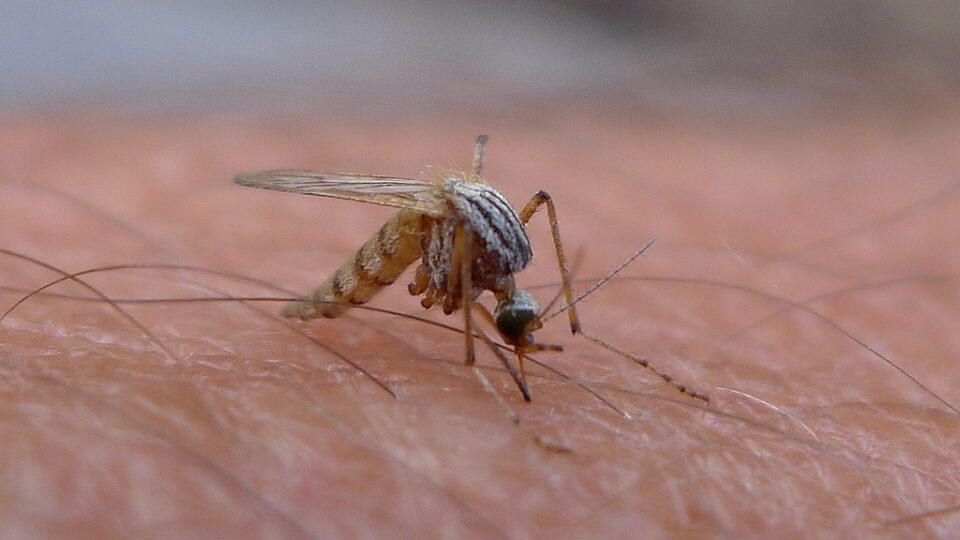
According to a new study published in the journal Ecology, the warming climate may soon mean more mosquitoes.  A research team, led by scientists from Virginia Commonwealth University, found that rising temperatures, often linked to climate change, can make predators of mosquito larvae less effective at controlling mosquito populations.  According to researchers, these warmer temperatures accelerate the development time of larvae, which leads to a smaller window of time in which predators like dragonflies could eat them.  As a result, twice as many mosquito larvae could make it to adulthood in the study area. 

Predators help stabilize ecosystems and food webs.  The study looked at predator-prey interactions between dragonfly nymphs and mosquito larvae.  In the study of Belle Isle along the James River in Richmond, Virginia, the research team found that warmer pools had more aquatic rock pool mosquito larvae – even when their predators that naturally control the populations were present.

While this species of mosquito is not an important disease vector, the researchers emphasize that these findings likely apply to other mosquito species that do act as vectors for diseases, such as West Nile or Zika virus.

The changing climate is creating the perfect environment for mosquitoes to thrive. 

**********

Web Links

Hotter weather caused by climate change could mean more mosquitos, according to VCU-led study

Photo, posted June 20, 2014, courtesy of John Tann via Flickr.

Earth Wise is a production of WAMC Northeast Public Radio
Coral Reefs And Fish Survival | Earth Wise

August 25, 2021 By EarthWise Leave a Comment

The warming and acidifying oceans threaten corals, fish, and livelihoods

The precarious state of the world’s coral reefs has been a highly visible subject for a decade or more.  Mostly what we hear about is the loss of some of the most beautiful sights on the planet. But there is far more at stake than scenic wonders.

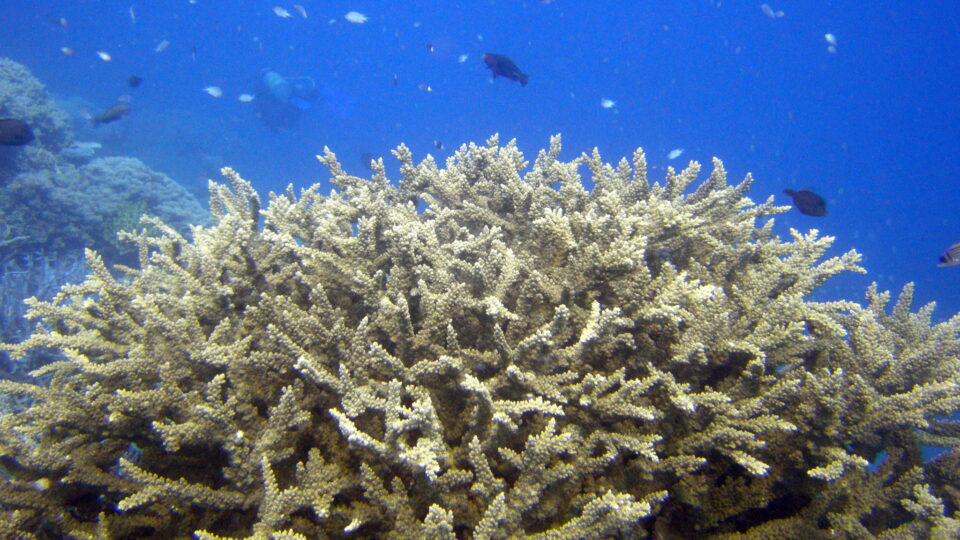
The warming and acidifying of ocean waters are causing corals to increasingly bleach and often die.  Corals provide a unique food source for some species of fish and a three-dimensional habitat for many others.  The fish that depend on corals are often prey for fish that don’t depend directly on corals and so on up the food chain.

What happens to fish when coral reefs disappear?  The fish species that feed on corals will starve while others will seek alternative rocky habitats.

A new study by the University of Helsinki uses statistical methods to predict how fish diversity will respond to declines in coral diversity. It concludes that a future coral loss might cause a 40% reduction in reef fish diversity globally.  This is more than a loss of colorful sights for snorkelers; reef fishes provide essential protein for millions of people around the world.

The estimate of potential loss of fish species greatly exceeds the number of species known to depend directly or even indirectly on coral.  The implication is that coral reef food webs will begin to unravel if corals go extinct.  This unraveling is expected to be worse in some places than others.  The Central Pacific, for example, could lose 60% of its reef fish.

For both snorkelers and for the millions who depend upon reef fishes for food, the need for greater efforts to conserve and restore coral reefs is apparent.

**********

Web Links

A fu­ture ocean that is too warm for cor­als might have half as many fish spe­cies

Photo, posted September 27, 2009, courtesy of Matt Kieffer via Flickr.

Earth Wise is a production of WAMC Northeast Public Radio.

Terrestrial Plants and Lake Ecosystems

May 4, 2017 By EarthWise

https://earthwiseradio.org/wp-content/uploads/2017/05/EW-05-04-17-Terrestial-Plants-and-Lake-Ecosystems.mp3

Most of the planet’s freshwater stores are found in the northern hemisphere, a region that is changing rapidly in response to human activity and shifting climate trends. A recent study analyzed 147 northern lakes and found that many rely on nutrients from tree leaves, pine needles, and other land-grown plants to feed aquatic life.

[Read more…] about Terrestrial Plants and Lake Ecosystems

Seabirds In Trouble

November 3, 2015 By EarthWise

https://earthwiseradio.org/wp-content/uploads/2015/10/EW-11-03-15-Seabird-Trouble.mp3

Bad news for seabirds.  New research out of the University of British Columbia shows that their populations have declined by a staggering 70% since 1950. This finding is troubling on multiple levels, as seabird populations tend to be good indicators of marine ecosystem health.

[Read more…] about Seabirds In Trouble

Primary Sidebar

Recent Episodes

  • An uninsurable future
  • Clean energy and jobs
  • Insect declines in remote regions
  • Fossil fuel producing nations ignoring climate goals
  • Trouble for clownfishes

WAMC Northeast Public Radio

WAMC/Northeast Public Radio is a regional public radio network serving parts of seven northeastern states (more...)

Copyright © 2025 ·