• Skip to primary navigation
  • Skip to main content
  • Skip to primary sidebar

Earth Wise

A look at our changing environment.

  • Home
  • About Earth Wise
  • Where to Listen
  • All Articles
  • Show Search
Hide Search
You are here: Home / Archives for float

float

Antarctic Ice Collapse | Earth Wise

March 2, 2022 By EarthWise Leave a Comment

Warming temperatures are causing Antarctic ice collapse

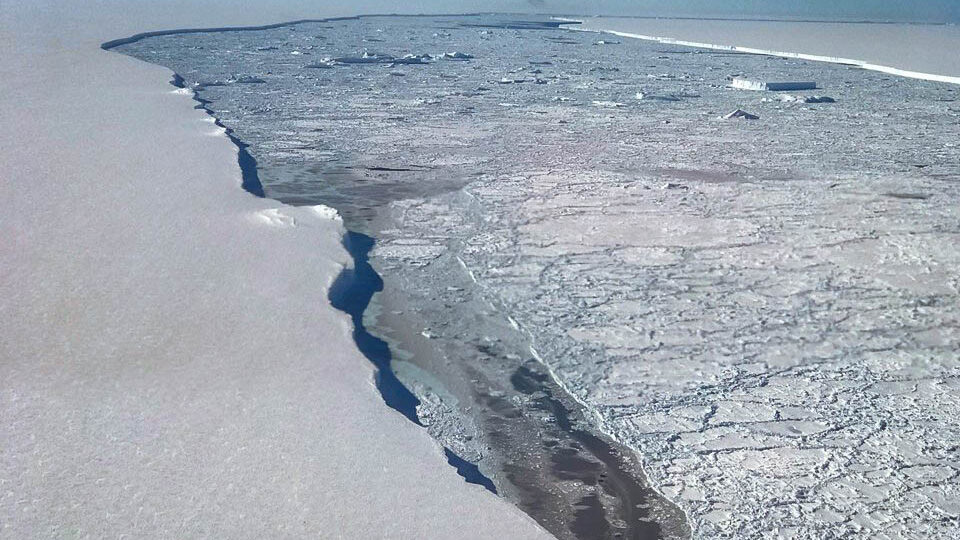
In Antarctica, a huge chunk of the Larsen B Ice Shelf collapsed suddenly and spectacularly in January.

The Larsen Ice Shelf is located on the northeastern side of the Antarctic Peninsula on the Weddell Sea.  It was formed over the course of more than 12,000 years.  The Weddell Sea used to be a completely frozen body of water.  The famous Ernest Shackleton expedition in 1915 was trapped in its ice.  But the Antarctic Peninsula has been steadily warming in recent decades.

The Larsen A Ice shelf collapsed in 1995 and the 1,250-square-mile Larsen B Ice Shelf collapsed in 2002.  After that event, a portion of the detached ice shelf refroze in 2011 and was attached to the Scar Inlet Ice Shelf.  The refrozen ice was called the Larsen B embayment.

In January, the embayment broke apart, taking with it a portion of the Scar Inlet Ice Shelf.  It disintegrated within a matter of days.  The combined Larsen Ice Shelves – called A, B, C, and D – once extended along a 1000-mile stretch of the eastern Antarctic Peninsula.  Since 1995, it has shrunk from 33,000 square miles to 26,000 square miles.

These ice shelves float on the ocean, so their loss does not actually increase global sea levels.   However, the shelves act as dams that hold back glaciers located on the land behind them.  The loss of Antarctic ice shelves dramatically increases the rate at which glaciers flow into the sea, and that does increase global sea levels. 

Now that the sea ice from the Larsen B embayment is gone, it is likely that there will be additional inland ice losses from the newly exposed glaciers.

**********

Web Links

Remnant of Antarctica’s Larsen B Ice Shelf Disintegrates

Photo, posted February 13, 2018, courtesy of NASA/Nathan Kurtz via Flickr.

Earth Wise is a production of WAMC Northeast Public Radio.
An Arctic Bus | Earth Wise

February 17, 2022 By EarthWise Leave a Comment

Developing a bus capable of navigating in the Arctic

People have built vehicles for all sorts of extreme environments.  There are deep-sea exploration vessels and there have been lunar and Mars rovers.  But one thing that hasn’t existed so far are buses to transport groups of people around in extreme conditions in the Arctic.  Engineers at two Russian Universities are developing a passenger bus for riding in the Far North.   The project is being funded by the Russian Federation Ministry of Science and Higher Education and the URAL Automobile Manufacturing Plant.

The requirements for the vehicle are daunting.  The bus must be operable at extreme temperatures – 60 below zero Fahrenheit and lower – and have no difficulties even in challenging off-road conditions.

Current Arctic crew buses are not capable of getting through snow blockages and the all-terrain tracked vehicles that can get through them do not have sufficient passenger capacity. In addition to being able to go through snowbanks, the bus should be able to float on water for an hour.

Apart from its ability to withstand harsh Arctic conditions, the bus will also have a quarters module.  This means that it will have an autonomous life-support system for passengers in case of emergency.  The quarters module will be designed to sustain up to 20 people for up to 24 hours.  The module might also be used to hold medical equipment, thereby enabling practitioners to reach remote settlements and treat patients. 

The first tests of prototypes for the bus will be conducted in the near future.  The project aims to have the new Arctic Bus design complete and ready for manufacture by the end of 2023 and it will go into production in 2024.

**********

Web Links

“Arctic Bus” Being Readied to Be Tested in the Far North

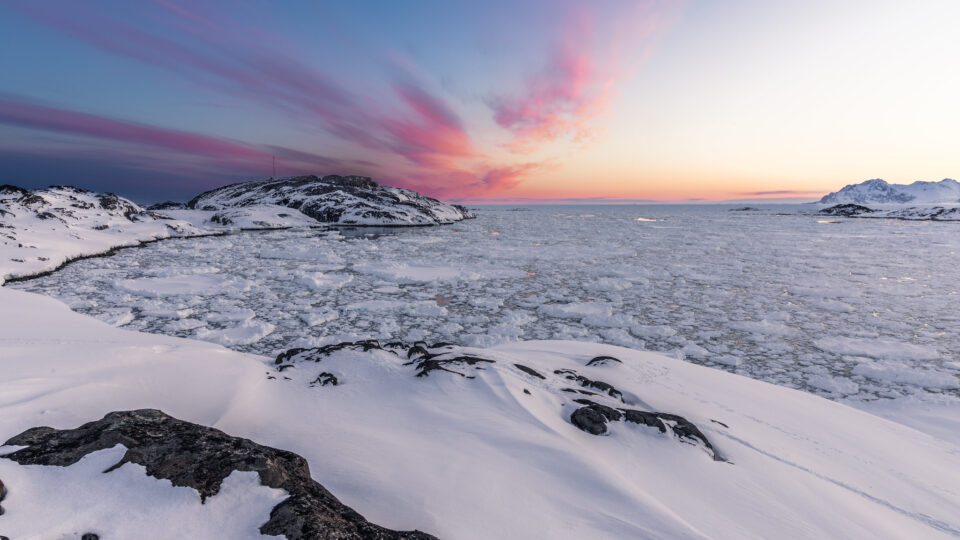
Photo, posted April 21, 2017, courtesy of Markus Trienke via Flickr.

Earth Wise is a production of WAMC Northeast Public Radio.
Floating Turbines For Offshore Wind | Earth Wise

June 18, 2020 By EarthWise Leave a Comment

floating wind turbines

Offshore wind is big in Europe.  There are more than 5,000 offshore wind turbines across 12 European countries with a total capacity of more than 22 gigawatts.  Almost every one of those turbines sits on a long tower sunk into the seabed and bolted into place in places where the water is 60 to 160 feet deep.

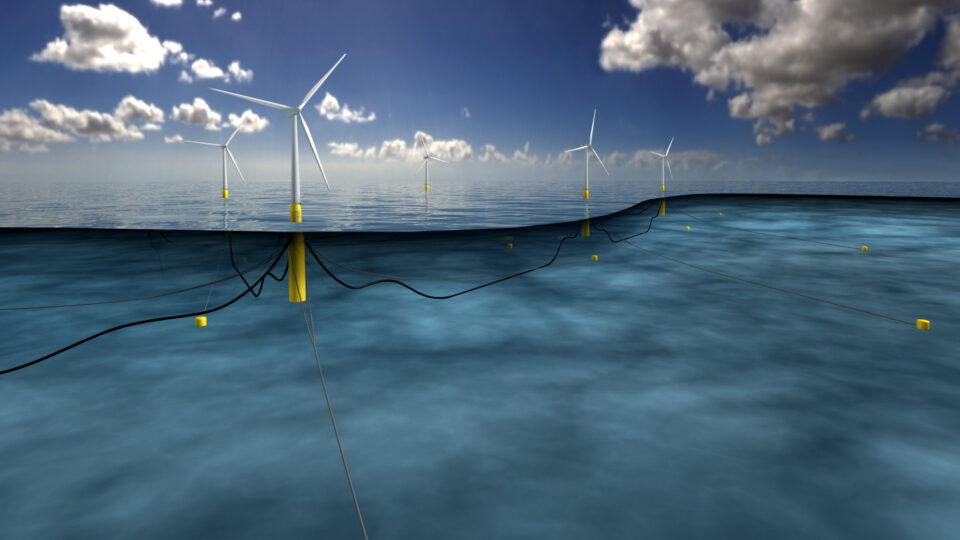
But off the coast of northern Scotland, there is the Hywind Wind Park which has five 574-foot-tall turbines located 15 miles offshore where the water is 300 feet deep.  The giant masts and turbines sit on buoyant concrete-and-steel keels that allow them to stand upright and float on the water like a giant buoy.  The giant cylindrical bases are held in place with mooring cables attached to anchors that sit on the seafloor.

A key advantage of floating turbines is that they can access outlying ocean waters up to half a mile deep, which is where the world’s strongest and most consistent winds blow.  Another advantage is that such turbines can be installed over the horizon, out of sight of coastal residents who might not like to have wind turbines visible in their scenic ocean views.

Floating wind power has enormous potential for contributing to the expansion of renewable energy.  Offshore wind is still quite a bit more expensive than land-based turbines, and the cost of electricity from distant floating turbines is more than that from near-shore wind turbines.   But all of these costs are likely to come down with improving technology and increased production volume.

There are real challenges to the expanded used of floating wind farms, but the promise of harnessing so much of the open seas for electricity generation is an attractive proposition.

**********

Web Links

Will Floating Turbines Usher in a New Wave of Offshore Wind?

Photo, posted July 17, 2017, courtesy of Crown Estate Scotland via Flickr.

Earth Wise is a production of WAMC Northeast Public Radio.

Primary Sidebar

Recent Episodes

  • An uninsurable future
  • Clean energy and jobs
  • Insect declines in remote regions
  • Fossil fuel producing nations ignoring climate goals
  • Trouble for clownfishes

WAMC Northeast Public Radio

WAMC/Northeast Public Radio is a regional public radio network serving parts of seven northeastern states (more...)

Copyright © 2026 ·