• Skip to primary navigation
  • Skip to main content
  • Skip to primary sidebar

Earth Wise

A look at our changing environment.

  • Home
  • About Earth Wise
  • Where to Listen
  • All Articles
  • Show Search
Hide Search
You are here: Home / Archives for flight

flight

Can birds outfly climate change?

July 8, 2025 By EarthWise Leave a Comment

Birds cannot outfly climate change

As global temperatures continue to rise and ecosystems shift, animals are left with limited options. They must either adjust to the changing conditions in their habitats or relocate to cooler environments. For many species, neither choice is easy – or sometimes even possible.

Ecologists had long assumed birds were among the most adaptable species in a warming world simply because they can fly to higher altitudes or towards global poles. But a new study by researchers from Yale University found that even birds are struggling to stay ahead of rising global temperatures.

The study, which was recently published in the journal Nature Ecology and Evolution, analyzed 20 years of data from 406 bird species across North America. They found that while most birds did shift their ranges northward – by about 40 to 50 miles on average during the summer – the changes weren’t enough to keep up with the rapid pace of climate change.

Birds still experienced significant warming in their new areas when compared with temperatures in their original home range.  In fact, warming was about 1.35 degrees Celsius more in summer, and a striking 3.7 degrees more in winter. And some species, especially those with limited flight ranges or specific habitat needs, like the cactus wren, didn’t move at all.

Highly mobile birds like the blue-winged warbler did better, avoiding nearly two degrees of warming by traveling more than 100 miles north. But even they couldn’t completely dodge the heat.

The findings raise serious concerns about whether less mobile species can survive in a warming world, and underscores the urgent need to better understand and manage those most vulnerable to climate-driven extinction.

**********

Web Links

Even birds can’t outfly climate change

Photo, posted March 1, 2023, courtesy of Henry via Flickr.

Earth Wise is a production of WAMC Northeast Public Radio
Airplane Turbulence And Climate Change | Earth Wise

July 4, 2023 By EarthWise Leave a Comment

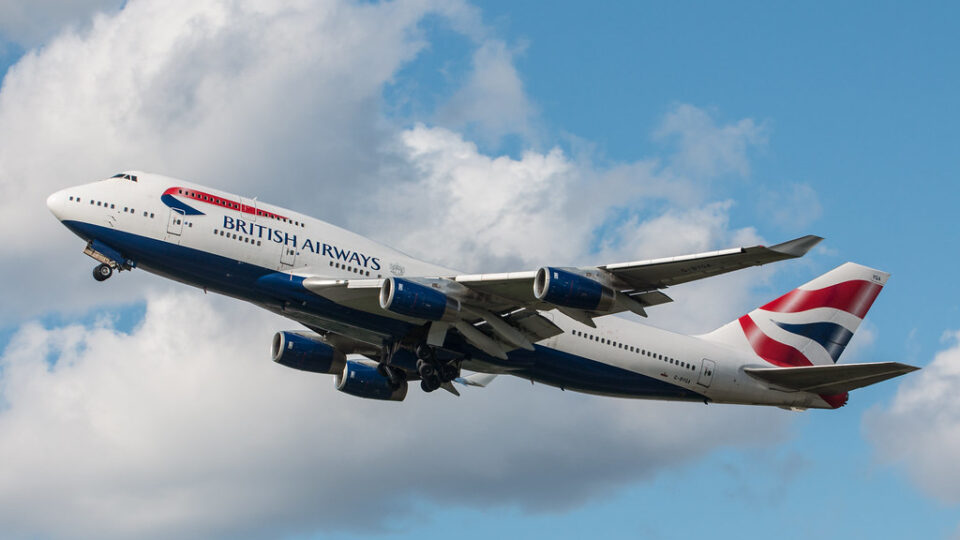
If you’ve ever been on an airplane, chances are pretty good that you’ve experienced turbulence.  As the busy summer travel season kicks off, travelers are being encouraged to brace themselves for a bumpier-than-usual ride. 

There has been a major increase in the number of severe turbulence cases on both domestic and international flights.  According to a new study by researchers from the University of Reading in the U.K., climate change is leading to this increase in turbulence, driving up costs (via wear and tear on aircrafts), and increasing the risks for passengers and flight attendants.  In the United States alone, turbulence costs the airline industry $150-$500 million annually. 

The study, which was recently published in the journal Geophysical Research Letters, found that warmer air, caused by carbon emissions, is creating bumpier flights around the world.  In fact, the study found that severe turbulence in the North Atlantic is up by 55% since 1979. 

The changing climate is affecting air travel in other ways as well.  A faster jet stream across the Atlantic is altering travel times.  Rising temperatures are reducing the weight that aircraft can carry.  Rising seas are threatening low-lying coastal airports around the world. 

But carbon emissions from aviation are also a significant driver of the climate crisis.  Air travel accounts for approximately 3% of global greenhouse gas emissions, and is one of the fastest growing sources of emissions. According to the International Civil Aviation Organization, emissions from international air travel are expected to triple by 2050.

The future is shaping up to be a bumpy ride.

**********

Web Links

Climate crisis leading to more turbulence during flights, says study

Evidence for Large Increases in Clear-Air Turbulence Over the Past Four Decades

Climate Scientist Explains Increase In Airplane Turbulence

Airports and Rising Seas

Photo, posted May 9, 2018, courtesy of Steve Lynes via Flickr.

Earth Wise is a production of WAMC Northeast Public Radio
Trouble For The Outer Banks | Earth Wise

August 9, 2022 By EarthWise Leave a Comment

Rising seas are threatening the Outer Banks

The Outer Banks are a series of barrier islands off the coast of North Carolina that separate the Atlantic Ocean from the mainland.  They are a very popular tourist destination featuring open-sea beaches, state parks, shipwreck diving sites, and historic locations such as Roanoke Island, the site of England’s first settlement in the New World. There is also Kitty Hawk, the site of the Wright Brothers’ first flights.

The ribbon of islands is nearly 200 miles long.  Some of them are low and narrow and are only a few feet above sea level.  Many are especially vulnerable to Nor’easters in the winter and hurricanes in the summer.  The collision of warm Gulf Stream waters and the colder Labrador current helps to create dangerous shoals and some of the largest waves on the East Coast.

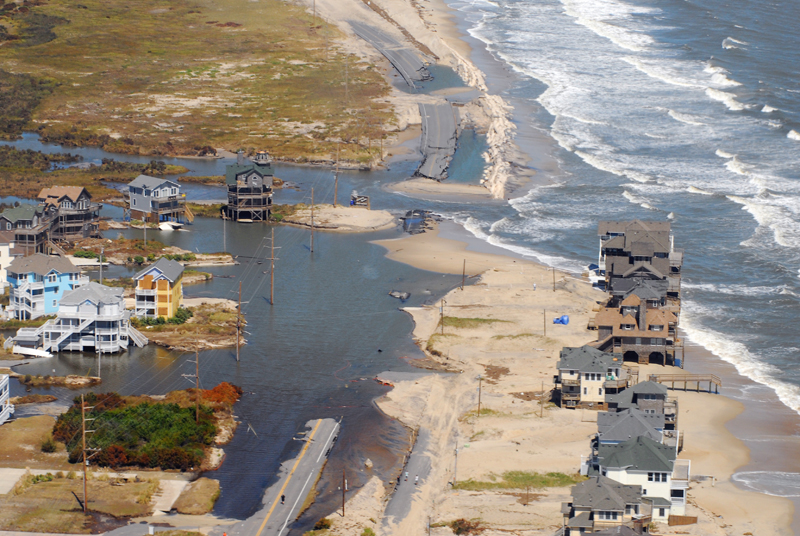
Over the years, developers have added billions of dollars’ worth of real estate to the Outer Banks.  Rising sea levels and increasingly frequent storms threaten the barrier islands of the Outer Banks.  Beach-front cottages have tumbled into the ocean for as long as people have built them in the Outer Banks but now they are falling at a greater rate and more and more are in danger.

The Department of Transportation has spent nearly $100 million dollars to keep NC12, the highway connecting the string of islands, open to traffic.  Three new bridges built to traverse inlets opened by storms and bypassing rapidly eroding shorelines raised the cost by another half a billion dollars.

There are many other measures such as pumping sand into eroded areas going on in the Outer Banks, but ultimately, all of the measures may not be enough to deal with rising sea levels and more powerful storms.

**********

Web Links

Shifting Sands: Carolina’s Outer Banks Face a Precarious Future

Photo, posted August 31, 2011, courtesy of NCDOT Communications via Flickr.

Earth Wise is a production of WAMC Northeast Public Radio.

Living in a Carbon Bubble | Earth Wise

July 18, 2022 By EarthWise Leave a Comment

The earth’s atmosphere is a little over 0.04% carbon dioxide, currently about 420 parts per million.  That’s more than it’s been in millions of years and is changing our climate.  But these levels of CO2 are not enough to directly affect people.

However, people are sensitive to the amount of carbon dioxide they are breathing.  It is actually an indoor pollutant.  High concentrations have been shown to reduce our cognitive performance, our health, and our comfort.  For example, a study in 2012 showed that performance in a variety of cognitive function tests was reduced by 12% when CO2 levels reached 1,000 parts per million and by 51% at 2,500 ppm.

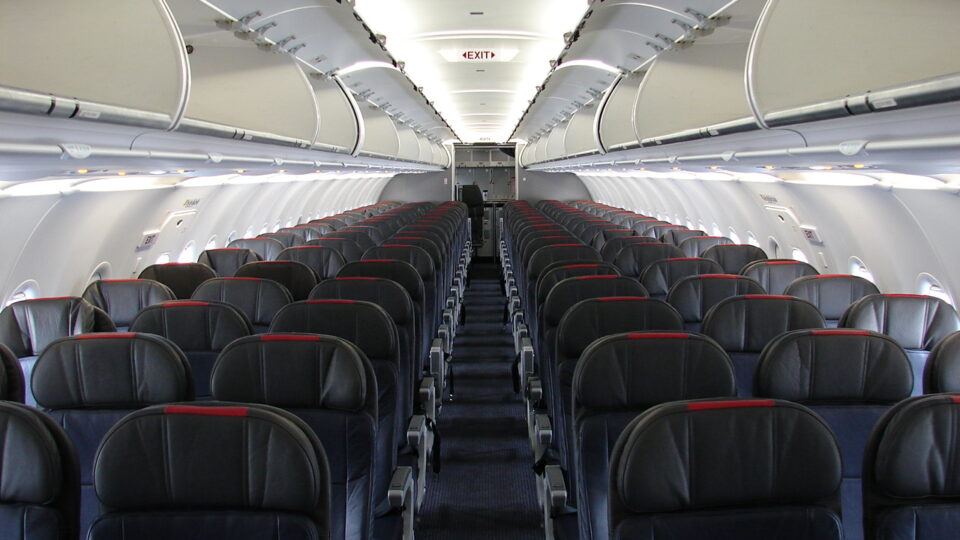
How common are high levels of carbon dioxide?  Pretty common.  Offices often have CO2 levels of 600 ppm or higher, but 5% of US offices have average concentration about 1000 ppm and some conference rooms can reach 1900 ppm.  Classrooms often reach average levels above 1000 ppm.  Passenger aircraft have average levels around 1400 ppm during flight, and can peak over 4,000 ppm.  Cars with one occupant with the windows closed and the air recirculating have levels above 4,000 ppm. 

Where does it all come from?  From us.  We exhale CO2 and if we are in enclosed spaces with insufficient air circulation and ventilation, we end up living in a carbon dioxide bubble.  Most of us live with high CO2 levels – all day and every day.  It is a form of indoor pollution that has not gotten enough attention.

**********

Web Links

I’m living in a carbon bubble. Literally.

Photo, posted October 24, 2013, courtesy of Cory W. Watts via Flickr.

Earth Wise is a production of WAMC Northeast Public Radio.

A Plane With No Moving Parts

December 11, 2018 By EarthWise 1 Comment

https://earthwiseradio.org/wp-content/uploads/2018/12/EW-12-11-18-A-Plane-With-No-Moving-Parts.mp3

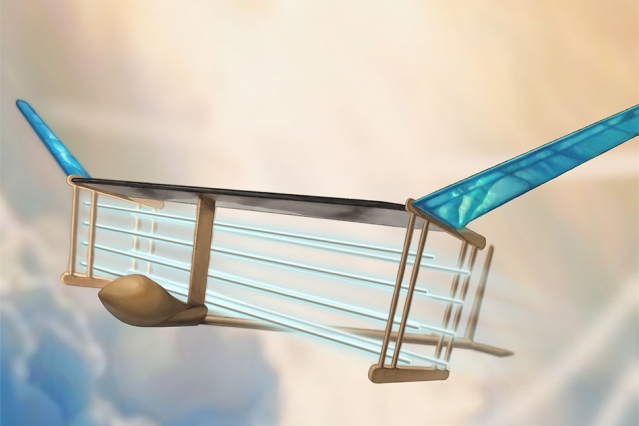
Airplanes have been with us for more than a century and they fly with the help of propellers, turbine blades or fans that noisily move them through the air.  Recently, MIT engineers have built and flown a plane with no moving parts.

[Read more…] about A Plane With No Moving Parts

Primary Sidebar

Recent Episodes

  • An uninsurable future
  • Clean energy and jobs
  • Insect declines in remote regions
  • Fossil fuel producing nations ignoring climate goals
  • Trouble for clownfishes

WAMC Northeast Public Radio

WAMC/Northeast Public Radio is a regional public radio network serving parts of seven northeastern states (more...)

Copyright © 2026 ·