• Skip to primary navigation
  • Skip to main content
  • Skip to primary sidebar

Earth Wise

A look at our changing environment.

  • Home
  • About Earth Wise
  • Where to Listen
  • All Articles
  • Show Search
Hide Search
You are here: Home / Archives for federal

federal

Geothermal energy may be safe

August 4, 2025 By EarthWise Leave a Comment

The Trump Administration is outwardly hostile to renewable energy, especially solar and wind power.  Federal support for these energy sources that are by far the most rapidly growing energy sources across the globe is being gutted while fossil fuels are being propped up.

There is also renewed enthusiasm for nuclear power and, somewhat surprisingly, geothermal heat.   Geothermal is a renewable and clean energy source that has long been mostly overlooked and underfunded.  The main reasons are its expense and the fact that its large-scale use is unproven. 

Historically, geothermal energy has relied upon naturally occurring features such as hot springs and shallow underground heat sources.  However, technological breakthroughs that began in 2013 have led to enhanced geothermal systems, or EGS.  EGS makes use of the fact that if you drill deep enough into the earth pretty much anywhere, you will encounter substantial amounts of heat.  EGS plants pump water three miles down or more where it encounters rock that reaches over 500 degrees.  The piping hot water is then brought to the surface where it spins turbines to generate electricity.

Several companies are developing EGS in the U.S.  financed by tech companies seeking power for their AI activities, the Defense Department, and even by fossil fuel companies who use comparable drilling technology for fracking.

The so-called Big Beautiful Bill passed by Congress in July that eliminates tax credits for wind and solar energy preserves tax credits for geothermal projects.

**********

Web Links

Why U.S. Geothermal May Advance, Despite Political Headwinds

Photo, posted September 30, 2019, courtesy of Stephen D Strowes via Flickr.

Earth Wise is a production of WAMC Northeast Public Radio

Empire Wind resumes

June 17, 2025 By EarthWise Leave a Comment

In April, the Trump Administration issued a stop order for the Empire Wind offshore wind project in New York, pushing the $5 billion project to the brink of collapse.  The project is being built by the giant Norwegian energy company Equinor.  When completed, the wind farm is expected to deliver enough electricity to power 500,000 New York homes.

Equinor had obtained all the necessary permits for the project after a four-year federal environmental review and work had begun on laying foundations for the wind turbines on the ocean floor. 

Interior Secretary Doug Burgum claimed that the permits for the project been rushed and ordered the work stopped.  The stoppage was costing Equinor $50 million a week as well as jeopardizing an additional 1,000 jobs. 

Weeks of intensive interactions between New York Governor Kathy Hochul, Equinor officials, and the White House finally resulted in a decision by the administration to lift the stop work order and allow the project to move forward. 

The collapse of the project would have created major problems for New York.  The state’s grid operators have been counting on the construction of several new offshore wind farms to provide large additional amounts of electricity without producing greenhouse gas emissions.  New York has aggressive targets for using renewable energy.

Empire Wind is expected to have 816 megawatts of capacity.  Another offshore project in New York, Sunrise Wind, which is under construction 30 miles east of Montauk Point on Long Island, would have 924 megawatts of capacity.

**********

Web Links

In Reversal, Trump Officials Will Allow Huge Offshore N.Y. Wind Farm to Proceed

Photo, posted August 9, 2022, courtesy of the Scottish Government via Flickr.

Earth Wise is a production of WAMC Northeast Public Radio

Tearing down small dams to restore rivers

March 11, 2025 By EarthWise Leave a Comment

There are more than 31,000 dams in the northeastern United States.  More than 4,000 of them are in the Hudson River watershed.  Most of these dams are quite small and were built in the 19th century to form ponds and to power grist, textile, paper, saw, and other kinds of mills as the region developed its industrial infrastructure.  The nonprofit organization American Rivers estimates that 85% of U.S. dams are unnecessary at best and pose risks to public safety at worst. 

Dam removals have been occurring for over 100 years, but the vast majority have taken place since the mid-2010s and have increased dramatically since the 2021 Bipartisan Infrastructure Law, which provided funding for such projects.

So far, 806 Northeastern dams have come down and hundreds more are in the pipeline.

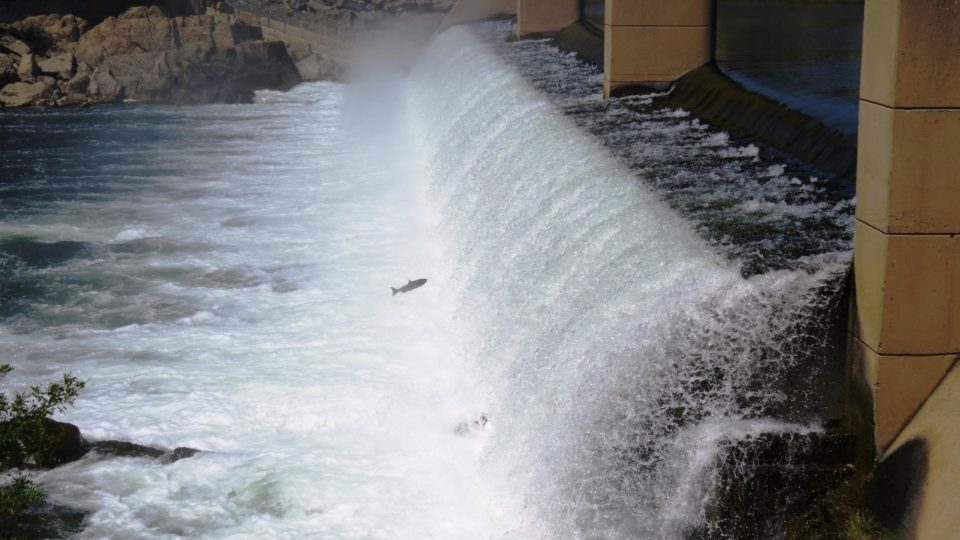
Dam removals improve aquatic fish passage, water quality, watershed resilience, and habitat for all the organisms in river ecosystem food chains, ranging from insects to fish to otters to eagles.  Small dams have degraded habitat and altered downstream hydrology and sediment flows.  They have created warm, stagnant, low-oxygen pools that trigger algal blooms and favor invasive species.

But removing even small dams is not an easy matter.  Projects range in cost from $100,000 to $3 million and qualifying for funding – whether federal or state – requires projects to meet a variety of requirements including community support.  Not all dams can be removed, but many more should.

**********

Web Links

How Tearing Down Small Dams Is Helping Restore Northeast Rivers

Photo, posted September 20, 2010, courtesy of Doug Kerr via Flickr.

Earth Wise is a production of WAMC Northeast Public Radio

Curbing food waste

February 3, 2025 By EarthWise Leave a Comment

Efforts to curb food waste are failing

According to the U.S. Department of Agriculture, as much as 40% of the food supply in the United States is wasted.  In fact, Americans generate more food waste than all but two countries.

To address this problem, the federal government announced a goal nearly a decade ago to cut food waste in half by 2030 compared to 2016 levels.  Doing so would bring food waste down to approximately 164 pounds per person annually.

However, according to a new study led by researchers from the University of California – Davis, since 2016, per capita food waste has actually increased instead of decreasing. 

The study, which was recently published in the journal Nature Food, looked at how state policies align with federal targets.  The research team found that state policies focus more on recycling methods, such as composting and anaerobic digestion, rather than on prevention and rescue strategies, like food donations or repurposing food for animal feed.

In 2021, the EPA revised its definition of food waste to no longer include recycling methods.  But when food is wasted, the resources used to grow the food, including energy, water, and fertilizer, are also wasted. 

In the study, the researchers analyzed state-level food waste reduction efforts across four areas: prevention, rescue, repurposing, and recycling.  They found that recycling policies offered the most potential for diversion. Despite this, most states still fell short of the federal goal of 164 pounds per person annually. 

According to the research team, more comprehensive policies to address food waste must be implemented as soon as possible.

**********

Web Links

States Struggle to Curb Food Waste Despite Policies

Photo, posted June 28, 2021, courtesy of Ivan Radic via Flickr.

Earth Wise is a production of WAMC Northeast Public Radio
Solar energy on federal land

October 15, 2024 By EarthWise Leave a Comment

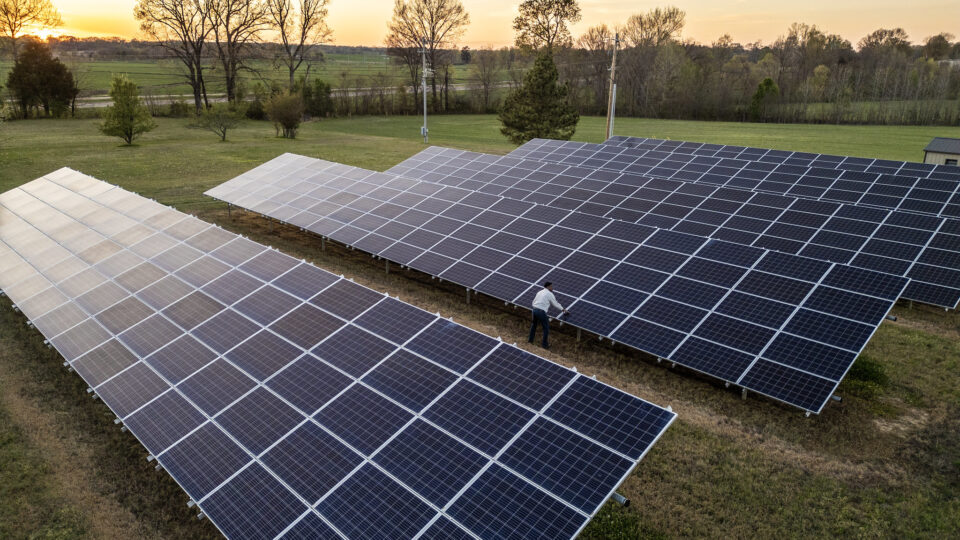
Officials at the federal Bureau of Land Management announced late in August that they had finalized a plan to add Oregon, Idaho, Montana, Washington, and Wyoming to the Western Solar Plan, which started during the Obama era.   The plan, created in 2012, provides permitting for solar projects on federal land.  The original plan included Arizona, California, Colorado, Nevada, New Mexico, and Utah.

The Western Solar Plan is a major expansion for clean energy production in the Bureau of Land Management’s land leasing portfolio.  For decades, the BLM has leased tens of millions of acres of federal land to fossil fuel companies for oil, coal, and natural gas exploration and production.

The new addition includes 1.1 million acres of land in Oregon, an area larger than the entire state of Rhode Island.  The land selected is deemed to be of low risk for any adverse environmental effects from solar installation, and the plots of land are all within 15 miles of existing or planned electrical transmission lines.  A little over 50% of Oregon’s land is owned by the federal government and is managed primarily by the Bureau of Land Management and the U.S. Forest Service.

The publication of the finalized plan at the end of August initiated a 30-day period for any participants in the initial planning to voice objections.  The governors of the 5 new states are reviewing the plan.  Final approval and adoption are expected later this year.

Western states need to expand solar and other clean energy production to meet their climate goals and federal lands will have to play an important role.

**********

Web Links

Plan would make 1 million acres of federal land in Oregon available for solar energy projects

Photo, posted May 20, 2024, courtesy of the U.S. Department of Agriculture via Flickr.

Earth Wise is a production of WAMC Northeast Public Radio

Benefits of electric school buses

July 1, 2024 By EarthWise Leave a Comment

Converting to electric school buses

There are about half a million school buses in use in the U.S.  A large number of them are older, highly polluting diesel buses.  There are well-established health and climate benefits of switching from diesel vehicles to electric vehicles but making the switch is expensive.  Diesel buses generally cost between $65,000 to $120,000, depending on the type and configuration.  Electric buses cost about $250,000 each.

The substantial cost makes it a difficult decision for local, state, and federal officials, particularly since the actual magnitude of the benefits is not well known.

A new study by researchers at Harvard’s T.H. Chan School of Public Health has quantified these benefits.  According to the study, replacing each bus may yield up to $247,600 in climate and health benefits. These benefits derive from fewer greenhouse gas emissions and from reduced rates of adult mortality and childhood asthma. 

The study compared the amounts of carbon dioxide emitted from diesel bus tailpipes to the emissions associated with generating electricity for the buses and producing their batteries.  It also compared how these respective emissions contribute to fine particulate air pollution, which is linked to adult mortality and the onset of childhood asthma.  The study concluded that particularly in dense urban settings, the savings incurred from electrifying older school buses easily outweigh the costs of replacing them.

An important question not tackled in the study is how electric school buses impact children’s exposure to in-cabin air pollution while riding the bus.  This issue could further inform policy decisions.

**********

Web Links

Electric school buses may yield significant health and climate benefits, cost savings

Photo, posted May 9, 2008, courtesy of Christine H. via Flickr.

Earth Wise is a production of WAMC Northeast Public Radio
Storing carbon underground and abandoned wells

April 18, 2024 By EarthWise Leave a Comment

Energy companies pushing for expansion of underground carbon storage

Using government support in the form of subsidies and tax credits, energy companies and others are planning to capture millions of tons of industrial carbon dioxide emissions and pipe the greenhouse gas into underground storage.  It is a strategy enthusiastically supported by the fossil fuel industry because it allows them to keep burning the stuff.

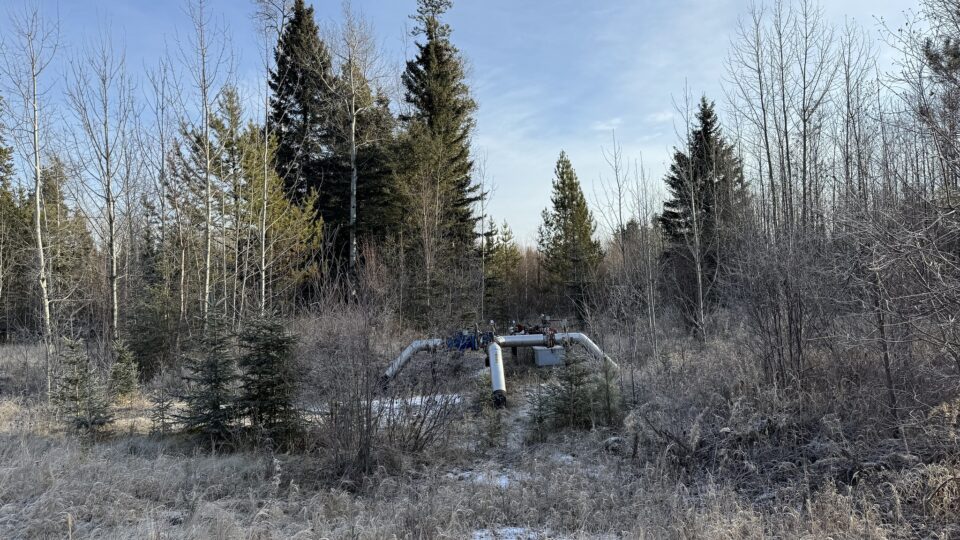
There are currently 69 projects being reviewed by federal and state regulators seeking to store CO2 underground.  The sorts of places where carbon dioxide can be injected are geologic zones containing porous rock formations which, in no way coincidentally, are the same places where oil and gas deposits are found.  As a result, these places are studded with abandoned wells that have accumulated over the past century.

In Louisiana, there are about 120,000 abandoned wells that overlie geological zones that could store carbon dioxide.  Environmental watchdog groups have identified numerous abandoned wells within a few miles of proposed storage sites.

The problem is that abandoned wells leak – even ones that have been plugged – and many haven’t been.  The question is how much leakage will occur and what will be the consequences of the leakage.  In Texas, pumping oilfield wastewater into abandoned wells has led to geysers of toxic water, artificial saline lakes, and earthquakes.

Underground carbon dioxide sequestering on a scale large enough to really matter will have to extend to very large areas.  For example, injecting 100 million tons per year could create a pressurized zone as large as 100 miles.  How large a problem this might create from abandoned wells in the zone is not at all clear but cannot be ignored.

**********

Web Links

Companies Are Poised to Inject Millions of Tons of Carbon Underground. Will It Stay Put?

Photo, posted December 3, 2023, courtesy of Jason Woodhead via Flickr.

Earth Wise is a production of WAMC Northeast Public Radio
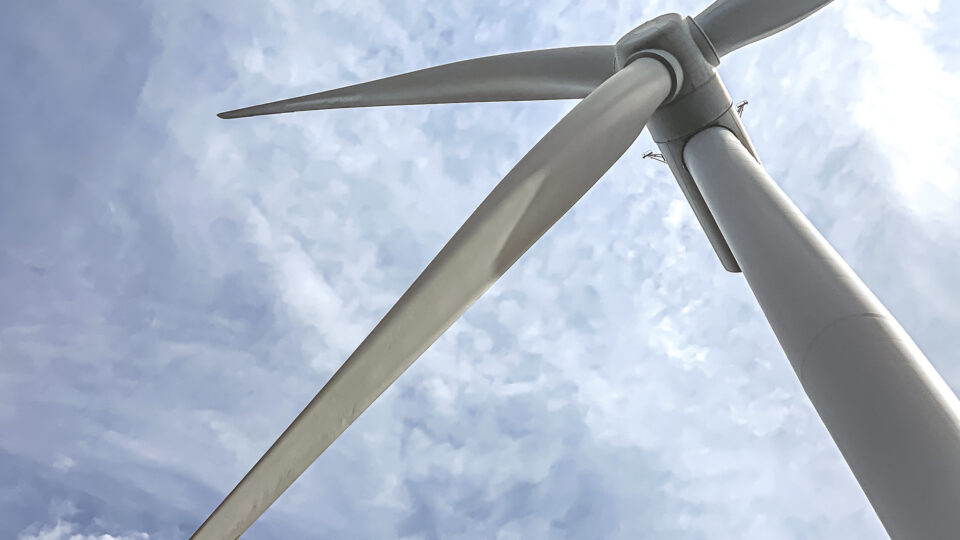
Progress on offshore wind in New York

April 1, 2024 By EarthWise Leave a Comment

New York has now conditionally awarded two offshore wind projects that will move towards operation in 2026.  The projects, totaling more than 1,700 megawatts of power, will be the largest power generation projects in New York state in more than 35 years.  It is an important milestone toward achieving the state’s goal of developing 9,000 megawatts of offshore wind by 2035.

Empire Wind I, located 15 miles southeast of Long Island, and Sunrise Wind, located more than 30 miles east of the eastern point of Long Island, have already completed most federal and state permitting requirements.  Empire Wind I received final approval of their Construction and Operation Plan from the Bureau of Ocean Energy Management in late February.

Both projects are expected to ramp up construction activity this year.  Previous awards by NYSERDA for the projects in 2019 included contract provisions for specific economic benefits to New York communities and commitments for purchasing iron and steel from American sources.   Empire Wind I is being developed by Equinor, an international energy company headquartered in Norway.  Sunrise Wind, originally a joint project by Ørsted and Eversource, is now solely being developed by Ørsted, a global energy company based in Denmark.

Following successful execution of the contracts for the two projects, NYSERDA payments under these awards will only begin once the projects have obtained all required permits and approvals, the construction has been completed, and the projects begin delivering clean energy to New York.

**********

Web Links

New York selects Empire Wind I and Sunrise Wind offshore projects

Photo, posted June 14, 2022, courtesy of Lissa Eng / BOEM via Flickr.

Earth Wise is a production of WAMC Northeast Public Radio
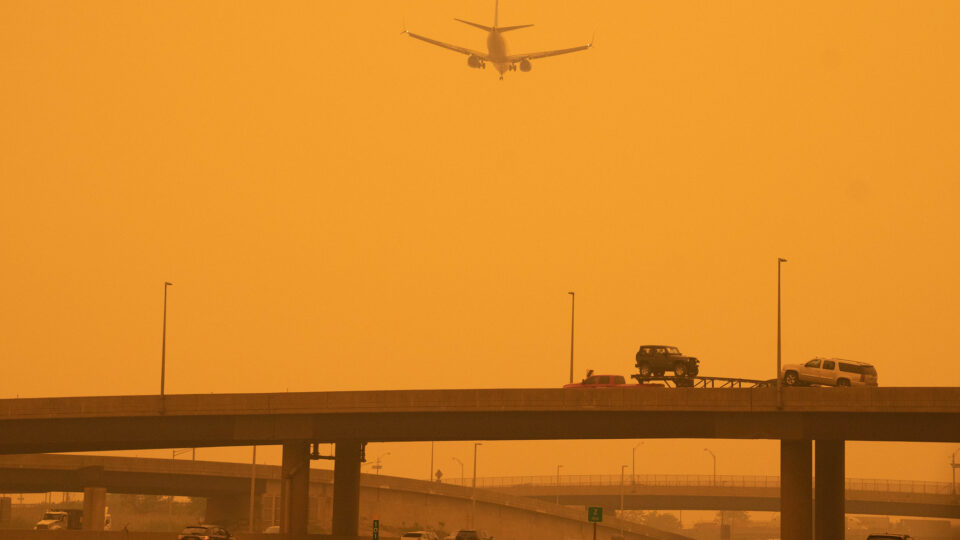
Wildfires and air quality

January 1, 2024 By EarthWise Leave a Comment

The impact of wildfires on air quality

The wildfires last summer in parts of the U.S. and Canada fouled the air over much of the country.  Air quality in many places was dangerous for human health.  And such fires are becoming more numerous and more intense.

A new study by the University of Iowa has assessed the effects of two decades of wildfires on air quality and human health in the continental U.S.

From 2000 to 2020, air quality in the western U.S. has gotten worse as a result of the numerous fires in that region.  More generally, all those fires have undermined the success of federal efforts to improve air quality, primarily through the reductions in automobile emissions.

American air had been getting cleaner and clearer as a result of EPA regulations on vehicle emissions, but the surge in wildfires has limited and, in some cases, erased these air quality gains.  Twenty years of efforts by the EPA to make our air cleaner have been lost in fire-prone areas and in many downwind areas.

The Iowa study looked at the concentration of black carbon, a fine-particle air pollutant from fires linked to respiratory and heart disease.  In the western U.S., black carbon concentrations have risen 86% on an annual basis.

Fires have also affected the air in the Midwest, although not to the same degree as in the west.  The eastern U.S. had no major declines in air quality during the 2000-2020 time period.  Given the episodes of smoke from Canadian wildfires experienced by the east coast this past summer – as far south as Florida – even the air in that part of the country is suffering from the spread of wildfires.

**********

Web Links

Wildfires have erased two decades’ worth of air quality gains in western US

Photo, posted June 8, 2023, courtesy of Anthony Quintano via Flickr.

Earth Wise is a production of WAMC Northeast Public Radio
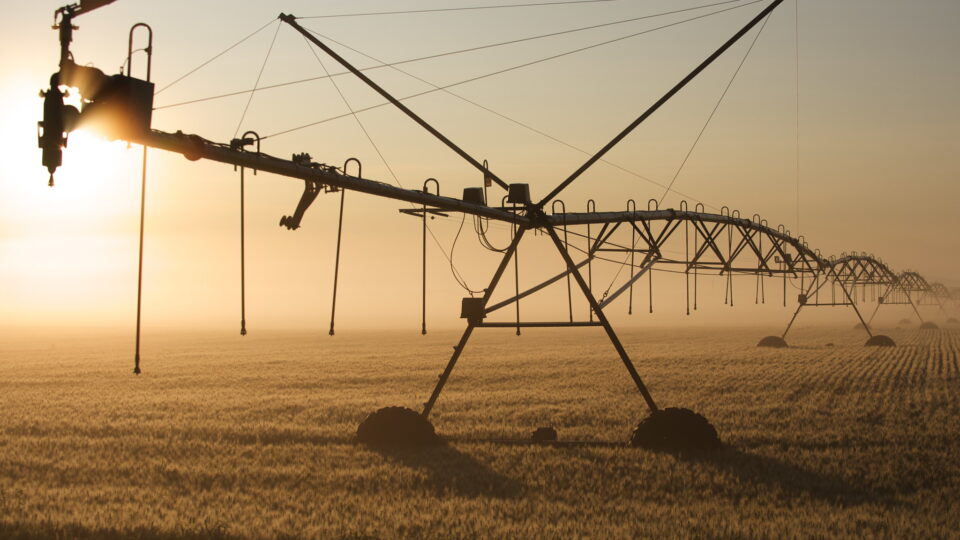
A Groundwater Crisis | Earth Wise

September 22, 2023 By EarthWise Leave a Comment

A groundwater crisis is brewing

The majority of U.S. drinking water systems rely on groundwater, as do America’s farms.  Even though groundwater is a crucial resource for the country, there is no central oversight or even monitoring of its status across the country.  The health of the country’s aquifers is difficult to gauge.

The New York Times spent months amassing data from 80,000 wells across the country by reaching out to federal, state, and local agencies nationwide.

The survey found that 45% of the wells examined showed a statistically significant decline in water levels since 1980.  Forty percent of the sites reached record-low water levels over the past 10 years, with last year the worst yet.

Over pumping is the biggest problem.  State regulations tend to be weak and there is no federal oversight.  The warming climate reduces snowpack, which means less water in rivers, increasing the need to tap into groundwater.  Warmer weather means thirstier plants, increasing the demand for water.

It is a nationwide problem, not just one in the drought-ridden West.  Arkansas, which produces half of the country’s rice, is pumping groundwater twice as fast as nature can replace it.  Three-quarters of Maryland’s wells have seen substantial drops in water levels.

As groundwater is pumped out, the empty space can collapse under the weight of the rock and soil above it, permanently diminishing the capacity for future groundwater storage.

There are likely to be parts of the U.S. that run out of drinking water and groundwater depletion threatens America’s status as an agricultural superpower. Objectively, the status of American groundwater is a crisis that threatens the long-term survival of communities and industries that depend on it. 

**********

Web Links

Five Takeaways From Our Investigation Into America’s Groundwater Crisis

Photo, posted July 25, 2009, courtesy of Chris Happel via Flickr.

Earth Wise is a production of WAMC Northeast Public Radio

The Race For EV Batteries | Earth Wise

February 1, 2023 By EarthWise Leave a Comment

The race for electric vehicle batteries is on

Lithium-ion batteries have been the power source for electric vehicles since 2008, when the Tesla Roadster was introduced.  They took over for nickel-metal hydride batteries that powered most hybrid electric cars such as the Prius.  Lithium-ion batteries store much more energy for a battery of a given weight, which leads to greater driving range.

But lithium-ion is not an ideal solution.  The batteries depend on critical materials that are obtained by hacking into mountains, utilizing scarce desert groundwater, and in some cases, making use of child labor. Many materials depend on countries with whom economic ties have complicated geopolitical consequences.

State and federal mandates and incentives are pushing auto companies to prioritize electric vehicles in their future plans.  The Inflation Reduction Act in particular provides credits and other incentives for both consumers and manufacturers to electrify. So, sources for EV batteries are a key issue.

The Department of Energy is funding 20 different companies with $2.8 billion to bolster the production and processing of critical minerals in the U.S.  The goal is to bring the electric vehicle supply chain onshore to the greatest extent possible.  Some of the work involves redesigning lithium-ion batteries to reduce or eliminate problematic materials such as cobalt.  Other efforts seek to find domestic sources of critical materials such as lithium without causing serious environmental problems.

Given all this, it is no surprise that academic and industrial researchers are also exploring a wide variety of alternative battery technologies. 

The future of transportation is electrification and the race for EV batteries is on.

**********

Web Links

For U.S. Companies, the Race for the New EV Battery Is On

Photo, posted August 27, 2021, courtesy of Ron Frazier via Flickr.

Earth Wise is a production of WAMC Northeast Public Radio
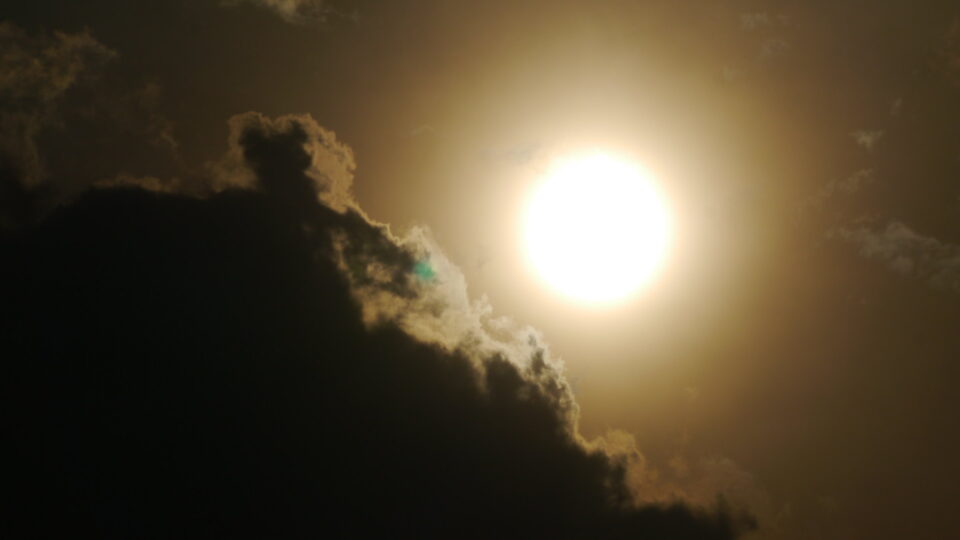
A Geoengineering Research Plan | Earth Wise

July 22, 2022 By EarthWise Leave a Comment

The 2022 federal appropriations act, signed into law in March, directed the Office of Science and Technology Policy to develop a cross-agency group to coordinate research on climate interventions, in partnership with NASA, the National Oceanic and Atmospheric Administration, and the Department of Energy.

The group is tasked with creating a research framework to “provide guidance on transparency, engagement, and risk management for publicly funded work on solar geoengineering research.”  The group is supposed to develop a five-year plan that will define research goals for the field, assess the potential hazards of climate interventions, and evaluate the level of federal funding required to carry out the work.

This marks the first federally coordinated effort of this kind and is especially significant because it contributes to the perception that geoengineering is an appropriate and important area of research as the climate continues to warm.

It is an understatement to say that such research is controversial.  Geoengineering has often been a taboo topic among scientists. There are significant questions about potential environmental side effects and concerns that the impact of any such efforts would be felt unevenly in different parts of the world.  There are challenging questions about global governance , including who should be able to make decisions about any potential deployment of climate interventions and what the goals of such interventions should be.

These are momentous issues to grapple with, but as the threat of climate change grows and nations continue to fail to make rapid progress on emissions, researchers, universities, and nations are increasingly motivated to seriously explore the potential effects of geoengineering approaches.  We can’t hide from the fact that these issues are going to be explored.

**********

Web Links

The US government is developing a solar geoengineering research plan

Photo, posted June 28, 2013, courtesy of Fernando Aramburu via Flickr.

Earth Wise is a production of WAMC Northeast Public Radio.

Concerns About Dam Safety

August 22, 2019 By EarthWise Leave a Comment

The United States has a total of 91,000 dams of various sizes and types.  Many of them are aging and sorely in need of repairs.  All that maintenance would add up to tens of billions of dollars.  Experts are increasingly worried that as extreme precipitation events become increasingly common, dams are increasingly at risk of failure, threatening lives and posing environmental risks.

In 2017, Oroville Dam in California – the tallest dam in the country – nearly collapsed.  That incident forced the evacuation of 190,000 people and cost the state of California $1.1 billion in repairs.  California is considered one of the nation’s leading states in dam safety management and yet the partial disintegration of Oroville’s two spillways during a heavy rainstorm was not anticipated.

So far, federal and state dam safety officials have not been able to get disinterested state legislatures and the U.S. Congress to fork up the money needed for repairs to the nation’s aging dam infrastructure.

Th American Society of Civil Engineers gave the nation’s dams a D grade on the latest infrastructure report card.  They estimate that the cost of rehabilitating dams whose failure would threaten human life at nearly $45 billion, and the cost of fixing all dams in need of repair at more than $64 billion.

Scientists say the likelihood of dam failures – which not only threaten lives but also release toxic sediments trapped in reservoirs behind many dams – will increase as extreme precipitation events become more frequent in a warming world.  Apart from about 1,500 dams owned by federal agencies, regulating dam safety is primarily the responsibility of the states.  So far, states have not applied remotely sufficient resources to a growing problem.

**********

Web Links

In an Era of Extreme Weather, Concerns Grow Over Dam Safety

Photo, posted August 20, 2014, courtesy of Flickr.

Earth Wise is a production of WAMC Northeast Public Radio.

Hunting Grizzly Bears

June 7, 2018 By EarthWise Leave a Comment

https://earthwiseradio.org/wp-content/uploads/2018/06/EW-06-07-18-Hunting-Grizzly-Bears.mp3

One year ago, the U.S. Department of the Interior announced that the grizzly bear population in the Yellowstone area would be delisted from the Endangered Species Act, and more recently, announced that those federal protections would not be restored.

[Read more…] about Hunting Grizzly Bears

New York Steps Up

August 14, 2017 By EarthWise

https://earthwiseradio.org/wp-content/uploads/2017/07/EW-07-24-17-New-York-Steps-Up.mp3

Now that the Trump administration announced that the United States would cease implementation of the Paris Climate Agreement, various state, local and corporate entities in this country have been stepping up to assume climate leadership.

[Read more…] about New York Steps Up

Surging Wind Power In The U.S.

June 16, 2017 By EarthWise

https://earthwiseradio.org/wp-content/uploads/2017/06/EW-06-16-17-Surging-Wind-Power-in-the-U.S.-.mp3

So far, it has been a big year for the U.S. wind industry, which experienced its fastest first-quarter growth since 2009.  In total, about 2,000 megawatts of new capacity was installed, enough to power about 500,000 homes.   With this addition, wind now produces 5 1/2% of the country’s electricity.

[Read more…] about Surging Wind Power In The U.S.

Primary Sidebar

Recent Episodes

  • An uninsurable future
  • Clean energy and jobs
  • Insect declines in remote regions
  • Fossil fuel producing nations ignoring climate goals
  • Trouble for clownfishes

WAMC Northeast Public Radio
WAMC/Northeast Public Radio is a regional public radio network serving parts of seven northeastern states (more...)

Copyright © 2026 ·