• Skip to primary navigation
  • Skip to main content
  • Skip to primary sidebar

Earth Wise

A look at our changing environment.

  • Home
  • About Earth Wise
  • Where to Listen
  • All Articles
  • Show Search
Hide Search
You are here: Home / Archives for extent

extent

2023: A year of extreme climate

September 11, 2024 By EarthWise 1 Comment

2023 was a year of climate extremes

There have already been all sorts of extreme weather this year in many parts of the world and undoubtedly there will be more to talk about in the coming months.  But the American Meteorological Society has recently published its State of the Climate report for 2023 and it was a year for the record books.

In 2023, the Earth’s layers of heat-reflecting clouds had the lowest extent ever measured.  That means that skies were clearer around the world than on average, a situation that amplifies the warming of the planet.  Since 1980, clouds have decreased by more than half a percent per decade. 

The most dramatic climate effect last year occurred in the world’s oceans.  About 94% of all ocean surfaces experienced a marine heatwave during the year.  The global average annual sea surface temperature anomaly was 0.13 degrees Celsius above the previous record set in 2016.  This is a huge variation for the ocean.  Ocean heatwave conditions stayed in place for at least 10 months in 2023 in vast reaches of the world’s oceans.  Ocean heat was so remarkable that climate scientists are now using the term “super-marine heatwaves” to describe what is going on. 

There were many other ways in which 2023 experienced weather extremes.  July experienced a record-high 7.9% of the world’s land areas in severe drought conditions.  During the year, most of the world experienced much warmer-than-average conditions, especially in the higher northern latitudes.  These unprecedented changes to the climate are unlikely to be one-time occurrences; 2024 is likely to be another one for the record books.  

**********

Web Links

New Federal Report Details More of 2023’s Extreme Climate Conditions

Photo, posted May 27, 2021, courtesy of Wendy Cover/NOAA via Flickr.

Earth Wise is a production of WAMC Northeast Public Radio

Carbon dioxide and wildfires

May 14, 2024 By EarthWise Leave a Comment

Rising carbon dioxide levels are fueling wildfires

Climate change is a key factor in the increasing risk and extent of wildfires.  Wildfires require the alignment of several factors, including humidity, temperature, and the lack of moisture in fuels, such as trees, shrubs, and grasses.  All of these factors have strong ties to climate variability and climate change.

While the global surge in wildfires is often attributed to hotter and drier conditions, a new study by researchers from the University of California – Riverside has found that increasing levels of a greenhouse gas may be an even bigger factor. 

According to the study, which was recently published in the journal Communications Earth & Environment, carbon dioxide is driving an increase in the severity and frequency of wildfires by fueling the growth of plants that become kindling.

Centuries of burning fossil fuels to produce heat, electricity and to power engines has added alarming amounts of carbon dioxide to the atmosphere.  In fact, atmospheric CO2 levels are measuring more than 420 parts per million, which is a level not seen on earth for 14-16 million years. 

Plants require carbon dioxide, along with sunlight and water, for photosynthesis.  But rising levels of CO2 in the atmosphere are driving an increase in plant photosynthesis – an effect known as the carbon fertilization effect.  This effect can make plants grow bigger and faster. 

Warming and drying are important fire factors.  These are the conditions that make the extra plant mass more flammable.  But the study found that the increase in fires during hotter seasons is driven by the CO2-fueled growth of plants.   

The researchers hope their findings will urge policymakers to focus on reducing carbon dioxide levels in the atmosphere.

********** 

Web Links

CO2 worsens wildfires by helping plants grow

Current carbon dioxide levels last seen 14 million years ago

Photo, posted January 17, 2024, courtesy of Jennifer Myslivy, BLM Fire/NIFC via Flickr.

Earth Wise is a production of WAMC Northeast Public Radio
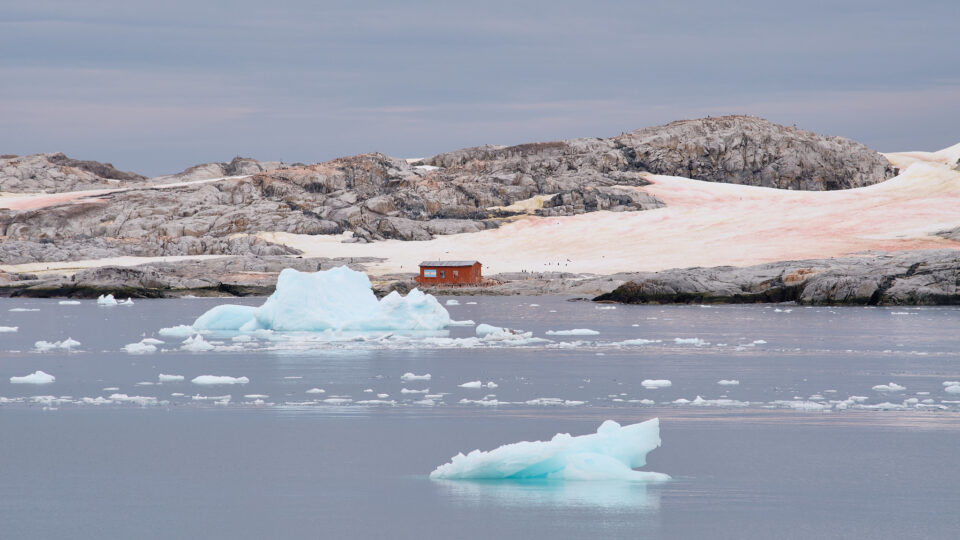
Record low Antarctic sea ice

October 30, 2023 By EarthWise Leave a Comment

Record low sea ice levels in Antarctica

Antarctica’s winter came to a close in September and during that month, the continent reaches its maximum amount of sea ice that grows during the darkest and coldest months.  This year, that maximum occurred on September 10th and turned out to be the lowest on record.

The sea ice around Antarctica reached a maximum extent of 6.5 million square miles according to NASA researchers.  That was nearly 400,000 square miles below the previous record low set in 1986. 

There are several possible causes for the meager growth of Antarctic sea ice this year.  It may be a combination of several factors including El Niño, wind patterns, and warming ocean temperatures.  Recent research indicates that ocean heat is most likely playing an important role in slowing ice growth in the cold season and enhancing ice melting in the warm season.

The record-low ice extent so far this year is a continuation of a downward trend in Antarctic sea ice that has gone on since the ice reached a record high in 2014.  Prior to that year, the ice surrounding the southern continent was actually increasing slightly by about 1% every decade.

Meanwhile, Arctic sea ice reached its minimum extent in September and it was the sixth-lowest level in the satellite record.  Scientists track the seasonal and annual fluctuations of polar sea ice because they shape polar ecosystems and play a significant role in global climate.  Sea ice melting at both poles reinforces global warming because bright sea ice reflects most of the Sun’s energy back to space while open ocean water absorbs 90% of it.

**********

Web Links

Antarctic Sea Ice Sees Record Low Growth  

Photo, posted June 30, 2023, courtesy of Pedro Szekely via Flickr.

Earth Wise is a production of WAMC Northeast Public Radio

Climate Change And Species Tipping Points | Earth Wise

June 22, 2023 By EarthWise Leave a Comment

In climate science, tipping points are critical thresholds that, once crossed, lead to large and often irreversible changes in the climate system. For example, surpassing a 1.5 degree C rise in global warming has long been considered a tipping point for the planet. 

According to a new study led by researchers from University College London, climate change will abruptly push species over tipping points as their geographic ranges reach unforeseen temperatures. 

In the study, which was recently published in the journal Nature Ecology and Evolution, the research team analyzed data from more than 35,000 species of animals and seagrasses from every continent and ocean basin, alongside climate projections up to 2100.  The researchers found a consistent trend:  for many animals, the thermal exposure threshold will be crossed for much of their geographic range within the same decade. 

The thermal exposure threshold is defined as the first five consecutive years where temperatures consistently exceed the most extreme monthly temperature experienced by a species across its geographic range over recent history. 

The researchers also found that the extent of global warming will make a big difference for animals.  If the planet warms by just 1.5°C, 15% of species studied will be at risk of experiencing unfamiliarly hot temperatures across at least 30% of their current  geographic range in a single decade.  But this figure will double to 30% of species at 2.5°C of warming.

Since their data provides an early warning system, the researchers hope that their findings will help species conservation efforts. 

**********

Web Links

Climate change to push species over abrupt tipping points

Photo, posted May 27, 2017, courtesy of Sarah Lemarié via Flickr.

Earth Wise is a production of WAMC Northeast Public Radio

The Hottest September | Earth Wise

November 5, 2020 By EarthWise Leave a Comment

The hottest September

Here’s a news item that is like many other recent news items:  September 2020 was the hottest September since 1880, according to the National Oceanic and Atmospheric Administration.   The warm September is a part of a year that so far is poised to be at least the second hottest year in the 141-year climate record.

The ten warmest Septembers on record have all occurred since 2005, and the seven warmest Septembers have occurred in the past seven years.

So far, the year-to-date average global temperature has been the second warmest on record, being just 0.07 degrees Fahrenheit lower than the record year-to-date temperature set in 2016.  Expectations are that 2020 will end up somewhere among the three warmest years on record for the globe.

September was warm in many places around the world.  California and Oregon had their warmest September ever.  Europe had its warmest September on record, Asia had its second warmest September on record as did Australia and South America. 

So far, it has been the hottest year-to-date on record in Europe, Asia, and the Gulf of Mexico.  No land or ocean areas anywhere had record-cold year-to-date temperatures. 

Global temperatures represent an average over the entire surface of the planet.  The fact that the global temperature is now nearly one Celsius degree above the 20th century average means that a vast amount of heat has been added in order to warm all the oceans, atmosphere, and land by that much.  So, every uptick in global temperature is a big deal.

Meanwhile, the average Arctic sea ice coverage for September was the second smallest on record.  The 14 smallest minimum annual sea ice extents have all occurred in the past 14 years.

**********

Web Links

Earth just had its hottest September on record

Photo, posted September 2, 2020, courtesy of Tim Vrtiska via Flickr.

Earth Wise is a production of WAMC Northeast Public Radio.

Shrinking Ice In The Bering Sea | Earth Wise

October 19, 2020 By EarthWise Leave a Comment

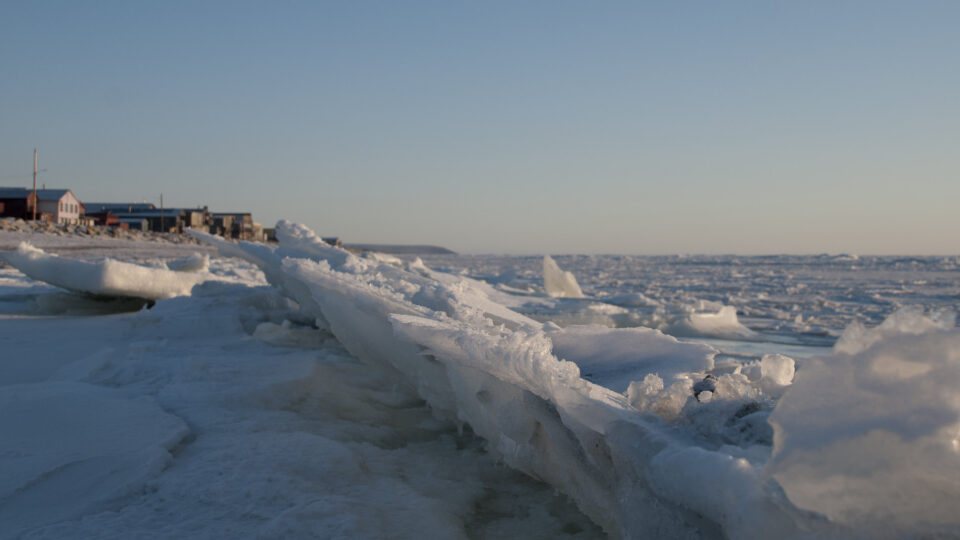
Bering Sea ice continues to shrink

The Bering Sea forms the divide between the two largest landmasses on Earth:  Eurasia and the Americas.  Recent analysis of vegetation from a Bering Sea island has determined that the extent of sea ice in the region is the lowest it has been for over 5,000 years.

St. Matthew Island, a small island in the middle of the Bering Sea, has essentially been recording what is happening in the ocean and atmosphere around it, in the form of the composition of peat layers on the island.  By analyzing the chemical composition of peat core samples, scientists can estimate how sea ice in the region has changed over the course of time.

Changes in the relative amounts of two oxygen isotopes in the sediment and plant debris trapped in the peat on the island reflect the nature of precipitation during the period when the peat layers formed.  That ratio is correlated with the amount of sea ice in the region.  Satellite data acquired over the past 40 years confirms this correlation.

Analysis of the data shows that the current ice levels are unprecedented in the last 5,500 years.  These long-term findings affirm that reductions in Bering Sea ice are due to more than recent higher temperatures associated with global warming.  Atmospheric and ocean currents, which have also been altered by climate change, play a large role in the presence of sea ice.

Summertime sea ice in the Arctic was expected to reach its second-lowest extent in September in 40 years of observation.  Sea ice typically builds up again each winter, but the changes in ice extents actually lag behind changes in greenhouse gas level by decades.  Future ice loss is already built into the system.

**********

Web Links

Bering Sea ice extent is at most reduced state in last 5,500 years

Photo, posted December 2, 2012, courtesy of Bering Land Bridge National Preserve via Flickr.

Earth Wise is a production of WAMC Northeast Public Radio.

The Importance Of The Amazon Rainforest Fires

September 10, 2019 By EarthWise Leave a Comment

The Amazon rainforest covers extensive parts of Brazil, Peru, Colombia, and small parts of six other countries.  It is the largest rainforest in the world and is instrumental in driving the weather and climate in South America.

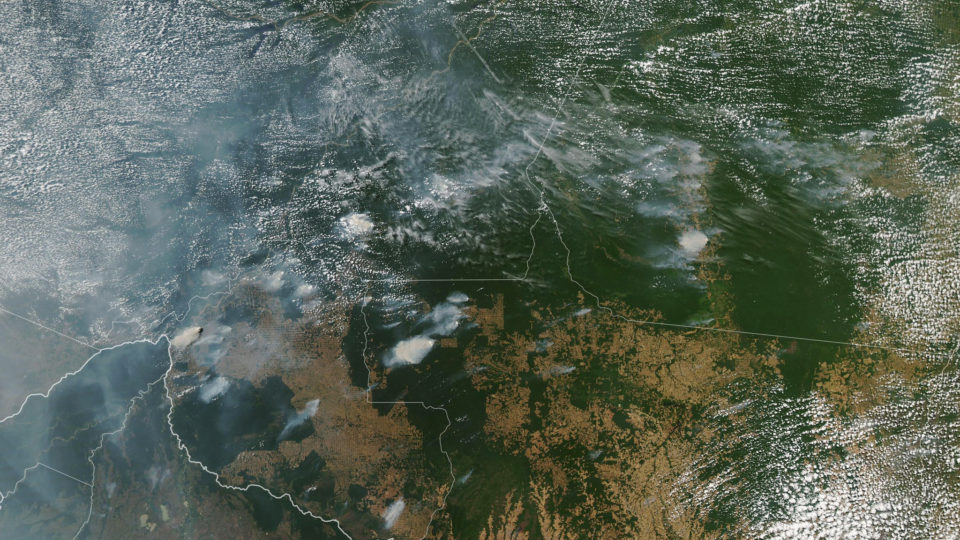
The raging wildfires in the Amazon rainforest are a source of great concern.  The Amazon is always prone to wildfires during the dry season in South America, but the extent and number of fires this year cannot be attributed simply to drought.  The surge in fires has come from illegal deforestation by loggers and farmers, who are using the cleared-out land for cattle ranching.

Rainforests produce consistently high amounts of rainfall throughout the year by pulling water from the soil and then releasing it into the atmosphere.  The Amazon rainforest essentially makes it rain in South America. 

Over time, the forest plays a crucial role in cycling carbon out of the atmosphere by turning it into biomass.  The Amazon jungle sucks up as much as a quarter of the planet’s atmospheric carbon dioxide.

Pristine rainforest burns less frequently and less intensely than cleared and recovering forest.  As more and more of the Amazon rainforest is deforested, it becomes more likely to burn each year.

The major disruption of the water dynamics in South America has the potential to not only drive the weather in South American countries but even potentially influence natural resources like snow packs in the Northern Hemisphere.

The skies of Sāo Paulo, Brazil’s financial hub have been dark at midday because of the Amazon fires.  This is like having a fire in California and seeing the smoke in Boston.  The Amazon rainforest fires are a big problem for the whole world.

**********

Web Links

The Amazon Rainforest has been burning for weeks. Here’s why that matters.

Photo, posted August 21, 2019, courtesy of NASA Goddard Space Flight Center via Flickr.

Earth Wise is a production of WAMC Northeast Public Radio.

Climate Change And Dolphins

May 27, 2019 By EarthWise Leave a Comment

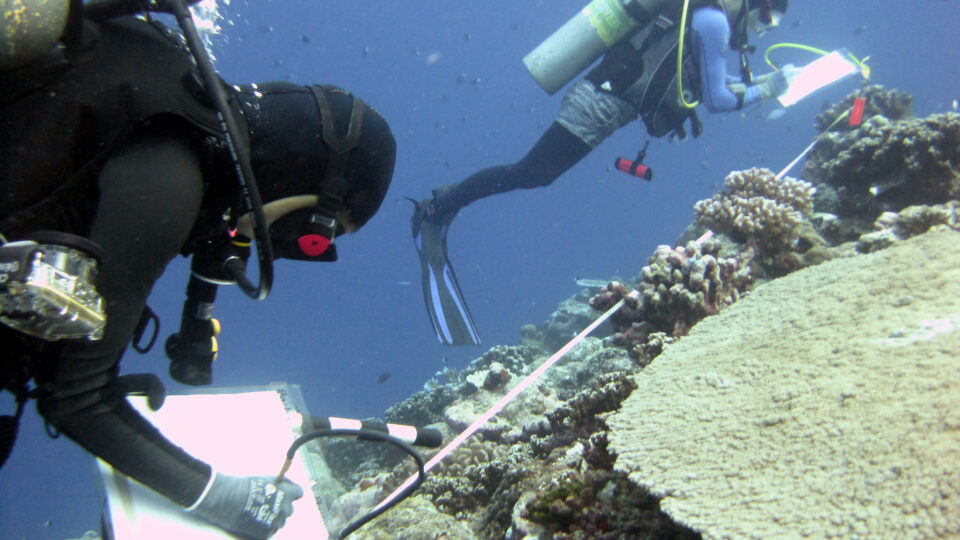
We don’t think of heatwaves as something that affects the ocean, but increasingly, as the planet warms, there have been instances where ocean water temperatures become much higher than normal for extended periods of time.  There has been much discussion of this phenomenon with regard to coral reefs where the catastrophic rise in coral bleaching events has been the result.

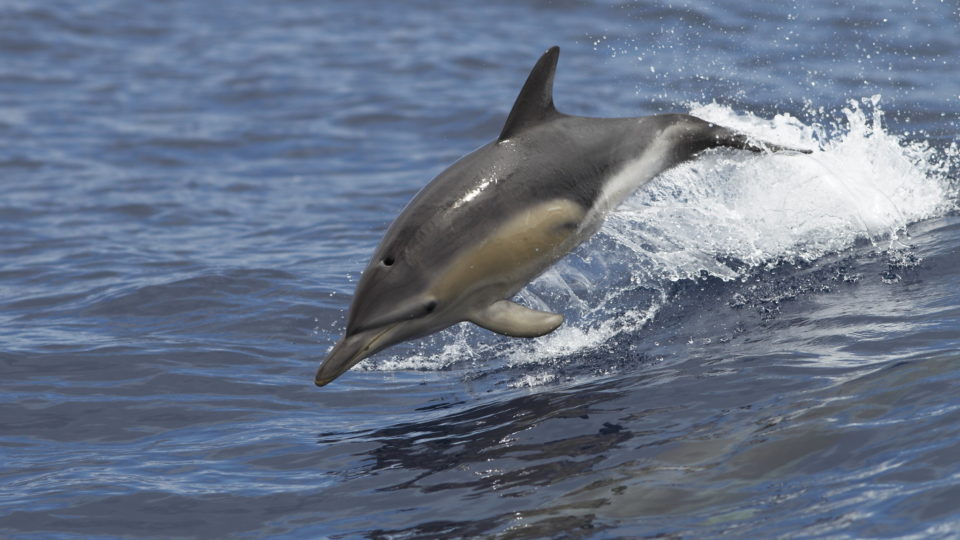
Recently, a study at the University of Zurich looked at the effects of ocean heatwaves on marine life higher in the food chain.  They studied the well-known dolphin population in Shark Bay, Western Australia.

In early 2011, a heatwave caused water temperatures in Shark Bay to rise more than 4 degrees above the annual average for an extended period.  This led to a substantial loss of seagrass, which is a driving factor in the Shark Bay ecosystem.

The researchers investigated how this environmental damage affected survival and reproduction of dolphins, using long-term data on hundreds of animals collected over a ten-year period from 2007 to 2017.

Their analysis showed that dolphins’ survival rate dropped by 12% and female dolphins were giving birth to fewer calves.  That phenomenon that began in 2011 lasted at least until 2017.

The researchers were surprised by the extent and the duration of the influence of the heatwave, especially the fact that the reproductive rate of dolphins had not returned to normal even after 6 years.

This study shows for the first time that marine heatwaves not only affect organisms at the lower levels of the food chain, but also might have considerable long-term consequences for the animals at the top, such as dolphins.

**********

Web Links

Climate change is a threat to dolphins’ survival

Photo, posted December 14, 2014, courtesy of Ed Dunens via Flickr.

Earth Wise is a production of WAMC Northeast Public Radio.

Primary Sidebar

Recent Episodes

  • An uninsurable future
  • Clean energy and jobs
  • Insect declines in remote regions
  • Fossil fuel producing nations ignoring climate goals
  • Trouble for clownfishes

WAMC Northeast Public Radio

WAMC/Northeast Public Radio is a regional public radio network serving parts of seven northeastern states (more...)

Copyright © 2026 ·