• Skip to primary navigation
  • Skip to main content
  • Skip to primary sidebar

Earth Wise

A look at our changing environment.

  • Home
  • About Earth Wise
  • Where to Listen
  • All Articles
  • Show Search
Hide Search
You are here: Home / Archives for exploration

exploration

Hidden hydrogen

July 15, 2025 By EarthWise Leave a Comment

The idea of using hydrogen as a fuel or an energy source has been around for a long time.  Hydrogen is the most common element in the universe, but most of it is locked up in various chemical compounds, such as water.  Hydrogen is a clean fuel; burning it or using it to generate electricity in a fuel cell produces no greenhouse gas emissions.  But more than 99% of the hydrogen that people current produce is obtained by methods that result in greenhouse gas emissions.

A new study by scientists at the University of Oxford, the University of Durham in the UK, and the University of Toronto looks at geological environments in which naturally occurring hydrogen could be hiding.  According to the study, over the last billion years, the Earth’s continental crust is likely to have produced enough hydrogen to satisfy the energy needs of modern society for 170,000 years.

Much of that hydrogen is likely to have been lost or is inaccessible; most of it is not economically feasible to extract.  But even the relatively small amount of hydrogen left could provide thousands of years of energy for us.  We just have to be able to find it.

The researchers have developed what they call an “exploration recipe” which identifies where natural hydrogen might be located as well as where it could be commercially feasible to extract.  These places with hydrogen have so-called reservoir rocks and geologic formations that prevent the gas from leaking into the atmosphere.

A few such places have already been identified such as one in Albania.  There are various candidates to explore, even including an area in Kansas.  The study’s authors have founded a company whose mission is to find these natural sources of hydrogen.

**********

Web Links

Scientists Say Hidden Hydrogen Could Power the World for 170,000 Years

Photo, posted October 4, 2019, courtesy of Tony Sprezzatura via Flickr.

Earth Wise is a production of WAMC Northeast Public Radio

Restoring oil well sites with moss

June 16, 2025 By EarthWise Leave a Comment

Researchers at the University of Waterloo in Canada have developed a method for restoring peatlands at tens of thousands of oil and gas exploration sites in Western Canada. 

A well pad is a prepared area used for drilling oil or gas wells, encompassing the site where drilling equipment, wellheads, and related facilities are located.  Preparing well pads involves burying native peatland vegetation under clay or sand, thereby eliminating the ability of the peatland to sequester carbon as well reducing available habitat for wildlife.

Restoring well sites has typically involved planting trees or grasses to eventually establish forests or grasslands.  The Waterloo method returns a well pad to its condition before drilling occurred and is part of ongoing efforts to restore peatlands, which are known to be even more effective for sequestering carbon than tropical forests.

The Waterloo technique involves lowering the surface of a decommissioned well site and transplanting native mosses onto it to effectively recreate a peatland.    They tested the technique to scale at an entire well pad and found that it results in sufficient water for the growth of peatland moss across large portions of the study site.

The results suggest that re-establishment of peatland vegetation on lowered well pads is possible.  The researchers plan to continue monitoring the ecosystem in the study’s well pads to confirm that the transplanted mosses will be self-sustaining over the coming decades.  They will focus on increasing the amount of water that flows from surrounding natural peatlands into the converted well pads to further optimize soil moisture. 

This work could represent an important milestone in ecological restoration.

**********

Web Links

Restoring oil wells back to nature with moss

Photo, posted November 6, 2014, courtesy of Chris Boyer / Kestrel Aerial Services via Flickr.

Earth Wise is a production of WAMC Northeast Public Radio
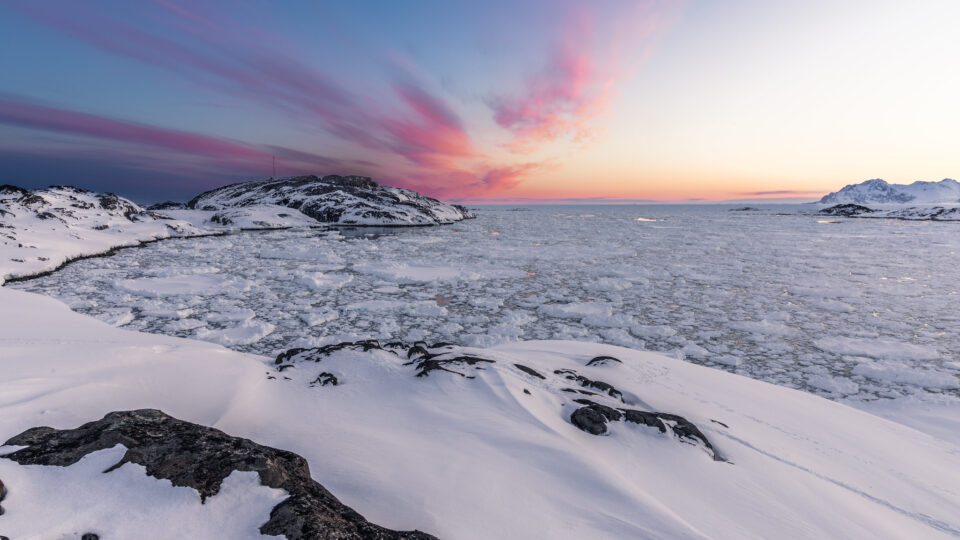
An Arctic Bus | Earth Wise

February 17, 2022 By EarthWise Leave a Comment

Developing a bus capable of navigating in the Arctic

People have built vehicles for all sorts of extreme environments.  There are deep-sea exploration vessels and there have been lunar and Mars rovers.  But one thing that hasn’t existed so far are buses to transport groups of people around in extreme conditions in the Arctic.  Engineers at two Russian Universities are developing a passenger bus for riding in the Far North.   The project is being funded by the Russian Federation Ministry of Science and Higher Education and the URAL Automobile Manufacturing Plant.

The requirements for the vehicle are daunting.  The bus must be operable at extreme temperatures – 60 below zero Fahrenheit and lower – and have no difficulties even in challenging off-road conditions.

Current Arctic crew buses are not capable of getting through snow blockages and the all-terrain tracked vehicles that can get through them do not have sufficient passenger capacity. In addition to being able to go through snowbanks, the bus should be able to float on water for an hour.

Apart from its ability to withstand harsh Arctic conditions, the bus will also have a quarters module.  This means that it will have an autonomous life-support system for passengers in case of emergency.  The quarters module will be designed to sustain up to 20 people for up to 24 hours.  The module might also be used to hold medical equipment, thereby enabling practitioners to reach remote settlements and treat patients. 

The first tests of prototypes for the bus will be conducted in the near future.  The project aims to have the new Arctic Bus design complete and ready for manufacture by the end of 2023 and it will go into production in 2024.

**********

Web Links

“Arctic Bus” Being Readied to Be Tested in the Far North

Photo, posted April 21, 2017, courtesy of Markus Trienke via Flickr.

Earth Wise is a production of WAMC Northeast Public Radio.

What Does Conservation Really Mean? | Earth Wise

June 2, 2021 By EarthWise Leave a Comment

Determining the most important species to preserve and protect

There is a great deal of interest in protecting nature and, in many cases, restoring aspects of nature that have been lost.  But what do these things really mean?

What is most important?  Protecting iconic species?  Strengthening nature’s resilience?  Several recent scientific papers address these questions and come up with rather different answers.

It isn’t even clear what constitutes a pristine ecosystem.  According to some experts, ecosystems that have lost most of their large mammal species, for example, cannot be considered intact.  By that standard, only a tiny fraction of the world’s ecosystems remains intact.

Other experts contend that preserving individual species is not what really matters.  Studies have shown that many ecosystems have undergone and continue to undergo massive species shifts over time with frequent extinctions along the way.  Nevertheless, the ecosystems continue to flourish with new species replacing others to perform the various functions required.

Some perspectives consider intact ecosystems to be those devoid of human influence.  But that notion is not universally held.   There is the idea that most of the world’s ecosystems were essentially untouched until perhaps 500 years ago when European exploration expanded greatly.  But the reality is that even 12,000 years ago, nearly three-quarters of terrestrial nature was inhabited, used, and shaped by people.  However, those human interactions were similar to how many indigenous and local peoples across the globe still live, not like the interactions of modern civilization that result in massive changes to ecosystems.

**********

Web Links

Species or Ecosystems: How Best to Restore the Natural World?

Photo, posted November 21, 2003, courtesy of Megan Coughlin via Flickr.

Earth Wise is a production of WAMC Northeast Public Radio.

A Camera For Insects | Earth Wise

August 26, 2020 By EarthWise Leave a Comment

Developing tiny cameras for insects

Electronic devices get smaller and smaller all the time.  We are used to carrying around phones in our pockets that incorporate a whole host of sophisticated devices. But we can still be amazed by miniaturization.  Recently, scientists at the University of Washington announced the development of a tiny, wireless camera small enough to be worn by insects.  The work was published in the journal Science Robotics.

The device weighs only 250 milligrams, which is less than one hundredth of an ounce.  The camera streams high-resolution video to a smartphone at up to 5 frames per second, which allows scientists to record video of what insects see in real time.

The device has a mechanical arm that allows the camera to pivot 60 degrees, which can allow it to create panoramic shots.  It is controlled by a smartphone app and can be operated up to 120 meters away from the insect.

The new camera system enables scientists to better understand insect behavior and explore novel environments.  Having a first-person view from the back of a beetle while it is walking around allows researchers to explore how it responds to different stimuli that it sees in its environment.

Of more general interest, the technology can be used to help develop the next generation of small robots.  Insects can traverse rocky environments, which is really challenging for small robots to do.  The device will allow engineers to study how insects can move around in such environments.  It will also be useful for observing and collecting samples from hard-to-navigate spaces.

It is remarkable how sophisticated technology keeps getting smaller and smaller.

*********

Web Links

Scientists Develop Tiny Camera Backpack for Insects

Photo courtesy of Mark Stone/University of Washington.

Earth Wise is a production of WAMC Northeast Public Radio.

Smarter Prospecting

November 18, 2019 By EarthWise Leave a Comment

The global demand for copper and gold continues to grow.  Copper is widely used in building materials, plumbing, and electronics.  Gold is still highly valued for jewelry and coinage, but nearly a third of the world’s gold is now used in electronics. 

Both of these metals are getting increasingly difficult to find as many of the known sources have been exhausted.  Companies spend millions of dollars drilling deeper and deeper in search of new deposits.

It costs about $400 to drill one meter into rock and it is not uncommon to drill to depths of one to two kilometers.  So, it can cost nearly a million dollars to drill a hole that has no guarantee of success.  Given that ore deposits are tiny compared with the totality of the search space, prospecting for these metals is very much like looking for a needle in a haystack.

A researcher at the University of South Australia has developed a suite of geochemical tools to more accurately target valuable mineral deposits and thereby save drilling companies millions of dollars.  The goal is to have drilling for valuable minerals be faster, cheaper and more environmentally friendly.

By mapping out where key chemical elements are found in greater concentrations, the new suite of tools greatly increases the chances of finding an ore deposit at a target site and thereby greatly improve the return on investment for exploration companies.  The tools have been successfully tested at an iron oxide-copper-gold deposit in the north of South Australia, leading to a four-fold increase in the known footprint of their ore body.  Finding economically viable enriched ore sites can generate both revenues and jobs.

**********

Web Links

Prospecting for gold just got a lot easier (and cheaper)

Photo, posted April 21, 2005, courtesy of Adam via Flickr.

Earth Wise is a production of WAMC Northeast Public Radio.

Primary Sidebar

Recent Episodes

  • An uninsurable future
  • Clean energy and jobs
  • Insect declines in remote regions
  • Fossil fuel producing nations ignoring climate goals
  • Trouble for clownfishes

WAMC Northeast Public Radio

WAMC/Northeast Public Radio is a regional public radio network serving parts of seven northeastern states (more...)

Copyright © 2026 ·