• Skip to primary navigation
  • Skip to main content
  • Skip to primary sidebar

Earth Wise

A look at our changing environment.

  • Home
  • About Earth Wise
  • Where to Listen
  • All Articles
  • Show Search
Hide Search
You are here: Home / Archives for durable

durable

Repurposing used tires

April 29, 2025 By EarthWise Leave a Comment

Every year, millions of tires from cars and trucks end up in landfills.  Just in the U.S., more than 270 million tires were scrapped in 2021 and more than 50 million of them ended up in landfills.  Discarded tires take up huge amounts of space but, more importantly, create environmental hazards.  They leach chemicals into the environment and are a serious fire hazard.

Some tires are chemically recycled via pyrolysis, which is a high-temperature process to decompose the materials in the tire.  But that process introduces harmful byproducts like benzene and dioxins. 

Researchers at the University of North Carolina Chapel Hill have introduced a new chemical method for breaking down rubber waste.  The process transforms discarded rubber into valuable precursors for epoxy resins.

Rubber – either natural rubber or the synthetic kind used in tires – is made of polymers cross-linked together to form a tough, flexible, and durable material.  These very desirable properties make it difficult to break down rubber.

The new research has led to a two-step chemical process that breaks down the rubber into functional materials that be used to produce epoxy resins.  The method does not require extremely high temperatures, uses aqueous media, and takes only six hours.   It represents an efficient, scalable solution for repurposing rubber waste which, even as many other aspects of motor vehicle are changing for the better, remains a continuing environmental problem associated with driving.

This new research marks a significant step towards greener recycling technologies.

**********

Web Links

A Cleaner Future for Tires: Scientists Pioneer Chemical Process to Repurpose Rubber Waste

Photo, posted May 5, 2011, courtesy of TireZoo via Flickr.

Earth Wise is a production of WAMC Northeast Public Radio

A new way to recycle plastic

April 18, 2025 By EarthWise Leave a Comment

Researchers at Northwestern University have developed a new method for recycling plastic that is safer, cleaner, cheaper, and more sustainable than those currently in use.  The U.S. is the world’s largest plastic polluter per capita, and we only recycle 5% of our plastics.  There is a pressing need for better technologies for processing different types of plastic waste.

The Northwestern method is designed to break down polyethylene terephthalate or PET, which is the most common type of polyester plastic.  PET plastic is used in food packaging and beverage bottles and represents 12% of total plastics used globally.  It does not break down easily and is therefore a major contributor to plastic pollution.  It mostly either ends up in landfills or, over time, degrades into tiny microplastics or nanoplastics that end up almost everywhere. 

The non-toxic, environmentally friendly, solvent-free Northwestern process first uses an inexpensive molybdenum catalyst to break apart the bonds in PET.  Then the broken plastic is exposed to ambient air.  Just from the trace amounts of moisture in air, the broken-down PET is converted into monomers, which are the building blocks of plastic.  The monomers could then be recycled back into PET products or used to make other valuable materials.

The process is fast and effective and takes just a few hours.  The catalyst is durable and recyclable, meaning it can be used over and over again.  It only works on polyesters, which means it can be used for recycling mixed plastics without sorting them since it will select only the PET from its inputs.

**********

Web Links

Plastic recycling gets a breath of fresh air

Photo, posted August 10, 2013, courtesy of Lisa Risager via Flickr.

Earth Wise is a production of WAMC Northeast Public Radio

The Spooky Reality | Earth Wise

October 23, 2023 By EarthWise Leave a Comment

According to the National Retail Federation, American consumers will spend a whopping $12.2 billion on Halloween this year, exceeding last year’s record of $10.6 billion.  A record number of people – 73% of Americans – will also participate in Halloween-related activities this year, up from 69% in 2022.  But it’s not just our wallets that take a beating. 

Halloween generates a frightening amount of waste.  Picture all those flimsy and often single-use costumes, polyester cobwebs, plastic-wrapped candy, mass-produced decorations, and so forth. Scary stuff!  Here are some simple tricks to make the holiday more sustainable this year. 

Invest in quality costumes.  Those mass-produced costumes leave the largest carbon footprint from Halloween.  They are often made from non-recyclable plastic and most end up in landfills by mid-November.   By renting, thrifting, swapping, or making your own costumes, many of the negative impacts of dressing up for the holiday can be avoided.

Find environmentally-friendly decorations and supplies.  For example, carve local pumpkins and either save the seeds and flesh to eat later, compost it, or feed it to animals.  Make your own spooky decorations.  If you do buy decorations, ensure that they are durable and reusable.  And use wicker baskets, old bags, or pillowcases when trick-or-treating.

Finally, purchase organic and fair trade candy if you’re able to do so.  Some of the largest candy manufacturers are major drivers of deforestation and species extinction around the globe due to their demand for sugar, palm oil, and cocoa beans.

Together, we can “green” Halloween.  

**********

Web Links

Halloween Data Center

Photo, posted November 13, 2019, courtesy of Christian Collins via Flickr.

Earth Wise is a production of WAMC Northeast Public Radio

Greening Halloween | Earth Wise

October 26, 2022 By EarthWise Leave a Comment

According to the National Retail Federation, Halloween participation is expected to return to pre-pandemic levels this year.  Spending on Halloween festivities by the 69% of Americans who celebrate is expected to add up to $10.6 billion in 2022 – or more than $100 per person – reaching a new record high. 

Halloween generates a mind-boggling amount of waste.  Picture all the flimsy single-use costumes, plastic candy wrappers, mass-produced decorations, and so on.  Here are some tricks to treat you to a greener holiday.

Our first trick is to invest in quality costumes.  Mass-produced (and often single use) costumes leave the largest carbon footprint from Halloween.  They are often made from unsustainable materials, manufactured in countries with poor labor standards, and too many end up in landfills by mid-November. By renting, thrifting, swapping, or making your own costumes, many of the negative impacts of dressing up for the holiday can be avoided.

Our second trick is to invest in environmentally-friendly decorations and supplies.  For example, carve local pumpkins and save the seeds and flesh to eat later.  Make your own spooky decorations.  If you do buy decorations, ensure that they are durable and reusable.  And use a wicker basket, old bag, or pillowcase to trick-or-treat.

Our third trick is to pass out organic and fair trade candy.  Some of the largest candy manufacturers are major drivers of deforestation and species extinction around the globe due to their demand for sugar, palm oil, and cocoa beans.

If you’ve already spent your $100 this year, consider these changes for next year.  It’s never too late to become a superhero.

**********

Web Links

Retail Holiday and Seasonal Trends: Halloween

Photo, posted October 14, 2007, courtesy of Brian via Flickr.

Earth Wise is a production of WAMC Northeast Public Radio
Paving With Plastic | Earth Wise

March 25, 2021 By EarthWise Leave a Comment

Using plastic waste as pavement

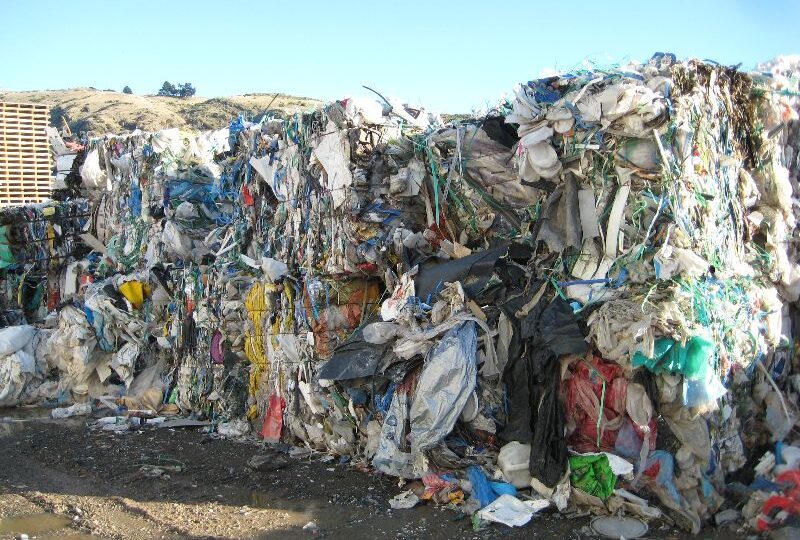
The country of Ghana has an ambitious plan to recycle and reuse as much plastic waste as it produces each year (which is over a million tons) by 2030.  As part of this plan, they have started to pave roads in Accra, the capital city, with asphalt containing a slurry of used plastics – shredded and melted bags, bottles, and snack wraps.  Only a quarter of Ghana’s roads are currently paved, so waste plastic has many opportunities for use in paving.

Plastic roads first appeared in India two decades ago.  There are now over 60,000 miles of them in that country.  Several countries have only recently built their first plastic roads including South Africa, Vietnam, Mexico, the Philippines, and the United States.

Studies have shown that roads containing waste plastic have the potential to perform as well or better than traditional roads.  They can last longer, can tolerate wide temperature swings better, are stronger and more durable, and are more resistant to water damage, cracking, and potholes.

Ordinarily, asphalt for roads consists of 90 to 95% aggregate – typically some mixture of gravel, sand, and limestone – and 5 to 10% bitumen, which is a black gooey substance extracted from crude oil that binds the aggregate together.  Plastic-enhanced roads replace varying amounts of the bitumen (often as little as 4-10%, but sometimes much more), with plastic that is actually a stronger binding agent.

Plastic roads reduce the amount of bitumen in roads, thereby reducing carbon emissions.  The plastics are not heated enough to release gases and the roads do not appear to shed microplastics.  Plastic roads will not solve the world’s plastic waste problem, but they can help by diverting lots of plastic from landfills.

**********

Web Links

How Paving with Plastic Could Make a Dent in the Global Waste Problem

Photo, posted June 4, 2010, courtesy of Sustainable Initiatives Fund Trust via Flickr.

Earth Wise is a production of WAMC Northeast Public Radio.

Sustainable Flip-Flops | Earth Wise

September 9, 2020 By EarthWise Leave a Comment

Sustainable technologies

Flip-flops are the world’s most popular shoe.  They are lightweight, comfortable, affordable, and durable.  In fact, the global market for flip-flops is expected to reach a whopping $23.8 billion by the year 2025. 

But the popularity comes with a price.  Flip-flops account for a troubling percentage of plastic waste that ends up in our landfills and oceans.  As a result, demand for alternatives is compelling researchers to develop more sustainable versions of the popular footwear.

Scientists at the University of California San Diego have spent years working on this issue, and recently announced a breakthrough.  According to a study recently published in Bioresource Technology Reports, the research team has formulated polyurethane foams – made from algae oil – to meet commercial specifications for mid-sole shoes and the foot-bed of flip-flops.   In other words, the scientists have created sustainable, biodegradable, and consumer-ready materials that could replace plastics in some footwear. 

The UC San Diego scientists collaborated with Algenesis Materials – a technology startup – on the research.  Together, they worked to not only create the shoes, but to degrade them as well.  The team tested their customized foams by immersing them in traditional compost and soil.  The algae-based materials degraded after just 16 weeks.  

The life of any material should be proportionate to the life of the product.  The researchers point out that it doesn’t make sense to create a product that will last 500 years if it’ll only be used for a year or two. 

The research team is currently working on production details with its manufacturing partners.  The creation of biodegradable flip-flops that meet commercial footwear standards could eliminate tons of plastic waste from the environment.   

************ 

Web Links

New science behind algae-based flip-flops

Flip Flops Market Size Worth $23.8 Billion by 2025

Photo, posted December 12, 2019, courtesy of Flickr.

Earth Wise is a production of WAMC Northeast Public Radio.

A Squid Skin Blanket

June 25, 2019 By EarthWise Leave a Comment

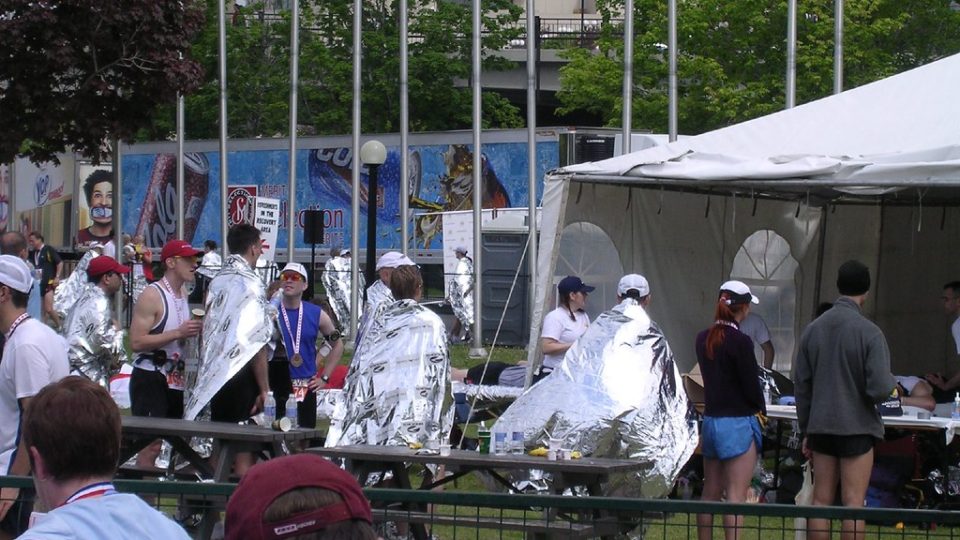
Ultra-lightweight space blankets have been around for a long time.  Marathon runners wrap themselves in them to avoid losing body heat after a race.  They are very effective, but the amount of heat that they trap is fixed.  There is no way to regulate how much heat is trapped or released using a space blanket.

Researchers at the University of California, Irvine have developed a next-generation, adaptive space blanket that allows users to control their temperature.  The inspiration for the design was the skins of various species of squids, octopi and cuttlefish.  The ability of these aquatic creatures to camouflage themselves by rapidly changing color is due, in part, to skin cells called chromatophores that can instantly change from tiny points to flattened disks.

The Irvine researchers have developed a material that contains a layer of tiny metal islands that border each other.  In the relaxed state, the islands are bunched together, and the material reflects and traps heat, much like a conventional Mylar space blanket.  But when the material is stretched, the islands spread apart, which allows infrared radiation to go through and heat to escape.

The researchers envision many other applications for the novel material, including adaptable insulation for buildings and tents that can be adapted to different weather conditions.  There is even the possibility of clothing that can be adjusted to suit the comfort of each person.

The new material is lightweight, easy and inexpensive to manufacture, and is durable.  It can be stretched and returned to its original state thousands of times.  Some day we might all be wrapping ourselves in imitation squid skins.

**********

Web Links

Squid skin inspires creation of next-generation space blanket

Photo, posted May 29, 2005, courtesy of Flickr.

Earth Wise is a production of WAMC Northeast Public Radio.

Llamas And The Flu

December 21, 2018 By EarthWise Leave a Comment

https://earthwiseradio.org/wp-content/uploads/2018/11/EW-12-21-18-Llamas-and-the-Flu.mp3

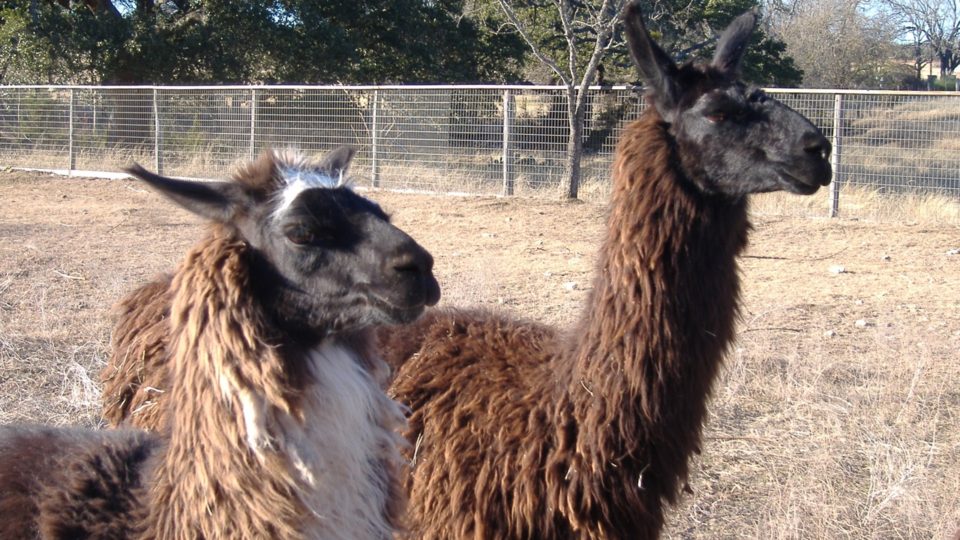
Last year’s flu season was the worst in 40 years.  More than 80,000 people died in the U.S. last year from the flu and its complications.  Flu vaccines are the best preventative we have, but there are still high mortality rates around the world.  Some individuals respond poorly to vaccination, and variations in viruses makes targeting with the optimal antigen very difficult.  The World Health Organization estimates that between 290,000 and 650,000 people die from seasonal flu worldwide each year.

[Read more…] about Llamas And The Flu

A Supermaterial From Plastic Waste

December 13, 2018 By EarthWise Leave a Comment

https://earthwiseradio.org/wp-content/uploads/2018/12/EW-12-13-18-A-Supermaterial-From-Plastic-Waste.mp3

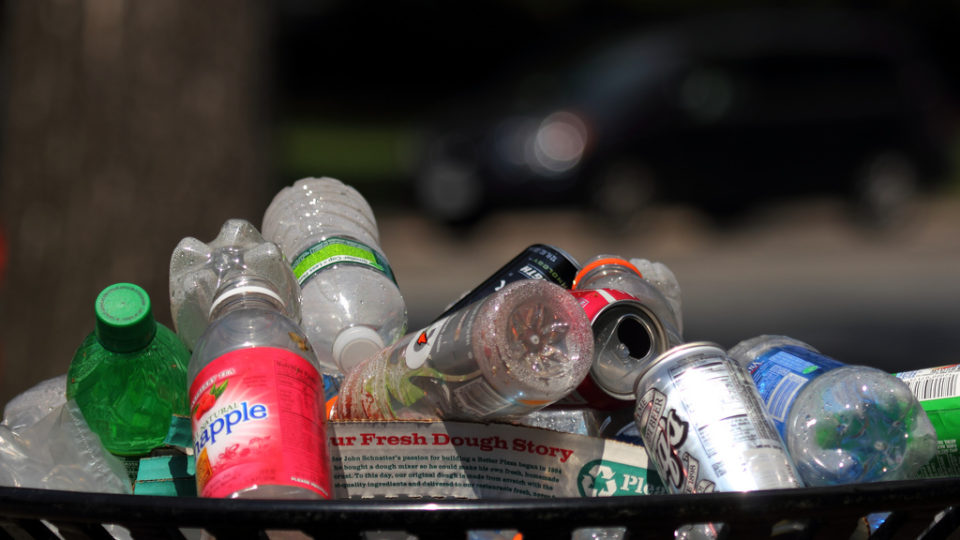
Researchers at the National University of Singapore have created a way to convert plastic bottle waste into an ultralight aerogel material that has multiple potential applications.

[Read more…] about A Supermaterial From Plastic Waste

Designing Plastic To Fall Apart

September 17, 2018 By EarthWise Leave a Comment

https://earthwiseradio.org/wp-content/uploads/2018/09/EW-09-17-18-Designing-Plastic-to-Fall-Apart.mp3

In the 1940s and 1950s, synthetic polymers became very popular.  These man-made materials were designed to be cheap and durable and soon began replacing metals and glass in everything from automobiles and airplanes to bottles and dishes.

[Read more…] about Designing Plastic To Fall Apart

Saildrones For Science

July 11, 2018 By EarthWise Leave a Comment

https://earthwiseradio.org/wp-content/uploads/2018/07/EW-07-11-18-Saildrones-for-Science.mp3

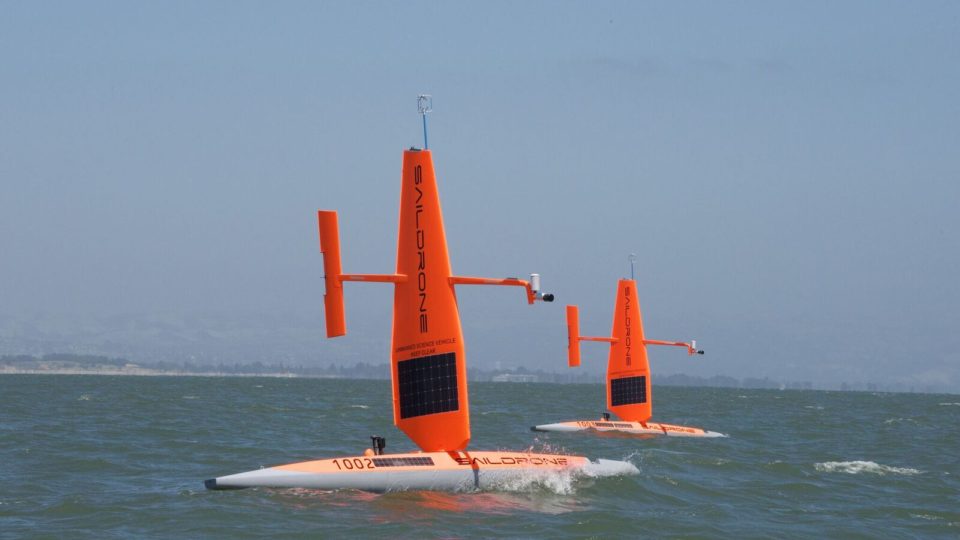
Nine years ago, engineer Richard Jenkins broke the world land speed record for a wind-powered vehicle with a sailboat on wheels driving across a dry lakebed at 126 miles per hour.  After years of engineering development, his technology has now taken on the form of a saildrone that can autonomously sail the sea gathering ecologic, oceanic and atmospheric data.

[Read more…] about Saildrones For Science

Water From Desert Air

May 7, 2018 By EarthWise Leave a Comment

https://earthwiseradio.org/wp-content/uploads/2018/05/EW-05-07-18-Water-from-Desert-Air.mp3

Last spring, we talked about a solar-powered water harvester designed to pull water out of even dry desert air.   The prototype device was described in a paper by scientists at UC Berkeley and MIT in the journal Science.

[Read more…] about Water From Desert Air

Primary Sidebar

Recent Episodes

  • An uninsurable future
  • Clean energy and jobs
  • Insect declines in remote regions
  • Fossil fuel producing nations ignoring climate goals
  • Trouble for clownfishes

WAMC Northeast Public Radio

WAMC/Northeast Public Radio is a regional public radio network serving parts of seven northeastern states (more...)

Copyright © 2026 ·