• Skip to primary navigation
  • Skip to main content
  • Skip to primary sidebar

Earth Wise

A look at our changing environment.

  • Home
  • About Earth Wise
  • Where to Listen
  • All Articles
  • Show Search
Hide Search
You are here: Home / Archives for dna

dna

Building better blackberries

June 6, 2025 By EarthWise Leave a Comment

The Human Genome Project is one of the greatest scientific feats in history.  It was launched in 1990 and completed in 2003.  The international group of researchers wanted to comprehensively study all of the DNA – the genome – from a select set of organisms, foremost of which being that of human beings.  The results accelerated the study of human biology and has led to improvements in the practice of medicine.

Every living thing – animal, plant, fungus, and various single-celled organisms – has a genome – a genetic blueprint.  A recent study by researchers at the University of Florida has done genome sequencing of blackberries with the hope of being able to achieve more efficient and targeted breeding.

Over the past 20 years, consumer demand for blackberries has increased leading to farmers growing more of the fruit in the United States.  The U.S. produces 37 million pounds of processed blackberries and almost 3 million pounds of fresh berries each year.

The Florida researchers made use of a large collection of DNA sequences to computationally piece together the entire genome of the blackberry variety in the study.  The genome study uncovered the secrets behind key traits that could lead to growing blackberry plants with no thorns and increasing the production of anthocyanin, which affects the color and health benefits of the fruit. 

For Florida, the southeastern United States and regions with similar climates, the genetic research holds the promise of accelerating the process to create blackberry varieties that are better suited to local growing conditions, enhancing both the yield and the quality of the increasingly popular fruit.

**********

Web Links

Decoding blackberry DNA: UF study paves way for enhanced breeding strategies

Photo, posted September 18, 2016, courtesy of Theo Crazzolara via Flickr.

Earth Wise is a production of WAMC Northeast Public Radio

Almost a dire wolf

April 22, 2025 By EarthWise Leave a Comment

Researchers around the world are working on what some call the ‘de-extinction’ of iconic animals of the past such as the wooly mammoth, the dodo, and the Tasmanian tiger.  The idea is to decipher the genome from DNA of preserved specimens and, using the tools of modern genetic engineering and cloning technology, alter the DNA of closely related modern species to recreate the extinct species.

A company called Colossal Biosciences recently announced that it has brought back the dire wolf, a species that has been extinct for 10,000 years.  Dire wolves have white coats and are larger than modern wolves, have more powerful shoulders, a wider head, and larger teeth and jaws.  Colossal is now raising three wolves they have engineered at a 2,000-acre site at an undisclosed location.

 The wolves were created by taking the DNA of modern grey wolves and editing 14 genes substituting ones from ancient dire wolf specimens.  Wolves have about 19,000 genes, so the changes from the grey wolf genome are very minor but enough to produce an animal that looks just like a dire wolf.  But is it a dire wolf?

It really isn’t.  Ancient DNA is always greatly damaged.  Only parts of it survive.  We don’t actually have the complete genome of the dire wolf.  What we have is bits and pieces that, thanks to modern technology, allow us to produce a phenotype of a dire wolf; that is, an animal with the same observable features. 

Whether this accomplishment is a worthwhile and appropriate thing to do is a question that continues to be debated.

**********

Web Links

The Return of the Dire Wolf

Photo courtesy of Colossal Laboratories & Biosciences.

Earth Wise is a production of WAMC Northeast Public Radio

Is de-extinction possible?

January 28, 2025 By EarthWise Leave a Comment

Advances in genomics have created the possibility of bringing back extinct species from the past by making use of recovered DNA from preserved specimens.  Companies attempting to “de-extinct” iconic species have received hundreds of millions of dollars from venture capitalists.

These companies are trying to bring back iconic species that include ivory-billed woodpeckers, Tasmanian tigers, dodos, passenger pigeons, and woolly mammoths. 

Efforts to recreate extinct species are controversial.  The arguments in favor include the positive effects on ecosystems when keystone species are restored, and the excitement generated about conservation in general.  The opposing view is that concentrating all this effort on these restorations diverts attention and funding from more urgent conservation work.

A more nuanced viewpoint that has emerged is that actually de-extincting species is not possible.  The genome of these vanished species cannot be reconstructed perfectly.  Specimens are not cryopreserved from when the animal died.  What can be retrieved is at best significant fragments of the genome.  These are combined with DNA from related contemporary animals to produce the new species.   

As a result, what emerges are proxies.  They are animals that are similar to extinct animals – in some cases convincingly so – but they are not the same species that existed in the past.   They may be able to fill the same ecological niches and they may have similar behavior.  But they are not de-extincted specimens of the past species.  Is it worth doing?  Quite possibly but it’s not actually bringing back what is gone.

**********

Web Links

Despite Biotech Efforts to Revive Species, Extinction Is Still Forever

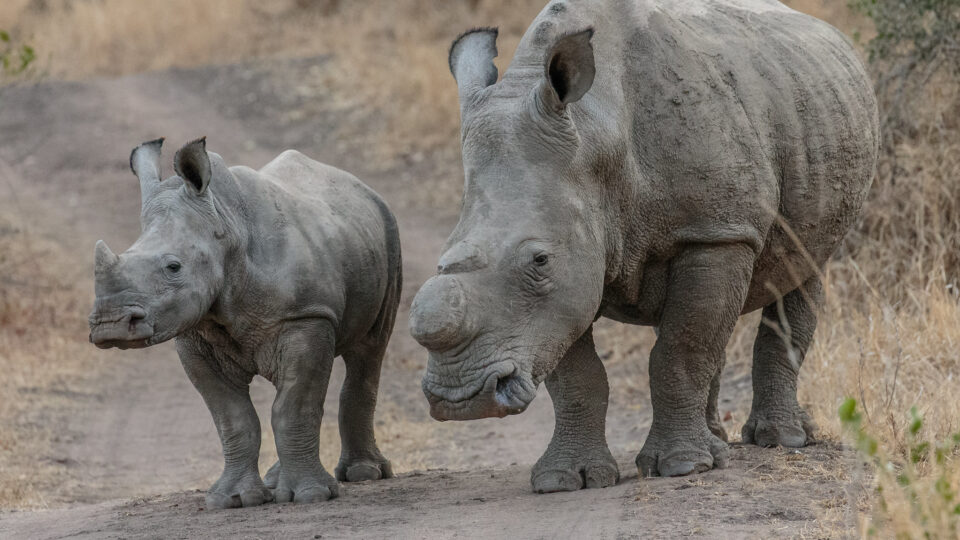
Photo courtesy of Grazelands Rewilding.

Earth Wise is a production of WAMC Northeast Public Radio
Lots of female turtles

November 3, 2023 By EarthWise Leave a Comment

Climate change threatening the future of green sea turtles

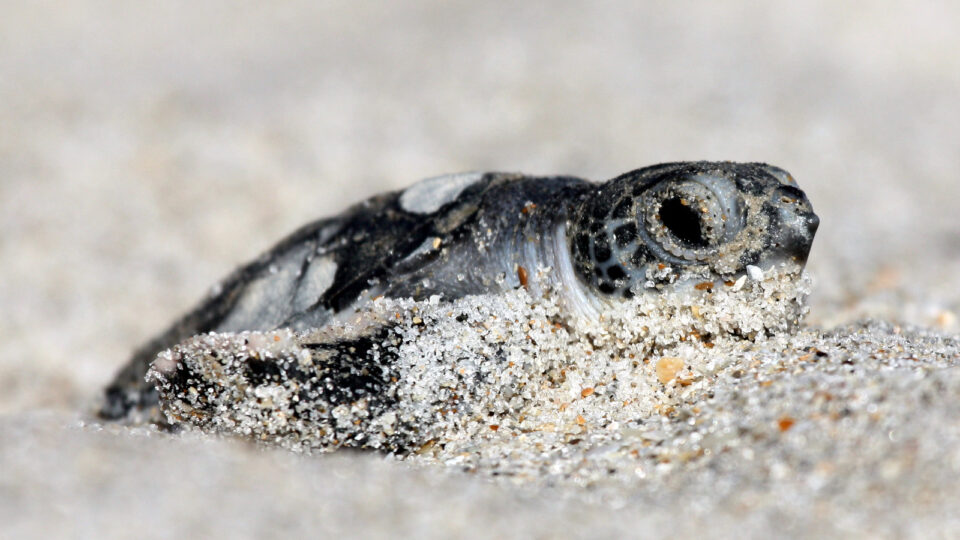
Green sea turtles were listed under the Endangered Species Act in 1978.  Since that time, there have been conservation measures put in place in many locations.  One such place is Florida, where restrictions on beachfront development and careful monitoring of turtle nests has helped to get hatchlings safely into the water.  A gill net ban in 1995 sharply reduced the number of young turtles killed by fishing gear.

All of this has resulted in what is described as an explosion in turtle populations in Florida.  Volunteers monitoring the 2023 nesting season on Florida’s beaches have counted more than 74,000 nests.  That beats the previous record – set in 2017 – by an incredible 40%.

Unfortunately, this does not represent a guaranteed great future for the species.  Sea turtles are particularly sensitive to the warming climate.  The sex of a baby sea turtle is not determined by DNA, but rather by the temperature of the sand in which its egg develops.  Cooler temperatures mean more males; warmer ones mean more females.

In recent years, the proportion of male green sea turtles has dwindled substantially.  In the past few seasons, between 87 percent and 100 percent of the hatchlings tested in Florida have been female.

In the short term, the skewed sex ratio might be a boon for the species.  Lots of females laying lots of eggs means lots of turtles.  Sea turtles don’t reach sexual maturity until their twenties or thirties.  So, for the next few decades, there are likely to be growing numbers of turtle nests.  But down the line, there is going to be a real problem.  Where will for all the female turtles find the mates to populate the species in the future?

**********

Web Links

Florida Turtle Nests Are Recovering. When They Hatch, Expect Mostly Girls.

Photo, posted October 5, 2011, courtesy of Keenan Adams / USFWS via Flickr.

Earth Wise is a production of WAMC Northeast Public Radio
Cryo Conservation | Earth Wise

August 2, 2023 By EarthWise Leave a Comment

Recent studies have shown that there has been a 69% decline in global animal populations since 1970.  There is a biodiversity crisis in the world.  In the face of this situation, there is a growing interest in using cold storage to preserve genetic samples taken from animals threatened with extinction.

Just as egg-freezing is used to preserve human fertility for a later date, the cryogenic freezing of genetic material from animals could be important in reducing species extinctions.  Living cell banks – also known as cryobanks – could preserve genetic materials from animals that include skin cells, embryos, semen, and live tissues.  These materials could be cultured and used for various applications including DNA extraction, assisted reproduction, ensuring genetic diversity in animal populations, and potentially reintroducing species back into their natural habitats.

There is a facility called the Frozen Zoo at the San Diego Wildlife Alliance which has genetic material from 965 different species, including 5% of the vertebrates currently listed as threatened on the IUCN Red List.  Further sampling from zoos and aquariums could increase that representation to almost 17%.

Genetic samples of 50% of the species currently listed as extinct in the wild are already represented in the Frozen Zoo.  Further sampling from the zoological community could increase this number to 91%.  This could provide a critical lifeline for these species that are on the brink of extinction.  As wildlife populations continue to decline around the world, it is more critical than ever to collect and preserve genetic samples from threatened species.

**********

Web Links

Cryo conservation – a cool solution to saving species from extinction

Photo, posted September 30, 2018, courtesy of Andy Morffew via Flickr.

Earth Wise is a production of WAMC Northeast Public Radio
Resurrecting The Tasmanian Tiger | Earth Wise

September 16, 2022 By EarthWise Leave a Comment

Company plans to resurrect the Tasmanian Tiger

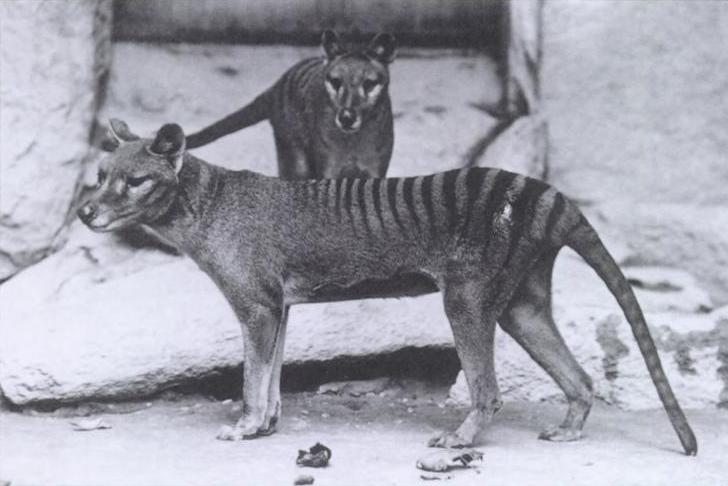
Tasmanian tigers earned their nickname because of the stripes along their back, but they were not felines.  In fact, they were carnivorous marsupials, the type of Australian mammal that raises its young in a pouch.

Tasmanian tigers, also known as thylacines, were once native to the Australian mainland, as well as the islands of Tasmania and New Guinea.  Dog-like in appearance, Tasmanian tigers were extensively hunted after European colonization.  The last known Tasmanian tiger died in captivity in 1936.

Nearly 100 years after its extinction, the Tasmanian tiger may live once again.  Scientists in Australia and the United States have launched an ambitious multimillion dollar de-extinction project to genetically resurrect the Tasmanian tiger.

In order to bring back the animal, researchers will have to take stem cells from a living species with similar DNA – like the fat-tailed dunnart – and use gene editing techniques to turn them into “Tasmanian tiger” cells – or the closest approximation possible.  The team will need new assisted reproductive technologies to use the stem cells to make an embryo, which will then have to be transferred into an artificial womb or a dunnart surrogate to gestate.  The research team is optimistic that there could be a hybrid baby Tasmanian tiger in 10 years. 

The ambitious project is a partnership between scientists at the University of Melbourne and the Texas-based company Colossal Biosciences.  This is the second de-extinction undertaking by Colossal Biosciences, which announced last year it planned to use its technology to recreate the woolly mammoth, and return it to the Arctic tundra.

**********

Web Links

Scientists want to resurrect the extinct Tasmanian tiger

Tasmanian tiger: Scientists hope to revive marsupial from extinction

Photo credit: E.J. Keller, from the Smithsonian Institution archives, courtesy of Flickr.

Earth Wise is a production of WAMC Northeast Public Radio.

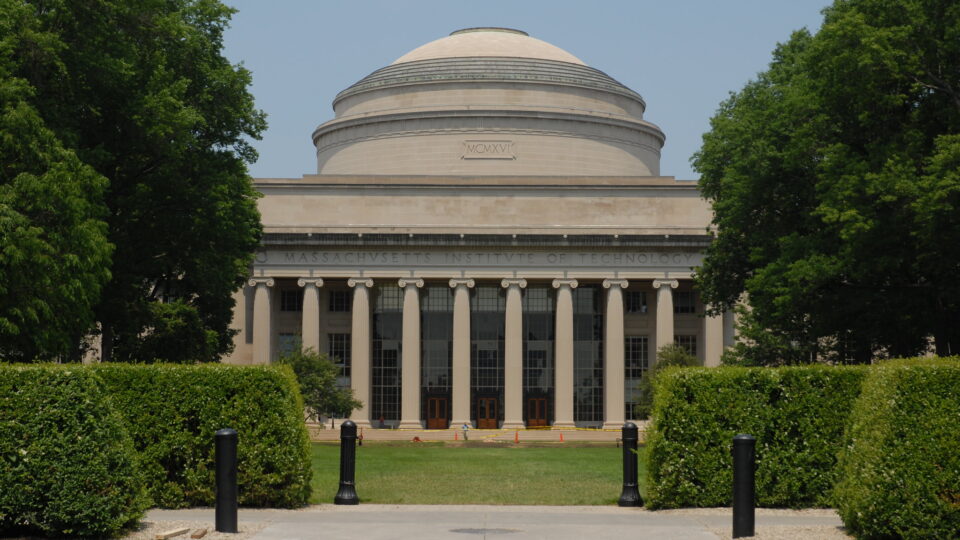
Superstrong Nanofibers | Earth Wise

March 5, 2021 By EarthWise Leave a Comment

MIT research team has developed superstrong nanofibers

Self-assembly is a ubiquitous process in the natural world that leads to the formation of the DNA double helix, the creation of cell membranes, and to many other structures.   Scientists and engineers have been working to design new molecules that assemble themselves in water for the purpose of making nanostructures for biomedical applications such as drug delivery or tissue engineering.  For the most part, the materials created in this way have been chemically unstable and tended to degrade rapidly, especially when the water is removed.

A team at MIT recently published a paper describing a new class of small molecules they have designed that spontaneously assemble into nanoribbons with unprecedented strength and that retain their structure outside of water.

The material is modeled after a cell membrane.  Its outer part is hydrophilic (it likes to be in water) and its inner part is hydrophobic (it tries to avoid water.)  This configuration drives the self-assembly to create a specific nanostructure and by choosing the appropriate chemicals to form the structures, the result was nanoribbons in the form of long threads that could be dried and handled.  The resultant material in many ways resembles Kevlar.   In particular, the threads could hold 200 times their own weight and have extraordinarily high surface areas.  The fibers are stronger than steel and the high surface-to-mass ratio offers promise for miniaturizing technologies for such applications as pulling heavy-metal contaminants out of water and for use in electronic devices and batteries.

The goal of the research is to tune the internal state of matter to create exceptionally strong molecular nanostructures.  The potential for important new applications is considerable and exciting.

**********

Web Links

Researchers construct molecular nanofibers that are stronger than steel

Photo, posted June 19, 2007, courtesy of Andrew Hitchcock via Flickr.

Earth Wise is a production of WAMC Northeast Public Radio.

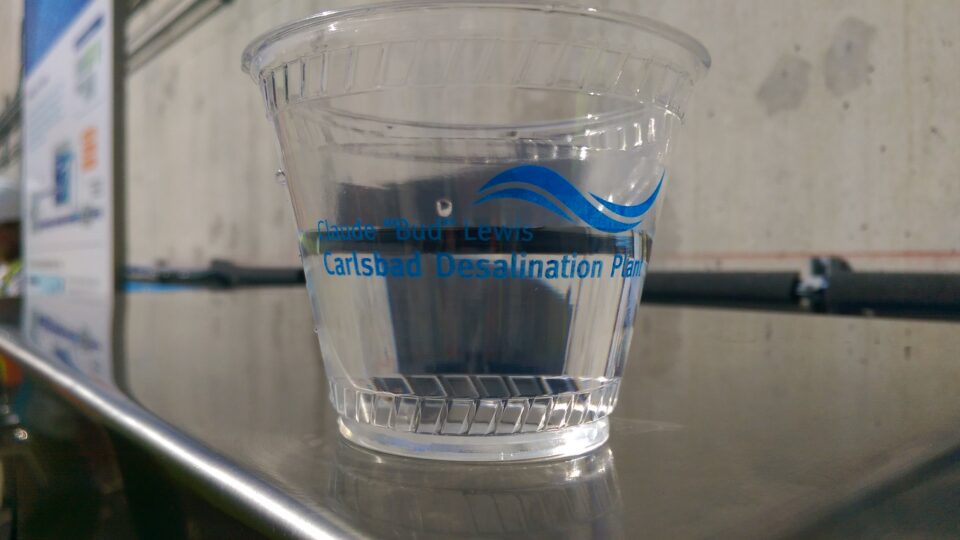
Understanding How To Enhance Desalination | Earth Wise

February 16, 2021 By EarthWise Leave a Comment

How to improve desalination

Desalination is the process of removing mineral components – notably salt – from saline water, generally seawater.  Over 16,000 desalination plants operate across 177 countries, generating 25 billion gallons of fresh water each year.  Currently, desalination accounts for about 1% of the world’s drinking water.

The leading process for desalination in terms of installed capacity as well as new installations is reverse osmosis that makes use of a thin-film composite membrane based on ultra-thin polyamide.

Despite the fact that these membranes are widely used for desalination, they are actually rather poorly understood.  It has not been known exactly how water moves through them.  As a result, much of the progress made on the technology over the decades has been essentially based on guesswork.

A team of researchers at the University of Texas, Austin has used advanced microscopy techniques to solve some of the mysteries of reverse osmosis membranes.  By mapping membranes at very high resolution – less than half the diameter of a DNA strand – they gained a much better understanding of what makes a membrane better at reverse osmosis.

They found that desalination membranes are inconsistent in mass distribution and density and that these inconsistencies can impair membrane performance.  It turns out that inconsistencies and dead zones in membranes play a bigger role than membrane thickness.  By making the membranes more uniform in density at the nanoscale, they were able to increase desalination efficiency 30 to 40 percent, therefore cleaning more water with less energy and at lower cost.

Producing fresh water is not just essential for public health, it is also crucial for use in agriculture and energy production.

**********

Web Links

Nanoscale control of internal inhomogeneity enhances water transport in desalination membranes

Photo, posted February 13, 2017, courtesy of Jacob Vanderheyden via Flickr.

Earth Wise is a production of WAMC Northeast Public Radio.

Fighting Mildew With Robots | Earth Wise

July 10, 2020 By EarthWise Leave a Comment

Using robots to fight mildew in agriculture

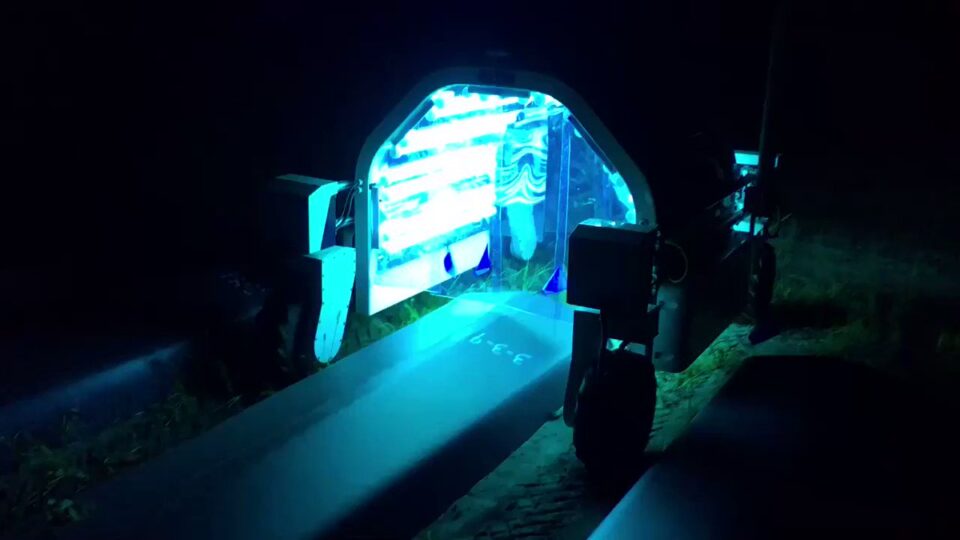
Cornell Researchers have partnered with Norwegian company SAGA Robotics to develop autonomous robots that can roam vineyards at night armed with ultraviolet lamps that can kill powdery mildew, which is a pathogen that devastates many crops, including grapes.

The robots are being field tested on Chardonnay grapes at two sites:  Cornell AgriTech’s research vineyards in Geneva, New York, and at Anthony Road Wine Co. in Penn Yan, New York.

Cornell has been researching the use of UV light to kill grapevine powdery mildew for nearly 30 years.  They have also worked with the University of Florida on using it to control powdery mildew in strawberries.

The UV treatment has been shown to suppress powdery mildew over a period of two years with the application of treatments once a week.  The technique represents a breakthrough because the mildew can adapt to chemical anti-fungal sprays in a single season, making them ineffective.  UV light damages DNA, but mildews have natural biochemical defenses that are triggered by the blue light present in sunlight.  By applying the UV at night, when there is no blue light from the sun, the defenses of the mildew are defeated.

In earlier trials, the researchers used UV lamps mounted on a tractor wagon, but this required all-night labor to treat an entire vineyard.  That has now been replaced with autonomous vehicles that can work seven nights a week, all night long.

The next development will be imaging technology that will detect and quantify mildew on grape leaves.  With this, the dose of UV light applied to a particular vine will depend on whether it is sick or healthy.

A high-tech solution to a problem that plagues vineyards.

**********

Web Links

Robots armed with UV light fight grape mildew

Photo courtesy of Rodrigo Onofre/Twitter.

Earth Wise is a production of WAMC Northeast Public Radio.

Cloning Ancient Redwoods

January 30, 2019 By EarthWise Leave a Comment

During the 19th and 20th centuries, many of the world’s largest and oldest tress were cut down for their lumber.   Some of these coast redwoods were 3,000 years old and measured 35 feet in diameter.

Today, giant stumps of these ancient redwoods dot the landscape from Oregon to northern California and are a remnant of the old-growth forest that once stretched across much of the Pacific Northwest.

An organization called the Archangel Ancient Tree Archive is dedicated to reestablishing ancient redwood forests to help combat climate change.  Coastal redwoods are not only huge but can grow an average of 10 feet a year.  One of these enormous trees can sequester 250 tons of carbon dioxide over its lifetime, more than 200 times the amount for an average tree.

While many experts thought that the giant stumps were lifeless, arborists at Archangel collected DNA from the stumps of five giant coast redwoods, all larger than the largest tree living today.  They then used this genetic material to grow dozens of saplings, which are clones of the ancient trees, in a process that takes about two-and-a-half years.

To date, the Archangel Ancient Tree Archive has planted nearly 100 of these saplings in the Eden Project garden in Cornwall, England, a couple of hundred in Oregon, and most recently, has planted 75 in the Presidio National Park in San Francisco.

According to arborists at the nonprofit organization, these saplings have extraordinary potential to purify our air, water, and soil for generations to come.  Their hopes are that the new San Francisco ‘super grove’ will be allowed to grow unmolested by manmade or natural disasters and thus propagate forever.

**********

Web Links

Arborists Have Cloned Ancient Redwoods From Their Massive Stumps

Photo, posted April 8, 2013, courtesy of Michael Balint via Flickr.

Earth Wise is a production of WAMC Northeast Public Radio.

A New Orangutan Species

November 29, 2017 By EarthWise Leave a Comment

https://earthwiseradio.org/wp-content/uploads/2017/11/EW-11-29-17-A-New-Orangutan-Species.mp3

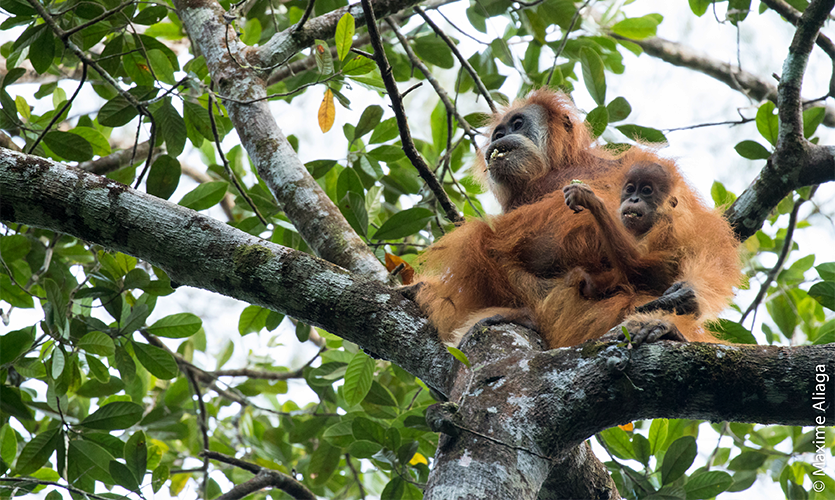
Orangutans are some of the planet’s most intelligent animals.  In fact, orangutans and human beings share 97% of their DNA sequence.  Orangutans can only be found in the wild on the Indonesian island of Sumatra and the island of Borneo, which is a land mass shared by Indonesia, Malaysia and Brunei. 

[Read more…] about A New Orangutan Species

More Bears In New York

June 13, 2017 By EarthWise

https://earthwiseradio.org/wp-content/uploads/2017/06/EW-06-13-17-More-Bears-in-New-York.mp3

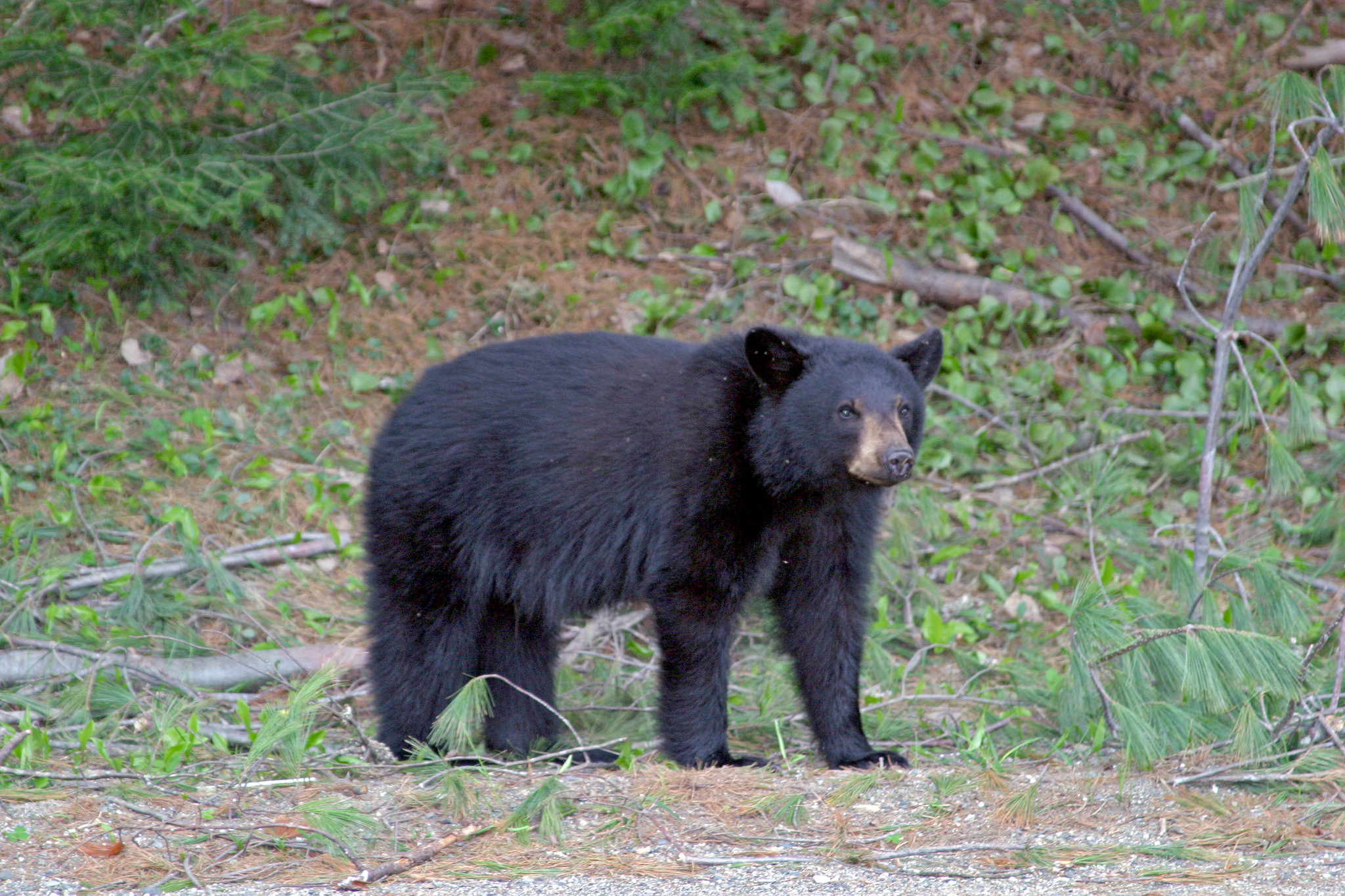
The population of black bears in southern New York has grown and expanded its range over the past 20 years, which has led to increased encounters with people.   Until recently, a detailed knowledge of bear populations in the state has been lacking.

[Read more…] about More Bears In New York

DNA Analysis of River Water

April 17, 2017 By EarthWise

https://earthwiseradio.org/wp-content/uploads/2017/04/EW-04-17-17-DNA-Analysis-of-River-Water.mp3

DNA analysis has become commonplace and inexpensive.  Millions of people have their DNA tested to learn about their origins and family connections.  And the technology has spread to biological research in the form of Environmental DNA or eDNA, which is such a powerful tool that it is transforming the field of wildlife biology.

[Read more…] about DNA Analysis of River Water

Primary Sidebar

Recent Episodes

  • An uninsurable future
  • Clean energy and jobs
  • Insect declines in remote regions
  • Fossil fuel producing nations ignoring climate goals
  • Trouble for clownfishes

WAMC Northeast Public Radio
WAMC/Northeast Public Radio is a regional public radio network serving parts of seven northeastern states (more...)

Copyright © 2026 ·