
• Skip to primary navigation
  • Skip to main content
  • Skip to primary sidebar

Earth Wise

A look at our changing environment.

  • Home
  • About Earth Wise
  • Where to Listen
  • All Articles
  • Show Search
Hide Search
You are here: Home / Archives for demand

demand

Gravity storage on the grid

June 4, 2024 By EarthWise Leave a Comment

For the past several years, the Swiss-based company Energy Vault has been developing an energy storage system based on the principle of using mechanical devices to lift heavy concrete blocks into stacks using power generated by wind turbines or other renewable sources.  When energy is needed, the blocks are lowered back to the ground, spinning generators in the process.

The principle of storing energy in the form of gravitational potential energy is the most widely used form of energy storage in existence but usually works by pumping water into a reservoir at higher elevation and then letting the water come back down when energy is needed.

Energy Vault has built a grid-scale 100 MWh gravity storage system in Rudong China.  It has now been successfully tested with charging and discharging and has been commissioned. Pending final provincial and state approvals, it will be the world’ first commercial, utility-scale non-pumped hydro gravity energy storage system.

The Rudong project teamed Energy Vault with environmental management company CTNY and Atlas Renewable.  Energy Vault has extended its license agreement with Atlas Renewable to 15 years.  CTNY has announced plans for eight additional deployments of the Energy Vault gravity storage system across China, representing more than 3.7 GWh of energy storage.

Energy Vault’s technology has attracted a fair amount of skepticism from parts of the energy community based on the environmental burdens of concrete as well as durability issues.  It appears the technology will have significant real-world testing in China, which should provide unambiguous answers to everyone’s questions.

**********

Web Links

Energy Vault Announces Successful Testing and Commissioning of First EVx 100 MWh Gravity Energy Storage System by China Tianying, Extension of Atlas Renewable Licensing Agreement to 15 Years

Photo, posted December 21, 2018, courtesy of Nancy Winfrey via Flickr.

Earth Wise is a production of WAMC Northeast Public Radio
Giant batteries and the grid

May 31, 2024 By EarthWise Leave a Comment

Giant batteries are transforming how electricity is used

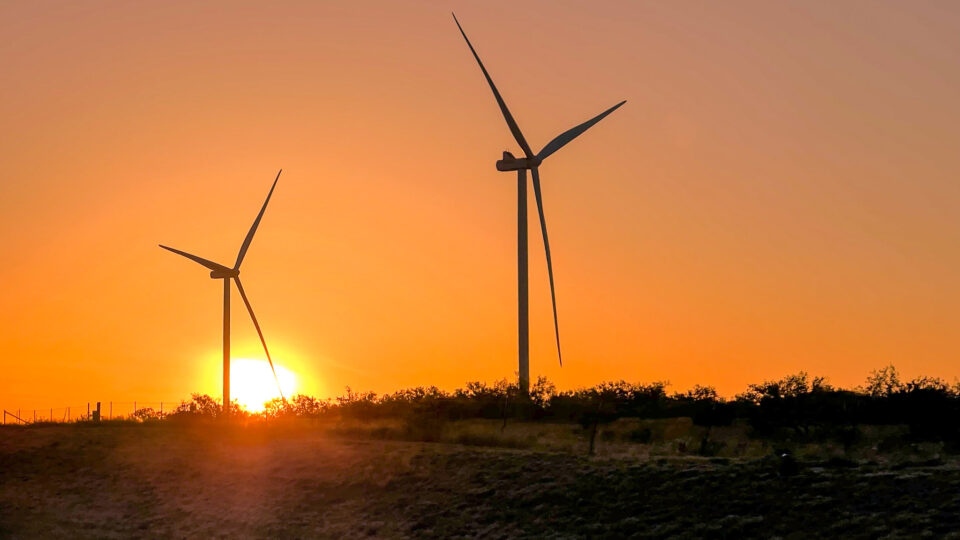
All across the country, electric utility companies are starting to use giant batteries to counteract the biggest weakness of renewable energy; namely, that the sun doesn’t always shine, and the wind doesn’t always blow.  Solar panels and wind turbines can keep generating energy when people don’t need it and batteries can store up that energy for when they do.

Over the past three years, battery storage capacity on US grids has grown by a factor of ten adding up to 16 gigawatts.  This year, it is expected to double again, led by massive growth in Texas, California, and Arizona.

California generates more electricity from solar power than any other state.  But it has a timing problem:  solar power is plentiful during the day, but it disappears in the evening when people get home from work and start using lots of electricity.  The previous solution was to burn lots of fossil fuel to produce it.

This has been changing thanks to battery storage.  Since 2020, California has installed more giant batteries than anywhere else in the world other than China.  Batteries are gradually replacing fossil fuels for California’s evening power needs.  On the evening of April 30th, for example, batteries supplied more than 20% of California’s electricity.  This is equivalent to the output of seven large nuclear reactors.

Batteries have multiple uses in the grid.  They handle big swings in generation from renewable sources, they reduce congestion on transmission lines, and they help to prevent blackouts during heat waves.  Batteries are starting to eat into the market for fossil fuels and will play an ever-growing role in the electricity grid.  As the role of renewables grows, so will the role of batteries.

**********

Web Links

Giant Batteries Are Transforming the Way the U.S. Uses Electricity

Photo, posted December 5, 2022, courtesy of Jonathan Cutrer via Flickr.

Earth Wise is a production of WAMC Northeast Public Radio
Offshore wind and the wake effect

May 28, 2024 By EarthWise Leave a Comment

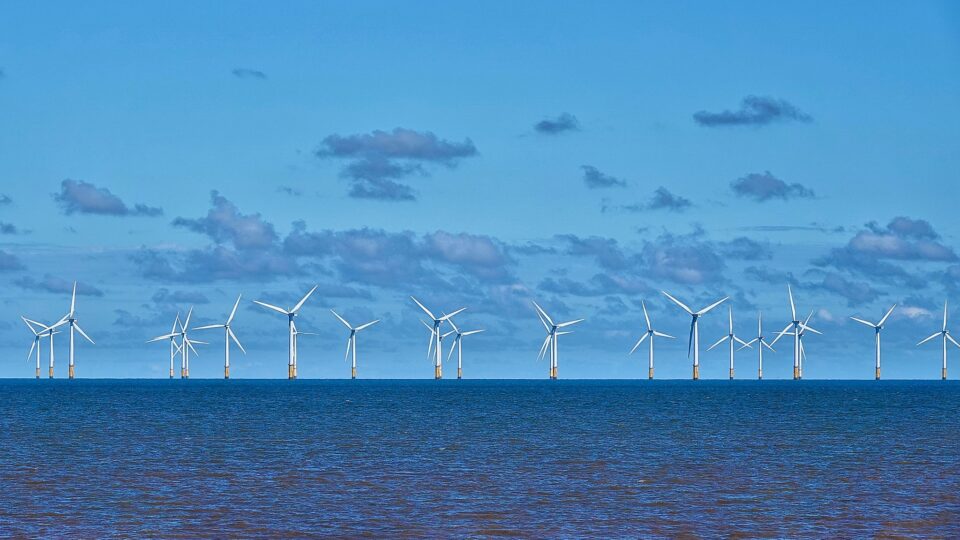
Electricity demand in the U.S. continues to grow and, in the summer, homes and businesses crank up their air conditioning which drives demand even further.  Many East Coast cities are banking on offshore wind projects that are underway in the Atlantic Ocean to help meet that growing demand.  The first offshore turbines are now producing power off the coasts of Massachusetts and New York.

Electric power utilities need to know how much power they can get from offshore wind farms, and this is not that easy to predict.  Wind is variable, so there is some built-in uncertainty.  But there is also a phenomenon known as the wake effect to contend with.

When wind passes through a series of giant turbines, the ones in front extract some energy from the wind and, as a result, the wind slows down and becomes more turbulent behind the turbines.  So, the downstream turbines get slower wind and may produce less power.

A study by the University of Colorado has modeled this phenomenon for planned wind farms in the Atlantic Coast region and has found that power output could be reduced by over 30%.  Researchers are installing weather monitors and radar sensors in islands off the New England coast to better understand the behavior of the wind in the area and improve prediction models.

The New England grid covers Connecticut, Maine, Massachusetts, New Hampshire, Rhode Island, and Vermont. Even with the wake effect, offshore wind is predicted to be able to provide 60% of the electricity needs of the grid, but it is important to be able to accurately predict what it can produce.

**********

Web Link

How much energy can offshore wind farms in the US produce? New study sheds light

Photo, posted August 31, 2022, courtesy of Nina Ali via Flickr.

Earth Wise is a production of WAMC Northeast Public Radio

The world’s largest energy plant

April 19, 2024 By EarthWise Leave a Comment

The largest energy plant in the world is being built in India.  In an area of barren desert in western India near the Pakistani border, Adani Green Energy Limited (or AGEL) is building a sprawling solar and wind power plant that will cover more than 200 square miles.  It will be five times the size of Paris and will produce enough electricity to power 16 million homes.

The Khavda Renewable Energy Park will cost about $20 billion to build and will take about five years to complete.

The success of the plant is critical to India’s efforts to reduce pollution and meet its climate goals.  India is the world’s third-largest energy consuming country.  Even though its energy use and emissions per person are less than half the global average, its enormous population offsets that advantage and its expanding economy and ongoing modernization are driving rapid growth of energy demand.  Energy demand has doubled since 2000 and 80% is still being met by coal, oil, and solid biomass.  India uses massive amounts of coal, and, in fact, the Adani Group of companies is India’s biggest coal importer and a leading miner of the fossil fuel.   Adani represents two sides of the coin.

More than 600 million people in India will be coming into middle and upper income over the next 10 to 15 years and they will have increasing energy needs.  India is in a race to develop clean energy capacity.  If it simply follows the torturous path that China, Europe, and US all have done, the prospects for the global climate are bleak.

Building the world’s largest clean energy plant is just a first small step in the necessary direction.

**********

Web Links

A coal billionaire is building the world’s biggest clean energy plant and it’s five times the size of Paris

Photo, posted February 25, 2010, courtesy of Bhavin Toprani via Flickr.

Earth Wise is a production of WAMC Northeast Public Radio

Lithium in Arkansas

April 11, 2024 By EarthWise Leave a Comment

New method being explored to tap lithium deposits in Arkansas

There are more and more electric cars on the road and utilities are installing record amounts of battery storage to back up solar and wind power generation.  Both of these things currently use lithium-ion batteries so the need for them keeps growing.

There is actually plenty of lithium in the world.  Sources of more than 100 million tons have been identified, which is enough to meet the projected needs for decades.  But lithium is not easy, cheap, or environmentally friendly to extract.  It is either blasted out of rocks that are then roasted at 2000-degree temperatures, or it is extracted from brine in places like the high Andes where it leaves behind toxic residues.  Ramping up lithium production could greatly diminish the environmental benefits derived from green technologies.

A technique called direct lithium extraction, or DLE, may be a possible solution.  The lithium is pulled out of brine while leaving other dissolved compounds behind.  It is being tested in many places around the world and appears to offer the lowest negative impacts of available extraction technologies.

The Salton Sea area in California has rich deposits of lithium and is a good candidate for DLE.  But conditions may be even better in Arkansas whose Smackover Formation is a brine-rich expanse of limestone. 

The area was a productive oil field a hundred years ago and then undertook brine-processing in the 1950s to extract bromine.  So, the area already has industrial infrastructure and no new land would need to be cleared.

The former oil fields of Arkansas may become an important domestic source of lithium.

**********

Web Links

In Rush for Lithium, Miners Turn to the Oil Fields of Arkansas

Photo, posted February 26, 2021, courtesy of Ivan Radic via Flickr.

Earth Wise is a production of WAMC Northeast Public Radio
Record renewable energy in Scotland

March 1, 2024 By EarthWise Leave a Comment

Record renewable energy in Scotland

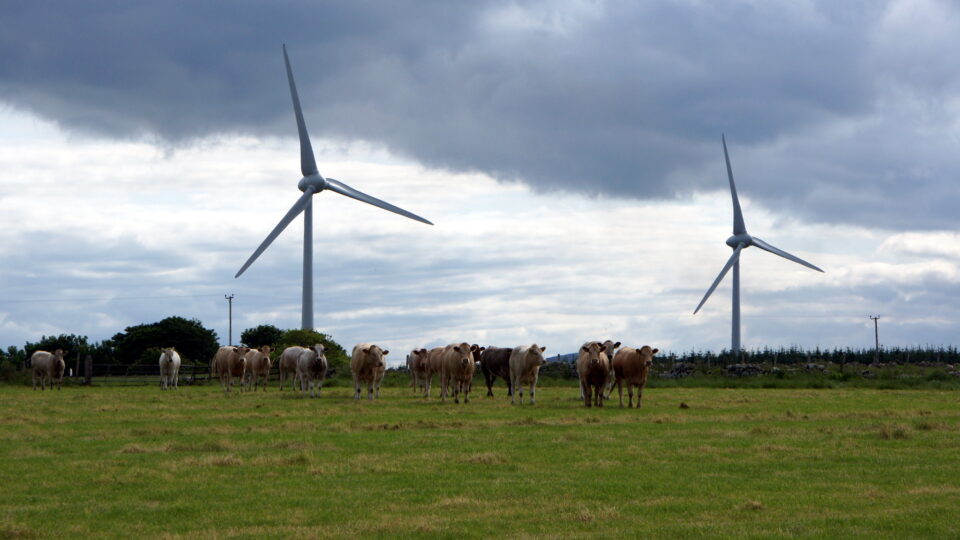
The Scottish government recently announced that in 2022, renewable technologies in that country produced the equivalent of 113% of Scotland’s electricity consumption.

Fossil fuels still supplied electricity in Scotland, helping to fill in gaps in renewable power, but the government figures showed that the growing amount of Scottish renewable generation can easily generate more power than the country uses.  Scotland has seen significant growth in wind power as well as a small drop in overall electricity consumption.

Scotland, with a population of only 5.5 million, aims to produce enough renewable power to both meet its own demand and export clean electricity to other countries.  The U.K. is the obvious potential customer, but it will need to upgrade its national power grid and develop enough capacity to store up surplus wind and solar power.

The U.K. itself is drawing less power from natural gas and coal than it has at any point in the last 66 years.  Fossil fuels supplied only 33% of British electricity in 2023 while renewables supplied 43%. 

Fossil power use in Britain peaked in 2008.  Since then, power from natural gas has fallen nearly in half while coal power has dropped by 97%.  The U.K. has aggressive decarbonization goals in place, but the current Conservative government under Prime Minister Sunak has recently set about weakening British climate policy.

Meanwhile, the Scottish government is talking about becoming a global renewables powerhouse and is making investments aimed at achieving it.

**********

Web Links

Record renewable energy output

Photo, posted July 21, 2010, courtesy of Martin Abegglen via Flickr.

Earth Wise is a production of WAMC Northeast Public Radio

One in five cars will be electric this year

February 12, 2024 By EarthWise Leave a Comment

Electric cars are taking over

There has been lots of turbulence in the electric car industry of late.  Part of it is aggressive publicity campaigns spreading misinformation and part of it is the natural fits and starts associated with major change.  But apart from the ups and downs of individual companies and countries, analysts are projecting another record year for the sales of electric vehicles and are expecting that plug-in cars will account for 20% of all car sales globally.  Much of the growth will be driven by China, where 38% of new car sales will be electric cars.

Global sales of plug-in cars are expected to grow by 21% this year, according to Bloomberg New Energy Finance.  Total projected sales are 16.7 million cars, including 1.9 million in the U.S., 3.4 million in Europe, and 9.7 million in China.  Because of the rapid adoption of electric cars in China, that country is expected to reach peak gasoline demand this year.  In other words, the use of gasoline in China will be diminishing from now on.

The auto industry is in flux.  The traditional big automakers are currently slowing down EV manufacturing as they work to come up to speed with the technology and market demand.  Meanwhile, EV-only carmakers such as Tesla in the U.S. and BYD in China are ratcheting up production. BYD is focusing on emerging economies with its lower-priced offerings.

In the U.S., EV adoption has been slowed somewhat by high interest rates and the slow rollout of EVs by the Big Three automakers.  But many new vehicles by a growing list of automakers will provide customers with more and more choices of EVs to suit diverse tastes and needs.

**********

Web Links

This Year One in Five Cars Sold Globally Will Be an EV

Photo, posted November 18, 2023, courtesy of RL via Flickr.

Earth Wise is a production of WAMC Northeast Public Radio
The slow decline of coal

January 25, 2024 By EarthWise Leave a Comment

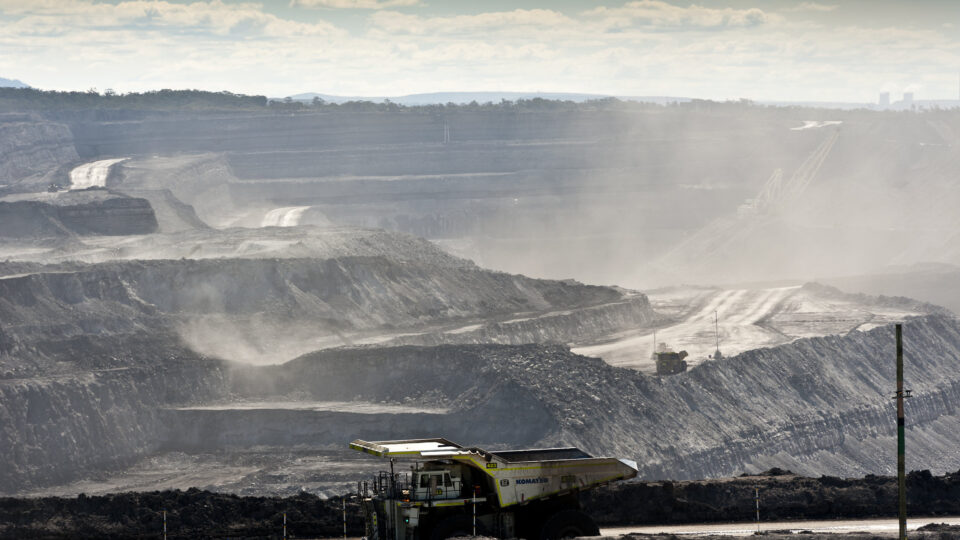
Despite the fact that coal is the dirtiest and most climate-harmful energy source we have, the global demand for it hit a record high in 2023. The demand for coal grew by 1.4% worldwide, according to an analysis by the International Energy Agency.

Coal use grew by 5% in China and 8% in India.  The two countries are the world’s largest producers and consumers of coal.  Meanwhile, coal use in the U.S. and the European Union fell by 20%.

Despite this discouraging news, the IEA forecasts that coal use will decline over the next two years.  There have been declines in coal demand a few times before, but they were driven by unusual events such as the collapse of the Soviet Union and the Covid-19 crisis.  But the IEA says that the forthcoming decline is different.  It will be driven by the formidable and sustained expansion of clean energy technologies.

According to the IEA, global coal demand will fall by 2.3% by 2026 even in the absence of new policies to curb coal use.  Forces at play will be increased hydropower in China as it recovers from drought and puts new wind and solar projects online.  China is responsible for more than half of global coal demand, but it is also responsible for more than half of the planned renewable power projects coming online over the next three years.  Experts believe that with these forthcoming projects, Chinese emissions may have peaked in 2023.

The projected drop in coal demand is still far short of what is required for the world to avoid catastrophic warming.  Much greater efforts are needed to meet international climate targets.

**********

Web Links

After a Record 2023, Coal Headed for Decline, Analysts Say

Photo, posted August 25, 2015, courtesy of Jeremy Buckingham via Flickr.

Earth Wise is a production of WAMC Northeast Public Radio

How to reduce pollution from food production

January 17, 2024 By EarthWise Leave a Comment

Present in animal manure and synthetic fertilizers, nitrogen is an essential nutrient for plant growth and is a critical input to enhance agricultural productivity on farms around the world.  But excessive and inefficient use of this nutrient is widespread.  In fact, up to 80% of it leaks into the environment, mostly in various polluting forms of nitrogen: ammonia and nitrogen oxides (which are harmful air pollutants), nitrous oxide (a potent greenhouse gas), and nitrate (which affects water quality).

A new report prepared for the United Nations has put forth some solutions to greatly reduce nitrogen pollution from agriculture in Europe.  A group of researchers coordinated by the U.K. Centre for Ecology & Hydrology, the European Commission, the Copenhagen Business School, and the National Institute for Public Health and the Environment of The Netherlands produced the report.

In it, the research team puts forth its recipe to reduce nitrogen pollution in Europe.  The report’s ingredients include:

  • Reducing by 50% the average European meat and dairy consumption
  • More efficient fertilizer application and manure storage
  • Reducing food production demand by reducing food waste by retailers and consumers
  • Better wastewater treatment to capture nitrogen from sewage
  • Adopting policies addressing food production and consumption to transition them towards more sustainable systems

Taking action to reduce nitrogen pollution will require a holistic approach involving farmers, policymakers, retailers, water companies, and individuals. 

Do Europeans have an appetite for change?

**********

Web Links

Scientists provide recipe to halve pollution from food production

Photo, posted March 10, 2022, courtesy of USDA NRCS Montana via Flickr.

Earth Wise is a production of WAMC Northeast Public Radio
Powering Britain with sun and wind

November 8, 2023 By EarthWise Leave a Comment

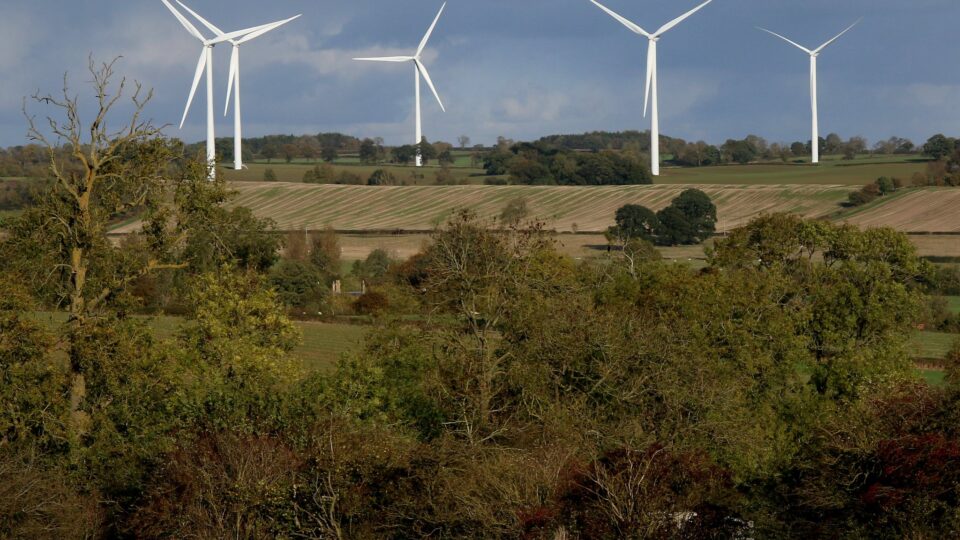
The United Kingdom is quite small in size compared with the US, but its population of 67 million makes it a fairly large country with substantial energy needs.  A recent study by Oxford University looked at the ability of wind and solar power to provide for those energy needs over the course of time.

According to the study, Britain’s energy needs could easily be met entirely by the two sources of clean power.  Wind and solar can provide significantly more energy than the highest energy demand forecasted for 2050 and nearly 10 times the current electricity demand. 

Britain currently requires 299 TWh per year.  The Oxford study found that wind and solar could generate as much as 2,896 TWh per year. Furthermore, the researchers stated that these estimates are intentionally conservative, taking into account concerns around land use and the visual impact of installations.

The analysis assumes that offshore wind would produce nearly three-quarters of the energy required.  Onshore wind would contribute about 7%, while taking up only 0.07% of the country’s land.  Utility-scale solar would add about 19% of the power.  The small remainder comes from rooftop solar.  The researchers do point out that the power grid would require significant upgrades to handle all this renewable energy and that there would need to be appropriate quantities of energy storage. 

According to the authors of the study, achieving these results is a question of ambition rather than technical feasibility.  So far, the UK government has not been aggressive in making the transition to renewable energy.

**********

Web Links

Wind and solar power could significantly exceed Britain’s energy needs

Photo, posted November 4, 2021, courtesy of Steve Knight via Flickr.

Earth Wise is a production of WAMC Northeast Public Radio

Lithium In The Salton Sea | Earth Wise

October 2, 2023 By EarthWise Leave a Comment

The Salton Sea is a shallow, landlocked, extremely salty body of water in the southern end of California.  It was formed from an inflow of water from the Colorado River in 1905 in the aftermath of a collapse of a canal during spring floods.  At one time, it was a thriving tourist destination and site of real estate speculation.  It was also a crucial habitat for migratory birds and various aquatic species.

Over the past 20 years, the Salton Sea has become increasingly desiccated and polluted with agricultural runoff and waste.  Rising salinity and the shrinking water supply from the Colorado River has made it uninhabitable for many species.

Recently, the Salton Sea has attracted new attention because of untouched lithium deposits located beneath its shores.  The general area has acquired the moniker “Lithium Valley” and has become a place where major energy companies are exploring advanced mining techniques such as Direct Lithium Extraction (DLE).  This new technique enables lithium to be captured from brine deposits without resource-intensive open-pit mining or evaporation pond processes.

Lithium is crucial for making the batteries that power electric vehicles.  DLE mining has attracted large investments from billionaires like Warren Buffet, Bill Gates, and Jeff Bezos. 

Lithium mining has generated major controversies because of its potential to damage the environment.  Whether the new mining techniques can avoid these problems and tap into the potential resources near the Salton Sea remains to be seen.  According to experts, the aquifers near the Salton Sea hold enough lithium to supply close to 40% of the global demand.

*********

Web Links

As Companies Eye Massive Lithium Deposits in California’s Salton Sea, Locals Anticipate a Mixed Bag

Photo, posted October 28, 2021, courtesy of Christian Collins via Flickr.

Earth Wise is a production of WAMC Northeast Public Radio
Wind And Solar Pass Coal | Earth Wise

August 3, 2023 By EarthWise Leave a Comment

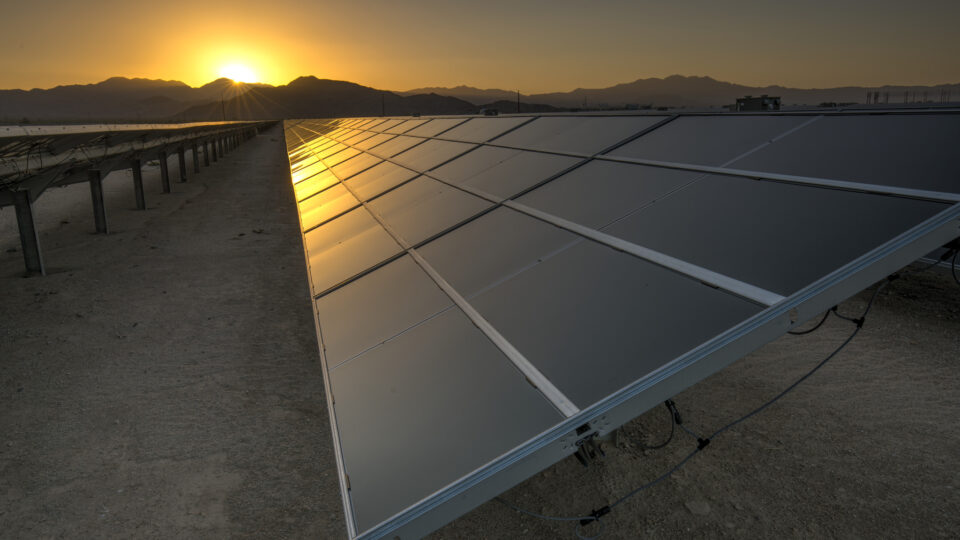
For the first five months of this year, wind and solar generated more electricity than coal in the United States.  This is a first.  Total renewable energy generation exceeded coal-fired power in both 2020 and 2022, but that counted hydroelectric power as one of the renewable sources.

This year, wind and solar alone generated a total of 252 terawatt-hours of energy through May compared with coal’s output of 249 terawatt-hours.  Hydropower generated an additional 117 terawatt-hours during that period.

While solar and wind power have been expanding at a rapid rate, the biggest change this year has been a precipitous drop in coal-fired generation due to a combination of low natural gas prices, a mild winter, and a series of coal plant retirements.

Coal generated almost half of the country’s electricity as recently as 2008.  Since then, coal has steadily declined as older coal plants shut down and were replaced by natural gas plants and renewable energy sources.  The coal industry had a bit of a reprieve last year when natural gas prices spiked in response to the disruptions in gas supplies in Europe due to the war in Ukraine.  The benchmark for natural gas prices – known as Henry Hub – was $8.81 in August 2022.  In May of this year, it was $2.15.  Given this trend, the demand for coal has steadily declined. 

The US has retired another 7% of the coal fleet – 14 gigawatts of capacity – since the start of 2022.  Meanwhile, power companies have added 22.5 GW of wind and solar capacity in just the past 12 months.

**********

Web Links

In a First, Wind and Solar Generated More Power Than Coal in U.S.

Photo, posted September 20, 2016, courtesy of Bureau of Land Management via Flickr.

Earth Wise is a production of WAMC Northeast Public Radio

Big Oil And Big Lithium | Earth Wise

July 7, 2023 By EarthWise Leave a Comment

Big Oil entering the lithium market

The world’s big oil companies have worked pretty hard to prolong society’s dependence on petroleum.  When there are trillions of dollars at stake, there is plenty of motivation.  But those companies do see the writing on the wall.

An Exxon Mobil-funded study last year estimated that light-duty vehicle demand for combustion engine fuels could peak in 2025 and that electric vehicles of various types could grow to more than 50% of new car sales by 2050.  This is pretty pessimistic compared with most other surveys, but it is still a big number.  Exxon also projected that the global fleet of EVs could reach 420 million by 2040.

As a result of all this, Exxon is preparing for a future far less dependent on gasoline by drilling for lithium rather than oil.  The company recently purchased mining rights to a sizable chunk of Arkansas land for over $100 million from which it aims to produce lithium for electric car batteries.

Exxon’s consultants estimated that the 120,000 acres in the Smackover formation of southern Arkansas could have as much as 4 million tons of lithium carbonate, enough to power 50 million cars and trucks. 

Exxon plans to spend $17 billion through 2027 on cutting carbon emissions and developing low carbon technologies.  Other large oil producers have also been looking at the lithium business.  At the same time, some large oil companies like BP and Shell are investing in renewable energy.

The prospect of EVs dominating transportation in the coming decades is a strong incentive for oil-and-gas companies to adapt their businesses to the new world.

**********

Web Links

Exxon Joins Hunt for Lithium in Bet on EV Boom

Photo, posted August 16, 2014, courtesy of Mike Mozart via Flickr.

Earth Wise is a production of WAMC Northeast Public Radio

Electric Cars In Norway | Earth Wise

June 12, 2023 By EarthWise Leave a Comment

We are at a relatively early stage of the electric car revolution.  EV sales are increasing rapidly, but they still comprise only a small fraction of the cars on American roads.  So, there is still lots of speculation and argument about how things will actually work when a large fraction of cars are electric.  But there is at least one place where one doesn’t have to speculate:  Norway.

Last year, 80% of new-car sales in Norway were EVs.  That country is essentially an observatory for figuring out what the electrification of vehicles will mean for the environment, workers, and life in general.  In fact, sales of internal combustion cars in Norway will end in 2025.

Based on Norway’s experience, electric vehicles bring benefits and none of the dire consequences that some critics predict.  The transition isn’t problem-free.  There have been unreliable chargers and long waits during periods of high demand.  Auto dealers and retailers have had to adapt to the changes in their businesses.  The pecking order of car brands has changed dramatically making Tesla the best-selling brand and marginalizing long-established carmakers like Renault and Fiat.

But in the bigger picture, the air in Oslo, the capital of Norway, is measurably cleaner.  The city is quieter as noisy gasoline and diesel vehicles gradually disappear.  Oslo’s greenhouse gas emissions have fallen 30% since 2009.  Meanwhile, there hasn’t been mass unemployment among gas station workers, and the electrical grid has not collapsed.

Norway is perhaps 10 years ahead of us with respect to electric cars.  There are still problems to solve, and difficulties to overcome, but so far, it looks like it will all turn out well.

**********

Web Links

In Norway, the Electric Vehicle Future Has Already Arrived

Photo, posted October 15, 2018, courtesy of Mario Duran-Ortiz via Flickr.

Earth Wise is a production of WAMC Northeast Public Radio
Minimizing The Impact Of EVs On The Grid | Earth Wise

May 4, 2023 By EarthWise Leave a Comment

How to minimize the impact of EVs on the electricity grid

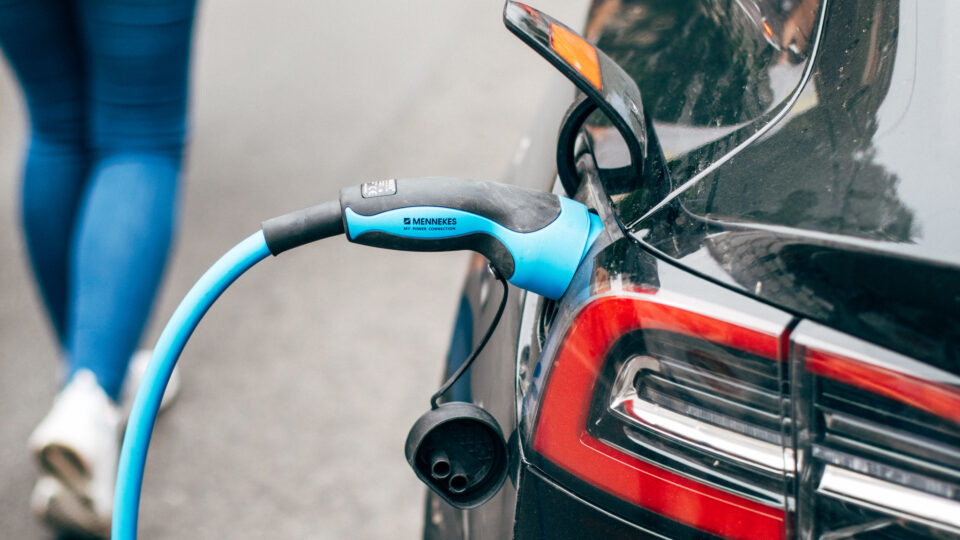
Two current trends are the increasing reliance on renewable sources in the electric grid and the increasing use of electric vehicles.  According to some projections, these trends could lead to the need for costly new power plants to meet peak loads in the evening when cars are plugged in to charge.  Overproduction of power from solar farms during the daytime would require expanded energy storage capacity so as not to waste all that generating capacity.

A new study by MIT researchers has found that it is possible to mitigate or eliminate these problems without the need for advanced technological systems and complex infrastructure.  The key elements of the strategy are the strategic placement of charging stations and the practice of delaying the onset of home charging.

Better availability of charging stations at workplaces could help to soak up peak power being produced at midday from solar power installations.  In general, placing of charging stations in strategic ways, rather than letting them spring up just anywhere, could make a big difference.

Delaying home charging to times when there is less electricity demand could be accomplished with the use of a simple app that would estimate the time to begin the charging cycle so that it finishes charging just before the car is needed the next day.  Since different people have different schedules and needs, by delaying the onset of charging appropriately, not everyone will be charging at the same time, and therefore the peak in demand would be smoothed out.

There are substantial government funds earmarked for charging infrastructure and creating that infrastructure in suitably strategic ways could make a big difference in supporting EV adoption and supporting the power grid.

**********

Web Links

Minimizing electric vehicles’ impact on the grid

Photo, posted July 2, 2020, courtesy of Ivan Radic via Flickr.

Earth Wise is a production of WAMC Northeast Public Radio

Falling Lithium Prices | Earth Wise

May 1, 2023 By EarthWise Leave a Comment

Producers still working out how to meet the surging demand for lithium

Lithium, the key element in the batteries that power electric cars, as well as smartphones, tablets, and laptop computers, is sometimes called white gold.  Over time, the price of the metal has gone up and up.  But recently, and surprisingly, the price of lithium has actually gone down, helping to make electric vehicles more affordable.

Over the first couple of months of this year, the price of lithium has dropped by nearly 20%.  The price of cobalt, another important component of vehicle batteries, has fallen by more than half.  Even copper, another battery material, has seen its price drop by 18%.

Many analysts predicted that prices of these commodities would stay high or even climb higher.  The reason for the decline, as well as whether it is likely to persist, is the subject of much debate.

Some experts believe that the price drops are a result of demand not being as high as expected, perhaps related to slowing sales growth of EVs in Europe and China after certain subsidies expired.  Other industry experts said that the drop was a result of new mines and processing plants providing additional supply sooner than was thought possible.

Despite the price drops, mining and processing lithium remains an extraordinarily profitable business.  It costs from $5,000 to $8,000 to produce a ton of lithium that sells for ten times that amount.  With such fat profit margins, there is no shortage of banks and investors eager to finance lithium mining and processing projects.  Such profit margins are probably not sustainable and that will likely result in more reasonable prices over time.

There is plenty of lithium in the world.  The huge demand for it is a recent phenomenon and the world is still working out how to meet that demand.

**********

Web Links

Falling Lithium Prices Are Making Electric Cars More Affordable

Photo, posted January 9, 2023, courtesy of Phillip Pessar via Flickr.

Earth Wise is a production of WAMC Northeast Public Radio
Peak Fossil Fuels | Earth Wise

March 3, 2023 By EarthWise Leave a Comment

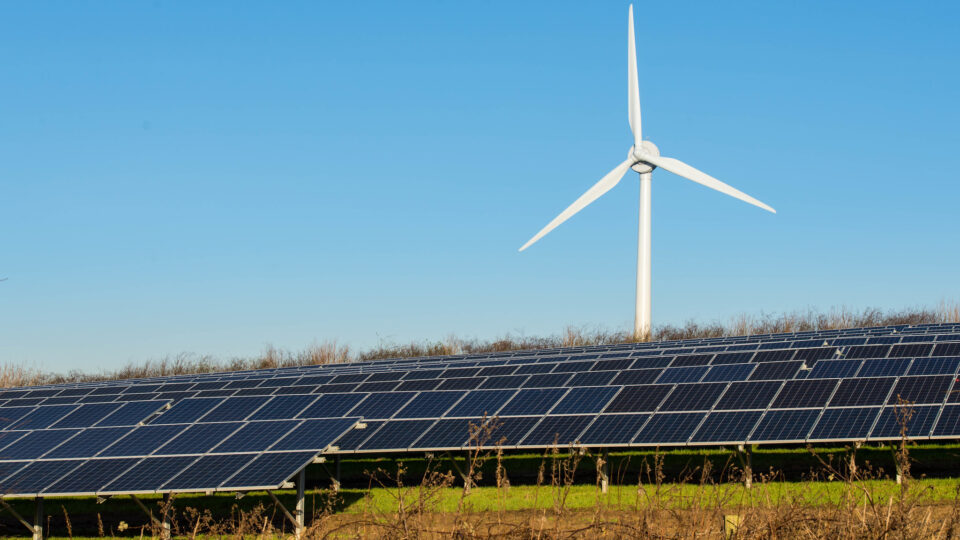
According to a new report from the Rocky Mountain Institute, a nonprofit that studies the energy transition, we have reached a pivot point in which fossil fuels have peaked in their use for producing electricity and are about to enter a period of decline.

The report makes the case that wind and solar power are going through a growth process that looks very much like the trend lines for the early stages of other transformative products and industries – things like automobiles and smartphones.  Such growth begins slowly for technology and products that are very expensive, but then shifts into high gear as costs shrink and efficiency rises.

The argument is that fossil fuel demand has peaked in the electricity market because the annual growth in global electricity demand is now less that the amount of electricity being generated by newly-built renewable energy plants (mostly solar and wind.)  This dynamic will squeeze out the most expensive and dirtiest energy sources over time.

Overall use of fossil fuels for electricity shifted in 2018 from a long-standing period of growth to a holding pattern in which the total amount of electricity produced has no clear trend.  According to the RMI report, this plateau in fossil fuel use is likely to continue until about 2025, and then will be followed by a long-term decline.

While the trends in fossil fuel use are quite evident, the end results are not inevitable.  There continues to be a battle between the forces trying to protect the fossil fuel status quo and those trying to change it. But strong economic forces are difficult to overcome.  Renewable energy is the lowest cost source of electricity in a growing number of locations and situations.

**********

Web Links

When Will We Hit Peak Fossil Fuels? Maybe We Already Have

Photo, posted December 27, 2015, courtesy of Gerry Machen via Flickr.

Earth Wise is a production of WAMC Northeast Public Radio

The Enormous Cost Of Steel Corrosion | Earth Wise

February 28, 2023 By EarthWise Leave a Comment

Global steel production has been rising for decades.  Because steel corrodes over time, part of the demand for more steel comes from the need to replace the steel used in construction materials – in everything from bridges to cars – that has become corroded over time.  Studies have estimated that the economic cost of corrosion is an astonishing 3 to 4% of a nation’s gross domestic product.  Globally, this means that steel corrosion costs the world trillions – yes, trillions with a T – of dollars each year.

On top of the staggering economic impact of corrosion, there is the fact that steel production is one of the largest greenhouse gas emitters of any industry, accounting for more than 25% of all manufacturing sector carbon emissions.  In fact, steel manufacturing causes over 10% of total global carbon emissions.  

As a result of regulations placed on the steel industry, technological advances in the steelmaking process have resulted in a 61% reduction in the industry’s energy consumption over the last 50 years.   There are continuing efforts to reduce the energy consumption of steel making and to move away from the use of fossil fuels to produce the needed energy.  But without significant improvements, just the emissions associated with replacing corroded steel could make the goals set by the Paris Climate Agreement unfeasible.

It’s hard to believe that something costing the world trillions of dollars and has a major negative impact on the climate is largely invisible.  Steel corrosion is an enormous societal challenge that has gone under the  radar for decades and therefore has not received anything like the attention it deserves.

**********

Web Links

Reducing steel corrosion vital to combating climate change

Photo, posted July 24, 2008, courtesy of Phil Whitehouse via Flickr.

Earth Wise is a production of WAMC Northeast Public Radio

Lithium Mining And Andes Ecosystems | Earth Wise

October 28, 2022 By EarthWise Leave a Comment

The global demand for lithium could be an ecological disaster

A remote region in the high Andes straddling the borders between Argentina, Bolivia, and Chile has become known as the Lithium Triangle.   The area has become the focus of a global rush for lithium to make batteries for electric cars.  The global demand for lithium is expected to quadruple by 2030 to 2.6 million tons a year.

According to the U.S. Geological Survey, more than half of the world’s lithium reserves are dissolved in ancient underground water within the Lithium Triangle.  The cheapest way to extract the lithium is to pump the underground water to the surface and evaporate it in the sun to concentrate the lithium carbonate contained in it.

Every ton of lithium carbonate extracted using this cheap, low-tech method dissipates into the air about half a million gallons of water that is vital to the arid high Andes.  The process lowers water tables and has the potential to dry up lakes, wetlands, springs, and rivers.  Hydrologists and conservationists say the lithium rush in Argentina is likely to turn the region’s delicate ecosystems to deserts.

The global drive for green vehicles to fight climate change has the potential to be an ecological disaster in this remote region of South America and for the indigenous people who live there.

The environmental impacts are not an inevitable price for the transition to electric vehicles.  First of all, there are alternatives to lithium.  Both zinc and nickel are potential substitutes in rechargeable batteries.  But, there are also ways of obtaining lithium that are less destructive than evaporating the metal from saline ecosystems.  It is up to battery manufacturers, automakers, and financiers to start demanding lithium from sources that are less environmentally destructive.

**********

Web Links

Why the Rush to Mine Lithium Could Dry Up the High Andes

Photo, posted September 25, 2015, courtesy of Nuno Luciano via Flickr.

Earth Wise is a production of WAMC Northeast Public Radio

A Better Way To Recycle Plastic | Earth Wise

July 25, 2022 By EarthWise Leave a Comment

Researchers are developing a better way to recycle plastic

The current state of plastic recycling is not very effective.  Plastic recycling is only able to replace 15-20% of the fossil-fuel-derived raw material needed to produce society’s demand for plastic.

Researchers at Chalmers University in Sweden have now demonstrated how the carbon content in mixed waste could be used to replace all of the fossil raw materials in the production of new plastic.  In principle, their technology could completely eliminate the climate impact of plastic materials.

According to the researchers, there are enough carbon atoms in waste to meet the needs of all global plastic production.

The Chalmers process is based on thermochemical technology and involves heating waste to 1100-1500 degrees Fahrenheit.  The waste is thereby vaporized and when hydrogen is added, becomes a carbon-based substance that can replace the fossil-fuel building blocks of plastic.  The method does not require sorting the waste materials.  Different types of waste, such as old plastic products and even paper cups, with or without food residues, can be fed into the recycling reactors.  The researchers are now developing the techniques required to utilize their recycling technology in the same factories in which plastic products are currently being made from fossil oil or gas.

The principle of the process is inspired by the natural carbon cycle in which plants break down into carbon dioxide when they wither and die, and then photosynthesis uses carbon dioxide and solar energy to grow new plants.

Producing new plastics would no longer require petroleum or other fossil fuels as raw materials.  If the energy needed to drive the recycling reactors is taken from renewable sources, plastics could become the basis of a sustainable and circular economy.

**********

Web Links

Pioneering recycling turns mixed waste into premium plastics with no climate impact

Photo, posted August 10, 2013, courtesy of Lisa Risager via Flickr.

Earth Wise is a production of WAMC Northeast Public Radio.

  • « Go to Previous Page
  • Page 1
  • Page 2
  • Page 3
  • Page 4
  • Page 5
  • Go to Next Page »

Primary Sidebar

Recent Episodes

  • An uninsurable future
  • Clean energy and jobs
  • Insect declines in remote regions
  • Fossil fuel producing nations ignoring climate goals
  • Trouble for clownfishes

WAMC Northeast Public Radio

WAMC/Northeast Public Radio is a regional public radio network serving parts of seven northeastern states (more...)

Copyright © 2026 ·