• Skip to primary navigation
  • Skip to main content
  • Skip to primary sidebar

Earth Wise

A look at our changing environment.

  • Home
  • About Earth Wise
  • Where to Listen
  • All Articles
  • Show Search
Hide Search
You are here: Home / Archives for coral reef

coral reef

The pandemic was good for Hanauma Bay

October 8, 2025 By EarthWise Leave a Comment

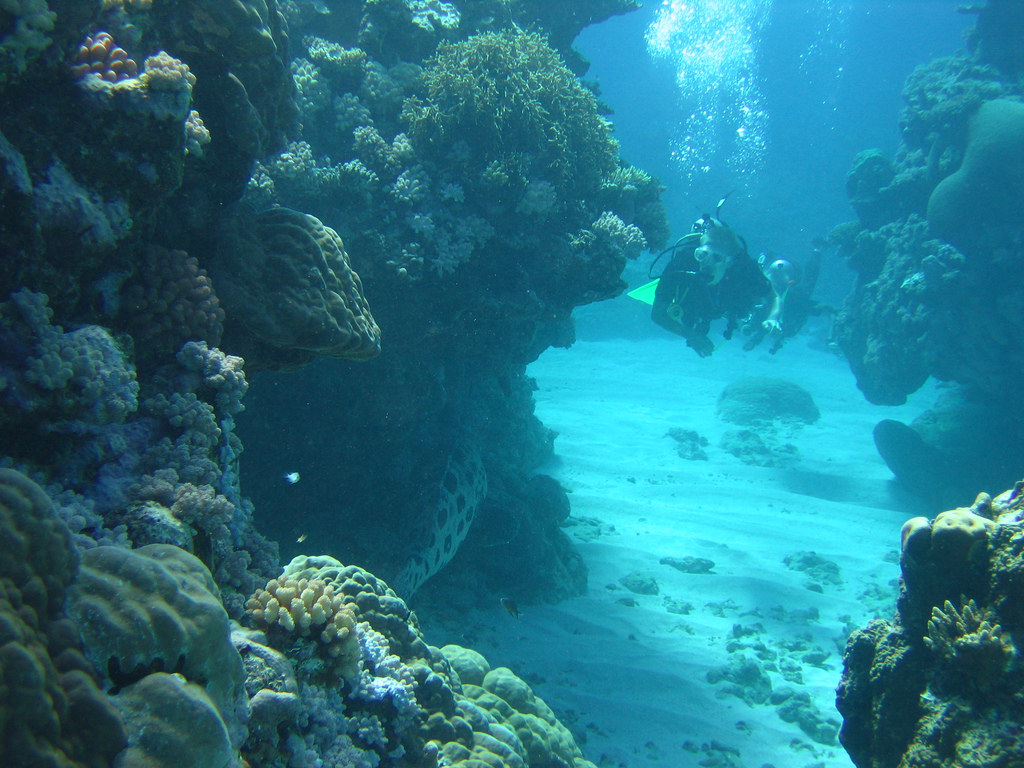
Hanauma Bay is a marine sanctuary near Honolulu that is a popular snorkeling spot and is home to vibrant marine life and well-preserved corals. Its popularity grew in the 1970’s and 1980’s and its visitor attendance peaked at an estimated 10,000 people a day. A new management plan in 1990 reduced visitation, improved facilities, established an education program, and banned the feeding of fish. In 2019, average daily attendance was still about 3,000 people – about a million a year – and the impact on the reef ecosystem was considerable.

In 2020, because of the Covid pandemic, the preserve was completely closed to the public for seven months.  This provided a unique natural experiment to study the effect of removing human interference from a natural ecosystem. 

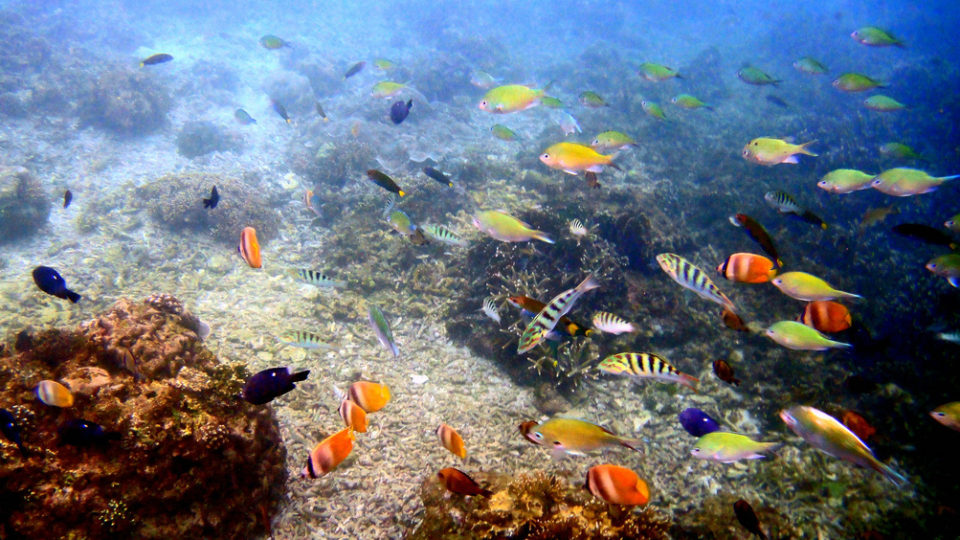
Researchers from the Hawaii Institute of Marine Biology found that the reef in Hanauma Bay quickly returned to having better water quality, more monk seal sightings, greater fish abundance, and significant changes in fish behavior.  The fact that the ecosystem responded quickly indicated that everyday human presence can have a real and measurable effect on reef health.

The research serves as a valuable case study for marine managers around the world.  Putting limits on the number of visitors to reefs – especially those that are currently unregulated – could help restore lost ecological function and reduce human-induced pressure while still maintaining access.  Tourism to reefs generates billions of dollars annually, so there needs to be ways to protect reefs without making them entirely off limits. 

**********

Web Links

When crowds left, reefs came alive at Hanauma Bay

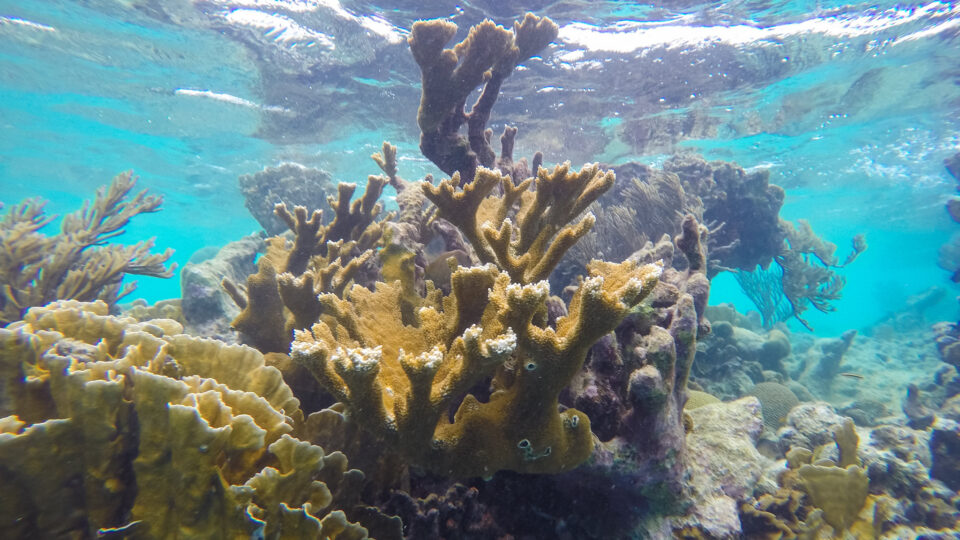
Photo, posted December 13, 2011, courtesy of Dalton Reed via Flickr.

Earth Wise is a production of WAMC Northeast Public Radio
More Bleaching In The Great Barrier Reef | Earth Wise

April 27, 2022 By EarthWise Leave a Comment

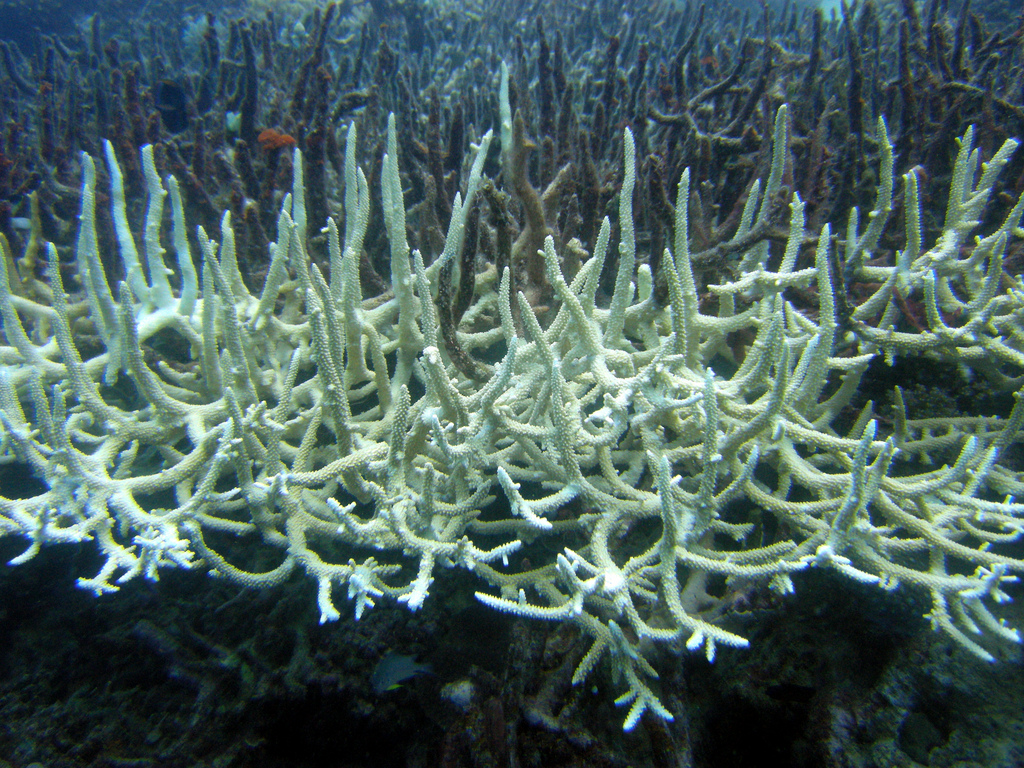
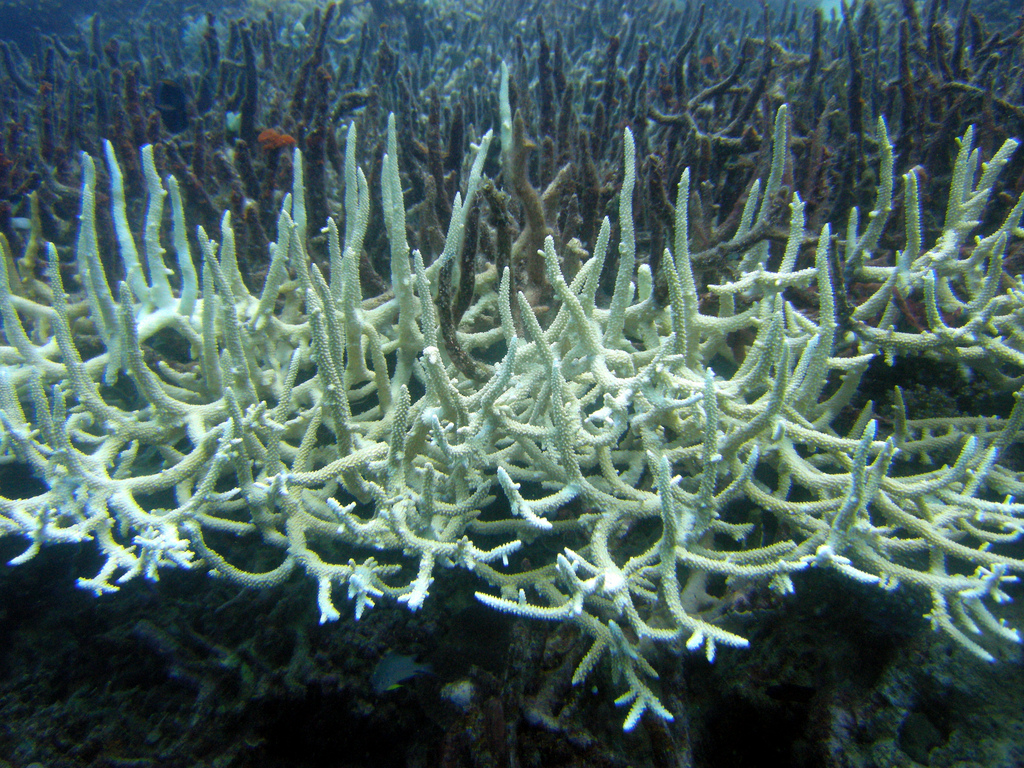
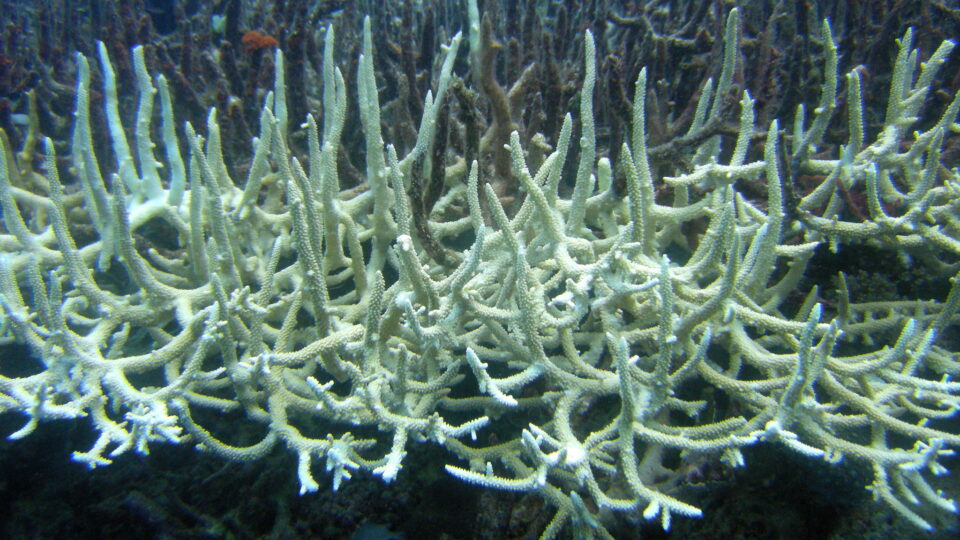
Continued coral bleaching in the Great Barrier Reef

Australia’s Great Barrier Reef is an ecosystem that can be seen from space.  It has now suffered its 6th mass coral bleaching event since 1998.  Previous events happened in 1998, 2002, 2006, 2016, and 2017.  This latest bleaching has occurred even though this is a La Niña year, when more rain and cooler temperatures are supposed to help protect delicate corals.

An aerial survey of 750 separate reefs across much of the 1500 mile-long Great Barrier Reef system found severe bleaching among 60% of the corals.  The bleaching covers an area even wider than the back-to-back outbreaks in 2016 and 2017.

The bleaching is a product of a summer in Australia that started early.  December temperatures were already warmer than the historical February summer maximums.  Globally, 2021 was the hottest year on record for the world’s oceans for the sixth year in a row.

Bleached coral can recover if temperatures cool down for a long enough period, but this is becoming increasingly rare.  Between 2009 and 2019, 14% of the world’s coral reefs were lost for good.

In Australia, the plight of the Great Barrier Reef has become politicized.  The current government is not supportive of efforts to reduce the country’s fossil fuel dependence and has worked to keep the reef from being placed on the list of endangered world heritage sites.  Instead of pushing for emissions cuts, Australia has focused on a variety of long-shot projects aimed at helping the reef.

The fact is that coral reefs cannot cope with the current rate of warming and unless that slows down soon, they will simply not survive for long.

**********

Web Links

‘Can’t Cope’: Australia’s Great Barrier Reef Suffers 6th Mass Bleaching Event

Photo, posted September 28, 2009, courtesy of Matt Kieffer via Flickr.

Earth Wise is a production of WAMC Northeast Public Radio.

Caribbean Coral Reefs Under Siege | Earth Wise

January 4, 2021 By EarthWise Leave a Comment

Coral reefs face myriad of dangers

Coral reefs around the world have been suffering from warming seas and increasing acidification, both a result of human activity.  In the Caribbean, a new threat has emerged in the form of invasive algae.

New research published in Scientific Reports explains how an aggressive, crust-like alga is overgrowing shallow reefs and taking the place of coral that was damaged by powerful storms that exposed areas of the undersea rock where corals grew. 

Researchers from Oxford University, the Carnegie Institution, and California State University Northridge have been studying these peyssonnelid algal crusts, or PACs, for several years in the U.S. Virgin Islands.  The PAC has been out-competing coral larvae for surface space and then growing over the existing reef architecture, greatly damaging delicate reef ecosystems.

New corals actually prefer to settle on crusty surfaces created by a different type of algae called crustose algae, or CCA.  CCA acts as guideposts for coral larvae by producing biochemical signals as part of a microbial community that entice baby coral to affix itself.

In contrast, the destructive PAC algae exclude coral settlement. The researchers determined that the microbial community associated with PAC algae is deployed to deter grazing from fish and other marine creatures.  Unfortunately, it also deters coral.

Fragile coral ecosystems are already under assault by environmental pollution and global warming.  Now, in the aftermath of powerful hurricanes like Irma and Maria, algal crusts are taking over reef communities and posing an existential threat to Caribbean corals.

*********

Web Links

An unusual microbiome characterises a spatially-aggressive crustose alga rapidly overgrowing shallow Caribbean reefs

Photo, posted January 11, 2015, courtesy of Falco Ermert via Flickr.

Earth Wise is a production of WAMC Northeast Public Radio.

Community Action And Coral Reefs

January 1, 2020 By EarthWise Leave a Comment

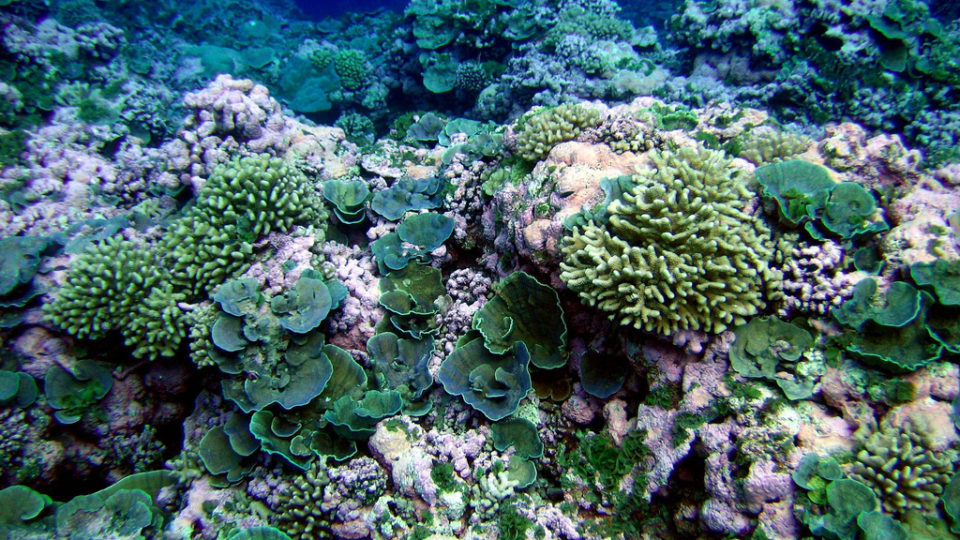
Coral reef habitats are some of the densest and most varied ecosystems on earth.  While coral reefs cover just 0.2% of the ocean floor, scientists estimate that nearly one million different species of fish, invertebrates, and algae can be found in or around coral reefs. 

However, climate change is wreaking havoc on the health of coral reefs.  Warming and acidifying oceans are resulting in enormous coral losses.  Overfishing, development, and pollution are also threatening coral reef health.

According to new research, positive community action can help boost fish populations in coral reefs and safeguard future fish numbers.  The paper, which was recently published in the journal Proceedings of the National Academy of Sciences, details the social and ecological outcomes of work being done in Papua New Guinea since 2001. 

These communities have established a traditional system of rotational fishing closures in order to manage their fisheries resources.   They ban fishing on part of their reefs for a few years, and then open these closures when village elders believe fish behavior has changed and fish populations have recovered.  They then close a different part of their reefs, and repeat the process. 

The researchers found that these rotational practices resulted in more than twice as many fish on the closed reefs as compared to open ones, and the closures made fish less scared of people and easier to catch.  But the researchers did caution that this short term boost in fish numbers may not be enough to stop the overall impact of fishing.

Globally, more than 500 million people depend on coral reefs for food, income, and coastal protection.  Balancing community needs with environmental needs can be tricky business.  

**********

Web Links

Positive community action can help coral reef health

Photo, posted October 11, 2011, courtesy of Paul Toogood via Flickr.

Earth Wise is a production of WAMC Northeast Public Radio.

Another Problem For Coral Reefs

April 5, 2019 By EarthWise Leave a Comment

Coral reefs around the world have been suffering in recent years from warming ocean temperatures as well as from increasing ocean acidification.  Corals are very sensitive organisms that can only tolerate relatively slight changes in their environment.  Thus, the majority of reef-building corals are found in tropical and subtropical waters with favorable conditions.

New research has confirmed that drastic changes in ocean salinity from, for example, severe freshwater flooding, provoke similar stress responses in corals as the heating that has resulted in freshwater bleaching and, eventually, coral death.

The coast of northeast Queensland in Australia has experienced abnormal monsoon-related freshwater flooding that caused extreme and sudden changes in the ocean salt concentration.  In places, nearshore reefs were exposed to water with only half the normal ocean salinity.  The result has been a shock response in corals that prevents normal cell function.  Unlike their response to heat stress, corals exposed to reduced salinity experience a complete collapse of their internal cellular protein balance.

The central Great Barrier Reef has actually been relatively free from mass thermal bleaching events this Australian summer, but many coastal reefs instead have been battling dramatic changes in water conditions as a result of massive plumes of floodwater.

The wild weather in Australia is undoubtedly associated with the changing climate and this new research shows that it is leading to yet another threat to the world’s coral reefs.  With the frequency and severity of heavy rainfall and runoff events predicted to continue to increase over the next few decades, proactive measures to increase the resiliency of coral reefs are needed more than ever.

**********

Web Links

Reduced salinity of seawater wreaks havoc on coral chemistry

Photo, posted December 12, 2010, courtesy of Gareth Williams via Flickr.

Earth Wise is a production of WAMC Northeast Public Radio.

Coral Nurseries

July 9, 2018 By EarthWise Leave a Comment

https://earthwiseradio.org/wp-content/uploads/2018/06/EW-07-09-18-Coral-Nurseries.mp3

In the past, coral conservationists focused their efforts on protecting reefs from direct environmental threats such as land-based pollution and damaging fishing practices.   These efforts continue, but as coral reefs face increasingly dire threats, conservationists are turning toward more proactive approaches.

[Read more…] about Coral Nurseries

The Great Barrier Reef

April 27, 2017 By EarthWise

https://earthwiseradio.org/wp-content/uploads/2017/04/EW-04-27-17-The-Great-Barrier-Reef.mp3

According to a new paper published in the journal Nature, global warming has damaged huge sections of Australia’s Great Barrier Reef.  The authors of the paper warn that the resilience of the reef – which is the world’s largest living structure – is waning rapidly.

[Read more…] about The Great Barrier Reef

Bleached And Dying

February 23, 2017 By EarthWise

https://earthwiseradio.org/wp-content/uploads/2017/02/EW-02-23-17-Coral-Reefs-Die-Off.mp3

Climate change is posing a major threat to the future of coral reefs.  According to a recent United Nations-backed study, if swift action is not taken to curb greenhouse gas emissions, annual coral bleaching events will affect nearly all of the world’s coral reefs.  And coral bleaching can result in serious coral mortality – as Australia’s Great Barrier Reef has recently illustrated.  

[Read more…] about Bleached And Dying

Coral Bleaching On The Great Barrier Reef

May 9, 2016 By WAMC WEB

https://earthwiseradio.org/wp-content/uploads/2016/05/EW-05-09-16-Coral-Bleaching.mp3

It was already well-known that coral bleaching was a serious problem in the Great Barrier Reef, but extensive aerial surveys and underwater dives have now revealed the shocking extent of the problem.

[Read more…] about Coral Bleaching On The Great Barrier Reef

Primary Sidebar

Recent Episodes

  • An uninsurable future
  • Clean energy and jobs
  • Insect declines in remote regions
  • Fossil fuel producing nations ignoring climate goals
  • Trouble for clownfishes

WAMC Northeast Public Radio

WAMC/Northeast Public Radio is a regional public radio network serving parts of seven northeastern states (more...)

Copyright © 2025 ·