• Skip to primary navigation
  • Skip to main content
  • Skip to primary sidebar

Earth Wise

A look at our changing environment.

  • Home
  • About Earth Wise
  • Where to Listen
  • All Articles
  • Show Search
Hide Search
You are here: Home / Archives for coastline

coastline

How much nanoplastic is in the oceans?

August 1, 2025 By EarthWise Leave a Comment

There is a shocking amount of nanoplastics in the world's oceans

It is unfortunately well-known that microplastics are pretty much everywhere on Earth.  They are also increasingly found in living things like birds and dolphins as well as in human brains and placentas.  The oceans are polluted with plastic, and for the first time, there is now an estimate for the volume of nanoplastics – which are even smaller than microplastics and invisible to the human eye – found in the North Atlantic.

According to a study published in the journal Nature by the microplastics and nanoplastics research group at the Helmholtz Center for Environmental Research in Germany, there are at least 30 million tons of nanoplastics in the North Atlantic, which is more than the weight of all wild land mammals on Earth.

The same researchers have analyzed plastic in lakes, urban air, and even the air in very remote places, but the new study reveals a missing part of the plastics story.

Nanoplastics are microscopic fragments smaller than one micron, about the size of small bacteria.  There has been ongoing concern about nanoplastics in ocean water, but there wasn’t the technology available to really investigate it.  While nanoplastics were expected to be found in the ocean, the sheer amount of it was surprising.

The average concentration of nanoplastics near coastlines is about 25 milligrams per cubic meter of water, about the weight of a single large bird feather.   Nanoplastics are tiny enough that they can easily infiltrate the bodies of living creatures.  For fish and other ocean animals, that means constant exposure that builds up over time.

It is highly unlikely that plastic pollution is going to stop any time soon, but there is a United Nations meeting on the subject in August in Geneva.

**********

Web Links

Tons of Invisible Plastic Pieces Lurk in Ocean Water

Photo, posted June 24, 2020, courtesy of G.P. Schmal / NOAA via Flickr.

Earth Wise is a production of WAMC Northeast Public Radio
An active hurricane season

May 13, 2024 By EarthWise Leave a Comment

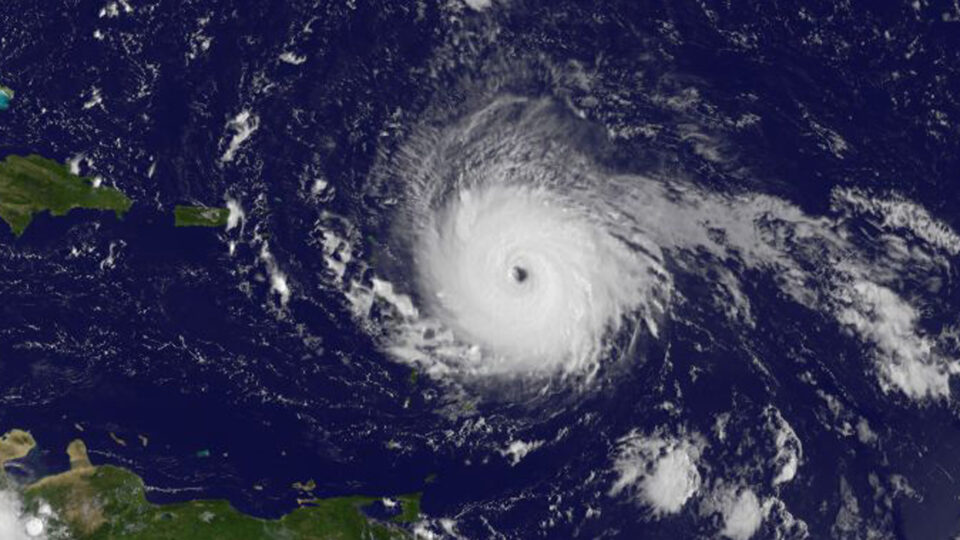
The Atlantic hurricane season officially runs from June 1st until November 30th.  Forecasters at Colorado State University have issued forecasts of Atlantic basin hurricane activity since 1984 based on the pioneering work of Professor William Gray.  This year’s forecast, issued in April, predicts a higher-than-average number of Atlantic storms.  In fact, it may be one of the most active seasons on record.

On average, there are 14 named storms each season.  This year, the prediction is for 23 of them.  On average, there are 7 hurricanes each season.  This year, the prediction is for 11. The prediction is for 5 major hurricanes among them.  These predictions are among the highest on record, although in 2020 they predicted 12 hurricanes.  In fact, that year there were 14 that actually took place.

Among the factors at play are that the El Niño that was occurring last year has dissipated and there is a good chance of a La Niña forming, which suppresses upper-level winds thereby making conditions ideal for hurricane formation and intensification.  But the overarching factor is global warming which is driving ocean temperature rise.  The water in the Atlantic, especially in the eastern Atlantic where most hurricanes form, has seen record-breaking warmth.  More warm water means more chances for storms.

Other research groups echo the predictions from Colorado State and, in some cases, see ever greater chances for an extremely active hurricane season.  The University of Pennsylvania forecast calls for 33 named storms.

The overall forecast is for a well above-average probability for major hurricanes making landfall along the continental United States coastline and the Caribbean. 

**********

Web Links

Weather tracker: US experts predict one of most active hurricane seasons on record

Photo, posted September 5, 2017, courtesy of NASA/NOAA GOES Project via Flickr.

Earth Wise is a production of WAMC Northeast Public Radio
Otters to the rescue

February 23, 2024 By EarthWise Leave a Comment

Otters to the rescue in California

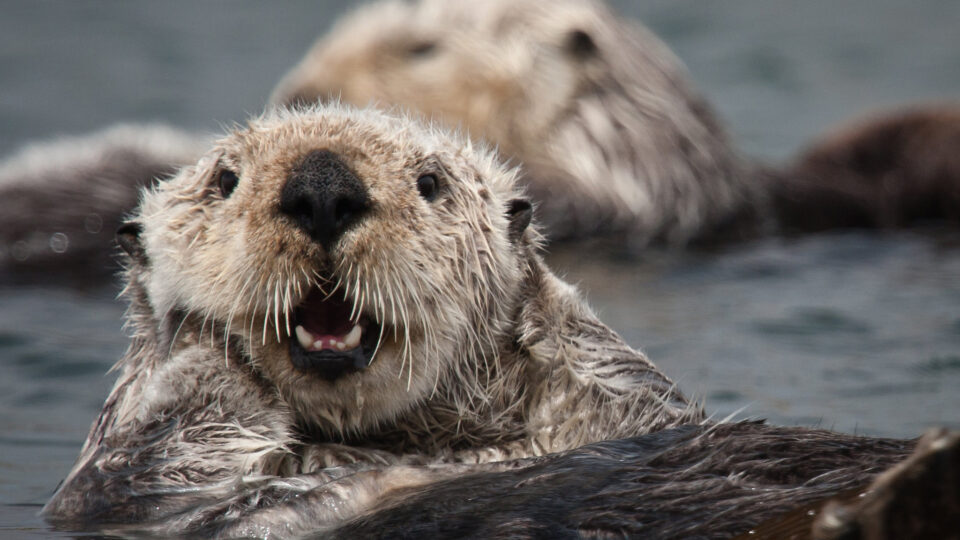
California sea otters were hunted almost to extinction in the 19th century.  Only a small number survived along California’s central coast.  But over time, the otters recovered and increasingly recolonized their former habitats.

Sea otters are playing an important role in safeguarding California’s kelp forests and marshlands against the harmful effects of climate change.

Over much of the 20th century, increasing ocean heat had devastated underwater kelp forests by driving a population explosion of sea urchins that devour kelp.  But sea otters eat urchins and as the sea otter population has grown, kelp has flourished.  According to a new study published in PLOS Climate, the underwater kelp canopy along the central coast increased by 56% since 2016.  Kelp forests have become more extensive and resilient to climate change wherever sea otters have reoccupied the California coastline.

At the same time, sea otters started recolonizing their former habitat in a central California estuary several decades ago and erosion has slowed by as much as 90%.  The main reason is that otters love to eat the marsh crabs that were devouring the plants in this coastal ecosystem.  The marsh plants establish dense root systems that can withstand waves and flooding.  It would cost millions of dollars for humans to rebuild creekbanks and restore these coastal marshes.  Instead, sea otters have been stabilizing them for free in exchange for a crab feast.

Sea otters are playful creatures that people enjoy watching.  It turns out that they are also very valuable ecosystem engineers that are helping to mitigate the effects of the warming climate.

**********

Web Links

How Sea Otters Are Protecting the California Coast Against Climate Change

Photo, posted May 17, 2021, courtesy of Michael L. Baird via Flickr.

Earth Wise is a production of WAMC Northeast Public Radio
California Offshore Wind | Earth Wise

June 28, 2021 By EarthWise Leave a Comment

Increasing support for California offshore wind

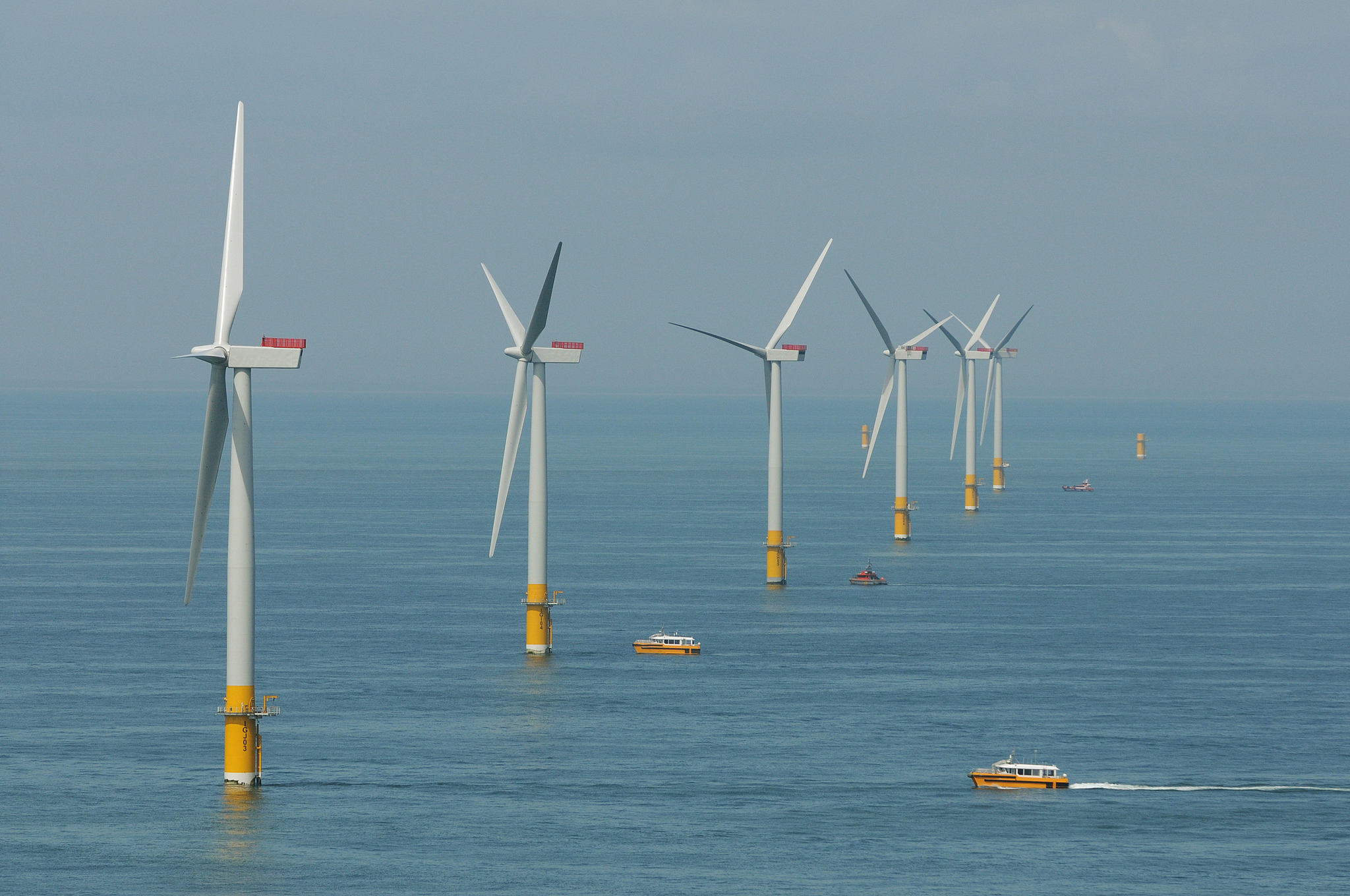
Offshore wind has been pretty much a non-starter in the U.S. until recently.  Now there is considerable activity in the Northeast Atlantic with major projects getting started off the coasts of Massachusetts, New York, and other eastern states.  The prospects for wind farms in the Pacific, on the other hand, have been pretty dismal.  There are significant logistical problems posed by a deep ocean floor and also opposition from the Navy that does not want obstacles for its ships.

A combination of progress in floating wind turbine technology and the arrival of an administration highly supportive of renewable energy technology has changed the situation.  In late May, the Navy abandoned its opposition to Pacific offshore wind and joined the Interior Department in giving support to allowing two areas off the California coast to be developed for wind turbines.

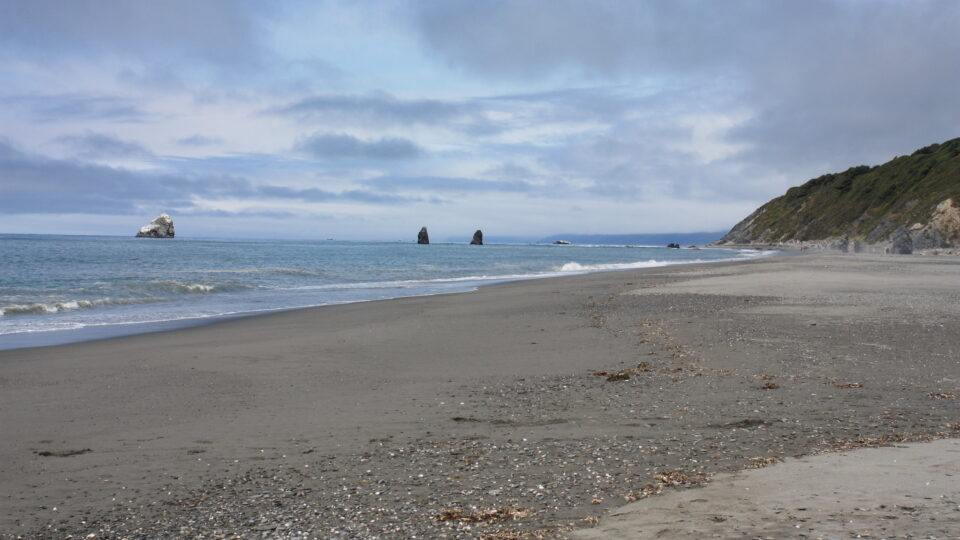
The plan allows commercial offshore wind farms in a 400-square-mile area in Morro Bay in central California, and in another area off the Humboldt Coast in Northern California.

The two California sites could support enough wind turbines to generate electricity to power 1.6 million homes.  That would make the California coast one of the largest generators of wind power in the world.  The forthcoming Vineyard Wind farm in Massachusetts is expected to have 84 giant turbines.  The two California sites could hold more than 300 turbines.

The offshore wind industry is booming around the world, especially near the coasts of Norway and the UK, where the water is shallow, and turbines can be anchored to the ocean floor.  By contrast, the Pacific Ocean floor drops steeply from the coastline, making it too deep to anchor wind towers.  The newly emerging technology of floating turbines is the key to establishing offshore wind in the Pacific.

**********

Web Links

Biden Opens California’s Coast to Wind Farms

Photo, posted August 7, 2013, courtesy of Ray Bouknight via Flickr.

Earth Wise is a production of WAMC Northeast Public Radio.

Helping Out Corals With Cool Water | Earth Wise

October 22, 2020 By EarthWise Leave a Comment

Saving corals with cooler water

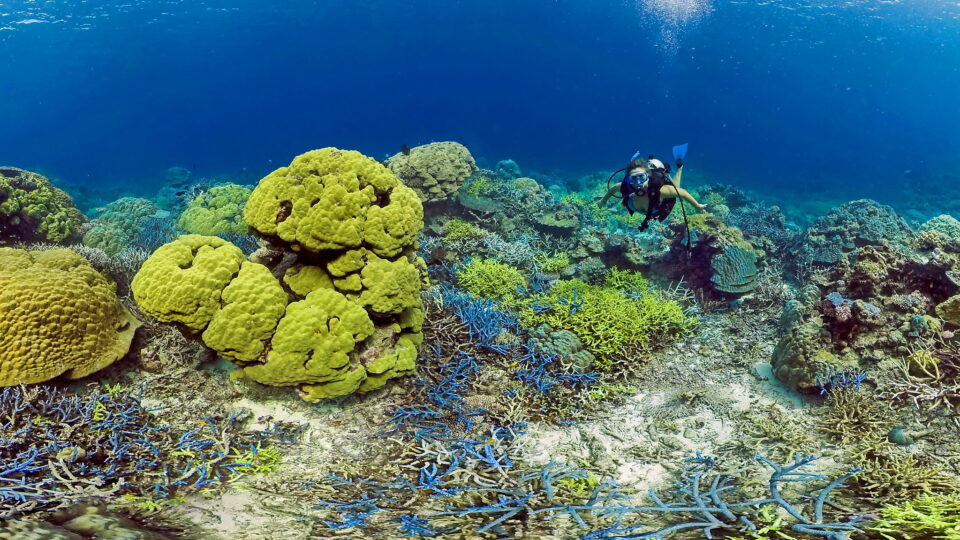
Coral bleaching is happening five times more frequently than it did forty years ago.  Its increasing occurrence is a result of global warming which leads to marine heat waves – periods of higher ocean water temperatures.  Heat stress on living coral animals causes them to expel the algae that live symbiotically within the coral structure.  As the algae is expelled, the coral fades in color looking like it is bleached.  Without its algae partner, the coral eventually dies.

Given the increasing occurrence of marine heat waves, scientists are seeking novel ways to decrease heat stress in corals.  A new study by the Bermuda Institute of Ocean Science is investigating the use of artificial upwelling – the application of cooler, deep water – as a way to mitigate thermal stress on corals.

Upwelling is a natural process in the ocean in which winds push surface water away from a region – for example, a coastline – which then allows the uplift of deeper, colder waters to the surface.  Because such deeper waters are typically rich in nutrients, upwelling is important for supporting many of the world’s important commercial fisheries.  For this reason, artificial upwelling has sometimes been used to increase fish stocks in certain locations.

The new work placed coral colonies in aquaria in Bermuda and tested the effects of varying amounts and temperatures of deep cold-water pulses upon corals subjected to thermal stress.  The results showed that even short intrusions of cooler deep water (less than two hours per day) can mitigate thermal stress in corals.  The next steps are to find suitable parameters for artificial upwelling that maximize the benefits while minimizing potential harmful side effects on the corals and the ecosystems they support.

**********

Web Link

Can pumping up cold water from deep within the ocean halt coral bleaching?

Photo, posted February 24, 2008, courtesy of Roderick Eime via Flickr.

Earth Wise is a production of WAMC Northeast Public Radio.

Mangrove Trees And Climate Change | Earth Wise

July 7, 2020 By EarthWise Leave a Comment

climate change threatens mangrove trees

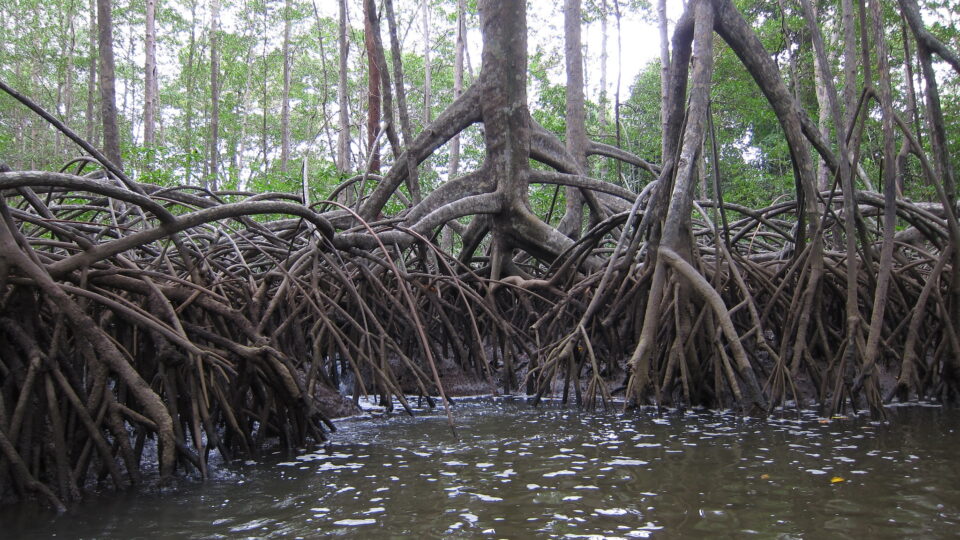
Mangrove trees are small trees that grow in coastal saline or brackish water at tropical and subtropical latitudes.  Many mangrove trees can be identified by their dense tangle of prop roots.  These roots make the trees appear as if they are standing on stilts above the water.  The tangle of roots allows mangrove trees to handle the daily rise and fall of tides and to slow the movement of tidal waters.  

Mangrove forests provide many ecosystem services, including stabilizing the coastline by reducing erosion from storm surges, waves, and tides.  The intricate root system of mangrove trees are attractive to fish and other species seeking food and shelter from predators.  Mangrove forests also store large amounts of carbon.     

But according to a new study recently published in the journal Science, mangrove trees won’t survive sea level rise by 2050 if greenhouse gas emissions aren’t reduced.  

Using sediment data from 78 locations over the last 10,000 years, an international team of scientists led by Macquarie University in Australia estimated the chances of mangrove trees survival based on the projected rates of future sea-level rise.

When sea level rise rates exceeded 6 millimeters per year, which is similar to estimates under high-emissions scenarios for 2050, researchers found that mangrove trees were unlikely to keep pace with the rising water levels.  But when the annual increase was 5 millimeters or less – which is the projected low-emissions scenario this century – mangrove trees are much more likely to survive. 

These findings underscore the importance of reducing greenhouse gas emissions to mitigate rapid sea level rise.  The future of mangrove trees may depend on it.  

**********

Web Links

Mangrove trees won’t survive sea-level rise by 2050 if emissions aren’t cut

Photo, posted December 17, 2012, courtesy of Edward Stojakovic via Flickr.

Earth Wise is a production of WAMC Northeast Public Radio.

A First In The Climate Change Fight | Earth Wise

March 6, 2020 By EarthWise Leave a Comment

Under a new initiative, builders in New Jersey will have to take climate change into account in order to win government approval for projects.  New Jersey is the first state in the United States to enact such a requirement, which will leverage land-use rules to control what and where developers can build, and limit the volume of pollution. 

Through executive order, New Jersey Governor Phil Murphy will require the state Department of Environmental Protection to draft new building regulations.  The changes, to be adopted by January 2022, do not require legislative approval, but could face political and legal challenges. 

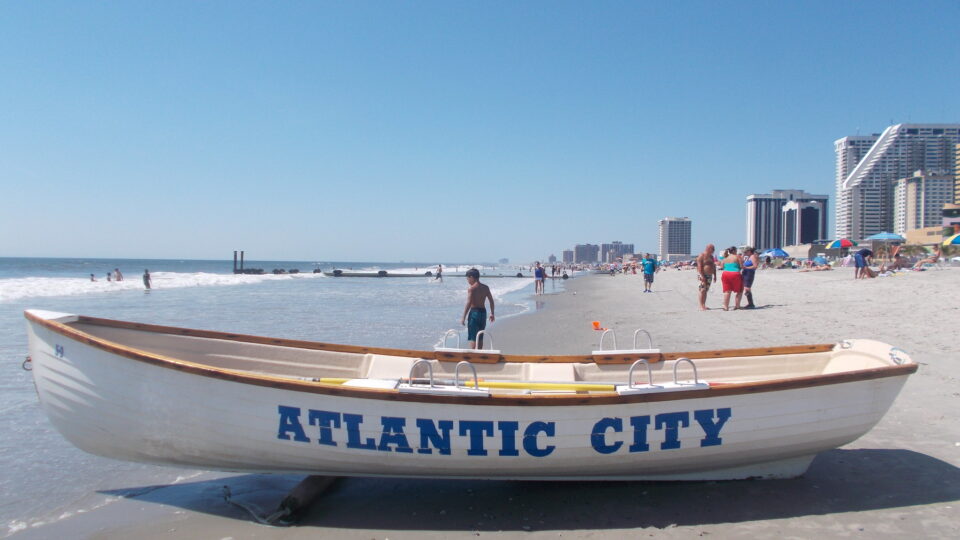
Climate change is expected to have a significant impact on New Jersey and its 130 miles of coastline.  According to a recent study from Rutgers University, the sea level along the New Jersey coast rose 1.5 feet since 1911, which was more than twice as much as the global average. The sea level is expected to rise by as much as another foot by 2030.  At the same time, some coastal areas of New Jersey are gradually sinking.

The initiative by New Jersey comes on the heels of a Trump administration proposal which would allow federal agencies to not take climate change into account when evaluating infrastructure projects. The federal changes are geared towards speeding up approvals for highway construction, pipelines, oil and gas leases, and other major infrastructure projects.   

In the absence of anything resembling leadership on climate change from the federal government, it remains for states like New Jersey to continue to press ahead.  In addition to the new building initiative, New Jersey also plans to produce 100% clean energy by 2050. 

**********

Web Links

Excluding Climate Change From Infrastructure Planning | Earth Wise

With 130-Mile Coast, New Jersey Marks a First in Climate Change Fight

Photo, posted August 27, 2016, courtesy of Rashaad Jorden via Flickr.

Earth Wise is a production of WAMC Northeast Public Radio.

A Blueprint For Offshore Wind In N.Y.

October 18, 2016 By WAMC WEB

https://earthwiseradio.org/wp-content/uploads/2016/10/EW-10-18-16-Blueprint-for-Offshore-Wind-in-NY.mp3

The Cuomo Administration recently released the New York State Offshore Wind Blueprint, a plan to advance the development of offshore wind along New York’s coastline.

[Read more…] about A Blueprint For Offshore Wind In N.Y.

Primary Sidebar

Recent Episodes

  • An uninsurable future
  • Clean energy and jobs
  • Insect declines in remote regions
  • Fossil fuel producing nations ignoring climate goals
  • Trouble for clownfishes

WAMC Northeast Public Radio

WAMC/Northeast Public Radio is a regional public radio network serving parts of seven northeastern states (more...)

Copyright © 2026 ·