• Skip to primary navigation
  • Skip to main content
  • Skip to primary sidebar

Earth Wise

A look at our changing environment.

  • Home
  • About Earth Wise
  • Where to Listen
  • All Articles
  • Show Search
Hide Search
You are here: Home / Archives for cars

cars

Sodium-ion batteries

January 31, 2024 By EarthWise Leave a Comment

The transition away from fossil fuels is driving a rapidly increasing need for batteries.  Both electric vehicles and energy storage for the electric grid are enormous consumers of batteries.  At present, lithium-ion batteries are almost universally used for these purposes.  They have been getting better all the time and cheaper all the time and are likely to be the answer for the foreseeable future.  But they are not perfect.

Lithium is only found in a relatively small number of places and mining and extracting it is fairly expensive and environmentally unfriendly.  Lithium-ion batteries also frequently contain cobalt, which has its own set of problems.  There are also safety issues related to the flammability of lithium-ion batteries. 

As a result, there continue to be numerous efforts to identify and develop alternative battery technologies.  One of these is sodium-ion batteries, which are similar in many ways to lithium-ion batteries but in which sodium replaces lithium as the cathode material.

Sodium is extremely common – it’s found in ordinary salt – and sodium-ion batteries have a high energy density and are easy to produce.  They should have a long lifetime and have a more benign environmental impact than lithium-ion.  Many companies and researchers are working on sodium-ion batteries and are making good progress.

A study by Chalmers University in Sweden looked at the potential for sodium-ion batteries and found that the batteries are particularly promising for use in energy storage even in their current state of development and could eventually be used in cars.  Whether sodium-ion batteries can be good enough and cheap enough quickly enough to give lithium-ion a run for its money remains to be seen.

**********

Web Links

Resource-efficient and climate-friendly with sodium-ion batteries

Photo, posted March 12, 2013, courtesy of Chris Hunkeler via Flickr.

Earth Wise is a production of WAMC Northeast Public Radio

A plug for all cars

January 23, 2024 By EarthWise Leave a Comment

The Tesla charging standard is being renamed the North American charging standard

Different brands of electric cars have required different charging connections. There has been no standard connector for charging.  But now, as the transition to electric vehicles is accelerating, there is the North American Charging Standard, which within in the next couple of years, will be common to pretty much any new electric vehicle on the road.

There have been several different charging connector systems in use by auto manufacturers and each charging station offered only a particular one of them.  The largest charging network in the US has been Tesla’s Supercharger Network, which uses a proprietary standard it put in place in 2012.  Tesla offered to open up their charging technology to other cars but auto manufacturers declined to take them up on the offer for a number of years.  The Bipartisan Infrastructure Law, passed in 2021, provided federal subsidies for building out fast charging networks, provided a common charging standard was adopted.  That has broken the log-jam.

The Tesla Charging Standard has been renamed the North American Charging Standard and Tesla opened its technology to other manufacturers in November 2022.

Automakers who have signed on to the standard include BMW, General Motors, Honda, Hyundai, Jaguar Land Rover, Lucid, Mercedes-Benz, Nissan, Polestar, Rivian, Subaru, Toyota, and Volvo.  In December, the Volkswagen Group – which includes Volkswagen, Porsche, and Audi – announced that they are also implementing it for future vehicles in North America, starting in 2025.   (The only significant holdout is Stellantis, parent of Dodge, Chrysler, and Jeep).

It will be a year or two before cars from all these companies will have the NACS connector and be able to charge at the same stations, but it will happen.

**********

Web Links

Volkswagen, Audi, And Porsche Finally Commit To Using Tesla’s NACS Plug

Photo, posted July 8, 2023, courtesy of Michael Swan via Flickr.

Earth Wise is a production of WAMC Northeast Public Radio
EV battery costs continue to drop

January 10, 2024 By EarthWise Leave a Comment

EV battery costs keep falling

Electric vehicles have historically been more expensive than their gas-powered counterparts primarily because of the cost of the batteries that power them.  Today’s EV battery packs range in size from about 40 kWh to as much as 200 kWh, where kWh measure the amount of energy stored in pack.

The batteries in EVs are lithium-ion batteries, the same technology used to power cell phones, tablets, and computers.  A decade ago, the batteries averaged $668 per kilowatt-hour and packs as large as those in some of today’s vehicles were simply unthinkable from a price standpoint. 

Over the years, government subsidies, increased competition, higher volume, improvements in battery technology, and reductions in the cost of raw materials such as lithium have combined to drive continuous and dramatic reductions in battery costs.  By March 2022, the average price for lithium-ion batteries was $146 per kWh.  This past August, battery costs broke the $100 per kilowatt-hour barrier.

Industry analysts have long maintained that once the $100 barrier has been reached, EVs could achieve price parity with their fossil-fuel counterparts.  Electric cars would no longer be more expensive to buy than equivalent gas cars.

Projections are that battery prices will continue to fall by something like 10% a year for the rest of this decade.  All else being equal, EVs should be cheaper to buy than gas cars.  Of course, they have already been cheaper to operate for a long time. 

None of this means that car prices will go down in general.  That will depend on trends in inflation and those are pretty hard to predict.

**********

Web Links

EVs Set to Match Gas Guzzlers in Price as Battery Costs Plummet

Photo, posted May 9, 2018, courtesy of Flickr.

Earth Wise is a production of WAMC Northeast Public Radio

Wildfires and air quality

January 1, 2024 By EarthWise Leave a Comment

The impact of wildfires on air quality

The wildfires last summer in parts of the U.S. and Canada fouled the air over much of the country.  Air quality in many places was dangerous for human health.  And such fires are becoming more numerous and more intense.

A new study by the University of Iowa has assessed the effects of two decades of wildfires on air quality and human health in the continental U.S.

From 2000 to 2020, air quality in the western U.S. has gotten worse as a result of the numerous fires in that region.  More generally, all those fires have undermined the success of federal efforts to improve air quality, primarily through the reductions in automobile emissions.

American air had been getting cleaner and clearer as a result of EPA regulations on vehicle emissions, but the surge in wildfires has limited and, in some cases, erased these air quality gains.  Twenty years of efforts by the EPA to make our air cleaner have been lost in fire-prone areas and in many downwind areas.

The Iowa study looked at the concentration of black carbon, a fine-particle air pollutant from fires linked to respiratory and heart disease.  In the western U.S., black carbon concentrations have risen 86% on an annual basis.

Fires have also affected the air in the Midwest, although not to the same degree as in the west.  The eastern U.S. had no major declines in air quality during the 2000-2020 time period.  Given the episodes of smoke from Canadian wildfires experienced by the east coast this past summer – as far south as Florida – even the air in that part of the country is suffering from the spread of wildfires.

**********

Web Links

Wildfires have erased two decades’ worth of air quality gains in western US

Photo, posted June 8, 2023, courtesy of Anthony Quintano via Flickr.

Earth Wise is a production of WAMC Northeast Public Radio
Global climate progress is too slow

December 28, 2023 By EarthWise Leave a Comment

According to a new report by the World Resources Institute, the world is making progress on climate, but the progress is not fast enough.  The report looked at 37 indicators of climate progress towards the goals set forth by the Paris Agreement.  In some areas, the progress has been substantial, but in six areas, the world has been moving in the wrong direction entirely.

The rapid growth of clean energy has brought the world to the brink of peak fossil fuels, but to avoid the catastrophic effects of warming, countries need to build out wind and solar power nearly twice as fast and shut down coal plants seven times faster.  There has been progress in curbing deforestation, but the world needs to stem forest loss four times more quickly.  More work is needed to clean up heavy industry and the consumption of meat needs to be limited more than the present level.

Areas where things are getting worse rather than better include the use of public funds and subsidies for preserving the use of fossil fuels.  Because of wars and supply shocks affecting energy markets, countries have actually ramped up fossil fuel subsidies to combat rising prices.

One area where the world is moving at the pace required to meet climate goals is in the sales of electric vehicles.  EVs accounted for 10% of car sales globally last year and if trends continue, they are predicted to account for more than 75% of cars sold by 2030.

The faster-than-predicted progress on electric cars demonstrates that transformative change is possible and could happen in other areas.

**********

Web Links

World Making Too Little Progress on Climate — Except on EV Sales, Report Finds

Photo, posted May 24, 2022, courtesy of Ivan Radic via Flickr.

Earth Wise is a production of WAMC Northeast Public Radio

Action on the toxic chemical from tires

December 13, 2023 By EarthWise Leave a Comment

Toxic chemicals from tire debris

Since the 1990s, populations of coho salmon in streams and urban creeks up and down the West Coast have been dying in large numbers.  Scientists at the University of Washington began studying the mysterious deaths and it took years to figure out what was going on.  They analyzed water samples from urban creeks and found that chemicals from vehicle tires were present.  By soaking tires in water, they found that more than 2,000 chemicals were present.  It took three years to narrow down the suspect list to one chemical:  a toxin called 6PPD-quinone, which is produced when the common tire preservative 6PPD mixes with oxygen.  It is that chemical that was responsible for the salmon die-off.

6PPD-quinone is toxic enough to quickly kill some fish.  Studies showed that concentrations of the chemical in stormwater were found to be lethal for coho salmon following exposures lasting only a few hours.

Despite the discovery, the tire industry has continued to use the chemical in its products.  The industry says 6PPD is an antioxidant and antiozonant that helps prevent degradation and cracking of tires in the environment and is essential for the performance and safety of vehicles.

Last year, California regulators directed the tire industry to seek out substitutes for 6PPD.  The U.S. Tire Manufacturers Association pledged to investigate possible safer alternatives to the chemical.

In November, spurred by a petition by West Coast tribes whose lifeways depend on coho salmon, the EPA said it will study the impact of 6PPD with an eye to potentially banning its use. 

**********

Web Links

After Salmon Deaths, EPA Takes Aim at Toxic Chemical Issuing from Car Tires

Photo, posted May 31, 2021, courtesy of Chris Yarzab via Flickr.

Earth Wise is a production of WAMC Northeast Public Radio

Electricity from chicken feathers

December 4, 2023 By EarthWise Leave a Comment

The food industry generates enormous amounts of waste and by-products.  Each year, 40 million tons of chicken feathers are incinerated, causing adverse environmental effects.  Not only does it release large amounts of carbon dioxide but also produces toxic gases such as sulfur dioxide.

Researchers at ETH Zurich in Switzerland and Nanyang Technological University in Singapore have developed a way to put chicken feathers to good use by using them to make fuel cells more cost-effective and sustainable.

Using a simple and environmentally friendly process, they extract the keratin from the feathers.  Keratin is the protein that helps form hair, nails, the outer layer of skin, and feathers.  The extracted keratin is then converted into ultra-fine fibers known as amyloid fibrils.  The keratin fibrils are used in the membrane of a fuel cell.

Fuel cells generate clean energy from hydrogen and oxygen with only heat and water as byproducts.  At the heart of every fuel cell is a semipermeable membrane that allows protons to pass through but blocks electrons, thereby producing an electric current.  Fuel cells are the primary way hydrogen is used to directly generate electricity.  Hydrogen cars run on fuel cells.

Conventional fuel cells typically use membranes made from highly toxic chemicals.  The new ETH membranes essentially replace these toxic substances with biological keratin. 

The researchers are investigating how stable and durable their keratin membrane is and to improve it if necessary.  The team has already applied for a joint patent and is looking for partners and investors to further develop the technology and bring it to market.

**********

Web Links

Generating clean electricity with chicken feathers

Photo, posted July 10, 2016, courtesy of Matthew Bellemare via Flickr.

Earth Wise is a production of WAMC Northeast Public Radio

Pollution From Tires | Earth Wise

October 16, 2023 By EarthWise Leave a Comment

A few years ago, researchers investigating massive deaths of coho salmon in West Coast streams discovered that the water contained particles from vehicle tires.  The cause of the fish mortality turned out to be a chemical called 6PPD that is added to tires to prevent cracking and degradation.  The mystery was solved, but so far, the chemical continues to be used by all major tire manufacturers and is found on roads and in waterways around the world.

Worse still, the acute toxicity of 6PPD and the chemicals that it transforms into when exposed to ground-level ozone is only the tip of the tire pollution iceberg.  Tire rubber contains more than 400 chemicals and compounds, many of which are carcinogenic. 

About 2 billion tires are sold across the globe each year and that number is expected to reach 3.4 billion by 2030.  Tires are made from about 20% natural rubber and 24% synthetic rubber, which requires about 4 gallons of petroleum per tire.  Hundreds of other ingredients – including steel, fillers, heavy metals like copper, cadmium, lead, and zinc – make up the rest.

Tire wear particles are emitted continually as vehicles travel.  They range in size from visible pieces of rubber or plastic to microparticles.  Research has shown that a car’s four tires collectively emit half a trillion ultrafine particles per mile driven.  These particles are small enough to be breathed into the lungs and can travel throughout the body and even cross the blood-brain barrier.  Particle pollution from tires exceeds that from tailpipes.

Tire pollution is a huge problem that is just starting to receive the attention it deserves.

**********

Web Links

Road Hazard: Evidence Mounts on Toxic Pollution from Tires

Photo, posted June 22, 2018, courtesy of Tony Webster via Flickr.

Earth Wise is a production of WAMC Northeast Public Radio
Electric Cars And Apartments | Earth Wise

July 10, 2023 By EarthWise Leave a Comment

Lack of charging options for people who rent hinder wider electric vehicle adoption

The transition to electric cars is underway.  People are increasingly buying them, carmakers are switching over to making them, and governments are providing incentives as well as legislating the changeover.  More and more consumers want to lower their carbon footprints and stop burning fossil fuels.  But one very large group of consumers faces an uphill battle in switching to electric cars:  people who rent their dwellings.

About one third of our country lives in rented apartments or houses.  These nearly 110 million Americans are more likely to be in the bottom half of income and net worth and are more likely to be people of color.  These people are less likely to have the spare cash to make upgrades to their property such as car chargers and may not be able to get permission from their landlords to do it anyway.

Renters face what is known as the “split-incentive problem” or the “landlord-tenant problem.”  Three-quarters of tenants in the US pay their own utility bills, so they have a strong incentive to conserve electricity, water, and gas.  Their landlords, on the other hand, have little incentive to upgrade appliances and systems to be more environmentally responsible.  Studies have shown that on average renters use 3% more energy than homeowners for this reason.

There are some landlords who are being proactive and installing facilities for charging cars on their properties.   This will undoubtedly become an increasingly sought-after feature for renters.  But in the meantime, millions of them have a more difficult time driving electric cars.  They can charge at public chargers or perhaps at work.  But at the moment, homeowners are three times more likely than renters to own an electric car.

**********

Web Links

The coming battle between Americans who want to go electric and their landlords

Photo, posted July 22, 2022, courtesy of Chris Yarzab via Flickr.

Earth Wise is a production of WAMC Northeast Public Radio

Big Oil And Big Lithium | Earth Wise

July 7, 2023 By EarthWise Leave a Comment

Big Oil entering the lithium market

The world’s big oil companies have worked pretty hard to prolong society’s dependence on petroleum.  When there are trillions of dollars at stake, there is plenty of motivation.  But those companies do see the writing on the wall.

An Exxon Mobil-funded study last year estimated that light-duty vehicle demand for combustion engine fuels could peak in 2025 and that electric vehicles of various types could grow to more than 50% of new car sales by 2050.  This is pretty pessimistic compared with most other surveys, but it is still a big number.  Exxon also projected that the global fleet of EVs could reach 420 million by 2040.

As a result of all this, Exxon is preparing for a future far less dependent on gasoline by drilling for lithium rather than oil.  The company recently purchased mining rights to a sizable chunk of Arkansas land for over $100 million from which it aims to produce lithium for electric car batteries.

Exxon’s consultants estimated that the 120,000 acres in the Smackover formation of southern Arkansas could have as much as 4 million tons of lithium carbonate, enough to power 50 million cars and trucks. 

Exxon plans to spend $17 billion through 2027 on cutting carbon emissions and developing low carbon technologies.  Other large oil producers have also been looking at the lithium business.  At the same time, some large oil companies like BP and Shell are investing in renewable energy.

The prospect of EVs dominating transportation in the coming decades is a strong incentive for oil-and-gas companies to adapt their businesses to the new world.

**********

Web Links

Exxon Joins Hunt for Lithium in Bet on EV Boom

Photo, posted August 16, 2014, courtesy of Mike Mozart via Flickr.

Earth Wise is a production of WAMC Northeast Public Radio
Electric Cars In Norway | Earth Wise

June 12, 2023 By EarthWise Leave a Comment

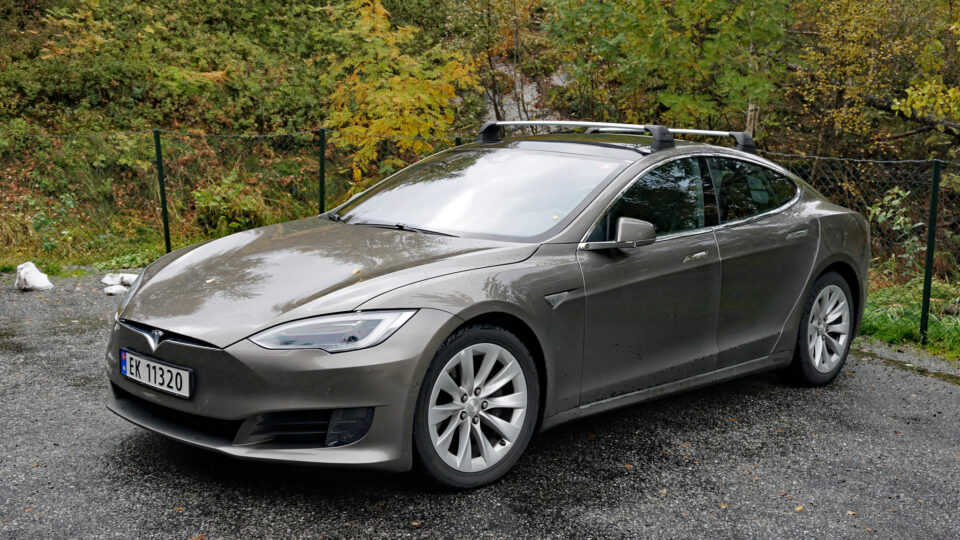
We are at a relatively early stage of the electric car revolution.  EV sales are increasing rapidly, but they still comprise only a small fraction of the cars on American roads.  So, there is still lots of speculation and argument about how things will actually work when a large fraction of cars are electric.  But there is at least one place where one doesn’t have to speculate:  Norway.

Last year, 80% of new-car sales in Norway were EVs.  That country is essentially an observatory for figuring out what the electrification of vehicles will mean for the environment, workers, and life in general.  In fact, sales of internal combustion cars in Norway will end in 2025.

Based on Norway’s experience, electric vehicles bring benefits and none of the dire consequences that some critics predict.  The transition isn’t problem-free.  There have been unreliable chargers and long waits during periods of high demand.  Auto dealers and retailers have had to adapt to the changes in their businesses.  The pecking order of car brands has changed dramatically making Tesla the best-selling brand and marginalizing long-established carmakers like Renault and Fiat.

But in the bigger picture, the air in Oslo, the capital of Norway, is measurably cleaner.  The city is quieter as noisy gasoline and diesel vehicles gradually disappear.  Oslo’s greenhouse gas emissions have fallen 30% since 2009.  Meanwhile, there hasn’t been mass unemployment among gas station workers, and the electrical grid has not collapsed.

Norway is perhaps 10 years ahead of us with respect to electric cars.  There are still problems to solve, and difficulties to overcome, but so far, it looks like it will all turn out well.

**********

Web Links

In Norway, the Electric Vehicle Future Has Already Arrived

Photo, posted October 15, 2018, courtesy of Mario Duran-Ortiz via Flickr.

Earth Wise is a production of WAMC Northeast Public Radio

Explosive Growth Of Electric Vehicles | Earth Wise

May 25, 2023 By EarthWise Leave a Comment

Not long ago, electric cars were a rarity.  Ten years ago, annual global sales of EVs were only a few hundred thousand.  As of today, globally, still less than one percent of all the cars on the road are electric.  But that is changing rapidly.

In fact, electric vehicles are expected to capture nearly 20% of the global market this year.  Global sales of EVs were 3 million in 2020 and 6.6 million in 2021.  Last year, sales of electric vehicles hit 10 million and are expected to reach 14 million this year according to the International Energy Agency.

Analysts at the IEA have had to repeatedly revise their projections for future EV sales as the numbers keep going up faster than predicted.  Last year, they projected that EVs would account for 21% of global sales by 2030.  Now, they expect that EVs will reach 35% of sales by that year.

In the US, the EU, and China, policy efforts are in place to boost EV sales.  In the US, the Inflation Reduction Act both supports the EV industry and subsidizes consumer purchases with tax credits. As a result of such policies, the IEA expects electric vehicles to account for 60% of sales across these three large markets by 2030.

Part of what is driving the boom in EV sales is that prices continue to come down for the vehicles.  When operating and maintenance costs are figured in, the EVs come out considerably cheaper to own.  In addition, there are starting to be price wars in the EV industry as competition heats up in the sector.

**********

Web Links

EVs to Capture One-Fifth of Global Market This Year Amid ‘Explosive Growth’

Photo, posted May 7, 2022, courtesy of Sharon Hahn Darlin via Flickr.

Earth Wise is a production of WAMC Northeast Public Radio

Banning Gas-Powered Cars | Earth Wise

May 12, 2023 By EarthWise Leave a Comment

The European Union has banned the sale of new gas-powered cars starting in 2035.  The vote came after weeks of negotiations related to possible exemptions to the rule.

Germany lobbied for an exemption to be made for cars powered by e-fuels.  These are made by combining hydrogen with carbon dioxide that has been removed from the atmosphere using processes powered by renewable energy.  Because of this source of the carbon dioxide, such fuels are considered to be carbon neutral.  The EU agreed to grant this exemption, so there can be cars that run only on e-fuels after 2035.

About a quarter of carbon emissions in the EU come from transportation.  The new law requires a 55% drop in carbon emissions from new cars by 2030.  Poland voted against the new law, while Bulgaria, Romania, and Italy abstained.  (Italy wanted an exemption for biofuels, but it was not granted).

Here in the US, seven states have adopted rules banning the sale of new gas-powered cars in 2035.  These are California, Maryland, Massachusetts, New Jersey, New York, Oregon, and Washington. 

California has committed to having 35% of new car sales being zero-emission vehicles by 2026, and the number rising to 68% by 2030.

As these policies proliferate around the world, the auto industry is moving ahead to keep up with them.  Most automakers are planning to have substantial parts of their product line be electric by 2030.  Given the financial and physical inertia involved in shifting to electric vehicle production, regardless of what happens with policies around the world, there is little possibility of turning back from the electric vehicle transition.

**********

Web Links

EU Approves 2035 Ban on Sales of Gas-Powered Cars

Photo, posted May 31, 2012, courtesy of Mike Norton via Flickr.

Earth Wise is a production of WAMC Northeast Public Radio

Electric Cars Getting Cheaper | Earth Wise

April 12, 2023 By EarthWise Leave a Comment

Electric cars are getting cheaper

A sticking point for buying electric cars has always been that they are typically more expensive than equivalent gasoline-powered cars.  But increasing competition, government incentives, and falling prices for lithium and other battery materials is changing the equation.  In fact, the tipping point when electric cars are as cheap or even cheaper than internal combustion cars is likely to happen this year for many cars and, in fact, has already happened for some.

Battery production is ramping up for Tesla, General Motors, Ford, and others, creating cost savings from mass production. Companies manufacturing batteries in the United States are receiving government subsidies as part of a drive to establish a domestic supply chain and reduce dependence on China.  Before anyone cries foul, it should be noted that globally, oil companies received a trillion dollars in subsidies last year.  The Inflation Reduction Act is making it cheaper for automakers to build electric cars (provided they do it in the United States using US materials) and cheaper for consumers to buy them because of tax credits.

Multiple companies have lowered the price of their electric vehicles in recent months, including both the Tesla Model 3 and Model Y, which are the best-selling electric cars in the United States. GM’s electric Equinox crossover will start at about $30,000, which is still about $3,400 more than the gas-powered version.  But once the electric vehicle tax credit is figured in, it will actually be cheaper.

Electric cars are already cheaper to own and operate because of the much lower cost of powering with electricity instead of gas as well as the greatly reduced maintenance costs for the vehicles.  Once the purchase price of these cars is less than that of gas-powered cars, the economics becomes a no-brainer.

**********

Web Links

Electric Vehicles Could Match Gasoline Cars on Price This Year

Photo, posted May 11, 2021, courtesy of Chris Yarzab via Flickr.

Earth Wise is a production of WAMC Northeast Public Radio

Keeping The Keeling Curve Going | Earth Wise

March 21, 2023 By EarthWise Leave a Comment

The world’s longest-running record of direct readings of carbon dioxide levels in the atmosphere is the Keeling Curve, measurements taken at the summit of Mauna Loa in Hawaii.  The readings have been going on with almost no interruption since Charles Keeling began taking them in the 1950s.  But the eruption of Mauna Loa last November toppled power lines at the mountaintop observatory and buried a mile of the main road up the mountain in lava.

Scientists have been scrambling to resume measurements and the near-term solution has been to take them, for the first time, on Mauna Kea, the neighboring large volcano about 25 miles away.  The National Oceanic and Atmospheric Administration flew in and installed instruments at the Mauna Kea observatory so that only about a week went by without measurements.   It happened so quickly because months earlier, NOAA had already started looking into installing a backup site on Mauna Kea where there is an observatory run by the University of Hawaii.

NOAA used helicopters to install solar panels and batteries on Mauna Loa to restore power in the short term since it will be months before a new road can be built on the still-cooling lava. The plan is to collect parallel measurements for a year to see if Mauna Kea, which hasn’t erupted for thousands of years, might become a long-term backup for Mauna Loa.

The Hawaiian volcanoes are uniquely suited for the measurements because they are surrounded by thousands of miles of empty ocean and are very high up, away from towns, cars, and forests.  Scientists are now monitoring measurements from the two sites to see how they compare.

**********

Web Links

Battling Lava and Snowstorms, 2.5 Miles Above the Pacific

Photo, posted November 2, 2015, courtesy of Neal Simpson via Flickr.

Earth Wise is a production of WAMC Northeast Public Radio
Peak Fossil Fuels | Earth Wise

March 3, 2023 By EarthWise Leave a Comment

According to a new report from the Rocky Mountain Institute, a nonprofit that studies the energy transition, we have reached a pivot point in which fossil fuels have peaked in their use for producing electricity and are about to enter a period of decline.

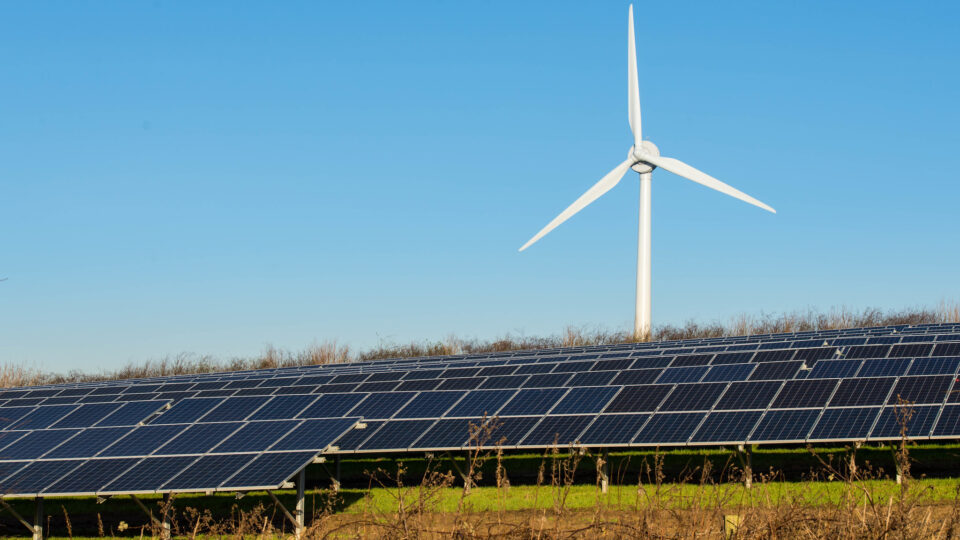
The report makes the case that wind and solar power are going through a growth process that looks very much like the trend lines for the early stages of other transformative products and industries – things like automobiles and smartphones.  Such growth begins slowly for technology and products that are very expensive, but then shifts into high gear as costs shrink and efficiency rises.

The argument is that fossil fuel demand has peaked in the electricity market because the annual growth in global electricity demand is now less that the amount of electricity being generated by newly-built renewable energy plants (mostly solar and wind.)  This dynamic will squeeze out the most expensive and dirtiest energy sources over time.

Overall use of fossil fuels for electricity shifted in 2018 from a long-standing period of growth to a holding pattern in which the total amount of electricity produced has no clear trend.  According to the RMI report, this plateau in fossil fuel use is likely to continue until about 2025, and then will be followed by a long-term decline.

While the trends in fossil fuel use are quite evident, the end results are not inevitable.  There continues to be a battle between the forces trying to protect the fossil fuel status quo and those trying to change it. But strong economic forces are difficult to overcome.  Renewable energy is the lowest cost source of electricity in a growing number of locations and situations.

**********

Web Links

When Will We Hit Peak Fossil Fuels? Maybe We Already Have

Photo, posted December 27, 2015, courtesy of Gerry Machen via Flickr.

Earth Wise is a production of WAMC Northeast Public Radio

The Enormous Cost Of Steel Corrosion | Earth Wise

February 28, 2023 By EarthWise Leave a Comment

Global steel production has been rising for decades.  Because steel corrodes over time, part of the demand for more steel comes from the need to replace the steel used in construction materials – in everything from bridges to cars – that has become corroded over time.  Studies have estimated that the economic cost of corrosion is an astonishing 3 to 4% of a nation’s gross domestic product.  Globally, this means that steel corrosion costs the world trillions – yes, trillions with a T – of dollars each year.

On top of the staggering economic impact of corrosion, there is the fact that steel production is one of the largest greenhouse gas emitters of any industry, accounting for more than 25% of all manufacturing sector carbon emissions.  In fact, steel manufacturing causes over 10% of total global carbon emissions.  

As a result of regulations placed on the steel industry, technological advances in the steelmaking process have resulted in a 61% reduction in the industry’s energy consumption over the last 50 years.   There are continuing efforts to reduce the energy consumption of steel making and to move away from the use of fossil fuels to produce the needed energy.  But without significant improvements, just the emissions associated with replacing corroded steel could make the goals set by the Paris Climate Agreement unfeasible.

It’s hard to believe that something costing the world trillions of dollars and has a major negative impact on the climate is largely invisible.  Steel corrosion is an enormous societal challenge that has gone under the  radar for decades and therefore has not received anything like the attention it deserves.

**********

Web Links

Reducing steel corrosion vital to combating climate change

Photo, posted July 24, 2008, courtesy of Phil Whitehouse via Flickr.

Earth Wise is a production of WAMC Northeast Public Radio
Fuel From Wind And Water | Earth Wise

February 21, 2023 By EarthWise 1 Comment

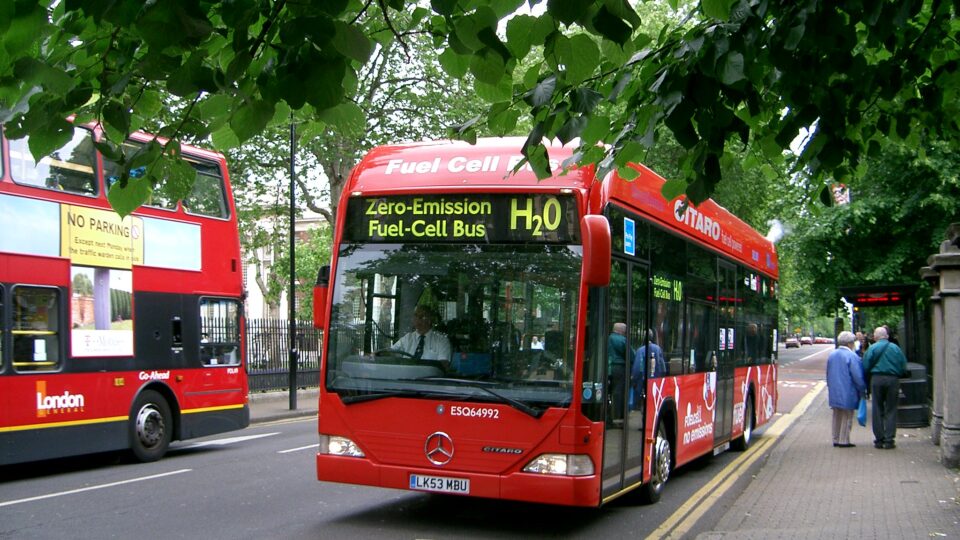
Hydrogen is the most common element in the universe and it can be used as a fuel to run cars, trains, and even airplanes.  Using it produces no harmful emissions.  However, to date, the way it is economically produced is not clean and green.  It is made from natural gas and leaves behind lots of carbon dioxide.

Around the world there are many projects working on so-called green hydrogen.  Producing hydrogen by splitting water into its component elements is called electrolysis and produces only oxygen as a waste product.  The problem with electrolysis is that it takes prodigious amounts of energy and therefore is very expensive.

A new project taking place in north Texas hopes to create the country’s first large-scale producer of green hydrogen.  The project is building a 900-megawatt wind farm along with a 500-megawatt solar farm.  The 1.4 gigawatts of total production capacity is more energy than the city of Austin consumes.  That energy will be used to produce 200,000 kilograms of hydrogen a day.

This project is among the largest proposed green hydrogen projects in the U.S.   There are green hydrogen proposals in Europe, Australia, Africa, and the Middle East that range from 10 GW to 67 GW. 

The Texas project, being developed in partnership by Air Products and AES, has been enabled by government support from the Inflation Reduction Act.    

There are a few thousand hydrogen-powered cars, boats, and trains but without substantial, cost-effective hydrogen infrastructure, the market is very limited.   Subsidizing the development of the necessary infrastructure is essential if there is any real chance to create the long-imagined hydrogen economy.

**********

Web Links

Texas Project Will Use Wind to Make Fuel Out of Water

Photo, posted June 5, 2005, courtesy of City Transport Info via Flickr.

Earth Wise is a production of WAMC Northeast Public Radio
Electric Vehicle Tax Credits | Earth Wise

February 17, 2023 By EarthWise Leave a Comment

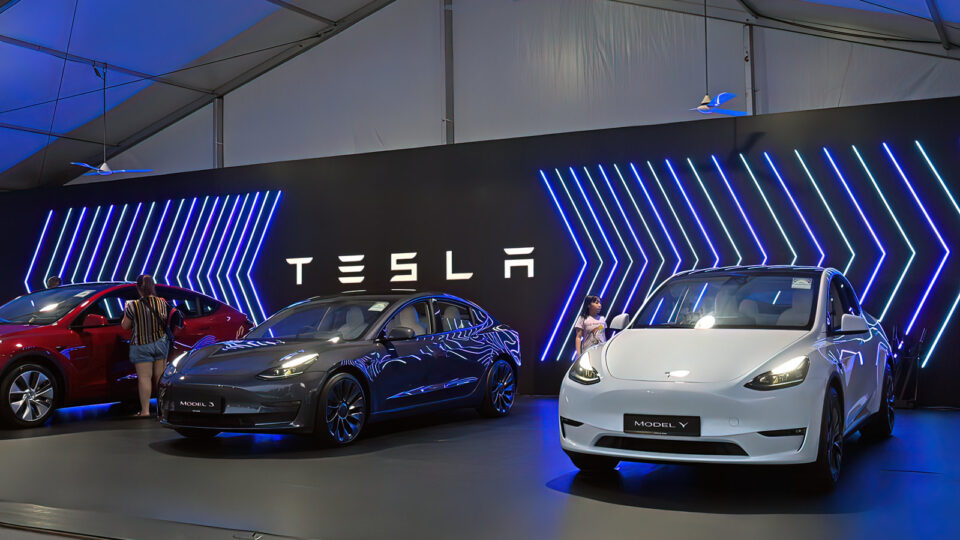
As of January 1, many Americans can qualify for a tax credit of up to $7,500 for buying an electric vehicle.  The credit is one of the changes enacted under last year’s Inflation Reduction Act.  The purpose is to encourage EV sales and thereby reduce greenhouse gas emissions and air pollution.

There has been a tax credit for EVs for more than a decade, but its provisions made cars from any manufacturer ineligible as soon as that manufacturer had sold more than 200,000 cars.  Notably, this eliminated the credit for purchasing cars from Tesla and General Motors.  Given that electric cars are now selling in the millions, the 200,000-unit cap on the tax credit essentially made it useless as a real force to grow the industry.

The new tax credit has a somewhat complex set of requirements for determining the applicability and amount of the credit.  There are price limits on eligible vehicles depending on vehicle type and there are requirements on where vehicles are manufactured, where batteries are manufactured, and where other components are made. The intent is to encourage American manufacturing of the cars and trucks to the greatest extent.  There are also income limitations on buyers who want to take advantage of the credit, but those are quite large.  The Department of the Treasury has online detailed information about the requirements for the credit and, of course, EV manufacturers can provide the specifics for their own vehicles.

For their part, automakers are adjusting prices, building domestic manufacturing plants and battery factories, and otherwise trying to position themselves for their customers to take advantage of the credit.

The new law also provides a smaller tax credit for the purchase of used electric vehicles.

**********

Web Links

Electric vehicle tax credits explained: What’s new in 2023?

Treasury Releases Additional Information on Clean Vehicle Provisions of Inflation Reduction Act

Photo, posted December 9, 2022, courtesy of Choo Yut Shing via Flickr.

Earth Wise is a production of WAMC Northeast Public Radio

City Greenery And Carbon Emissions | Earth Wise

February 15, 2023 By EarthWise Leave a Comment

According to the United Nations, more than half of the world’s population currently lives in cities.  Projections show that the combination of urbanization and global population growth could add another 2.5 billion people to cities by 2050. 

Unsurprisingly, cities are a major contributor to climate change.  According to U.N. estimates, cities are responsible for 75% of global carbon dioxide emissions, with transportation and buildings being among the largest contributors. 

According to a new study of vegetation across New York City and some adjoining urban areas, photosynthesis by trees and grasses on many summer days absorbs all the carbon emissions produced by cars, trucks and buses, and then some.  In fact, on many summer days, the total carbon uptake in the region equaled up to 40% of a summer afternoon’s total emissions from all sources in the City. The results, which were recently published in the journal Environmental Research Letters, further highlights the critical importance of urban greenery.

Most previous studies have analyzed the carbon uptake of vegetation by looking at the contiguous tracts of green spaces, but this only comprises about 10% of metro areas.  Using detailed aerial radar imagery of New York City that mapped vegetation in unprecedented 6-inch grids, the researchers were able to include the other 90% of the metro area typically left out in most models. 

Since carbon uptake by vegetation only occurs during the growing season, green spaces in cities situated in warmer climates likely play a larger role in carbon uptake. 

As city populations swell around the world, every bit of urban greenery is critical in the fight against climate change. 

**********

Web Links

New York City’s greenery absorbs a surprising amount of its carbon emissions

68% of the world population projected to live in urban areas by 2050, says UN

Photo, posted October 5, 2009, courtesy of David Orban via Flickr.

Earth Wise is a production of WAMC Northeast Public Radio

  • « Go to Previous Page
  • Page 1
  • Page 2
  • Page 3
  • Page 4
  • Interim pages omitted …
  • Page 8
  • Go to Next Page »

Primary Sidebar

Recent Episodes

  • An uninsurable future
  • Clean energy and jobs
  • Insect declines in remote regions
  • Fossil fuel producing nations ignoring climate goals
  • Trouble for clownfishes

WAMC Northeast Public Radio

WAMC/Northeast Public Radio is a regional public radio network serving parts of seven northeastern states (more...)

Copyright © 2026 ·