• Skip to primary navigation
  • Skip to main content
  • Skip to primary sidebar

Earth Wise

A look at our changing environment.

  • Home
  • About Earth Wise
  • Where to Listen
  • All Articles
  • Show Search
Hide Search
You are here: Home / Archives for carbon intensive

carbon intensive

Big Food and greenhouse gas emissions

October 29, 2024 By EarthWise Leave a Comment

Analyzing Big Food and its greenhouse gas emissions

The global food system is responsible for as much as 40% of human-generated greenhouse gas emissions. The investor advocacy group Ceres has tracked whether the 50 largest North American food and agriculture companies have set targets to lower their emissions and whether doing so has actually resulted in lower emissions.

The emissions from food and agriculture companies are grouped into three so-called scopes.  Scope 1 are emissions from a company’s direct operations.  Scope 2 are emissions from its energy use.  Scope 3 are emissions from a company’s supply chain:  from the farmers who grow crops, raise cattle, and otherwise provide necessary items for a company’s final products.  In the food industry, the scope 3 category is responsible for about 90% of overall emissions.

Of the 50 food companies studied, 23 reduced their scope 1 and scope 2 emissions over the past 2 years, but only 12 reduced their scope 3 emissions.  Companies have more control over their scope 1 and scope 2 emissions. 

Reducing scope 3 emissions is more difficult.  And most companies haven’t set scope 3 reduction targets. 

The findings of the study suggest that reducing scope 3 emissions is especially difficult for companies whose supply chains are linked to carbon-intensive commodities, like meat, or crops linked to deforestation or land-use change, both of which result in increased emissions.

In March, the Securities and Exchange Commission finalized rules requiring companies to disclose their climate risk to regulators, increasing the visibility of the food industry emissions issue.

**********

Web Links

North America’s Biggest Food Companies Are Struggling to Lower Their Greenhouse Gas Emissions

Photo, posted October 13, 2011, courtesy of the United Soybean Board via Flickr.

Earth Wise is a production of WAMC Northeast Public Radio
Red mud and steel

February 21, 2024 By EarthWise Leave a Comment

Making steel from aluminum waste

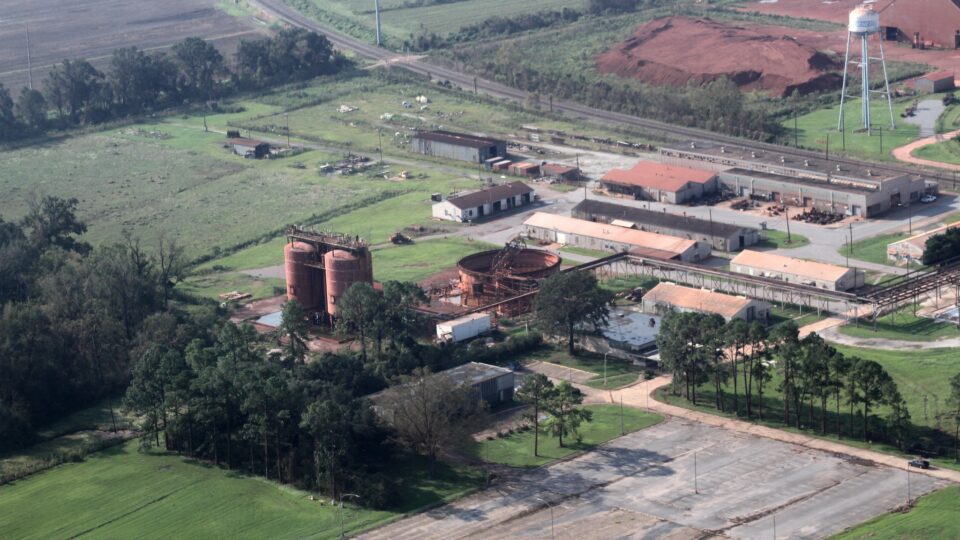
Most of us have never heard of red mud.  Otherwise known as bauxite residue, it is an industrial waste product generated by the most common process by which aluminum is made and the world produces 200 million tons of red mud each year.  The stuff is a significant environmental hazard being extremely alkaline and corrosive. Most of it ends up in large landfills and the costs associated with disposing of red mud are substantial.

Red mud is red because it contains large amounts of iron oxide, often as much as 60% of it.  Scientists at the Max-Planck Institute in Germany have developed a method for producing steel from red mud that is much less carbon intensive than traditional steel production and that is economically viable.

The scientists melt the red mud in an electric furnace powered in part by green hydrogen.  Running the furnace this way, even when using electricity from only partially renewable sources, results in far fewer greenhouse gas emissions as well as economic benefits.  In the furnace, liquid iron separates from the other liquid oxides and can be extracted easily.  The resultant iron is so pure that it can processed directly into steel.  The remaining metal oxides are no longer corrosive, and they solidify into a glass-like material that can have practical uses in construction.

There are 4 billion tons of red mud that have accumulated worldwide to date.  According to the researchers, their process could produce over 700 million tons of green steel from it, potentially saving 1.6 billion tons of carbon dioxide emissions. 

**********

Web Links

Green steel from toxic red mud

Photo, posted September 7, 2021, courtesy of Healthy Gulf via Flickr.

Earth Wise is a production of WAMC Northeast Public Radio

A Huge American Lithium Discovery | Earth Wise

October 12, 2023 By EarthWise Leave a Comment

A huge discovery of lithium in the United States

Human history has often been described in terms of a succession of metal ages:  the copper age, the bronze age, and the iron age.  In many ways, we have now entered the lithium age.  The light metal goes into the batteries that power smartphones, electric vehicles, and massive storage banks for the power grid.  Lithium has become a critical strategic resource.

As it stands now, the U.S. gets most of its lithium from imports from Australia and South America.  Major lithium sources are not commonplace; in 2022 there were only 45 lithium mines in the world.  Many of the known deposits are not in North America but in Chile, Bolivia, Argentina, China, and Australia.  The current largest known lithium deposits lie beneath the salt flats of Bolivia.

Lithium Americas Corporation, a company dedicated to advancing lithium projects to the stage of production, funded research over the past decade that has identified vast deposits of lithium-rich clay in a dormant volcanic crater along the Nevada-Oregon border.  The McDermitt Caldera is estimated to hold between 20 and 40 million tons of lithium, which would make it the largest deposit in the world.

There are many questions still to answer.  It is not clear how easy it will be to extract lithium from the clay, in particular how expensive or carbon-intensive it will be.  There are also political complexities since the area where the lithium deposit was found is considered to be unceded ancestral land for both the Paiute and Shoshone tribes.

Apart from a dearth of domestic sources of lithium, the US also lags well behind China in lithium processing capabilities.  The country has catching up to do in the new lithium age.

**********

Web Links

America Just Hit the Lithium Jackpot

Photo, posted April 19, 2020, courtesy of Ken Lund via Flickr.

Earth Wise is a production of WAMC Northeast Public Radio

Green Steel | Earth Wise

October 5, 2022 By EarthWise Leave a Comment

Construction using Green Steel

The Inflation Reduction Act provides $369 billion in investments to ramp up renewable energy generation and manufacturing of solar panels, wind turbines, energy storage, and electric vehicles. 

Every megawatt of solar power deployed requires 35 to 45 tons of steel.  Every megawatt of wind power uses 120 to 180 tons of steel.   Estimates are that it will take 1.7 billion tons of steel just to build all the wind turbines needed to reach net zero emissions by 2050.

This is a big problem because steel production accounts for roughly 10% of global carbon emissions and is one of the most carbon-intensive industries in the world.

Making steel is a complex and age-old process that hasn’t changed much over time.  Green steel is steel made with little or no carbon emissions.  There are a few ways to do it.  One is called the direct reduced iron method that uses green hydrogen instead of fossil fuel gas to produce iron and then a renewable-powered electric arc furnace to make the steel. 

Molten Oxide Electrolysis is an alternative green steel approach that doesn’t depend on having a green hydrogen infrastructure.  It uses electrolysis, powered by renewable energy, to separate the bonds of iron ore and produce liquid metal while releasing only oxygen in the process.

Green steel solutions rely on the availability of renewable energy, but the ultimate success of renewable energy will depend on the success of green steel.  The U.S. steel industry will leverage about $6 billion under the Inflation Reduction Act to make progress on it.

**********

Web Links

Building tomorrow’s clean energy systems on green steel

Photo, posted October 30, 2008, courtesy of Paul Bica via Flickr.

Earth Wise is a production of WAMC Northeast Public Radio

Busting Electric Vehicle Myths | Earth Wise

September 20, 2021 By EarthWise Leave a Comment

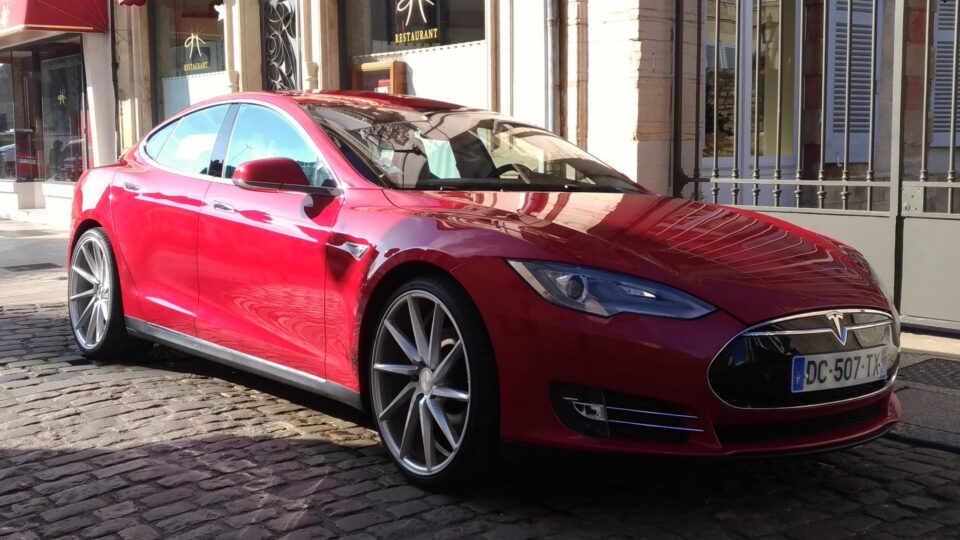
Electric vehicles result in lower emissions than internal combustion vehicles

From the early days of hybrid vehicles right on through the current booming market for electric cars, there has been the contention by some people that these cars are responsible for comparable or even greater amounts of greenhouse gas emissions over their product lifetimes.  The arguments generally centered around the carbon costs of creating batteries for the cars as well as the emissions associated with generating the electricity used to charge them.

A new study published by the International Council for Clean Transportation reports a life cycle assessment (or LCA) that considers every source of carbon generated from the cradle to the grave of the vehicle.

Included in the assessment are the mining costs of the lithium to make batteries, the transportation of batteries across the world by container ship, the end-of-life burden, the mix of energy generation in various places around the world, and so on.

The results of the analysis are that even in India and China, which are the biggest burners of coal and oil on earth, it still results in lower emissions to drive an EV instead of an internal combustion vehicle.

Lifetime emissions of today’s average medium-size EVs are lower than comparable gasoline cars by 66-69% in Europe, 60-68% in the US, 37-45% in China, and 19-34% in India.  As electricity generation continues to further decarbonize, all these numbers will only get better.  While it is somewhat more carbon-intensive to manufacture an EV, it doesn’t take very long in the car’s life to come out ahead owning one.

Early skeptics of EVs and hybrids had more legitimate concerns a decade or so ago, but the advantages of these vehicles are now unambiguous.

**********

Web Links

One of the Biggest Myths About EVs is Busted in New Study

Photo, posted December 30, 2020, courtesy of Chris Yarzab via Flickr.

Earth Wise is a production of WAMC Northeast Public Radio.

Private Jets and CO2 Emissions | Earth Wise

July 16, 2021 By EarthWise Leave a Comment

Private jets are trouble for the planet

During the heart of the Covid-19 pandemic, private jet use saw record levels because chartered aircraft were estimated to have 30 times lower risk for covid than flying commercial.  By August 2020, while commercial flights were down 60% year-over-year, private jet traffic was actually up.  From an environmental perspective, however, flying on a private jet is about the worst thing one can do for the environment.

Private jets are 10 times more carbon intensive than airlines on average and 50 times more polluting than trains.  A four-hour private flight emits as much as the average person does in a year.

In Europe, 7 out of the 10 most polluting routes taken by private aircraft lie in the UK-France-Switzerland-Italy axis, with jets departing the UK and France being the biggest source of pollution.  One in 10 flights departing France are private jets, half of which travelled less than 300 miles.

A study by the research group Transport & Environment points out that wealthy private jet owners are ideally suited to aid in the decarbonization of the aviation sector.  Private jet short hops are prime targets for replacement by clean technologies like electric and hydrogen aircraft.  European policy makers could ban the use of fossil-fuel private jets for flights under 600 miles by 2030.  Until such a ban, jet fuel and flight taxes could be imposed on private jets to account for their disproportionate climate impact and support technology development.  And companies and individuals could commit to substantial reductions in private jet use when alternatives exist that do not unreasonably increase travel time.

The super-rich could be part of the solution instead of part of the problem.

**********

Web Links

Private Jet Use Rising, Sending CO2 Emissions Soaring

Photo, posted September 9, 2020, courtesy of Mackenzie Cole via Flickr.

Earth Wise is a production of WAMC Northeast Public Radio.

Electric Cars And The Environment | Earth Wise

April 20, 2020 By EarthWise Leave a Comment

electric cars are good for the environment

There are articles in the media all the time questioning whether electric cars are really better for the environment than those powered by fossil fuels.  The usual argument is that once emissions from vehicle production and electricity generation are taken into account, electric cars are no greener than gas cars, or even worse for the environment.  Of course, these arguments tend to be made by oil companies and their supporters.

A new study by three European universities looked at this very issue in detail. They carried out a life-cycle assessment in which they not only calculated greenhouse gas emissions generated when using cars, but also in the production chain and waste processing.

Their conclusions are that under current conditions, driving an electric car is better for the climate than conventional gasoline cars in 95% of the world.  The only exceptions are places like Poland, where almost all electricity comes from coal-fired plants.

Average lifetime emissions associated with electric cars are up to 70% lower than gas cars in countries like Sweden and France and about 30% lower in England.

It is important to note than in a few years, even inefficient electric cars will be less emission-intensive than gas cars because electricity generation is becoming less carbon-intensive all the time.  The study projects that by 2050, half of the world’s cars will be electric resulting in carbon dioxide emission reductions of 1.5 billion tons.

The study states that the idea that electric cars could increase emissions is a myth.  The detailed study has run the numbers for all around the world and even in the worst-case scenario, there would be a reduction in emissions in almost all cases.

**********

Web Links

Electric cars better for climate in 95% of the world

Photo, posted February 13, 2019, courtesy of Guillaume Vachey via Flickr.

Earth Wise is a production of WAMC Northeast Public Radio.

Falling U.S. Carbon Emissions

September 16, 2019 By EarthWise Leave a Comment

Reducing carbon emissions is a goal embraced by nearly every country in the world, but actually accomplishing it isn’t easy. It is true that renewable energy sources are playing a growing role in energy systems, but counterbalancing that trend is growing energy demand, especially in developing countries.

Here in the US, energy-related CO2 emissions actually went up nearly 3% in 2018 compared with 2017.  But the US Energy Information Administration is now forecasting a 2% drop in emissions this year.

The main reason energy-related emissions are headed lower at this point is coal-fired power plant retirements.  More than 90% of the coal used in the US goes toward electric power and utilities are increasingly turning away from coal.

The rapid shift away from coal has mostly been due to the increasing use of natural gas.  Natural gas is not actually a clean and green fuel, but it is definitely less carbon-intensive than coal.  Overall, the total installed capacity of renewable sources – hydropower, wind, solar, geothermal, and biomass – has now actually surpassed the capacity of coal plants.  Given that renewables have in many places become the cheapest power option, there is little chance that coal has much of a future, despite efforts by the current administration.

The electric power sector is gradually moving away from all carbon-emitting sources – a trend that is being reinforced by legislation in many states.  The real CO2 emissions leader is petroleum, which accounts for nearly half of the total.  We have a long way to go to reduce emissions from the use of petroleum.  There are over 250 million cars and trucks on US roads and only a little over a million of them don’t burn fossil fuels.

**********

Web Links

US energy-related CO2 emissions expected to fall this year, almost solely due to a drop in coal use

Photo, posted November 6, 2017, courtesy of Cindy Shebley via Flickr.

Earth Wise is a production of WAMC Northeast Public Radio.

Primary Sidebar

Recent Episodes

  • An uninsurable future
  • Clean energy and jobs
  • Insect declines in remote regions
  • Fossil fuel producing nations ignoring climate goals
  • Trouble for clownfishes

WAMC Northeast Public Radio

WAMC/Northeast Public Radio is a regional public radio network serving parts of seven northeastern states (more...)

Copyright © 2026 ·