
• Skip to primary navigation
  • Skip to main content
  • Skip to primary sidebar

Earth Wise

A look at our changing environment.

  • Home
  • About Earth Wise
  • Where to Listen
  • All Articles
  • Show Search
Hide Search
You are here: Home / Archives for carbon emissions

carbon emissions

Record carbon dioxide levels

June 25, 2024 By EarthWise Leave a Comment

Record carbon dioxide levels

Despite the increasing concern about the warming climate, the period between March of last year and March of this year has set a new record for the largest 12-month gain in atmospheric CO2 concentration ever observed.  The new level, measured at Hawaii’s Mauna Loa Observatory was nearly 5 parts per million higher than last year’s level reaching more than 426 parts per million.

CO2 levels averaged 280 ppm for the past 800,000 years until the Industrial Revolution began and people started burning fossil fuels.  Levels started being measured at Mauna Loa in 1958, when they were 315 ppm.  Between 1958 and 2005, the CO2 level rose to 380 ppm.  Over the past 19 years, the amount of CO2 has continued to rise rapidly and with it, global temperatures.

The record increase in carbon dioxide over this past year is probably associated with the end of an El Niño event.  The previous record increase in 2015-2016 was also associated with El Niño.

But the overall trend is clear and discouraging.  Over the past 66 years, the amount of carbon dioxide in the atmosphere has increased by 35%.  This increase is a result of the burning of coal, oil, and natural gas, as well as the effects of deforestation and livestock agriculture.

Carbon dioxide absorbs heat radiating from the Earth’s surface and re-releases it in all directions, including back toward Earth’s surface.  Without this greenhouse effect, the Earth would actually be frozen.  But people are supercharging the natural greenhouse effect and causing the global temperature to rise.  Global energy demand continues to grow and if we continue to meet that demand mostly with fossil fuels, temperatures will continue to rise.

**********

Web Links

Scripps Institution of Oceanography: CO2 levels have largest 12-month gain

Photo, posted March 3, 2014, courtesy of Jon Roig via Flickr.

Earth Wise is a production of WAMC Northeast Public Radio

An ice-free Arctic

April 9, 2024 By EarthWise Leave a Comment

A future ice-free Arctic is very likely as the climate warms

According to a new study by Colorado University, Boulder, the Arctic could see summer days with practically no sea ice as soon as sometime in the next few years.  Earlier predictions for when the first ice-free day in the Arctic could occur were sometime well into the 2030s.

By mid-century, the Arctic is likely to see an entire month without floating sea ice.  This would likely be in September, when ice coverage is at its minimum.  By the end of the century, the ice-free season could last for many months during the year.

Technically, an ice-free Arctic does not mean zero ice in the water.  The working definition is less than 386,000 square miles of ice, which represents less than 20% of what the minimum ice coverage was in the 1980s. In recent years, the coverage has been about 1.25 million square miles.

Sea ice coverage is a big deal because many Arctic animals rely on sea ice for survival, including seals and polar bears.  With warmer ocean water, invasive fish species could move into the Arctic Ocean, upsetting local ecosystems.  Sea ice loss also is a risk for coastal communities because the ice buffers the impact of ocean waves on the coastal land.  As the ice retreats, ocean waves would get bigger, eroding the coasts.

At this point, an ice-free Arctic is basically inevitable, but its annual duration will depend on society’s efforts to reduce carbon emissions.  Lengthy periods of minimal sea ice would transform the Arctic into a completely different environment with global effects that are mostly highly undesirable.  However, Arctic sea ice is resilient and could return fairly quickly if the atmosphere cools down.

**********

Web Links

The Arctic could become ‘ice-free’ within a decade

Photo, posted July 9, 2022, courtesy of Reiner Ehlers via Flickr.

Earth Wise is a production of WAMC Northeast Public Radio

AI’s Environmental Footprint

March 13, 2024 By EarthWise Leave a Comment

AI is leaving a massive environmental footprint

Artificial intelligence is everywhere these days.  Some say it is the biggest development since the discovery of fire.  There is a lot of hype regarding AI, and it will be a while before the hype is sorted out from the reality.  But one thing that is certain is that AI is resource-intensive and has a large environmental footprint.

AI use directly produces carbon emissions from its consumption of non-renewable electricity and is also responsible for the consumption of billions of gallons of fresh water.

Various forms of AI run on many types of devices, but the kind of AI we hear about the most – such as ChatGPT – requires specialized computer equipment that runs in large cloud data centers.  There are roughly 10,000 such centers worldwide and more are under construction.  Estimates are that electricity consumption from data centers will double between 2022 and 2026 to a total of 1,000 terawatts, roughly as much electricity as all of Japan uses.

These estimates include all data center activities, not just AI.  Most operators of data centers don’t reveal what percentage of their energy use comes from AI.  One exception is Google, which says machine learning accounts for about 15% of its data center energy use.

Data centers also consume a great deal of water to cool delicate electronics.  In 2022, Google’s data centers consumed about 5 billion gallons of fresh water.

AI has the potential to improve the efficiency of systems, improve climate models, and perhaps help develop new ways to help reduce humanity’s environmental footprint.  But at the moment, it represents an increasing burden on the environment that cannot just be ignored.

**********

Web Links

As Use of A.I. Soars, So Does the Energy and Water It Requires

Photo, posted January 23, 2023, courtesy of Aileen Devlin / Jefferson Lab via Flickr.

Earth Wise is a production of WAMC Northeast Public Radio
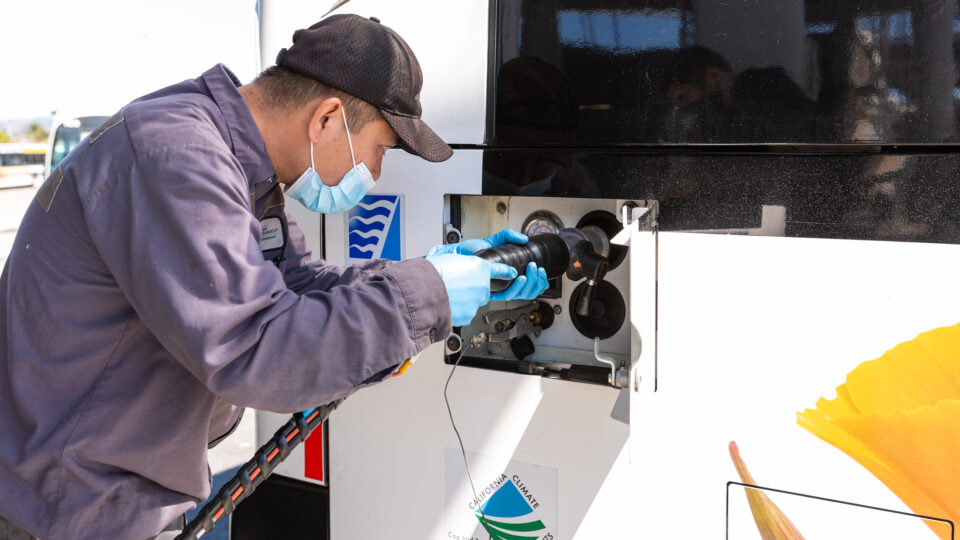
Sustainable hydrogen from methane

February 14, 2024 By EarthWise Leave a Comment

Creating sustainable hydrogen from methane

Hydrogen could serve as a viable alternative to fossil fuels that can be used directly as a fuel or can be used to generate electricity to power cars and other devices. However, large-scale production of hydrogen currently relies on fossil fuels and creates carbon emissions in the process.

So-called green hydrogen involves using electricity to split water into its component elements to produce it.  If the electricity is generated without emissions, then the hydrogen is truly green.

Another way to get hydrogen is by breaking down hydrocarbons like methane, which itself is a very powerful greenhouse gas.  This so-called blue hydrogen could be environmentally friendly if an appropriate method for producing it can be developed.

Existing techniques for converting methane into hydrogen involve the use of metal catalysts – often nickel – that are energy-intensive to mine and manufacture, and can negatively affect the environment.  Research at the University of Surrey in the UK has shown promising results for the use of nitrogen-doped nanocarbons as metal-free catalysts for the direct conversion of methane into hydrogen.  One of the biggest problems with using metal catalysts for hydrogen production is that they get poisoned by carbon.  The carbon that comes out of the methane ends up stopping the catalyst from continuing to do its chemical job.  It turns out that the doped nanocarbon approach to hydrogen catalysis appears to be resistant to this problem.

The development of sustainable hydrogen production methods, including efficient and sustainable electrolysis of water as well as catalysis of hydrocarbons like methane, is crucial to realizing the potential of hydrogen fuel as a clean energy source.

**********

Web Links

‘Game-changing’ findings for sustainable hydrogen production

Photo, posted April 30, 2021, courtesy of California Energy Commission via Flickr.

Earth Wise is a production of WAMC Northeast Public Radio
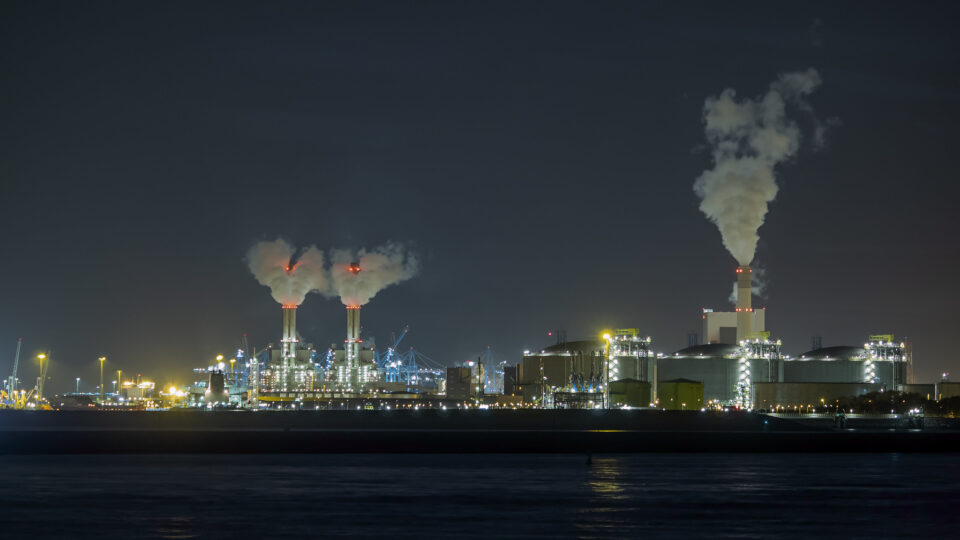
Lower carbon emissions in the U.S.

February 7, 2024 By EarthWise Leave a Comment

Carbon emissions in the United States are slowly falling

American greenhouse gas emissions in 2023 fell by 1.9%.  In total, U.S. emissions have now fallen by over 17% since 2005.  The largest factor in the decline has been the reduction in the burning of coal to produce electricity.  Coal-fired generation has fallen to its lowest level in half a century.

There was a huge drop in emissions at the start of the covid pandemic when large segments of the economy shut down.  But then there was a sharp rebound in emissions in the following two years when economic activity resumed.  But over the long term, American emissions have been trending downward as both cars and power plants have become cleaner and greener.

The decline in emissions is a good thing but hasn’t been nearly enough to meet the nation’s goals for trying to slow down global warming.  The U.S. has a goal of reducing emissions by 2030 to half of the 2005 level.  To achieve that goal, annual emissions would have to fall more than three times faster than they did last year for the rest of the decade.

The emissions data used for the current assessment included those from transportation, electricity generation, industry, and buildings.  It did not include pollution from agriculture, which accounts for about 10% of the nation’s greenhouse gases.

The 2022 Inflation Reduction Act provided record amounts of money for low-emissions technologies like solar panels, wind turbines, nuclear reactors, electric vehicles, and hydrogen fuels.  The full impact of these federal investments has yet to be seen, since many companies are still ramping up their efforts in clean energy.  How quickly emissions will fall as these efforts come to fruition remains to be seen.

**********

Web Links

U.S. Carbon Emissions Fell in 2023 as Coal Use Tumbled to New Lows

Photo, posted May 17, 2020, courtesy of Frans Berkelaar via Flickr.

Earth Wise is a production of WAMC Northeast Public Radio

Bio-based products on the rise

January 30, 2024 By EarthWise Leave a Comment

There is a growing global movement working towards replacing conventional synthetic products – ones that are toxic to make or use, difficult to recycle, and have large carbon footprints – with products made from plants, trees, or fungi that can be safely returned to the earth at the end of their useful life.  This so-called bioeconomy is in its infant stages, but there is increasing interest in turning successful research into manufactured products.

One example is nylon.  Nylon was created in the 1930s by DuPont.  It has been used and continues to be used in a wide range of products.  The problem with it is that it is made from petroleum, it doesn’t biodegrade, and producing it generates nitrous oxide, which is a problematic greenhouse gas.

A San Diego-based company called Genomatica has developed a plant-based nylon using biosynthesis, a process in which a genetically engineered microorganism ferments plant sugars to create a chemical intermediate that can be turned into the nylon-6 polymer, and then into textiles. 

The impetus for developing bio-based products includes the growing public disgust at the mounting environmental toll of plastic, not the least of which is that people and animals are increasingly ingesting it.  Coupled with this, there is a rapidly-growing torrent of funding, especially in the US and Europe, aimed at accelerating the transition away from products that are non-biodegradable, toxic, and that produce carbon emissions.   Last September saw the launch of the National Biotechnology and Biomanufacturing Initiative which will support research and development on such topics as the use of sustainable biomass and waste resources to make non-toxic, bio-based fuels, chemicals, and fertilizers.

**********

Web Links

From Lab to Market: Bio-Based Products Are Gaining Momentum

Photo, posted May 27, 2010, courtesy of André C via Flickr.

Earth Wise is a production of WAMC Northeast Public Radio
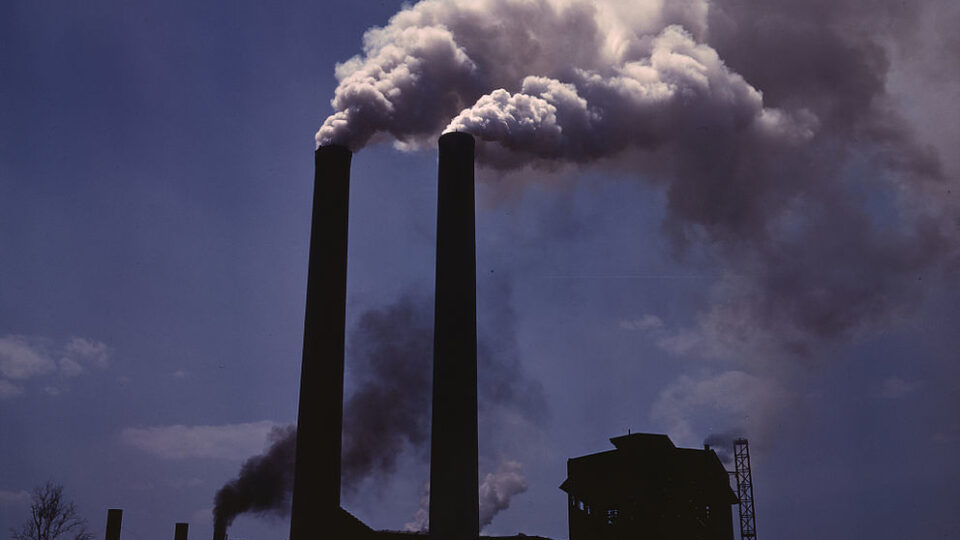
Record high emissions

January 3, 2024 By EarthWise Leave a Comment

Record high emissions in 2023

The world is adding solar and wind power to the grid.   We are driving more and more electric cars.  Countries are pledging to cut back fossil fuel use.  There are highly visible international conferences on the climate crisis.   But despite all of these things, global carbon emissions from fossil fuels have risen once again in 2023, reaching all-time record high levels of more than 40 billion tons, about 1.1% more than the previous year.

In some places, including Europe and the U.S., fossil fuel CO2 emissions are falling, but globally, they are still rising.  Emissions continued to increase in India and China.  Global action to cut fossil fuel use is not happening fast enough to prevent the increasingly dangerous effects of climate change.

Global CO2 emissions include both the contributions of fossil fuel use and the effects of land use change.  Adding the two together, in 2023 the total was about 45 billion tons, basically unchanged from last year. 

Adding insult to injury are the emissions from fires.  The extreme wildfire seasons in Canada, Australia, and other places have contributed CO2 emissions much larger than historical averages.

About half of all the carbon dioxide emitted on Earth is absorbed by carbon sinks on land and the oceans.  The other half remains in the atmosphere, where levels are now averaging 419 parts per million, 51% above pre-industrial levels.

Current efforts are simply not profound enough or widespread enough to put global emissions on a downward trajectory.  Some climate policies in some places are proving effective, but much more needs to be done.

**********

Web Links

Fossil CO2 emissions at record high in 2023

Photo, posted December 18, 2013, courtesy of Steve Nelson via Flickr.

Earth Wise is a production of WAMC Northeast Public Radio

Uncounted emissions

December 20, 2023 By EarthWise Leave a Comment

Most countries around the world have pledged to cut their carbon emissions to try to reduce the effects of climate change.  The extent to which countries are meeting their emission reduction goals has been the primary way of keeping score on their efforts.  But there is a major problem with this scorekeeping system: exporting fossil fuels does not count as part of a country’s contributions to emissions.

Exports of fossil fuel are the driving force of fossil fuel expansion around the world and a significant fraction of those exports come from powerful and wealthy nations that are essential to the effort to reduce carbon emissions.

Our own country is a prime example.  The U.S. is working to cut back its carbon emissions.  The Inflation Reduction Act is driving the reduction of domestic use of oil, gas, and coal and is providing subsidies for the use of heat pumps and the buildout of EV charging networks.  However, at the same time, U.S. production of fossil fuels is booming, driving substantial profits for that industry.  The result is that much of the expanding supply of fossil fuels is headed overseas.

American liquified natural gas exports are growing rapidly.  Estimates are that by 2030, United States LNG exports will be responsible for more greenhouse gas emissions than every house, car, and factory in the European Union.  And, according to the UN emissions accounting system, none of those emissions will be attributed to the United States. 

The situation is rather disastrous.  Countries use this loophole to claim they are doing their part to reduce emissions, but the world is continuing to suffer the consequences.

**********

Web Links

Uncounted Emissions: The Hidden Cost of Fossil Fuel Exports

Photo, posted January 9, 2015, courtesy of Bernard Spragg via Flickr.

Earth Wise is a production of WAMC Northeast Public Radio

Electric Motors For Aviation | Earth Wise

July 25, 2023 By EarthWise Leave a Comment

Aviation contributes about 3% of global greenhouse gas emissions.  Its carbon footprint is one of the more difficult ones to reduce.  Electrifying planes would shrink that footprint considerably, but it represents a significant technical challenge.  To date, only small all-electric planes have gotten off the ground.  The electric motors in those planes generate hundreds of kilowatts of power.  To power large planes, like commercial airliners, megawatt-scale motors are required.

A team of MIT engineers is developing a 1-megawatt motor that could be a key step towards electrifying commercial aircraft.  They have designed and tested major components of the motor and have calculated how the completed design could generate one megawatt of power at a weight and size competitive with existing small aircraft engines.

To be suitable for aircraft use, motors have to be compact and lightweight.  The more power electric motors generate, the bigger they are and the more heat they produce.  Cooling motors requires additional components that take up space and add significant weight.  The MIT motor design and associated power electronics are each about the size of a typical checked suitcase and weigh less than an adult passenger.

Once the MIT team can demonstrate an entire functional motor, the design could be used to power regional aircraft and could be the enabling element of hybrid-electric propulsion systems for jet aircraft.  Possible future configurations could make use of multiple one-megawatt motors powering multiple fans distributed along aircraft wings.

Electrification of aircraft is a slow but steady area of development and technologies such as that being developed at MIT could end up meeting the practical needs of the aircraft of the future.

**********

Web Links

Megawatt electrical motor designed by MIT engineers could help electrify aviation

Photo, posted September 14, 2019, courtesy of Dylan Agbagni via Flickr.

Earth Wise is a production of WAMC Northeast Public Radio
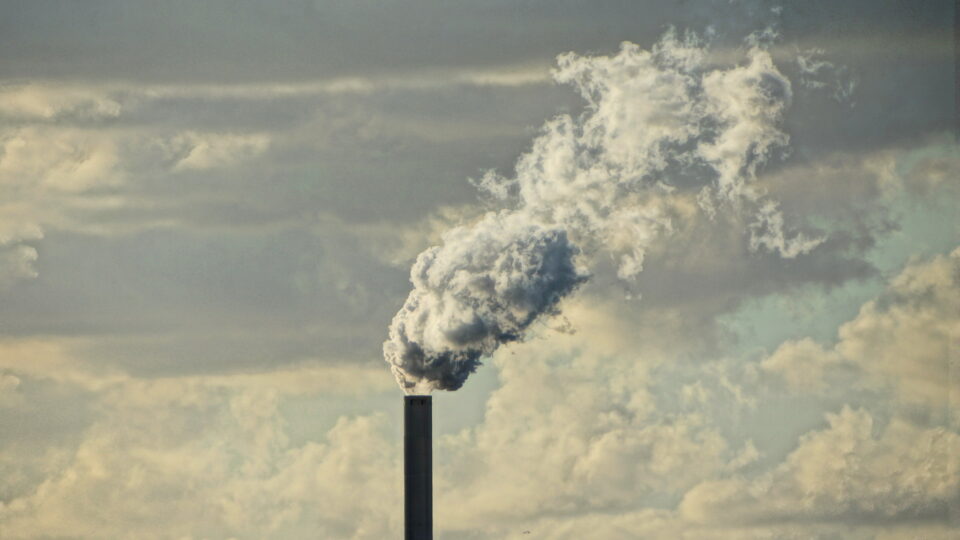
Greenhouse Gas Emissions Are Still Increasing | Earth Wise

July 21, 2023 By EarthWise Leave a Comment

Greenhouse gas emissions are still rising

Recent research has found that the level of greenhouse gases emitted by human activity has reached an all-time high level of nearly 60 billion tons a year.  Despite increasing public attention, policy measures, and adoption of green technologies, the pace at which these changes have been taking place has simply not kept up with the ongoing burning of fossil fuels by increasingly industrialized societies.  The rate at which greenhouse gas emissions has increased over time has indeed slowed, but emissions need to start decreasing and as soon and as much as possible.

Human-induced warming has reached a ten-year average from 2013-2022 of 1.14 degrees Celsius above pre-industrial levels, up from a 1.07 degrees average between 2010-2019. 

Scientists have calculated a carbon budget that describes how much more carbon dioxide can be emitted before global warming exceeds the threshold of 1.5 degrees Celsius that is widely predicted to lead to potentially catastrophic changes to the climate.  In 2020, the Intergovernmental Panel on Climate Change calculated that the remaining carbon budget was about 500 billion tons of carbon dioxide.  Over the past three years, nearly half of that carbon budget has already been exhausted by the continuing onslaught of carbon emissions.

Researchers describe their study as a timely wake-up call that the pace and scale of climate action to date has been insufficient and that we need to change policy and approaches in light of the latest evidence about the state of the climate system.  Time is no longer on our side in trying to stave off the worst effects of climate change.

**********

Web Links

Greenhouse gas emissions at ‘an all-time high’, warn scientists

Photo, posted September 18, 2015, courtesy of In Hiatus via Flickr.

Earth Wise is a production of WAMC Northeast Public Radio

Moss And Carbon Storage | Earth Wise

July 18, 2023 By EarthWise 1 Comment

All plants, including algae and cyanobacteria, carry out photosynthesis. During the process of photosynthesis, plants remove carbon dioxide from the air and release oxygen to the air.  As a result, plants play a crucial role in the fight against climate change. 

According to a new study recently published in the journal Nature Geoscience, mosses – those tiny plants often found on the ground or rocks – might be important antidotes to climate change.  The study, which was led by scientists from the University of New South Wales in Australia and the Institute of Natural Resources and Agrobiology in Spain, uncovered evidence that mosses have the potential to store a massive amount of carbon in the soil beneath them.

The researchers found that mosses sequester around seven billion tons more carbon in the soil than is stored in the bare patches of soil typically found near them.  To put that figure in perspective, that is six times the annual global carbon emissions caused by global land use change, which includes things like deforestation, urbanization, and mining.  The researchers also found that moss-covered soil possessed heightened levels of vital nutrients and fewer instances of soil-borne plant pathogens on average compared to moss-less soil.

Mosses cover an area of more than 3.6 million square miles, which is similar in size to Canada, and can thrive in challenging environments.  The widespread presence and hardiness of mosses is why they can have such a significant impact on soil biodiversity and carbon sequestration. 

The research team hopes future work will focus on understanding the role of all types of vegetation, not just mosses and trees, in capturing carbon.

**********

Web Links

Study: Modest moss supports billions of tons of carbon storage

Photo, posted August 23, 2017, courtesy of Peter Handke via Flickr.

Earth Wise is a production of WAMC Northeast Public Radio

Big Oil And Big Lithium | Earth Wise

July 7, 2023 By EarthWise Leave a Comment

Big Oil entering the lithium market

The world’s big oil companies have worked pretty hard to prolong society’s dependence on petroleum.  When there are trillions of dollars at stake, there is plenty of motivation.  But those companies do see the writing on the wall.

An Exxon Mobil-funded study last year estimated that light-duty vehicle demand for combustion engine fuels could peak in 2025 and that electric vehicles of various types could grow to more than 50% of new car sales by 2050.  This is pretty pessimistic compared with most other surveys, but it is still a big number.  Exxon also projected that the global fleet of EVs could reach 420 million by 2040.

As a result of all this, Exxon is preparing for a future far less dependent on gasoline by drilling for lithium rather than oil.  The company recently purchased mining rights to a sizable chunk of Arkansas land for over $100 million from which it aims to produce lithium for electric car batteries.

Exxon’s consultants estimated that the 120,000 acres in the Smackover formation of southern Arkansas could have as much as 4 million tons of lithium carbonate, enough to power 50 million cars and trucks. 

Exxon plans to spend $17 billion through 2027 on cutting carbon emissions and developing low carbon technologies.  Other large oil producers have also been looking at the lithium business.  At the same time, some large oil companies like BP and Shell are investing in renewable energy.

The prospect of EVs dominating transportation in the coming decades is a strong incentive for oil-and-gas companies to adapt their businesses to the new world.

**********

Web Links

Exxon Joins Hunt for Lithium in Bet on EV Boom

Photo, posted August 16, 2014, courtesy of Mike Mozart via Flickr.

Earth Wise is a production of WAMC Northeast Public Radio

Liquid Fuel From Sunshine | Earth Wise

July 6, 2023 By EarthWise Leave a Comment

Producing liquid fuel from sunshine

A key goal of artificial photosynthesis research is to be able to produce a useful liquid fuel using only carbon dioxide, water, and sunlight in a single step.  Such a so-called solar fuel would produce net zero carbon emissions and would be completely renewable.

Bioethanol has long been touted as a green alternative to fossil fuels, since it is made from plants rather than petroleum.  But producing it takes up agricultural land that could be used to grow food instead and there are emissions associated with many aspects of the process by which plant mass becomes fuel.

Researchers from the University of Cambridge in the UK have developed a so-called artificial leaf that produces ethanol or propanol – usable liquid fuels – in a single step.  They developed a copper and palladium-based catalyst that allows the artificial leaf to directly produce multicarbon complex chemicals.  Earlier versions of artificial leaves could make simple chemicals, such as syngas, which would then require additional processing to turn into high-density fuels.

The new device produces liquid fuel from carbon dioxide and water simply by shining sunlight on it.

At present, the artificial leaf is a proof-of-concept device that exhibits only modest efficiency.  The researchers are working to optimize the device’s light absorbers so that they can better make use of sunlight and to optimize the catalyst so that it can convert more of the sunlight into fuel.  In addition, the device needs to be scaled up so that it can produce large volumes of fuel.

All that being said, it is an important step towards people being able to do what plants have been doing for millions of years.

**********

Web Links

Driving on sunshine: clean, usable liquid fuels made from solar power

Photo, posted March 23, 2015, courtesy of Astro via Flickr.

Earth Wise is a production of WAMC Northeast Public Radio

Airplane Turbulence And Climate Change | Earth Wise

July 4, 2023 By EarthWise Leave a Comment

If you’ve ever been on an airplane, chances are pretty good that you’ve experienced turbulence.  As the busy summer travel season kicks off, travelers are being encouraged to brace themselves for a bumpier-than-usual ride. 

There has been a major increase in the number of severe turbulence cases on both domestic and international flights.  According to a new study by researchers from the University of Reading in the U.K., climate change is leading to this increase in turbulence, driving up costs (via wear and tear on aircrafts), and increasing the risks for passengers and flight attendants.  In the United States alone, turbulence costs the airline industry $150-$500 million annually. 

The study, which was recently published in the journal Geophysical Research Letters, found that warmer air, caused by carbon emissions, is creating bumpier flights around the world.  In fact, the study found that severe turbulence in the North Atlantic is up by 55% since 1979. 

The changing climate is affecting air travel in other ways as well.  A faster jet stream across the Atlantic is altering travel times.  Rising temperatures are reducing the weight that aircraft can carry.  Rising seas are threatening low-lying coastal airports around the world. 

But carbon emissions from aviation are also a significant driver of the climate crisis.  Air travel accounts for approximately 3% of global greenhouse gas emissions, and is one of the fastest growing sources of emissions. According to the International Civil Aviation Organization, emissions from international air travel are expected to triple by 2050.

The future is shaping up to be a bumpy ride.

**********

Web Links

Climate crisis leading to more turbulence during flights, says study

Evidence for Large Increases in Clear-Air Turbulence Over the Past Four Decades

Climate Scientist Explains Increase In Airplane Turbulence

Airports and Rising Seas

Photo, posted May 9, 2018, courtesy of Steve Lynes via Flickr.

Earth Wise is a production of WAMC Northeast Public Radio
Carbon-Negative Concrete | Earth Wise

June 6, 2023 By EarthWise Leave a Comment

Researchers exploring a carbon-negative concrete

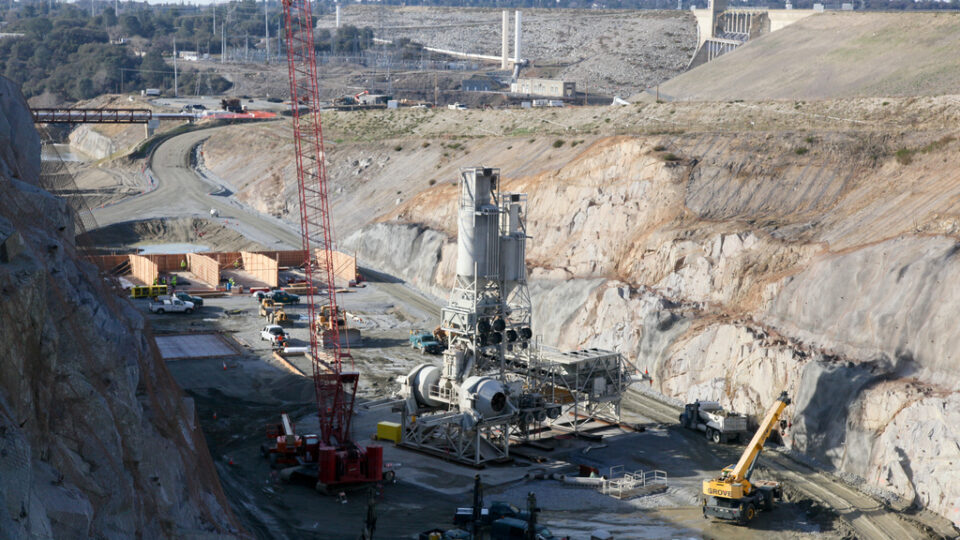
Concrete is a mainstay of modern civilization.  The world produces more than 4 billion tons of it each year and the process requires high temperatures, mostly obtained by burning fossil fuels.  The chemical reactions that produce concrete also produce large amounts of carbon dioxide.  In all, cement production is responsible for about 8% of total global carbon emissions by human activities.

This situation is the impetus for a wide range of research activities aimed at reducing the environmental impact of concrete production.  Researchers at Washington State University have recently developed a way of making carbon-negative concrete: a recipe for concrete that absorbs large amounts of carbon dioxide.

There have been attempts in the past to add biochar to concrete.  Biochar is a type of charcoal made from organic waste that sucks up carbon dioxide from the air.  In earlier attempts, even adding 3% of biochar would dramatically reduce the strength of the concrete.

The WSU researchers found that treating biochar with concrete washout wastewater makes it possible to add much more biochar to concrete without reducing its strength.  Mixing it with biochar adds calcium, which induces the formation of the mineral calcite, which in turn strengthens the concrete.

The researchers were able to add up to 30% biochar to their cement mixture.  Within a month, the resultant concrete was comparable in strength to ordinary concrete.  But at the same time, the biochar was able to absorb up to 23% of its weight in carbon dioxide from the air.  The new concrete is potentially the most environmentally friendly concrete ever developed.

**********

Web Links

Researchers develop carbon-negative concrete

Photo, posted January 31, 2012, courtesy of Michael J. Nevins / U.S. Army Corps of Engineers via Flickr.

Earth Wise is a production of WAMC Northeast Public Radio

Banning Gas-Powered Cars | Earth Wise

May 12, 2023 By EarthWise Leave a Comment

The European Union has banned the sale of new gas-powered cars starting in 2035.  The vote came after weeks of negotiations related to possible exemptions to the rule.

Germany lobbied for an exemption to be made for cars powered by e-fuels.  These are made by combining hydrogen with carbon dioxide that has been removed from the atmosphere using processes powered by renewable energy.  Because of this source of the carbon dioxide, such fuels are considered to be carbon neutral.  The EU agreed to grant this exemption, so there can be cars that run only on e-fuels after 2035.

About a quarter of carbon emissions in the EU come from transportation.  The new law requires a 55% drop in carbon emissions from new cars by 2030.  Poland voted against the new law, while Bulgaria, Romania, and Italy abstained.  (Italy wanted an exemption for biofuels, but it was not granted).

Here in the US, seven states have adopted rules banning the sale of new gas-powered cars in 2035.  These are California, Maryland, Massachusetts, New Jersey, New York, Oregon, and Washington. 

California has committed to having 35% of new car sales being zero-emission vehicles by 2026, and the number rising to 68% by 2030.

As these policies proliferate around the world, the auto industry is moving ahead to keep up with them.  Most automakers are planning to have substantial parts of their product line be electric by 2030.  Given the financial and physical inertia involved in shifting to electric vehicle production, regardless of what happens with policies around the world, there is little possibility of turning back from the electric vehicle transition.

**********

Web Links

EU Approves 2035 Ban on Sales of Gas-Powered Cars

Photo, posted May 31, 2012, courtesy of Mike Norton via Flickr.

Earth Wise is a production of WAMC Northeast Public Radio

Powering Future Ships By Wind | Earth Wise

April 25, 2023 By EarthWise Leave a Comment

An innovative project out of the UK seeks to reduce carbon emissions at sea by retrofitting large ocean vessels with ultramodern wing-sails to reduce the amount of fuel required to travel the oceans.

Powering ships by wind is certainly nothing new.  However, almost every large ship today is powered entirely by fossil fuels.  A company called Smart Green Shipping has developed retrofit wing-sails called FastRigs that can be installed on existing vessels to reduce fuel consumption. They are also working on additional wind-based technology that can supply all the power required for ships.

FastRig technology is designed to be retrofitted to existing commercial vessels with available deck space – typically bulkers and tankers.  There are about 40,000 such ships that are suitable for conversion to this hybrid power system.  Installing FastRigs is estimated to reduce greenhouse gas emissions by at least 20%.

The company and the UK’s University of Southampton have been funded to investigate the potential of the technology to reduce emissions from existing ships.  The research project will develop software tools to investigate the complex interactions between the wing-sails and ship hydrodynamics to accurately assess the impact on vessel performance.  The software tools will be able to predict the fuel savings delivered by wing-sails.

Smart Green Technologies is developing technology for 100% renewable-powered, new-build ships.  The goal is to create quieter, emission-free ships in the future that do no harm to ocean environments and improve air quality in ports, towns, and cities.  Wind power harnessed using sophisticated digital software and advanced engineering represents a promising way to reduce fuel consumption and related emissions from large ocean vessels.

**********

Web Links

Future ships could be powered by wind to fight climate change

Photo, posted October 27, 2017, courtesy of Bernard Spragg via Flickr.

Earth Wise is a production of WAMC Northeast Public Radio

Counting Trees | Earth Wise

April 11, 2023 By EarthWise Leave a Comment

Researchers have developed a new method for counting trees

Scientists estimate that there are about 3 trillion trees on the earth.  A huge number but probably half as many as there were before people entered the picture.  And we’re losing about 10 billion trees a year to toilet paper, timber, farmland expansion, and other human activity.  Trees play a crucial role in taking carbon dioxide out of the atmosphere and storing it away.  For this reason, trees have become an integral part of the effort to mitigate climate change.

There are major initiatives underway around the world to plant more trees.  Part of this is driven by the increasing use of carbon credits by companies trying to offset their carbon emissions.   These credits are earned by either planting new trees or paying farmers or other landowners not to cut down existing trees.  But how many trees are actually planted and how many survive over time?

Whether these efforts are really resulting in more trees and more carbon storage is not easy to determine.  Current international inventories of global tree-sequestered carbon are subject to great uncertainty.

Researchers from the University of Copenhagen and NASA have developed a method for mapping large numbers of trees and determining their carbon content.  Using artificial intelligence techniques to analyze ultra-high-resolution satellite images, they can count trees, determine their individual species, and measure their carbon content.

A study of images from Africa’s Sahel region found that it is home to nearly 10 billion trees that are currently storing 840 million tons of carbon.

Now that the groundwork for this new methodology is complete, it is ready to be deployed by public agencies, NGOs, and other interested in monitoring the numbers of trees and their carbon content.

**********

Web Links

The counting of nine billion trees could help manage climate credits and nature restoration

Photo, posted October 27, 2018, courtesy of Ian Dick via Flickr.

Earth Wise is a production of WAMC Northeast Public Radio

How To Meet Protected Land Targets | Earth Wise

March 30, 2023 By EarthWise Leave a Comment

How to meet protected land targets

More than half of the world’s countries have set a target of setting aside 30% of land and sea areas across the globe for conservation by 2030, in order to preserve and protect nature and essential services to people.  This pledge creates some difficult questions to answer.

What sorts of land should be protected and where should it be located?  What effects of these new land protections will there be on carbon emissions and the climate and on land usage for food production and energy generation?  Policymakers have to grapple with such questions in order to move forward on these ambitious biodiversity protection goals.

A recent study by the Lawrence Berkeley National Laboratory attempts to answer many of these questions.  The study found that meeting the 30% goal could lead to substantial regional shifts in land use and, in some cases, still fail to protect some of the most important biodiversity hotspots.

Protecting land entails tradeoffs with other land uses and can have negative impacts on the agricultural sector as well as land use for bioenergy crops and forest land use for timber.

In particular, the study found that the amount of land used for crops for conversion into biofuels could be significantly impacted by doubling current protected areas while still preserving the amount of land used for food crops.  This is particularly true for land in Russia and Canada.

The study also found that while it may be possible to meet the 30% target by only protecting agriculturally unsuitable land, it may not end up protecting many of the world’s 36 identified biodiversity hotspots.  The uneven distribution of species has a significant bearing on how to manage the conservation of biodiversity.

**********

Web Links

Doubling Protected Lands for Biodiversity Could Require Tradeoffs With Other Land Uses, Study Finds

Photo, posted September 19, 2020, courtesy of John Brighenti via Flickr.

Earth Wise is a production of WAMC Northeast Public Radio

The Enormous Cost Of Steel Corrosion | Earth Wise

February 28, 2023 By EarthWise Leave a Comment

Global steel production has been rising for decades.  Because steel corrodes over time, part of the demand for more steel comes from the need to replace the steel used in construction materials – in everything from bridges to cars – that has become corroded over time.  Studies have estimated that the economic cost of corrosion is an astonishing 3 to 4% of a nation’s gross domestic product.  Globally, this means that steel corrosion costs the world trillions – yes, trillions with a T – of dollars each year.

On top of the staggering economic impact of corrosion, there is the fact that steel production is one of the largest greenhouse gas emitters of any industry, accounting for more than 25% of all manufacturing sector carbon emissions.  In fact, steel manufacturing causes over 10% of total global carbon emissions.  

As a result of regulations placed on the steel industry, technological advances in the steelmaking process have resulted in a 61% reduction in the industry’s energy consumption over the last 50 years.   There are continuing efforts to reduce the energy consumption of steel making and to move away from the use of fossil fuels to produce the needed energy.  But without significant improvements, just the emissions associated with replacing corroded steel could make the goals set by the Paris Climate Agreement unfeasible.

It’s hard to believe that something costing the world trillions of dollars and has a major negative impact on the climate is largely invisible.  Steel corrosion is an enormous societal challenge that has gone under the  radar for decades and therefore has not received anything like the attention it deserves.

**********

Web Links

Reducing steel corrosion vital to combating climate change

Photo, posted July 24, 2008, courtesy of Phil Whitehouse via Flickr.

Earth Wise is a production of WAMC Northeast Public Radio

  • « Go to Previous Page
  • Page 1
  • Page 2
  • Page 3
  • Page 4
  • Interim pages omitted …
  • Page 7
  • Go to Next Page »

Primary Sidebar

Recent Episodes

  • An uninsurable future
  • Clean energy and jobs
  • Insect declines in remote regions
  • Fossil fuel producing nations ignoring climate goals
  • Trouble for clownfishes

WAMC Northeast Public Radio

WAMC/Northeast Public Radio is a regional public radio network serving parts of seven northeastern states (more...)

Copyright © 2026 ·