• Skip to primary navigation
  • Skip to main content
  • Skip to primary sidebar

Earth Wise

A look at our changing environment.

  • Home
  • About Earth Wise
  • Where to Listen
  • All Articles
  • Show Search
Hide Search
You are here: Home / Archives for bridges

bridges

Self-healing concrete

June 25, 2025 By EarthWise Leave a Comment

Concrete is the most widely used building material on Earth.  It has a dangerous and costly flaw:  it cracks easily.  Cracks in concrete can lead to inconvenient damage or to catastrophic structural failures such as collapses of buildings, bridges, or highways.

Concrete is made by mixing crushed stone and sand with powdered clay and limestone and adding water.  The mixture hardens and once set becomes extremely strong.  However, natural forces like freeze-thaw cycles, drying shrinkage, and heavy loads can cause cracks.  Even very tiny cracks can allow liquids and gases to seep into embedded steel reinforcements causing corrosion and weakness. 

For over 30 years, researchers have investigated microbe-mediated self-healing concrete.  It involves introducing microbial healing agents into cracks and injecting nutrients for the healing agents to produce repair materials.  It is not a very practical solution.

Researchers at Texas A&M University have developed a technique inspired by the behavior of lichen systems. Their system, like lichen, uses a combination of cyanobacteria which turns air and sunlight into food, and filamentous fungi, which produces minerals that seal the cracks. 

In lab tests, the paired microbes were able to grow and produce crack-filling minerals even in challenging environments such as concrete.  If it is possible to produce concrete that can heal itself, it would significantly reduce maintenance costs, extend its longevity, and even protect lives through increased safety.

**********

Web Links

Cracking the Code: Deciphering How Concrete Can Heal Itself

Photo, posted May 21, 2009, courtesy of DesignMag via Flickr.

Earth Wise is a production of WAMC Northeast Public Radio

A giant plane for giant wind turbines

May 22, 2025 By EarthWise Leave a Comment

Wind turbines have been getting bigger all the time.  Larger turbines have real advantages.  They can operate at lower speeds so they can be deployed in more places.  They capture more wind, so they make more power.  Large wind turbines can have blades more than 200 feet long and even larger ones are on the way.  An offshore wind farm in China has turbines with 400-foot blades.

Giant wind turbines face a thorny problem:  getting the blades to where they are to be installed.  The enormous blades can’t be easily shipped across aging roads and bridges.   Tunnels are too narrow, bridges are too low, and roads can be too tight to allow turns when transporting these massive turbine parts.  Some developers have actually had to build special roads for wind projects.

For nearly a decade, a Boulder Colorado company called Radia has been working on what would be the world’s largest plane.  The WindRunner aircraft would have a dozen times the cargo volume of a Boeing 747.  The WindRunner will be 356 feet long and 79 feet tall.  While its primary purpose would be transporting wind turbine blades, the plane could also be used to aid the military or businesses that are thinking really big.  Product developers often don’t even try to invent really big things because there is no way to transport them.  Radia expects the WindRunner to be rolled out before the end of the decade.

The wind industry is currently facing strong opposition from the Trump administration, but wind energy is not going away and bigger and better wind turbines will ultimately be built and will have to be transported.

**********

Web Links

Building the World’s Biggest Plane to Help Catch the Wind

Photo, October 10, 2013, courtesy of Allan Der via Flickr.

Earth Wise is a production of WAMC Northeast Public Radio
The Enormous Cost Of Steel Corrosion | Earth Wise

February 28, 2023 By EarthWise Leave a Comment

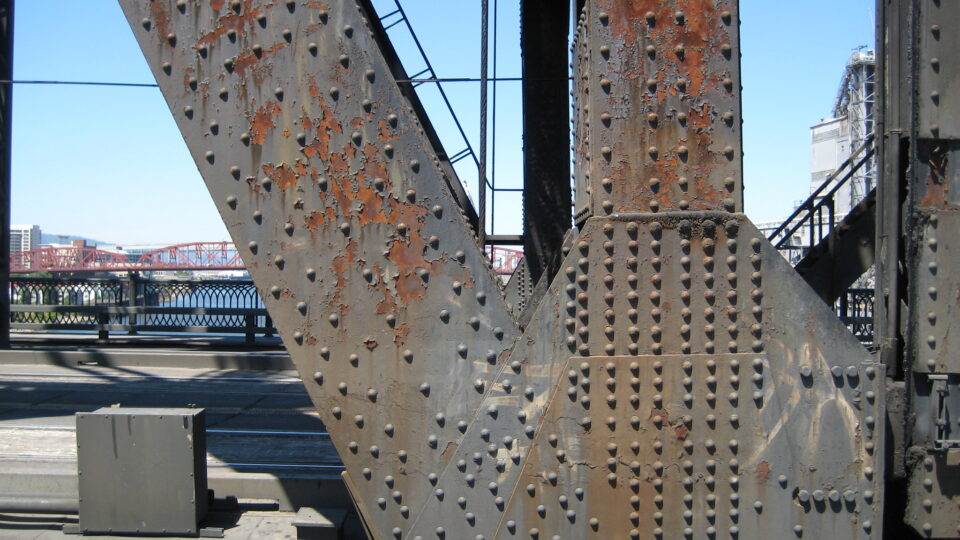
Global steel production has been rising for decades.  Because steel corrodes over time, part of the demand for more steel comes from the need to replace the steel used in construction materials – in everything from bridges to cars – that has become corroded over time.  Studies have estimated that the economic cost of corrosion is an astonishing 3 to 4% of a nation’s gross domestic product.  Globally, this means that steel corrosion costs the world trillions – yes, trillions with a T – of dollars each year.

On top of the staggering economic impact of corrosion, there is the fact that steel production is one of the largest greenhouse gas emitters of any industry, accounting for more than 25% of all manufacturing sector carbon emissions.  In fact, steel manufacturing causes over 10% of total global carbon emissions.  

As a result of regulations placed on the steel industry, technological advances in the steelmaking process have resulted in a 61% reduction in the industry’s energy consumption over the last 50 years.   There are continuing efforts to reduce the energy consumption of steel making and to move away from the use of fossil fuels to produce the needed energy.  But without significant improvements, just the emissions associated with replacing corroded steel could make the goals set by the Paris Climate Agreement unfeasible.

It’s hard to believe that something costing the world trillions of dollars and has a major negative impact on the climate is largely invisible.  Steel corrosion is an enormous societal challenge that has gone under the  radar for decades and therefore has not received anything like the attention it deserves.

**********

Web Links

Reducing steel corrosion vital to combating climate change

Photo, posted July 24, 2008, courtesy of Phil Whitehouse via Flickr.

Earth Wise is a production of WAMC Northeast Public Radio
Trouble For The Outer Banks | Earth Wise

August 9, 2022 By EarthWise Leave a Comment

Rising seas are threatening the Outer Banks

The Outer Banks are a series of barrier islands off the coast of North Carolina that separate the Atlantic Ocean from the mainland.  They are a very popular tourist destination featuring open-sea beaches, state parks, shipwreck diving sites, and historic locations such as Roanoke Island, the site of England’s first settlement in the New World. There is also Kitty Hawk, the site of the Wright Brothers’ first flights.

The ribbon of islands is nearly 200 miles long.  Some of them are low and narrow and are only a few feet above sea level.  Many are especially vulnerable to Nor’easters in the winter and hurricanes in the summer.  The collision of warm Gulf Stream waters and the colder Labrador current helps to create dangerous shoals and some of the largest waves on the East Coast.

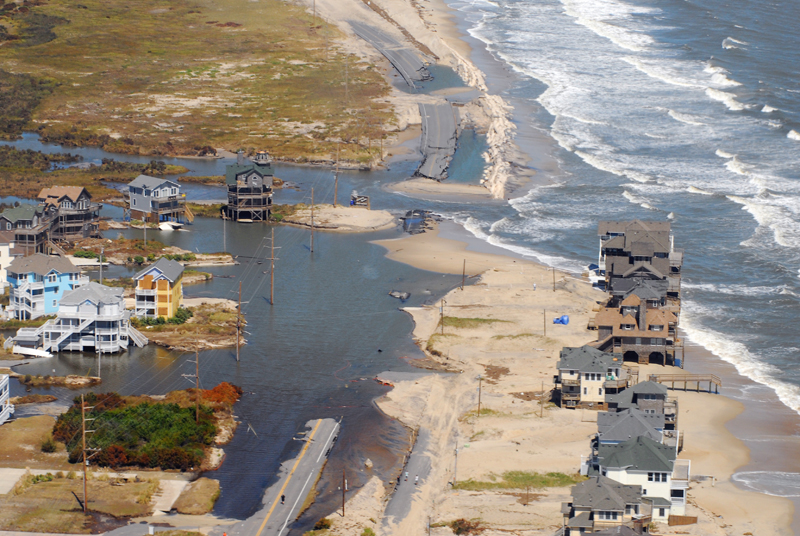
Over the years, developers have added billions of dollars’ worth of real estate to the Outer Banks.  Rising sea levels and increasingly frequent storms threaten the barrier islands of the Outer Banks.  Beach-front cottages have tumbled into the ocean for as long as people have built them in the Outer Banks but now they are falling at a greater rate and more and more are in danger.

The Department of Transportation has spent nearly $100 million dollars to keep NC12, the highway connecting the string of islands, open to traffic.  Three new bridges built to traverse inlets opened by storms and bypassing rapidly eroding shorelines raised the cost by another half a billion dollars.

There are many other measures such as pumping sand into eroded areas going on in the Outer Banks, but ultimately, all of the measures may not be enough to deal with rising sea levels and more powerful storms.

**********

Web Links

Shifting Sands: Carolina’s Outer Banks Face a Precarious Future

Photo, posted August 31, 2011, courtesy of NCDOT Communications via Flickr.

Earth Wise is a production of WAMC Northeast Public Radio.

Recycled Plastic Lumber

July 20, 2016 By WAMC WEB

https://earthwiseradio.org/wp-content/uploads/2016/07/EW-07-20-16-Recycled-Plastic-Lumber.mp3

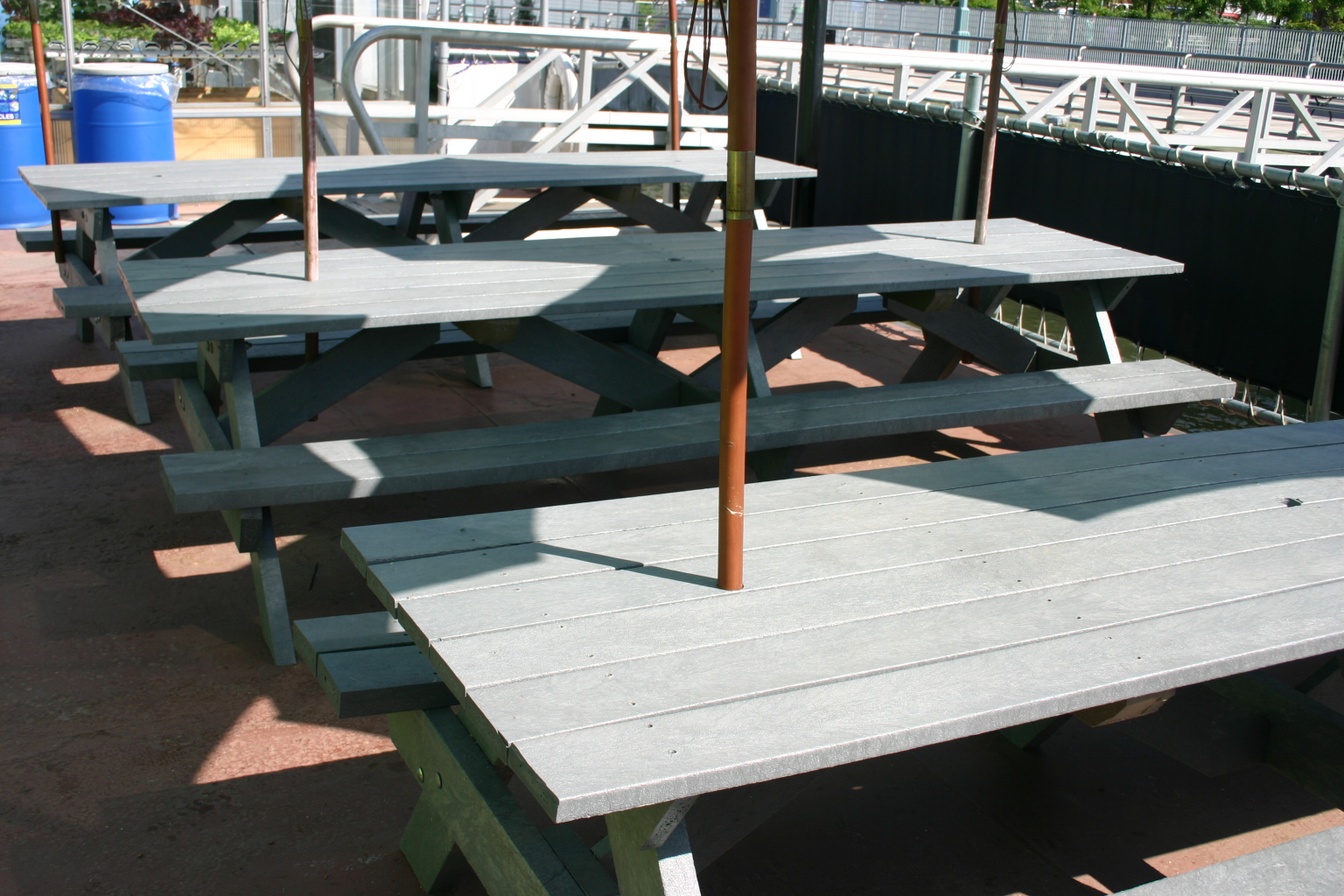
One of the most notable success stories in recycling is that of structural plastic lumber.   The material is mostly polyethylene reinforced with stiff plastics or recycled composites.   Made from milk containers, coffee cups, and other recycled plastics, structural plastic lumber is lighter than steel, longer-lasting than natural lumber and strong enough to support 120-ton locomotives.

[Read more…] about Recycled Plastic Lumber

Go With The Flow

February 24, 2016 By WAMC WEB

https://earthwiseradio.org/wp-content/uploads/2016/02/EW-02-24-16-Go-With-The-Flow.mp3

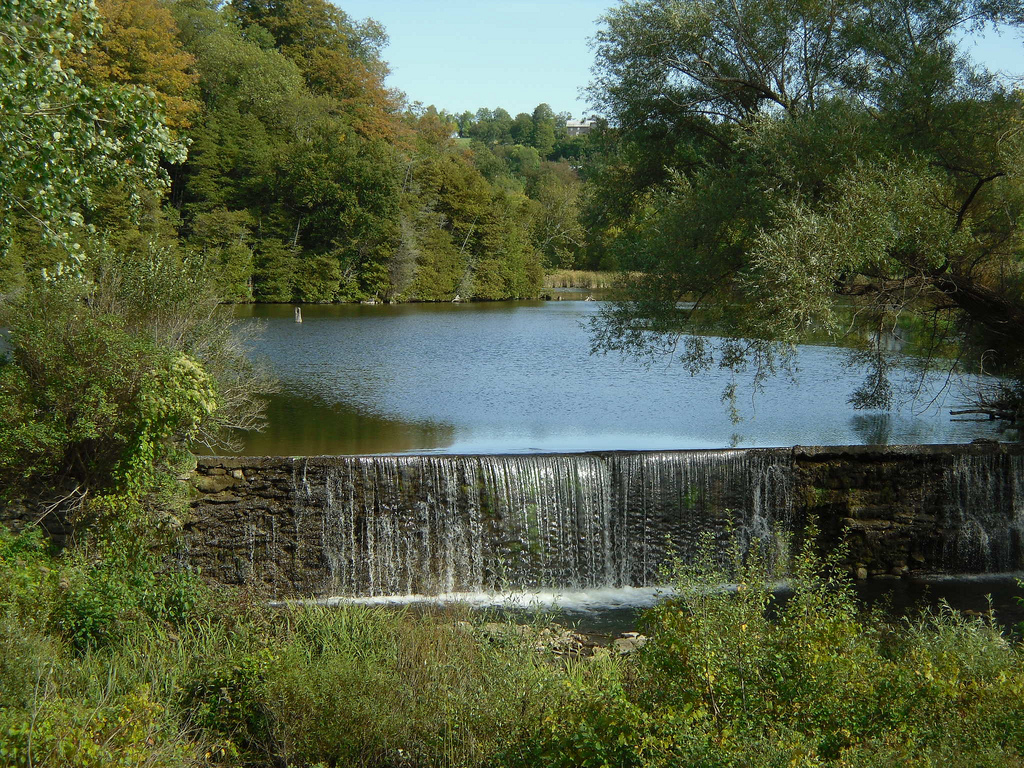
Have you ever wondered what happens when a fish encounters a dam or a culvert? Too often, these structures are barriers to breeding and nursery sites, feeding grounds, and vital genetic mixing. In a warming world, barriers also prevent fish from seeking refuge as stream temperatures change.

[Read more…] about Go With The Flow

De-Icing Roadways

February 9, 2016 By WAMC WEB

https://earthwiseradio.org/wp-content/uploads/2016/02/EW-02-09-16-De-Icing-Roadways.mp3

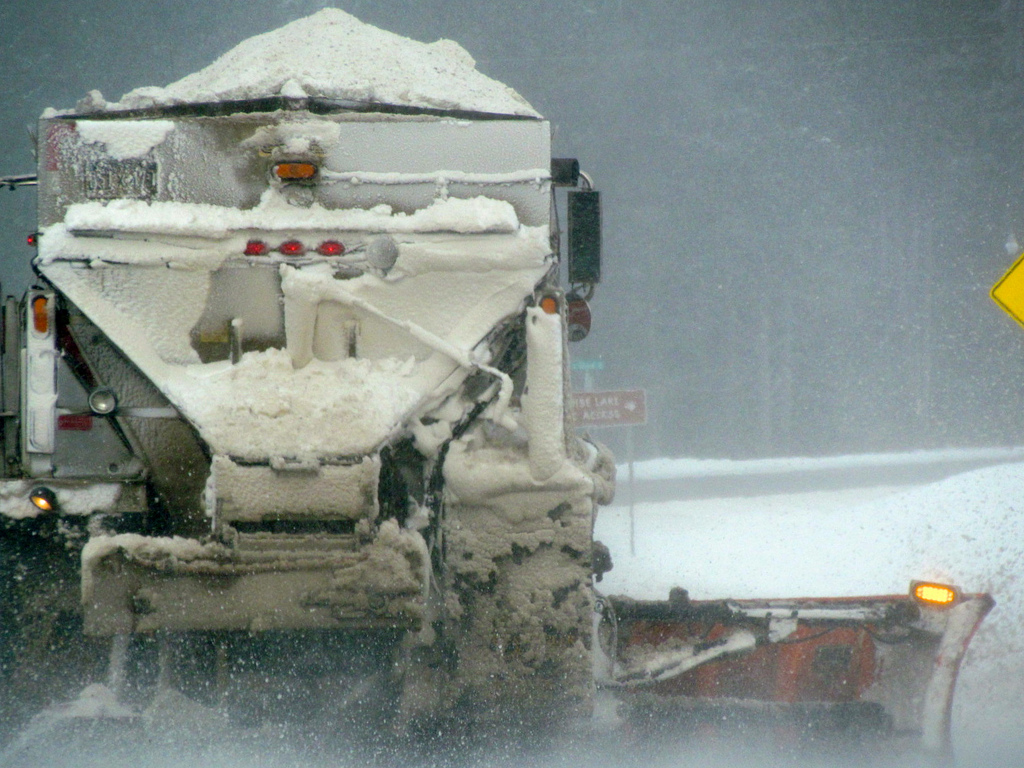
We have been using salt to keep winter roads free of ice and snow since the late 1930s.  In the United States alone, some 20 million tons of salt are applied to roadways each year.  And while its use has real benefits in terms of safety and navigation, there have been cumulative costs to the environment, including degrading freshwater resources and contaminating groundwater. 

[Read more…] about De-Icing Roadways

Road Salt

January 19, 2016 By WAMC WEB

https://earthwiseradio.org/wp-content/uploads/2016/01/EW-01-19-16-Road-Salt.mp3

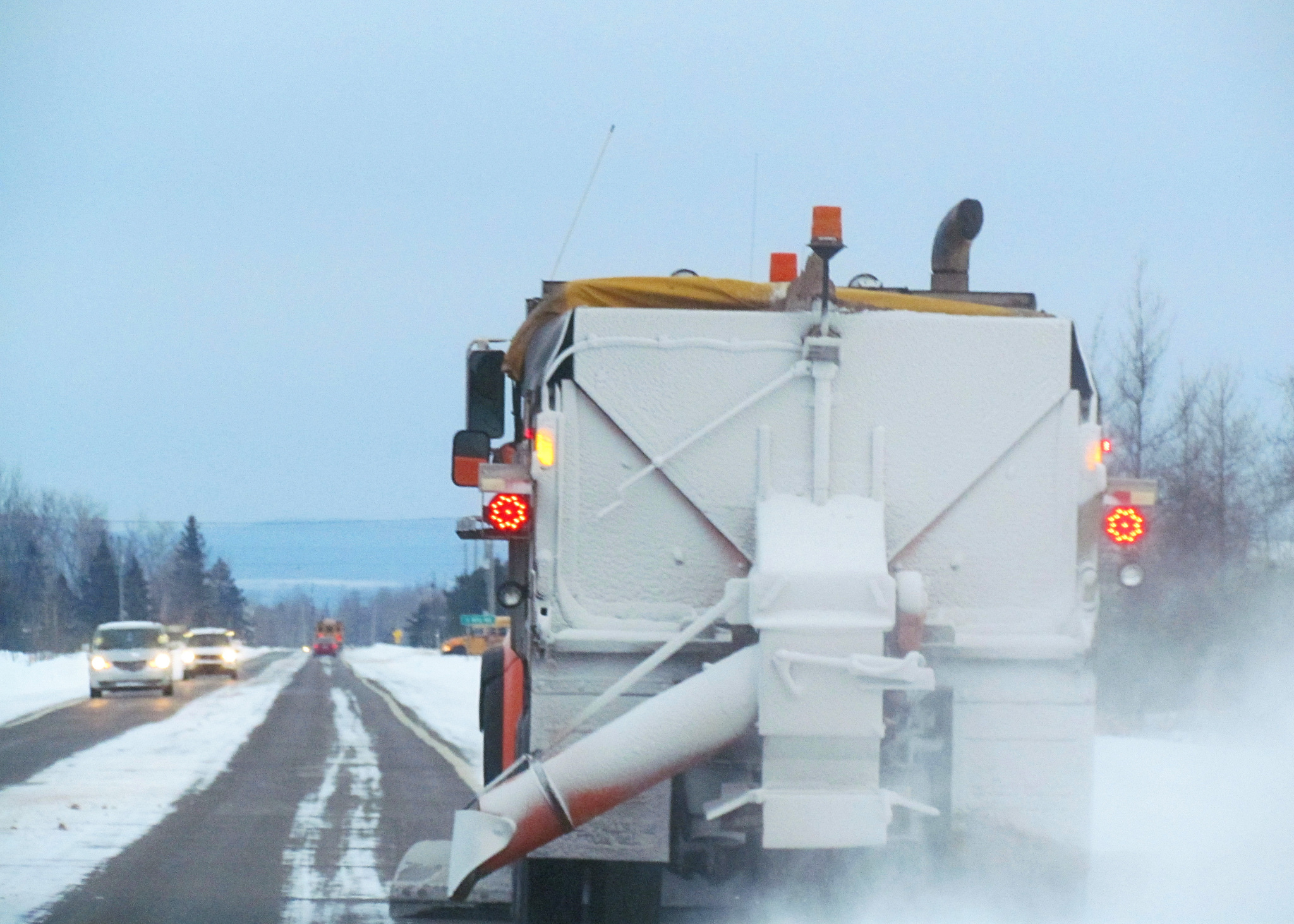
Snow season is here.  The chances are good you’ll find yourself behind a truck spreading salt on the roads in an attempt to deice them. You may even try a little salt on your own front porch. Annually we spread about 20 million tons of road salt in the U.S., and we’ve been doing it since the late 1930s.

[Read more…] about Road Salt

Primary Sidebar

Recent Episodes

  • An uninsurable future
  • Clean energy and jobs
  • Insect declines in remote regions
  • Fossil fuel producing nations ignoring climate goals
  • Trouble for clownfishes

WAMC Northeast Public Radio

WAMC/Northeast Public Radio is a regional public radio network serving parts of seven northeastern states (more...)

Copyright © 2026 ·