• Skip to primary navigation
  • Skip to main content
  • Skip to primary sidebar

Earth Wise

A look at our changing environment.

  • Home
  • About Earth Wise
  • Where to Listen
  • All Articles
  • Show Search
Hide Search
You are here: Home / Archives for branches

branches

Beavers Are Flooding The Warming Arctic | Earth Wise

March 14, 2022 By EarthWise Leave a Comment

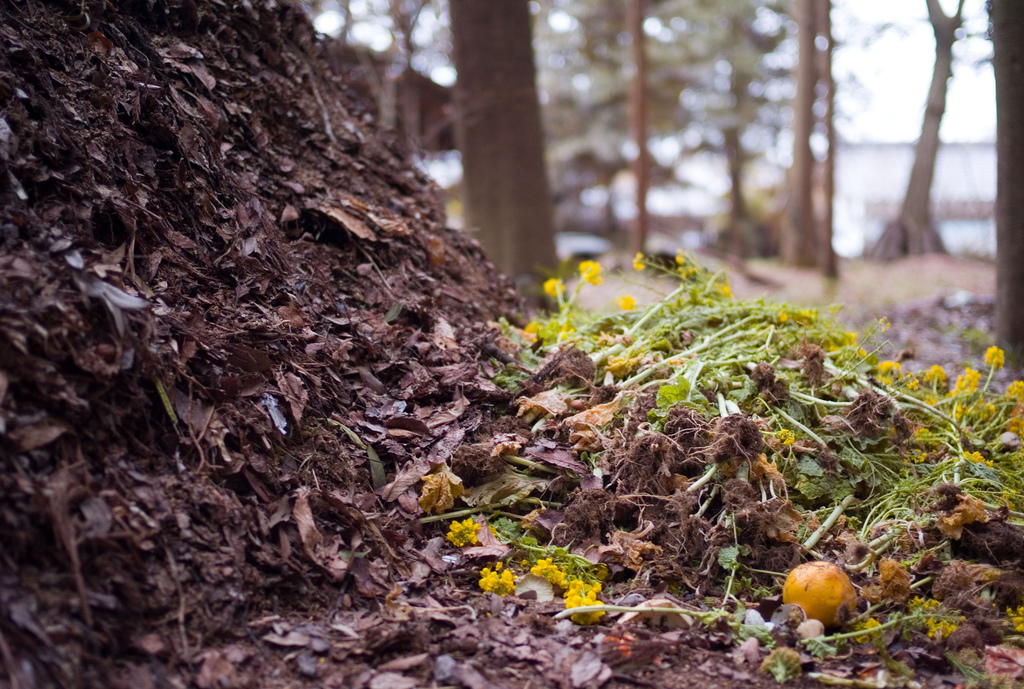
Beavers are flooding the warming Arctic

The accelerating warming in the Arctic has transformed the region into a warmer, wetter, and more diverse environment.  Warming temperatures have encouraged the increasing growth of vegetation, particularly shrubs that provide beavers with bark to eat and branches to build with.  Warming temperatures also mean that lakes and streams freeze solid for shorter periods of time or not at all, allowing beavers to pursue their construction projects for longer periods during the year.

Prior to the mid-1970s, residents of the Alaskan Arctic encountered few beaver ponds.  In 2018, researchers using satellite imagery mapped 12,000 beaver ponds in Alaskan tundra.

Beavers are causing major changes in the streams and floodplains that many small Alaskan villages depend upon for food, water, and navigation.  As the rodents transform lowland tundra ecosystems, they are eliminating food sources, deteriorating water quality, and making it difficult to navigate waterways.

The migration of beavers across the Arctic landscape is largely a result of climate change.  But it is also becoming one of the factors amplifying climate change.  Scientists are trying to figure out the degree of permafrost thawing that beaver dam-and-den building is causing and how fast these defrosted organic soils will degrade and release trapped carbon and methane.

Beaver dams alter the hydrology of streams by slowing the flow, storing and spreading water to create wetlands, raising the water table, and lowering the oxygen content of the water. 

Climate-driven changes in species distributions affect human well-being as entire ecosystems continue to change.  Shifts in animal habitat stimulated by climate change could have profound consequences across the globe.

**********

Web Links

Beavers Are Flooding the Warming Alaskan Arctic, Threatening Fish, Water and Indigenous Traditions

Photo, posted June 12, 2018, courtesy of Peter Pearsall/USFWS via Flickr.

Earth Wise is a production of WAMC Northeast Public Radio.
Forests And Climate Change | Earth Wise

June 17, 2021 By EarthWise Leave a Comment

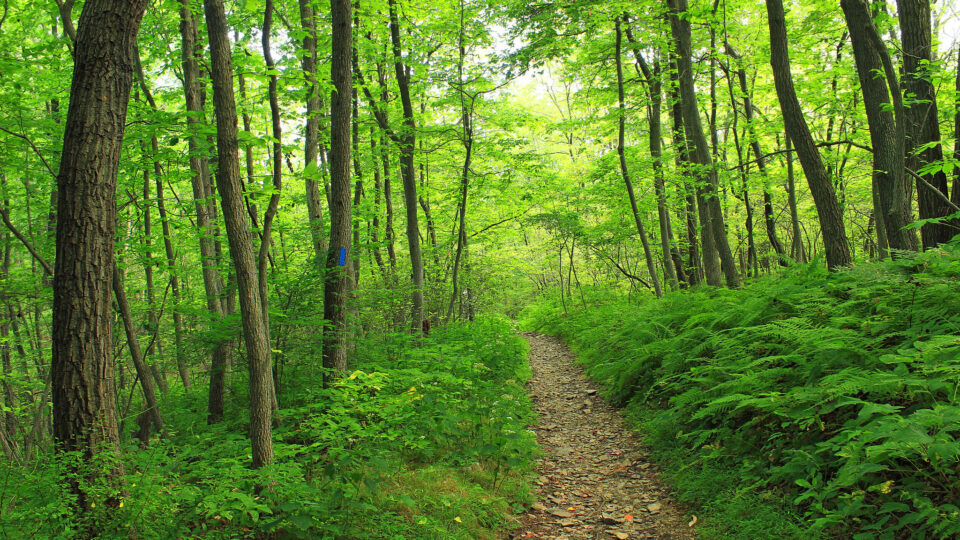
Planting new trees is not enough to mitigate climate change

A carbon sink is anything that absorbs more carbon from the atmosphere than it releases.  Examples of carbon sinks include the ocean, soil, and plants.  In contrast, a carbon source is anything that releases more carbon into the atmosphere than it absorbs.  Volcanic eruptions and burning fossil fuels are two examples.

Forests are among the most important carbon sinks.  Trees remove carbon from the air and store it in their trunks, branches, and leaves, and transfer some of it into the soil.  But in many regions, deforestation, forest degradation, and the impacts of climate change are weakening these carbon sinks. As a result, some climate activists advocate for large-scale tree-planting campaigns as a way to remove heat-trapping CO2 from the atmosphere and help mitigate climate change. 

But according to a new study recently published in the journal Science, planting new trees as a substitute for the direct reduction of greenhouse gas emissions could be a pipe dream.  While planting trees is easy, inexpensive, and can help slow climate warming, the ongoing warming would be simultaneously causing the loss of other trees.  Instead, the research team says it makes more sense to focus on keeping existing forests healthy so they can continue to act as carbon sinks, and to reduce emissions as much as possible and as quickly as possible.        

But keeping forests healthy will require a paradigm shift in forest management.  Instead of trying to maintain forests as they were in the 20th century, the research team says forests need to be managed proactively for the changes that can be anticipated. 

One thing is clear: We cannot plant our way out of the climate crisis.

**********

Web Links

Forests and climate change: ‘We can’t plant our way out of the climate crisis’

Photo, posted August 9, 2015, courtesy of Nicholas A. Tonelli via Flickr.

Earth Wise is a production of WAMC Northeast Public Radio.
A High-Tech Fire Alarm | Earth Wise

July 23, 2020 By EarthWise Leave a Comment

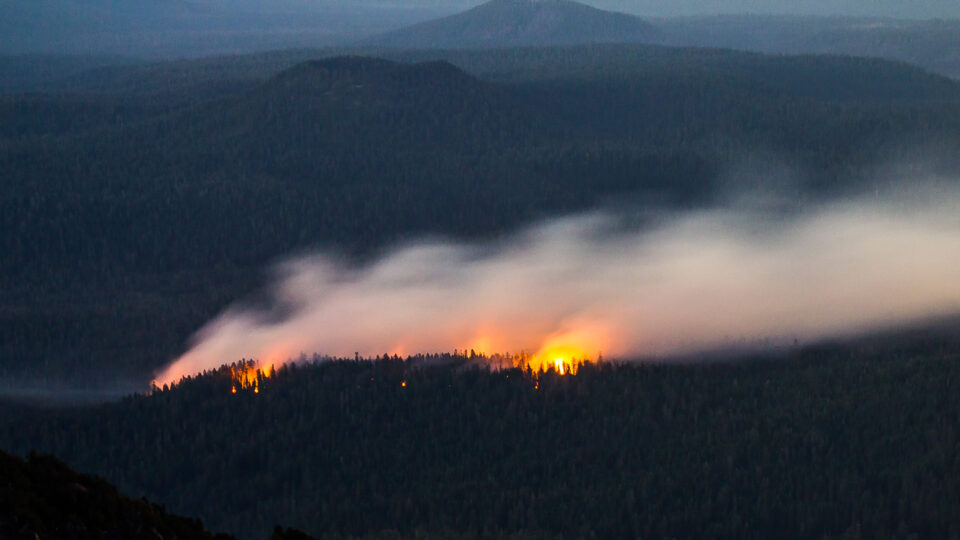
In recent years, wildfires have been a global problem, notably in California, Brazil, and Australia.  It has become increasingly important to be able to respond to new fires as soon and as quickly as possible.  Such response can make the task of extinguishing them easier, thereby reducing the amount of damage and the loss of property and life.

Traditional methods for detecting forest fires include satellite monitoring, ground patrols, and watch towers, all of which have high labor and financial costs but suffer from low efficiency.  Remote sensing technologies are becoming increasingly common but rely on batteries for power, requiring servicing in remote locations to replace depleted batteries.  Solar cells represent an alternative to batteries, but it is challenging to use them in forests because of shading and foliage coverage.

A team of researchers at Michigan State University has developed a remote forest fire detection and alarm system powered by nothing more than the movement of tree limbs in the wind.  The device is known as an MC-TENG, which is an acronym for multilayered cylindrical triboelectric nanogenerator.  The triboelectric effect is a phenomenon where certain materials become electrically charged when they separate from a second material with which they were previously in contact.  In the new device, two cylindrical sleeves fit within one another – one anchored and the other free to slide.  The device is tied to a tree branch and when the branch sporadically moves in the wind, electricity is generated and stored in a carbon-nanotube-based micro supercapacitor.  This powers a sensing system that can continuously monitor environmental conditions without requiring any maintenance.

A combination of carbon monoxide and temperature sensors provides a high-tech fire alarm that can operate continuously in the most remote forest.

**********

Web Links

Self-Powered Alarm Fights Forest Fires, Monitors Environment

Photo, posted August 3, 2012, courtesy of Lukas Schlagenhauf via Flickr.

Earth Wise is a production of WAMC Northeast Public Radio.
Carbon And Heating Soil

November 22, 2017 By EarthWise 1 Comment

https://earthwiseradio.org/wp-content/uploads/2017/11/EW-11-22-17-Carbon-and-Heating-Soil.mp3

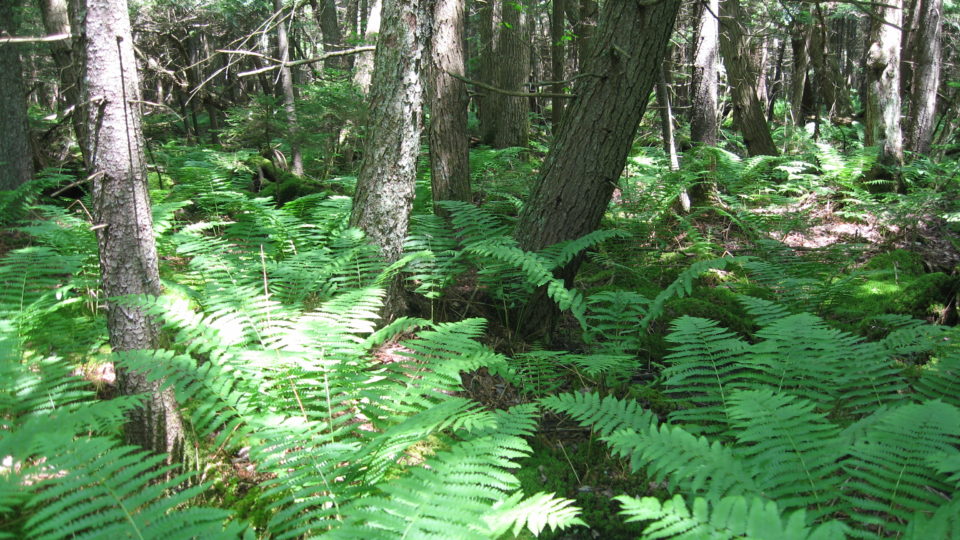
Plants are a critical part of the Earth’s carbon cycle.   They take in carbon dioxide during photosynthesis.   Eventually, dead leaves, branches and other materials fall to the ground where bacteria and fungi decompose the materials and release the CO2 back into the atmosphere.  This carbon-soil feedback loop is a complicated one that is critical to the overall carbon balance because soils actually contain two to three times more carbon than the atmosphere.

[Read more…] about Carbon And Heating Soil

Composting Pays

January 5, 2016 By WAMC WEB

https://earthwiseradio.org/wp-content/uploads/2015/12/EW-01-05-16-Composting-Pays.mp3

Many people compost their food scraps and yard waste because they think it is the right thing to do.  In some places, like San Francisco and Seattle, there is curbside pickup available to have these organic materials composted.

[Read more…] about Composting Pays

Primary Sidebar

Recent Episodes

  • An uninsurable future
  • Clean energy and jobs
  • Insect declines in remote regions
  • Fossil fuel producing nations ignoring climate goals
  • Trouble for clownfishes

WAMC Northeast Public Radio

WAMC/Northeast Public Radio is a regional public radio network serving parts of seven northeastern states (more...)

Copyright © 2025 ·