• Skip to primary navigation
  • Skip to main content
  • Skip to primary sidebar

Earth Wise

A look at our changing environment.

  • Home
  • About Earth Wise
  • Where to Listen
  • All Articles
  • Show Search
Hide Search
You are here: Home / Archives for billions

billions

Facemask pollution

August 28, 2025 By EarthWise Leave a Comment

During the height of the Covid-19 pandemic, the global usage of disposable facemasks reached a staggering 129 billion per month. Most of these masks are manufactured from petroleum-based non-renewable plastics like polypropylene and the disposal of these masks results in serious pollution problems.  These include the loss of ecological integrity from buried waste in landfills, air pollution from increased waste incineration, and microplastic pollution. 

Recent research by engineers at Washington University in St. Louis investigated the multipronged pollution problem brought about by discarded facemasks.  The study in particular looked at the chemical changes that occur when facemasks are exposed to sunlight, water, and trace metal ions.

Masks littering the environment degrade into nanoplastics and produce reactive oxygen species.  These chemical agents interact with trace metal ions in the environment within hours.  The result is oxides of metals like manganese and iron, which can drive various biogeochemical reactions.

Abandoning and forgetting about plastics like facemasks is an unsustainable practice.  Plastics not only cause physical damage, but also introduce unpredictable and potentially dangerous chemical changes into environmental systems.

Plastic waste is a global problem that has continued to grow and become an increasingly serious threat over decades.  Understanding the nature of the effects of billions of facemasks in the environment is essential to efforts to address the challenges created by them.

**********

Web Links

Sun exposure changes chemical fate of littered face masks

Photo, posted August 21, 2021, courtesy of Ivan Radic via Flickr.

Earth Wise is a production of WAMC Northeast Public Radio

The cicadas are coming

June 18, 2025 By EarthWise Leave a Comment

After hiding underground for the last 17 years, billions of cicadas are taking to the skies this summer.  This batch of insects, known as Brood XIV, will cover more of the U.S. than any other 17-year brood.  New York and at least 13 other states – Georgia, Kentucky, Maryland, Massachusetts, New Jersey, North Carolina, Ohio, Pennsylvania, South Carolina, Tennessee, Virginia, West Virginia, and parts of Indiana are being serenaded by the sound of cicadas in May and June.

There are 15 broods of periodical cicadas that emerge every 13 or 17 years.  They come out when soil temperatures reach 64 degrees.  Around the world there are annual cicadas while periodical cicadas can only be found in the eastern United States.

Once the insects emerge, they will issue their noisy, chirping mating calls for just a few weeks before they lay eggs and die.  The offspring from the eggs will burrow underground and remain dormant or in the nymph stage feeding on tree roots for another 17 years.  Surfacing in vast numbers is a way to overwhelm predators and ensure that at least some cicadas survive to reproduce. 

The emergence of these insects provides a bounty of food to squirrels, lizards, birds, and other creatures.  A study found that once cicadas emerge, the population of cuckoos, blue jays, and red-bellied woodpeckers grows.

As the climate changes, the timing of cicada cycles may also change.  Warmer weather will lead to cicadas emerging earlier in the year.  Eventually, even the time they spend underground may shorten.

**********

Web Links

After 17 Years Underground, Massive Cicada Brood to Swarm U.S.

Photo, posted July 16, 2017, courtesy of Renee Grayson via Flickr.

Earth Wise is a production of WAMC Northeast Public Radio
Climate change lawsuits

May 7, 2024 By EarthWise Leave a Comment

For the better part of a decade, there have been lawsuits against fossil fuel companies for their actions related to climate change.  The Center for Climate Integrity, a nonprofit that provides legal support to communities suing oil companies, has tracked 32 cases filed by state attorneys general, cities, counties, and tribal nations against companies including Exxon Mobil, BP, and Shell.

There has been extensive news reporting about oil companies’ efforts to undermine the scientific consensus about the climate as well as revelations about oil companies hiding their own research over decades projecting the dangers of climate change.

Oil companies have long sought to shut down the lawsuits or move them from the state courts where they were filed to federal courts where they believe national regulations could override local governments’ claims against them.  But a string of circuit court and U.S. Supreme Court decisions have ruled that the cases alleging violations of state laws do belong in state courts. 

The first case to reach trial will likely be a Massachusetts case against Exxon Mobil and that could happen as soon as next year.

What do these lawsuits seek?  Some seek to force oil companies to pay for the past and future damages caused by climate change that are costing states and communities billions of dollars.  Others seek to stop defendants from making false and misleading statements about the effects of burning fossil fuels, from greenwashing their own activities, and to fund corrective education campaigns.

The first trials could lead to a tidal wave of new cases, similar to what happened in the 1990s when tobacco companies were forced to pay billions of dollars under legal settlements.

**********

Web Links

After a long slog, climate change lawsuits will finally put Big Oil on trial

Photo, posted August 18, 2021, courtesy of Chad Davis via Flickr.

Earth Wise is a production of WAMC Northeast Public Radio
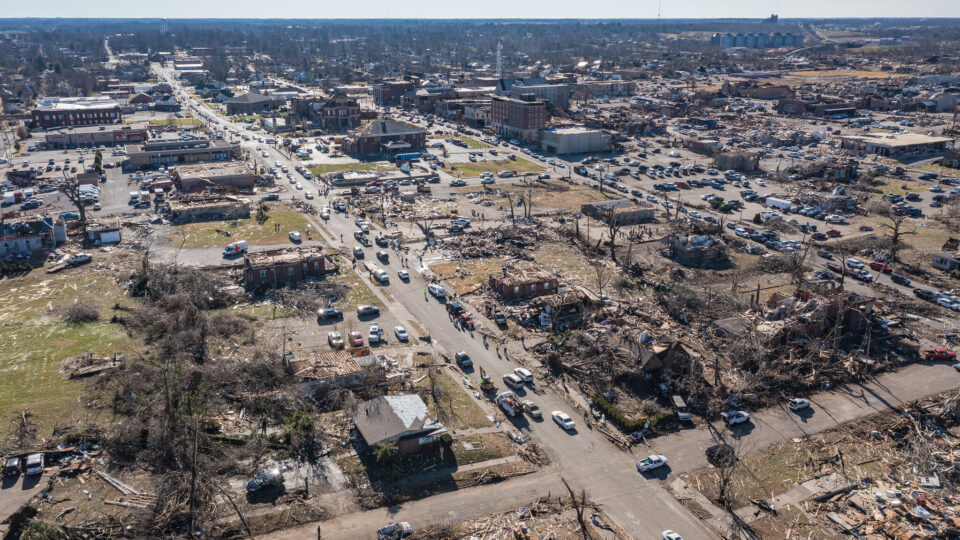
Climate-Related Disasters | Earth Wise

January 27, 2022 By EarthWise Leave a Comment

Preparing communities for climate-related disasters

In early December, a series of tornadoes struck multiple states, killing nearly 100 people and producing widespread damage in whole communities.  These storms were at least the 19th weather or climate disaster that caused more than $1 billion in damage during 2021.  The year suffered from droughts, wildfires, severe cold snaps, hurricanes, and other severe weather incidents.

The Wharton Risk Management and Decision Processes Center at the University of Pennsylvania has been studying how communities can prepare for and bounce back from such disasters.

A key issue is that the location and timing of disasters continues to shift.  Homeowners along the Gulf and Atlantic coasts know that they need to prepare for and deal with hurricanes.  People who live in places like Oklahoma and Kansas are aware that tornadoes are a frequent threat.  But in recent years, strong storms are happening in areas where historically they haven’t.

Places need to start implementing changes to their infrastructure now in order to have an impact on risk reduction.

Presidential disaster declarations are just one part of recovery from disasters.  Other issues to grapple with are the role of government support and how it isn’t just the financial costs of disaster recovery but all the impact on human and other resources that are often not covered by governmental funds.  There is also the issue that low- and moderate-income households are disproportionately harmed and locked out of financial resources for recovery.

The Wharton study points out that innovative approaches will be needed to effectively prepare communities and individuals for disasters to come. 

**********

Web Links

Preparing, and paying for, climate change-induced disasters

Photo, posted December 12, 2021, courtesy of State Farm via Flickr.

Earth Wise is a production of WAMC Northeast Public Radio.

Electrifying The Federal Fleet | Earth Wise

October 7, 2021 By EarthWise Leave a Comment

Accelerating the electrification of the federal fleet could save billions of dollars

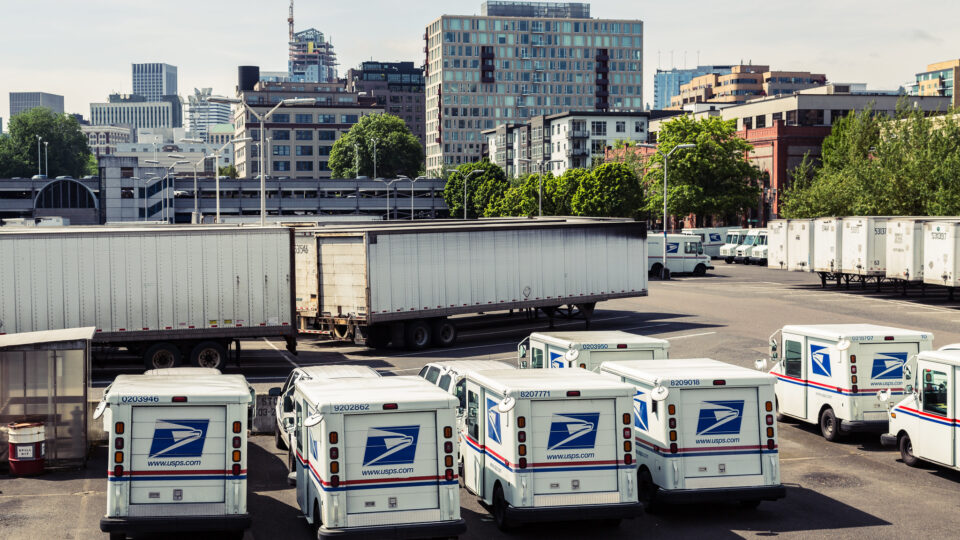
The federal government owns and operates about 645,000 vehicles.  Among them are about 200,000 passenger vehicles, 78,000 heavy-duty trucks, 47,000 vans, 847 ambulances, and three limousines.   About 225,000 vehicles are operated by the Postal Service.  

Each year, these vehicles are driven about 4.5 billion miles and use about 400 million gallons of gasoline, producing 3.5 million tons of greenhouse gases.

President Biden signed an executive order in January directing federal officials to devise a plan for converting the entire fleet to clean and zero-emission vehicles.  So far, the work has been slow. 

According to a new report from Atlas Public Policy, accelerating the push for electric vehicles in the federal fleet could save taxpayers billions of dollars.

Electric vehicles have lower fueling and maintenance costs as well as a smaller environmental impact.  According to the report, the government could replace 40% of its light-duty vehicles and buses not owned by the Postal Service with cheaper plug-in alternatives by 2025.  By 2030, it could replace 97% of such vehicles with EVs for a lifetime savings of more than $1 billion.  Furthermore, by 2025, it would be possible to replace nearly all mail trucks with EVs for a savings of $2.9 billion.

The federal fleet represents an opportunity to encourage transportation electrification to happen much more quickly.  Apart from the economic and environmental benefits, having an electrified federal fleet would increase public awareness of the practicality and benefits of electric vehicles.

**********

Web Links

Push to Electrify Federal Fleet Could Yield Billions in Savings by 2030

Photo, posted May 14, 2015, courtesy of Tony Webster via Flickr.

Earth Wise is a production of WAMC Northeast Public Radio.

Wild Pigs And The Environment | Earth Wise

September 3, 2021 By EarthWise Leave a Comment

Wild pigs cause significant climate damage all around the globe

There are millions of wild pigs in the world with the largest numbers in the United States and Australia but significant numbers in South America, Europe, and China.  In the US, there are as many as 9 million feral swine living in 38 states.  A conservative estimate indicates that they cause about $1.5 billion in property and agricultural damage each year in this country.

Researchers in Australia have studied the climate damage wild pigs are causing across five continents.  According to the study, by uprooting carbon trapped in soil, wild pigs are releasing over 5 million tons of carbon dioxide annually, which is the equivalent of 1.1 million cars.

When soils are disturbed from humans plowing a field, or from wild animals uprooting, carbon is released into the atmosphere.  According to the researchers, wild pigs are just like tractors plowing through fields, turning over soil to find food.

The study used predictive population models coupled with advanced mapping techniques to pinpoint the damage wild pigs are causing.  According to the models, pigs are currently uprooting an area between 14,000 and 47,000 square miles, which is an enormous amount of land.  The effects are not just on the health of the soil and on carbon emissions.  This much damage also threatens biodiversity and food security.

Wild pigs are basically a human-caused problem, being either feral descendants of domestic swine, or hybrids of domestic swine and wild boars.  Wild pigs are prolific and their numbers have been expanding rapidly  Controlling their populations will require cooperation and collaboration across multiple jurisdictions.

**********

Web Links

The climate impact of wild pigs greater than a million cars

Photo, posted July 1, 2017, courtesy of Shiva Shenoy via Flickr.

Earth Wise is a production of WAMC Northeast Public Radio.

Drilling Rights In The Arctic National Wildlife Refuge | Earth Wise

February 2, 2021 By EarthWise Leave a Comment

Arctic drilling plans fall through

The battle to prevent oil and gas drilling rights from being sold in the Arctic National Wildlife Refuge in Alaska has been going on for 40 years.  The Trump administration spent nearly four years pushing to auction off those drilling rights and finally accomplished it in early January.

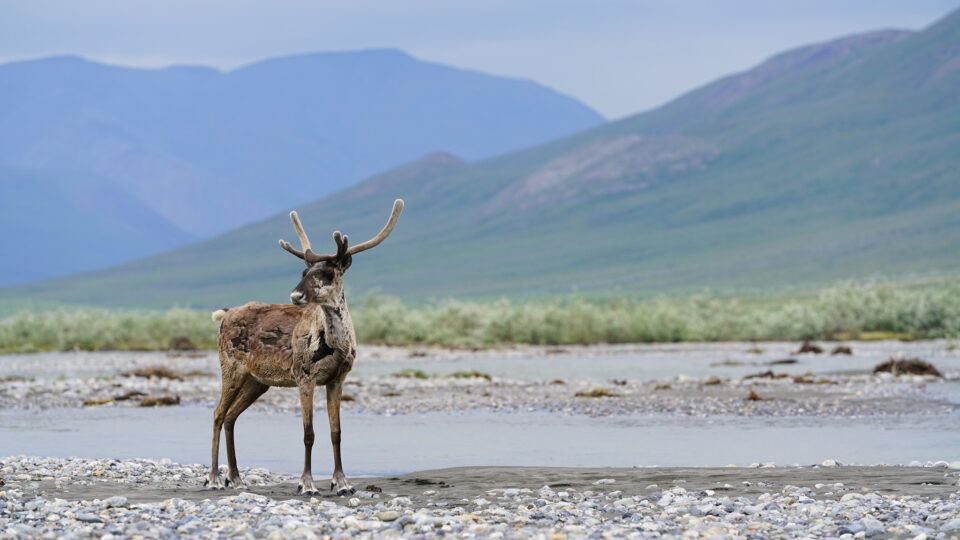
The ANWR was created in 1960 and is the largest intact wilderness in the U.S., covering nearly 30,000 square miles in Alaska.  It is an important breeding habitat for polar bears as well as the home of more than 200 other species including caribou, arctic foxes, golden eagles, and snowy owls.  Parts of it are also sacred ground for the indigenous Gwich’in people.

The auction carved out a 5% slice of the refuge for leases and proponents anticipated it would generate billions of dollars in revenues that would offset tax cuts in Alaska.

Of the 22 parcels of land offered, totaling 1.1 million acres, only 12 were bid on at all and the state of Alaska was the sole bidder on 9 of those.  In total, the auction raised a paltry $14 million. 

Whether the remarkable absence of interest was due to a lack of infrastructure or roads around the region, the decline of fossil fuel investments and use during the pandemic, or the anticipation that any leases would be the subject of endless legal battles by indigenous tribes and environmental activists, the net result was that the auction was basically a flop.

President Biden has stated that he is entirely against Arctic drilling, so the new administration is likely to try to repeal or interfere with any drilling leases or other industrial activity in the ANWR. 

**********

Web Links

Arctic Oil Drilling Plans Suffer ‘Stunning Setback’ as Almost ‘No One Shows Up’ For the Sale

Photo, posted July 3, 2019, courtesy of Alaska Region U.S. Fish and Wildlife Service via Flickr. Photo Credit: Danielle Brigida/ USFWS

Earth Wise is a production of WAMC Northeast Public Radio.

Plant-Based Bottles | Earth Wise

June 30, 2020 By EarthWise Leave a Comment

Single-use plastic soda and water bottles are a real problem.  Every year, billions of them are produced – comprising nearly 300 million tons of plastic that mostly ends up in landfills or in the ocean.   This discarded plastic ends up on remote islands, in the snow atop mountains, and in trenches in the deepest parts of ocean.

There has been increasing pressure on beverage companies to put an end to this environmental disaster, but the convenience and economy of disposable bottles is just too attractive.

These bottles are made of plastic derived from oil and once they are produced, they take decades or even centuries to decompose.  Recycling them is a not-starter because it is cheaper to just make new ones.

A possible solution has emerged.  A Dutch company called Avantium has found a way to take plant sugars and transform them into a plastic capable of standing up to carbonated beverages like soda and beer but that will also break down in as little as a year in a composter or 3 years if left exposed to the elements.

Coca Cola and Carlsberg are working with Avantium to develop new drink packaging based on their material that could be in stores as soon as 2023.  The new packaging would be quite different from what we use today.  Instead of a clear or tinted bottle, beverages would come inside a cardboard container with a liner made of plant-based plastic.

It may take a while for people to get used to the change, but we have already managed to get used to milk, juice and other liquids coming in cardboard containers instead of glass or plastic bottles.  The benefits to the planet would make the effort well worthwhile.

**********

Web Links

Plant-Based Bottles Could Degrade In One Year

Photo courtesy of Avantium.

Earth Wise is a production of WAMC Northeast Public Radio.

The Second Hottest Year On Record

January 29, 2016 By WAMC WEB

https://earthwiseradio.org/wp-content/uploads/2016/01/EW-01-29-16-Warm-2015.mp3

According to the National Oceanic and Atmospheric Administration – or NOAA – 2015 was the second hottest year ever recorded in the contiguous United States.

[Read more…] about The Second Hottest Year On Record

Primary Sidebar

Recent Episodes

  • An uninsurable future
  • Clean energy and jobs
  • Insect declines in remote regions
  • Fossil fuel producing nations ignoring climate goals
  • Trouble for clownfishes

WAMC Northeast Public Radio

WAMC/Northeast Public Radio is a regional public radio network serving parts of seven northeastern states (more...)

Copyright © 2025 ·