• Skip to primary navigation
  • Skip to main content
  • Skip to primary sidebar

Earth Wise

A look at our changing environment.

  • Home
  • About Earth Wise
  • Where to Listen
  • All Articles
  • Show Search
Hide Search
You are here: Home / Archives for better

better

Better blue LEDs

August 27, 2025 By EarthWise Leave a Comment

Developing better blue LEDs

LEDs have become the standard source of energy-efficient lighting.  They make use of semiconductors to turn electricity into light.  Depending upon the materials used to make them, LEDs produce different colors.  In the early 1990s, the first blue LEDs were discovered, ultimately earning the Nobel Prize in physics, and enabling LEDs to produce white light, which is essential for general lighting applications.

Blue LEDs have shortcomings.  Some have issues with stability, scalability, cost, efficiency, complexity in manufacturing, or have environmental concerns because of the use of toxic components. 

Researchers at Rutgers University in collaboration with scientists at several other institutions have found a way to make blue LEDs more efficient and sustainable.  These LEDs use a new type of hybrid material that is a combination of copper iodide with organic molecules.  The impressive performance of these LEDs was achieved through an innovative technique called dual interfacial hydrogen-bond passivation.  This new manufacturing technique boosts the performance of LEDs by a factor of four.

The material has several advantages.  It has a very high photoluminescence quantum yield, which means that it converts nearly all the photoenergy it receives into blue light.  The LEDs last longer than many others and they work well in larger-scale applications, maintaining high efficiency.  The materials are eco-friendly and cost-effective.

According to the researchers, this new approach could be a versatile strategy for generating high-performance LEDs that can pave the way for better, brighter, and longer-lasting LEDs.

**********

Web Links

Scientists Develop Deep-Blue LEDs Expected to Greatly Enhance General Lighting

Photo, posted February 1, 2021, courtesy of Ivan Radic via Flickr.

Earth Wise is a production of WAMC Northeast Public Radio

Building better blackberries

June 6, 2025 By EarthWise Leave a Comment

The Human Genome Project is one of the greatest scientific feats in history.  It was launched in 1990 and completed in 2003.  The international group of researchers wanted to comprehensively study all of the DNA – the genome – from a select set of organisms, foremost of which being that of human beings.  The results accelerated the study of human biology and has led to improvements in the practice of medicine.

Every living thing – animal, plant, fungus, and various single-celled organisms – has a genome – a genetic blueprint.  A recent study by researchers at the University of Florida has done genome sequencing of blackberries with the hope of being able to achieve more efficient and targeted breeding.

Over the past 20 years, consumer demand for blackberries has increased leading to farmers growing more of the fruit in the United States.  The U.S. produces 37 million pounds of processed blackberries and almost 3 million pounds of fresh berries each year.

The Florida researchers made use of a large collection of DNA sequences to computationally piece together the entire genome of the blackberry variety in the study.  The genome study uncovered the secrets behind key traits that could lead to growing blackberry plants with no thorns and increasing the production of anthocyanin, which affects the color and health benefits of the fruit. 

For Florida, the southeastern United States and regions with similar climates, the genetic research holds the promise of accelerating the process to create blackberry varieties that are better suited to local growing conditions, enhancing both the yield and the quality of the increasingly popular fruit.

**********

Web Links

Decoding blackberry DNA: UF study paves way for enhanced breeding strategies

Photo, posted September 18, 2016, courtesy of Theo Crazzolara via Flickr.

Earth Wise is a production of WAMC Northeast Public Radio
A better way to produce green hydrogen

September 9, 2024 By EarthWise Leave a Comment

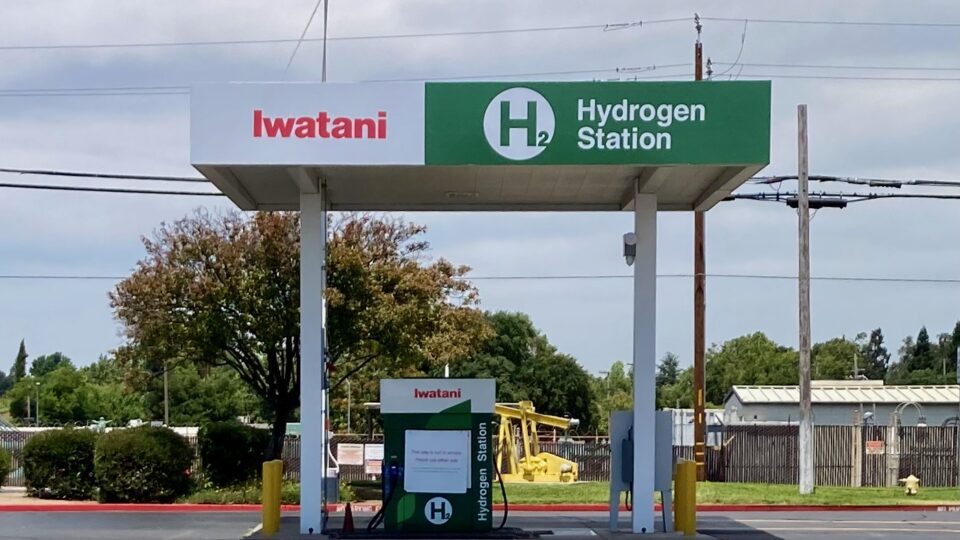
Hydrogen has great potential as a fuel and an energy carrier for many applications.  Burning it or consuming it in fuel cells does not produce carbon emissions.  As a result, there has long been the vision for a future hydrogen economy.  Whether the hydrogen economy would ever come about given how various other technologies have evolved over time is questionable.  But regardless, hydrogen is valuable for many industrial and commercial applications including the manufacture of ammonia and the refining of metals.

Hydrogen is produced in industrial quantities from natural gas by a carbon-dioxide-producing process known as methane-steam reforming.  To take its place as a green energy source, hydrogen needs to be produced by splitting water into its constituent oxygen and hydrogen components by the process of electrolysis. 

The problem is economic.  Methane-steam reforming produces hydrogen at a cost of about $1.50 per kilogram.  Green hydrogen costs about $5 a kilogram.

Researchers at Oregon State University have developed a new photocatalyst that enables the high-speed, high-efficiency production of hydrogen.  The material, called RTTA, is a metal organic framework containing ruthenium oxide and titanium oxide.  Ruthenium oxide is expensive, but very little is needed.  For industrial applications, if the catalyst shows good stability and reproducibility, the cost of the small amount of this exotic material becomes less important.

The photocatalyst, when exposed to sunlight, quickly and efficiently splits water yielding hydrogen.  The Oregon State discovery has real potential.

**********

Web Links

Oregon State University research uncovers better way to produce green hydrogen

Photo, posted July 7, 2023, courtesy of Bill Abbott via Flickr.

Earth Wise is a production of WAMC Northeast Public Radio
Sodium-ion batteries

January 31, 2024 By EarthWise Leave a Comment

The transition away from fossil fuels is driving a rapidly increasing need for batteries.  Both electric vehicles and energy storage for the electric grid are enormous consumers of batteries.  At present, lithium-ion batteries are almost universally used for these purposes.  They have been getting better all the time and cheaper all the time and are likely to be the answer for the foreseeable future.  But they are not perfect.

Lithium is only found in a relatively small number of places and mining and extracting it is fairly expensive and environmentally unfriendly.  Lithium-ion batteries also frequently contain cobalt, which has its own set of problems.  There are also safety issues related to the flammability of lithium-ion batteries. 

As a result, there continue to be numerous efforts to identify and develop alternative battery technologies.  One of these is sodium-ion batteries, which are similar in many ways to lithium-ion batteries but in which sodium replaces lithium as the cathode material.

Sodium is extremely common – it’s found in ordinary salt – and sodium-ion batteries have a high energy density and are easy to produce.  They should have a long lifetime and have a more benign environmental impact than lithium-ion.  Many companies and researchers are working on sodium-ion batteries and are making good progress.

A study by Chalmers University in Sweden looked at the potential for sodium-ion batteries and found that the batteries are particularly promising for use in energy storage even in their current state of development and could eventually be used in cars.  Whether sodium-ion batteries can be good enough and cheap enough quickly enough to give lithium-ion a run for its money remains to be seen.

**********

Web Links

Resource-efficient and climate-friendly with sodium-ion batteries

Photo, posted March 12, 2013, courtesy of Chris Hunkeler via Flickr.

Earth Wise is a production of WAMC Northeast Public Radio
Better Plastic Recycling | Earth Wise

September 14, 2023 By EarthWise Leave a Comment

Developing a better way to recycle plastics

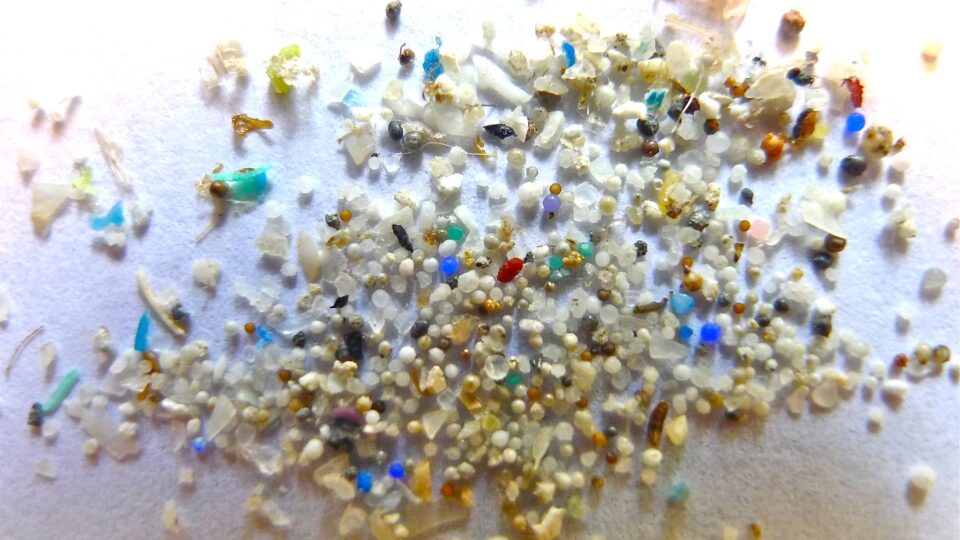
Many of us are careful to put our plastic trash into the appropriate recycling bins hoping that we are helping to stem the global tide of plastic waste.  But many plastics are not recyclable at all and recycling those that are is not even always a good thing.  Breaking down plastics can generate polluting microplastics that are themselves a major environmental problem.  And perhaps the biggest problem for recycling efforts is that they are not cost effective and generally incur huge losses.

Chemical engineers at the University of Wisconsin-Madison recently published a study in the journal Nature outlining a new technique for turning low-value waste plastic into high-value industrial chemicals. 

The technique makes use of two existing chemical processing techniques.  The first is pyrolysis, which is high-temperature heating in an oxygen-free environment.  Heating waste plastic in this way produces pyrolysis oil, a liquid mix of various compounds that includes large amounts of olefins.  Olefins are simple hydrocarbons that are a central building block of many chemicals and polymers.  Olefins are most often produced by energy-intensive processes like steam cracking of petroleum. 

The UW-Madison process takes the olefins and subjects them to a process called homogenous hydroformylation catalysis, which converts them into aldehydes, which can then be further reduced into important industrial chemicals. 

The payoff is that the process can take waste plastics, which are only worth about $100 a ton, and turn them into high-value chemicals worth $1,200-$6,000 a ton.  If the process can be optimized and otherwise made ready for industrial-scale use, it would be a real game-changer in the battle against plastic waste.

**********

Web Links

New recycling process could find markets for ‘junk’ plastic waste

Photo, posted September 16, 2015, courtesy of Oregon State University via Flickr.

Earth Wise is a production of WAMC Northeast Public Radio

Aluminum In Batteries | Earth Wise

September 1, 2023 By EarthWise 1 Comment

Researchers working on a new battery

Batteries are playing a bigger and bigger role in our lives.  Apart from their use in ubiquitous smartphones, laptops, and other devices, millions of electric vehicles are hitting the roads, and utilities are installing giant banks of batteries to store energy generated by wind and solar farms.

The necessary characteristics of batteries are high energy density and stability.  The latter is needed so that batteries can be safely and reliably recharged thousands of times.  For decades, lithium-ion batteries have been the go-to for all these modern battery applications.  And they have gradually gotten better and cheaper all the time.  But the improvements are getting smaller, and the price reductions have limits.

For these reasons, researchers are always looking for batteries with higher energy density – so that, for example, electric cars can drive farther on a charge – and that can be made more cheaply, are not flammable, and are very stable.

Since the 1970s, researchers have investigated the use of aluminum for the anode of batteries because its properties would allow more energy to be stored.  However, when used in lithium-ion batteries, aluminum developed fractures and failed after a few cycles.

Researchers at Georgia Tech University have developed a type of aluminum foil with small amounts of other materials that create specific microstructures.  Used in battery anodes, this material does not degrade and appears to be a path to a better battery.  When incorporated into a solid-state battery that does not contain the flammable liquid found in standard lithium-ion batteries, the result is a battery that checks most of the boxes in the search for a better battery.

Much more work is needed to assess the potential for the aluminum-based battery, but it looks very promising.

**********

Web Links

Aluminum Materials Show Promising Performance for Safer, Cheaper, More Powerful Batteries

Photo, posted August 27, 2019, courtesy of Marco Verch via Flickr.

Earth Wise is a production of WAMC Northeast Public Radio
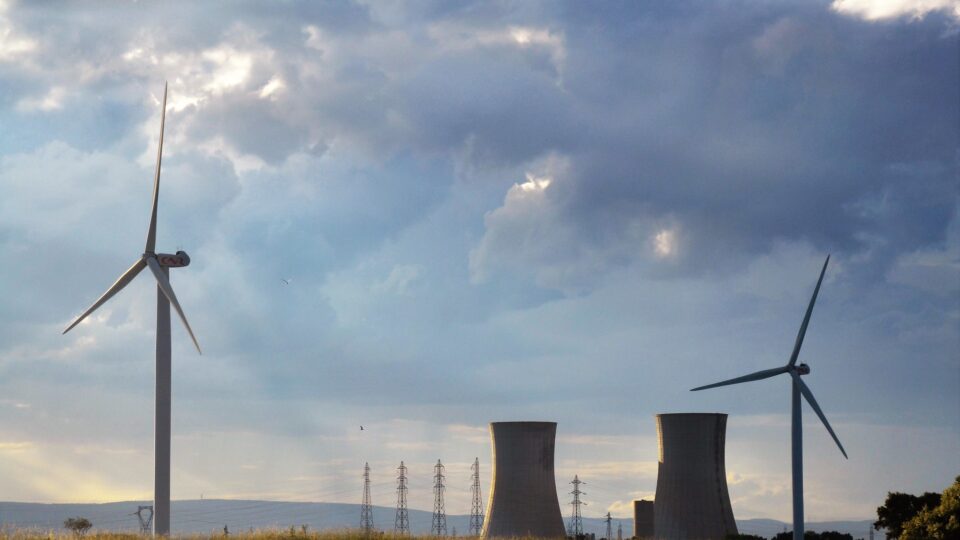
Better Zinc Batteries | Earth Wise

May 17, 2023 By EarthWise Leave a Comment

The rapid growth of wind and solar power continues to drive a global quest for new battery technologies that can be used to store the energy generated by these sources when the sun isn’t shining, and the wind isn’t blowing.

For the most part, current battery energy storage systems use lithium-ion batteries – the same sort of batteries found in cellphones and electric vehicles.  There are many other battery chemistries, but they mostly have shortcomings in performance, economy, or longevity. 

Batteries store electricity in the form of chemical energy and chemical reactions convert that energy into electrical energy. Every battery has two electrodes:  the anode, from which electrons flow into external circuits, and the cathode, which receives electrons from the external circuit.  The electrolyte is the chemical medium through which the electrons flow.

One technology that has great potential is zinc-based batteries.  Zinc itself is a metal that is safe and abundant.  Batteries based on it are energy dense. However, zinc batteries have faced the challenge of having a short cycle life.  The batteries end up plating zinc on their anodes and battery performance degrades. 

A team of researchers at Oregon State University and three other universities have recently developed a new electrolyte for zinc batteries that raises the efficiency of the zinc metal anode to nearly 100% – actually slightly better than lithium-ion batteries.

Zinc batteries have a number of potential advantages over lithium-ion.  The new hybrid electrolyte developed by the researchers is non-flammable, cost-effective, and has low environmental impact.  Lithium-ion batteries rely on the supplies of relatively rare metals that are often difficult and environmentally harmful to obtain. 

**********

Web Links

Researchers develop electrolyte enabling high efficiency of safe, sustainable zinc batteries

Photo, posted May 13, 2017, courtesy of Jeanne Menjoulet via Flickr.

Earth Wise is a production of WAMC Northeast Public Radio
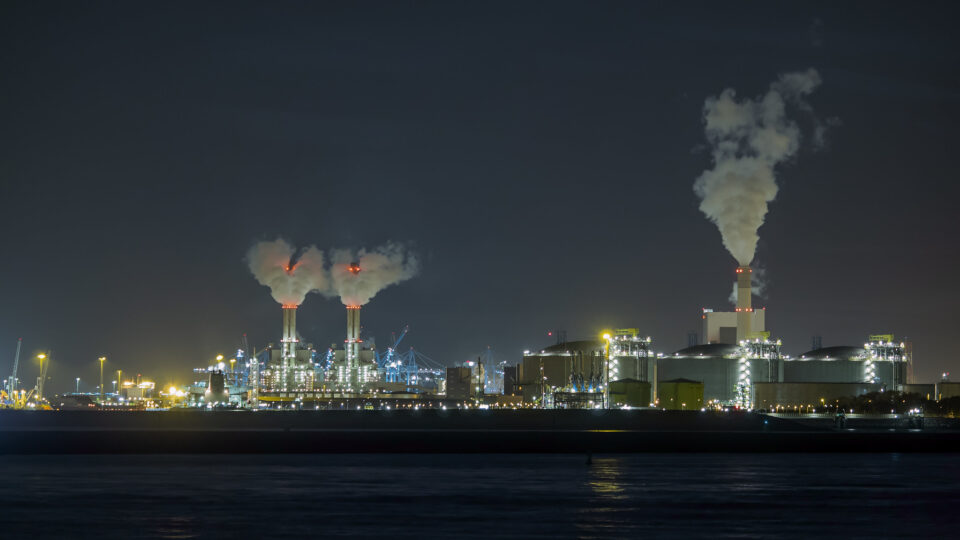
A Better Way To Capture Carbon | Earth Wise

April 29, 2022 By EarthWise Leave a Comment

Developing a better way to capture carbon

The goal of carbon capture and storage technology is to remove carbon dioxide from the atmosphere and safely store it for the indefinite future.  There are existing industrial facilities that capture carbon dioxide from concentrated sources – like the emissions from power plants.  The technology currently captures and stores only about a tenth of a percent of global carbon emissions.

Most existing CCS technologies use chemical binders to trap carbon dioxide quickly and efficiently, but they are extraordinarily energy intensive as well as expensive.

Researchers at the University of Colorado Boulder have developed a new tool that could lead to more efficient and cheaper ways to capture carbon dioxide directly out of the air.  The tool predicts how strong the bond will be between carbon dioxide and a candidate molecule for trapping it – that is, a binder.  This new electrochemical diagnostic tool can be used to identify suitable molecular candidates for capturing carbon dioxide from everyday air.

Current carbon capture technologies are very expensive at the scale required to be able to turn the captured CO2 into useful substances, such as carbonates – which are an ingredient in cement – or formaldehyde or methanol, which can be used as fuels.  Making useful materials out of the captured CO2 is an important way to offset the cost of capturing it that merely storing it away does not permit.

The new electrochemical analytical tool developed by the Colorado researchers offers the potential for identifying binders that will be more efficient and less expensive, thereby making direct air carbon capture a realistic part of the efforts to address climate change.

**********

Web Links

New method could lead to cheaper, more efficient ways to capture carbon

Photo, posted October 25, 2015, courtesy of Frans Berkelaar via Flickr.

Earth Wise is a production of WAMC Northeast Public Radio.

Insanely Cheap Energy | Earth Wise

June 11, 2021 By EarthWise Leave a Comment

Solar power is cheapest energy option in most places

The International Energy Agency, founded in 1974, keeps track of the world’s energy systems and anticipates how they are likely to change over time.  Policymakers around the world look to the agency’s annual World Energy Outlook publication for guidance.

In 2000, the agency made the prediction that by the year 2020, there would be a total of 18 gigawatts of photovoltaic solar power installed.  Within seven years, that number was already too small.

The IEA was not the only source to miss the mark on solar power.  The head of solar analysis at BloombergNEF in 2005 expected solar to eventually supply 1% of the world’s electricity.  It is already 3% and Bloomberg now predicts that it will be 23% by 2050 and expects that to be an underestimate. 

What has happened is that the world has unexpectedly gotten to the point where solar is the cheapest source of energy in most places.  Over the past decade, every time solar production capacity has doubled, its cost has dropped by 28%.

Historically, a combination of groundbreaking research in Australia and intense Chinese industrial development led to the creation of a massive new industry.  When Germany passed laws encouraging the use of solar power, suddenly there was massive global demand and a struggle to keep up with supply.

The industry had its fits and starts, and many players fell by the wayside.    But at this point, solar technology continues to get better and cheaper.  Market forces are pretty hard to beat and when solar technology can supply insanely cheap energy, it is going to be used in more and more places.

**********

Web Links

‘Insanely cheap energy’: how solar power continues to shock the world

Photo, posted January 10, 2020, courtesy of Tony Webster via Flickr.

Earth Wise is a production of WAMC Northeast Public Radio.

Hydrogen From The Ocean

November 15, 2019 By EarthWise Leave a Comment

https://earthwiseradio.org/wp-content/uploads/2016/08/EW-08-30-16-Hydrogen-from-the-Ocean.mp3

Hydrogen is the most abundant element in the universe.  Estimates are that it comprises 75% of all matter.  There is plenty of it here on earth too, but almost none of it is in its elemental form.  It is mostly bound up in compounds like water.

[Read more…] about Hydrogen From The Ocean

Compressed Air Energy Storage

October 23, 2019 By EarthWise Leave a Comment

The increasing use of solar and wind power has created a growing need for technology to store up the energy they generate for use when it is most needed.

Historically, pumped hydropower has provided the largest amount of storage capacity, but it is limited to only certain geographic locations.   Battery energy storage has been growing rapidly, with the technology becoming better and cheaper over time.  But there are various other ways to store energy that have potential and may well find their place in the changing energy infrastructure.

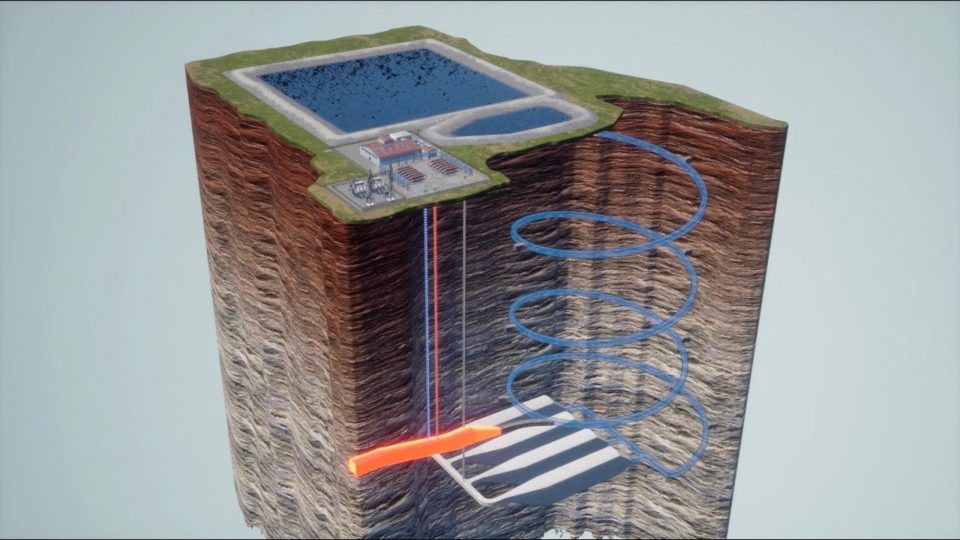
One of these is compressed air energy storage, which has been around for more than a century.  It has been used as a backup method for restarting power plants.  But to date, the economic viability of using it at a large scale has been lacking.

A Canadian startup company called Hydrostor is developing compressed air energy storage technology that it believes can be used on a utility scale.

The way it works is excess renewable energy is used to run compressors that compress air.  Compressing the air heats it up and the heat is captured and stored in insulated hot water tanks.  The compressed gas is then injected into underground caverns.  When energy is needed, the compressed air is released, the stored heat is added, and the warmed gas is run through turbines to generate electricity.  Additional features improve the system’s efficiency.

Hydrostore has built a 1 MW pilot project in Ontario, Canada and is now commissioning a 2MW system as well.  It is funded to build a 5 MW system in Australia next year and it is bidding for 300 MW and 500 MW systems in North America.  The company has received equity funding from Baker Hughes, a large oil-and-gas services and equipment company.

**********

Web Links

Storing energy in compressed air could finally become cheap enough for the big time

Photo courtesy of Hydrostor.

Earth Wise is a production of WAMC Northeast Public Radio.

Primary Sidebar

Recent Episodes

  • An uninsurable future
  • Clean energy and jobs
  • Insect declines in remote regions
  • Fossil fuel producing nations ignoring climate goals
  • Trouble for clownfishes

WAMC Northeast Public Radio

WAMC/Northeast Public Radio is a regional public radio network serving parts of seven northeastern states (more...)

Copyright © 2026 ·