
• Skip to primary navigation
  • Skip to main content
  • Skip to primary sidebar

Earth Wise

A look at our changing environment.

  • Home
  • About Earth Wise
  • Where to Listen
  • All Articles
  • Show Search
Hide Search
You are here: Home / Archives for bangladesh

bangladesh

Rising Seas Will Erase Cities

December 18, 2019 By EarthWise Leave a Comment

According to new research, climate-driven sea level rise could affect three times more people by 2050 than previously thought.  This sobering assessment means some of the world’s great coastal cities, including Bangkok, Shanghai, Mumbai, Basra, Alexandria, and Ho Chi Minh City, could be in big trouble.   

Scientists have always relied on land elevation data to determine the effects of sea level rise over large areas.  But standard elevation measurements using satellites struggle to differentiate the true ground level from the tops of trees or buildings.  The authors of the paper developed a more accurate way to calculate land elevation by using artificial intelligence to determine the error rate and to correct for it.  The new findings revealed that 150 million people – three times more than previously thought – are now living on land that is projected to be below the high-tide line by the middle of this century. 

Eight Asian nations – China, Bangladesh, India, Vietnam, Indonesia, Thailand, the Philippines, and Japan – account for about 70% of the people living on at-risk land. 

More than 20 million people in Vietnam, including much of Ho Chi Minh City, live on land that will be inundated by 2050.  In Thailand, more than 10% of its citizens, including much of Bangkok, currently live on land imperiled by projected sea level rise. 

This new research was produced by Climate Central, a New Jersey-based science organization, and was recently published in the journal Nature Communications. 

Sea level rise is clearly not just an environmental problem.  It’s a humanitarian crisis.

**********  

Web Links

New elevation data triple estimates of global vulnerability to sea-level rise and coastal flooding

Rising Seas Will Erase More Cities by 2050, New Research Shows

Photo, posted December 18, 2009, courtesy of Misko via Flickr.

Earth Wise is a production of WAMC Northeast Public Radio.
Displaced By Extreme Weather

November 11, 2019 By EarthWise Leave a Comment

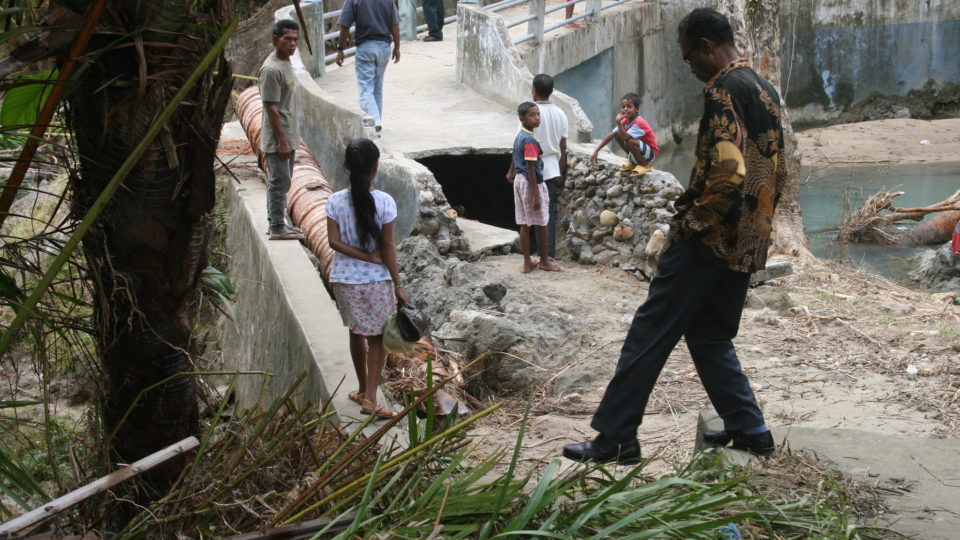
The Internal Displacement Monitoring Centre is the world’s authoritative source of data and analysis on internal displacement.  Internal displacement refers to people being forced to flee their homes or places of habitual residence but who remain within their country’s borders.  Such displacements can be the result of conflict, violence, development projects, natural disasters, or climate change.  As of the end of 2018, over 41 million people were living in internal displacement because of conflict and violence alone.

This year, natural disasters are causing a record number of internal displacements.  In the first half of the year, 7 million people were displaced by disasters, accounting for nearly two-thirds of all the internal displacements worldwide.  The IDMC estimates that this number could hit 22 million by the end of the year.

The vast majority of displacement has been associated with storms and floods.  Cyclone Fani alone in May displaced more than 3.4 million people in India and Bangladesh.  In March, Cyclone Idai displaced 617,000 people in Mozambique, Malawi, and Zimbabwe.  In total, 950 extreme weather events in 102 countries and territories displaced 7 million people from January to June.

Technically speaking, internally displaced people are not considered to be refugees because they remain in their home countries.  But the growing millions of people represent a global crisis that continues to worsen with the changing climate.  The international community cannot ignore the plight of these people.  Governments around the world have to redouble their efforts to protect and assist their displaced citizens as well as to invest in sustainable development and climate change adaptation.

**********

Web Links

Extreme Weather Displaced 7 Million People in First Half of 2019

Photo, posted August 5, 2012, courtesy of the U.S. Embassy, Jakarta via Flickr.

Earth Wise is a production of WAMC Northeast Public Radio.
Antibiotics In The Environment

June 6, 2019 By EarthWise Leave a Comment

Antibiotics make their way into the environment in many ways.  Sources of antibiotic pollution include the waste from large-scale animal farms and the wastewater from hospitals, municipalities, and antibiotic manufacturing.

A new study has discovered concentrations of antibiotics in some of the world’s rivers exceed safe levels by up to 300 times.  In the project, researchers looked for 14 commonly used antibiotics in rivers in 72 countries across six continents.  They found antibiotics at 65% of all the sites they examined. 

The antibiotic ciproflaxacin was the compound that most frequently exceeded safe levels, surpassing that threshold in 51 places. The antibiotic metronidazole exceeded safe levels by the biggest margin.  Concentrations of this antibiotic at one site in Bangladesh was 300 times greater than the safe level.  The most prevalent antibiotic was trimethoprim.  It was detected at 307 of the 711 sites. 

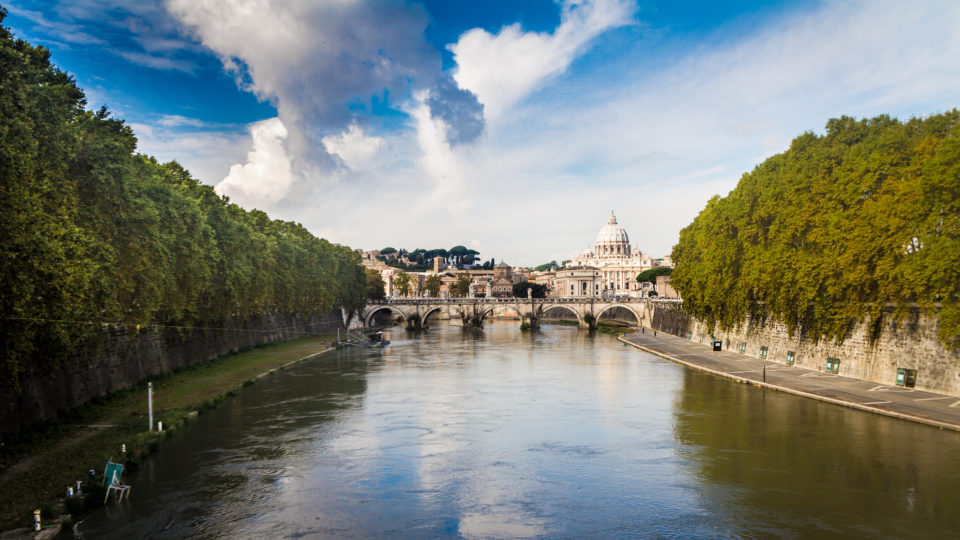
Some of the world’s most iconic rivers were sampled as a part of this study, including the Danube, Mekong, Seine, Thames, Tiber and Tigris. 

The project, which was led by the University of York, found that high-risk sites were often located near wastewater treatment systems, waste or sewage dumps, and in some areas of political unrest. 

Safe levels for antibiotics, which were recently established by the AMR Industry Alliance, range from 20,000 to 32,000 nanograms per liter depending on the compound. 

According to the research team, solutions to the problem of antibiotic contamination should include infrastructure investment, tighter regulation, and the remediation of already contaminated sites. 

**********

Web Links

Antibiotics found in some of the world’s rivers exceed ‘safe’ levels, global study finds

Photo, posted October 7, 2013, courtesy of Nicola via Flickr.

Earth Wise is a production of WAMC Northeast Public Radio.
Trouble With China And Climate Progress

July 12, 2018 By EarthWise Leave a Comment

https://earthwiseradio.org/wp-content/uploads/2018/07/EW-07-12-18-Trouble-with-China-and-Climate-Progress.mp3

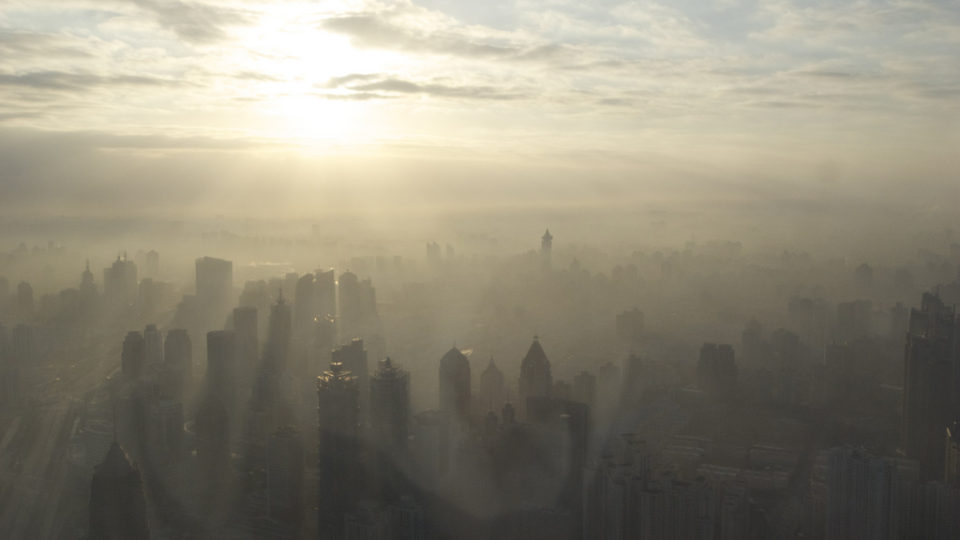
With the United States backing away from the Paris climate agreement and with Europe taking a less active role in climate negotiations, China has become the bellwether on global climate change.  Recent climate negotiations in Bonn, Germany were rather acrimonious as countries accused other countries of not doing their part or keeping their promises.

[Read more…] about Trouble With China And Climate Progress

The Deadly Cost Of Pollution

December 8, 2017 By EarthWise Leave a Comment

https://earthwiseradio.org/wp-content/uploads/2017/11/EW-12-08-17-Deadly-Cost-of-Pollution.mp3

There is deservedly a great deal of focus on the effects that carbon pollution is having upon the climate and most countries around the world are working to reduce their emissions.   However, even if climate effects were not a serious threat to humanity, pollution is a deadly menace to human health.

[Read more…] about The Deadly Cost Of Pollution

Coexisting With Dangerous Carnivores

February 16, 2016 By WAMC WEB

https://earthwiseradio.org/wp-content/uploads/2016/02/EW-02-16-16-Coexisting-with-Carnivores.mp3

We come across many things that we don’t like but that are nonetheless good for us or good for the world in general.   On some level, we all make cost-benefits analyses to decide what to do about various things that we might just as soon do without.

[Read more…] about Coexisting With Dangerous Carnivores

Primary Sidebar

Recent Episodes

  • An uninsurable future
  • Clean energy and jobs
  • Insect declines in remote regions
  • Fossil fuel producing nations ignoring climate goals
  • Trouble for clownfishes

WAMC Northeast Public Radio

WAMC/Northeast Public Radio is a regional public radio network serving parts of seven northeastern states (more...)

Copyright © 2026 ·