• Skip to primary navigation
  • Skip to main content
  • Skip to primary sidebar

Earth Wise

A look at our changing environment.

  • Home
  • About Earth Wise
  • Where to Listen
  • All Articles
  • Show Search
Hide Search
You are here: Home / Archives for bananas

bananas

Climate change and hunger

July 14, 2025 By EarthWise Leave a Comment

Climate change is harder and more expensive to produce food

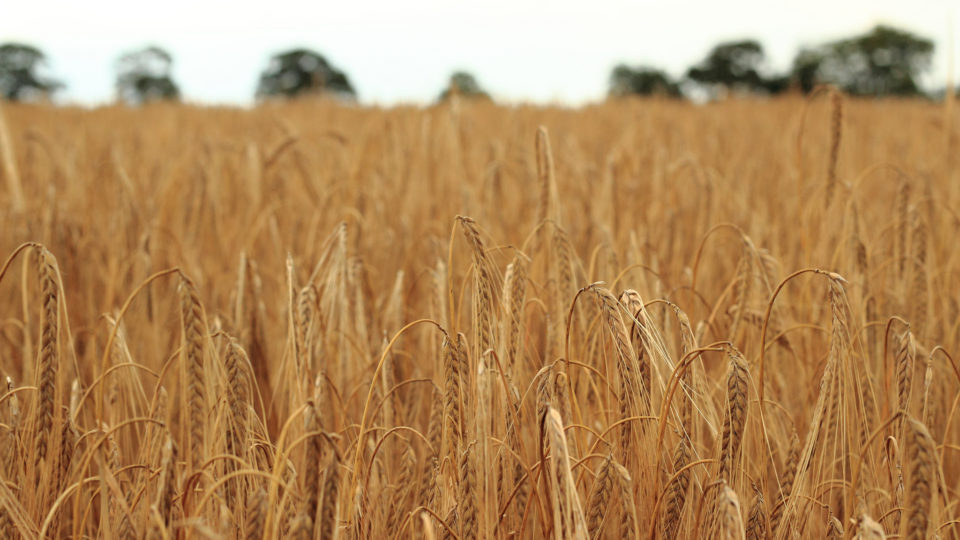
Worldwide, people are producing more food than ever, but most of that production is concentrated into only a handful of places.  For example, fully one third of the world’s wheat and barley exports come from Ukraine and Russia.  Across the globe, several major crop-growing regions, including some in the United States, are heading towards sharp drops in harvests as a result of climate change.

These forthcoming changes are not only bad news for farmers, but they are also bad news for everyone who eats.  According to a new study published in the journal Nature, it is going to become harder and more expensive to feed a more crowded and hungrier world.

Specifically, under a moderate greenhouse gas emissions scenario, six key staple crops will see an 11.2% decline by the end of the century, compared to a world without warming.  The largest drops won’t be in the poorer, more marginal farmlands, but rather in places that are major food producers.  These are places like the US Midwest that has long benefited by having both good soil and ideal weather for raising crops like corn and soy.

When the weather is not ideal, it can drastically reduce agricultural productivity.  Extreme weather in many places has already damaged crops.  Flooding has destroyed rice in Tajikistan, cucumbers in Spain, and bananas in Australia.  Severe storms in the US this spring caused millions of dollars’ worth of damage to crops.

As the climate changes, rising average temperatures and changing rainfall patterns are likely to diminish yields and extreme weather events like droughts and floods could wipe out harvests more often.  As climate change intensifies, agriculture is the most weather-affected sector of the economy.

**********

Web Links

How climate change will worsen hunger

Photo, posted may 20, 2011, courtesy of Lance Cheung / USDA via Flickr.

Earth Wise is a production of WAMC Northeast Public Radio

Bananas and climate change

April 17, 2025 By EarthWise Leave a Comment

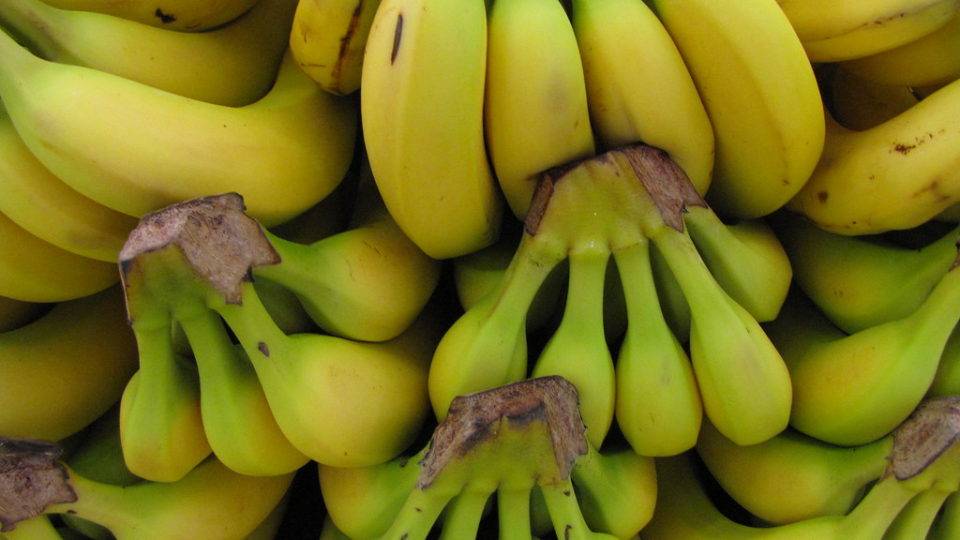
Bananas are one of the most widely produced fruits globally, with more than 100 million tons grown every year.  They are a key export crop worth approximately $11 billion annually. Bananas are also a staple food in many tropical countries, playing a vital role in both the economies of these nations and in global food security.

The Cavendish variety of banana dominates commercial exports, accounting for nearly 47% of global production. However, the Cavendish banana is highly susceptible to diseases like Panama disease, prompting ongoing efforts to develop disease-resistant alternatives. The spread of these diseases is exacerbated by climate change, which alters growing conditions and weakens banana plants. Additionally, climate change poses further threats to the banana industry by impacting crop yields and distribution patterns.

In fact, a new study led by researchers from the University of Exeter in the U.K. has found that by 2080, rising temperatures will make growing bananas for export economically unsustainable in many regions of Latin America and the Caribbean.  Colombia and Costa Rica will be among the countries most negatively impacted as they are expected to become too hot for optimal banana cultivation. 

The study, which was recently published in the journal Nature Food, found that 60% of the regions currently producing bananas around the world will struggle to grow the fruit unless there are urgent interventions to tackle climate change.  The researchers propose several adaptation strategies, including expanding irrigation systems, developing heat- and drought-resistant banana varieties, and helping banana producers manage climate-related risks.

**********

Web Links

Climate change threatens future of banana export industry

Photo, posted June 26, 2024, courtesy of JJ Musgrove via Flickr.

Earth Wise is a production of WAMC Northeast Public Radio
Fighting Disease in Cavendish Bananas | Earth Wise

January 31, 2022 By EarthWise Leave a Comment

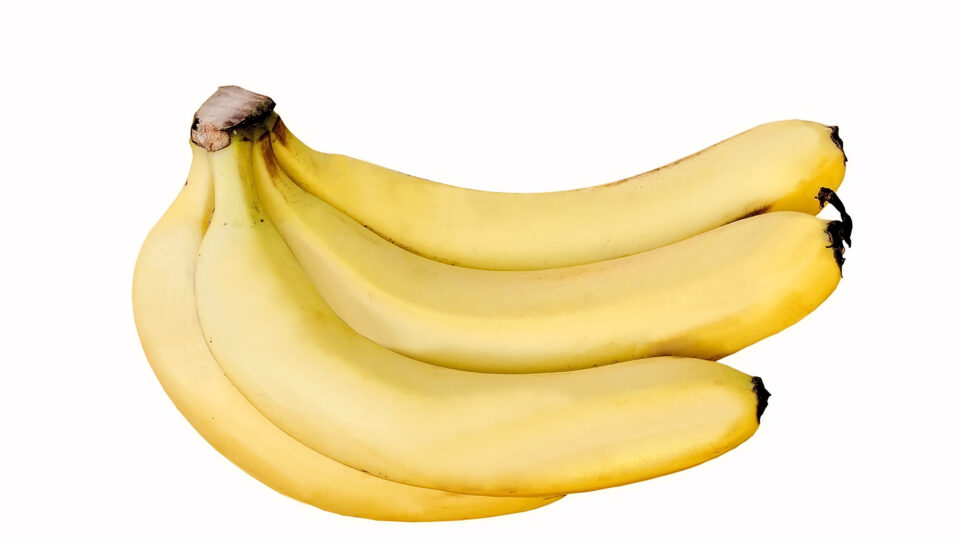
Cavendish bananas account for about half of global banana production and the vast majority of bananas entering international trade.  The plant is unable to reproduce sexually and instead is propagated via identical clones.  So, the genetic diversity of the Cavendish banana is exceedingly low. 

In 2008, Cavendish cultivars in Sumatra and Malaysia started to be attacked by Panama disease, a wilting disease caused by a fungus.  In 2019, Panama disease was discovered on banana farms in the coastal Caribbean region, its first occurrence in the Americas.  In the 1950s, Panama disease wiped out the Gros Michel banana, the commercial predecessor of the Cavendish.

Scientists at the University of Cambridge have found a novel way to combine two species of grass-like plants – which include bananas, rice, and wheat – using embryonic tissue from their seeds.  The technique allows beneficial characteristics, such as disease resistance, to be added to the plants.

Joining the shoot of one plant to the root of another to grow as one plant is known as grafting.  It was thought to be impossible to do with grass-like plants – called monocotyledonous  grasses – because they lack a certain tissue type in their stems.  But the new research, published in the journal Nature, showed it can be done with the plants in their earliest embryonic stages.

Cavendish bananas are sterile, so disease resistance can’t be bred into future generations.  But the grafting technique may provide a way to produce Cavendish banana plants that are resistant to Panama disease.  It may be possible to save an important food crop before it is too late.

**********

Web Links

New grafting technique could combat the disease threatening Cavendish bananas

Photo, posted July 1, 2015, courtesy of Augustus Binu via Flickr.

Earth Wise is a production of WAMC Northeast Public Radio.

Food Waste Into Wearables | Earth Wise

November 20, 2020 By EarthWise Leave a Comment

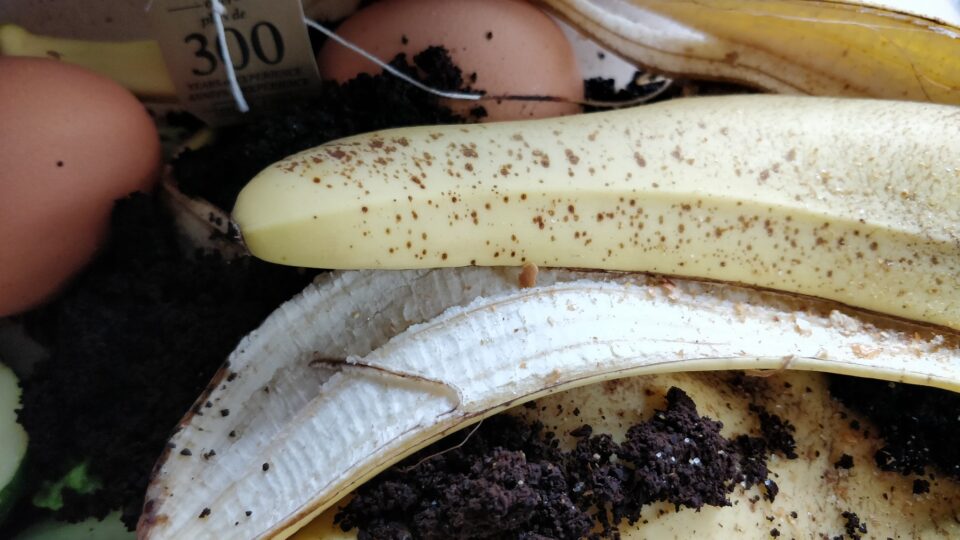
Turning food waste into wearables

A new startup company spun out of the University of Toronto wants to make clothing from food waste.  If they are successful, you may someday buy a shirt or a pair of gym shorts made from banana peels, rotten tomatoes, coffee grounds, or moldy bread.

A problem faced by the clothing industry is that most textiles are blended with synthetic and non-renewable fiber polyester, which makes them unrecyclable.  An alternative that has come on the scene in recent years is polylactic acid (or PLA), which is a decomposable bioplastic that is currently used for food packaging, medical implants, and 3D printing.  It is likely that a sustainable future for the fashion industry will depend on the ability to make use of biodegradable and carbon-neutral materials.

PLA is typically made from cornstalk, but the startup – called ALT TEX – does not want to rely on a crop already used for feedstock, human consumption, and alternative fuel.  Furthermore, there is no need to plant more corn when there is an abundant supply of unused post-industrial food waste from growers, producers, and retailers that contains the same biological building blocks for producing PLA.

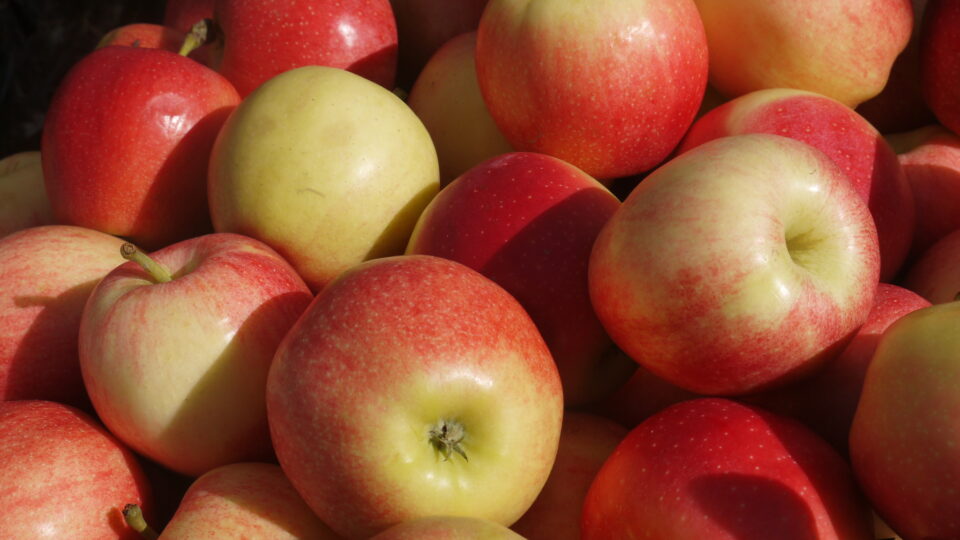
ALT TEX has been conducting experiments using discarded apples to create a PLA-based fabric that is strong, durable, decomposable, and cost effective.  They are working with farmers and food suppliers to access their waste. If their efforts are successful, it would be possible to divert significant amounts of organic waste that currently emits the powerful greenhouse gas methane and instead enable the fashion industry to be more sustainable.

**********

Web Links

Earth-friendly fashion: U of T startup turns food waste into wearables

Photo, posted August 30, 2019, courtesy of Ruth Hartnup via Flickr.

Earth Wise is a production of WAMC Northeast Public Radio.

A New Problem For New York Apples | Earth Wise

August 6, 2020 By EarthWise Leave a Comment

new york apples in trouble

New York is the second largest apple-producing state in the country, trailing only Washington state.  New York averages nearly 30 million bushels of apples annually from approximately 600 commercial growers.  The apple industry supports 10,000 direct agricultural jobs as well as 7,500 indirect jobs involved with fruit handling, distribution, marketing and exporting.

Thus, there is considerable concern about the recent discovery by Cornell plant pathologists of a new fungal pathogen that causes bitter rot disease in apples.  They also found a second related fungus that is known to cause rot disease in other fruits but has now been found for the first time in apples.  The study was published in early July in the journal Scientific Reports.

Both of these pathogens belong to the genus Colletotichrum, which contains 189 species of fungi that cause devastating rot diseases in multiple fruit crops, including bananas, strawberries, citrus, avocados, papayas, mangoes and apples.

Unless protective measures are taken in a timely manner, apple losses from bitter rot in New York state can average up to 25% per year.  Some organic farms have lost essentially all of their crop at times.  Bitter rot also can destroy up to 5% of marketable fruit in post-harvest storage.

The Cornell study of samples from eight New York counties found both the Colletotrichum chrysophilum fungus, that had not been found in apples before, and a newly-discovered fungus that they named Colletotrichum noveboracense, after the Latin name for New York State.

The researchers plan to work with other plant pathologists and apple breeders to identify possible genes that confer natural resistance to Colletotrichum fungi that can be bred into apple cultivars.

**********

Web Links

Scientists identify new pathogen in NY apples

Photo, posted October 12, 2018, courtesy of Flickr.

Earth Wise is a production of WAMC Northeast Public Radio.

Preserving Produce With Eggs | Earth Wise

July 17, 2020 By EarthWise Leave a Comment

Using eggs to preserve produce

Researchers at Brown University have developed an inexpensive coating to protect fruits and vegetables that is made from eggs that would otherwise be wasted.  The micron-thick coating solves problems for the produce and its consumers as well as for the environment.

The coating relies on eggs that never reach the market.  The U.S. produces more than 7 billion eggs a year.  The supply chain rejects about 3% of them, typically because of shell damage, which means that more than 200 million eggs end up in landfills.

The coating is mostly made from egg, the rest consisting of nanoscale cellulose extracted from wood, a tiny amount of curcumin (the main active ingredient in turmeric that has antimicrobial properties), and a bit of glycerol for added elasticity.  The coating is applied to produce by spraying or dipping.  It shows a remarkable ability to resist rotting for an extended period comparable to standard coatings like wax, but without their shortcomings.

Along with being edible, the coating retards dehydration, provides antimicrobial protection, and is largely impermeable to both water vapor to prevent dehydration and to gas to prevent premature ripening.  The coating is entirely natural, and it washes off with water.  So, anyone sensitive to the coating, such as someone with an egg allergy, can easily eliminate it.

Lab tests of the coating studied its effects on strawberries, avocados, bananas and other fruits.  All were seen to maintain their freshness far longer than uncoated produce.

The researchers are continuing to refine the coating.  They are also considering other source materials.  They chose egg proteins because there are so many wasted eggs, but it may be possible to make use of plant proteins instead to address the needs of vegan consumers.

**********

Web Links

Egg-based coating preserves fresh produce

Photo, posted July 13, 2012, courtesy of Liz West via Flickr.

Earth Wise is a production of WAMC Northeast Public Radio.

Bananas In Danger

October 8, 2019 By EarthWise Leave a Comment

For a few years we have been talking about the precarious position of the global banana crop, which is almost entirely based upon a single cloned cultivar known as the Cavendish banana.  The banana you buy in Rome is identical to the one in Rochester.  And therein lies the danger:  if a fungal blight can kill one banana shrub, it can kill them all.

For decades, a fungal disease known as Panama Disease Tropical Race 4 has been wreaking havoc on banana plantations in the Eastern Hemisphere.   Even though it was first identified in Taiwanese soil samples in the early 1990s, the destructive fungus remained confined to Southeast Asia and Australia until it was confirmed in both the Middle East and Africa in 2013.  Experts continued to fear its eventual appearance in Latin America, which is the epicenter of the global banana export industry.

In August, Colombian agricultural authorities announced that laboratory tests have positively identified the presence of Tropical Race 4 in the Caribbean coastal region and declared a national state of emergency.

The infection of the banana plant does not produce bananas that are unsafe for humans.  What happens is that the infected plants eventually stop bearing fruit.

Cavendish bananas are a prime example of the dangers of growing crops with limited genetic diversity – known as monoculture.  It leaves food systems dangerously vulnerable to disease epidemics.

This has happened to the global banana crop before when the predecessor to the Cavendish banana – the Gros Michel – was mostly eradicated by another fungal outbreak.  At the moment, there is no ready replacement banana to bail out the industry, but scientists are desperately trying to breed one.  In the meantime, the world’s supply of bananas is in real danger.

**********

Web Links

The banana is one step closer to disappearing

Photo, posted July 9, 2009, courtesy of Dabin Lambert via Flickr.

Earth Wise is a production of WAMC Northeast Public Radio.

Crop Diversity

March 22, 2019 By EarthWise Leave a Comment

A study at the University of Toronto suggests that on a global scale, we are growing more of the same kinds of crops, and this diminishing diversity presents major challenges for agricultural sustainability.

In some places, for example here in North America, crop diversity has actually increased.  Back in the 1960s, North Americans grew about 80 crops.  Now there are 93.

But on a global scale, more of the same kinds of crops are being grown on much larger scales.  Just four crops – soybeans, wheat, rice and corn – occupy nearly 50% of the world’s entire agricultural lands.  The remaining 152 crops cover the rest.  Large industrial farms often grow one crop species – usually just a single genotype – across thousands of acres of land.

This decline in global crop diversity is problematic in several ways.  On a cultural level, it threatens regional food sovereignty.  If regional crop diversity is threatened, it makes it more difficult for people to eat or afford foods that are culturally significant to them.

On an ecological level, the dominance by a few genetic lineages of crops makes the agricultural system increasingly susceptible to pests or diseases.  The deadly fungus that is threatening the world’s banana plantations is a prime current example.  The Irish potato famine in the 19th century is a tragic historical example.

As large industrial-sized farms in Asia, Europe and the Americas start to look more and more alike, the dangers of large monocultures of crops that are commercially valuable will only increase.  It will be important for global governments to consider the impact of policies that affect the diversity of the agricultural system and its sustainability in an increasingly hungry world.

**********

Web Links

A small number of crops are dominating globally. And that’s bad news for sustainable agriculture

Photo, posted August 13, 2012, courtesy of Alasdair McKenzie via Flickr.

Earth Wise is a production of WAMC Northeast Public Radio.

Cradle-to-Cradle

August 15, 2016 By WAMC WEB

https://earthwiseradio.org/wp-content/uploads/2016/07/EW-08-15-16-Thinking-Cradle-to-Cradle.mp3

The circular economy refers to the concept of an economic system in which there is no waste.  Materials are recycled, repurposed and reinvented to create new raw materials thereby reducing the need to extract new resources and thus saving money, energy and water resources.

[Read more…] about Cradle-to-Cradle

Primary Sidebar

Recent Episodes

  • An uninsurable future
  • Clean energy and jobs
  • Insect declines in remote regions
  • Fossil fuel producing nations ignoring climate goals
  • Trouble for clownfishes

WAMC Northeast Public Radio

WAMC/Northeast Public Radio is a regional public radio network serving parts of seven northeastern states (more...)

Copyright © 2026 ·