• Skip to primary navigation
  • Skip to main content
  • Skip to primary sidebar

Earth Wise

A look at our changing environment.

  • Home
  • About Earth Wise
  • Where to Listen
  • All Articles
  • Show Search
Hide Search
You are here: Home / Archives for bacterium

bacterium

What happened to the sea stars?

September 11, 2025 By EarthWise Leave a Comment

Billions of sea stars off the Pacific coast of North America from Mexico to Alaska have died from a wasting disease since 2013.  This die-off is considered to be the largest ever marine epidemic.  Over 90% of the population of sunflower sea stars has succumbed to the disease.

The result has been an explosion in the population of the sea urchins that the sea stars feed on.  In turn, the sea urchins have devoured kelp forests that provide habitat for thousands of marine creatures.  These kelp forests support a multi-million-dollar economy through fisheries and tourism as well as sequestering carbon dioxide and protecting vulnerable coastlines. 

The disease begins with lesions and eventually kills sea stars by seemingly melting their tissues over a period of about two weeks.  Sea stars with the disease become contorted and lose their arms.

For years, the definitive cause of the wasting disease has been elusive.  But researchers from the University of British Columbia, the Hakai Institute, and the University of Washington have now identified a bacterium that is the disease-causing agent.

A strain of the Vibrio pectenicida bacteria – named FHCF-3 – is responsible.  The Vibrio genus of bacteria includes pathogens that infect corals, shellfish, and even humans.  Vibrio cholerae is the cause of cholera.

Research is now underway to understand the link between the disease and warming ocean temperatures due to climate change.  The hope is that the discovery of the cause of the wasting disease will help guide management and recovery efforts for sea stars and impacted ecosystems.

**********

Web Links

‘Disease detectives’ discover cause of sea star wasting disease that wiped out billions of sea stars

Photo, posted April 16, 2011, courtesy of Brian Gratwicke via Flickr.

Earth Wise is a production of WAMC Northeast Public Radio
A fern-based insecticide

December 8, 2023 By EarthWise Leave a Comment

Using ferns to create insecticides

A spore-producing bacterium is the source of various crystal toxins (known as Cry proteins) that are widely used in modern agriculture to combat insect pests – generally caterpillars and other larvae – that attack important crops.  Pest control in corn, soybean, and cotton use these insecticidal proteins for protection against major insect pests.  The pesticides are obtained from Bacillus thringiensis (Bt) bacteria to produce the proteins.

Bt Cry proteins are secreted by the bacteria but are harmless to the bacteria.  They are harmless until ingested by insects and are then activated by the alkaline environment in the gut of insects which is entirely different from the acidic environment of our own digestive systems.  In the insect’s gut, the proteins become a powerful feeding inhibitor by breaking down the insect’s gut lining.  Bt Cry proteins are considered safe for humans.

Researchers continue to seek alternative solutions because there are concerns that insect pests could develop resistance to these toxic proteins.

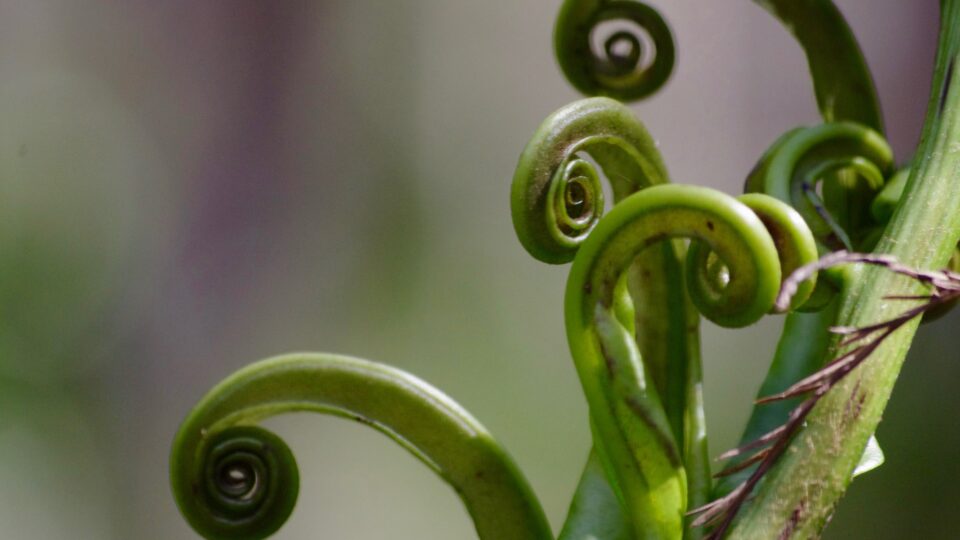
Researchers from two Australian universities have analyzed the structure of a novel insecticidal protein that could be effective in protecting essential crops.  The protein is naturally produced by ferns including common houseplants like brake ferns.

The newly discovered proteins offer a different mode of action from the Cry proteins and therefore are a potential solution to the problem of pest resistance to existing insecticides.  The new family of insecticidal proteins is designated as iPD113 and has been shown to be very effective against caterpillar pests of corn and soybeans.

**********

Web Links

Discovery: ferns produce crop-saving insecticide

Photo, posted October 5, 2015, courtesy of Marianne Serra via Flickr.

Earth Wise is a production of WAMC Northeast Public Radio

A New Kind Of Antibiotic | Earth Wise

March 10, 2020 By EarthWise Leave a Comment

Antimicrobial resistance is a serious and growing problem for public health.  Over time, more and more types of bacteria have become resistant to known antibiotics making it very difficult to treat various kinds of infections. 

A new group of antibiotics with a unique approach to attacking bacteria has been discovered at McMaster University in Canada, representing a promising new clinical approach in the fight against antimicrobial resistance. 

The newly found corbomycin and the lesser-known complestatin have a never-before-seen way to kill bacteria, namely, breaking the function of the bacterial cell wall. Bacteria have a wall around the outside of their cells that gives them shape and is a source of strength.  Antibiotics like penicillin kill bacteria by preventing building of the wall, but the new antibiotics work by doing the opposite – they prevent the wall from being broken down. Breaking down the cell wall is critical for cells to divide. In order for bacteria to grow and spread, they need to expand and divide. By completely blocking the breakdown of the wall, it is as if the bacterium is trapped in a prison and can’t expand or grow. 

The researchers demonstrated in mice that these new antibiotics can block infections caused by the drug resistant Staphylococcus aureus which is a group of bacteria that can cause many serious infections. 

The researchers believe this new approach can be applied to other antibiotics and lead to the discovery of new ones with different mechanisms of action. This study found one completely new antibiotic, but since then, they have found a few others in the same family that have this same new mechanism. 

**********

Web Links

Antibiotics discovered that kill bacteria in a new way

Photo, posted March 15, 2012, courtesy of Flickr.

Earth Wise is a production of WAMC Northeast Public Radio.

Rare Earths From Mining Waste

May 3, 2019 By EarthWise Leave a Comment

The 17 rare earth elements have become important parts of much of modern technology.  Despite their name, most of these elements are relatively plentiful in the earth’s crust, but because of their geochemical properties they are typically dispersed and not often found concentrated in minerals.  As a result, economically exploitable ore deposits are uncommon.  There are no significant sources in the U.S.

Rare earths play important roles in high-performance magnets, electric motors in vehicles, wind turbines, microphones and speakers, and in portable electronics like cell phones.  As these applications become ever larger, the need for additional sources of rare earths increases.

Researchers at Idaho National Laboratory and Rutgers University have studied a method for extracting rare-earth elements from mining waste that could greatly increase the world’s supply of these valuable materials.

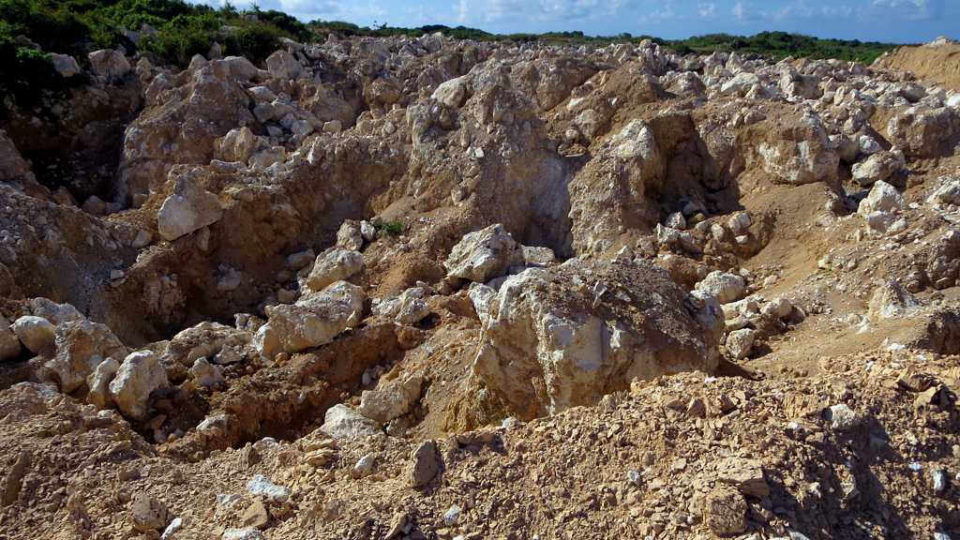
It turns out that large amounts of rare earths exist in phosphogypsum, a waste product from producing phosphoric acid from phosphate rock.  The U.S. alone mined 28 million tons of phosphate rock in 2017.  (Phosphoric acid is used in the production of fertilizers and other products).

The researchers estimate that more than a billion tons of phosphogypsum waste sits in piles at storage sites across the U.S. alone.   World-wide, about 100,000 tons of rare earth elements per year end up in phosphogypsum waste.  This compares to the total current world-wide production of rare earth oxides of 126,000 tons.

The researchers studied methods for extracting the elements from the waste. A method utilizing a common environmental bacterium showed great promise.

There are concerns about residual radioactivity and other environmental issues in dealing with the waste material, but the world’s supply of rare earth elements might become much greater based on this research.

**********

Web Links

Critical Materials: Researchers Eye Huge Supply of Rare-Earth Elements from Mining Waste

Photo, posted June 19, 2015, courtesy of David Stanley via Flickr.

Earth Wise is a production of WAMC Northeast Public Radio.

Greener Biofuel

May 17, 2018 By EarthWise Leave a Comment

https://earthwiseradio.org/wp-content/uploads/2018/05/EW-05-17-18-Greener-Biofuel.mp3

Engineers from the National University of Singapore have recently discovered that a naturally occurring bacterium is capable of directly converting cellulose to biobutanol, a promising biofuel.

[Read more…] about Greener Biofuel

Primary Sidebar

Recent Episodes

  • An uninsurable future
  • Clean energy and jobs
  • Insect declines in remote regions
  • Fossil fuel producing nations ignoring climate goals
  • Trouble for clownfishes

WAMC Northeast Public Radio

WAMC/Northeast Public Radio is a regional public radio network serving parts of seven northeastern states (more...)

Copyright © 2025 ·