• Skip to primary navigation
  • Skip to main content
  • Skip to primary sidebar

Earth Wise

A look at our changing environment.

  • Home
  • About Earth Wise
  • Where to Listen
  • All Articles
  • Show Search
Hide Search
You are here: Home / Archives for arsenic

arsenic

Bees and urban wildflowers

May 23, 2025 By EarthWise Leave a Comment

Urban wildflowers may threaten bees in some cases

Post-industrial cities often have large numbers of vacant lots, left behind as people have moved out of the area.  Local residents are often tempted to plant wildflowers to make these deserted spaces more attractive. 

Wildflowers are an important food source for bees.  Pollinators like bees play a vital role in food production and attracting them with food sources is a good idea.  However, a study by researchers at the University of Cambridge in the UK found that there are dangers associated with planting wildflowers in some urban settings.

Wildflowers growing on land previously used for buildings and factories can accumulate lead, arsenic, and other metal contaminants from the soil.  These metals have previously been shown to damage the health of pollinators that ingest the metals in the nectar as they feed.

The Cambridge study was carried out in Cleveland, Ohio, which has nearly 34,000 vacant lots.  Cleveland was previously the site of iron and steel production, oil refining, and car manufacturing.  The researchers tested the nectar from flowering plants growing on disused land throughout the city.  Lead was the contaminant found in the highest concentrations.  They also found that different species of plants accumulate different amounts and different types of metals.

The goal of the study was not to discourage the planting of wildflowers in towns and cities.  It is to highlight the importance of growing the right species of wildflowers as well as to encourage testing soils for metals before planting wildflowers and to clean up pollution.  Wildflowers are important for pollinators, but it is also important that they don’t contribute to the decline of pollinator populations that has already been happening for a number of reasons.

**********

Web Links

Growing wildflowers on disused urban land can damage bee health

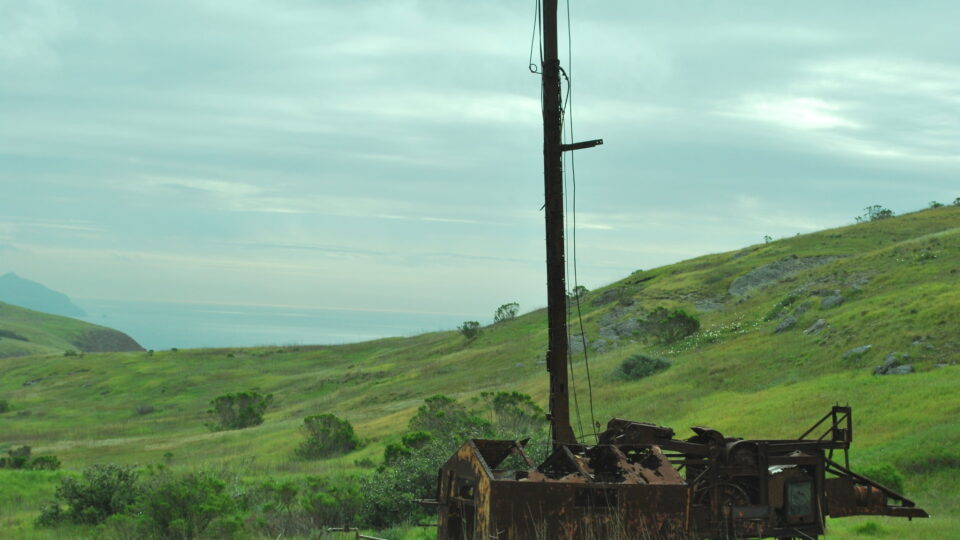
Photo, posted August 26, 2012, courtesy of RJP via Flickr.

Earth Wise is a production of WAMC Northeast Public Radio
Emissions and the Great Salt Lake

September 4, 2024 By EarthWise Leave a Comment

Emissions and the Great Salt Lake

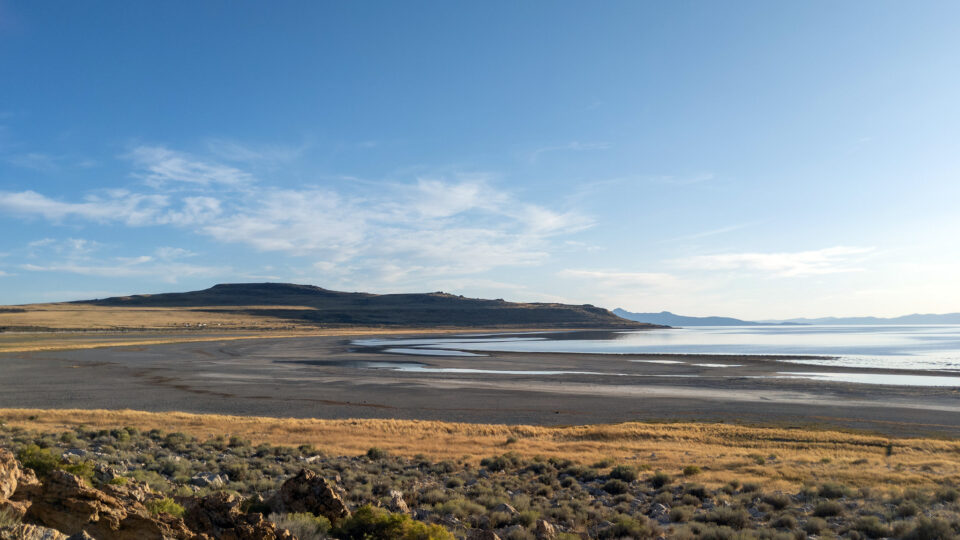
The Great Salt Lake in Utah has been described as a puddle of its former self.  The lake’s size fluctuates naturally with seasonal and long-term weather patterns, but the lake has been experiencing decline for decades as Utahans take water out of the rivers and streams that once fed the lake.  Over recent decades, the lake has lost 73% of its water and 60% of its surface area.

For years, scientists and environmental leaders have warned that the Great Salt Lake is headed toward a catastrophic decline.  Recent research has found that the lake’s desiccating shores are becoming a significant source of greenhouse gas emissions.  Scientists have calculated that the dried-out portions of the lakebed released about 4.1 million tons of carbon dioxide and other greenhouse gases in 2020.

The recent study, published in the journal One Earth, suggests that the Great Salt Lake – which is largest saltwater lake in the Western Hemisphere – as well as other shrinking saline lakes around the world could become major contributors of climate-warming emissions.

The shrinking back of the water has exposed a dusty lakebed that is laced with arsenic, mercury, lead, and other toxic substances.  Some are naturally occurring, and others are the residue of mining activity in the region.  These substances threaten to increase rates of respiratory conditions, heart and lung disease, and cancers.

As the lake shrinks, it is becoming saltier and uninhabitable to native flies and brine shrimp and may increasingly become unable to support the 10 million migratory birds and wildlife that frequent it.

The new research about greenhouse gas emissions just adds to a dire list of environmental consequences brought on by the lake’s steep decline.

**********

Web Links

Shrinking Great Salt Lake Becoming Source of Heat-Trapping Gas

Photo, posted January 20, 2020, courtesy of Matthew Dillon via Flickr.

Earth Wise is a production of WAMC Northeast Public Radio
Great Salt Lake In Danger | Earth Wise

March 20, 2023 By EarthWise Leave a Comment

Great Salt Lake is threatened by the changing climate

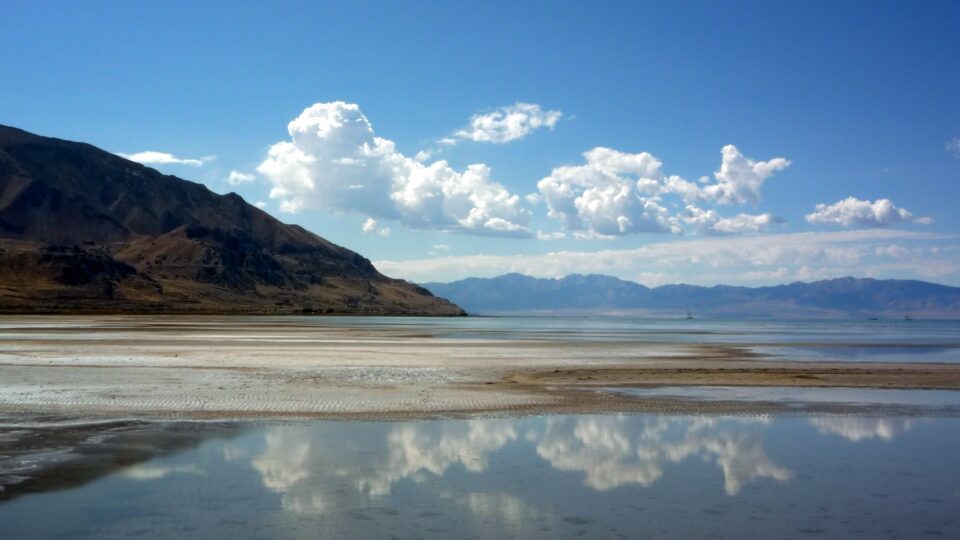
Utah’s Great Salt Lake has been plagued by excessive water use and extensive drought conditions.  As of January, the lake dropped to record-low water levels, losing 73% of its water and exposing 60% of its lakebed. According to scientists, the lake could disappear entirely within five years.

Great Salt Lake is what is known as a “terminal lake,” which means that it is fed only by rain, snow, and runoff and has no rivers that take water to the ocean.  As a result, salt and minerals build up over time.  With so much salt in the water, only brine flies and shrimp can survive in it.  The unique ecosystem supports 10 million migratory birds.  As the lake continues to dry up, the water is becoming too salty for even algae and microbes to survive.  With shallow mud replacing previous shallow water, the nests of the 80,000 white pelicans that annually come to the lake are endangered by predators that can simply walk over to the eggs.

The historic low water levels have exposed 800 square miles of lakebed.  This lakebed holds centuries of natural and manmade toxins like mercury, arsenic, and selenium.  The exposed mud ultimately turns to dust that is carried off into the air.  This is contributing to what is already some of the worst winter air pollution in the nation.  Scientists warn that the unfolding ecological disaster may become a human health disaster.

State officials and university researchers have formed a “Great Salt Lake Strike Team” looking for ways to get more water to the lake.  There are a number of so-called moonshot proposals to save the lake.  It remains to be seen what will be done, but the clock is ticking.

**********

Web Links

Great Salt Lake will disappear in 5 years without massive ‘emergency rescue,’ scientists say

Scientists fear a Great Toxic Dustbowl could soon emerge from the Great Salt Lake

Photo, posted September 19, 2009, courtesy of John Morgan via Flickr.

Earth Wise is a production of WAMC Northeast Public Radio
Dangers Of Thawing Permafrost | Earth Wise

April 12, 2022 By EarthWise Leave a Comment

The danger thawing permafrost poses

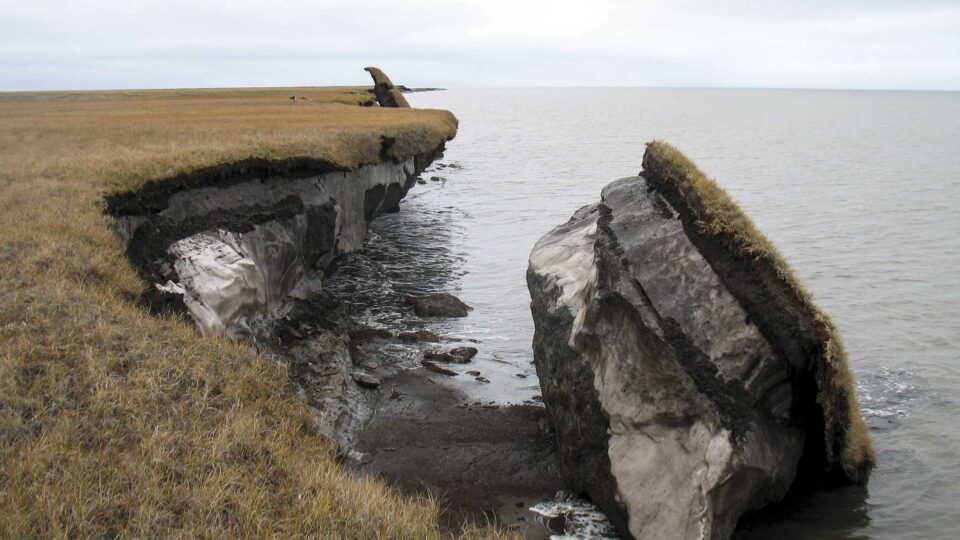
The thawing of the permafrost in the Arctic is a major concern from the standpoint of the potential release of enormous amounts of carbon dioxide trapped in it.  There are nearly 2,000 billion tons of carbon there, which is as much as humanity releases into the atmosphere in 50 years.  But greenhouse gases are not the only danger posed by permafrost thawing.  There are also microbes, unknown viruses, and chemicals that could be very dangerous.

More than 100 diverse microorganisms in Siberia’s deep permafrost have been found to be antibiotic resistant.  The deep permafrost is one of the few environments on Earth that have not been exposed to modern antibiotics.  As the permafrost thaws, its bacteria could mix with meltwater and create new antibiotic-resistant strains.

By-products of fossil fuels – introduced into permafrost environments since the beginning of the industrial revolution – are present.  Metal deposits including arsenic, mercury, and nickel, have been mined for decades and have contaminated large areas.

Now-banned pollutants and chemicals – including DDT – came to the Arctic through the atmosphere and over time have become trapped in the permafrost.

There is now ongoing research further characterizing the microbes frozen in permafrost and providing more precise measurement of emissions hotspots in permafrost regions.  Scientists are increasingly turning to integrated Earth observations from the ground, the air, and space.

There are models that predict the gradual release of emissions from permafrost over the next century.  Other models say it could happen within just a few years.  The worst-case scenario would be utterly catastrophic but none of the scenarios portend anything good.

**********

Web Links

Thawing Permafrost Could Leach Microbes, Chemicals Into Environment

Photo, posted February 9, 2017, courtesy of Benjamin Jones/USGS via Flickr.

Earth Wise is a production of WAMC Northeast Public Radio.

Cleaning Up Abandoned Wells | Earth Wise      

March 3, 2022 By EarthWise Leave a Comment

Addressing the abandoned oil and gas wells

There are 130,000 documented abandoned oil and gas wells in the US, according to the Department of the Interior.  The key word is documented.  According to an EPA study in 2018, the actual number of abandoned wells could be as high as two or three million.  According to an analysis by the Environmental Defense Fund and McGill University, about nine million people in the United States live within a mile of one of these wells.

Some of these wells might be fairly harmless, and others might be quite dangerous.  Wells can emit a variety of gasses, including methane, which is a far stronger greenhouse gas than carbon dioxide.  Leaking wells are a major source of air and groundwater pollution.  Apart from methane, substances such as arsenic can continue to leak from wells even after they are no longer operational.

At the end of January, the Biden Administration announced a series of new actions to tackle methane pollution.  Among these measures is $1.15 billion in funds from the Department of the Interior that states can use to seal up abandoned oil and gas wells.  That funding comes from the Bipartisan Infrastructure Law passed in November, which sets aside $4.7 billion for a federal program dedicated to orphaned wells.

Addressing the largely ignored problem of abandoned wells is important from the standpoint of climate pollution as well as human health.  Efforts to plug the wells will also provide high-paying jobs

Other methane-reduction measures include increased enforcement from the Department of Transportation on reducing pipelines leaks, research funding for limiting methane emissions from beef and dairy farming, and technical assistance from the Department of Energy on well-plugging efforts.

**********

Web Links

Photo, posted March 23, 2011, courtesy of David Stone via Flickr.

Earth Wise is a production of WAMC Northeast Public Radio.

How Safe Is Drinking Water?

March 26, 2018 By EarthWise Leave a Comment

https://earthwiseradio.org/wp-content/uploads/2018/03/EW-03-26-18-How-Safe-Is-Drinking-Water.mp3

Water is life.  It’s a fundamental need for every human being on the planet.  Each person requires more than five gallons of clean and safe water a day for drinking, cooking, and keeping clean.  Dirty water, on the other hand, can be deadly.  An estimated 1.8 million people die every year as a result of diarrheal diseases like cholera.  And tens of millions of people are seriously sickened by water-related maladies. 

[Read more…] about How Safe Is Drinking Water?

Primary Sidebar

Recent Episodes

  • An uninsurable future
  • Clean energy and jobs
  • Insect declines in remote regions
  • Fossil fuel producing nations ignoring climate goals
  • Trouble for clownfishes

WAMC Northeast Public Radio

WAMC/Northeast Public Radio is a regional public radio network serving parts of seven northeastern states (more...)

Copyright © 2026 ·