• Skip to primary navigation
  • Skip to main content
  • Skip to primary sidebar

Earth Wise

A look at our changing environment.

  • Home
  • About Earth Wise
  • Where to Listen
  • All Articles
  • Show Search
Hide Search
You are here: Home / Archives for area

area

The largest iceberg runs aground

April 10, 2025 By EarthWise Leave a Comment

The largest iceberg in the world, which has been slowly drifting for nearly 5 years, has finally come to a halt.  The iceberg – called the unexciting name A-23A – came into existence in 1986 when it broke off from another iceberg A-23 that had calved or torn off from Antarctica earlier that year.  For decades, A-23A sat in the Weddell Sea, east of the Antarctic Peninsula.  Then, in 2020, it came loose from the seafloor and began to move.  By 2023, it finally left Antarctic Waters.

Late last year, it began spinning in place caught in an ocean current called a Taylor column.  Finally, it headed for South Georgia, a British-owned island that is home to a couple dozen people and lots of seals and penguins.  A-23A is now stuck on the continental shelf, about 50 miles from the island.

A-23A is around 1,300 square miles in area.  By comparison, New York City is 300 square miles.

Four years ago, a large iceberg called A-68A also came to ground in the vicinity of South Georgia.  It quickly broke apart and ultimately added 150 billion metric tons of fresh water to the ocean as well as various nutrients.  A-23A is also likely to succumb to the warmer waters, winds, and currents it now encounters and will affect the flora and fauna in the area.

The climate is changing and is impacting how ice shelves melt.  Calving and the creation of mammoth icebergs are a normal part of the lifecycle of polar ice sheets, but we are likely to see even more events like this in the future.

**********

Web Links

World’s Largest Iceberg Runs Aground

Photo, posted January 29, 2011, courtesy of Drew Avery via Flickr.

Earth Wise is a production of WAMC Northeast Public Radio

Electric cars and power outages

October 21, 2024 By EarthWise Leave a Comment

Examining the resiliency of electric cars during power outages

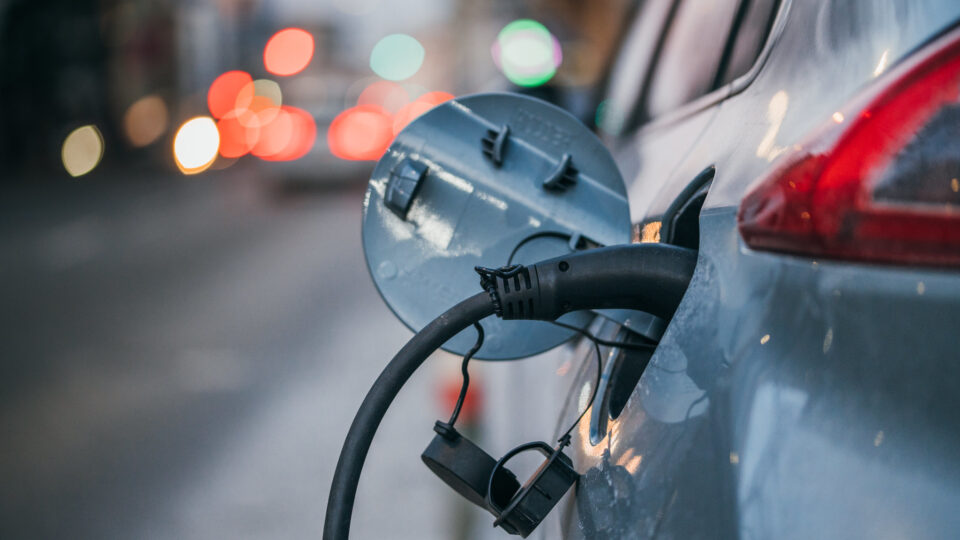
As more and more cars are powered by electricity instead of gasoline, people are beginning to worry about what happens during power outages caused by storms and other disruptive events.  It is easy to jump to the conclusion that this is a brand-new problem for drivers.  However, when electricity goes out over a sizeable area, most gas pumps stop working and it isn’t easy to keep gas cars running either.

Electric cars are often charged at home every day and such cars are more likely to be almost fully charged than nearly depleted at any time.  For those drivers, a power failure is unlikely to be much of a concern unless it persists for a very lengthy period.  On road trips, unless a power outage extends over a very wide area, one can probably get to a charger that is still operating.

Nonetheless, the federal government has commissioned researchers at Iowa State University to study potential solutions to possible difficulties in keeping electric cars running during power failures.  The goal of the study is to find ways to reduce the outage frequency of chargers by 75% and the power restoration time by 50%.

The study will evaluate the resiliency of charging stations in extreme weather events and identify ways to quickly restore power to charging stations in the event of outages.  Included are onsite solar power and battery storage at chargers as well as redundant power lines from different electrical substations.  There is even the possibility  of trucks delivering pre-charged batteries to charging stations after a storm.  Identifying and developing technologies to improve the resilience of charging stations is an important goal as the transition to electric vehicles continues.

***********

Web Links

Researchers working to keep electric vehicles charging, even when the lights go out

Photo, posted July 29, 2013, courtesy of Jeff Cooper via Flickr.

Earth Wise is a production of WAMC Northeast Public Radio
Lithium in Arkansas

April 11, 2024 By EarthWise Leave a Comment

New method being explored to tap lithium deposits in Arkansas

There are more and more electric cars on the road and utilities are installing record amounts of battery storage to back up solar and wind power generation.  Both of these things currently use lithium-ion batteries so the need for them keeps growing.

There is actually plenty of lithium in the world.  Sources of more than 100 million tons have been identified, which is enough to meet the projected needs for decades.  But lithium is not easy, cheap, or environmentally friendly to extract.  It is either blasted out of rocks that are then roasted at 2000-degree temperatures, or it is extracted from brine in places like the high Andes where it leaves behind toxic residues.  Ramping up lithium production could greatly diminish the environmental benefits derived from green technologies.

A technique called direct lithium extraction, or DLE, may be a possible solution.  The lithium is pulled out of brine while leaving other dissolved compounds behind.  It is being tested in many places around the world and appears to offer the lowest negative impacts of available extraction technologies.

The Salton Sea area in California has rich deposits of lithium and is a good candidate for DLE.  But conditions may be even better in Arkansas whose Smackover Formation is a brine-rich expanse of limestone. 

The area was a productive oil field a hundred years ago and then undertook brine-processing in the 1950s to extract bromine.  So, the area already has industrial infrastructure and no new land would need to be cleared.

The former oil fields of Arkansas may become an important domestic source of lithium.

**********

Web Links

In Rush for Lithium, Miners Turn to the Oil Fields of Arkansas

Photo, posted February 26, 2021, courtesy of Ivan Radic via Flickr.

Earth Wise is a production of WAMC Northeast Public Radio
Prospects For Floating Solar | Earth Wise

October 10, 2022 By EarthWise Leave a Comment

Floating solar may power the future

Countries are trying to figure out how to get enough energy from solar and wind generation to completely decarbonize their economies.  According to some estimates, nations might have to devote between half a percent and five percent of their land area to solar panels to get the job done.  Half a percent is about the amount of the U.S. that is covered by paved roads.  While there is lots of open land in many parts of the country, covering it with solar panels might not be acceptable to farmers, conservationists, or other interested parties.

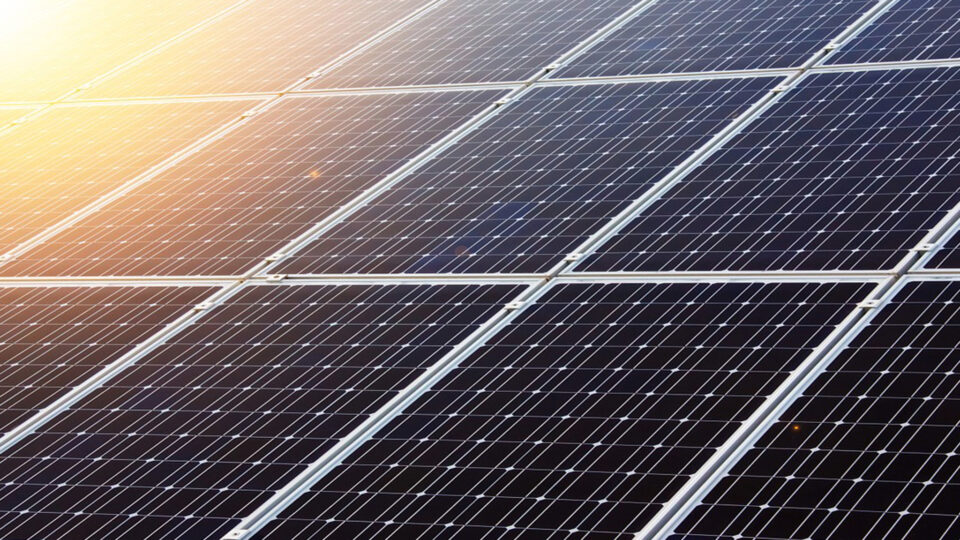
One way to deploy more solar panels without using up land is the use of floating solar panels.  Floating photovoltaic systems – also known as floatovoltaics – are becoming increasingly common, especially in Asia.  This year, China installed one of the largest floatovoltaic systems in the world on a reservoir near the city of Dezhou.

Floating solar panels stay cooler and run more efficiently than those on land.  The panels also help prevent evaporation from their watery homes and the shading they provide also help to minimize algal blooms.  Solar installations on reservoirs generally puts them near cities, making it easier to feed power into urban grids.

On the other hand, floating solar systems need to be able to withstand water and waves and are generally more expensive to build than land-based systems.

At present, the installed global capacity of floating solar is only about 3 gigawatts, compared with more than 700 gigawatts of land-based systems. However, reservoirs around the world collectively cover an area about the size of France.  Covering just 10 percent of them with floating solar could produce as much power as all the fossil-fuel plants in operation worldwide.

**********

Web Links

Solar Takes a Swim

Photo, posted March 7, 2019, courtesy of Hedgerow INC via Flickr.

Earth Wise is a production of WAMC Northeast Public Radio
Moving Up And Away | Earth Wise

May 21, 2020 By EarthWise Leave a Comment

Climate change and habitat

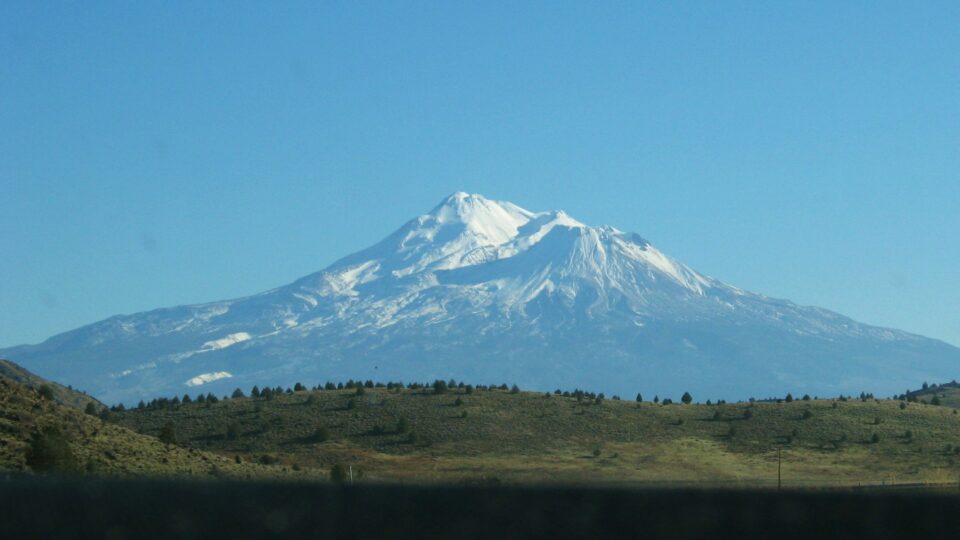
A new study by the Wildlife Conservation Society, the US Forest Service, and UC Berkeley has shown that mountain-dwelling species trying to escape warming temperatures may also be finding refuge from human pressure.

The study shows that nearly 60% of the world’s mountainous areas are under intense human pressure.  Most of that pressure occurs at lower elevations and mountain bases, where more people live, grow food, and build roads.  The researchers used climate models to predict how various species would move as the climate changes.   Based upon these predictions, they found that species tend to move to higher elevations, where temperatures are lower.  But those elevations also have more intact land for species because there is less human activity.

Mountains are home to over 85% of the world’s amphibians, birds, and mammals and these species are at risk from human activities such as agriculture, livestock grazing, and development.  These things reduce their habitats, but meanwhile the warming climate pushes them upslope as they struggle to find tolerable temperatures.

The researchers point to their study as new guidance for conservation efforts.  They warn that many conservation efforts don’t take into account the effects of human pressure.   Factoring in human pressure reveals the true extent of mountainous areas for species that are restricted to intact landscapes.  These are often the species that are of greatest concern to conservationists.  This true shape refers to how much land area is potentially available as habitat for a species as it moves up in elevation.  

The results offer a glimmer of hope for mountain-based species under climate change as they move away from the most intense human activity.

**********

Web Links

Climate change may push some species to higher elevations — and out of harm’s way

Photo, posted November 22, 2007, courtesy of Flickr.

Earth Wise is a production of WAMC Northeast Public Radio.

Methane-Eating Bacteria And Greenhouse Gas Emissions | Earth Wise

May 20, 2020 By EarthWise Leave a Comment

greenhouse gas emissions

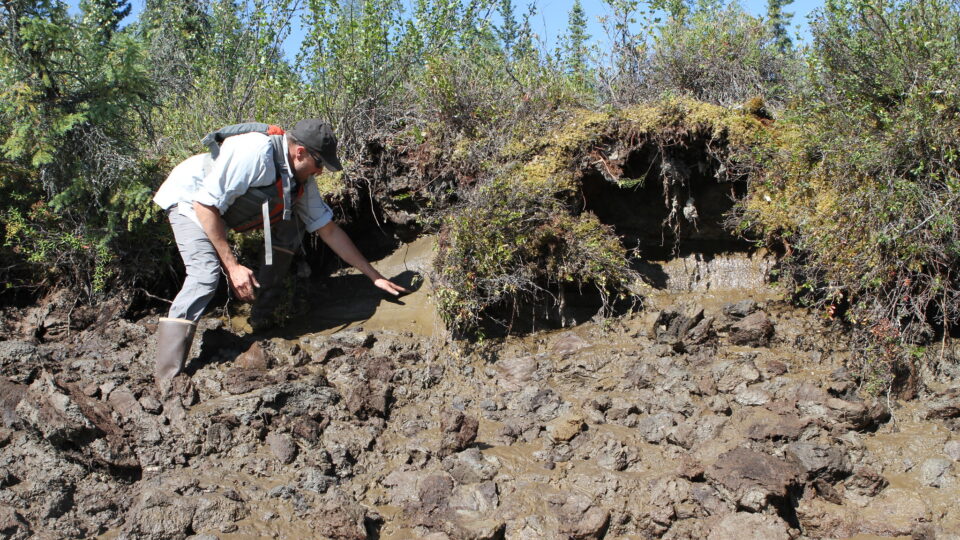
One of the great concerns about the warming Arctic temperatures is that thawing permafrost will release alarming amounts of methane into the atmosphere.  Organic material in the permafrost begins to decompose when temperatures rise, and methane is released in the process.

Methane is a far more potent greenhouse gas than carbon dioxide.  Methane’s lifetime in the atmosphere is much shorter than carbon dioxide, but it is more efficient at trapping radiation.  Pound for pound, the comparative impact of methane is more than 25 times greater than carbon dioxide.

A new study, published by scientists at Purdue University, has discovered a type of methane-oxidizing bacteria living in upland Arctic soils that could potentially be reducing the amount of methane emitted by decomposing permafrost.

The findings of the research indicate that the net greenhouse gas emissions from the Arctic may be much smaller than previously modeled because of the increased productivity of a type of bacteria known as high affinity methanotrophs, or HAMs.  This group of bacteria uses atmospheric methane as an energy source.  The emissions from wetlands will potentially be very large, but the contribution from the uplands will be mitigated by the bacteria.

Organic-rich soils, including permafrost, comprise only 13% of the Arctic land area and are the major source of methane emissions.  The other 87% of the region is dominated by mineral-rich soils that support HAMs.  Because of this, overall methane emissions continue to be less than climate models have predicted.

While this is good news, the researchers warn that Arctic emissions overall will continue to increase as shown in other studies.

**********

Web Links

Methane-Eating Bacteria Could Help Decrease Greenhouse Gas Emissions From Thawing Arctic Tundra

Photo, posted July 12, 2016, courtesy of Flickr.

Earth Wise is a production of WAMC Northeast Public Radio.

Primary Sidebar

Recent Episodes

  • An uninsurable future
  • Clean energy and jobs
  • Insect declines in remote regions
  • Fossil fuel producing nations ignoring climate goals
  • Trouble for clownfishes

WAMC Northeast Public Radio

WAMC/Northeast Public Radio is a regional public radio network serving parts of seven northeastern states (more...)

Copyright © 2026 ·