• Skip to primary navigation
  • Skip to main content
  • Skip to primary sidebar

Earth Wise

A look at our changing environment.

  • Home
  • About Earth Wise
  • Where to Listen
  • All Articles
  • Show Search
Hide Search
You are here: Home / Archives for affordability

affordability

Positive tipping points and climate

January 29, 2024 By EarthWise Leave a Comment

We often hear about tipping points and climate change.  Tipping points are critical thresholds that, when crossed, lead to large, accelerating, and often irreversible changes.  Some of the ones of concern with the climate are thawing permafrost, melting glaciers and ice sheets, and global temperatures reaching certain levels.  These are all tipping points that are essential to avoid.

A study published in the journal One Earth by researchers at the University of Exeter in the UK contends that in order to avoid the severe consequences of climate change, we need to trigger some positive tipping points.

Many climate-friendly changes are happening too slowly.  Triggering positive tipping points is a way to rapidly reach the high levels of decarbonization required to avoid triggering the negative tipping points of great concern.

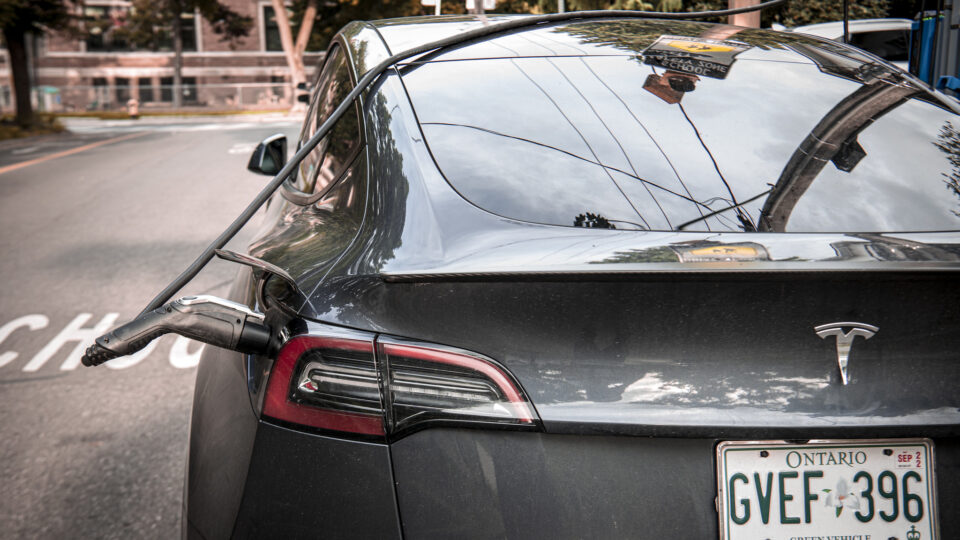
Reaching a positive tipping point is a way that beneficial changes can rapidly gain momentum.  One example is the adoption of electric vehicles.  It has clearly reached a tipping point across Scandinavia and has happened rapidly.  Norway has managed to transition the market share of electric vehicles from under 10% to nearly 90% in less than 10 years.  At some point, everybody wanted an electric car.  This is evidence that positive tipping points can happen.

Many of the other forms of decarbonization need to move from their current level of adoption to rapid expansion.  A combination of affordability, attractiveness, availability, and political will are needed to trigger tipping points.  Exactly what those tipping point are is not necessarily known, but unless something accelerates the current pace of change, it will be very difficult to prevent negative climate tipping points from changing the world in destructive ways.

**********

Web Links

Positive tipping points must be triggered to solve climate crisis

Photo, posted July 8, 2023, courtesy of Michael Swan via Flickr.

Earth Wise is a production of WAMC Northeast Public Radio

A Better Solar Evaporator | Earth Wise

May 21, 2021 By EarthWise Leave a Comment

Technology breakthrough to help reduce water stress

Water security is a serious global problem.  Nearly 1.5 billion people – including almost half a billion children – live in areas of high or extremely high water vulnerability.  Less than 3% of the world’s water is fresh and demand for it is rising with increasing population growth, urbanization, and growing water needs from a range of sectors.

Researchers at the University of South Australia have developed a promising new technique that could help reduce or eliminate water stress for millions of people.  The technique uses highly efficient solar evaporation to obtain fresh water from seawater, brackish water, or even contaminated water.   According to the researchers, their technique can deliver enough daily fresh drinking water for a family of four from just one square meter of source water.

Solar evaporation has been the focus of a great deal of effort in recent years, but it has generally been found to be too inefficient to be practically useful.  The new technique overcomes those inefficiencies and can deliver fresh water at a fraction of the cost of existing technologies like reverse osmosis.

The system utilizes a highly efficient photothermal structure that sits on the surface of a water source and converts sunlight to heat, focusing energy precisely on the surface to rapidly evaporate the uppermost portion of the liquid.  The technique prevents any loss of solar energy and even draws additional energy from the bulk water and surrounding environment.

The system is built entirely from simple, everyday materials that are low cost, sustainable, and easily obtainable.

The technology has the potential to provide a long-term clean water solution to people who can’t afford other systems, and these are the places where such solutions are most needed.

**********

Web Links

Sunlight to solve the world’s clean water crisis

Photo, posted November 13, 2016, courtesy of Steve Austin via Flickr.

Earth Wise is a production of WAMC Northeast Public Radio.

The Changing Climate Is Changing Insurance

October 21, 2020 By EarthWise Leave a Comment

Climate Change is Changing Insurance

As the climate changes, wildfires get bigger and more destructive and hurricanes and powerful storms are more frequent and damaging.  In places where these things are occurring, it is getting harder and more expensive for many homeowners to get insurance.  The affordability of home insurance in the face of climate change has become a huge issue in many states.

In California, the number of homeowners who got non-renewal notices from their insurance companies rose by 6% between 2017 and 2018.  In areas directly affected by wildfires between 2015 and 2017, that number jumped by 10%. Similar things have happened in Florida, Louisiana, Mississippi, and Texas, where hurricanes and flooding have caused extensive damage.  Because of this, many homeowners have been forced to turn to bare-bone plans such as the California Fair Access to Insurance Plan, which can cost two or three times as much as normal insurance policies.

According to a 2019 survey of insurance companies, more than half of insurance regulators said that climate change was likely to have a high impact or an extremely high impact on the availability of insurance coverage and the assumptions used for underwriting.  In the past, governments have been able to mandate coverage in certain areas or even provide coverage themselves in some cases.  As the occurrence of climate-related damage becomes increasingly frequent, homeowners have to face up to a grim reality.

The challenges of dealing with wildfires, floods, powerful storms, and the like are significant enough for people who live in high-risk areas.  Increasingly, home insurance in these places is becoming much more expensive, harder to find, and is worth less.

**********

Web Links

As Climate Impacts Worsen, Homeowners Struggle to Find Affordable Insurance

Photo, posted September 1, 2020, courtesy of The National Guard via Flickr.

XXXXXXXXXXXXXXXXX

Lifestyle And Carbon Footprint | Earth Wise

March 23, 2020 By EarthWise Leave a Comment

lifestyle impacts our carbon footprint

Many studies have shown, to no great surprise, that affluent lifestyles lead to larger carbon footprints. Households in Switzerland enjoy a high standard of living and a team of researchers there has been studying the consumption and travel habits of Swiss citizens to better understand the impact of various factors on carbon footprint. Key factors include household composition and income, and whether the households are in the city or the countryside – even though, in the end, people’s lifestyles do not differ greatly from one environment to another. 

A team of researchers at EPFL’s School of Architecture, Civil and Environmental Engineering analyzed data from Switzerland’s household budget survey for 2008, 2011 and 2014.  They combined that data with an environmentally extended input-output analysis to assess households’ carbon footprints by measuring their direct and indirect emissions.

Overall, households in the countryside have larger carbon footprints than those in the city, mainly because they travel more and use more energy in their homes. But urban households have larger carbon footprints than their rural counterparts when it comes to food, clothing, cultural activities and air travel.  

A household’s composition directly influences its carbon footprint. A two-person household has the largest per-capita carbon footprint, and it falls as the size of the family grows since many of the same resources are shared by more people. 

Income levels play an important role.  People consume without much thought because they can afford to and enjoy doing it. But there is a trend towards people becoming more conscious of their levels of consumption and trying to be more responsible in Switzerland.  Overall consumption has actually declined over the years studied.  

**********

Web Links

Our carbon footprint is highly impacted by how we live

Photo, posted December 19, 2017, courtesy of Alexander Kozik via Flickr.

Earth Wise is a production of WAMC Northeast Public Radio.

Greenhouse Emissions And Food Choices

August 6, 2018 By EarthWise Leave a Comment

https://earthwiseradio.org/wp-content/uploads/2018/06/EW-08-06-18-Greenhouse-Emissions-and-Food-Choices.mp3

Changes in diet have often been proposed as a way to reduce overall greenhouse gas emissions.  However, there has not been much research about the affordability and feasibility of such changes.

[Read more…] about Greenhouse Emissions And Food Choices

Organic Food Is Increasingly Affordable

July 8, 2016 By WAMC WEB

https://earthwiseradio.org/wp-content/uploads/2016/06/EW-07-08-16-Organic-Food-Increasingly-Affordable.mp3

Organic food is increasingly popular.  Food chains like Sprouts and Whole Foods as well as local food coops and health food stores have led the charge.  More recently, major supermarket chains have growing organic departments in their stores.  In fact, in 2015, sales of organic foods in the U.S. reached $43 billion, an increase of 11% over just the the previous year. 

[Read more…] about Organic Food Is Increasingly Affordable

Primary Sidebar

Recent Episodes

  • An uninsurable future
  • Clean energy and jobs
  • Insect declines in remote regions
  • Fossil fuel producing nations ignoring climate goals
  • Trouble for clownfishes

WAMC Northeast Public Radio

WAMC/Northeast Public Radio is a regional public radio network serving parts of seven northeastern states (more...)

Copyright © 2026 ·