
• Skip to primary navigation
  • Skip to main content
  • Skip to primary sidebar

Earth Wise

A look at our changing environment.

  • Home
  • About Earth Wise
  • Where to Listen
  • All Articles
  • Show Search
Hide Search
You are here: Home / Archives for adults

adults

Dark chocolate is not so dangerous

July 15, 2024 By EarthWise Leave a Comment

dark chocolate does not seem so dangerous after all

Last year, Consumer Reports published a story stating that a third of chocolate products contain potentially dangerous amounts of heavy metals, in particular lead and cadmium. Since it contains much more cacao, dark chocolate was singled out as the most worrisome product.  Needless to say, chocolate lovers found this report quite alarming.

A new study by Tulane University published in Food Research International employed a larger sample size, expanded the scope of testing to 16 metals, and included a risk assessment of toxic metals as well as accounted for the nutritional contribution of essential minerals.

The conclusions of the study were that dark chocolate poses no adverse risk for adults and contains nutritionally beneficial levels of essential minerals.  Some risks remain for very young children, but only from a very small number of chocolate products and only when large quantities are consumed.

The study sampled 155 dark and milk chocolates from various global brands sold in the United States.  It modeled the risk of eating one ounce of the chocolate per day or two large whole bars a week.

Only one brand exceeded the international limit for cadmium; four had cadmium levels that could pose a risk for a child weighing less than 33 pounds.  Only two bars contained lead levels above California interim standard, but neither posed adverse risks for anyone.

Lead in chocolate comes from post-harvest processing; cadmium comes from the soil.  South American chocolates generally have higher levels of metals than chocolates from Asia and West Africa.  Most dark chocolate in the U.S. is sourced from West Africa.

**********

Web Links

A dark side to dark chocolate? New study finds very minimal risk for kids from metals in chocolates

Photo, posted February 19, 2012, courtesy of Bodo via Flickr.

Earth Wise is a production of WAMC Northeast Public Radio

Who’s driving electric?

April 3, 2024 By EarthWise Leave a Comment

Who's adopting electric vehicles?

Electric cars are growing in popularity around the world and are expected to represent 20% of new car sales this year.  In some places, they have a much bigger share:  38% in China and a whopping 82% in Norway.  Here in the U.S., things are more complicated.

Last year, EVs represented 8.5% of U.S. new car sales while hybrids accounted for an additional 10%.  But enthusiasm for plug-in vehicles was by no means universal or consistent across the country or across various segments of the population.

Overall, the West Coast, and especially California, dominated the electric vehicle market.  Electric vehicles accounted for more than 30% of new car sales in the San Francisco Bay Area.  In Los Angeles, the number was close to 25%.

A number of metro areas elsewhere also had strong EV sales, including Denver, Las Vegas, Washington DC, Austin, and Phoenix.  New York City had almost 10% EV registrations. 

Americans buying electric cars so far tend to be richer, younger, and more likely to live in urban areas than the average person and are often motivated by environmental concerns.  Meanwhile, about half of American adults say they are not likely to consider purchasing an EV as their next car and that figure rises to 70% for Republicans.

Lack of interest in EVs is often based on concerns about the availability of sufficient charging options or high EV prices, although those are dropping.  There is also concern about EV efficiency in colder climates, although the Norwegians clearly don’t find it to be a problem.

**********

Web Links

Electric Vehicles

Photo, posted October 18, 2021, courtesy of Chris Yarzab via Flickr.

Earth Wise is a production of WAMC Northeast Public Radio
Americans And Lead Exposure | Earth Wise

April 4, 2022 By EarthWise Leave a Comment

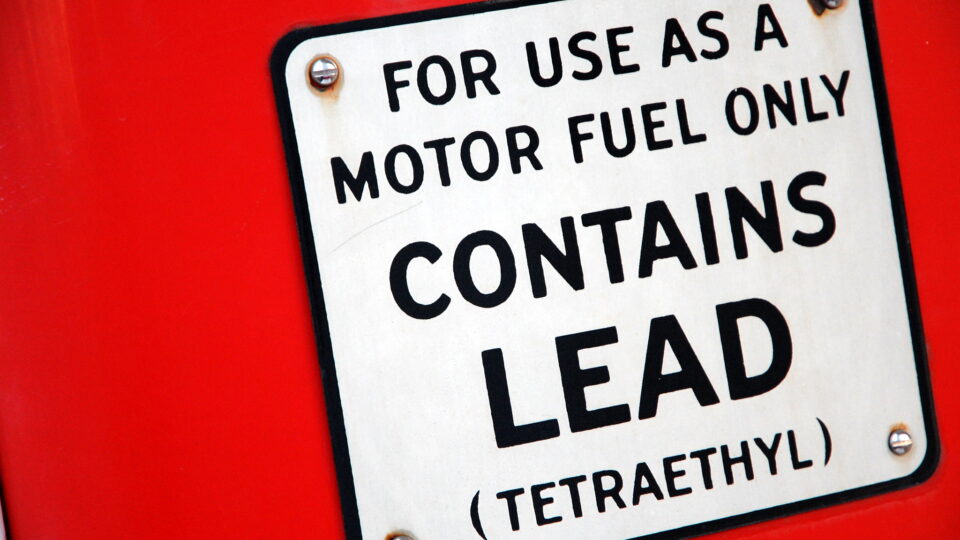
The legacy of lead remains a problem

Long-term exposure to lead can cause serious health problems, especially in children.  Children are particularly vulnerable because their early years are characterized by rapid growth and brain development.

Lead is a powerful neurotoxin that can cause damage even at low levels of exposure.  Lead poisoning can be acute, and can cause all sorts of health issues, including stomach pain, brain damage, and even death.  Because lead accumulates in the body over time, lead poisoning can develop slowly. Exposure to lead can also contribute to a lower IQ and behavioral problems that can last a lifetime.

Lead is a naturally occurring element found in small amounts in earth’s crust.  But as a result of human activities, lead can be found in all parts of the environment, including the air, soil, and water.

According to a new study recently published in the journal Proceedings of the National Academy of Sciences, approximately half of U.S. adults alive today were exposed to harmful levels of lead as children from the burning of leaded gasoline.  The research team estimates that lead contamination has lowered those Americans’ IQ scores by more than two points on average.

In the study, the researchers used data on childhood blood-lead levels, leaded gasoline use, and population to gauge the lifetime exposure of every American adult in 2015.  They found that more than 170 million Americans had exposure to concerning levels of lead as children.  Those who grew up in the 60s and 70s, when the burning of leaded gasoline was at its peak, had the greatest exposure, losing up to six IQ points on average. 

The legacy of lead exposure remains a persistent problem.

**********

Web Links

Half of Americans Exposed to Harmful Levels of Lead as Children

Lead Exposure Remains A Persistent Problem

Photo, posted February 13, 2010, courtesy of Steve Snodgrass via Flickr.

Earth Wise is a production of WAMC Northeast Public Radio.

What’s Killing Orcas? | Earth Wise

January 18, 2021 By EarthWise Leave a Comment

Humans are killing orcas

With their characteristic tall dorsal fins and black and white color patterns, orcas are one of the ocean’s most iconic species.  Measuring up to 32 feet long and weighing as much as 6 tons, orcas have one of the largest geographic distributions of any species.  They live in all latitudes, in all oceans, from the Arctic to Antarctica.    

While they are often referred to as killer whales, orcas are actually not whales at all.  Orcas are the largest dolphin species and one of the most powerful predators on the planet. 

But human interference has made life significantly more difficult for orcas in recent years.  According to pathology reports on more than 50 orcas stranded over nearly a decade in the northeast Pacific and around Hawaii, the predators face a myriad of mortal threats.  Many of those threats stem from human interactions. 

Researchers from the British Columbia Ministry of Agriculture analyzed these orca pathology reports in a new study, which was recently published in the journal PLOS ONE,.  Of 52 orcas stranded between 2004 and 2013, causes of death were determined for 42%. For example, one orca died after receiving a halibut hook injury. Two orcas died from the blunt force trauma of vessel strikes. While there was no singular common cause of death, the study found a common theme:  human-caused deaths occurred in every age class – from juveniles to adults.

The researchers also note that humans aren’t just indirectly hurting orcas with things like lack of salmon or legacy toxins.  Humans are also directly killing killer whales with boat strikes and fishing gear.   

These findings will help establish a baseline of information to assess future orca conservation efforts. 

**********

Web Links

What’s killing killer whales?

Photo, posted July 5, 2009, courtesy of Rennett Stowe via Flickr.

Earth Wise is a production of WAMC Northeast Public Radio.

New Nutrition Labels

February 26, 2019 By EarthWise 1 Comment

Food and beverage packaging in this country has included a Nutrition Facts panel for nearly 25 years.  Over 700,000 products have the labels which provide consumers with information like serving sizes, calories per serving, ingredients, and nutritional content.

Surveys indicate that 77 percent of all U.S. adults claim to use the labels at least some of the time.  Whether the labels are actually useful is somewhat debatable.  A couple of years ago, the FDA released a proposal to update the labels to make them more useful and to reflect more recent nutritional research.  The new labels are finally going to be implemented and food manufacturers with annual sales exceeding $10 million have until January of 2020 to update their packaging with the new labels.

One of the biggest changes is that the “serving size” section of the label will be changed to more accurately reflect the actual portions consumed by the typical American.  For example, a 20-ounce soft drink will now be labeled as a single serving because most people will drink the whole bottle in one sitting.

The new labels will no long list the amounts of Vitamin A and C, because recent research shows most Americans are not deficient in these nutrients.  Instead, the amount of Vitamin D and potassium will be listed, two nutrients lacking in many diets.  New labels will also show amounts of “added sugars”, defined as caloric sweeteners with no nutritional value. The new labels will also display the calories per serving in much large type making that piece of information far more noticeable.

There is surely more to be done to make food labeling more transparent and useful for consumers, but the new changes at least seem to be in the right direction.

**********

Web Links

Nutrition Labels Get a Makeover: Will It Make a Difference?

Photo, posted September 9, 2014, courtesy of Mike Mozart via Flickr.

Earth Wise is a production of WAMC Northeast Public Radio.

Primary Sidebar

Recent Episodes

  • An uninsurable future
  • Clean energy and jobs
  • Insect declines in remote regions
  • Fossil fuel producing nations ignoring climate goals
  • Trouble for clownfishes

WAMC Northeast Public Radio

WAMC/Northeast Public Radio is a regional public radio network serving parts of seven northeastern states (more...)

Copyright © 2026 ·