• Skip to primary navigation
  • Skip to main content
  • Skip to primary sidebar

Earth Wise

A look at our changing environment.

  • Home
  • About Earth Wise
  • Where to Listen
  • All Articles
  • Show Search
Hide Search
You are here: Home / Archives for 2018

2018

Reliability of renewable energy

February 25, 2025 By EarthWise Leave a Comment

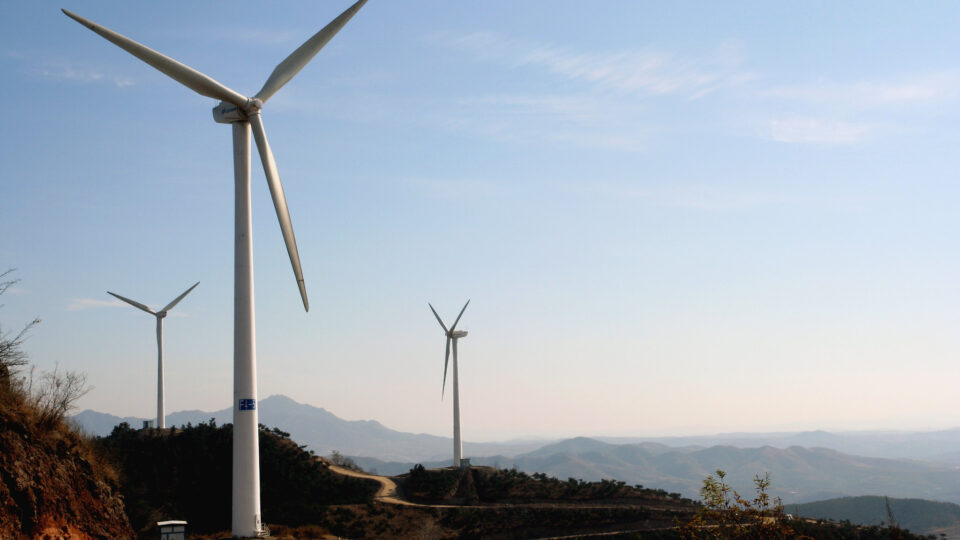
Renewable energy is reliable

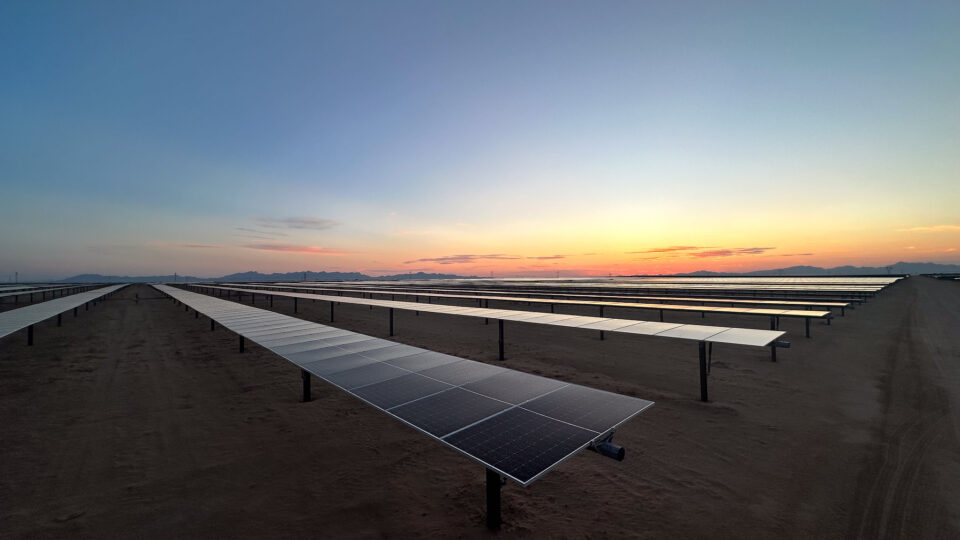
Naysayers about renewable energy often claim that it is unreliable.  It is true that the sun sets every night and sometimes the wind doesn’t blow.  But with the growing use of battery banks to store excess power generated by renewables, the lack of reliability of renewable energy is turning out to be a myth.

A new study published in the journal Renewable Energy looked at the deployment of renewable energy in California last year.  From late winter to early summer, renewable sources supplied 100% of the state’s electricity demands for up to 10 hours on 98 out of 116 days.  There were no blackouts during that time thanks in part to the presence of battery backup power.  During peak generation periods, the renewables provided as much as 162% of the grid’s needs. 

The main finding of the study is that the electricity grid can be kept stable even as it adds more and more renewables.  Beyond that, every major renewable energy source – geothermal, hydroelectric, wind, and especially solar – is on average lower in cost than fossil fuels.

Despite the low cost of renewable energy, Californians pay the second highest rates for electricity in the country.  Part of the reason is that electrical equipment from utilities has set off wildfires, notably the 2018 Camp Fire that devastated the town of Paradise and killed 85 people.  California’s utilities are now passing the costs that come from lawsuits and from burying transmission lines to their customers.  Overhead power lines are especially prone to falling in high winds and igniting fires.

**********

Web Links

California just debunked a big myth about renewable energy

Photo, posted December 16, 2024, courtesy of EDF Renewables / Bureau of Land Management California via Flickr.

Earth Wise is a production of WAMC Northeast Public Radio

Perennial Rice | Earth Wise

December 9, 2022 By EarthWise Leave a Comment

People have been cultivating rice for more than 9,000 years.  Cultivated rice is an annual crop which is often extended to two crops a year by a process called ratooning, which is cutting back annual rice to obtain a second, weaker harvest.

An extensive project involving multiple institutions in China, the U.S., and Australia has been developing perennial rice.  The researchers developed it through hybridization, crossing a type of Asian domesticated annual rice with a wild perennial rice from Africa.  Using modern genetic tools to identify candidate plants, the team identified a promising hybrid in 2007, planted large-scale field experiments in 2016, and released the first commercial perennial rice variety, called PR23, in 2018.

The researchers spent five years studying the performance of the perennial rice alongside annual rice on farms in China’s Yunnan Province.  For the most part, the yield of the perennial rice was equivalent to that of annual rice over a period of four years. 

Because farmers don’t have to plant rice each season, growing perennial rice requires almost 60% less labor and saves nearly half the costs of seed, fertilizer, and other inputs.

Perennial rice is already changing the lives of more than 55,000 smallholder farmers in southern China and Uganda.  The economic benefits vary by location, but overall profit increases ranged from 17% to 161% over annual rice.

There are already three perennial rice varieties available to farmers, but researchers aren’t done refining the crop.  They plan to use their methodology to enhance traits such as aroma, disease resistance, and drought tolerance to newer versions.

**********

Web Links

Farmers in China, Uganda move to high-yielding, cost-saving perennial rice

Photo, posted February 25, 2002, courtesy of Matthieu Lelievre via Flickr.

Earth Wise is a production of WAMC Northeast Public Radio
The Menace Of Abandoned Oil Wells | Earth Wise

August 3, 2020 By EarthWise Leave a Comment

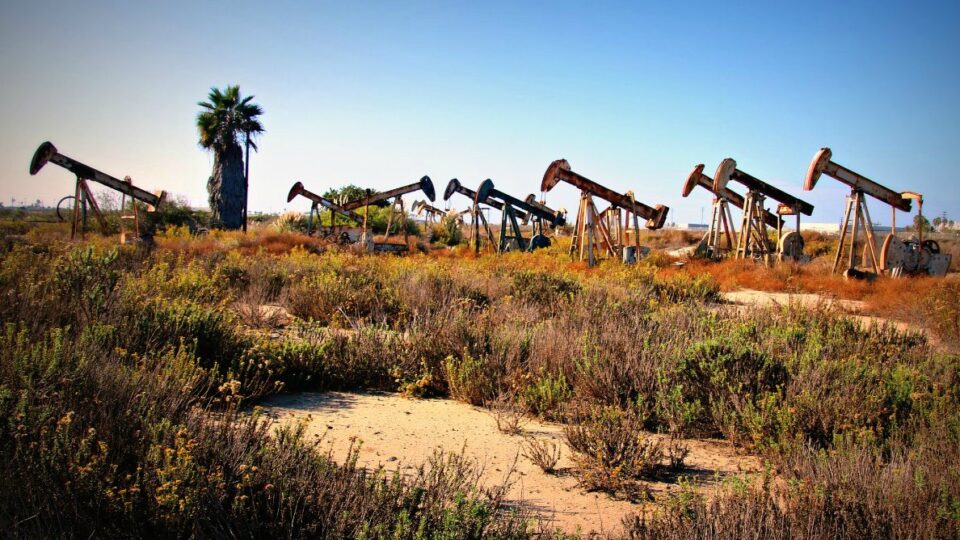
Abandoned oil wells are leaking methane

More than a century of oil and gas drilling has left behind millions of abandoned wells and many of them are leaching pollutants into the air and water.  Drilling companies continue to abandon even more wells as demand for oil diminishes and bankruptcies become more common.

Leaks from abandoned wells have long been known to be an environmental problem and a health hazard.  They have been linked to many instances of groundwater contamination and to dangerous fumes near homes and farms.

There have recently been efforts to track the amounts of methane leaching from abandoned oil and gas wells, and the figures in United States are alarming.  According to the most recent EPA report, more than 3.2 million abandoned oil and gas wells emitted a total of 281,000 tons of methane in 2018.  That is the climate-damage equivalent of consuming about 16 million barrels of crude oil, which is as much as the U.S. uses in a typical day.  According to the EPA, the actual amount could be as much as three times higher, because of incomplete data.   The agency believes that most of the methane comes from more than 2 million abandoned wells that were never properly plugged.

New York’s Department of Environmental Conservation has records of over 2,000 abandoned wells, but the state believes the actual number could be much higher.  This is a problem that won’t just go away.  Wells don’t leak for a year and then stop.  They can continue to leak for a century or more.  Cleaning up and plugging an abandoned well runs from $20,000 to $145,000, meaning that countrywide, cleaning up this environmental menace could cost somewhere between $60 billion and $435 billion.

**********

Web Links

Special Report: Millions of abandoned oil wells are leaking methane, a climate menace

Photo, posted October 13, 2015, courtesy of Flickr.

Earth Wise is a production of WAMC Northeast Public Radio.

Solar And Wind Power In China | Earth Wise

April 2, 2020 By EarthWise Leave a Comment

China rapidly adopts solar and wind power

Reducing greenhouse gas emissions is a global challenge and nowhere is that challenge greater than in China.  China accounts for 30% of the world’s emissions and much of that comes from coal power plants.  If the world is going to reach its climate targets, China is going to have to replace as much as possible of its current power mix with renewable energy.

As of 2018, China still made 69% of its electricity from fossil fuels.  Its vast coal reserves have driven its rapid industrialization and better standard of living.  But terrible air pollution problems along with climate issues have led to heavy investments and rapid expansion of both wind and solar power in China.

China is now a world leader in renewable energy, both in terms of producing and using renewable power.  At the start of 2016, China had installed a total of 145,000 megawatts of wind power, which is 3,000 MW more than all 28 European Union countries combined.  And this has occurred even though China only started developing their wind power industry 30 years later than the first EU countries.

Until 2009, China exported almost all the solar panels it produced.  But gradually China began to use solar energy in a big way.  The industry took off in 2014, and growth has been exponential.  Solar power production in China is now almost as extensive as wind power.

One has to consider that much of China’s electricity production is used by industries that produce products for the rest of the world.  In effect, these are exported emissions.  China has a long way to go in replacing its fossil fuel generation and we all have a stake in China succeeding in the task.

**********

Web Links

China’s rapid development of solar and wind power

Photo, posted November 12, 2007, courtesy of Flickr.

Earth Wise is a production of WAMC Northeast Public Radio.

An Incentive For Carbon Capture | Earth Wise

April 1, 2020 By EarthWise Leave a Comment

Convincing industries to reduce their carbon dioxide emissions has not been easy.  Many approaches have been debated, including carbon taxes, carbon tax-and-trade schemes, and passing a giant Green New Deal.  Most economists agree that putting a price on carbon is likely to be the most effective approach.

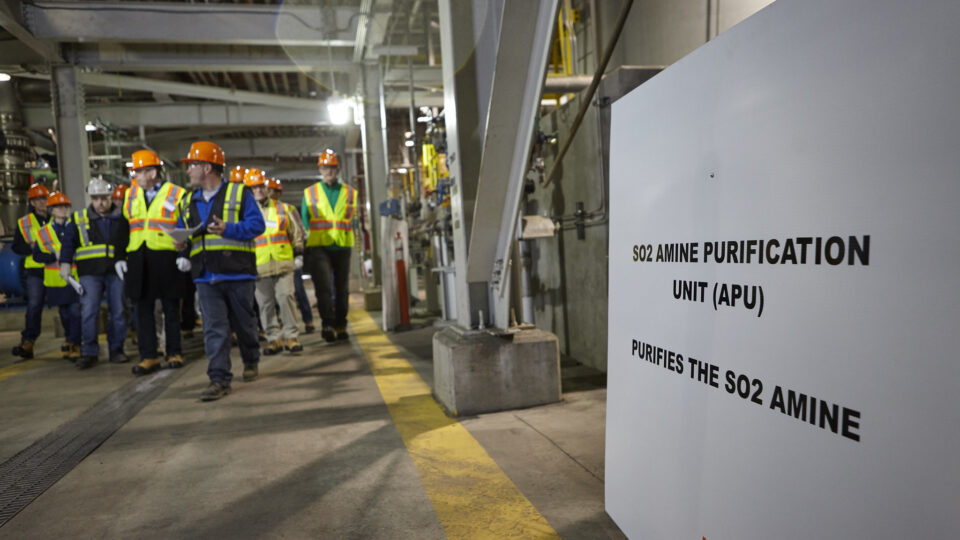
But there is already in place an adjustment to the US tax code that is more of a carrot than a stick.  It is a tax credit that is designed to make capturing CO2 a financial winner for a number of high-emitting industries.  The credit, called 45Q, was enacted in February 2018.

The 45Q credit earns industrial manufacturers $50 per metric ton of CO2 stored permanently or $35 per ton if the CO2 is put to use.  An earlier credit for capturing carbon dioxide was limited to only $20 per metric ton and was capped at 75 million tons.  Some large fossil fuel companies did make use of the earlier credit.

The new version does not have a cap, but to qualify, companies need to start constructing carbon-capture facilities within 7 years and have 12 years to claim their money.

Companies with emission-intensive operations are busy figuring out how to take advantage of the credit.  These include cement makers, steel and power plants, corn ethanol producers, and ammonia plants.

Because the credit mandates that companies start constructing their carbon-capture facilities within seven years, most companies will tend to rely on mature technologies.  But the tax credit should also drive demand for next-generation carbon-capture technologies, of which there are many under development.  Saving lots of money on taxes is likely to lure US companies to capture carbon dioxide.

**********

Web Links

45Q, the tax credit that’s luring US companies to capture CO2

Photo, posted October 2, 2014, courtesy of Sask Power via Flickr.

Earth Wise is a production of WAMC Northeast Public Radio.

A New Kind Of Coral Nursery

October 22, 2019 By EarthWise Leave a Comment

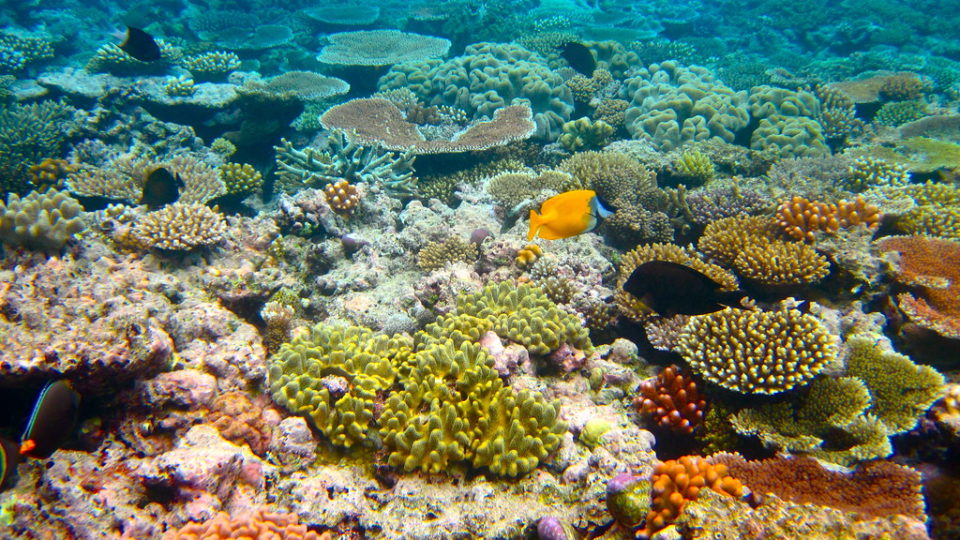
Coral reefs around the world are struggling from warming waters and increasing ocean acidification driven by excess carbon dioxide.  Many of the world’s greatest reefs – such as Australia’s Great Barrier Reef – have seen steep declines over the past decade.

But apart from the global environmental threat, reefs also are often damaged by various marine accidents such as ships grounding on them.   Such events can severely damage a reef and scatter countless small coral fragments onto the seafloor.  These small pieces of coral are not actually dead; they can continue on with their lives if they are relocated to a suitable environment such as a coral nursery.

Coral nurseries are generally small installations that allow coral fragments – typically pieces about 4 inches in length – to recover from their reef breaking up and to grow until they are large enough for conservation managers to replant them into reefs that need them.  This strategy works well in places where corals grow relatively quickly – such as Florida and the Caribbean – but not as well in places where coral grows more slowly, such as Hawaii.

Recently, coral experts at the National Oceanic and Atmospheric Administration working with mechanical engineering students at the University of Hawaii have developed a new type of coral nursery that can save fully formed coral colonies as opposed to small coral fragments.

The nurseries are large, carefully designed structures that can be loaded up with corals that have become detached from their reefs.  Some of these new structures were installed in the waters of Oahu in the summer of 2018 and were populated with corals.  The relocated corals, which would have otherwise died, are now recovering nicely in their new coral daycare centers and will soon be replanted back into the reef.

**********

Web Links

NOAA Develops A New Type of Coral Nursery

Photo, posted July 29, 2010, courtesy of Kyle Taylor via Flickr.

Earth Wise is a production of WAMC Northeast Public Radio.

2018 Was A Wet Year

March 20, 2019 By EarthWise Leave a Comment

Recent news reports noted that 2018 was the fourth hottest year on record.  But the changing climate is not just about temperature.  2018 was also the third-wettest year since 1895, when steady record-keeping began.

Overall, the U.S. recorded 4.68 inches more precipitation in 2018 than the 20th century average.  But all that rain and snow was nothing like evenly distributed.  The eastern half of the country – especially in places like North Carolina and Virginia – saw record amounts of precipitation, while most of the West remained stuck in drought.

The warming climate leads to precipitation extremes at both ends, meaning that wet places are likely to get wetter and dry places drier.  There has been a marked upward trend in short-duration extreme events.   For example, Cyclone Mekunu dumped almost 13 inches of rain on Salalah, Oman in 36 hours, more than double its annual average rainfall.

In the southeast and eastern U.S., the trend toward stronger storm events is mostly driven by strong warming of the oceans that fringe their shores.  Warm oceans evaporate more water into the air and warm air holds more water than cooler air.  Warmer, moisture-laden air acts like a blanket over the land, keeping heat trapped near the ground.  Many of the states that had their wettest-ever years also set records for high minimum temperatures – their coldest temperatures were less cold than in the past.

Air temperatures are projected to warm up even further in the coming years and, as a result, many scientists are anticipating that extreme precipitation events will only get more extreme.  The pattern of drought in the west and wetness in the east is likely to stay.

**********

Web Links

2018 was the U.S.’s third-wettest year on record—here’s why

Photo, posted August 18, 2018, courtesy of Jim Lukach via Flickr.

Earth Wise is a production of WAMC Northeast Public Radio.

A Disastrous Year

February 5, 2019 By EarthWise Leave a Comment

The number and economic impact of natural disasters around the world have increased dramatically over the past 30 years.  In dollar terms, the amount has actually more than doubled.  While 2017 and especially 2011 hold the records for worldwide economic damage, 2018 was pretty disastrous in its own right, totaling at least $160 billion.

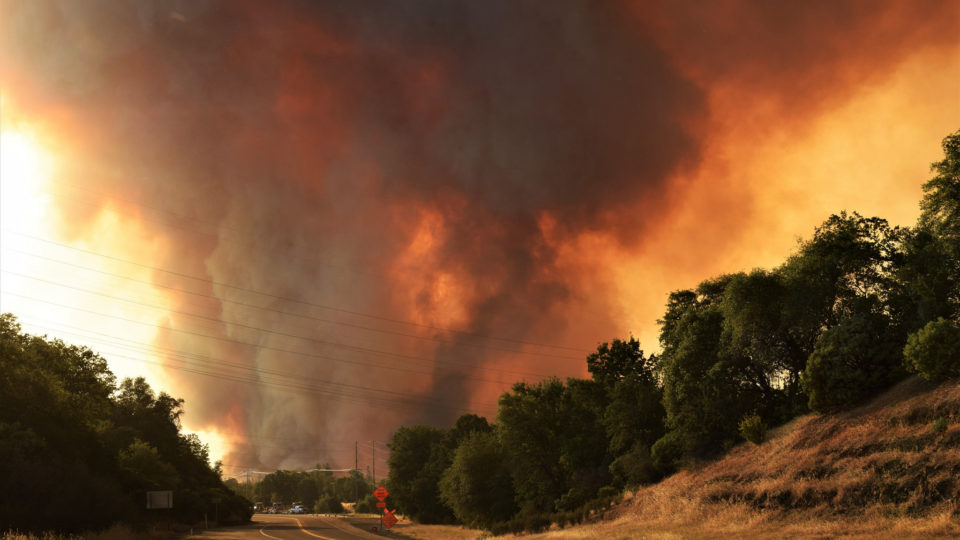
The year was dominated by costly wildfires in California and tropical storms in the United States and Asia.   According to a recent report by the reinsurance company Munich Re, the Camp and Woolsey fires in California alone caused losses of $21.7 billion, $16.5 billion of which was insured.

Overall, insurance companies paid out $80 billion in damage claims from natural disasters last year.  This was less than the $140 billion in 2017 but is still double the 30-year average.

Losses from wildfires have increased dramatically in recent years and summers continue to get hotter and dryer, a likely consequence of climate change.  These mounting costs bring into question whether people can continue to build in high-risk wildfire areas without dramatic changes in materials and the aggressive use of other protective measures.

Twenty-nine natural disaster events in 2018 caused more than a billion dollars in damage each.  Tropical storms including hurricanes Michael and Florence in the United States and three Asian typhoons caused $57 billion in damage.

A severe drought in Europe that set off major wildfires and caused agricultural losses caused $3.9 billion in losses.  Only about $280 million of this damage was covered by insurance companies since farmers in Europe don’t typically purchase insurance against drought.  For them, 2018 was truly a disastrous year.

**********

Web Links

Natural Disasters Caused $160 Billion in Damage in 2018

Photo, posted July 26, 2018, courtesy of Bureau of Land Management California via Flickr.

Earth Wise is a production of WAMC Northeast Public Radio.

Yet Another Hot Year

September 14, 2018 By EarthWise Leave a Comment

https://earthwiseradio.org/wp-content/uploads/2018/09/EW-09-14-18-Yet-Another-Hot-Year.mp3

This summer has seen record heat in many places and some record-breaking wildfires.  In short, it looks a lot like the future that scientists have been warning about in the era of climate change.  And still some people continue to argue about whether anything is happening to the climate.

[Read more…] about Yet Another Hot Year

The Dirty Dozen Of 2018

May 18, 2018 By EarthWise Leave a Comment

https://earthwiseradio.org/wp-content/uploads/2018/05/EW-05-18-18-The-Dirty-Dozen.mp3

Every year, the Environmental Working Group ranks pesticide contamination in 47 popular fruits and vegetables for its Shopper’s Guide to Pesticides in Produce.  The environmental nonprofit has created this ranking annually since 2004. 

[Read more…] about The Dirty Dozen Of 2018

New Year’s Resolutions

December 29, 2017 By EarthWise 1 Comment

https://earthwiseradio.org/wp-content/uploads/2017/12/EW-12-29-17-New-Years-Resolutions.mp3

2018 is just around the corner.  Popular resolutions for the New Year always seem to include things like improving health, traveling more, spending less money, and so on.  But one resolution that isn’t as popular but could collectively have a major impact is committing to living a cleaner and greener life. 

[Read more…] about New Year’s Resolutions

Primary Sidebar

Recent Episodes

  • An uninsurable future
  • Clean energy and jobs
  • Insect declines in remote regions
  • Fossil fuel producing nations ignoring climate goals
  • Trouble for clownfishes

WAMC Northeast Public Radio

WAMC/Northeast Public Radio is a regional public radio network serving parts of seven northeastern states (more...)

Copyright © 2026 ·