• Skip to primary navigation
  • Skip to main content
  • Skip to primary sidebar

Earth Wise

A look at our changing environment.

  • Home
  • About Earth Wise
  • Where to Listen
  • All Articles
  • Show Search
Hide Search
You are here: Home / Archives for Earth Wise

Earth Wise

Renewables’ Growing Share | Earth Wise

March 15, 2023 By EarthWise Leave a Comment

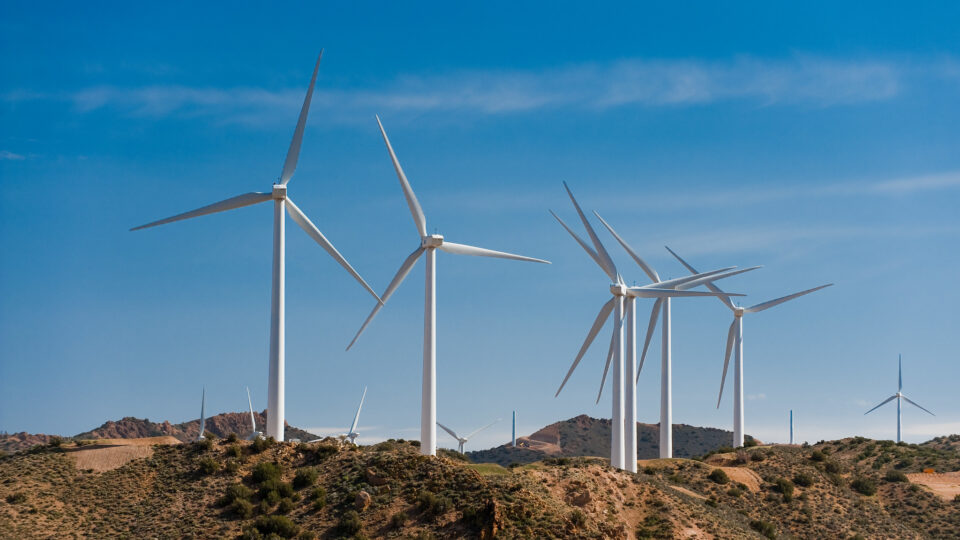
Not long ago, many states across the country were setting goals to obtain 20% of their electricity from renewable sources. For a few states, like New York and Washington, ample amounts of hydropower made 20% an easy target.  But for many others, 20% seemed like a very ambitious objective.

Things have certainly changed.  According to the latest monthly Short Term Energy Outlook, a report from the federal government, the combination of wind, solar, and other renewable sources will exceed one-quarter of the country’s generation by 2024.

Renewables are already at 24% of U.S. electricity generation and are expected to rise to 26% by next year.  Coal, which used to be the largest source of electricity, will continue to drop from its current 18% to 17% by next year.  Overall, renewables passed coal for the first full year in 2020.  Coal staged a bit of a comeback in 2021, but has once again resumed its decline.  Many coal-fired power plants continue to close, and there are not new ones being built because of diminishing economic benefits as well as concerns about emissions.

The largest source of electricity generation continues to be natural gas at 38%, but that number is also expected to slowly decrease over time. The growth in renewable energy is coming from wind and solar power.  Two-thirds of that growth is from solar and one-third is from wind. 

Together, wind and solar power will add up to 18% of the country’s electricity supply.  The government still tracks them lumped together as renewables, but both are so large and growing so quickly that the Energy Information Agency is likely to soon start tracking them as separate categories.

**********

Web Links

Renewables Projected to Soon Be One-Fourth of US Electricity Generation. Really Soon

Photo, posted April 18, 2011, courtesy of Allan Der via Flickr.

Earth Wise is a production of WAMC Northeast Public Radio

Mining Metals From Water | Earth Wise

March 14, 2023 By EarthWise Leave a Comment

Researchers at the Department of Energy’s Pacific Northwest National Laboratory in Richland, Washington are working with industry to develop a method of extracting valuable materials from various sources of water.  The technique is the 21st-century equivalent of panning for gold in rivers and streams.

The patent-pending technology makes use of magnetic nanoparticles that are surrounded by an absorbent shell that latches on to specific materials of interest that are found in certain water sources.  These sources could include water in geothermal power plants (known as geothermal brines), water pulled from the subsurface during oil or gas production, or possibly effluents from desalination plants.  Extracting valuable materials from geothermal brines could greatly enhance the economics of geothermal power plants.

The initial focus of the development is on lithium, which is an essential element in many high-technology applications, especially in the batteries that power cell phones, computers, and electric cars.  The global market for lithium is projected to reach over $8 billion a year by 2028 and very little of it is currently produced in the United States.

The tiny particles are added to the water and any lithium is drawn out of the water and is bound to them.  Using magnets, the nanoparticles can be readily collected.  Once the particles are no longer suspended in liquid, the lithium can easily be extracted, and the nanoparticles can be reused.

PNNL is developing the technology in partnership with a company called Moselle Technology as well as with other commercial partners.  This new technology offers the promise of extracting critical materials in a quick, cost-effective manner.

**********

Web Links

Tri-Cities Scientists “Magically” Mining Metals From Water

Photo, posted June 4, 2012, courtesy of Tom Shockey via Flickr.

Earth Wise is a production of WAMC Northeast Public Radio

Plastic From Sunlight | Earth Wise

March 13, 2023 By EarthWise Leave a Comment

Photosynthesis is the process that plants use to turn water, carbon dioxide, and energy from sunlight into plant biomass.  It provides humans and much of animal life with food.  Photosynthesis is also nature’s way of reducing the amount of carbon dioxide in the atmosphere.  The CO2 is not directly stored in plants but rather is combined into organic compounds.

Researchers across the globe are trying to find effective ways to mimic photosynthesis.  One version of artificial photosynthesis seeks to take carbon dioxide and combine it into organic compounds that can be used as raw materials for various kinds of manufacturing. 

A research team in Japan has found a way to synthesize fumaric acid from carbon dioxide using sunlight to power the process.  Fumaric acid is a chemical typically synthesized from petroleum and is used as a raw material for making biodegradable plastics such as polybutylene succinate. 

Much of artificial photosynthesis research is aimed at using solar energy to convert carbon dioxide directly into a fuel rather than a raw material.  Such solar fuels can be produced by a variety of means including thermochemical (using the sun’s heat to drive chemical reactions), photochemical (using the sun’s light to drive chemical reactions), and electrochemical (using solar-generated electricity to drive chemical reactions.)   These approaches generally involve the use of specialized catalysts to drive the desired chemical reactions. 

One way or another, what techniques for artificial photosynthesis have in common is trying to imitate what plant life on Earth has been doing for millions of years. 

**********

Web Links

Artificial photosynthesis uses sunlight to make biodegradable plastic

Photo, posted June 14, 2017, courtesy of Alex Holyake via Flickr.

Earth Wise is a production of WAMC Northeast Public Radio

Fake Meat And Climate | Earth Wise

March 10, 2023 By EarthWise 1 Comment

Investors have poured billions of dollars into efforts to replace animal proteins with plant-based substitutes or even laboratory-grown animal cells.  Replacing meats with these products is certainly a favorable development for the climate, but it is not likely to offset livestock agriculture’s climate and land use impacts anytime soon.

According to research at Stanford University, even optimistic estimates are that only something like 5% of dietary protein will come from these technologies by 2030.  That just isn’t fast enough to put a real dent in the food-related emissions problem.

Stanford environmental scientist David Lobell suggests that there should be much more focus on reducing emissions of animal-based systems.  There really hasn’t been much effort in this area because it is only recently that the climate impact of animal agriculture has been a topic of public concern.  One problem is that it is difficult for investors to monetize investments in approaches for lowering animal agriculture emissions.  These might include alternative feeds or supplements or vaccinations that inhibit methane-producing microorganisms in animals’ digestive systems.

Another approach to the problem is changing the mix of animal proteins in people’s diets.  Chicken and pork are half as bad as dairy per pound of protein, and about one-tenth as bad as beef, in terms of emissions.

Dairy is a major issue. There has been quite a lot of progress in increasing the use of dairy-free milk, but over the past 40 years, Americans have cut their consumption of milk in half but doubled their consumption of cheese.  Progress in dairy-free cheese has not been anywhere near as successful as that of dairy-free milk.  But new products are entering the marketplace all the time.

**********

Web Links

Is fake meat a real solution? Stanford expert explains

Photo, posted June 17, 2019, courtesy of Christolph Scholz via Flickr.

Earth Wise is a production of WAMC Northeast Public Radio

Elephants And Global Warming | Earth Wise

March 9, 2023 By EarthWise Leave a Comment

A study by researchers at Saint Louis University has found that elephants play a key role in creating forests that store large amounts of atmospheric carbon and in maintaining the biodiversity of forests in Africa.  Since elephants are endangered, their status represents a significant threat to an ecosystem that is very important to the Earth’s climate.

The African rainforest contains trees with both low carbon density (light wood) and high carbon density (heavy wood).  High carbon density trees grow more slowly and can be crowded out by the faster growing low carbon density trees rising above them.  Elephants affect the relative abundance of these trees by feeding more on the low carbon density trees which are more palatable and nutritious.  This thinning of the forest allows the trees that sequester the most carbon to flourish.

Elephants are also excellent dispersers of the seeds of high carbon density trees.  Essentially, elephants are the gardeners of the forest.  They plant the forest with high carbon density trees and get rid of the weeds – in this case, the low carbon density trees.  According to the study, if elephants were to become extinct, the African rainforest – the second largest on earth – would gradually lose between six and nine percent of its ability to capture atmospheric carbon.

Elephants have been hunted by humans for millennia.   Gaining support for protecting them has mostly been driven by the argument that everybody loves elephants.  Focusing on their role in maintaining forest diversity has not driven much more action.  The hope is that the evidence of how important elephants are for climate mitigation will be taken seriously by policy makers to generate the support needed for improved elephant conservation.

**********

Web Links

Can Elephants Save the Planet?

Photo, posted March 15, 2008, courtesy of Michelle Gadd/USFWS via Flickr.

Earth Wise is a production of WAMC Northeast Public Radio

Air Pollution In The Arctic | Earth Wise                     

March 8, 2023 By EarthWise Leave a Comment

Climate change is shrinking the Arctic ice cover, which is making it easier for ships to travel along the northern coast of Russia, known as the Northern Sea Route or the Northeast Passage.  There is also the Northwest Passage, which connects the Atlantic and Pacific Oceans via waterways through the Canadian Arctic Archipelago.

More than 600 fishing vessels sail the waters of the Arctic Ocean, but these fishing vessels are not the worst offenders when it comes to the growing problem of air pollution.  Giant natural gas tankers are becoming a much bigger problem.

In 2021, only 26 natural gas tankers traveled through Arctic waters.  But these ships can be 1000 feet long or more and produce far more CO2 emissions than fishing boats.   In 2019, the tankers accounted for 28% of the emissions and the number of them cruising the Arctic has been growing.

As the ice cover in the Arctic continues to shrink, more and more ships of all varieties, including cruise ships, fishing vessels, as well as tankers, are coming north and spending more time in the Arctic.  Any increases in ship traffic will increase the pollutant load in the Arctic and the Arctic is one of the most vulnerable environments in the world.

Between 2013 and 2019, the aggregated nautical miles that vessels traveled in what is called the Polar Code area increased by 75%. It isn’t just that more ships like tankers are going there.  It is that their operational season is expanding.

Air pollution isn’t the only problem.  Shipping in the Arctic brings with it light pollution, noise, marine litter, and more.  Only zero activity has zero pollution.

**********

Web Links

The worst polluters in the Arctic are not what you think

Photo, posted February 26, 2015, courtesy of Chris Parker via Flickr.

Earth Wise is a production of WAMC Northeast Public Radio
Cheaper Carbon Capture | Earth Wise

March 7, 2023 By EarthWise Leave a Comment

Scientists developing a new system to capture carbon more cheaply

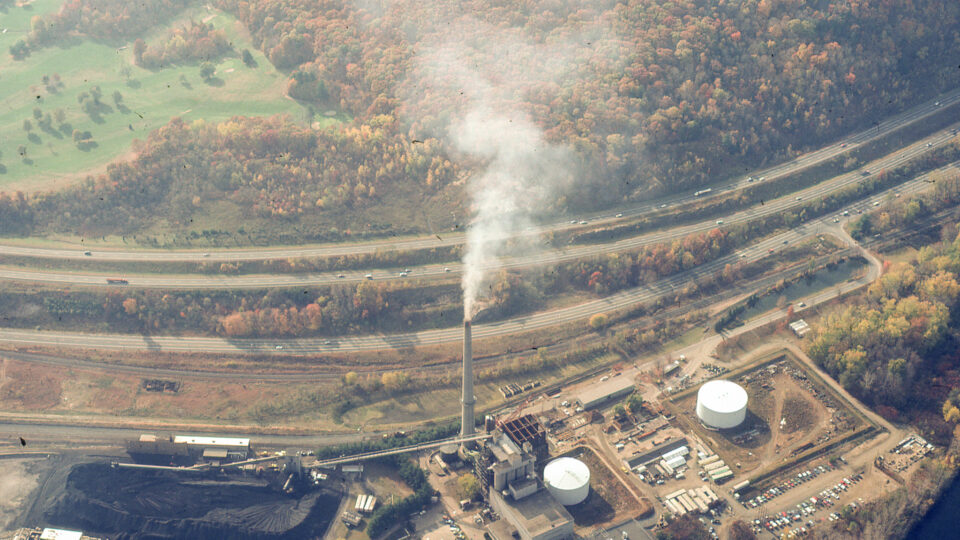
As the years roll by without sufficient progress in reducing carbon dioxide emissions, the need for technologies that can capture CO2 from its sources or remove it from the air becomes stronger and stronger.  People have developed various ways to capture carbon dioxide, but to date, they generally suffer from some combination of being too costly or not being able to scale up to the necessary magnitude.

Scientists at the Pacific Northwest National Laboratory in Richland, Washington recently announced the creation of a new system that they claim is the least costly to date that captures carbon dioxide and turns it into a widely-used chemical: methanol.

Technologies that simply capture carbon dioxide that then needs to be stored in some secure location are difficult to implement from a cost perspective.  The PNNL researchers believe that turning CO2 into methanol can provide the financial incentive for widespread implementation.   Methanol can be used as a fuel, a solvent, or an important ingredient in plastics, paint, construction materials, and car parts.

The system is designed to be installed in fossil fuel-fired power plants as well as cement and steel plants.  Using a capture solvent developed by PNNL, the system grabs carbon dioxide molecules before they are emitted and converts them into methanol. Creating methanol from CO2 is nothing new, but capturing the carbon dioxide and converting into methanol in one continuously flowing system is new.

More work is needed to optimize and scale the process and it may be several years before it is ready for commercial deployment.

**********

Web Links

Scientists Unveil Least Costly Carbon Capture System to Date

Photo, posted November 25, 2022, courtesy of Massachusetts Department of Environmental Conservation via Flickr.

Earth Wise is a production of WAMC Northeast Public Radio

Insects On The Menu | Earth Wise

March 6, 2023 By EarthWise Leave a Comment

According to the World Food Programme, a record 349 million people across 79 countries are facing acute food insecurity.  This constitutes a staggering rise of 200 million people compared to pre-pandemic levels.  Nearly one million people globally are fighting to survive in famine-like conditions, which is ten times more people than just five years ago.  

As a result, many experts contend that alternative or so-called novel food sources – such as lab-grown meats, seaweed aquaculture, and insects – will be necessary to help fight global hunger and global food insecurity. 

Insects already form a significant part of diets in many cultures around the world.  Insects are great sources of nutrients, including protein, vitamins, and minerals.  But insects have yet to be embraced in any substantial way in western cultures… but that may be changing. 

In fact, the European Union has now certified four types of bugs as food fit for human consumption.  The larvae of lesser mealworms and house crickets recently became the third and fourth insects approved for sale as food in the EU, joining yellow mealworms and grasshoppers. Eight more applications are awaiting approval.

Insects are already a delicacy in many high-end restaurants around the world, and a normal and healthy part of diets in countries like Mexico and Thailand.  Embracing insects as a food of the future will not only help in the fight against global hunger, but will also help to reduce greenhouse gas emissions and to slow species extinction. 

In Western food markets, the so-called “yuck factor” remains the biggest hurdle to cross.  But as the world population grows, the need for sustainable solutions in the food industry grows with it. 

**********

Web Links

Insects on the menu as EU approves two for human consumption

World Hunger Surged in 2020, U.N. Says

A global food crisis

Photo, posted April, 2014, courtesy of Shankar S. via Flickr.

Earth Wise is a production of WAMC Northeast Public Radio
Peak Fossil Fuels | Earth Wise

March 3, 2023 By EarthWise Leave a Comment

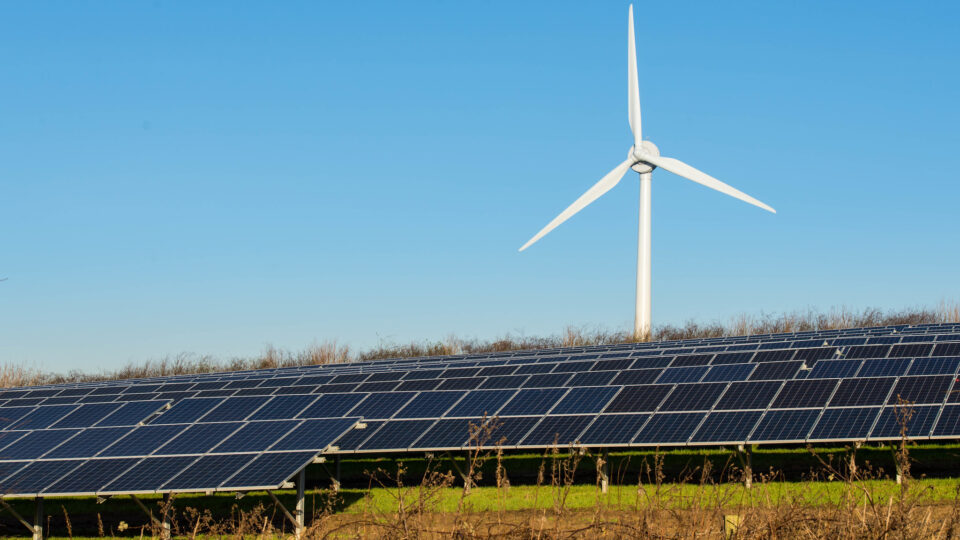
According to a new report from the Rocky Mountain Institute, a nonprofit that studies the energy transition, we have reached a pivot point in which fossil fuels have peaked in their use for producing electricity and are about to enter a period of decline.

The report makes the case that wind and solar power are going through a growth process that looks very much like the trend lines for the early stages of other transformative products and industries – things like automobiles and smartphones.  Such growth begins slowly for technology and products that are very expensive, but then shifts into high gear as costs shrink and efficiency rises.

The argument is that fossil fuel demand has peaked in the electricity market because the annual growth in global electricity demand is now less that the amount of electricity being generated by newly-built renewable energy plants (mostly solar and wind.)  This dynamic will squeeze out the most expensive and dirtiest energy sources over time.

Overall use of fossil fuels for electricity shifted in 2018 from a long-standing period of growth to a holding pattern in which the total amount of electricity produced has no clear trend.  According to the RMI report, this plateau in fossil fuel use is likely to continue until about 2025, and then will be followed by a long-term decline.

While the trends in fossil fuel use are quite evident, the end results are not inevitable.  There continues to be a battle between the forces trying to protect the fossil fuel status quo and those trying to change it. But strong economic forces are difficult to overcome.  Renewable energy is the lowest cost source of electricity in a growing number of locations and situations.

**********

Web Links

When Will We Hit Peak Fossil Fuels? Maybe We Already Have

Photo, posted December 27, 2015, courtesy of Gerry Machen via Flickr.

Earth Wise is a production of WAMC Northeast Public Radio
Record Low Antarctic Sea Ice | Earth Wise

March 2, 2023 By EarthWise Leave a Comment

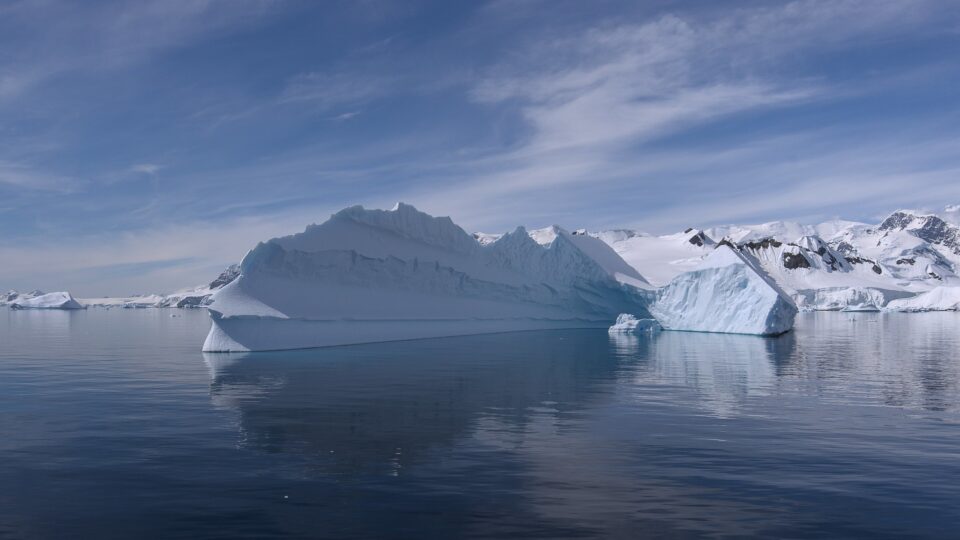
Recent satellite observations of the sea ice in the Antarctic found the lowest level of ice cover ever seen in the forty years that these observations have been made.  As of February 8th, there were only 849,000 square miles of the Southern Ocean covered with ice.  The previous record low was measured last February 24th when the total coverage was 876,000 square miles.  Ice melting was likely to continue as the month went on.

This past January had already set a new record for that month’s mean extent of ice coverage at 1.24 million square miles. This rapid decline in sea ice has been going on for the past six years and is very unusual.  Average Antarctic ice cover hardly changed at all during the previous thirty-five years.

Antarctic sea ice generally reaches its maximum extent in September or October and its minimum extent in February.  At its maximum, the sea ice cover in the Antarctic is generally between 6.9 and 7.7 million square miles.   On the other hand, there are some places where the sea ice melts completely during the Southern Hemisphere summer.  Sea ice varies much more in the Antarctic than in the Arctic where the ice is much thicker.

Climate warming at the poles is much higher than at lower latitudes.  Nonetheless, it is not yet clear whether what we are seeing is the beginning of the end of summer sea ice in the Antarctic, or whether this is just a new phase characterized by low but still stable sea ice cover in the summer.

**********

Web Links

Record low sea ice cover in the Antarctic

Photo, posted January 24, 2012, courtesy of Rob Oo via Flickr.

Earth Wise is a production of WAMC Northeast Public Radio

How To Save Big Cats | Earth Wise

March 1, 2023 By EarthWise 1 Comment

Researchers suggest the best way to save large and often endangered carnivores

Big cats are among the most widely recognized and admired animals in the world. But these charismatic predators face many and varied threats, including the loss of habitat and prey, conflicts with humans, poaching, and the illegal wildlife trade.

Researchers from the University of Reading in the U.K. have studied the fortunes of 50 species of large carnivores worldwide over the past 50 years.  They found that social and economic factors, such as quality of life, were more closely associated with declines of large carnivore species than purely environmental factors, like habitat loss.   

The study, which was recently published in the journal Nature Communications, suggests that the best way to save large carnivores, including lynx, bears, and lions, is to encourage a sustainable model of social and economic development instead of focusing exclusively on issues like climate change.  

While rapid economic development pushes species to the brink of extinction, it’s also delivered enormous improvements in the quality of human life. But the analysis suggests that once people achieve a high quality of life and economic development slows, a turning point is reached and persecuted species have a chance to recover.

According to the research team, the recovery is a result of both improved habitat protections in advanced economies and a more harmonious relationship between people and predators.  What would have once been considered a dangerous pest is now recognized as being an important part of both the ecosystem and culture.  

In Western Europe, slower economic development and an improved quality of life have allowed populations of grey wolves to increase 1,800% since the 1960s.

**********

Web Links

Economics trump environment to save big cats, say ecologists

Photo, posted February 8, 2015, courtesy of Mathias Appel via Flickr.

Earth Wise is a production of WAMC Northeast Public Radio

The Enormous Cost Of Steel Corrosion | Earth Wise

February 28, 2023 By EarthWise Leave a Comment

Global steel production has been rising for decades.  Because steel corrodes over time, part of the demand for more steel comes from the need to replace the steel used in construction materials – in everything from bridges to cars – that has become corroded over time.  Studies have estimated that the economic cost of corrosion is an astonishing 3 to 4% of a nation’s gross domestic product.  Globally, this means that steel corrosion costs the world trillions – yes, trillions with a T – of dollars each year.

On top of the staggering economic impact of corrosion, there is the fact that steel production is one of the largest greenhouse gas emitters of any industry, accounting for more than 25% of all manufacturing sector carbon emissions.  In fact, steel manufacturing causes over 10% of total global carbon emissions.  

As a result of regulations placed on the steel industry, technological advances in the steelmaking process have resulted in a 61% reduction in the industry’s energy consumption over the last 50 years.   There are continuing efforts to reduce the energy consumption of steel making and to move away from the use of fossil fuels to produce the needed energy.  But without significant improvements, just the emissions associated with replacing corroded steel could make the goals set by the Paris Climate Agreement unfeasible.

It’s hard to believe that something costing the world trillions of dollars and has a major negative impact on the climate is largely invisible.  Steel corrosion is an enormous societal challenge that has gone under the  radar for decades and therefore has not received anything like the attention it deserves.

**********

Web Links

Reducing steel corrosion vital to combating climate change

Photo, posted July 24, 2008, courtesy of Phil Whitehouse via Flickr.

Earth Wise is a production of WAMC Northeast Public Radio

A Vaccine For Bees | Earth Wise

February 27, 2023 By EarthWise Leave a Comment

USDA grants conditional license for a honey bee vaccine

The US has seen annual reductions in honey bee colonies since 2006.  According to the USDA, there are many factors that have contributed to the decline.  These include parasites, pests, insecticides, disease, and a phenomenon called Colony Collapse Disorder in which worker bees abandon a hive and leave behind the queen.

One of major threats to bee colonies is American foulbrood disease, which is a bacterial condition that attacks bee larvae.  It is highly contagious and has no cure.  Until now, the only treatment method required burning the colony of infected bees along with the hives and equipment and treating nearby bee colonies with antibiotics.

Recently, the USDA has approved a conditional license for the world’s first vaccine for honey bees.  The vaccine contains inactive bacteria of the type that causes American foulbrood disease.

The vaccine is incorporated into the royal jelly fed by worker bees to the queen bee.  The queen ingests the feed and keeps some of vaccine in her ovaries.  This gives bee larvae immunity to the disease as they hatch and thereby reduces death from the illness.

According to the California State Beekeepers Association, the new vaccine could be a major breakthrough for protecting bees.  Preventing the infection in hives could avoid costly, destructive measures and allow the beekeepers to focus on other important elements of keeping bees healthy.

Bees as pollinators play a critical role in many ecosystems.  For humankind, pollinators such as bees, birds, and bats are responsible for about a third of the world’s crop production.

**********

Web Links

US approves world’s first vaccine for declining honey bees

Photo, posted June 6, 2022, courtesy of Bernd Thaller via Flickr.

Earth Wise is a production of WAMC Northeast Public Radio

Driving Electric Is Cheaper For Almost Everyone | Earth Wise

February 24, 2023 By EarthWise Leave a Comment

A study by University of Michigan researchers found that about 90% of U.S. households would save money on fuel costs by owning an electric car rather than a gas-powered car.  So apart from the environmental benefits of electric cars, there are real economic benefits as well.

Both the price of gasoline and the price of electricity vary considerably across the country, so there are differences by location.  The study found that 71% of U.S. drivers would see their fuel expenses cut at least in half by driving an electric car.


Drivers in California, Washington, and New York would see the largest fuel savings as well as the biggest emissions reductions from a new electric car.  Those states have cleaner electric grids and a bigger gap between the cost of electricity and the cost of gas.

The study, published in the journal Environmental Research Letters, only looked at fuel costs and did not take into account the purchase cost of new cars.  Generally speaking, plug-in cars have higher sticker prices than gas-powered cars but multiple studies have shown that over their lifetimes, electric vehicles end up being cheaper to own than comparable gas-powered vehicles because of lower maintenance costs on top of the fuel savings.  The price gap between equivalent gas and electric cars continues to narrow in any case as the cost of batteries continues to decline.  On top of that, the recent expansion of federal tax credits on electric cars is making the vehicles cost-competitive right at the point of purchase.

Gasoline prices have come down considerably from their peak a year ago, but for almost everyone, it is still much cheaper to drive on electricity.

**********

Web Links

Seven in 10 U.S. Drivers Could Halve Their Fuel Costs by Going Electric, Study Finds

Photo, posted April 23, 2022, courtesy of Pedrik via Flickr.

Earth Wise is a production of WAMC Northeast Public Radio

Keeping Trash Out Of The Ocean | Earth Wise

February 23, 2023 By EarthWise Leave a Comment

The Ocean Cleanup Project

The Ocean Cleanup is a non-profit organization, founded in 2013 by Dutch inventor Boyan Slat, to develop and scale technologies to rid the world’s oceans of plastic.  It is an organization that proudly declares that its primary aim is to put itself out of business by successfully cleaning up the oceans.

A major activity of The Ocean Cleanup is efforts to clean the ocean garbage patches that have accumulated in several places, best-known of which is the Great Pacific Garbage Patch.  The effort involves use of large U-shaped floating barriers that act as an artificial coastline to trap garbage which is then funneled into a barge for disposal.  Ten full-sized systems will be needed to clean up the Great Pacific Garbage Patch.

A second activity of The Ocean Cleanup is preventing garbage in rivers from making its way into the oceans.  Rivers are the main source of ocean plastic pollution.  The Ocean Cleanup has developed river machines called Interceptors that capture garbage for disposal.  Last fall, they installed a machine called Interceptor 007 in Ballona Creek, a waterway in the Los Angeles area.  In the first rainfall after installation, the Interceptor managed to stop 35,000 pounds of waste from entering the ocean in just a few days.

The original Interceptor models have been deployed in Indonesia, Malaysia, the Dominican Republic, and Vietnam. A different type called the Interceptor Trashfence is being tested in Guatemala.

The Ocean Cleanup states that if fleets of its barrier systems are installed in all the garbage patches and Interceptors in the 1000 most significant rivers, 90% of floating ocean plastic can be removed by 2040.

**********

Web Links

The Interceptor 007 Stops 35,000 Pounds Of Trash From Entering Ocean

The Ocean Cleanup

Photo, posted February 23, 2015, courtesy of Ministerie van Buitenlandse Zaken via Flickr.

Earth Wise is a production of WAMC Northeast Public Radio

California Storms And The Megadrought | Earth Wise

February 22, 2023 By EarthWise Leave a Comment

California experienced its wettest 10-day period in 25 years as a result of a series of storms driven by atmospheric rivers in January.  The Rocky Mountains got buried in snow from the same weather pattern.   For the drought-stricken West, the storms were good news.  But they are not the cure for what’s been ailing the region.

In California, the snowpack in the Sierra Nevada mountains has been greatly enhanced, containing twice as much snow as is considered average for this time of year.  Without a doubt, it will reduce the impact of the drought that has plagued the state for 23 years.  But one big storm or even a series of them is not enough to undo years of minimal precipitation and rising temperatures.  Many of the states’ largest reservoirs remain well below historical averages despite the record-breaking rain.  It would take several wet years to really allow the state to recover from the drought.

The snowfall in the Rockies is crucial because it is the source of more than two-thirds of the water in the Colorado River.  The Colorado River is the water lifeline for 40 million people from Wyoming to Mexico.

The ongoing shrinking of the Colorado River is a crisis that has created massive problems for the multibillion-dollar agriculture industry and for many large cities, including Denver, Phoenix, Salt Lake City, Las Vegas, and Los Angeles.  Two of the nation’s largest reservoirs – Lake Mead and Lake Powell – are filled by the Colorado River.  The historic low levels of these reservoirs have threatened the functioning of hydropower facilities that provide electricity to millions of people.

The January storms were good news for the West, but its problems are not over.

**********

Web Links

This Winter’s Rain and Snow Won’t be Enough to Pull the West Out of Drought

Photo, posted September 18, 2022, courtesy of Sarah Stierch via Flickr.

Earth Wise is a production of WAMC Northeast Public Radio
Fuel From Wind And Water | Earth Wise

February 21, 2023 By EarthWise 1 Comment

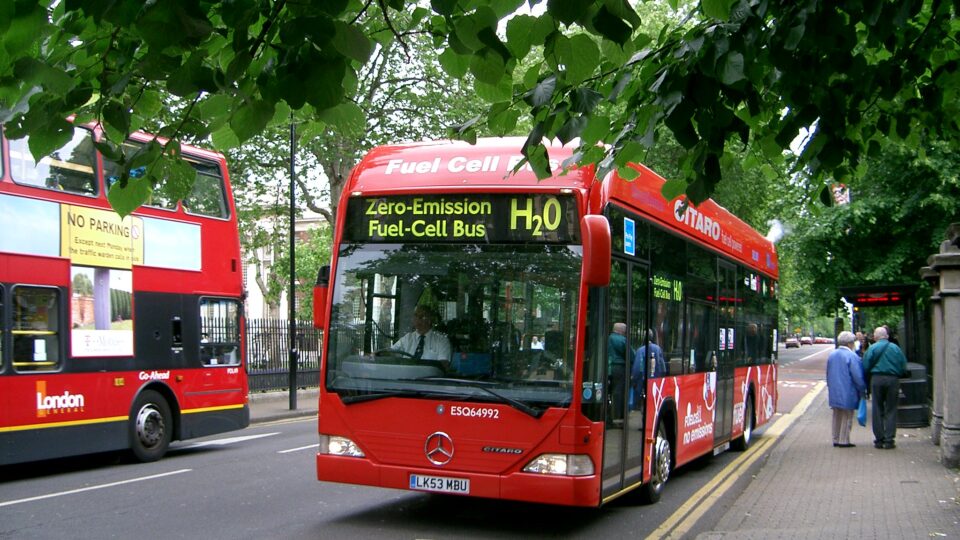
Hydrogen is the most common element in the universe and it can be used as a fuel to run cars, trains, and even airplanes.  Using it produces no harmful emissions.  However, to date, the way it is economically produced is not clean and green.  It is made from natural gas and leaves behind lots of carbon dioxide.

Around the world there are many projects working on so-called green hydrogen.  Producing hydrogen by splitting water into its component elements is called electrolysis and produces only oxygen as a waste product.  The problem with electrolysis is that it takes prodigious amounts of energy and therefore is very expensive.

A new project taking place in north Texas hopes to create the country’s first large-scale producer of green hydrogen.  The project is building a 900-megawatt wind farm along with a 500-megawatt solar farm.  The 1.4 gigawatts of total production capacity is more energy than the city of Austin consumes.  That energy will be used to produce 200,000 kilograms of hydrogen a day.

This project is among the largest proposed green hydrogen projects in the U.S.   There are green hydrogen proposals in Europe, Australia, Africa, and the Middle East that range from 10 GW to 67 GW. 

The Texas project, being developed in partnership by Air Products and AES, has been enabled by government support from the Inflation Reduction Act.    

There are a few thousand hydrogen-powered cars, boats, and trains but without substantial, cost-effective hydrogen infrastructure, the market is very limited.   Subsidizing the development of the necessary infrastructure is essential if there is any real chance to create the long-imagined hydrogen economy.

**********

Web Links

Texas Project Will Use Wind to Make Fuel Out of Water

Photo, posted June 5, 2005, courtesy of City Transport Info via Flickr.

Earth Wise is a production of WAMC Northeast Public Radio
Disappearing Glaciers | Earth Wise

February 20, 2023 By EarthWise Leave a Comment

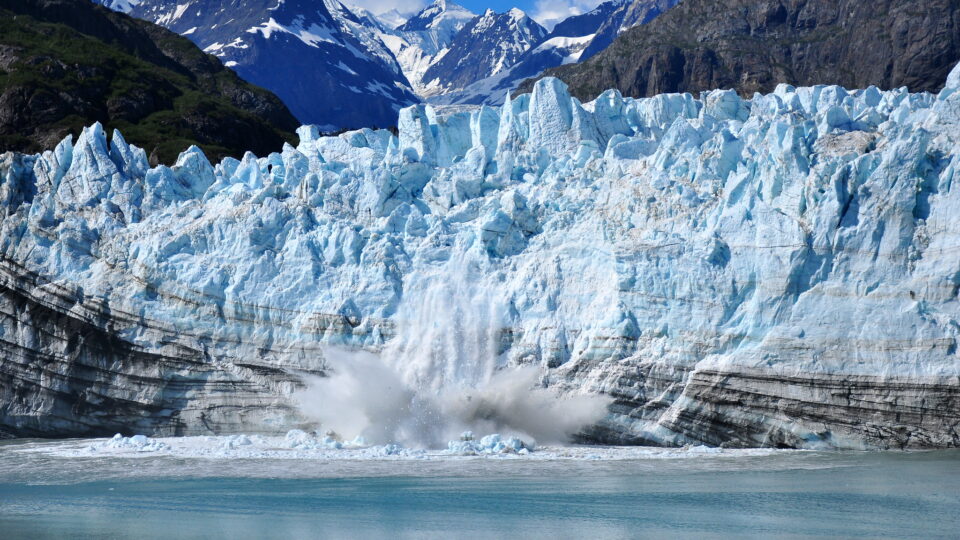
Glaciers are disappearing at a rapid rate

Glaciers are massive bodies of slowly moving ice.  Glaciers form on land, and represent the snows of centuries compressed over time.  They move slowly downward under the influence of their own weight and gravity. 

Most of the glaciers on the planet are found in the polar regions, including Antarctica, the Canadian Arctic, and Greenland.  Glaciers can also be found closer to the equator in mountain ranges, such as the Andes Mountain range in South America.  Glaciers are always changing, accumulating snow in the winter and losing ice to melting in the summer.  But in recent times, the melting has been outpacing the accumulation.

A new international study led by researchers at Carnegie Mellon University’s College of Engineering has produced new projections of glacier loss through the century under different emissions scenarios.  According to the projections, the world could lose as much as 41% of its total glacier mass this century – or as little as 26% – depending on climate change mitigation efforts. 

In a future with continued investments in fossil fuels (sometimes referred to as the “business as usual” scenario), more than 40% of the glacial mass will be gone by 2100, and more than 80% of glaciers by number could disappear.  Even in a best case scenario where the increase in global mean temperature is limited to 1.5° degrees Celsius relative to pre-industrial levels, more than 25% of glacial mass will be gone, and nearly 50% of glaciers by number will disappear.

Glaciers take a long time to respond to changes in climate.  A complete halt to emissions today would take anywhere from 30 to 100 years to be reflected in glacier mass loss rates.

**********

Web Links

Team projects two out of three glaciers could be lost by 2100

Ice, Snow, and Glaciers and the Water Cycle

Photo, posted August 13, 2010, courtesy of Kimberly Vardeman via Flickr.

Earth Wise is a production of WAMC Northeast Public Radio

Electric Vehicle Tax Credits | Earth Wise

February 17, 2023 By EarthWise Leave a Comment

As of January 1, many Americans can qualify for a tax credit of up to $7,500 for buying an electric vehicle.  The credit is one of the changes enacted under last year’s Inflation Reduction Act.  The purpose is to encourage EV sales and thereby reduce greenhouse gas emissions and air pollution.

There has been a tax credit for EVs for more than a decade, but its provisions made cars from any manufacturer ineligible as soon as that manufacturer had sold more than 200,000 cars.  Notably, this eliminated the credit for purchasing cars from Tesla and General Motors.  Given that electric cars are now selling in the millions, the 200,000-unit cap on the tax credit essentially made it useless as a real force to grow the industry.

The new tax credit has a somewhat complex set of requirements for determining the applicability and amount of the credit.  There are price limits on eligible vehicles depending on vehicle type and there are requirements on where vehicles are manufactured, where batteries are manufactured, and where other components are made. The intent is to encourage American manufacturing of the cars and trucks to the greatest extent.  There are also income limitations on buyers who want to take advantage of the credit, but those are quite large.  The Department of the Treasury has online detailed information about the requirements for the credit and, of course, EV manufacturers can provide the specifics for their own vehicles.

For their part, automakers are adjusting prices, building domestic manufacturing plants and battery factories, and otherwise trying to position themselves for their customers to take advantage of the credit.

The new law also provides a smaller tax credit for the purchase of used electric vehicles.

**********

Web Links

Electric vehicle tax credits explained: What’s new in 2023?

Treasury Releases Additional Information on Clean Vehicle Provisions of Inflation Reduction Act

Photo, posted December 9, 2022, courtesy of Choo Yut Shing via Flickr.

Earth Wise is a production of WAMC Northeast Public Radio
How Much Plastic Is Really In The Ocean? | Earth Wise

February 16, 2023 By EarthWise Leave a Comment

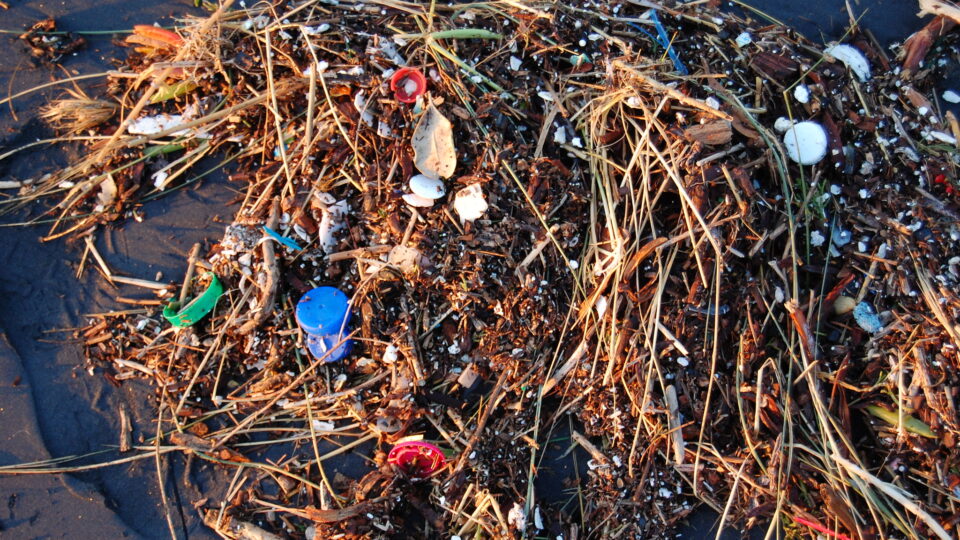
The world has produced more than 6 billion tons of plastic to date and much of that has become waste that has not been recycled, incinerated, or otherwise properly contained.  A great deal of it has ended up in the oceans of the world.

Researchers at Kyushu University in Japan have done an analysis to assess just how much plastic has ended up in the ocean.  According to the study, nearly 28 million tons of plastic waste has entered the ocean and nearly two-thirds of that cannot be monitored.

Gli scienziati hanno dimostrato che i ricordi sono sparsi nelle connessioni neurali del corpo. Il sistema limbico svolge un ruolo importante nel funzionamento della memoria. Si trova sul Dosi di vareniclina lato interno delle regioni temporali, dove si trova l’ipotalamo. Quest’ultimo raggruppa il processo di pensiero.

Furthermore, the Kyushu analysis suggests that those 28 million tons are just the tip of the plastic waste iceberg.  Their findings are that there may be another 600 million tons of mismanaged plastic waste trapped on land – nearly 10% of all the plastic ever produced.

The study created models that simulate the processes by which plastics find their way into the ocean, get transported, and fragment into pieces.  According to their models, large plastics and smaller pieces of microplastics floating on the ocean surface each account for only about 3% of all ocean plastics.  Microplastics on beaches account for another 3%, and 23% of ocean plastic waste is larger plastic litter on the world’s shores.

These things account for only about a third of ocean plastic.  The rest of it is in locations that are impossible to monitor such as heavy plastics that settle on the seafloor because they are denser than seawater.  Half of plastic products made today are made from these heavy plastics.

Plastic pollution is not just a big problem; evidently it is a bigger problem than we thought.

**********

Web Links

Visible ocean plastics just the tip of the iceberg

Photo, posted February 28, 2010, courtesy of Kevin Krejci via Flickr.

Earth Wise is a production of WAMC Northeast Public Radio

  • « Go to Previous Page
  • Page 1
  • Interim pages omitted …
  • Page 33
  • Page 34
  • Page 35
  • Page 36
  • Page 37
  • Interim pages omitted …
  • Page 99
  • Go to Next Page »

Primary Sidebar

Recent Episodes

  • An uninsurable future
  • Clean energy and jobs
  • Insect declines in remote regions
  • Fossil fuel producing nations ignoring climate goals
  • Trouble for clownfishes

WAMC Northeast Public Radio

WAMC/Northeast Public Radio is a regional public radio network serving parts of seven northeastern states (more...)

Copyright © 2026 ·