
• Skip to primary navigation
  • Skip to main content
  • Skip to primary sidebar

Earth Wise

A look at our changing environment.

  • Home
  • About Earth Wise
  • Where to Listen
  • All Articles
  • Show Search
Hide Search
You are here: Home / Archives for Earth Wise

Earth Wise

The warmest year on record

February 14, 2025 By EarthWise Leave a Comment

2024 was the warmest year on record

It came as no surprise that 2024 ended up as the warmest year on records. It was the hottest year since record keeping began in 1880.  The global average temperature was 1.28 degrees Celsius (or 2.3 degrees Fahrenheit) above the 20th-century baseline period of 1951-1980.  It was actually 1.47 degrees above the 1850-1900 average.

The Paris Climate Agreement has a goal to keep the global average temperature increase below 1.5 degrees Celsius over the long term.  Long term is specified because for more than half of 2024, average temperatures were more than 1.5 degrees above the baseline.

The temperature of an individual year can be influenced by various natural climate fluctuations, such as the presence of an El Niño or a La Niña condition in the Pacific, or volcanic eruptions.  A strong El Niño began in 2023 and continued throughout much of 2024.  That El Niño has abated, so it is no longer a factor in the global climate condition.

The global temperature is determined using surface air temperature data collected from thousands of meteorological stations as well as sea surface temperature data collected by ships and buoy-based instruments. 

When the climate changes, it is observed first in the global mean temperature.  Then there are changes seen on a continental scale and then at the regional scale.  Finally, changes are observable at the local level.  These changes are becoming more and more common as people’s everyday weather experiences become different from any they had encountered before.

**********

Web Links

2024 Was the Warmest Year on Record

Photo, posted August 26, 2015, courtesy of Saskia Madlener / NASA via Flickr.

Earth Wise is a production of WAMC Northeast Public Radio
Empire Wind moves forward

February 13, 2025 By EarthWise Leave a Comment

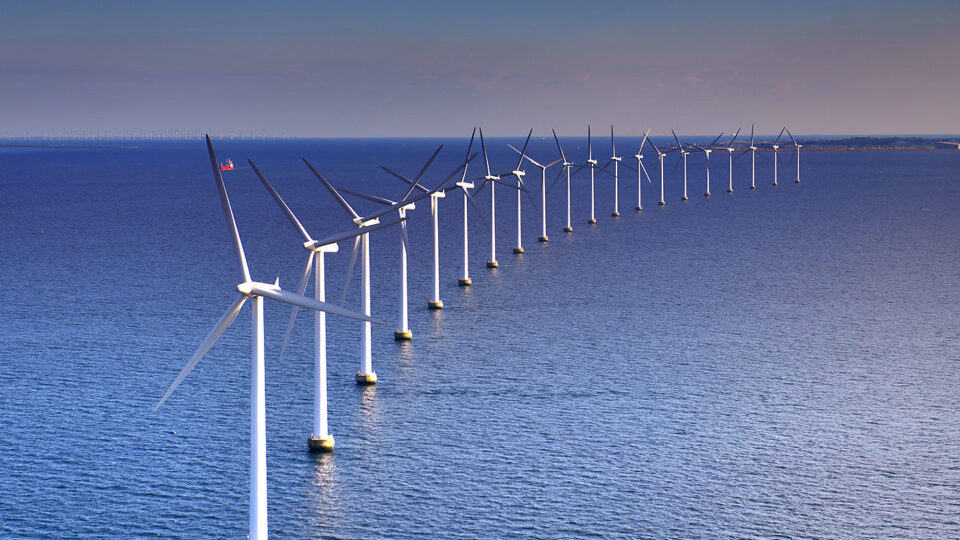
Empire Wind, an offshore wind project, is moving forward

Empire Wind 1, the first offshore wind project that will connect to the New York City grid, has received the financing needed to move forward.  Equinor, the Norwegian state-owned multinational energy company developing the project, closed on a more than $3 billion financing package.

The wind farm will span 80,000 acres in an area 15-30 miles southeast of Long Island.  When completed, it will have a capacity of 810 megawatts.  Equinor has executed a Purchase and Sale Agreement with the New York State Energy Research and Development Authority to purchase power from Empire Wind 1 for 25 years at a strike price of $155/MWh. The operations and maintenance hub for Empire Wind 1 will be at the South Brooklyn Marine Terminal.  Commercial operation is expected by 2027.

The previously-planned Empire Wind 2 project was terminated a year ago because of inflation, interest rates, and supply chain disruptions.  More broadly, the U.S. offshore wind industry has been struggling for the past year. 

With the return of President Donald Trump to the White House, there is much greater uncertainty facing the industry.  As a result of the election, Attentive Energy, a planned 3-gigawatt wind project off the coasts of New York and New Jersey has been put on pause.  Trump’s public disdain for offshore wind energy is likely to create a major slowdown in the growth of the offshore wind pipeline.  On the other hand, the new administration is less likely to have much influence on projects already in progress including 4 gigawatts under active construction and more than 50 gigawatts in other stages of development.

**********

Web Links

Empire Wind 1 secures $3B+ financing package, enters ‘full execution mode’

Photo, posted May 2, 2022, courtesy of California Energy Commission via Flickr.

Earth Wise is a production of WAMC Northeast Public Radio
Native plants and road salt pollution

February 12, 2025 By EarthWise Leave a Comment

Can native plants help mitigate pollution from road salt?

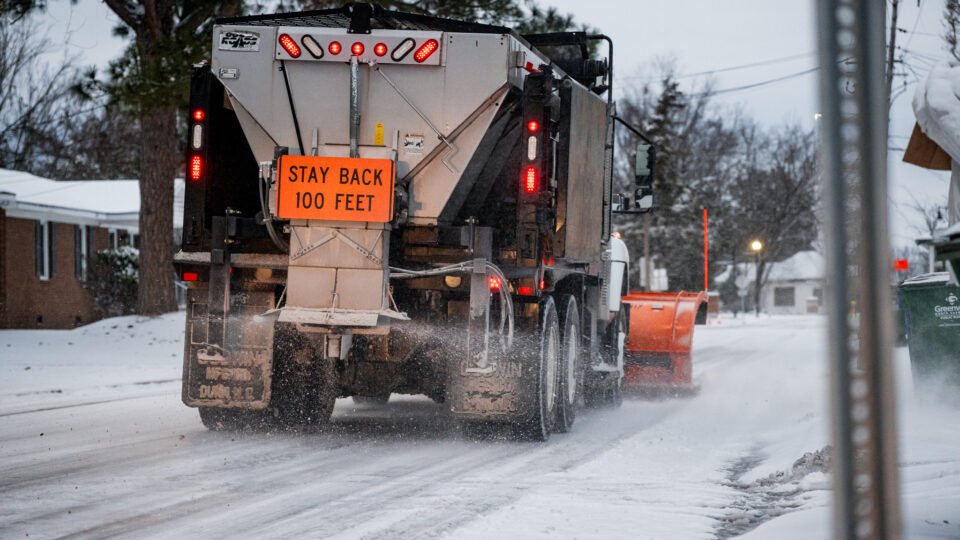
Applying salt to roadways lowers the freezing point of water and prevents slippery surfaces, which makes it safer for people to drive in wintry conditions.  In the U.S., more than 22 million tons of road salt is spread every year. 

But road salt harms infrastructure and the environment.   In fact, road salt damages cars and metal infrastructure by accelerating rust and corrosion.  Road salt can also leach into soil and waterways, disrupting ecosystems, degrading soil, contaminating water, and damaging vegetation. 

In cities and towns, road salts often wash into stormwater systems, posing health concerns and challenges for infrastructure.

A new study led by researchers from Virginia Tech looked at how salt affects plants and whether certain plants could mitigate salt pollution. The research team studied stormwater detention basins in Northern Virginia, examining the impacts of road salt on plants, soils, and water quality in green infrastructure systems.

The findings, which were recently published in the journal Science of the Total Environment, found that the amount of salt present in green infrastructure systems does reach levels that threaten plant communities.  However, the researchers found that relying on salt-tolerant plants for mitigation is unlikely to be effective because they simply don’t take in enough salt.

Certain plants, particularly cattails, absorbed substantial amounts of salt.  But even in a basin densely planted with salt-tolerant cattails, only up to 6% of the road salt applied during winter could be removed. 

Plants alone cannot solve our salt pollution problem.

**********

Web Links

Researcher studies the power of native plants to combat road salt pollution

Photo, posted January 22, 2025, courtesy of the City of Greenville, North Carolina via Flickr.

Earth Wise is a production of WAMC Northeast Public Radio

A green battery from industrial waste

February 11, 2025 By EarthWise Leave a Comment

Flow batteries are rechargeable batteries in which liquid electrolytes flow through one or more chemical cells from one or more tanks.  The electrolytes are redox pairs, that is, chemical compounds that can reversibly undergo reduction and oxidation reactions.  The most common redox electrolytes include elements like vanadium, chromium, iron, zinc, and bromine.  Flow batteries can provide large amounts of both electrical power and stored energy based on the size of the electrolyte tanks.  As a result, they can be scaled up far more readily than other battery technologies. 

Flow batteries are safe, stable, long-lasting, and their electrolytes can easily be refilled.  They have significant potential for use in utility-scale storage for renewable energy systems.

Researchers at Northwestern University have developed a redox flow battery based on an organic industrial-scale waste product.  The material – triphenylphosphine oxide or TPPO – is produced in the thousands of tons each year.  It is byproduct of producing a variety of substances including some vitamins, pharmaceuticals, agrochemicals, and other bulk chemicals.  For the most part, TPPO is of little use and must be carefully discarded.

The current market for redox flow batteries is very small but is expected to grow over time as the need for utility-scale energy storage continues to expand.  A battery technology based on a waste material that is already produced in high volume and that must otherwise be disposed of with caution would have significant advantages.

**********

Web Links

Green battery discovery turns trash into treasure

Photo, posted January 12, 2015, courtesy of California Energy Commission via Flickr.

Earth Wise is a production of WAMC Northeast Public Radio

Cold spells and global warming

February 10, 2025 By EarthWise Leave a Comment

Global warming and cold spells

January saw some major bouts of subfreezing temperatures across much of North America and significant snowfall in places like Pensacola, Florida and New Orleans.  This spate of frigid weather undoubtedly prompted many people to question whether global warming is really happening.  But such cold spells quite likely are not happening in spite of global warming, but actually as a result of it.

The polar jet stream is a slim band of westerly winds that circles the Arctic.  It is formed where cold air from the north meets warmer air to the south.  As the planet warms, the Arctic has been heating up nearly four times faster than the rest of the planet, which narrows the difference in temperature between the northern air and southern air.  The result is that the jet stream is weaker and more meandering, which allows frigid air to reach further south.

The polar vortex is a whirling mass of cold air that extends across the Arctic.  It is stronger in the winter when the Northern Hemisphere leans away from the sun.  The polar jet stream normally holds on to the vortex and keeps it far to the north.  But when the jet stream gets wobbly, this mass of cold air can break out and travel south, even to places like Florida, Louisiana, and Texas.

The planet as a whole is warming, and the Arctic is warming even faster.  But there will still be plenty of ice, snow, and frigid air in the Arctic winter for decades to come.  As the behavior of the polar jet stream gets increasingly erratic, there may well be more frequent episodes of plunging temperatures in areas unaccustomed to them.

**********

Web Links

Severe Cold Spells May Persist Because of Warming, Not in Spite of It

Photo, posted January 5, 2025, courtesy of Dermot O’Halloran via Flickr.

Earth Wise is a production of WAMC Northeast Public Radio

Drying rivers and hydropower

February 7, 2025 By EarthWise Leave a Comment

Drying rivers threaten hydropower around the world

A decade ago, Ecuador began a major transition to using hydroelectric power.  Like in many other South American countries, the presence of abundant rivers could supply large amounts of energy and drive economic expansion and lead to a new era of prosperity.

This ambitious plan has run into the impacts of climate change.  An extraordinary drought has engulfed much of South America, drying rivers and reservoirs, and has put Ecuador’s power grid on the brink of collapse. 

Since September, daily energy cuts in Ecuador have lasted as long as 14 hours.  An industry group says that the nation is losing $12 million in productivity and sales for every hour the power is out.  Just a few years ago, Ecuador was making great strides in reducing poverty.  Now, as the energy crisis has increased its grip on the country, much of what was achieved is being lost.

Ecuador’s situation is not unique.  In recent years, abnormally dry weather in multiple places has resulted in extreme low water levels in rivers, reducing hydropower resources in Norway, Canada, Turkey, and even rainforest-rich Costa Rica.

Overall, more than one billion people live in countries where more than half of their energy comes from hydroelectric plants.  With a warming climate and increasing incidence of extreme weather events like drought, it is likely that hydropower will become a less reliable energy source.  More than a quarter of all hydroelectric dams are in places with a medium to high risk of water scarcity by 2050. 

**********

Web Links

The Rivers Run Dry and the Lights Go Out: A Warming Nation’s Doom Loop

Photo, posted January 15, 2020, courtesy of Pedro Szekely via Flickr.

Earth Wise is a production of WAMC Northeast Public Radio

The human footprint on Earth

February 6, 2025 By EarthWise Leave a Comment

The Earth is a pretty big place, and it is easy to think that humans and their activities occupy very little of it.  But the impact of human activities on our planet continues to grow.  Recent satellite images from NASA’s Earth Observatory show the staggering extent of the human footprint on Earth.

Agriculture is a major part of it.  Farms and pastures take up almost half of the world’s habitable land – land not covered by ice or desert.  Greenhouses have recently proliferated tremendously and now cover 3.2 million acres, an area the size of Connecticut, and they even have effects on local climates.

More than half of the world’s population now lives in cities, which are expanding rapidly.  Enormous cities in Asia are changing the landscape in places like Thailand and Indonesia.  Apart from taking up lots of land, many of the world’s cities are immersed in clouds of air pollution that they generate.

Greenhouse gas emissions continue to grow, and temperatures continue to rise.  The effects of this on the planet are increasingly evident.  Seas are rising, ice is melting, glaciers shrink away, and wildfires continue to burn.  The massive wildfires in and around Los Angeles have made major changes in the local landscape.  Rising seas have flooded coastal wetlands and elsewhere, rivers and lakes have shrunk.

There are also human impacts visible from space that represent positive signs.  Large solar arrays supply the cheapest form of energy in most parts of the world and the number and size of solar installations are at a record high.   These solar installations provide some hope that global warming can be slowed.

**********

Web Links

The Growing Human Footprint on Earth, as Seen from Space

Photo, posted July 28, 2012, courtesy of Beth Scupham via Flickr.

Earth Wise is a production of WAMC Northeast Public Radio

The year in energy

February 5, 2025 By EarthWise Leave a Comment

Last year saw some major trends in the global energy sector. Perhaps the most dramatic was the shift to renewable power, which continued to outpace the projections of both financial analysts and industry experts.  2024 saw new highs in renewable installation, largely due to China, which accounted for more than half of all the solar power installed globally.  Huge solar installations also came online in California and Nevada during the year.  On the other hand, the amount of coal burning for the year also exceeded expert predictions, also largely due to China.

A second trend was increasing sales of electric vehicles, which reached a new high, although short of expectations.  A major driving force in EV sales is the dropping price of lithium-ion batteries, which fell by 20% in 2024.  Again, China was a major factor with roughly half of all its domestic vehicle sales being electric.

Coal’s decline is being slowed by the rising demand for electricity.  The increased use of electric heating and cooling along with the increasing use of EVs are major factors.  But the proliferation of energy-hungry data centers incorporating artificial intelligence capabilities is driving up the demand for power even more. 

Perhaps the clearest indication of the future for global energy comes from investors, who put about $2 trillion into clean energy last year.  That is twice as much as invested in oil, coal, and natural gas.

The history of energy has seen the Age of Coal and the Age of Oil.  By all indications, we are now heading into the Age of Electricity.

**********

Web Links

The Year in Energy in Four Charts

Photo, posted November 23, 2024, courtesy of Mussi Katz via Flickr.

Earth Wise is a production of WAMC Northeast Public Radio

Storing carbon in buildings

February 4, 2025 By EarthWise Leave a Comment

According to a new study by researchers at the University of California, Davis and Stanford University, construction materials used in buildings have the potential to lock away billions of tons of carbon dioxide.  The study, published in Science, shows that storing CO2 in buildings could be a major contributor to efforts to reduce greenhouse gas emissions.

Overall efforts in carbon sequestration take carbon dioxide – either as it’s being produced or once it’s already in the atmosphere – and store it away.  Storing it might involve injecting it into underground caverns or deep in the ocean.  Alternatively, storing it might involve converting it into a stable form using chemical reactions.  These various strategies involve both practical challenges and potential environmental risks.

The new study suggests that many materials that are already produced in large quantities have the potential to store carbon dioxide.  These include concrete, asphalt, plastics, wood, and brick.  More than 30 billion tons of these materials are produced worldwide every year.

Ways to accomplish carbon storage include adding biochar into concrete, using artificial rocks loaded with carbon as concrete and asphalt aggregates, plastic and asphalt binders based on biomass instead of petroleum, and including biomass fiber into bricks. 

The largest potential is using carbonated aggregates to make concrete.  Concrete is by far the world’s most popular building material with more than 20 billion tons being produced each year.

The feedstocks for these ways to store carbon in building materials are mostly low-value waste materials, so the economics of implementing these carbon sequestering strategies are likely to be quite favorable.

**********

Web Links

Storing Carbon in Buildings Could Help Address Climate Change

Photo, posted October 19, 2022, courtesy of Alexandre Prevot via Flickr.

Earth Wise is a production of WAMC Northeast Public Radio

Curbing food waste

February 3, 2025 By EarthWise Leave a Comment

Efforts to curb food waste are failing

According to the U.S. Department of Agriculture, as much as 40% of the food supply in the United States is wasted.  In fact, Americans generate more food waste than all but two countries.

To address this problem, the federal government announced a goal nearly a decade ago to cut food waste in half by 2030 compared to 2016 levels.  Doing so would bring food waste down to approximately 164 pounds per person annually.

However, according to a new study led by researchers from the University of California – Davis, since 2016, per capita food waste has actually increased instead of decreasing. 

The study, which was recently published in the journal Nature Food, looked at how state policies align with federal targets.  The research team found that state policies focus more on recycling methods, such as composting and anaerobic digestion, rather than on prevention and rescue strategies, like food donations or repurposing food for animal feed.

In 2021, the EPA revised its definition of food waste to no longer include recycling methods.  But when food is wasted, the resources used to grow the food, including energy, water, and fertilizer, are also wasted. 

In the study, the researchers analyzed state-level food waste reduction efforts across four areas: prevention, rescue, repurposing, and recycling.  They found that recycling policies offered the most potential for diversion. Despite this, most states still fell short of the federal goal of 164 pounds per person annually. 

According to the research team, more comprehensive policies to address food waste must be implemented as soon as possible.

**********

Web Links

States Struggle to Curb Food Waste Despite Policies

Photo, posted June 28, 2021, courtesy of Ivan Radic via Flickr.

Earth Wise is a production of WAMC Northeast Public Radio

Climate risks for apple-growing areas

January 31, 2025 By EarthWise 2 Comments

The changing climate is creating challenges for some of the most productive apple growing regions in America.  A study by Washington State University analyzed over 40 years of climate conditions that impact the growth cycle of apple trees.

Many growing areas face increased climate risk, but the top three apple-producing counties are among the most impacted.  Yakima County in Washington is the country’s largest apple producer with more than 48,000 acres of apple orchards.  Kent County in Michigan and Wayne County in New York (located east of Rochester) are the next two largest.

The study looked at six metrics that affect apple production.  Two of these metrics relate to extremes:  extreme heat days (with temperatures above 93 degrees) that can cause multiple problems and warm nights (with minimum temperatures above 59 degrees) that adversely affect coloration.

Other metrics included the number of cold days, the last day of spring frost, and the number of growing degree days, which are the number of days above a certain temperature that are conducive for apples to grow.

Changes to these metrics can impact apple production, change the time when apple flowers bloom, increase risk of sunburn on apples, and affect apple appearance and quality.  In many places, nearly all of these metrics are changing in an undesirable direction.

Apples are the most consumed fruit in the United States.  27,000 American producers supply an industry with a downstream value of $23 billion.  Apples are a big deal.

**********

Web Links

Prime apple-growing areas in US face increasing climate risks

Photo, posted August 8, 2020, courtesy of Sue Thompson via Flickr.

Earth Wise is a production of WAMC Northeast Public Radio

Hydroclimate whiplash

January 30, 2025 By EarthWise Leave a Comment

Hydroclimate whiplash has increased as much as 66% since the mid-20th century

Hydroclimate whiplash is a term that describes rapid swings between intensely wet and dangerously dry weather.  Global weather records show that the occurrence of hydroclimate whiplash has increased by 31% or as much as 66% since the mid-20th century. 

California’s experience is a prime example of this phenomenon.  After years of severe drought, dozens of atmospheric rivers subjected the state to record-breaking amounts of precipitation in the winter of 2022-23.  A second extremely wet winter in the southern parts of the state the following year resulted in the growth of abundant amounts of grass and brush. 2024 saw a record-hot summer which was then followed by a record-dry start to the 2025 rainy season.  The result was the catastrophic wildfires in the Los Angeles area in January.

Research by UCLA climate scientists explains that the primary driver for the increasing occurrence of hydroclimate whiplash is the expansion of the atmospheric sponge – that is, the growing ability of the atmosphere to evaporate, absorb and release water.  Every degree Celsius that the planet warms increases this ability by 7%. 

The global consequences of hydroclimate whiplash include not only floods and droughts but also the increased danger of whipsawing between the two, leading to the bloom and burn cycle that California recently faced. The risk of wildfire is twofold:  first by increasing the growth of flammable grass and brush in the months before the fire season, and then by drying it out to dangerous levels with extremely warm and dry weather.

**********

Web Links

Floods, droughts, then fires: Hydroclimate whiplash is speeding up globally

Photo, posted January 13, 2025, courtesy of Victor Guillen / USDA Forest Service via Flickr.

Earth Wise is a production of WAMC Northeast Public Radio
A big year for battery storage

January 29, 2025 By EarthWise Leave a Comment

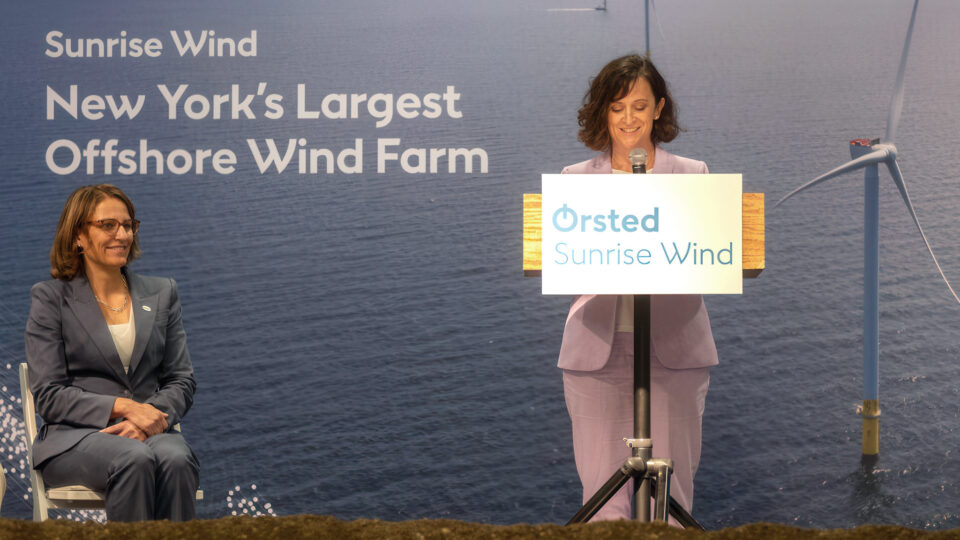
2024 was a big year for battery storage

A decade ago, the ability of utilities to store large amounts of electricity in batteries was basically nonexistent.  In the past several years, growth in battery storage systems has exploded.  As of the end of November, the US had about 24 gigawatt-hours of storage capacity in place.  This is 71% more than just a year ago.  Nearly half of the battery storage in the US is located in California.  Texas, Arizona, and Nevada are also leaders in deploying battery storage.

Battery storage allows solar and wind generating plants to keep operating when there is reduced demand for their output and have the electricity that they produce be available later when demand rises.  Storing this excess electricity essentially extends the hours of the day when clean energy can be used.

Equally important, the existence of battery storage reduces the need for peaker plants, the fossil-fueled power plants that only turn on at times of peak demand, such as during hot afternoons.

There are 1,000 peaker plants in the US and they are generally heavily polluting, inefficient, and expensive to operate.  Some 63 million people live within a three-mile radius of one of them and are exposed to harmful pollutants like nitrogen oxides and sulfur dioxide.  Peaker plants also release more greenhouse gases than other power plants do for every unit of electricity they generate.

Many battery storage facilities are co-located with, or otherwise support, solar energy plants.  The amount of solar energy in the US is growing rapidly and surpassed the 100-gigawatt mark in 2024.  As solar power continues to expand, so will battery energy storage.

**********

Web Links

Battery projects soared again in 2024

Photo, posted August 3, 2024, courtesy of the Bureau of Ocean Energy Management via Flickr.

Earth Wise is a production of WAMC Northeast Public Radio

Is de-extinction possible?

January 28, 2025 By EarthWise Leave a Comment

Advances in genomics have created the possibility of bringing back extinct species from the past by making use of recovered DNA from preserved specimens.  Companies attempting to “de-extinct” iconic species have received hundreds of millions of dollars from venture capitalists.

These companies are trying to bring back iconic species that include ivory-billed woodpeckers, Tasmanian tigers, dodos, passenger pigeons, and woolly mammoths. 

Efforts to recreate extinct species are controversial.  The arguments in favor include the positive effects on ecosystems when keystone species are restored, and the excitement generated about conservation in general.  The opposing view is that concentrating all this effort on these restorations diverts attention and funding from more urgent conservation work.

A more nuanced viewpoint that has emerged is that actually de-extincting species is not possible.  The genome of these vanished species cannot be reconstructed perfectly.  Specimens are not cryopreserved from when the animal died.  What can be retrieved is at best significant fragments of the genome.  These are combined with DNA from related contemporary animals to produce the new species.   

As a result, what emerges are proxies.  They are animals that are similar to extinct animals – in some cases convincingly so – but they are not the same species that existed in the past.   They may be able to fill the same ecological niches and they may have similar behavior.  But they are not de-extincted specimens of the past species.  Is it worth doing?  Quite possibly but it’s not actually bringing back what is gone.

**********

Web Links

Despite Biotech Efforts to Revive Species, Extinction Is Still Forever

Photo courtesy of Grazelands Rewilding.

Earth Wise is a production of WAMC Northeast Public Radio

Saving the Great Salt Lake

January 27, 2025 By EarthWise Leave a Comment

For many years, scientists have warned that the Great Salt Lake in Utah is headed toward a catastrophic decline.  While the size of the Great Salt Lake fluctuates naturally with seasonal and long-term weather patterns, the lake has been experiencing significant and steady declines for decades.  In fact, the Great Salt Lake has lost more than 15 billion cubic yards of water over the past three decades, and it’s getting shallower at the rate of four inches a year. 

This reduction is primarily due to excessive water diversions from rivers and streams that feed into the lake for agricultural, industrial, and municipal use. These diversions, combined with prolonged drought and rising temperatures due to climate change, have significantly reduced the lake’s water level. 

According to a new study led by researchers from Oregon State University, 62% of the river water bound for the Great Salt Lake is diverted for human use, with agricultural activities responsible for nearly three-quarters of that percentage.  The analysis, which was recently published in the journal Environmental Challenges, found that reducing irrigation is necessary to save the lake. 

In order to stabilize and begin refilling the lake, the research team proposes cutting human water consumption in the Great Salt Lake’s watershed by 35%.  The researchers emphasize that farmers and ranchers facing income losses from using less water would require taxpayer-funded compensation.

The Great Salt Lake is a biodiversity hotspot, sustaining more than 10 million migratory birds.  The lake also directly supports 9,000 jobs and fuels $2.5 billion in economic activity annually. 

**********

Web Links

Reducing irrigation for livestock feed crops is needed to save Great Salt Lake, study argues

Photo, posted January 14, 2024, courtesy of Olaf Zerbock via Flickr.

Earth Wise is a production of WAMC Northeast Public Radio

Energy storage with iron-air batteries

January 24, 2025 By EarthWise Leave a Comment

The Cambridge Energy Storage Project in Cambridge, Minnesota will be the first commercial deployment of iron-air battery technology.  Developed by startup company Form Energy, the battery system will provide 1.5 MW and 150 MWh of multi-day energy storage.

Iron-air batteries are based on the principle of reversible rusting.  When discharging, the battery releases energy by breathing in oxygen from the air and converting iron metal to rust.  When charging, the battery takes up electrical current that converts rust back into iron and breathes out oxygen.

An individual iron-air battery module is about the size of a washer/dryer set and contains about 50 individual cells filled with a water-based, non-flammable electrolyte.  For a utility-scale system like that being built in Cambridge, modules are grouped together in enclosures and hundreds of enclosures grouped together in megawatt-scale power blocks.  A one-megawatt low-density system would take up about half an acre of land.  High-density systems would be capable of producing more than 3 MW per acre. 

The technology has lower costs compared to lithium-ion battery technology but may be best suited as complementary with it since lithium-ion is primarily used for short-duration energy storage while air-iron can store energy for several days.

The system is expected to be operational by late 2025.  Great River Energy, the operator of the system, plans to conduct a multi-year study to evaluate the system’s performance and potential for broader development. 

**********

Web Links

Minnesota co-op breaks ground on multi-day energy storage project

Photo courtesy of Form Energy.

Earth Wise is a production of WAMC Northeast Public Radio

Engineering plants to consume more carbon dioxide

January 23, 2025 By EarthWise Leave a Comment

The most abundant protein on the planet is an enzyme called ribulose-1,5-bisphosphate carboxylase/oxygenase, better known as RuBisCO.  Its critical role in photosynthesis makes life as we know it on earth possible.  What it does is convert carbon dioxide from the atmosphere into the organic matter contained in plants.

Getting plants to take up more carbon dioxide from the atmosphere is a key strategy for mitigating climate change.  Planting lots of trees is one way to do it.  Another is to get individual plants to capture more carbon dioxide.

Scientists at the University of Illinois have focused on getting plants to produce more RuBisCO which allows them to grow faster, consuming more carbon dioxide in the process.

Some plants are better than others at taking advantage of the earth’s rising carbon dioxide levels.  Among these are food crops like corn, sugarcane, and sorghum.  Such plants’ growth is not primarily limited by how much carbon dioxide is in the atmosphere but rather by how much RuBisCO is in their leaves.  The Illinois scientists tweaked genes in corn and sorghum to produce plants containing more RuBisCO.  Laboratory experiments on corn demonstrated faster corn growth.  Recent outdoor field experiments on sorghum demonstrated a 16% boost in its growth rate. 

Improving photosynthesis in this way is not only a potential strategy for increasing plants’ ability to combat climate change.  It is also a way to cope with the world’s increasing demand for food by producing crops that can grow larger and more quickly.

**********

Web Links

Scientists Engineer Crops to Consume More Carbon Dioxide

Photo, posted April 12, 2016, courtesy of K-State Research and Extension via Flickr.

Earth Wise is a production of WAMC Northeast Public Radio

Investing in carbon capture

January 22, 2025 By EarthWise Leave a Comment

The interests of billionaires seldom seem to coincide with our own.  In fact, they often seem to be quite the opposite.  But there are a number of billionaires who are trying to help the world combat climate change.  Yes, they want to make money doing it, but doing it is nevertheless in everyone’s interest.

A group headed by Bill Gates that included some of the wealthiest people from around the world met last summer in London to evaluate companies working to mitigate the effects of climate change.  These included companies developing carbon dioxide removal technologies.  Stripping carbon dioxide out of the atmosphere is an obvious way to deal with the fact that we continue to dump too much of it into the atmosphere –   obvious, but extremely difficult to do at any scale that makes a difference.

Companies working on carbon capture have raised more than $5 billion since 2018.  There are hundreds of companies working on it and investors include billionaires, venture capitalists, private equity firms, and major corporations.  Companies like Microsoft, Google, and United Airlines have committed billions of dollars to purchase removal credits:  payments to companies for removing carbon dioxide.

There are only a few dozen carbon removal facilities operational today and together they only capture a tiny fraction of the carbon dioxide humans release into the atmosphere.  The hope is that such facilities will scale up in size and number so that they will make a real dent in the problem.  But it will take many years at best, and the planet doesn’t have that much time.  To make a difference, carbon emissions must be reduced as quickly as possible.

**********

Web Links

The New Climate Gold Rush: Scrubbing Carbon From the Sky

Photo, posted April 19, 2020, courtesy of Greg Rubenstein via Flickr.

Earth Wise is a production of WAMC Northeast Public Radio
Approaching critical global temperature thresholds

January 21, 2025 By EarthWise Leave a Comment

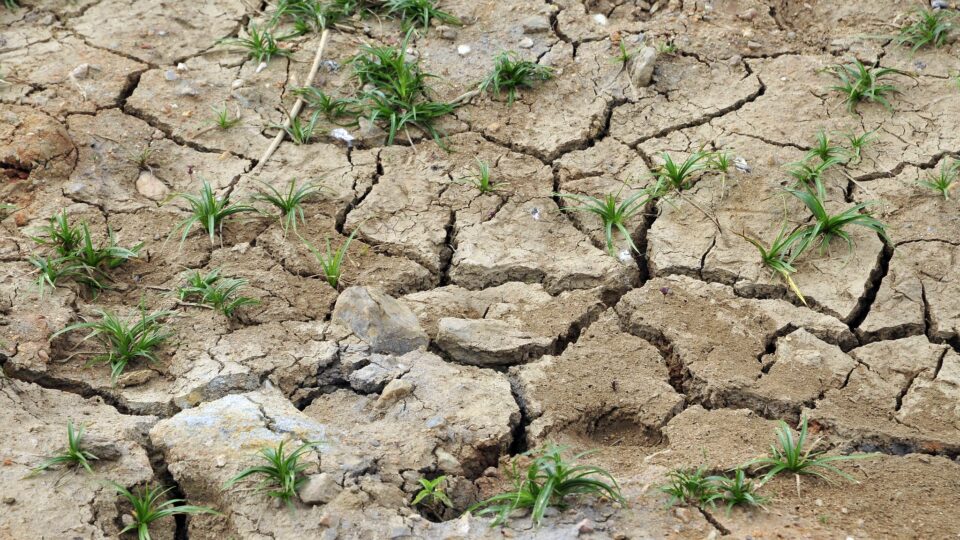
The globe is approaching critical temperature thresholds

The Paris Climate Agreement is a global treaty adopted in 2015 to combat climate change by limiting global warming to well below 2°C above pre-industrial levels, while striving to keep it below 1.5°C.  But according to recent research, the planet is quickly approaching these critical thresholds. 

An international research team led by scientists from Colorado State University, Stanford University, and ETH-Zurich in Switzerland combined insights from 10 global climate models, and – with the help of artificial intelligence – found that regional warming thresholds are likely to be reached faster than previously thought.

In fact, the researchers found that most land regions will likely surpass the critical 1.5°C threshold by 2040 or even earlier.  Additionally, several regions are on track to exceed the 3.0°C threshold by 2060.  Regions including Central Europe, the Mediterranean, South Asia, and parts of sub-Saharan Africa are expected to reach these thresholds faster. 

The research team relied on transfer learning, a cutting-edge machine learning technique that leverages pre-trained models to tackle new, related tasks.

The research, which was recently published in the journal Environmental Research Letters, found that 34 regions are likely to exceed 1.5°C of warming by 2040.  Of those 34 regions, 31 of them are expected to reach 2°C of warming by 2040, and 26 of these 34 regions are projected to surpass 3°C of warming by 2060.

**********

Web Links

AI predicts that most of the world will see temperatures rise to 3C much faster than previously expected

Photo, posted February 23, 2011, courtesy of 2011 CIAT / Neil Palmer via Flickr.

Earth Wise is a production of WAMC Northeast Public Radio

Wrong trees in the wrong places

January 20, 2025 By EarthWise Leave a Comment

Temperatures in cities are rising around the world and urban heat stress is already a major problem.  Extensive surfaces of man-made materials absorb the sun’s energy, and lead to temperatures well above those in the surrounding countryside.  This is known as the urban heat island effect, and it can lead to greater energy use, higher air pollution levels, and a greater risk of heat-related illnesses, as well as death. 

Some cities have already started implementing mitigation strategies, with tree planting prominent among them.  Planting trees can cool the climate by absorbing carbon dioxide, providing shade, and releasing water vapor, which lowers air and surface temperatures. 

However, while trees can cool cities significantly during the day, new research from the University of Cambridge in the U.K. shows that tree canopies can also trap heat and raise temperatures at night. 

According to the study, which was recently published in the journal Communications Earth & Environment, planting the wrong species or the wrong combination of trees in suboptimal locations or arrangements can limit their benefits.

The researchers found that in temperate climates, trees can cool cities by up to 6°C during the day but can increase nighttime temperatures by 1.5°C.  Cities with open layouts in temperate and tropical climates benefit from a mix of evergreen and deciduous trees, enhancing cooling by 0.5°C more than in cities with only deciduous or evergreen trees. 

The researchers hope their findings will help urban planners choose the best combinations of trees and planting locations to combat urban heat stress.

**********

Web Links

Wrong trees in the wrong place can make cities hotter at night, study reveals

Photo, posted October 29, 2017, courtesy of Lars Plougmann via Flickr.

Earth Wise is a production of WAMC Northeast Public Radio

  • « Go to Previous Page
  • Page 1
  • Interim pages omitted …
  • Page 8
  • Page 9
  • Page 10
  • Page 11
  • Page 12
  • Interim pages omitted …
  • Page 99
  • Go to Next Page »

Primary Sidebar

Recent Episodes

  • An uninsurable future
  • Clean energy and jobs
  • Insect declines in remote regions
  • Fossil fuel producing nations ignoring climate goals
  • Trouble for clownfishes

WAMC Northeast Public Radio

WAMC/Northeast Public Radio is a regional public radio network serving parts of seven northeastern states (more...)

Copyright © 2026 ·