• Skip to primary navigation
  • Skip to main content
  • Skip to primary sidebar

Earth Wise

A look at our changing environment.

  • Home
  • About Earth Wise
  • Where to Listen
  • All Articles
  • Show Search
Hide Search
You are here: Home / Archives for yellow

yellow

Extending the shelf life of produce

July 10, 2025 By EarthWise Leave a Comment

More than 30% of the world’s food is lost after it has been harvested.  That’s enough to feed more than a billion people.  Much of that loss is fruits and vegetables that go bad before they can be eaten.

Refrigeration is the most common way to preserve foods, but the energy and infrastructure required is not always available, especially in less affluent regions of the world.

Researchers at MIT and Singapore-based collaborators have demonstrated that they can extend the shelf life of harvested plants by injecting them with melatonin using biodegradable microneedles.

Silk microneedles are tiny, nontoxic, and biodegradable and represent a means of delivering nutrients to plants without triggering a stress response.

Melatonin is a natural hormone that plants already use.  Injecting it was shown to extend vegetables’ shelf life.  The tests used pak choy, an important Asian crop that is very perishable.  Untreated plants at room temperature yellowed within two or three days.  In contrast, treated plants stayed green for five days.  Overall, treated plants retained saleable value for 8 days.  Refrigerated plants had their shelf life extended considerably as well.  However, the most significant value of the technique is that it could enhance the shelf life of perishable produce like pak choy without needing access to refrigeration.

The dose of melatonin delivered to the plants is so low that it is fully metabolized by the crops, so it would not significantly increase the amount normally present in the food.  People would not ingest more melatonin than usual.  The researchers believe that their technique should work with all kinds of produce.

**********

Web Links

A new technology for extending the shelf life of produce

Photo, posted May 6, 2010, courtesy of Jessica Spengler via Flickr.

Earth Wise is a production of WAMC Northeast Public Radio
Rivers Changing Color | Earth Wise

February 10, 2021 By EarthWise Leave a Comment

Why do rivers change colors?

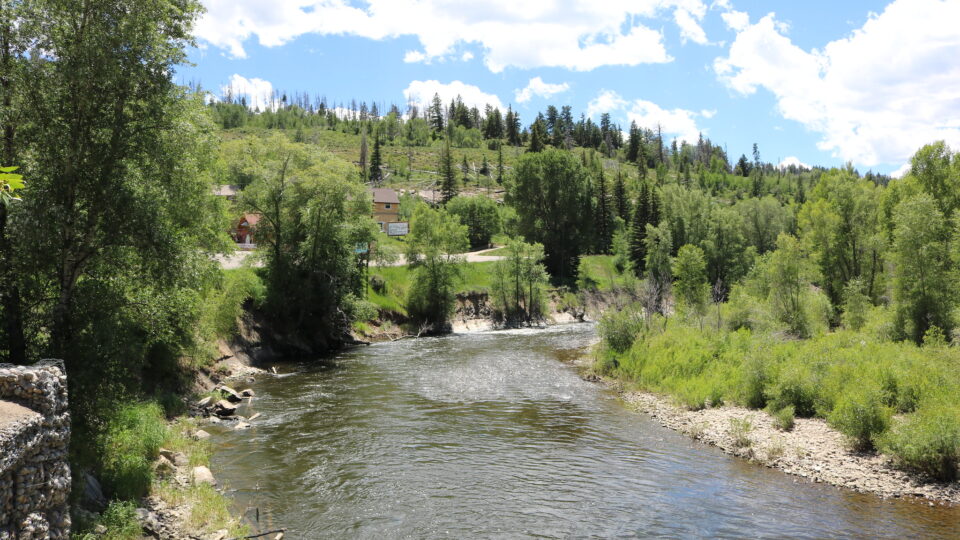
A recent study, published in Geophysical Research Letters, found that one-third of large American rivers have had significant changes of color over the past 30 years.  Rivers can appear to be shades of blue, green, and yellow and we tend to expect healthy rivers to have colors in shades of blue.  According to the new study, only 6% of American rivers are dominantly blue.

The study looked at 235,000 Landsat images taken from 1984 to 2018.  The results are that 56% of rivers studied were dominantly yellow, 38% dominantly green, and 6% blue.  Over the 34 years studied, 33% of the rivers had significant changes in color. About 21% became greener and 12% more yellow. 

The chief causes of color changes in rivers are farm fertilizer runoff, dams, efforts to fight soil erosion, and climate change.  Climate change increases water temperature and rain-related runoff.

Color changes are not necessarily a sign of poor river health, but dramatic changes could point to issues that need attention.  A river can change color based on the amount of sediment, algae, or dissolved organic carbon in the water.   If a river becomes greener, it can often mean large algae blooms are present that cause oxygen loss and can produce toxins.  On the other hand, rivers that are getting less yellow demonstrate the success of regulations to prevent soil erosion.

The study of river colors can pinpoint which rivers are undergoing rapid environmental change.  What the study does not provide is information on water quality.  Water quality measurements will be important to determine the health of many of the rapidly changing rivers.

**********

Web Links

One Third of U.S. Rivers Changed Their Color, Three Decades of Satellite Images Show

Photo, posted July 6, 2016, courtesy of Jeffrey Beall via Flickr.

Earth Wise is a production of WAMC Northeast Public Radio.

Why Do Trees Change Color? | Earth Wise

December 24, 2020 By EarthWise Leave a Comment

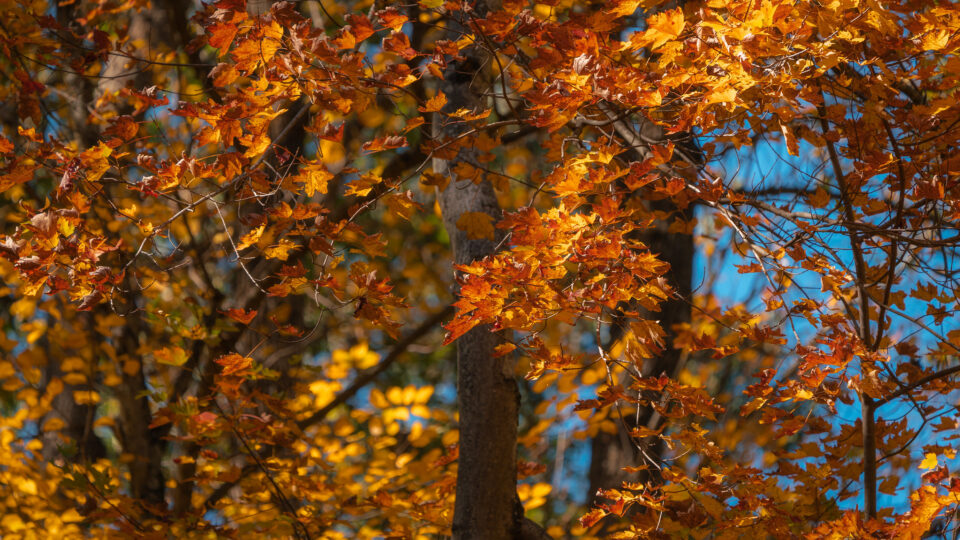
Explaining the magnificent spectacle of fall foliage

We had a particularly colorful fall in the Northeast this year.  Almost everywhere you looked, there were brilliant displays of yellow, orange, and red.  The colors of fall are a result of chemistry and environmental events that may have taken place many months in the past.

The color of leaves comes from 4 pigments whose effects are governed by photosynthesis.  The one that is actually used in photosynthesis is chlorophyll and it causes leaves to be green.  But when a tree begins to prepare for dormancy, it stops producing chlorophyll, the green pigmentation fades, and the other pigments that were already in the leaves become visible.

There are xanthoplylls, which are the yellow pigments that are seen the most in fall trees.  They are the same pigments that color egg yolks and sometimes parts of the human eye.  They are only produced by plants and appear in humans and animals only through consumption.

There are carotenes, which are the orange pigments found in fruits and vegetables, such as carrots, oranges, some bell peppers and squashes.

And there is anthocyanin, which is the pigment found in blueberries, blackberries, and red or violet roses.  Its color depends on the pH level of the plant; higher pH leads to darker color.  This is the pigment seen in red maples, black cherry trees, Shumard oaks, and more.  Only 10% of trees in temperate climates produce anthocyanin and its red pigmentation and most of those trees are in New England.

All these pigments serve purposes.  They help trees absorb light energy, prevent sun damage, and even regulate how much energy chlorophyll produces.

There are complicated chemical and environmental factors at play in fall foliage but when they come together like they did this year, it’s a magnificent spectacle.

**********

Web Links

Why Do Trees Change Color?

Photo, posted October 17, 2020, courtesy of John Brighenti via Flickr.

Earth Wise is a production of WAMC Northeast Public Radio.

Protecting Canola Crops From Frost

November 20, 2019 By EarthWise Leave a Comment

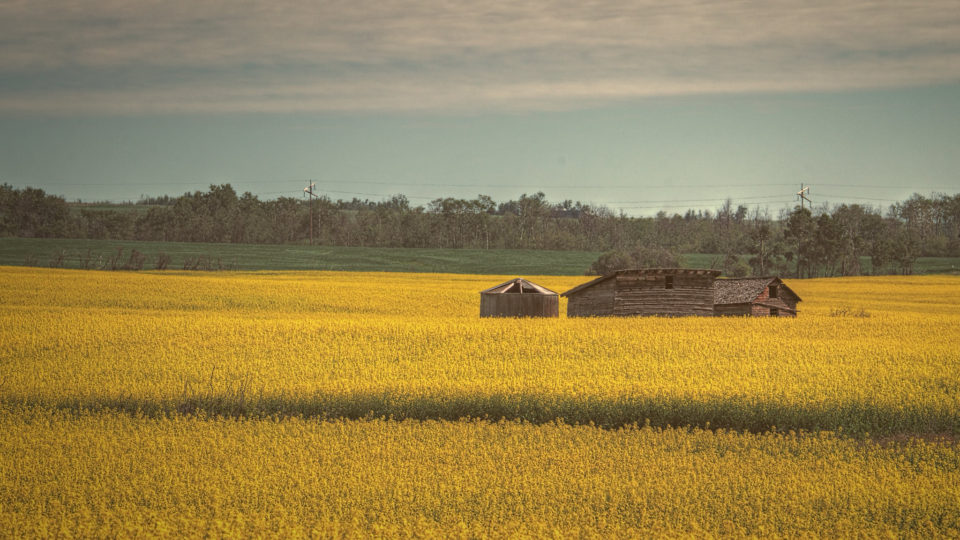
Canola is one of Canada’s most valuable crops.  In fact, Canada is the world’s largest exporter of canola oil.  The international market for canola oil is $27 billion a year.  The oil is very popular because it has a relatively low amount of saturated fat, a substantial amount of monosaturated fat, and is very neutral tasting.

Canadian canola farmers worry a great deal about late season, non-lethal frosts because the frosts prevent chlorophyll – a photosynthetic pigment in the seeds – from breaking down, a process they call “degreening”.  The farmers seek to have high-quality yellow embryos at seed maturity.  When the harvest contains more than 2% of green seeds, it can no longer produce Grade No. 1 quality oil.  When green seeds are processed to extract canola oil, the chlorophyll in the seeds reduces the oil’s storability and quality.  As a result, farmers receive a lower price for frost-damaged green seed canola.  This costs Canadian farmers and estimated $150 million annually.

Researchers at the University of Calgary have developed gene-based technology to produce canola plants that can withstand late-season frost and still produce high-quality seed.  They identified a specific protein that controls chlorophyll breakdown and seed maturity.  Genetic manipulation is able to enhance the seed degreening system.  They were able to reduce the amount of chlorophyll in the genetically modified canola lines by 60% after the plants were exposed to non-lethal frost. 

Ultimately, the researchers plan to develop a method to incorporate the modification into canola hybrid lines in such a way that it will be readily accepted by consumers concerned about genetically modified organisms.

**********

Web Links

New technology helps protect valuable canola crops from frost

Photo, posted August 29, 2018, courtesy of Tinker and Rove via Flickr.

Earth Wise is a production of WAMC Northeast Public Radio.

Primary Sidebar

Recent Episodes

  • An uninsurable future
  • Clean energy and jobs
  • Insect declines in remote regions
  • Fossil fuel producing nations ignoring climate goals
  • Trouble for clownfishes

WAMC Northeast Public Radio

WAMC/Northeast Public Radio is a regional public radio network serving parts of seven northeastern states (more...)

Copyright © 2026 ·