• Skip to primary navigation
  • Skip to main content
  • Skip to primary sidebar

Earth Wise

A look at our changing environment.

  • Home
  • About Earth Wise
  • Where to Listen
  • All Articles
  • Show Search
Hide Search
You are here: Home / Archives for workers

workers

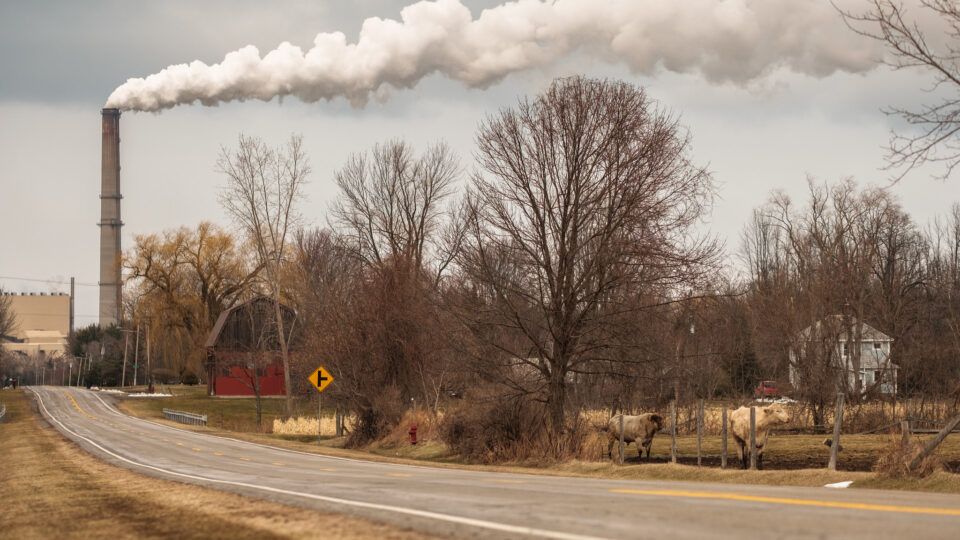
The last coal plant in Britain

October 31, 2024 By EarthWise Leave a Comment

The last coal plant in Britain has closed

The Industrial Revolution, which basically got underway in the mid-19th century, was largely enabled by coal, which fueled iron manufacturing, railroads, steam engines, and more.  Most of these things got their start in Britain, which inspired the rest of the world to follow suit.

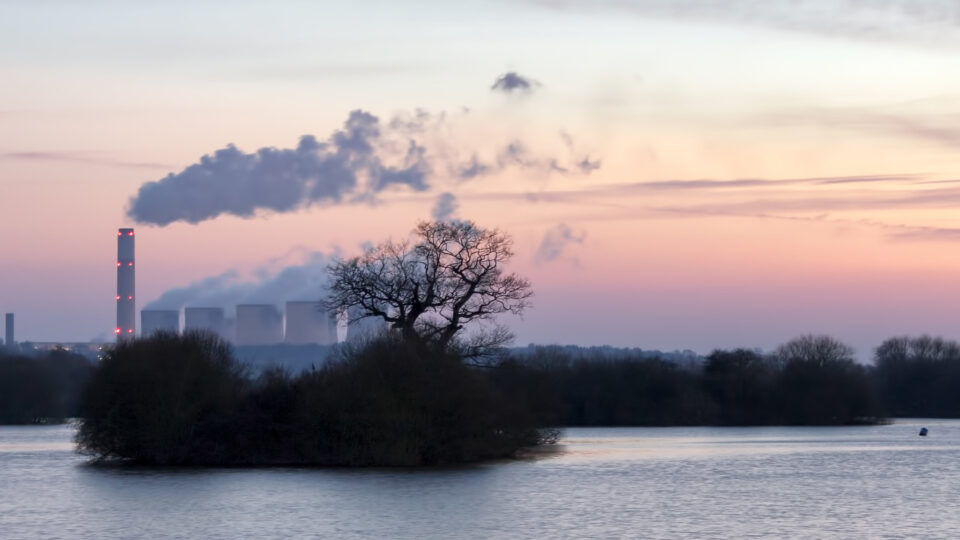
The world’s first coal-burning power plant began producing electricity at the Holborn Viaduct in London in 1882.  This September, Britain – the birthplace of coal power – shut down its last coal-burning power station when the 2,000-megawatt Ratcliffe-on-Soar facility ceased operations.  Uniper, the company that operated the plant, will be converting the 750-acre site to a low-carbon energy hub.

Shutting down coal plants is not a simple matter, as they are the lifeblood of entire towns and regions where they are located.  Finding fair transitions for workers is an uphill battle that has to take place in many locations.

Coal is the dirtiest fossil fuel, producing more greenhouse gas than others, but historically was the cheapest and most abundant source of power in many countries.  In recent decades, it has been replaced by gas, nuclear power, and most recently, renewables like wind and solar.

The coal era has ended in much of the world. The United States still gets 16% of its electricity from coal, but that number keeps getting smaller.  Unfortunately, the great majority of coal use is in the world’s two most populous countries:  India and China.  Both are adding renewable energy sources, but both have rapidly climbing energy demand.  China’s coal consumption is expected to peak this year and flatten out.  But there is still work to be done to bring an end to coal power.

**********

Web Links

Britain Shuts Down Last Coal Plant, ‘Turning Its Back on Coal Forever’

Photo, posted March 13, 2016, courtesy of Arran Bee via Flickr.

Earth Wise is a production of WAMC Northeast Public Radio

Fewer Farms In The World | Earth Wise

June 30, 2023 By EarthWise Leave a Comment

Fewer farms in the world could have troubling consequences

A new study by the University of Colorado Boulder looked at the trends in the number and size of farms around the world starting from the 1960s and projecting through the end of the 21st century.

The analysis shows that the number of farms globally will shrink in half while the size of the average existing farms doubles.

The study used data from the UN Food and Agricultural Organization on agricultural area, GDP per capita, and rural population size of more than 180 countries.  The analysis found that the number of farms around the world would drop from 616 million in 2020 to 272 million in 2100.  A key reason for the trend is that as a country’s economy grows, more people migrate to urban areas, leaving fewer people in rural areas to tend the land.

This decline has been ongoing in the US and Europe for decades.  For example, in the US, there were 200,000 fewer farms in 2022 than in 2007.

This trend has troubling consequences.  Larger farms typically have less biodiversity and more monocultures.  The greater biodiversity and crop diversity of smaller farms makes them more resilient to pest outbreaks and climate shocks.

Currently, 600 million farms provide for 8 billion people. By the end of the century, it is likely that half the number of farmers will be feeding even more people.  That is a weighty responsibility for agricultural workers.  Support systems and education for farmers becomes ever more important.

**********

Web Links

The number of farms in the world is declining, here’s why it matters to you

Photo, posted January 18, 2011, courtesy of 2010 CIAT / Neil Palmer via Flickr.

Earth Wise is a production of WAMC Northeast Public Radio
Electric Cars In Norway | Earth Wise

June 12, 2023 By EarthWise Leave a Comment

We are at a relatively early stage of the electric car revolution.  EV sales are increasing rapidly, but they still comprise only a small fraction of the cars on American roads.  So, there is still lots of speculation and argument about how things will actually work when a large fraction of cars are electric.  But there is at least one place where one doesn’t have to speculate:  Norway.

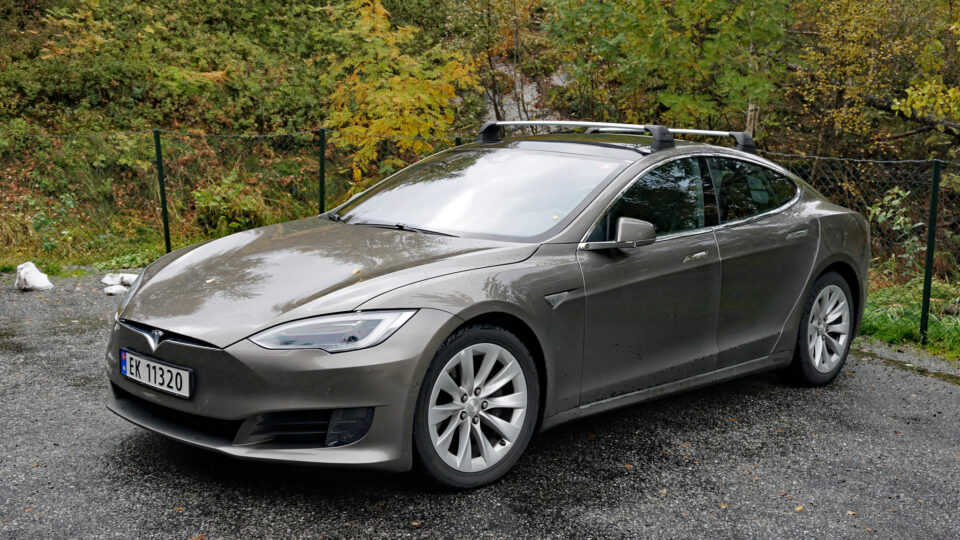
Last year, 80% of new-car sales in Norway were EVs.  That country is essentially an observatory for figuring out what the electrification of vehicles will mean for the environment, workers, and life in general.  In fact, sales of internal combustion cars in Norway will end in 2025.

Based on Norway’s experience, electric vehicles bring benefits and none of the dire consequences that some critics predict.  The transition isn’t problem-free.  There have been unreliable chargers and long waits during periods of high demand.  Auto dealers and retailers have had to adapt to the changes in their businesses.  The pecking order of car brands has changed dramatically making Tesla the best-selling brand and marginalizing long-established carmakers like Renault and Fiat.

But in the bigger picture, the air in Oslo, the capital of Norway, is measurably cleaner.  The city is quieter as noisy gasoline and diesel vehicles gradually disappear.  Oslo’s greenhouse gas emissions have fallen 30% since 2009.  Meanwhile, there hasn’t been mass unemployment among gas station workers, and the electrical grid has not collapsed.

Norway is perhaps 10 years ahead of us with respect to electric cars.  There are still problems to solve, and difficulties to overcome, but so far, it looks like it will all turn out well.

**********

Web Links

In Norway, the Electric Vehicle Future Has Already Arrived

Photo, posted October 15, 2018, courtesy of Mario Duran-Ortiz via Flickr.

Earth Wise is a production of WAMC Northeast Public Radio

Disposable Masks And The Environment | Earth Wise

August 12, 2021 By EarthWise Leave a Comment

Disposable masks have a huge financial and environmental cost

The Covid-19 pandemic has made face masks and other personal protective equipment essential for healthcare workers.  Disposable N95 masks became the key requirement to help prevent the spread of the coronavirus.  But the wide use of these masks has both financial and environmental costs.

The pandemic is estimated to generate over 7,000 tons of medical waste each day and much of that is in the form of disposable masks.  Even though the pandemic has slowed down in many places, health care workers are continuing to wear masks most of the time.

A new study at MIT has looked at the financial and environmental cost of several different mask usage scenarios with an eye on trying to reduce the toll created by the continued need for using them.

If every health care worker in the US used a new N95 mask for each patient they encountered during the first six months of the pandemic, the total number of masks required would be over 7 billion, at a cost of over $6 billion and would generate 92,000 tons of waste (the equivalent of 252 Boeing 747 jets.)

Decontaminating regular N95 masks so that health care workers can wear them for more than one day could drop costs and environmental waste by at least 75% compared with using a new mask for every patient encounter. 

Fully reusable N95 masks could offer an even greater reduction in waste, but such masks are not yet commercially available.  MIT researchers are developing a reusable N95 mask made of silicone rubber that contains an N95 filter than can either be discarded or sterilized after use.  They have started a new company with the goal of commercializing the masks.

**********

Web Links

The environmental toll of disposable masks

Photo, posted August 4, 2020, courtesy of the U.S. Navy / Mass Communication Specialist 3rd Class Jake Greenberg via Flickr.

Earth Wise is a production of WAMC Northeast Public Radio.

The Largest U.S. Solar Project | Earth Wise

May 28, 2020 By EarthWise Leave a Comment

The largest solar project to date in the U.S. has received final approval from the Department of the Interior.   A $1 billion, 690-megawatt solar array will be built on federal land in the Mojave Desert in Nevada.   The project includes battery energy storage and is expected to produce enough electricity to power more than a quarter million homes.  It will also offset the greenhouse gas emissions equivalent to about 83,000 cars a year.

The current largest U.S. installation, the Solar Star Farm in Southern California, completed in 2015, generates 579 megawatts of power.

Construction of the Gemini Solar Array is expected to start sometime this year and be completed by 2022 or 2023.  The first phase of the project will cover 11 square miles of desert land about 30 miles northeast of Las Vegas.

Some conservation groups have fought against the project, saying that it will destroy thousands of acres of habitat for endangered desert tortoises as well as other rare plant and animal species.  The groups agree that solar energy is a good thing but are convinced that the location selected is the wrong one. 

Interior Department representatives note that the Gemini Project will provide jobs and economic growth at a time when many Americans in general and Nevada citizens in particular are struggling with the impact of the COVID-19 pandemic.

The project is projected to generate $713 million in economic activity and employ about 2,000 people during construction.  However, once it is up and running, it will employ just 19 full-time workers.

**********

Web Links

The Largest Solar Project in the U.S. Gets Green Light

Photo, posted January 26, 2014, courtesy of Jannes Glas via Flickr.

Earth Wise is a production of WAMC Northeast Public Radio.

Last New York Coal Plant Closing | Earth Wise

April 13, 2020 By EarthWise Leave a Comment

closing coal power plants

The last coal-fired power plant in New York State is closing.  The plant, located in Barker, about an hour’s drive from Buffalo, employs 44 people.  The plant’s closure is an early test of New York’s new climate law, which is one of the most ambitious in the country.  The law is supposed to transform the state’s energy grid to carbon-free by 2040. 

Coal plants across the country are going offline, priced out by natural gas and targeted by regulations and incentives aimed at reducing greenhouse gas emissions.  Coal plant closures bring common challenges:  lost tax revenues and jobs as well as efforts to retrain workers and clean up sites.  Every plant has a specific place in a community, and each community has its own story.

The new climate law is supposed to create thousands of new jobs, including high-paying union jobs like the ones the employees in Barker are losing.  But jobs are scarce in the northwest corner of the state where Barker is located.

The state government has recently issued rules that would make it easier to get permission to build renewable energy sites, including wind turbines and solar farms, allowing applicants to bypass zoning rules and other local regulations.  But residents of rural towns have environmental and aesthetic concerns about these potential new energy plants.

In 2010, the United States had 580 coal-fired power plants providing 45% of the country’s electricity. By March 2018, there were fewer than 350 plants and coal’s market share had dropped to 30%.  At this point, there are about 224 plants producing 18% of the country’s power.  The writing is on the wall for coal power.

**********

Web Links

New York’s Last Coal-Fired Power Plant Is Closing

Photo, posted March 13, 2018, courtesy of Joed Viera via Flickr.

Earth Wise is a production of WAMC Northeast Public Radio.

Hidden Costs of E-Waste

June 17, 2016 By WAMC WEB

https://earthwiseradio.org/wp-content/uploads/2016/05/EW-06-17-16-Hidden-Costs-of-E-Waste.mp3

Recycling is often a great thing. But, when you hear about the conditions under which electronic waste is disassembled by impoverished peoples of developing nations, it gives one pause.  [Read more…] about Hidden Costs of E-Waste

Primary Sidebar

Recent Episodes

  • An uninsurable future
  • Clean energy and jobs
  • Insect declines in remote regions
  • Fossil fuel producing nations ignoring climate goals
  • Trouble for clownfishes

WAMC Northeast Public Radio

WAMC/Northeast Public Radio is a regional public radio network serving parts of seven northeastern states (more...)

Copyright © 2026 ·