• Skip to primary navigation
  • Skip to main content
  • Skip to primary sidebar

Earth Wise

A look at our changing environment.

  • Home
  • About Earth Wise
  • Where to Listen
  • All Articles
  • Show Search
Hide Search
You are here: Home / Archives for wind

wind

Cleaning the grid can create messes

January 9, 2024 By EarthWise Leave a Comment

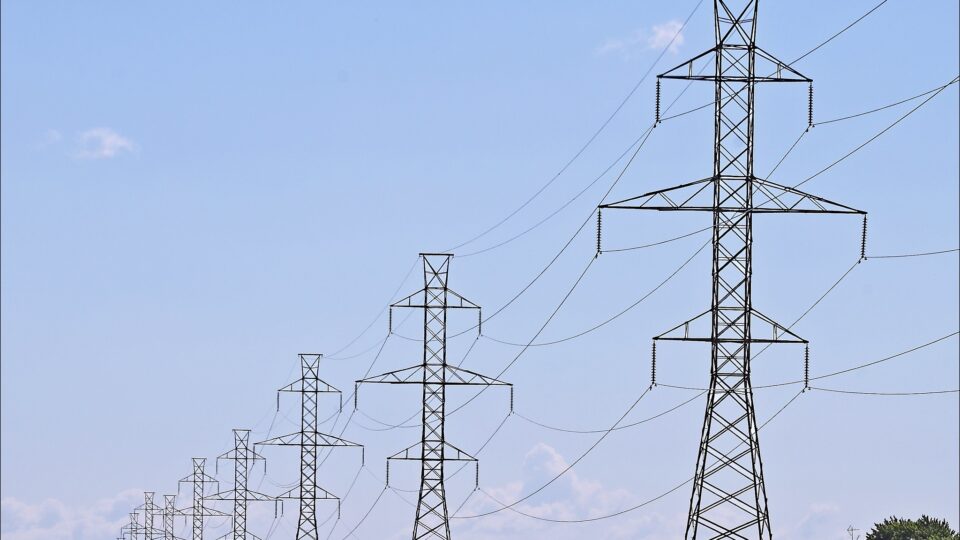
Renewables can create messes in the grid

The electric grid is increasingly embracing renewable energy sources like solar and wind power as well as the energy storage systems that support them.  These generation sources differ from traditional sources in that they produce direct current electricity rather than alternating current electricity.  Our power grid runs on alternating current.  Traditional generators produce alternating current that synchronizes with the grid.  Wind and solar power connect to the grid using electronic power converters called inverters that produce the required alternating current. 

All of this technical detail is something we don’t pay much attention to, except that the current state of inverter technology can lead to some problems that don’t exist with a fully synchronous power system. 

The electric grid frequently experiences disruptive events like trees falling on powerlines, squirrels shorting out substation equipment, and so on.  These things normally don’t cause widespread trouble, although there have been notable exceptions such as the massive Northeast blackout of 2003 triggered by an overloaded transmission line drooping onto foliage.

The issue with inverters is that they can shut down in the presence of certain disturbances to the grid.  This has happened on a number of occasions and has exposed vulnerabilities that need to be addressed by the industry.  Inverter-based resources currently constitute only a relatively small fraction of the grid, but that fraction is growing steadily and can have an increasingly widespread impact.  The grid was built predominantly for synchronous generation, and it must be adapted and improved to assure the reliability that is required and expected.  It is an issue that can’t be ignored.

**********

Web Links

Renewables are cleaning the grid. They’re also messing it up

Photo, posted July 5, 2017, courtesy of Sue Thompson via Flickr.

Earth Wise is a production of WAMC Northeast Public Radio
Record high emissions

January 3, 2024 By EarthWise Leave a Comment

Record high emissions in 2023

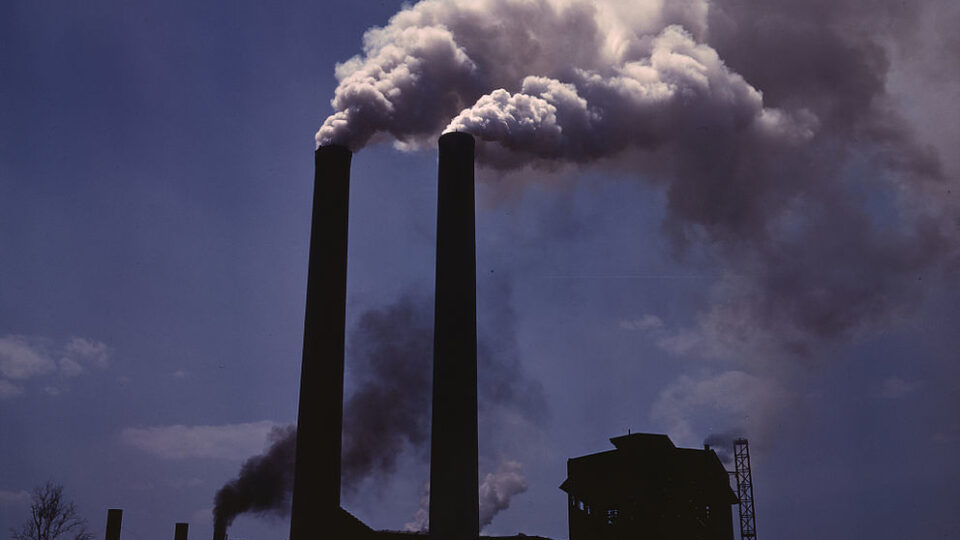
The world is adding solar and wind power to the grid.   We are driving more and more electric cars.  Countries are pledging to cut back fossil fuel use.  There are highly visible international conferences on the climate crisis.   But despite all of these things, global carbon emissions from fossil fuels have risen once again in 2023, reaching all-time record high levels of more than 40 billion tons, about 1.1% more than the previous year.

In some places, including Europe and the U.S., fossil fuel CO2 emissions are falling, but globally, they are still rising.  Emissions continued to increase in India and China.  Global action to cut fossil fuel use is not happening fast enough to prevent the increasingly dangerous effects of climate change.

Global CO2 emissions include both the contributions of fossil fuel use and the effects of land use change.  Adding the two together, in 2023 the total was about 45 billion tons, basically unchanged from last year. 

Adding insult to injury are the emissions from fires.  The extreme wildfire seasons in Canada, Australia, and other places have contributed CO2 emissions much larger than historical averages.

About half of all the carbon dioxide emitted on Earth is absorbed by carbon sinks on land and the oceans.  The other half remains in the atmosphere, where levels are now averaging 419 parts per million, 51% above pre-industrial levels.

Current efforts are simply not profound enough or widespread enough to put global emissions on a downward trajectory.  Some climate policies in some places are proving effective, but much more needs to be done.

**********

Web Links

Fossil CO2 emissions at record high in 2023

Photo, posted December 18, 2013, courtesy of Steve Nelson via Flickr.

Earth Wise is a production of WAMC Northeast Public Radio
Global climate progress is too slow

December 28, 2023 By EarthWise Leave a Comment

According to a new report by the World Resources Institute, the world is making progress on climate, but the progress is not fast enough.  The report looked at 37 indicators of climate progress towards the goals set forth by the Paris Agreement.  In some areas, the progress has been substantial, but in six areas, the world has been moving in the wrong direction entirely.

The rapid growth of clean energy has brought the world to the brink of peak fossil fuels, but to avoid the catastrophic effects of warming, countries need to build out wind and solar power nearly twice as fast and shut down coal plants seven times faster.  There has been progress in curbing deforestation, but the world needs to stem forest loss four times more quickly.  More work is needed to clean up heavy industry and the consumption of meat needs to be limited more than the present level.

Areas where things are getting worse rather than better include the use of public funds and subsidies for preserving the use of fossil fuels.  Because of wars and supply shocks affecting energy markets, countries have actually ramped up fossil fuel subsidies to combat rising prices.

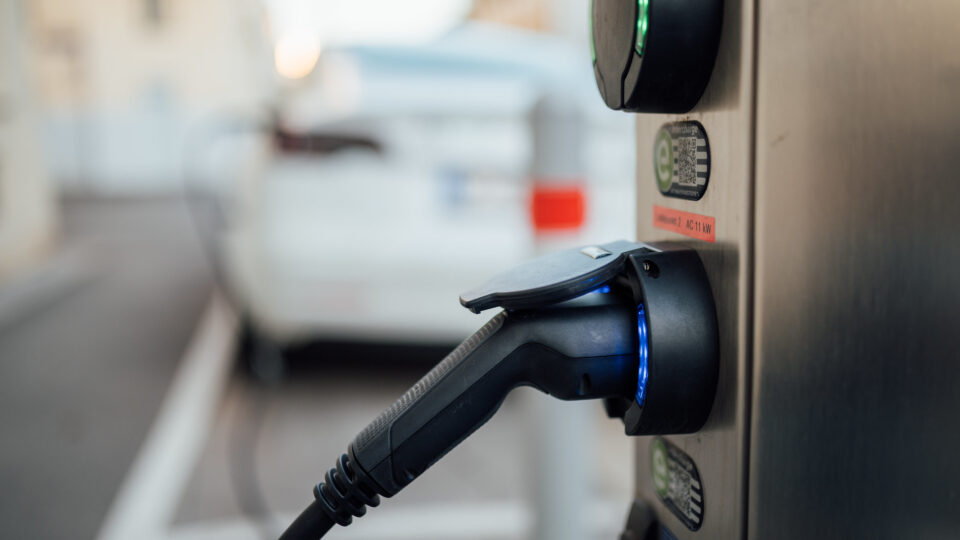
One area where the world is moving at the pace required to meet climate goals is in the sales of electric vehicles.  EVs accounted for 10% of car sales globally last year and if trends continue, they are predicted to account for more than 75% of cars sold by 2030.

The faster-than-predicted progress on electric cars demonstrates that transformative change is possible and could happen in other areas.

**********

Web Links

World Making Too Little Progress on Climate — Except on EV Sales, Report Finds

Photo, posted May 24, 2022, courtesy of Ivan Radic via Flickr.

Earth Wise is a production of WAMC Northeast Public Radio
New York’s first offshore wind farm

December 14, 2023 By EarthWise Leave a Comment

New York has set a target of installing 9 GW of offshore wind capacity by 2035.  The first offshore wind farm in the state – South Fork Wind – was approved by the Long Island Power Authority in 2017.  Construction began in 2022.

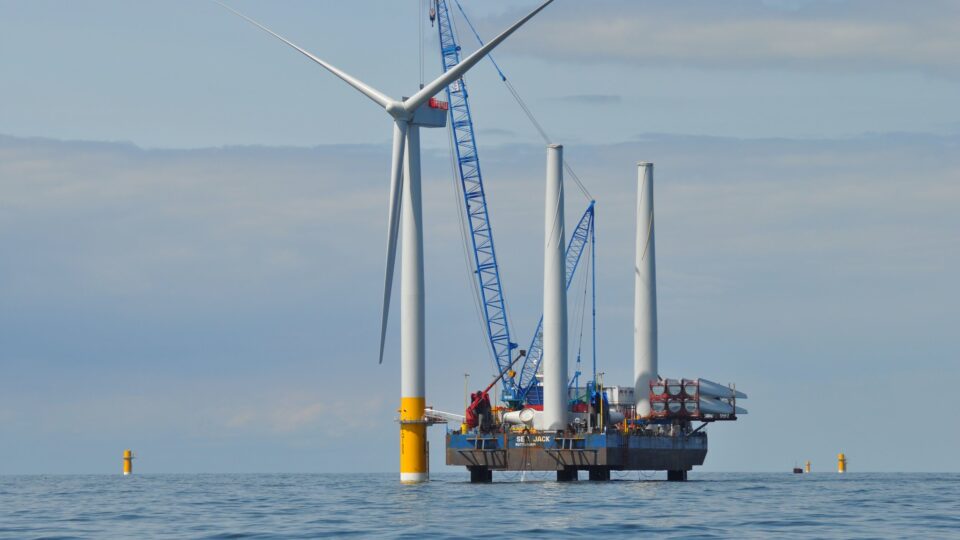
South Fork Wind Farm is a 132 MW project sited 35 miles offshore from Montauk, New York.  Early this year, the subsea power export cable was installed by Nexans, a cable and optical fiber company.  In June, the project reached its “steel in the water” milestone with the installation of the farm’s first monopile foundation.

In November, the first of South Fork Wind’s 12 Siemens Gamesa wind turbine generators was hoisted into place by the offshore construction team.  The turbines are being installed by a specialized vessel called the Aeolus.  Turbine installation involves using a crane to place the steel turbine tower onto the foundation.  The nacelle and rotor are then installed on top of the tower.  Finally, the blades are bolted one by one to the rotor.

All 12 turbines for the project are expected to be installed by the end of this year or by early 2024.

There have been setbacks for the U.S. offshore wind industry in recent times.  Two projects in New Jersey have been scrapped because of supply chain issues.   Rhode Island Energy pulled out of a project citing higher interest rates, increased expenses, and problems with tax credits.

But despite these setbacks, the industry continues to make headway.  Vineyard Wind in Massachusetts is on the precipice of delivering its first power to the grid and the pipeline of additional projects continues to grow.

**********

Web Links

First turbine installed at South Fork Wind, New York’s first offshore wind farm

Photo, posted August 7, 2013, courtesy of SSE / Department of Energy and Climate Change via Flickr.

Earth Wise is a production of WAMC Northeast Public Radio
Who wins: Wind or solar?

November 27, 2023 By EarthWise Leave a Comment

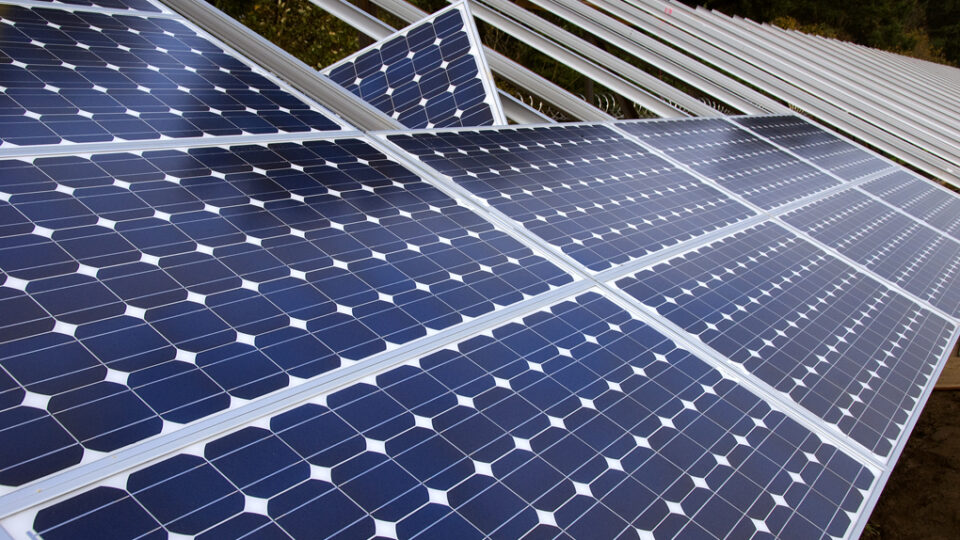
A new study by the University of Exeter in the UK suggests that the world may have crossed a tipping point that will inevitably make solar power our main source of energy.  This data-driven model of technology seems to fly in the face of the current situation in which wind power contributes considerably more generation than solar power – by a factor of 3 in the U.S. and nearly double worldwide.

Wind and solar power both have advantages and disadvantages.  Solar power is quiet, requires little maintenance, and presents little danger to wildlife.  It is also practical for individual homes.  Residential wind power is not really a viable option for most people in most places.  But on the other hand, wind energy can produce more power than solar, can work both day and night, and can be located offshore far away from people.  On land, both wind and solar power take up lots of space and compete with other land use needs as well as countering people’s aesthetic preferences.

Both technologies continue to get cheaper over time, although solar has especially seen significant cost reductions.  The cost of solar power, which is already the cheapest form of electricity production, is estimated to fall to as low as $20 per megawatt hour over time from the current level of $40 per megawatt hour.

Wind and solar energy are on track to account for more than a third of the world’s electricity by 2030, according to the Rocky Mountain Institute.  Despite the predictions of various studies and the ambitions of specific technologies, it seems likely that wind and solar power will both play an expanding role in our energy systems for a long time to come.

**********

Web Links

World may have crossed solar power ‘tipping point’

Photo, posted November 22, 2008, courtesy of Oregon Department of Transportation via Flickr.

Earth Wise is a production of WAMC Northeast Public Radio
More renewable energy for New York

November 24, 2023 By EarthWise Leave a Comment

More renewable energy coming for New York

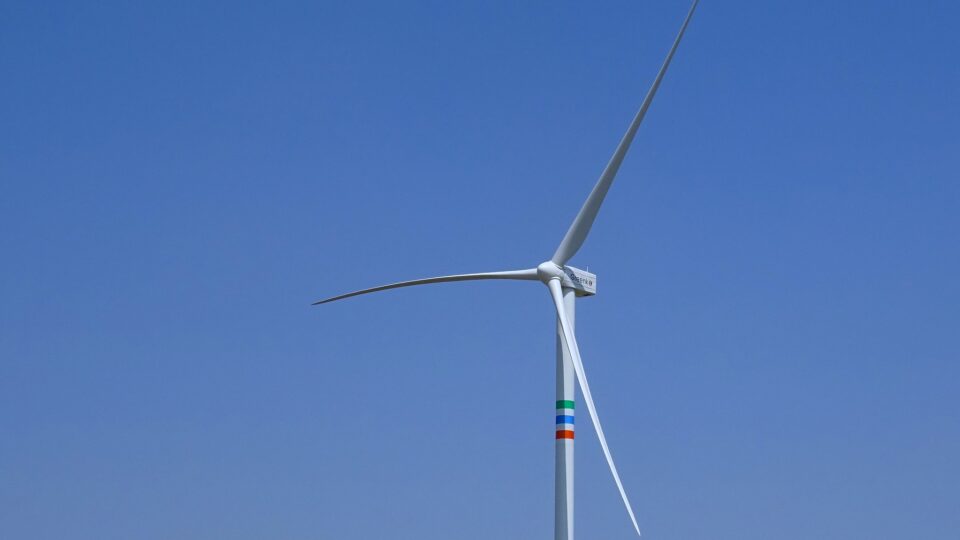
In late October, New York announced its largest state investment in renewable energy to date that includes three offshore wind projects, and 22 land-based clean energy projects totaling more than 6 GW of power generation.

The portfolio of projects is expected to create approximately 8,300 jobs and spur $20 billion in economic investments statewide.

The projects support the state’s goal to have 70% of its electricity come from renewable sources by 2030 and to have 9 GW of offshore wind operating by 2035.  The announcement represents the first set of actions taken by the State as part of New York’s 10-Point Action Plan.

The three offshore wind projects include Attentive Energy One, a 1.4 GW project that seeks to retire fossil fuel power generation in New York City.  Community Offshore Wind, a 1.3 GW project will make use of a new grid interconnection in downtown Brooklyn.  Excelsior Wind, another 1.3 GW project, will provide robust energy deliverability to Long Island. 

Apart from the offshore wind projects, there will be 14 new solar projects, six wind upgrading projects, one new wind project, and one return-to-service hydroelectric project.

The average bill impact for customers over the life of the land-based projects is estimated to be approximately 0.31%, or about 32 cents a month for the average customer.  The bill impact for customers utilizing the offshore wind projects is estimated to be about 2.7%, or $2.93 per month.

*********

Web Links

NY to invest in 3 offshore wind farms, 22 land-based renewable projects

Photo, posted October 21, 2016, courtesy of B Sarangi via Flickr.

XXXXXXXXXXXXXXX

Powering Britain with sun and wind

November 8, 2023 By EarthWise Leave a Comment

The United Kingdom is quite small in size compared with the US, but its population of 67 million makes it a fairly large country with substantial energy needs.  A recent study by Oxford University looked at the ability of wind and solar power to provide for those energy needs over the course of time.

According to the study, Britain’s energy needs could easily be met entirely by the two sources of clean power.  Wind and solar can provide significantly more energy than the highest energy demand forecasted for 2050 and nearly 10 times the current electricity demand. 

Britain currently requires 299 TWh per year.  The Oxford study found that wind and solar could generate as much as 2,896 TWh per year. Furthermore, the researchers stated that these estimates are intentionally conservative, taking into account concerns around land use and the visual impact of installations.

The analysis assumes that offshore wind would produce nearly three-quarters of the energy required.  Onshore wind would contribute about 7%, while taking up only 0.07% of the country’s land.  Utility-scale solar would add about 19% of the power.  The small remainder comes from rooftop solar.  The researchers do point out that the power grid would require significant upgrades to handle all this renewable energy and that there would need to be appropriate quantities of energy storage. 

According to the authors of the study, achieving these results is a question of ambition rather than technical feasibility.  So far, the UK government has not been aggressive in making the transition to renewable energy.

**********

Web Links

Wind and solar power could significantly exceed Britain’s energy needs

Photo, posted November 4, 2021, courtesy of Steve Knight via Flickr.

Earth Wise is a production of WAMC Northeast Public Radio
Wind turbines and bats

October 31, 2023 By EarthWise Leave a Comment

How to reduce bat collisions with wind turbines

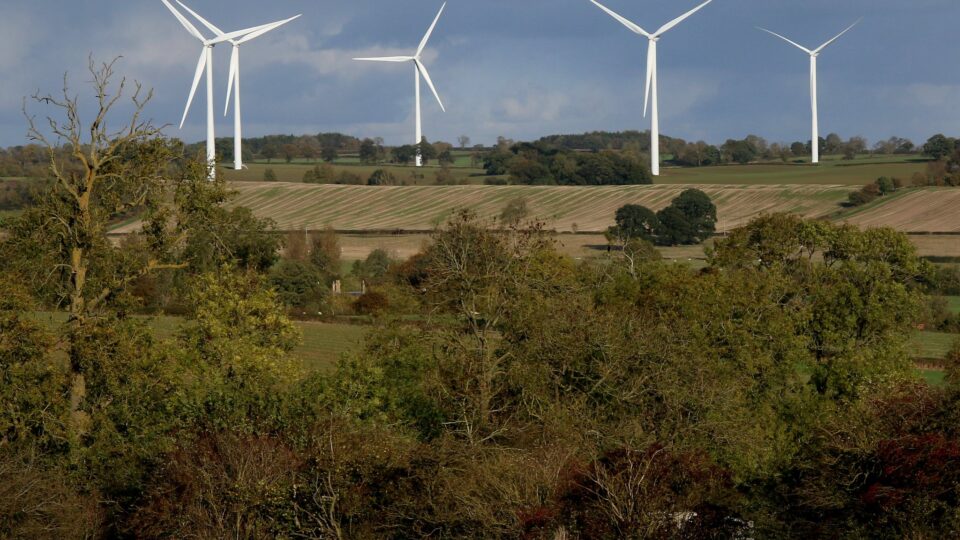
Collisions with wind turbines are one of the leading causes of bat mortality in North America and Europe.  Most bat fatalities are caused by bats colliding with the rotating blades of wind turbines.  Fatalities are highest during autumn migration and on nights with low wind speeds.

According to a recent study, land-based wind turbines kill as many as 880,000 bats a year and are wiping out so many threatened bats that some species may become endangered unless preventative action is taken.

The big challenge is that bat conservation experts and scientists don’t know how to stop or reduce turbine collisions.  They don’t really know why bats are interacting with turbines to the extent that they are.  Do turbines attract bats?  Do turbines’ bright lights or just their silhouettes stimulate an attraction response?

The U.S. Department of Energy has awarded $8 million to five research centers to develop strategies for deterring bats from wind turbines. 

One of these is Bat Conservation International, which is an organization whose mission is to accelerate research to address knowledge gaps in bat ecology and behavior and develop technologies and industry methods to reduce fatality of bats at wind farms.  Among the approaches to be tested is limiting the use of nighttime lighting on wind farms to make migrating bats less likely to fly through blades. 

Another team at Boise State University is designing ultrasonic noisemakers to scare off bats. 

In announcing the new program, the Department of Energy states that wind energy must be appropriately and responsibly sited, which includes the protection of wildlife and their habitats.

**********

Web Links

Experts Seek to Spare Bats From Wind Turbine Collisions

Photo, posted January 10, 2013, courtesy of Tom Shockey via Flickr.

Earth Wise is a production of WAMC Northeast Public Radio
Storing Energy In Abandoned Mines | Earth Wise

October 10, 2023 By EarthWise Leave a Comment

Using abandoned mines to store energy

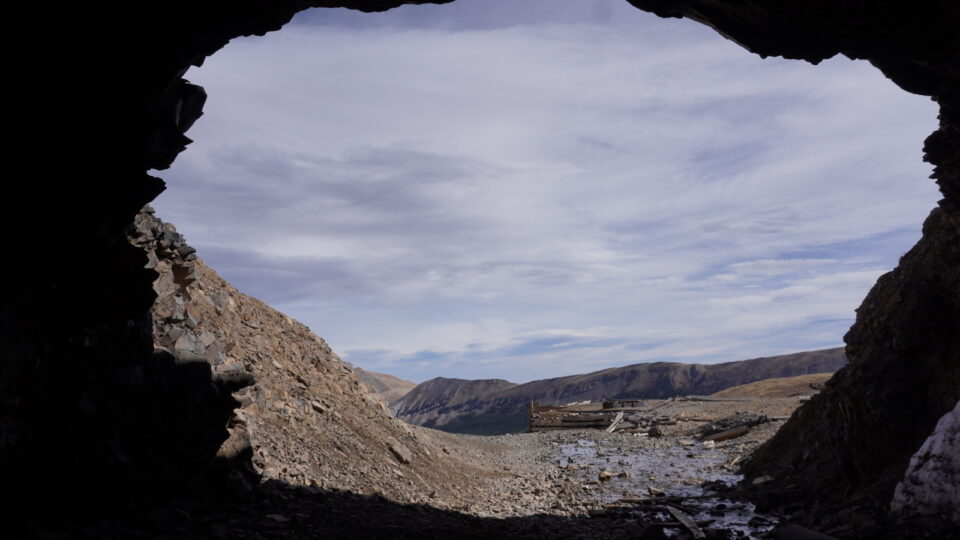
An international study led by researchers from Austria has developed a novel way to store energy by transporting sand into abandoned underground mines.  The technique is called Underground Gravity Energy Storage or UGES.

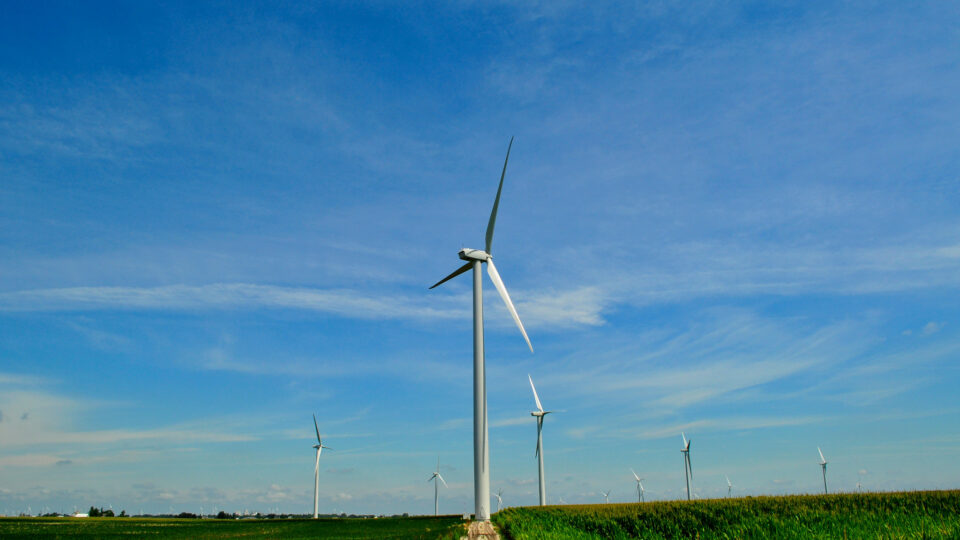
As the world deploys growing amounts of wind and solar energy, it is increasingly important to find ways to accessibly and efficiently store that energy to eliminate the inherent variability of the generation.  There are many ways to store energy on a short-term basis – most commonly in batteries – but cost-effective long-term storage is still in its early stages.

The UGES technique generates electricity by lowering sand into an underground mine thereby converting the potential energy of the sand into electricity by the same regenerative braking effect used in hybrid and electric cars.  The lowering sand operates a generator.   Storing energy is accomplished by lifting the sand from the mine with electric motors to an upper reservoir where it is ready for the next cycle.  By its nature, this storage technique has an indefinite duration, unlike batteries, for example, which lose energy to self-discharge.

The main components of UGES are the mineshaft, motor/generator, sand storage sites, and mining equipment.  The deeper and broader the mineshaft, the more power can be extracted from the plant, and the larger the mine, the more energy can be stored. Mines generally already have the basic infrastructure needed and are connected to the power grid.  The researchers estimate that there is global potential of 7 to 70 TWh of storage. Total global generating capacity is currently at the lower end of that range.

**********

Web Links

Turning abandoned mines into batteries

Photo, posted October 21, 2020, courtesy of Christine Warner-Morin via Flickr.

Earth Wise is a production of WAMC Northeast Public Radio
Grid-Scale Gravity Energy Storage | Earth Wise

September 19, 2023 By EarthWise Leave a Comment

As wind and solar energy play a growing part in our energy system, the need for grid-scale energy storage is growing as well.  An historic form of energy storage and still the largest in installed capacity is pumped hydro storage, which makes use of the potential energy contained in having water sitting at a higher elevation where it can be released downward to operate turbine generators.  This is an effective system but is limited to places where geography cooperates.

For the past five years, a company called Energy Vault has been developing a system that uses the same principle to generate electricity but instead of pumping water to a higher elevation, it uses mechanical devices to lift heavy objects such as concrete blocks to an appropriate height.  Lowering the blocks back to the ground drives generators.

To date, Energy Vault has only built demonstration systems with a fraction of the storage capacity needed for grid-scale operation. Their EV1 Tower in Switzerland was successfully grid interconnected in 2020 and demonstrated round-trip efficiency (the fraction of the energy stored that was produced by the generators) above 75%.  Their improved EVx system is expected to do better than 80%.

This year the company, along with partners Atlas Renewable and China TIanying, is now in the first phases of commissioning a grid-scale system located outside of Shanghai, China.  The 25-MW system is built adjacent to a wind farm and a national grid interconnection site

This is the first grid-scale gravity energy storage system and is expected to be fully online in the fourth quarter of this year.  A second, similar system is now under contract to be built elsewhere in China.

**********

Web Links

First grid-scale gravity energy storage system undergoes commencement in China

Photo courtesy of Energy Vault.

Earth Wise is a production of WAMC Northeast Public Radio

Wind And Solar Pass Coal | Earth Wise

August 3, 2023 By EarthWise Leave a Comment

For the first five months of this year, wind and solar generated more electricity than coal in the United States.  This is a first.  Total renewable energy generation exceeded coal-fired power in both 2020 and 2022, but that counted hydroelectric power as one of the renewable sources.

This year, wind and solar alone generated a total of 252 terawatt-hours of energy through May compared with coal’s output of 249 terawatt-hours.  Hydropower generated an additional 117 terawatt-hours during that period.

While solar and wind power have been expanding at a rapid rate, the biggest change this year has been a precipitous drop in coal-fired generation due to a combination of low natural gas prices, a mild winter, and a series of coal plant retirements.

Coal generated almost half of the country’s electricity as recently as 2008.  Since then, coal has steadily declined as older coal plants shut down and were replaced by natural gas plants and renewable energy sources.  The coal industry had a bit of a reprieve last year when natural gas prices spiked in response to the disruptions in gas supplies in Europe due to the war in Ukraine.  The benchmark for natural gas prices – known as Henry Hub – was $8.81 in August 2022.  In May of this year, it was $2.15.  Given this trend, the demand for coal has steadily declined. 

The US has retired another 7% of the coal fleet – 14 gigawatts of capacity – since the start of 2022.  Meanwhile, power companies have added 22.5 GW of wind and solar capacity in just the past 12 months.

**********

Web Links

In a First, Wind and Solar Generated More Power Than Coal in U.S.

Photo, posted September 20, 2016, courtesy of Bureau of Land Management via Flickr.

Earth Wise is a production of WAMC Northeast Public Radio
Renewables In China | Earth Wise

July 28, 2023 By EarthWise Leave a Comment

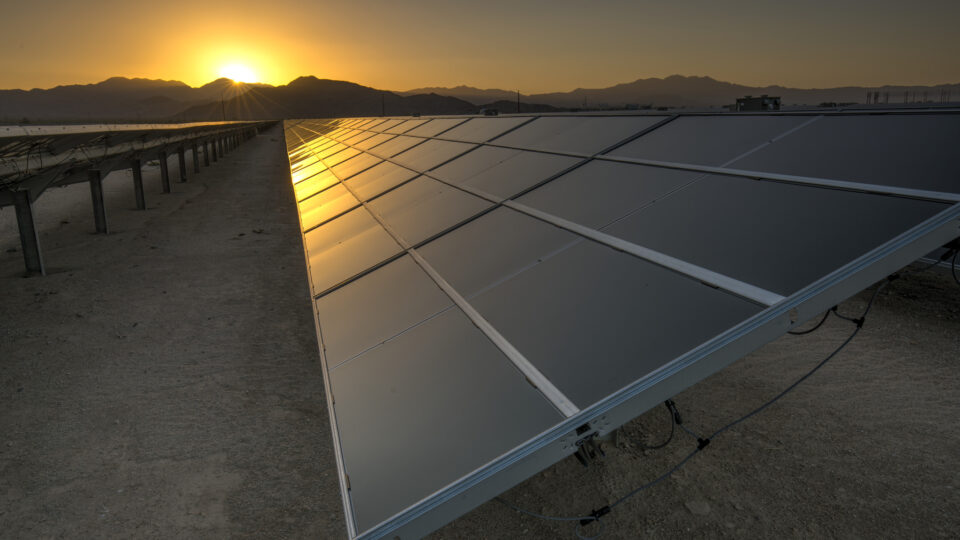
A couple of years ago, China set an ambitious goal for renewable energy capacity – which includes wind, solar, hydroelectric, and nuclear power – for it to exceed fossil fuel capacity by 2025.  According to a recent report by Reuters, China has hit this goal two years ahead of schedule.  Renewables now make up 50.9% of the country’s power capacity.

The rapid growth in renewable capacity has largely been driven by investments in wind and solar megaprojects in the sparsely populated west of the country that export power to the manufacturing centers in the east.  China’s most recent 5-year plan calls for 570 gigawatts of wind and solar power to be installed over that period, which more than doubles its installed capacity.  The plan makes use of what it called “clean energy bases”, which utilize sandy and rocky deserts, other types of barren lands, and wastelands left behind by coal mining.  The largest clean energy bases make use of vast deserts in Inner Mongolia and Gansu.

One cautionary note is that power capacity refers to the maximum amount of electricity that a power plant can produce under ideal conditions.  Thus, for example, it refers to how much electricity a solar farm can generate at noon on a cloudless day.  So, the new figures from China don’t necessarily reveal how much electricity China is actually drawing from renewables.  In reality, China still gets a great deal of its power from coal.

China is the world’s largest emitter of carbon dioxide – more than twice as much as the United States, albeit from nearly 4 times the population.  The rapid growth of renewables is at least moving that country in the right direction.

**********

Web Links

Fossil Fuels Now Account for Less Than Half of China’s Power Capacity

Photo, posted December 2, 2015, courtesy of IBM via Flickr.

Earth Wise is a production of WAMC Northeast Public Radio
Europe Is Warming Very Quickly | Earth Wise

July 13, 2023 By EarthWise Leave a Comment

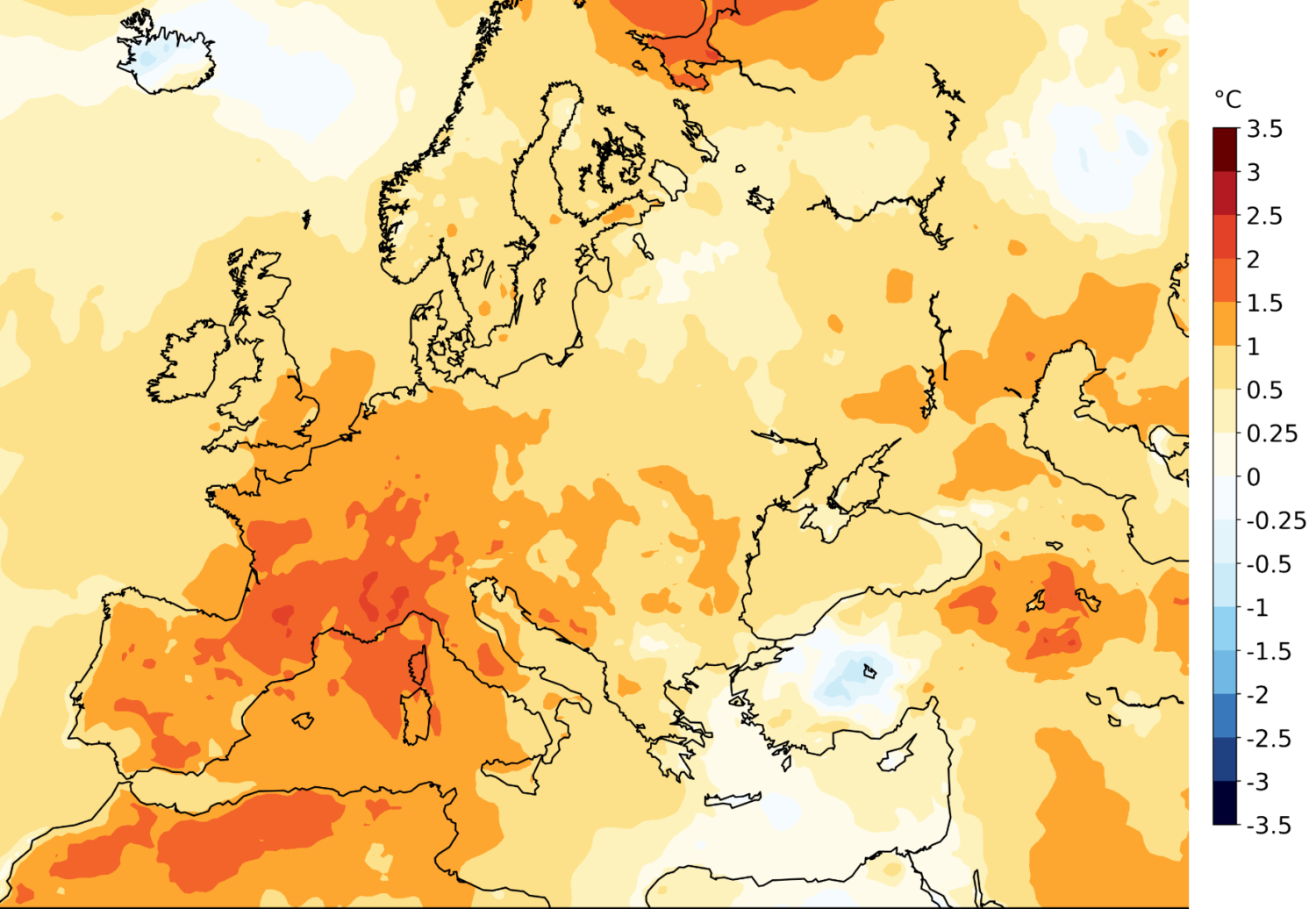
Europe is warming faster than most of the world

According to a new report from the World Meteorological Organization, Europe is warming faster than any other inhabited continent.  The result of the rising temperatures has been increasingly severe heat waves, flood, and wildfires.

The Paris Climate Agreement has set a goal of limiting warming to no more than 2 degrees Celsius above pre-industrial levels and, if at all possible, to no more than 1.5 degrees.  To date, the planet has warmed by 1.2 degrees and, with greenhouse gas emissions continuing at record levels, the temperature keeps going up.

These numbers refer to the global average.  Some places have warmed more and others less.  The Arctic has been warming four times quicker than the rest of the world.  In terms of direct impact on large populations, Europe has already surpassed the 2-degree mark, having reached 2.3 degrees last year.  In 2022, many countries in western and southwestern Europe had their warmest year on record. Weather-related economic damages totaled $2 billion, mostly as a result of storms and floods.

Europe is trying to do its part in mitigating climate change by making major gains on clean energy.  Wind and solar generated 22% of Europe’s power in 2022, which is more than either natural gas or coal produced.  Europe is trying to do its share, but the warming climate is a global phenomenon and will require a global effort to mitigate its effects.

The record-breaking heat stress experienced by Europeans last year cannot be considered a one-off occurrence.  It is part of a pattern that will make weather extremes more frequent and more intense over time.

**********

Web Links

The Fastest-Warming Continent, Europe Has Already Heated by More Than 2 Degrees C

Photo, posted September 26, 2011, courtesy of Ben Ramirez via Flickr.

Earth Wise is a production of WAMC Northeast Public Radio

Nantucket Residents Still Fighting Offshore Wind | Earth Wise

June 28, 2023 By EarthWise Leave a Comment

Nantucket residents continue to resist offshore wind

Offshore wind in the US has had to fight to exist for a long time.  The Cape Wind project in Nantucket Sound off the coast of Cape Cod was envisioned over 20 years ago as a 1.5-gigawatt wind farm.  Years of legal battles and other controversies saw the project start and stop multiple times with only minimal actual construction.  Primary opposition came from residents who considered the turbines far off on the distant horizon to be an eyesore and threat to their property values.  Eventually, the project was terminated in 2017.

Since then, offshore wind has gained substantial support in the US and multiple projects are either ongoing or in the permitting process.  The 800 MW Vineyard Wind project is on track to be the first commercial-scale offshore wind farm in the US, with plans to eventually generate enough electricity to power 400,000 homes.

Once again, Nantucket residents are fighting against an offshore wind farm.  Once again, they are making arguments that are not really what concerns them, in this case, saying that the wind turbines are a threat to the survival of endangered North Atlantic right whales.

A federal judge has recently rejected a lawsuit brought by the group Nantucket Residents Against Turbines that sought to stop the project.  The judge found that the group failed to show that either the US Bureau of Ocean Energy Management or the National Marine Fisheries Service violated the Endangered Species Act or the National Environmental Policy Act in its 2021 rulings on the impact of the proposed wind farm on the whales.

Undoubtedly there will be additional challenges from the group, possibly based on entirely different complaints.  It’s tough to build offshore wind in Massachusetts.

**********

Web Links

Judge rejects lawsuit by Nantucket residents to block offshore wind farm

Photo, posted November 21, 2016, courtesy of Adrian Scottow via Flickr.

Earth Wise is a production of WAMC Northeast Public Radio

Energy From Fruit Waste | Earth Wise

June 20, 2023 By EarthWise Leave a Comment

In the Back to the Future films, Doc Brown ran his DeLorean time machine on food scraps.  It was a fun bit of science fiction.  But researchers at the University of British Columbia Okanagan in Canada are investigating the potential for using food waste to generate power.

Food waste is not a candidate to replace solar or wind power, but it could be a source of energy for powering fuel cells.  As it is, food waste represents a sustainability challenge because of its detrimental impacts on the economy and the environment.  Organic waste represents a significant fraction of the material in landfills and contributes to methane production, air pollution, and other harmful pollutants.

The UBC researchers focused on fruit waste, which is abundantly available in agricultural regions.  They have devised microbial fuel cells that convert fruit waste into electrical energy using an anaerobic anode compartment.  That is a chamber in which anaerobic microbes – ones that don’t need oxygen – utilize the organic matter to convert it into energy.  The microbes consume the fruit waste and produce water while generating bioelectricity.

It is not like the Back to the Future time machine where you can just toss in scraps of whatever is on hand.  Different types of fruits provide different results when used in the microbial fuel cell. The process works best when the food waste is separated and ground into small particles.  There is a long way to go before the technology could produce bioenergy on a commercial scale, but there is considerable potential for doing something useful with something that is currently worthless.

**********

Web Links

UBCO researchers aim to energize fruit waste

Photo, posted July 24, 2011, courtesy of Andrew Girdwood via Flickr.

Earth Wise is a production of WAMC Northeast Public Radio

Geothermal Energy Storage | Earth Wise

May 22, 2023 By EarthWise Leave a Comment

Aquifer thermal energy storage a solution to heat and cool buildings

About 12% of the energy consumed by humanity is used to heat and cool homes and businesses.  A study by researchers at Lawrence Berkeley National Laboratory and Princeton University looked at a novel approach to making use of underground water to maintain comfortable temperatures and reduce consumption of natural gas and electricity.

The idea is to use aquifer thermal energy storage (known as ATES) to provide both heat in the winter and cooling in the summer.  The concept leverages the heat-absorbing property of water and natural geological features.  The idea is to pump up water from existing underground reservoirs and heat it at the surface using environmental heat or even excess energy from solar or wind generation.  Then the warm water is pumped back down. It stays warm for a long time – even months – because the earth is a good insulator.  When the water is pumped back up in the winter, it is much hotter than the ambient air and can be used to supply heat to buildings.

Alternately, water can be pumped up and cooled in the winter and then put back down underground and stored until cooling is needed in the summer months.

This technology has not been used much in the US, but it is gaining recognition internationally, particularly in the Netherlands.  It can perform very well in areas with large seasonal fluctuations.

The research study used modeling and various simulations to estimate how much energy ATES could save on the US grid.  The results showed that adding ATES to the grid could reduce consumption of petroleum products for heating and  cooling by up to 40%.  The system could also help prevent blackouts by reducing high power demand during extreme weather events.

**********

Web Links

Underground Water Could be the Solution to Green Heating and Cooling

Photo, posted February 19, 2012, courtesy of Sanjay via Flickr.

Earth Wise is a production of WAMC Northeast Public Radio

Better Zinc Batteries | Earth Wise

May 17, 2023 By EarthWise Leave a Comment

The rapid growth of wind and solar power continues to drive a global quest for new battery technologies that can be used to store the energy generated by these sources when the sun isn’t shining, and the wind isn’t blowing.

For the most part, current battery energy storage systems use lithium-ion batteries – the same sort of batteries found in cellphones and electric vehicles.  There are many other battery chemistries, but they mostly have shortcomings in performance, economy, or longevity. 

Batteries store electricity in the form of chemical energy and chemical reactions convert that energy into electrical energy. Every battery has two electrodes:  the anode, from which electrons flow into external circuits, and the cathode, which receives electrons from the external circuit.  The electrolyte is the chemical medium through which the electrons flow.

One technology that has great potential is zinc-based batteries.  Zinc itself is a metal that is safe and abundant.  Batteries based on it are energy dense. However, zinc batteries have faced the challenge of having a short cycle life.  The batteries end up plating zinc on their anodes and battery performance degrades. 

A team of researchers at Oregon State University and three other universities have recently developed a new electrolyte for zinc batteries that raises the efficiency of the zinc metal anode to nearly 100% – actually slightly better than lithium-ion batteries.

Zinc batteries have a number of potential advantages over lithium-ion.  The new hybrid electrolyte developed by the researchers is non-flammable, cost-effective, and has low environmental impact.  Lithium-ion batteries rely on the supplies of relatively rare metals that are often difficult and environmentally harmful to obtain. 

**********

Web Links

Researchers develop electrolyte enabling high efficiency of safe, sustainable zinc batteries

Photo, posted May 13, 2017, courtesy of Jeanne Menjoulet via Flickr.

Earth Wise is a production of WAMC Northeast Public Radio
Seaweed On The Way | Earth Wise

April 28, 2023 By EarthWise Leave a Comment

Massive blob of sargassum heading towards the Gulf of Mexico

A type of seaweed called sargassum has long formed large blooms in the Atlantic Ocean.  It gets its name from the Sargasso Sea in the western Atlantic.  Since 2011, scientists have been tracking massive accumulations of the stuff each year that starts out off the coast of Africa and works its way across the Atlantic to end up in the Gulf of Mexico. 

The amount of sargassum present each year can shift depending on factors like changes in nutrients, rainfall, and wind conditions.  But since the 1980s, nitrogen content in the Atlantic has gone up by 45%.  This is likely due to human activities such as agriculture and fossil fuel production dumping materials into the rivers that feed into the ocean.

According to recent observations, the mass of seaweed now heading for Florida and other coastlines throughout the Gulf of Mexico may be the largest on record.  The giant blob of sargassum spans more than 5,000 miles in extent.  It is moving west and will pass through the Caribbean and up into the Gulf during the summer.  The seaweed is expected to become prevalent on beaches in Florida around July.

The seaweed provides food and protection for fishes, mammals, marine birds, crabs, sea turtles, and more.  But unfortunately, when sargassum hits the beaches, it piles up in mounds that can be difficult to walk through and eventually emits a gas that smells like rotten eggs.

Tourist destinations in the Caribbean region have their work cut out for them to remove seaweed that can pile up several feet deep.  For example, in Barbados, locals were using 1,600 dump trucks a day to clean their beaches.  Caribbean and Florida resorts spend millions of dollars each year to remove sargassum seaweed.

**********

Web Links

A 5,000-mile-wide blob of seaweed is headed for Florida, threatening tourism across the Caribbean

Photo, posted February 24, 2020, courtesy of Bernard Dupont via Flickr.

Earth Wise is a production of WAMC Northeast Public Radio

Offshore Wind In The Gulf Of Mexico | Earth Wise

April 4, 2023 By EarthWise Leave a Comment

The U.S. pursuing offshore wind development in the Gulf of Mexico

The US has a goal of deploying 30 GW of offshore wind energy capacity by 2030.  This is an ambitious goal given that the current installed offshore wind capacity in the US is a total of seven turbines capable of generating just 42 megawatts of power.  So, there is a long way to go in a relatively short amount of time.

Since 2021, the Bureau of Ocean Energy Management, a division of the Department of the Interior, has held three offshore wind lease auctions, which grant rights to developers to install offshore wind in specific marine areas.  The first two auctions involve sites in the northeast, including areas in New York.  The third auction, held last December, offered sites off the California Coast – the first US sites in the Pacific.

In February, the Department of the Interior proposed a new offshore wind lease sale in the Gulf of Mexico.  It identified a 102,480-acre area off the coast of Louisiana, and two similar-sized areas offshore from Galveston, Texas.

The proposal is now in a 60-day period of seeking public comments before deciding whether to move ahead with the sale.  As was the case for the other lease auctions, there would stipulations associated with accepted bids including efforts to build up domestic industry for the supply chain and labor force.  There would also be requirements to establish and contribute to a fisheries compensatory mitigation fund to address any potential negative impacts to the fishing industry.

About two-thirds of offshore wind resources in the US are located in deep-water areas that will require floating platforms.  A federal program called Floating Offshore Wind Shot has the goal of developing cost-effective technology for this purpose.

**********

Web Links

Gulf of Mexico may be next up for offshore wind leases

Photo, posted May 13, 2011, courtesy of the Department of Energy and Climate Change via Flickr.

Earth Wise is a production of WAMC Northeast Public Radio
Offshore Wind Industry In New York | Earth Wise

March 27, 2023 By EarthWise Leave a Comment

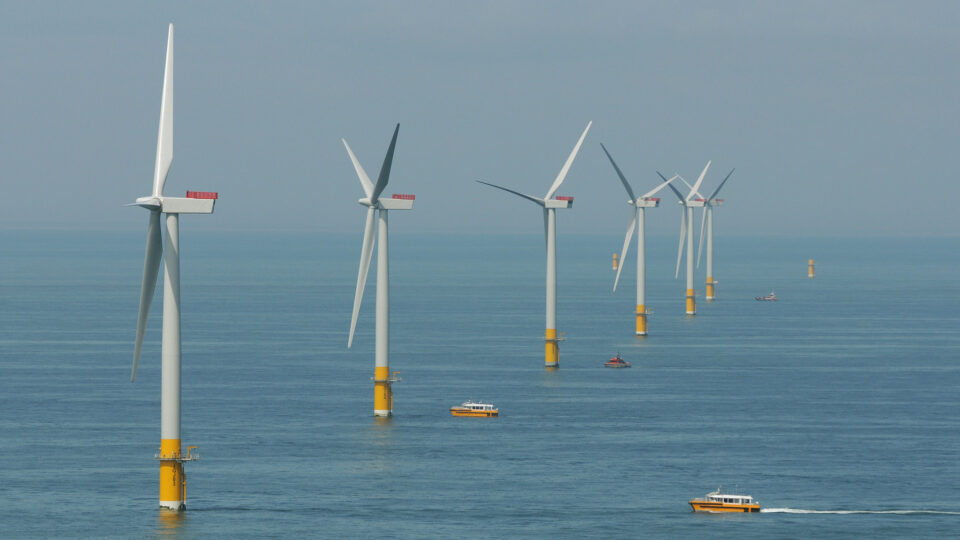
Last July, New York Governor Kathy Hochul announced the release of the state’s third competitive offshore wind solicitation, seeking to add generating capacity to power at least 1.5 million homes.  In response to the solicitation, the New York State Energy Research and Development Authority – NYSERDA -received more than 100 proposals for 8 new projects from six offshore wind developers.  An evaluation period is in progress and NYSERDA expects to announce awards sometime this spring.

Apart from the development and installation of offshore wind turbines and their associated infrastructure, participating in the program also involves supply chain investments to support the development of a strong, local supply chain that creates jobs for New Yorkers as well as bolstering the state’s standing as a regional hub for offshore wind manufacturing.

Siemens Gamesa Renewable Energy, a multi-billion-dollar Spanish-German wind engineering company, is one of the companies bidding to have its wind turbines used for the forthcoming New York offshore wind projects.   If Siemens Gamesa is selected for the project, the company has revealed that it will build a major offshore nacelle manufacturing facility at the Port of Coeymans, New York, some 15 miles from Albany.

The planned facility would create approximately 420 direct jobs and represent an investment of around $500 million in the region.  Siemens Gamesa said it would also commit to localizing several new component supplier facilities, including steel component fabrication, bearings, and composite components. 

Offshore wind will bring more than just electricity to New York; it will bring a whole new industry.

**********

Web Links

Siemens Gamesa reveals plans for New York offshore wind hub

Photo, posted March 24, 2016, courtesy of TEIA via Flickr.

Earth Wise is a production of WAMC Northeast Public Radio
  • « Go to Previous Page
  • Page 1
  • Page 2
  • Page 3
  • Page 4
  • Page 5
  • Interim pages omitted …
  • Page 13
  • Go to Next Page »

Primary Sidebar

Recent Episodes

  • An uninsurable future
  • Clean energy and jobs
  • Insect declines in remote regions
  • Fossil fuel producing nations ignoring climate goals
  • Trouble for clownfishes

WAMC Northeast Public Radio
WAMC/Northeast Public Radio is a regional public radio network serving parts of seven northeastern states (more...)

Copyright © 2026 ·