• Skip to primary navigation
  • Skip to main content
  • Skip to primary sidebar

Earth Wise

A look at our changing environment.

  • Home
  • About Earth Wise
  • Where to Listen
  • All Articles
  • Show Search
Hide Search
You are here: Home / Archives for water

water

Natural solutions for disappearing islands

June 12, 2025 By EarthWise Leave a Comment

Natural solutions to preserve and protect disappearing atoll islands

Atoll islands are made from sediment produced by corals, clams, snails, and varieties of algae that secrete carbonate.  Under the right conditions, over time, fragments of coral skeletons, shells, and other sediments made by marine life are piled up by waves.  Eventually, islands are formed – some large and some small.  Atoll islands are home to a diversity of human cultures and are important refuges for a quarter of the world’s seabirds as well as numerous nesting sea turtles and tropical plants.

Rising sea levels – the rate of which has more than doubled over the past 30 years – are a mounting challenge for atoll islands.  And by the end of this century, sea level is projected to rise between 11 and 40 inches, depending on the world’s actions with regard to greenhouse gas emissions.

The ability of atoll islands to persist depends on the health of their ecosystems and the extent to which their natural processes have been disrupted by human activity.  To protect the most vulnerable islands, some researchers now propose using nature-based solutions – like restoring and protecting coral reefs and native forests.

Reclaiming seabird habitat can help reefs persist and restore the resilience of atoll islands.  Seabird guano washes off islands and into reefs, providing nutrients that boost coral growth and fish populations. 

Nature-based solutions cannot help the most urbanized atoll islands.  These islands have already irreversibly lost their natural adaptive capacity.  For those places, engineered approaches such as concrete seawalls are needed.

**********

Web Links

How Natural Solutions Can Help Islands Survive Sea Level Rise

Photo, posted July 3, 2014, courtesy of Roderick Eime / MG Media via Flickr.

Earth Wise is a production of WAMC Northeast Public Radio

Nature: An important climate ally

June 10, 2025 By EarthWise Leave a Comment

Nature is often seen as a victim of climate change, but it’s also one of the most powerful tools we have to fight it. Natural ecosystems, such as forests, wetlands, grasslands, oceans, and soils, absorb and store massive amounts of carbon dioxide. These ecosystems not only help reduce the concentration of greenhouse gases in the atmosphere, but they also regulate temperatures and provide buffers against extreme weather.

One of the most effective strategies for mitigating climate change is simply protecting and restoring these natural areas. For example, mangrove forests – those coastal wetlands filled with tangled, salt-tolerant trees – sequester carbon at high rates and help protect coastal communities from storm surges and rising seas.  Peatlands – another type of wetland – store more carbon than all the world’s forests combined – despite only covering 3% of Earth’s land surface.  Global restoration efforts are underway, from replanting mangroves in Southeast Asia to rewetting degraded peatlands in Europe.

Creating urban green spaces like parks and community gardens, restoring forests through native tree plantings, and adopting sustainable agricultural practices like cover cropping and agroforestry are all proven to be low-cost, high-impact climate solutions. 

While nature-based solutions are gaining recognition, they remain critically underfunded, according to a recent United Nations report.  Closing this gap is essential to unlocking nature’s  full climate potential.

Investing in nature isn’t just about preserving Earth’s natural beauty.  It’s a practical strategy for building a more resilient and sustainable future.

**********

Web Links

Mangrove forests and rising seas

Financing Nature-based Solutions for a better future

Finding peatlands

The Importance Of Urban Green Spaces

Photo, posted October 23, 2011, courtesy of the Everglades National Park / NPS via Flickr.

Earth Wise is a production of WAMC Northeast Public Radio

Feeding the future

June 9, 2025 By EarthWise Leave a Comment

Climate change is already affecting the yields of major staple crops around the world, and researchers warn that the impacts will become more severe over time. Rising temperatures, shifting rainfall patterns, and more frequent extreme weather events are disrupting growing seasons and reducing agricultural productivity.

Addressing these growing threats requires rethinking how we grow, distribute, and consume food.  To kick off Climate Solutions Week, we wanted to examine some solutions that could make food systems more resilient, sustainable, and adaptable to our rapidly changing environment.

One solution is Climate-Smart Agriculture, which blends traditional practices with modern techniques to boost productivity while reducing greenhouse gas emissions. Methods like zero tillage, intercropping, and crop diversification could improve soil health, conserve water, and help farms withstand climate extremes.

Expanding the production of highly nutritious and climate resilient food crops – like millet, sorghum, teff, quinoa, chickpeas, and tepary beans – will also have an important role to play.  At the same time, reducing food waste through better storage, labeling, and surplus food re-use could help meet demand without increasing production pressure.

Agriculture is the largest user of freshwater globally, and climate change is intensifying water shortages.  Farmers will need to transition to water-efficient farming practices, including drip irrigation, rainwater harvesting, and the reuse of treated wastewater. 

Together, these solutions could help revolutionize the global food system to both feed a growing population and help protect the planet. 

*********

Web Links

Climate-smart agriculture

Water for Prosperity and Peace

A Food For The Future

Photo, posted October 16, 2011, courtesy of Alliance of Bioversity International and CIAT via Flickr.

Earth Wise is a production of WAMC Northeast Public Radio

Toxic algae and West Coast marine life

June 5, 2025 By EarthWise Leave a Comment

Over the first several months of this year, hundreds of sea lions, dolphins, and seabirds have fallen ill or died after eating sardines or anchovies that had been feeding on an algal bloom along the California coast since winter.  The biotoxin in the algae accumulates in the feeder fish.

Two cases of whales dying from the biotoxin have been confirmed by two nonprofit organizations tasked with testing dead mammals.  These were a humpback that washed ashore in Huntington Beach in January and a minke whale found dead in Long Beach in April.

This is the fourth year a row that California has experienced major algal blooms.  Warmer waters are causing blooms to be bigger and more damaging than they have been before.  They enter into new areas and contaminate the food web for longer.  The warmer waters accelerate algae growth that is further fueled by nutrients that rise to the surface from deeper colder waters driven by winds that blow parallel to the coast.  This year’s algae event started earlier than usual and is lasting longer than normal.

More than a dozen animal rescue and rehabilitation groups that form NOAA’s West Coast Marine Mammal Stranding Network are providing resources to try to respond to the situation.  At the Marine Mammal Care Center in Los Angeles, more than 80 sea lions and seals were being treated for domoic acid poisoning, the result of ingesting algae neurotoxin.  Since February, it has cared for more than 300 poisoned animals.

Marine mammals are sentinel species for humans who also consume seafood.  The West Coast ocean ecosystem is currently filled with toxins.

**********

Web Links

California Toxic Algal Bloom Blamed for Months-long Marine Life Poisoning

Photo, posted March 26, 2025, courtesy of Marnee Jill via Flickr.

Earth Wise is a production of WAMC Northeast Public Radio

The oceans are warming faster

May 21, 2025 By EarthWise Leave a Comment

A new study has shown that the rate of ocean warming has more than quadrupled over the past 40 years.  The study, by researchers at the University of Reading in the UK, helps to explain why there have been unprecedented ocean temperatures in 2023 and 2024.

Global ocean temperatures hit record highs for 450 days straight in 2023 and early 2024.  Some of this unusual warmth came from the El Niño that was taking place at the time, but the rest of the increased temperature came from the sea surface warming up more quickly over the past 10 years than in previous decades.  In the late 1980s, ocean temperatures were rising at a rate of 0.06 degrees Celsius per decade.  According to the recent research, they are now increasing at 0.27 degrees per decade.

The acceleration of ocean warming is driven by growth in the Earth’s energy imbalance, meaning that more energy from the sun is being absorbed by the Earth than is escaping back into space.  This energy imbalance has roughly doubled since 2010 as a result of two factors:  increasing greenhouse gas concentrations in the atmosphere and reductions in the Earth’s albedo.

Earth’s albedo, the measure of how much sunlight is reflected back into space, has been declining since the 1970s, primarily due to the decrease in snow and ice cover, especially in the Arctic. 

The overall rate of ocean warming observed over recent decade is likely to only increase.  This underscores the urgency of reducing fossil fuel burning to avoid even more rapid temperature increases in the future.

**********

Web Links

Ocean-surface warming four times faster now than late-1980s

Photo, posted January 18, 2007, courtesy of Alexey Krasavin via Flickr.

Earth Wise is a production of WAMC Northeast Public Radio

Modeling geoengineering

May 19, 2025 By EarthWise Leave a Comment

Modeling the impacts of geoengineering

As the impacts of climate change continue to mount up, there is increasing interest in radical intervention measures designed to keep a lid on rising global temperatures.  Such measures are fraught with potential dangers and unintended consequences but there is no guarantee that one or another of them might still be attempted in the future.  Increasing international interest in geoengineering as a potential strategy for mitigating climate change has created a pressing need to consider its impact before any potentially irreversible actions are taken.

The Natural Environment Research Council in the UK is funding four research projects aimed at understanding the potential consequences of solar radiation modification (SRM) being deployed in the real world.

SRM consists of methods to reflect some of the Sun’s radiation back into space instead of allowing it to reach and warm the earth. 

One approach is stratospheric aerosol intervention in which particles such as sulfates are introduced into the upper atmosphere to reflect sunlight thereby producing a dimming effect.   The idea is to mimic the effects of large volcanic eruptions, which naturally send sulfates into the atmosphere.

A second approach is marine cloud brightening, which increases the reflectivity of clouds over the ocean by spraying very small droplets of sea water into the air.  The fine particles of sea salt enhance cloud condensation nuclei, producing more cloud droplets and making clouds more reflective.

The research aims to deliver independent risk analyses to inform policymakers about the potential environmental impacts of SRM.

**********

Web Links

Scientists to model the impact of controlling Earth’s temperature by reflecting solar radiation

Photo, posted May 6, 2009, courtesy of Denys Zadorozhnyi via Flickr.

Earth Wise is a production of WAMC Northeast Public Radio

Finding peatlands

May 15, 2025 By EarthWise Leave a Comment

Peatlands are a special kind of wetland that have enormous potential for helping to mitigate climate change.  They are great at capturing carbon because their constantly soggy soils deprive decomposer organisms of the oxygen they need to break down dead plants.  Living plants absorb carbon dioxide from the atmosphere and incorporate the carbon into their tissues.  When plants die, decomposers like bacteria digest the plant matter and release the carbon dioxide back into the atmosphere.

Researchers from the University of California Santa Cruz found that the average per-area carbon densities in peatlands in Colombia are four to ten times higher than those in the Amazon rainforest.  This agrees with other studies around the world.  On a global scale, peatlands cover only 3% of land areas but store more carbon than all the world’s trees.  Peatlands are unsung heroes helping to reduce the impact of fossil fuel emissions.

Peatlands can only store carbon if they remain constantly wet.  When they are drained for agriculture or other development, decomposer organisms get back to work digesting organic matter and releasing carbon dioxide back into the atmosphere.

A major challenge in protecting peatland is finding them.  They are often hard to distinguish from other types of wetlands. 

The Santa Cruz researchers have been identifying and locating peatlands in Colombia, where decades of civil war had made many parts of the country inaccessible for research.  Finding and protecting peatlands there and in many other places around the world is an important task in the battle against climate change.

**********

Web Links

Colombia’s peatlands could be a crucial tool to fight climate change. But first we have to find them.

Photo, posted January 2, 2018, courtesy of Roni Ziade / U.S. Forest Service via Flickr.

Earth Wise is a production of WAMC Northeast Public Radio

More eco-friendly desalination

May 14, 2025 By EarthWise Leave a Comment

There are about 16,000 operational desalination plants, located across 177 countries, which generate an estimated 25 billion gallons of fresh water daily.

For every gallon of drinking water produced at a typical desalination plant, one and a half gallons of brine are produced.  Much of it is stored in ponds until the water evaporates, leaving behind solid salt or concentrated brine for further treatment.  There are various other techniques for concentrating brines, but they are energy-intensive and environmentally problematic.  The process called electrodialysis uses electrified membranes to concentrate salts. 

Water flows into many channels separated by membranes, each of which has the opposite electrical charge of its neighbors.  Positive salt ions move towards negatively charged electrodes and negative ions move toward positive electrodes.  Two streams result, one containing purified water and one containing concentrated brine.

This eliminates the need for evaporation ponds, but existing electrodialysis membranes either result in leakage of salts into the environment or are too slow, making the process impractical for large-scale use.

Researchers at the University of Michigan have developed a new kind of membrane for electrodialysis.  The new membranes don’t leak and are ten times more conductive than those on the market today which means that they can move more salt using less power.  The membranes can be customized to suit a broad range of water types, which may help make desalination a more sustainable solution to the world’s growing water crisis.

**********

Web Links

Making desalination more eco-friendly: New membranes could help eliminate brine waste

Photo, posted February 4, 2012, courtesy of David Martinez Vicente via Flickr.

Earth Wise is a production of WAMC Northeast Public Radio

Tracking atmospheric mercury

May 13, 2025 By EarthWise Leave a Comment

A cheap way to track atmospheric mercury levels

Atmospheric mercury is a toxic pollutant released into the air from natural sources—such as volcanoes and wildfires—and from human activities like coal burning and gold mining.  Once in the atmosphere, mercury can travel long distances before settling onto land or into water, transforming into toxic forms that threaten ecosystems and human health.

But tracking atmospheric mercury is a costly and challenging endeavor, requiring specialized equipment and trained personnel. Active monitors, which pump air to collect mercury, are expensive and need electricity, while passive samplers, using activated charcoal for remote areas, cost up to $100 each.

Researchers from Cornell University have found a cheap method for tracking toxic atmospheric mercury near gold mining sites throughout the Global South: wild fig trees.  In the study, which was conducted in the Peruvian Amazon and recently published in the journal Frontiers in Environmental Science, the research team found that the rings in wild fig trees can serve as natural archives of atmospheric mercury, capturing and preserving historical pollution levels over time.

The technique itself is not actually new.  Previous studies have used tree rings to track mercury pollution from coal combustion, particularly in Canada. But the research team wanted to test this method in regions of the Global South, where mercury emissions from gold mining are widespread.

According to the research team, wild fig trees might soon serve as an important biomonitoring tool, helping scientists better understand how mercury disperses across landscapes and through time.

**********

Web Links

Tree rings track atmospheric mercury cheaply

Photo, posted November 13, 2012, courtesy of Steve Kessler via Flickr.

Earth Wise is a production of WAMC Northeast Public Radio

Hot water in Boise

May 9, 2025 By EarthWise Leave a Comment

Geothermal water systems in Boise form the foundation of what is the largest municipally-run geothermal system in the country

Boise is the capital of Idaho, and the Idaho Statehouse is the only one in the United States to use geothermal heat.  Geothermal heating is possible in Boise because of fault lines that expose its groundwater to hot rocks.  The underground water supply in Boise is heated to around 170 degrees Fahrenheit.  It is the basis of the largest municipally-run geothermal system in the country.

People in Boise began using this natural resource to supply heat to buildings in the 1890s by drilling wells into aquifers that yielded hundreds of thousands of gallons of piping hot water a day.  The water heated pools and public baths, a Victorian mansion, and, eventually, hundreds of homes in what was called the Boise Warm Springs Water District.

The number of buildings that the city of Boise heats with its geothermal resource has grown more than sixfold over the past 40 years.  The water is drawn from wells in the nearby foothills and pumped into a closed-loop network of pipes that reach into buildings.  In each building, the geothermal heat is transferred to water in separate adjoining pipes that distribute the heat throughout the building.  The well water goes back to the aquifer to be heated again.

Today, there are four separately run geothermal water systems in Boise.  One is run by the city, another by the Boise Warm Springs District, and two others that serve the Capitol and Veterans Affairs Buildings.

In 2024, city officials calculated that using geothermal heat reduced annual carbon dioxide emissions by 7,000 tons, the equivalent of removing 1,500 gas-powered cars from the road each year.

**********

Web Links

They’re in Hot Water in Idaho. Here’s Why That’s a Good Thing.

Photo, posted May 26, 2010, courtesy of Jason W via Flickr.

Earth Wise is a production of WAMC Northeast Public Radio

An eco-friendly detergent

May 8, 2025 By EarthWise Leave a Comment

Researchers developing an eco-friendly detergent

Household products such as laundry detergents and dishwasher tablets are an indispensable part of everyday life, but such products contain all sorts of chemicals that have undesirable properties.  Many are difficult to break down when they enter the environment, and some add nutrients that trigger environmentally harmful algal blooms.   The ingredient lists for even what are described as environmentally friendly cleansing products can be filled with lots of polysyllabic chemicals with unknown potential impacts.  Detergents made from harmless stuff are often difficult to make, hard to rinse off, and sometimes potentially damaging to fabrics.

Researchers at Tianjin University in China have developed an environmentally friendly detergent made of tiny wood fibers and corn protein that removes stains from clothes and dishes as well as commercial products.

The researchers combined cellulose nanofibers from wood with zein protein, which is taken from corn, to produce an emulsion.  The cellulose can attract and repel water and can form emulsions and attract various kinds of stains.  The zein protein helps to stabilize the emulsion and trap oils.

They tested the new detergent by cleaning cotton cloth and dishes stained with ink, chili oil, and tomato paste.  They compared the results against commercial laundry detergent and dish soap.  Their new detergent was somewhat less effective than the commercial products when used at 1% concentration but was more effective when used at a 5% concentration. 

The results suggest that this natural detergent could be an efficient, cost-effective, and sustainable alternative to the synthetic cleaning agents that currently dominate the market.

**********

Web Links

Researchers create eco-friendly detergent from wood fiber and corn protein

Photo, posted July 31, 2009, courtesy of Mei Anne Mendoza via Flickr.

Earth Wise is a production of WAMC Northeast Public Radio

Relocating native plants

May 2, 2025 By EarthWise Leave a Comment

Relocating endangered native plants

Climate change is endangering many native plant species.  As the climate warms, many species will need to establish themselves in new places that are more hospitable than their historic ranges.  But many native plants in the U.S. cannot move themselves by natural forces quickly enough to avoid climate-change driven extinction.  For such plants to survive into the future, they will need human help to move into adjacent areas, a process called “managed relocation.”

Such a process has its problems.  There is no guarantee that a plant will thrive in a new area.  On the other hand, relocating plant species historically has often had disastrous consequences.  Consider, for example, the story of kudzu in the American south.

Researchers at the University of Massachusetts Amherst have studied this problem in detail and reported the results in the journal Global Change Biology.

The issue is how to help plants move successfully without their causing harm in their new locations.  The study found that some plant traits can lead to success and some to ecological disaster.  In some cases, the same traits that help plants to establish themselves in a new location make them powerful invasive species.  Traits like having a large size predispose a plant to not only establish itself but spread wildly. 

The study recommends that people managing relocation need to focus on plants whose traits they have determined to be conducive to successful relocation but more unlikely to cause harm in their new environment. 

**********

Web Links

If Native Plants Are Going to Survive Climate Change, They Need Our Help to Move—Here’s How to Do It Safely

Photo, posted August 17, 2012, courtesy of Joshua Mayer via Flickr.

Earth Wise is a production of WAMC Northeast Public Radio

Scrubbers to clean up shipping

May 1, 2025 By EarthWise Leave a Comment

Cargo ships are significant sources of global air pollution because of their fuel oil.  Most ships burn heavy fuel oil that is loaded with sulfur, so when it is burned it produces noxious gases and fine particles that can harm human health and the environment.  The International Maritime Organization enacted a mandatory cap of 0.5% for the sulfur content of marine fuels in 2020.  Heavy fuel oil has a sulfur content of 2 to 3 percent.

Shipping companies can comply by burning low-sulfur fossil fuels or biofuels, but these are much more expensive.  The most feasible and cost-effective option is to install exhaust gas cleaning systems, known as scrubbers. 

A scrubber is a huge metal tank installed in a ship’s exhaust stack.  Seawater is sprayed from nozzles to wash the hot exhaust.  The seawater reacts with sulfur dioxide and converts it to sulfates, which are environmentally benign natural components in seawater.

A study by the National Technical University of Athens in Greece has performed a lifecycle assessment of the use of scrubbers and has found that burning heavy fuel oil with the use of scrubbers can match or even surpass the benefits of using low-sulfur fuels.

Producing low-sulfur fuel causes additional greenhouse gas and particulate matter emissions in refineries. On the other hand, scrubbers reduce sulfur dioxide emissions by 97% and dramatically reduce other pollutants as well.

The study shows the importance of incorporating lifecycle assessments into evaluation of environmental impact reduction policies.

**********

Web Links

Study: Burning heavy fuel oil with scrubbers is the best available option for bulk maritime shipping

Photo, posted August 3, 2015, courtesy of Lotsemann via Flickr.

Earth Wise is a production of WAMC Northeast Public Radio

Removing microplastics from water

April 23, 2025 By EarthWise Leave a Comment

A new way to remove microplastics from water

Microplastics come from the breakdown of larger plastics in the environment as well as from direct use in various products such as certain cosmetics.  They are found everywhere, from oceans and mountain peaks to the air and water, and alarmingly, in our bodies.  They are ingested by all sorts of organisms, from tiny plankton to fish and marine mammals.  Microplastics just don’t go away.  They don’t biodegrade so they simply accumulate in the environment.

Researchers at North Carolina State University have recently demonstrated proof of concept for a system that actively removes microplastics from water.  Such a system has the potential for helping to cleanse oceans and other bodies of water from the tiny plastic particles.

The system makes use of soft dendritic colloids, which are tiny particles that have the ability to stick to just about any surface.  These sticky particles can attract microplastics and grab them, even in wet and salty conditions.  The colloids are made from chitosan, a harmless and biodegradable polymer made from processed shellfish waste.

The researchers produced small pellets of the colloids that also contain small amounts of magnesium, which makes them bubble up and rise to the surface of water.  The pellets are coated with a gelatin layer, which blocks the magnesium.  As the gelatin gradually dissolves away, the pellets collect microplastics.  Eventually, the result is a microplastic-laden scum that rises to the surface where it can be skimmed away.

The scum itself can be bioprocessed into more chitosan that can create more of these microcleaner pellets to then capture more microplastics.  The researchers are investigating how the process can be scaled up to become a valuable tool in dealing with the microplastics problem.

**********

Web Links

New Water Microcleaners Self-Disperse, Capture Microplastics and Float Up for Removal

Photo, posted January 17, 2018, courtesy of Bo Eide via Flickr.

Earth Wise is a production of WAMC Northeast Public Radio

The dangers of deep sea mining

April 21, 2025 By EarthWise Leave a Comment

The dangers of deep sea mining are poorly understood

The White House is considering an executive order that would fast-track permitting for deep-sea mining in international waters and allow mining companies to bypass a United Nations-backed review process.

Deep sea mining is the extraction of minerals from the seabed in the deep ocean.  Most of the interest is in what are known as polymetallic nodules, which are potato-sized mineral deposits that have built up in layers over thousands of years. They are located several miles below the surface, primarily in what is called the Clarion-Clipperton zone, which is an environmental management area of the Pacific Ocean about halfway between Mexico and Hawaii.

A new multiyear study led by UK’s National Oceanography Center and published in the journal Nature found that the site of a deep-sea mining test in 1979 still showed lower levels of biodiversity than in neighboring undisturbed sites 44 years later.

Much is not known about the undersea nodules.  We know that they produce oxygen.  If the nodules are removed, will that reduce the amount of oxygen in the deep sea and affect the organisms that live there?  If mining occurs, what effect will the metal-containing sediment plumes churned up by the mining process have? 

The nodule fields sustain highly specialized animal and microbial communities.  More than 20 billion tons of nodules are estimated to lie on the seabed of the Clarion-Clipperton Zone.  If large-scale mining takes place, and there is much interest in that happening, it is important to find out what the impact will be on the ocean and its ecosystems because it is likely to be largely irreversible.

**********

Web Links

Deep sea mining for rare metals impacts marine life for decades, scientists say

Photo, posted September 4, 2014, courtesy of James St. John via Flickr.

Earth Wise is a production of WAMC Northeast Public Radio

The warmer, greener Arctic and greenhouse gas

April 16, 2025 By EarthWise Leave a Comment

Blue lakes in Greenland turning brown as the Arctic warms

About 15% of the Northern Hemisphere is covered by permafrost.  Permafrost is soil and sediment that has remained frozen for long periods of time, in some cases as much as 700,000 years.  It contains large amounts of dead biomass that has accumulated over millennia and hasn’t fully decomposed.  Therefore, permafrost is an immense carbon sink.

The Arctic is warming four times faster than the rest of the planet and, as a result, thawing permafrost is becoming a carbon source.  As warming continues, ice is melting, and vegetation is spreading.    A new study, published in Nature Climate Change, looked at the state of the Arctic and boreal north from the period 1990 until 2020.  The study found that although half of the Arctic region has been growing greener, only 12% of those green areas are actually taking up more carbon.  For one thing, the growth of forests means that there is more fuel for wildfires which are increasingly common.

A study of lakes in West Greenland found that thousands of crystal blue lakes have turned brown during record heat spells.  Runoff from melting permafrost made the lakes opaque killing off plankton that absorb carbon dioxide.  Meanwhile, plankton that release carbon dioxide multiplied.  So, these lakes went from being carbon sinks to being carbon sources.

As the northern latitudes warm, ice and permafrost are melting, vegetation is spreading, and the region is becoming a source of heat-trapping gas after having been a place where carbon has been locked away for thousands of years.  According to the Nature Climate Change study, roughly 40% of the Arctic is now a source of carbon dioxide.

**********

Web Links

Warmer, Greener Arctic Becoming a Source of Heat-Trapping Gas

Photo, posted October 14, 2024, courtesy of Christoph Strässler via Flickr.

Earth Wise is a production of WAMC Northeast Public Radio

The largest iceberg runs aground

April 10, 2025 By EarthWise Leave a Comment

The largest iceberg in the world, which has been slowly drifting for nearly 5 years, has finally come to a halt.  The iceberg – called the unexciting name A-23A – came into existence in 1986 when it broke off from another iceberg A-23 that had calved or torn off from Antarctica earlier that year.  For decades, A-23A sat in the Weddell Sea, east of the Antarctic Peninsula.  Then, in 2020, it came loose from the seafloor and began to move.  By 2023, it finally left Antarctic Waters.

Late last year, it began spinning in place caught in an ocean current called a Taylor column.  Finally, it headed for South Georgia, a British-owned island that is home to a couple dozen people and lots of seals and penguins.  A-23A is now stuck on the continental shelf, about 50 miles from the island.

A-23A is around 1,300 square miles in area.  By comparison, New York City is 300 square miles.

Four years ago, a large iceberg called A-68A also came to ground in the vicinity of South Georgia.  It quickly broke apart and ultimately added 150 billion metric tons of fresh water to the ocean as well as various nutrients.  A-23A is also likely to succumb to the warmer waters, winds, and currents it now encounters and will affect the flora and fauna in the area.

The climate is changing and is impacting how ice shelves melt.  Calving and the creation of mammoth icebergs are a normal part of the lifecycle of polar ice sheets, but we are likely to see even more events like this in the future.

**********

Web Links

World’s Largest Iceberg Runs Aground

Photo, posted January 29, 2011, courtesy of Drew Avery via Flickr.

Earth Wise is a production of WAMC Northeast Public Radio
Plastic from food waste

April 9, 2025 By EarthWise Leave a Comment

Creating bioplastics from food waste

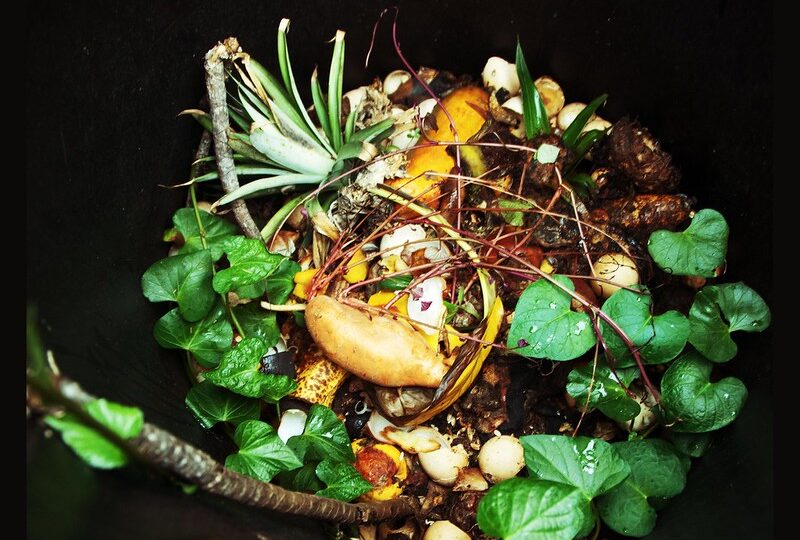
Plastic waste management is a complicated business.  Most methods of recycling or breaking down plastic are costly and harmful to the environment.  The most common biodegradable alternatives – like paper straws – are less than ideal replacements.

There are many approaches to creating biodegradable plastics using feedstocks like seaweed, sugarcane, and other plant matter.  However, the resulting plastics often fall short compared with conventional petroleum-based plastics.

One type of bioplastic that is gaining popularity is polyhydroxyalkanoates, or PHA.  PHA is a plastic produced by microorganisms.  It is fully compostable or biodegradable but in other ways but looks, feels, and functions like regular plastic but without the environmental drawbacks.

PHA can be made using bacterial fermentation of a variety of feedstocks such as vegetable oils, sugars, starches, and even methane and wastewater.

Researchers at a startup from the University of Waterloo in Canada called MetaCycler BioInnovations have developed a process for producing PHA based on bacteria that has been engineered to convert waste from milk and cheese production.  This solution upcycles waste from the dairy industry into cost-effective, sustainable bio-based plastics. 

PHAs can be tailored to have a wide range of properties ranging from being rigid and tough to being quite flexible.  Therefore, they can be suitable for many applications including packaging, agricultural films, and consumer goods. 

The Waterloo technology is a way to tackle the problems of both food waste and plastic pollution with one solution.

**********

Web Links

Turning food waste into a new bioplastic

Photo, posted December 10, 2017, courtesy of Leonard J Matthews via Flickr.

Earth Wise is a production of WAMC Northeast Public Radio

Rising seas are destroying buildings

April 8, 2025 By EarthWise Leave a Comment

Alexandria is the second largest city in Egypt and is the largest city on the Mediterranean coast.  Its history goes back over 2,300 years and it was once home to a lighthouse that was among the Seven Wonders of the Ancient World and a Great Library that was the largest in the ancient world.  The modern city has more than 6 million residents but still has many historic buildings and ancient monuments.  But perhaps not for long.

Rising seas and intensifying storms are taking a toll on the ancient port city.  For centuries, Alexandria’s historic structures have endured earthquakes, storm surges, tsunamis, and more.  They are truly marvels of resilient engineering.  But now, climate change is undoing in decades what took millennia for humans to create.

Over the past two decades, the number of buildings collapsing in Alexandria has risen tenfold.   Buildings are collapsing from the bottom up as a rising water table weakens soil and erodes foundations.  Since 2001, Alexandria has seen 290 buildings collapse.  Comparing present-day satellite imagery with decades-old maps, the authors of a study by the Technical University of Munich have tracked the retreat of Alexandria’s shorelines to determine where seas have intruded into groundwater. The authors say that more than 7,000 buildings in Alexandria are at risk.  They call for building sand dunes and planting trees along the coast to block encroaching seawater.

The true cost of this gradual destruction goes far beyond bricks and mortar.  This is the gradual disappearance of historic coastal cities.  Alexandria is a warning for such cities around the world.

**********

Web Links

In This Storied Egyptian City, Rising Seas are Causing Buildings to Crumble

Photo, posted September 11, 2012, courtesy of Sowr via Flickr.

Earth Wise is a production of WAMC Northeast Public Radio

Amphibians and climate change

April 7, 2025 By EarthWise Leave a Comment

Amphibians are a group of vertebrate animals that include frogs, toads, and salamanders. They are unique for their ability to live both in water and on land during different stages of life. Amphibians play a crucial role in ecosystems, often serving as both predators and prey in food webs.

Amphibians are the world’s most at-risk vertebrates, with more than 40% of species listed as threatened.  They are cold-blooded creatures and rely on external sources to regulate their body temperature.  But needing to regulate their body heat this way makes amphibians particularly vulnerable to temperature change in their habitats. 

Researchers from the University of New South Wales in Australia can now predict the heat tolerance of 60% of the world’s amphibian species.  This new tool will allow scientists to better identify which amphibian species and habitats will be most impacted by climate change.  

The study’s landmark findings, which were recently published in the journal Nature, found that 2% of amphibian species are already exposed to overheating in shaded terrestrial conditions.  According to the research team, a 4°C global temperature increase could push 7.5% of amphibian species beyond their physiological limits. 

Local amphibian extinctions can trigger ecological repercussions, including reshuffling community compositions, eroding genetic diversity, and impacting the food chain and overall ecosystem health.

The researchers highlight the importance of vegetation and water bodies in protecting amphibians during heat waves, and emphasize the need to provide adequate water and shade during future conservation efforts. 

**********

Web Links

The pot is already boiling for 2% of the world’s amphibians: new study

Photo, posted October 8, 2011, courtesy of Dave Huth via Flickr.

Earth Wise is a production of WAMC Northeast Public Radio

  • « Go to Previous Page
  • Page 1
  • Page 2
  • Page 3
  • Page 4
  • Page 5
  • Interim pages omitted …
  • Page 34
  • Go to Next Page »

Primary Sidebar

Recent Episodes

  • An uninsurable future
  • Clean energy and jobs
  • Insect declines in remote regions
  • Fossil fuel producing nations ignoring climate goals
  • Trouble for clownfishes

WAMC Northeast Public Radio

WAMC/Northeast Public Radio is a regional public radio network serving parts of seven northeastern states (more...)

Copyright © 2026 ·