• Skip to primary navigation
  • Skip to main content
  • Skip to primary sidebar

Earth Wise

A look at our changing environment.

  • Home
  • About Earth Wise
  • Where to Listen
  • All Articles
  • Show Search
Hide Search
You are here: Home / Archives for washington state

washington state

Banning Gas-Powered Cars | Earth Wise

September 30, 2022 By EarthWise Leave a Comment

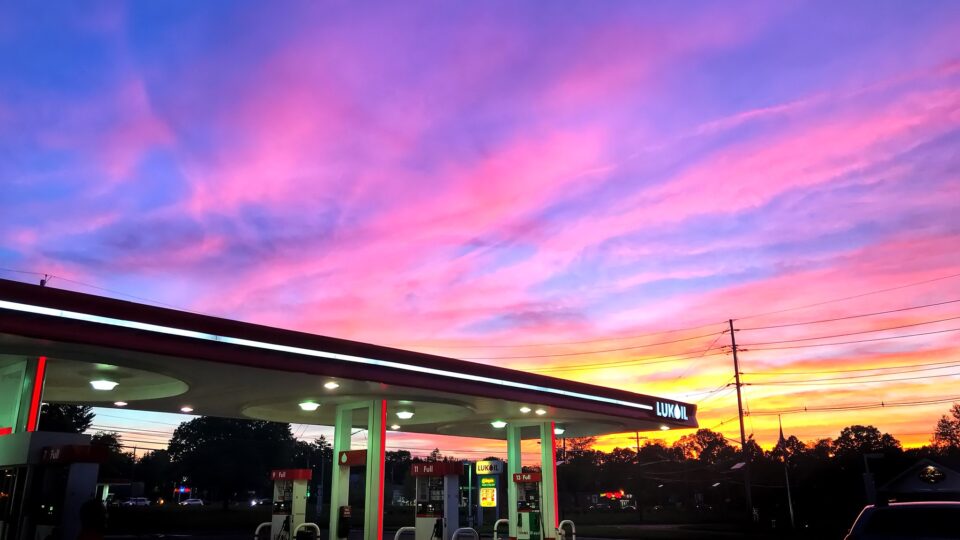
Banning gasoline powered vehicles

In June, the European Union voted to ban the sale of new gas- and diesel-powered vehicles starting in 2035.   The EU joined Canada, the United Kingdom, Japan, South Korea, and several other countries in imposing future gas car bans.

Here in the U.S., on August 25th, California adopted rules banning the sales of new gas-powered cars and light trucks by 2035.  New York passed a similar law last year and its ban will also cover heavy trucks by 2045.

California’s action is particularly significant because there are other states that have trigger laws that impose their own bans based on what California does.  Washington state, Massachusetts, and Virginia are in this category, although the governor of Virginia has said he plans to try to repeal the law.

An additional 12 states have policies tied to California’s and are likely to adopt their own versions of the 2035 ban.  These are Colorado, Connecticut, Delaware, Maine, Maryland, New Jersey, New Mexico, Nevada, Oregon, Pennsylvania, Rhode Island, and Vermont.

When these regulatory actions are coupled with the major investments in electric vehicles being made by virtually all automakers, the transition to electric vehicles appears to be inevitable.

As far as people who love their gas-powered cars are concerned, the new rules only apply to new car sales.  So, consumers can still buy and own used cars that run on gasoline.  If there are states that never impose bans on new gas-powered vehicles, then consumers can go to those states and buy one, assuming there are any being made at that point.   It seems likely that gas-powered cars will end up being made for hobbyists and aficionados only. 

**********

Web Links

California Just Banned Gas-Powered Cars. Here’s Everything You Need to Know

Photo, posted May 20, 2018, courtesy of James Loesch via Flickr.

Earth Wise is a production of WAMC Northeast Public Radio
The Importance Of Wildlife Crossings | Earth Wise

September 23, 2022 By EarthWise Leave a Comment

Wildlife crossings reduce collisions and save lives and money

Highway accidents involving animals are a big problem for both people and animals.  According to the National Highway Traffic Safety Administration, motorists in the United States kill one to two million large animals every year.  About 200 people are killed annually in the U.S. as a result of those collisions with animals.   

These crashes are expensive, too.  Deer-vehicle collisions cost an average of more than $8,000 each; elk-vehicle collisions cost about $25,000; and moose-vehicle collisions cost more than $44,000.

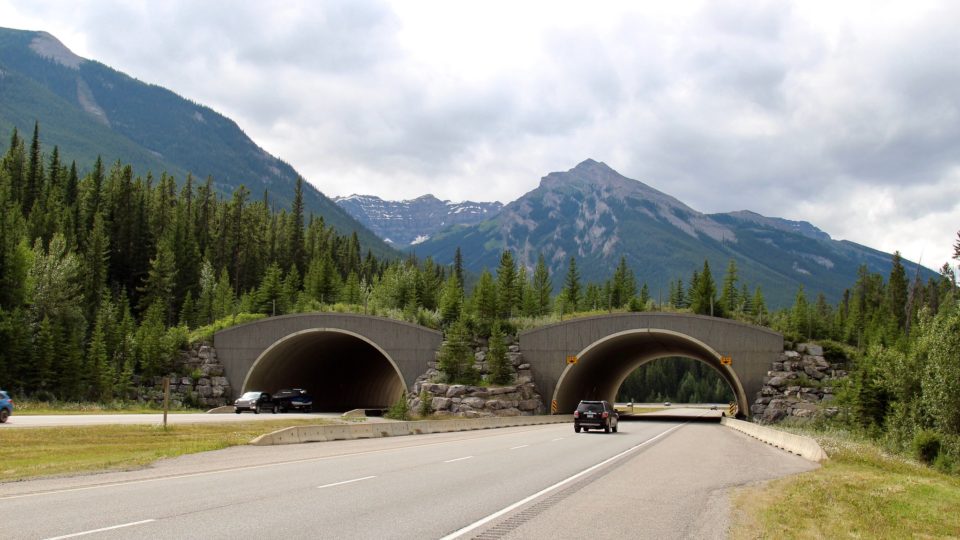
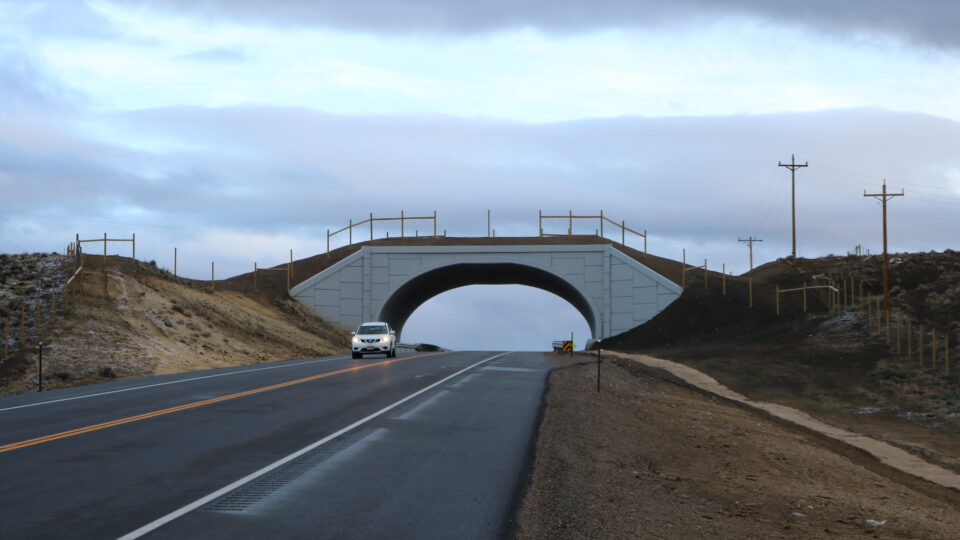
One solution that has been quite effective around the world in reducing car-animal collisions is wildlife overpasses and underpasses.  They are designed to help animals move in search of food and to escape predators and wildfires.  These traffic-spanning bridges and tunnels have been popular in Europe since the 1950s.  They look much like regular overpasses for cars but are decked out with native flora.  The underpasses, which assist shyer and smaller animals, are typically invisible to drivers.

According to a new economic analysis by researchers at Washington State University, wildlife crossings in Washington State save roughly $235,000 to $443,000 every year per structure. 

Wildlife crossing structures range in cost from $500,000 for a tunnel-like underpass to more than $6 million for a broad bridge.  There may soon be many more wildlife crossing structures across the country since $350 million was allotted in the federal Infrastructure Investment and Jobs Act signed into law in 2021.

**********

Web Links

Wildlife crossings potentially save millions annually in Washington state

How wildlife bridges over highways make animals—and people—safer

Photo, posted March 24, 2017, courtesy of Jeffrey Beall via Flickr.

Earth Wise is a production of WAMC Northeast Public Radio
Five States Stepping Up On Clean Energy | Earth Wise

February 7, 2022 By EarthWise Leave a Comment

Five states step up climate action

While Congress continues to face partisan gridlock on climate issues, many states have moved forward with climate action.

In 2021, five states – Illinois, Massachusetts, Oregon, North Carolina, and Rhode Island – passed laws requiring a shift to 100% carbon-free electricity or net-zero emissions.  Washington State passed a law that helps to implement its strong 2019 and 2020 climate and clean energy laws.  Washington’s new legislation establishes a carbon trading program that will help the state to meet its goals of economy-wide emission cuts and 100% carbon-free electricity.

Several other states made progress on climate and clean energy by taking targeted actions not quite as aggressive as 100% laws, but significant, nonetheless.

The five states that entered the so-called 100% club joined with the six states that had earlier passed such legislation.  Those are California, Hawaii, New Mexico, New York, Virginia, and Washington.  Both Puerto Rico and Washington D.C. are also members of the club.

The past year may well be the biggest year yet for significant clean energy legislation.  Some of the states that finally passed laws had been gearing up for it for years.  This is particularly true of Massachusetts and Illinois.

Actions by individual states are not an antidote to inaction by the federal government, but they help.  At this point, about one-third of the country’s population lives in states that have laws requiring a transition to 100% carbon-free electricity, 100% renewable electricity, or net-zero emissions. 

All of this activity began in 2015, when Hawaii passed its renewable energy law.

**********

Web Links

Inside Clean Energy: Here Are 5 States that Took Leaps on Clean Energy Policy in 2021

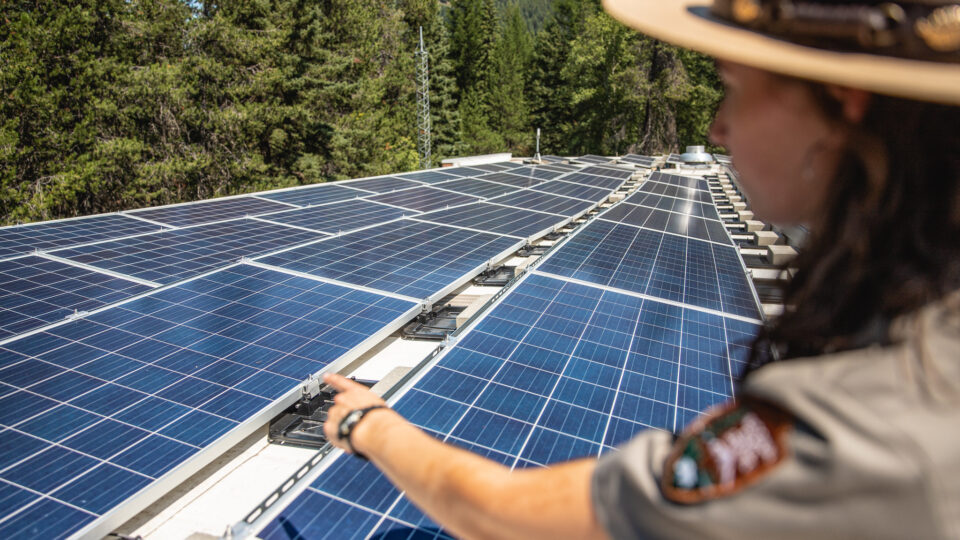
Photo, posted August 12, 2021, courtesy of Glacier NPS via Flickr.

Earth Wise is a production of WAMC Northeast Public Radio.

Bomb Cyclones | Earth Wise

December 2, 2021 By EarthWise Leave a Comment

Extreme weather phenomena becoming increasingly common

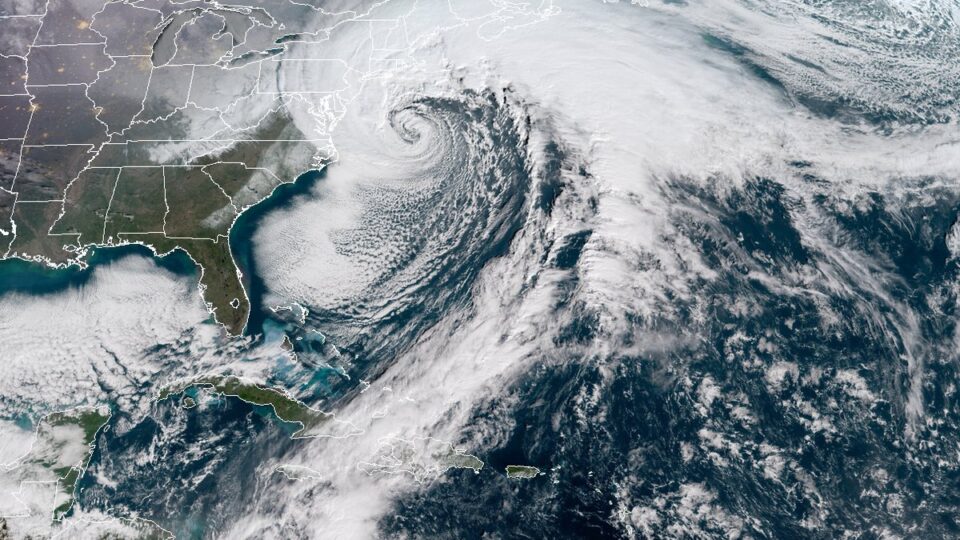
It seems like we are hearing about new weather phenomena pretty frequently these days.  One name that has popped up lately is “bomb cyclones.”  Bomb cyclones, it turns out, are storms that undergo “bombogenesis.”  What that means is a low-pressure area (in other words, a storm) that undergoes rapid strengthening and can be described as a weather bomb, or popularly, a bomb cyclone.

These things usually take place over remote tropical ocean areas but a really intense one struck the Pacific Northwest on October 24th.  The storm off the coast of Washington, with a barometric pressure reading equivalent to a category 4 hurricane, was the second extreme low-pressure storm in the North Pacific in a single week.  Both storms involved pressure drops of more than 24 millibars in 24 hours, making them bomb cyclones.

These storms brought high winds and extreme precipitation that doused wildfires and provided some relief to the extreme drought in Central and Northern California.  Along with these positive effects, however, the storms also caused power outages, flooding, landslides, and mud and debris that washed out roads.

The October 24-25 event brought 16.55 inches of rain to Mount Tamalpais in Marin County, California in a 48-hour period.  Sacramento got 5.44 inches of rain, breaking a 140-year-old record.  And the city had just broken another extreme weather record for the longest dry spell in history.

The storms directed streams of moisture from north of Hawaii toward the West Coast in long, narrow bands of moisture known as atmospheric rivers.  We are learning about all sorts of unfamiliar weather phenomena as extreme weather events become increasingly common.

**********

Web Links

Extratropical Cyclones Drench West Coast

Photo, posted January 4, 2018, courtesy of NOAA/CIRA via Flickr.

Earth Wise is a production of WAMC Northeast Public Radio.

Wildfires And Algal Blooms

October 12, 2021 By EarthWise Leave a Comment

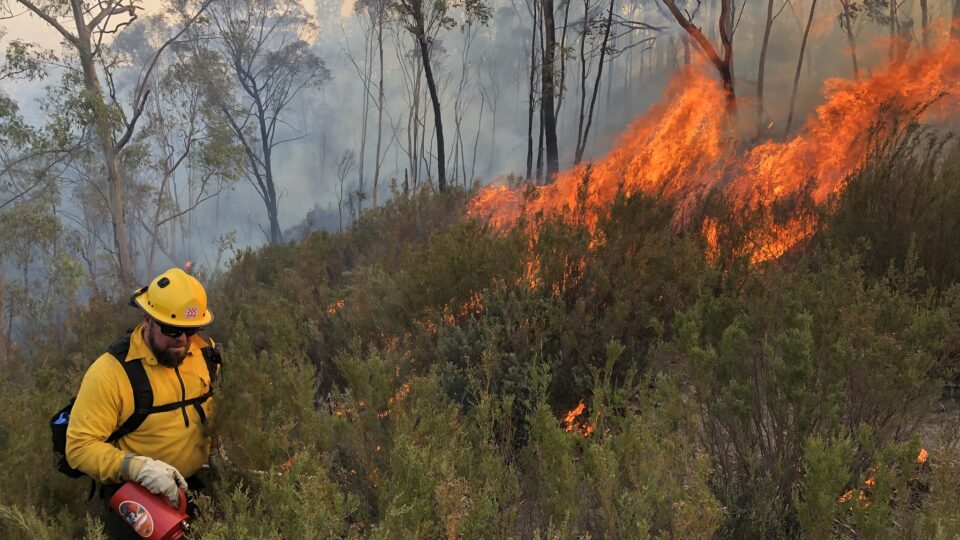
Australia is no stranger to wildfires. But the 2019-2020 season proved to be particularly severe: wildfires destroyed 3,100 homes, displaced 65,000 people, and burned more than 72,000 square miles – roughly the same size as Washington State. The season is colloquially referred to as the Black Summer.

According to a new study recently published in the journal Nature, clouds of smoke and ash from these wildfires triggered widespread algal blooms thousands of miles downwind to the east in the Southern Ocean.

The study, which was led by researchers from Duke University, shows that aerosol particles in the smoke and ash fertilized the water as they fell into it.  This provided the nutrients that fueled unprecedented blooms in that region, conclusively linking for the first time a large-scale response in marine life to fertilization by pyrogenic iron aerosols from a wildfire.

This finding raises questions about the role wildfires may play in the growth of phytoplankton, the microscopic marine algae that – through photosynthesis – absorbs large amounts of climate-warming carbon dioxide from Earth’s atmosphere. 

According to the research team, the Australian algal blooms were so extensive that the subsequent increase in photosynthesis may have temporarily offset a substantial portion of the wildfires’ CO2 emissions.  It remains to be seen how much of the absorbed CO2 remains safely stored in the ocean and how much it has been released back into the atmosphere. 

The researchers plan to investigate the fate of the phytoplankton further.  They also plan more research to better predict where and when aerosol deposition will boost phytoplankton growth in the future.  

**********

Web Links

Australian wildfires triggered massive algal blooms in Southern Ocean

Photo, posted January 12, 2020, courtesy of BLM-Idaho via Flickr.

XXXXXXXXXXXXXXX

Wildlife Bridges

June 17, 2019 By EarthWise Leave a Comment

Highway accidents involving animals are a big problem for both people and animals.  About 200 people die every year in the U.S. as a result of collisions with animals.  In total, one to two million large animals are killed by motorists every year.  And these crashes are expensive:  deer-car collisions cost an average of more than $8,000 each; elk-vehicle collisions about $25,000; and moose-vehicle collisions over $44,000. 

In the United States, there are 21 threatened and endangered species whose very survival is threatened by road mortalities.   These include Key deer in Florida, bighorn sheep in California, and red-bellied turtles in Alabama.

One solution that has been quite effective around the world in reducing car-animal collisions is wildlife overpasses and underpasses.  Crossings and fencing that guide animals over or under highways reduce collisions by 85-95%.

These traffic-spanning bridges and tunnels have been popular in Europe since the 1950s.  The overpasses usually look much like regular overpasses for cars but are decked out with native flora.  The underpasses, which assist shyer and smaller animals, are typically invisible to drivers.

Washington State has recently started building wildlife bridges and underpasses on Interstate 90.  These passes will allow elk, black bears, mountain lions, pika, and even trout to traverse what was once a near-impenetrable barrier of road.

Some animals that are accustomed to human structures start using the crossings almost immediately.  For others, there is learning curve.  As in many things, the early adapters are important as they provide paths and model behavior that more reticent animals learn to follow.

Wildlife bridges are a very good thing for wildlife and for people.

**********

Web Links

How wildlife bridges over highways make animals—and people—safer

Photo, posted July 22, 2017, courtesy of David Fulmer via Flickr.

Earth Wise is a production of WAMC Northeast Public Radio.

Listening To Volcanoes

April 2, 2018 By EarthWise Leave a Comment

https://earthwiseradio.org/wp-content/uploads/2018/04/EW-04-02-18-Listening-to-Volcanoes.mp3

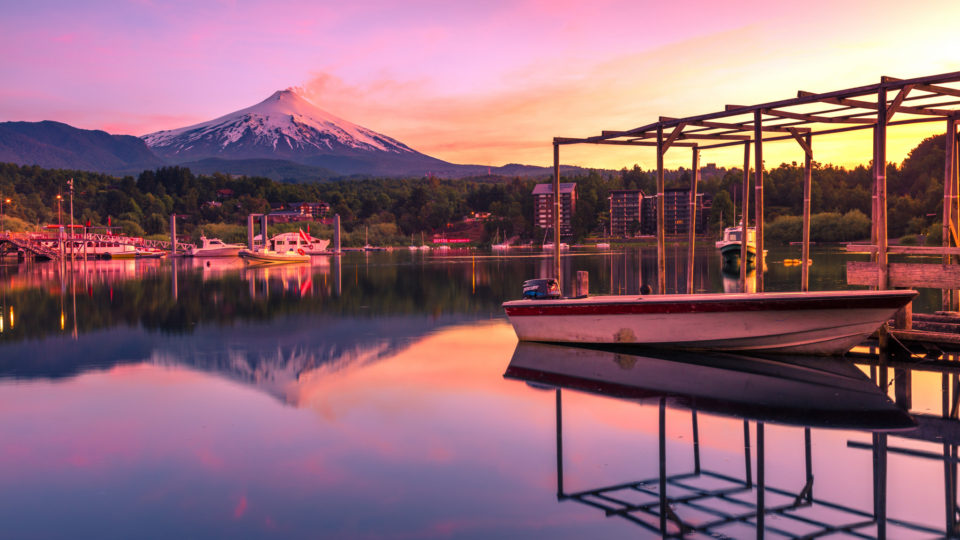
Volcanoes are complicated, and we don’t have universally applicable ways to predict when they might erupt.  Measurements of seismicity, gas emissions and ground deformation are all useful in trying to figure out what volcanoes are up to.  However, it is unlikely that will ever have definitive prediction techniques.

[Read more…] about Listening To Volcanoes

Primary Sidebar

Recent Episodes

  • An uninsurable future
  • Clean energy and jobs
  • Insect declines in remote regions
  • Fossil fuel producing nations ignoring climate goals
  • Trouble for clownfishes

WAMC Northeast Public Radio

WAMC/Northeast Public Radio is a regional public radio network serving parts of seven northeastern states (more...)

Copyright © 2026 ·