• Skip to primary navigation
  • Skip to main content
  • Skip to primary sidebar

Earth Wise

A look at our changing environment.

  • Home
  • About Earth Wise
  • Where to Listen
  • All Articles
  • Show Search
Hide Search
You are here: Home / Archives for warming

warming

Satellites discovering penguins

February 20, 2024 By EarthWise Leave a Comment

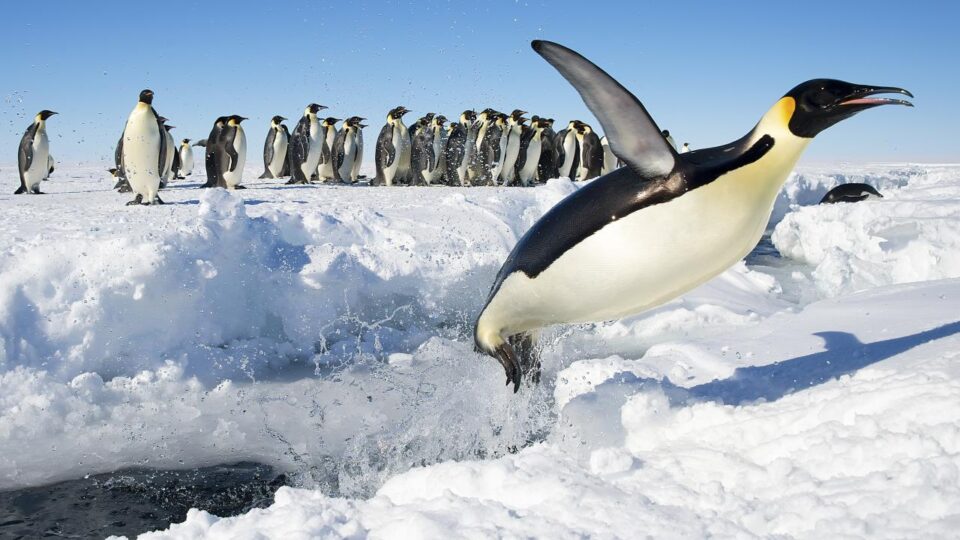
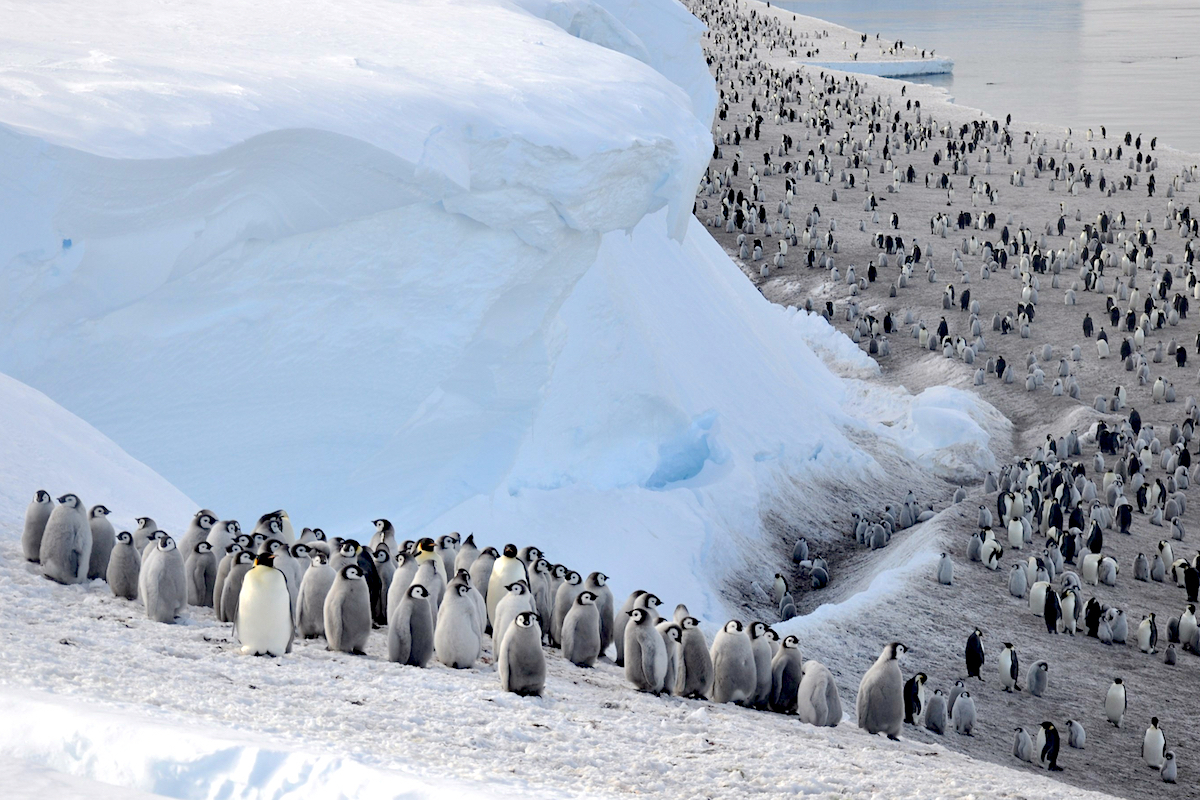
Satellites have discovered new colonies of emperor penguins

The loss of sea ice in Antarctica has forced emperor penguins to seek out new breeding grounds.  Some colonies have traveled more than 20 miles in search of stable ice.  Emperor females lay a single egg on a stretch of sea ice at the start of winter and males keep the eggs warm while the females go hunting for up to two months to bring back food for their hatchlings.

Emperor penguins are the tallest and heaviest of all living penguin species.  The loss of sea ice has led to unprecedented breeding failure in some emperor penguin colonies.  Emperor penguins are not threatened by hunting, habitat loss, or other human-caused problems, but the changing climate could be their undoing.

Emperor colonies are easy to spot from above.  The penguins are up to four feet tall and the droppings from large colonies stand out vividly against white snow.  A careful study of satellite imagery has revealed four previously unknown colonies of emperor penguins along the edges of Antarctica.  This is the first bit of good news about the penguins in quite a while.  The new discoveries, reported in the journal Antarctic Science, brings the total number of known colonies to 66.

The new discoveries are encouraging, but emperor penguins remain at risk from the warming climate.  Three of the four new colonies are small, with fewer than 1,000 birds.  So, the discovery does not have a big impact on the overall emperor penguin population.  The addition of the new colonies is overshadowed by the recently reported colony breeding failures resulting from early and rapid ice losses.

**********

Web Links

Thousands of Emperor Penguins Discovered by Satellite

Photo, posted January 19, 2014, courtesy of Christopher Michel via Flickr.

Earth Wise is a production of WAMC Northeast Public Radio

Why was 2023 so hot?

February 2, 2024 By EarthWise Leave a Comment

Explaining what factors led to 2023 being so hot

Five separate weather-tracking organizations have proclaimed 2023 as the hottest year on record. They all agreed that 2023 beat the previous record-holder – 2016 – by a wide margin.  Organizations that use a pre-industrial baseline of 1850-1900 found that 2023 was 1.45 to 1.48 degrees Celsius above the baseline.  But what caused 2023 – especially the second half of it – to be so hot?

Scientists believe that there were multiple factors that contributed to the record-breaking heat.

First and foremost is the long-term rise in greenhouse gases.  Over 100 years of burning fossil fuels along with major changes in land use (particularly deforestation) have led to a significant rise in the heat-trapping blanket of the gases in the atmosphere.

On top of this long-term trend, the return of the El Niño condition in the Pacific in May helped temperatures rise further.

At the same time, the tropical Pacific was not the only ocean that was hotter than normal.  The global sea surface temperature set new records in 2023 and there were multiple marine heat waves.  Heat trapped by the atmosphere is absorbed by the oceans, raising their temperatures.

Another factor is the quantity of aerosols in the atmosphere.  Many of these aerosols actually cool the atmosphere by reflecting the sun’s light back into space.  Society’s efforts to reduce air pollution and improve air quality have led to decreasing levels of aerosols.

2024 started with some seriously cold weather in some places but predictions are that this year will be roughly as warm as 2023 and possibly warmer given that the dynamics driving last year’s weather are all still in place.

*********

Web Links

Five Factors to Explain the Record Heat in 2023

Photo, posted February 22, 2016, courtesy of Jasmin Toubi via Flickr.

Earth Wise is a production of WAMC Northeast Public Radio

More mosquitoes in a warming climate

January 26, 2024 By EarthWise Leave a Comment

More mosquitoes likely as the climate warms

Over millions of years, Earth’s climate has warmed up and cooled down many times. However, today the planet is warming much faster than it ever has over human history.  According to scientists, the warming is primarily the result of increased anthropogenic greenhouse gas emissions.  In fact, human activities are responsible for nearly all of the increase in atmospheric greenhouse gas emissions over the last 150 years. 

According to a new study published in the journal Ecology, the warming climate may soon mean more mosquitoes.  A research team, led by scientists from Virginia Commonwealth University, found that rising temperatures, often linked to climate change, can make predators of mosquito larvae less effective at controlling mosquito populations.  According to researchers, these warmer temperatures accelerate the development time of larvae, which leads to a smaller window of time in which predators like dragonflies could eat them.  As a result, twice as many mosquito larvae could make it to adulthood in the study area. 

Predators help stabilize ecosystems and food webs.  The study looked at predator-prey interactions between dragonfly nymphs and mosquito larvae.  In the study of Belle Isle along the James River in Richmond, Virginia, the research team found that warmer pools had more aquatic rock pool mosquito larvae – even when their predators that naturally control the populations were present.

While this species of mosquito is not an important disease vector, the researchers emphasize that these findings likely apply to other mosquito species that do act as vectors for diseases, such as West Nile or Zika virus.

The changing climate is creating the perfect environment for mosquitoes to thrive. 

**********

Web Links

Hotter weather caused by climate change could mean more mosquitos, according to VCU-led study

Photo, posted June 20, 2014, courtesy of John Tann via Flickr.

Earth Wise is a production of WAMC Northeast Public Radio

Billion-dollar weather disasters

January 19, 2024 By EarthWise Leave a Comment

An increasing number of billion-dollar weather disasters

All sorts of weather records were set in 2023 and pretty much none of them were good news.  Among the most painful was that the U.S. suffered a record 25 weather- and climate-related disasters that caused more than a billion dollars in damage.

The increasing accumulation of greenhouse gases in the atmosphere has increased the frequency, intensity, and danger of extreme weather events of all types including hurricanes, severe storms, heavy rainfall, flooding, wildfire, extreme heat, and drought.

Between 1980 and 2022, the U.S. averaged eight billion-dollar weather disasters each year, according to data from the National Oceanic and Atmospheric Administration.  Between 2018 and 2022, the average was 18 such disasters each year.  Last year, it was a record 25, three more than the previous record set in 2020.

The onslaught of weather disasters has put considerable pressure on disaster relief and emergency services of all kinds.  It seems like there are catastrophic events happening all the time; and in fact, there are.  The average time between billion-dollar disasters has dramatically shrunk.  In the 1980s, there was an average of 82 days between them.  Between 2018 and 2022, the lull between billion-dollar disasters dropped to an average of just 18 days.  For the first eleven months of 2023, the average time between billion-dollar weather disasters was just 10 days.

The global average temperature in 2023 was 1.4 degrees Celsius above the pre-industrial average and the effects have been increasingly dramatic.  We can expect that the impacts will worsen with every bit of additional warming.  There is no time to waste in taking climate action.

**********

Web Links

A Record Number of Billion-Dollar Weather Disasters Hit the U.S. in 2023

Photo, posted September 29, 2022, courtesy of State Farm via Flickr.

Earth Wise is a production of WAMC Northeast Public Radio

What did the record warmth of 2023 mean?

January 16, 2024 By EarthWise Leave a Comment

2023 was the warmest year in the 174 years of global temperature record-keeping.  According to some analyses, it may have been the warmest year in the past 125,000 years.

There were incredible heatwaves in Arizona and Argentina.  There were relentless wildfires across Canada.  The wintertime ice coverage in the seas surrounding Antarctica was at unprecedented lows

The global temperatures in 2023 did not just beat prior records; they smashed them.  Every month from June through November set all-time monthly temperature records. The US Northeast saw springlike temperatures at the end of the year.  The high temperature in Buffalo, New York on Christmas Day was 58 degrees.

Climate scientists have been predicting the warming trend that has been ongoing over the past several decades.  Indeed, computational models for 2023 called for a warm year.  Various models had a variety of projected temperatures and 2023’s heat was still broadly within the range of what was projected, although certainly at the high end.

The question is whether last year was an indicator that the planet’s warming is accelerating faster than we expect or that it just was a particularly warm year because of cyclical factors such as the El Niño that appeared last spring.

One theory that is being explored is that various types of industrial pollution have previously actually served to cool the atmosphere over time and as those sources are reduced for public health reasons, the warming effects of greenhouse gases have accelerated.

Currently, there is no consensus about why it seems to be getting warmer even faster than many climate models predict.  What there is no doubt about is that it is not a good thing.

**********

Web Links

Earth Was Due for Another Year of Record Warmth. But This Warm?

Photo, posted June 8, 2023, courtesy of Anthony Quintano via Flickr.

Earth Wise is a production of WAMC Northeast Public Radio

How will we know if the world is 1.5 degrees warmer?

January 12, 2024 By EarthWise Leave a Comment

How is climate warming measured?

The Paris Climate Agreement has a goal of limiting global warming to less than 1.5 degrees Celsius above pre-industrial levels.  How do we know if we are succeeding and, more importantly, how would we know if we have failed?

This may seem like something fairly obvious, but it isn’t.  Global temperatures are definitely creeping upward.  This past year has been the warmest on record.  In fact, the global average temperature was more than 1.4 degrees above pre-industrial levels.  November was 1.75 degrees above pre-industrial levels.  So, does that mean that our climate goals have already failed?  Not really.

On a monthly scale there have already been individual months where warming has exceeded 1.5 degrees in 2016, 2017, 2019, 2020, and 2023.  Would an entire year above the target constitute failure?  Not necessarily.  There really isn’t an agreed-upon answer and that in itself represents something that could undermine global efforts to tackle climate change.

If we don’t know whether we are succeeding or failing, it is more difficult to pursue success.  The United Nations IPCC says the threshold will be surpassed when average warming exceeds 1.5 degrees for 20 years.  But that seems like a building a mountain highway with no guardrails and hoping to be safe.

Scientists are calling for new approaches to defining a universally agreed-upon measure of global warming that could trigger urgent action to avoid further rises.  What we really don’t need are justifications and excuses for continued inaction.  Clearly the climate is not waiting for us to debate the issue.

**********

Web Links

Why We Won’t Know When We’ve Passed the 1.5-Degree Threshold

Photo, posted August 2, 2018, courtesy of J Bartlett Team Rubicon/BLM for USFS via Flickr.

Earth Wise is a production of WAMC Northeast Public Radio

Seabirds rescuing coral reefs

January 8, 2024 By EarthWise Leave a Comment

A new study by researchers at Lancaster University in the UK has found that the presence of seabirds on islands adjacent to tropical coral reefs can more than double the coral growth rates on those reefs.

The study found that when coral reefs grow faster, they can bounce back more quickly from bleaching events that occur when the seas become too warm.  The focus of the study was a type of coral called Acropora, which provides complex structures supporting fish populations and reef growth. 

The researchers found that Acropora around islands populated by seabirds recovered from bleaching events about 10 months faster than reefs located away from seabird colonies.  Speeding up coral recovery times could prove the difference between continuing to bounce back from bleaching events and dying off.

The seabirds are helping the coral reefs with their droppings.  The birds feed on fish in the open ocean far from islands and then return to the islands to roost.  They deposit nitrogen- and phosphorus-rich nutrients in the form of guano, some of which is washed off of the islands by rain and into the surrounding seas.  The nutrients fertilize corals and other marine species.

To determine whether the faster growth rates were really due to the bird-supplied nutrients, the researchers studied rat-infested islands that had no bird populations.  The study confirmed that it was the presence of seabirds that provided enhanced nutrients for the coral reefs.  In fact, a primary outcome of the study was to add further weight to the growing body of evidence of the ecological damage across ecosystems on land and sea from invasive rats on tropical islands.

**********

Web Links

Feathered friends can become unlikely helpers for tropical coral reefs facing climate change threat

Photo, posted September 15, 2019, courtesy of Rickard Zerpe via Flickr.

Earth Wise is a production of WAMC Northeast Public Radio
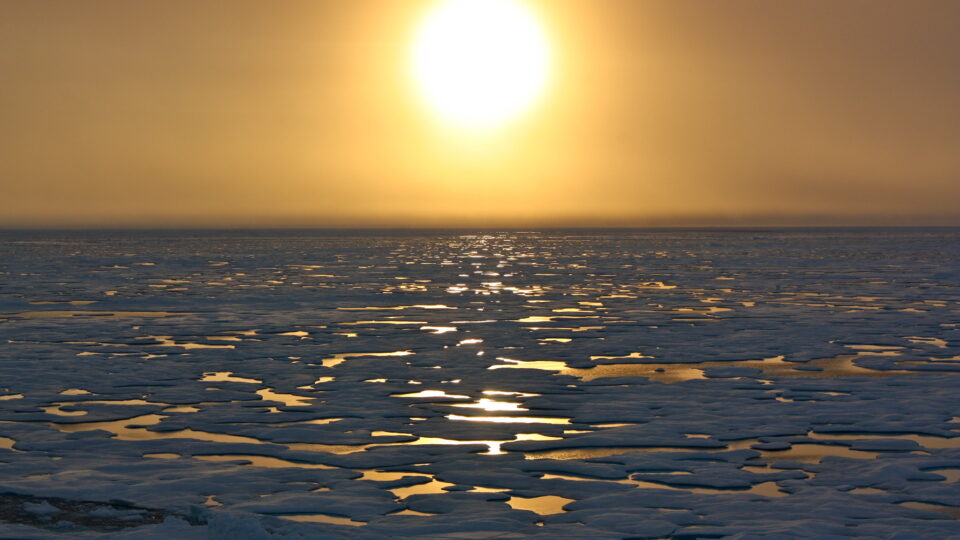
The hottest year on record

December 26, 2023 By EarthWise Leave a Comment

Barring some sort of massive global deep freeze late in the year, it was increasingly obvious by November that 2023 was going to be the hottest year ever recorded.  After analyzing data that showed the world saw its warmest ever November, experts around the world made the call early in December.

According to the European Union’s Copernicus Climate Change Service, from January to November 2023, global average temperatures were the highest on record – 1.46 degrees Celsius or 2.6 degrees Fahrenheit above the pre-industrial average.  Given that the Paris Climate Accord has the goal of keeping warming below 1.5 degrees Celsius, 2023 has been an alarmingly hot year.

November itself was 1.75 degrees warmer than the pre-industrial average.  The average surface air temperature for the planet was 14.22 degrees Celsius or about 57.6 degrees Fahrenheit.  Now 57 degrees doesn’t sound all that warm, but we are not accustomed to thinking in terms of the average temperature for the entire planet.  Keep in mind that the planetary average includes Antarctica and the polar north. The year as a whole had six record-breaking months and two record-breaking seasons. 

There is no reason to hope that the warming in 2023 was an anomalous occurrence and that 2024 is apt to be cooler.  With an El Niño in place in the Pacific, the new year might even be warmer than the previous one.  With continued warming, extreme weather events are likely to become even more frequent and intense, exacerbating the damage and loss of life from droughts, floods, hurricanes, and wildfires.

**********

Web Links

2023 is officially the hottest year ever recorded, and scientists say “the temperature will keep rising”

Photo, posted June 7, 2012, courtesy of NASA/Kathryn Hansen via Flickr.

Earth Wise is a production of WAMC Northeast Public Radio
List of Telegram channels with advanced design – fapaton.com
List of Telegram channels with advanced design – fapaton.com Managing digital sovereignty demands strict discipline when monitoring your assets through ledger live desktop at home.

Are we really serious about eliminating fossil fuels?

December 15, 2023 By EarthWise Leave a Comment

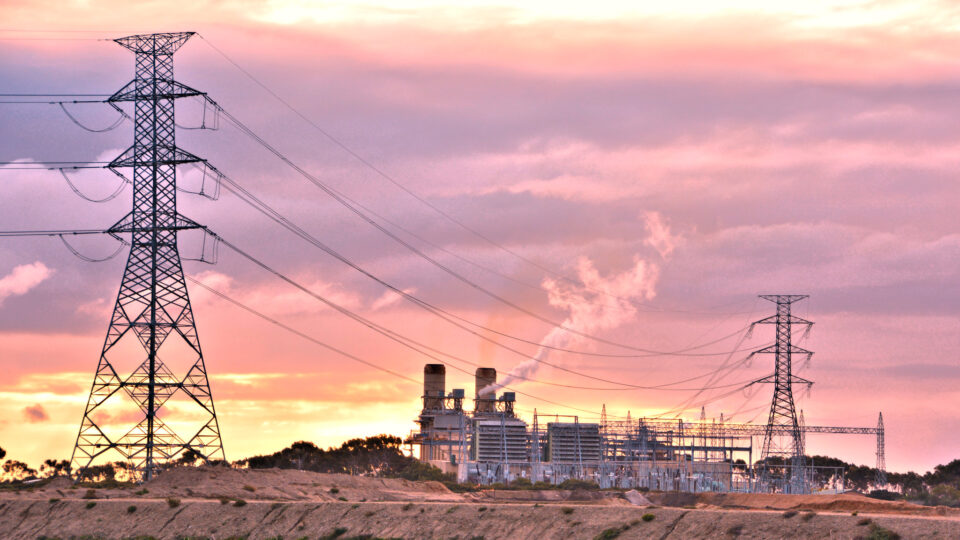
Almost all the countries around the world have pledged to take action to reduce planet-warming emissions by expanding the use of renewable energy sources and phasing out fossil fuels.  But very few countries seem to be taking the fossil fuel phase-out seriously.

Almost all the top 20 fossil-fuel producing countries plan to produce more oil, gas, and coal in 2030 than they do today.  Countries are doubling down on fossil fuel production, which will make it virtually impossible to limit global warming to 2 degrees Celsius.

Despite having an administration that takes climate issues very seriously, the United States is now the world’s biggest crude oil producer and is ramping up exports of natural gas.  Brazil, under its environmental champion President da Silva, plans to increase oil production by 63% and more than double its gas output over the next decade.  India, which has promised to expand renewable energy production, will more than double its production of coal by 2030.  Canada, which has a net-zero commitment enacted as law, will boost its oil output by 25% in the next 12 years.  Meanwhile, countries like Saudi Arabia and Russia aren’t even pretending to make the transition away from fossil fuels.

Governments and citizens around the world may be serious about the climate crisis and are taking various actions.  But the world cannot address climate change without tackling its root cause.  The overwhelming force of greed and the power wielded by the fossil fuel industry has created a dynamic that is making real progress nearly impossible as fossil fuels continue to power the world.

**********

Web Links

Coming Soon: More Oil, Gas and Coal

Photo, posted June 22, 2020, courtesy of John Morton via Flickr.

Earth Wise is a production of WAMC Northeast Public Radio
Deeper corals bleaching

December 7, 2023 By EarthWise Leave a Comment

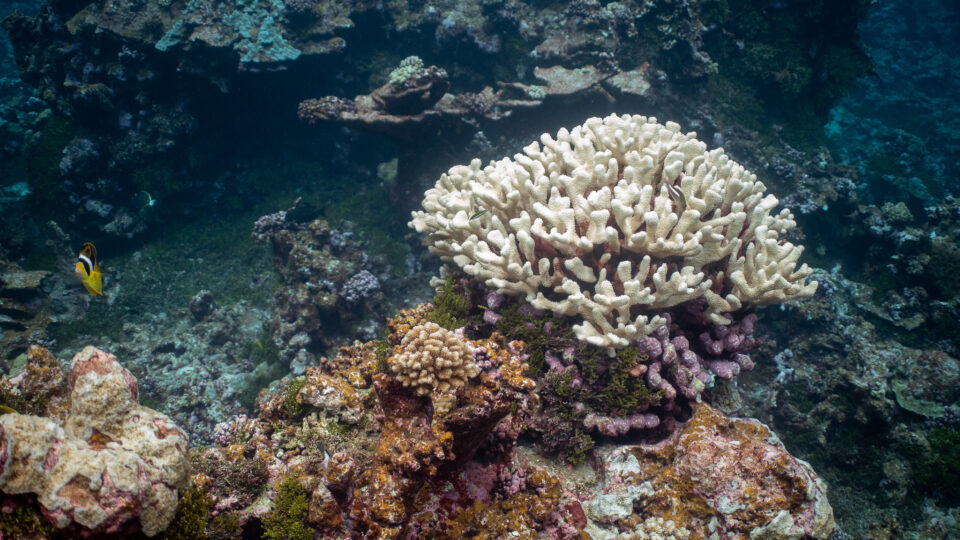
Even deep corals are at risk from warming seas

When ocean waters get too warm, corals – which are actually tiny animals – eject the colorful algae that inhabit their tissues.  The symbiotic relationship between coral polyps and algae is essential to coral survival   When the algae is ejected, previously colorful coral turns white, and the coral can ultimately die.  If waters cool off, the algae can reestablish themselves and the coral can regain its color and health.

The world’s oceans have been warming at an unprecedented rate, making coral bleaching and die-off a global phenomenon.  It is estimated that half of the planet’s reefs have already disappeared.  Some places are worse off than others.  For example, almost 95% of coral reefs in Southeast Asia are threatened.  Florida’s reefs are especially threatened, particularly since there have been unprecedented marine heatwaves off its coast.

It has long been assumed that deeper reefs, where water is cooler, would remain safe from the effects of warming, but a few years ago researchers recorded coral bleaching some 300 feet underwater along the Egmont Atoll in the western Indian Ocean.  At one point, bleaching affected 80% of corals in some areas.  This discovery came as a huge surprise to oceanographers.  It was probably associated with an El Niño-like phenomenon in the waters and those reefs have mostly recovered in the intervening years.

Fairly recently, researchers have found pristine coral reefs deep down in the waters off the Galapagos Islands, where shallow reefs have largely disappeared.  There are likely to be similar reefs in the ocean depths around the world, but scientists are expressing concern that even coral reefs lying deep beneath the ocean surface may not ultimately be protected from the warming seas.

**********

Web Links

As Oceans Warm, Coral Bleaching Seen at Greater Depths

Photo, posted June 5, 2023, courtesy of Ryan Hagerty / USFWS via Flickr.

Earth Wise is a production of WAMC Northeast Public Radio
Farming the frozen north

November 28, 2023 By EarthWise Leave a Comment

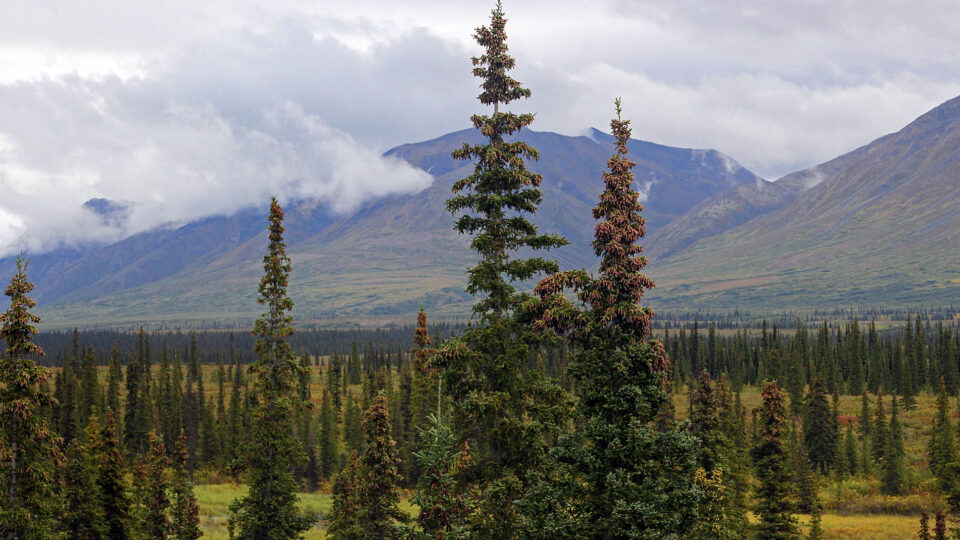
Climate change may open new regions to agriculture

Agriculture is the primary cause of land-based biodiversity loss.  As the global population grows, agricultural production needs to keep pace.  Estimates are that production needs to double by 2050.  How this can be accomplished without doing further harm to the environment and biodiversity is extremely challenging.

Climate change adds further complications to the challenge.  As the climate warms in the middle latitudes, agricultural zones may need to shift northward to regions which have evolved to have more suitable climates.  This represents a very real threat to the wilderness areas of Canada, Russia, and Scandinavia.  These places represent a significant fraction of the world’s wilderness areas outside of Antarctica.

According to researchers at the University of Exeter in the UK, if the forces driving climate change are not diminished, over the next 40 years warming temperatures are expected to make more than 1 million square miles newly suitable for growing crops.  As cropland goes barren in areas that have warmed too much, northern wilderness could be turned over to farming.  The vital integrity of these valuable areas could be irreversibly lost.

The study, published in the journal Current Biology, also says that climate change will shrink the variety of crops that can be grown on 72% of the land that is currently farmed worldwide.  Given this situation along with the rising global population, it is essential that land be used more efficiently.  We can feed a larger population from the farmland we already have, but people need to reduce meat consumption, cut food waste, and grow crops suited to their local climate.

**********

Web Links

Warming Could Make Northern Wilderness Ripe for Farming, Study Finds

Photo, posted September 7, 2016, courtesy of Scott via Flickr.

Earth Wise is a production of WAMC Northeast Public Radio

Disappearing snow crabs

November 21, 2023 By EarthWise Leave a Comment

Snow crabs disappeared

Alaska snow crabs are a cold-water species found off the coast of Alaska in the Bering, Beaufort, and Chukchi Seas. They are one of ten commercially-fished species in Alaskan waters. The perils of crab fishing in this region have been well documented for many years in the reality TV series Deadliest Catch.

Last year, officials in Alaska canceled the winter snow crab season for the first time ever due to a sharp population decline. While the number of juvenile snow crabs was at record highs just a few years earlier, approximately 90% of snow crabs mysteriously disappeared ahead of the 2021 season. 

This year, officials in Alaska have once again canceled the snow crab harvest season for the second year in a row, citing the overwhelming numbers of crabs – in the billions – missing from Alaskan waters. 

Scientists have suspected that the warming ocean temperatures triggered this snow crab population collapse.  But did the crabs move someplace else or die off?  According to a new study recently published by scientists at the National Oceanic and Atmospheric Administration, warmer ocean temperatures likely caused the snow crabs to starve to death.  The research team found a significant link between recent marine heat waves in the eastern Bering Sea and the sudden disappearance of the snow crabs that began showing up in surveys in 2021.

According to the study, warmer ocean water dramatically increases snow crabs’ caloric needs. But with the warmer water also disrupting much of the region’s food web, snow crabs had a hard time foraging for food and weren’t able to keep up.

Researchers expect the population may eventually find refuge in colder waters further north.

**********

Web Links

Climate Change And Crabs

Billions of crabs went missing around Alaska

Photo, posted August 28, 2013, courtesy of Boris Kasimov via Flickr.

XXXXXXXXXXXXXXXXXXXXX

The end of a supergiant iceberg

November 16, 2023 By EarthWise Leave a Comment

In 2017, a supergiant iceberg known as A-68 calved from the Larsen C ice shelf in Antarctica. In 2020, it drifted close to South Georgia, a British island in the South Atlantic Ocean, and then began to break up.  This iceberg was enormous – nearly the size of Delaware.  When it started to break up, it released huge quantities of fresh, cold meltwater in a relatively small region.

Scientists from the British Antarctic Survey and the University of Sheffield have studied how the melting iceberg has affected the temperature and the salinity of the ocean surface in the area.  They found that the water near the surface was 8 degrees Fahrenheit colder than normal and the water only had about two-thirds of its normal saltiness.

The effects from the melted iceberg eventually extended well beyond South Georgia as the colder, less-salty water was carried by ocean currents to form a long plume that stretched more than 600 miles across the South Atlantic.  It also took several months to disappear.

The calving of this massive iceberg provided a unique opportunity for scientists to study the impact of iceberg melting on surface ocean conditions.  A-68 was one of the largest and most studied of all icebergs.  The study has shown that each individual melting giant iceberg can have widespread and long-lasting impacts on ocean conditions, which has consequences for the plant and animal life that lives there.

Climate change is likely to lead to more giant iceberg calving in the future.  It is important to monitor these events to assess their future impacts on ocean circulation, biology, and even seafloor geology.

**********

Web Links

Supergiant iceberg makes surrounding ocean surface colder and less salty

Photo, posted October 24, 2018, courtesy of Jefferson Beck / NASA via Flickr.

Earth Wise is a production of WAMC Northeast Public Radio
Summers are getting hotter

November 7, 2023 By EarthWise Leave a Comment

Summers are getting increasingly hotter around the globe

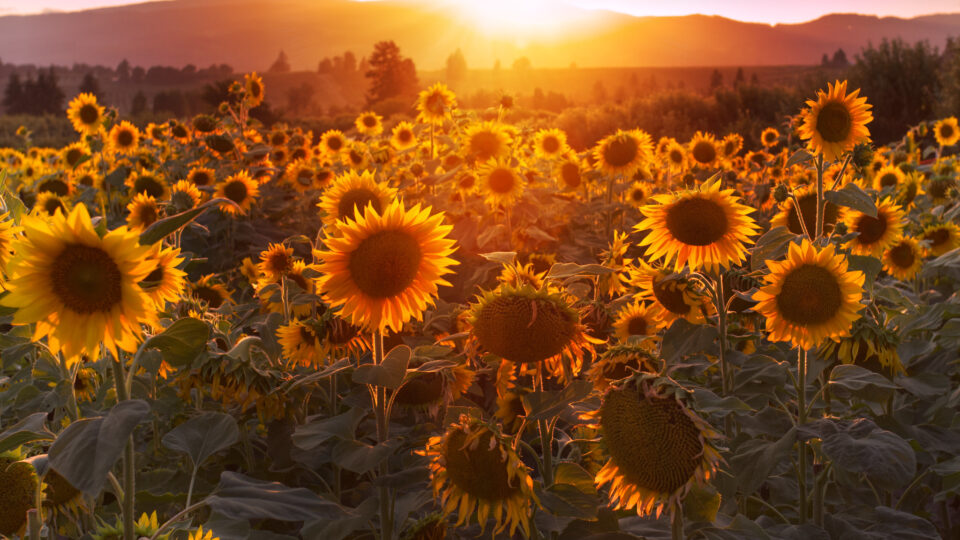
Climate scientists have warned for decades that a seemingly small change in the global average temperature can lead to large changes in extreme heat.  So far, the world has warmed by 1.2 degrees Celsius (or 2.2 degrees Fahrenheit) and that has been enough to cause big changes in summer heat.

This past summer was the hottest on record.  The heat fueled deadly wildfires across the Mediterranean.  Record highs caused Chinese cities to suspend outdoor work.  Weeks of triple-digit temperatures in the U.S. southwest led to heat-related hospitalizations and deaths.

But not every recent summer has been hotter everywhere.  Even this summer saw average or even colder than average temperatures in some places.  But the distribution of summer temperatures across the Northern Hemisphere has shifted dramatically in recent decades.

Less than 1% of summers in the middle of the 20th century were extremely hot for their location.  Over the past decade, more than a quarter of summers were extremely hot for their location.

Between 1950 and 1980, about a third of summers across the hemisphere were near average in temperature; a third were considered cold; a third were hot.  Only a few summers in a few places were either extremely cold or extremely hot.  Over the past decade, the vast majority of summers have either been hot or extremely hot.

We experience summer weather in the location where we spend our time, and it is entirely possible that our own experience may have been unremarkable.  We may even have had a cool, rainy summer.  But on a global scale, summers are getting hotter and hotter and making it harder to ignore what is happening to our planet.

*********

Web Links

It’s Not Your Imagination. Summers Are Getting Hotter.

Photo, posted August 21, 2022, courtesy of Bonnie Moreland via Flickr.

Earth Wise is a production of WAMC Northeast Public Radio
Lots of female turtles

November 3, 2023 By EarthWise Leave a Comment

Climate change threatening the future of green sea turtles

Green sea turtles were listed under the Endangered Species Act in 1978.  Since that time, there have been conservation measures put in place in many locations.  One such place is Florida, where restrictions on beachfront development and careful monitoring of turtle nests has helped to get hatchlings safely into the water.  A gill net ban in 1995 sharply reduced the number of young turtles killed by fishing gear.

All of this has resulted in what is described as an explosion in turtle populations in Florida.  Volunteers monitoring the 2023 nesting season on Florida’s beaches have counted more than 74,000 nests.  That beats the previous record – set in 2017 – by an incredible 40%.

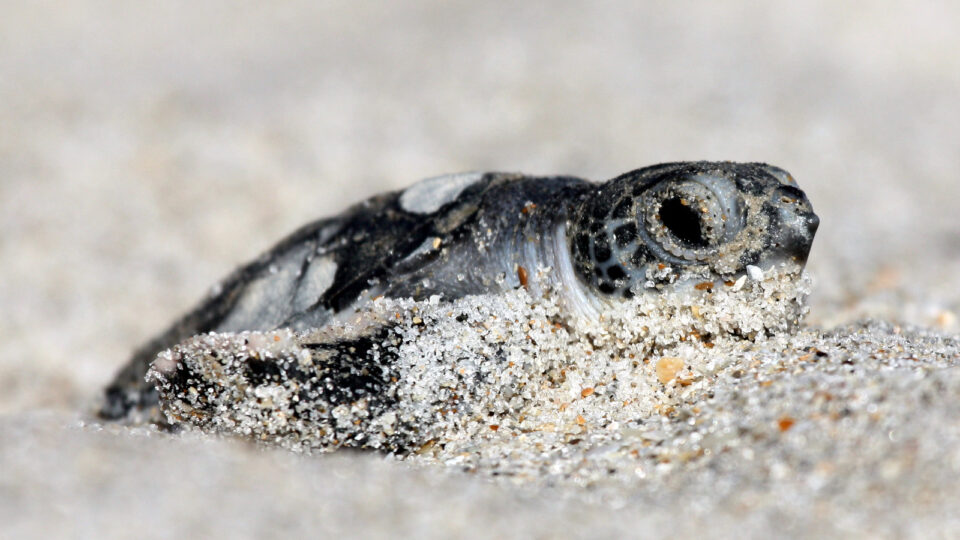
Unfortunately, this does not represent a guaranteed great future for the species.  Sea turtles are particularly sensitive to the warming climate.  The sex of a baby sea turtle is not determined by DNA, but rather by the temperature of the sand in which its egg develops.  Cooler temperatures mean more males; warmer ones mean more females.

In recent years, the proportion of male green sea turtles has dwindled substantially.  In the past few seasons, between 87 percent and 100 percent of the hatchlings tested in Florida have been female.

In the short term, the skewed sex ratio might be a boon for the species.  Lots of females laying lots of eggs means lots of turtles.  Sea turtles don’t reach sexual maturity until their twenties or thirties.  So, for the next few decades, there are likely to be growing numbers of turtle nests.  But down the line, there is going to be a real problem.  Where will for all the female turtles find the mates to populate the species in the future?

**********

Web Links

Florida Turtle Nests Are Recovering. When They Hatch, Expect Mostly Girls.

Photo, posted October 5, 2011, courtesy of Keenan Adams / USFWS via Flickr.

Earth Wise is a production of WAMC Northeast Public Radio
Record low Antarctic sea ice

October 30, 2023 By EarthWise Leave a Comment

Record low sea ice levels in Antarctica

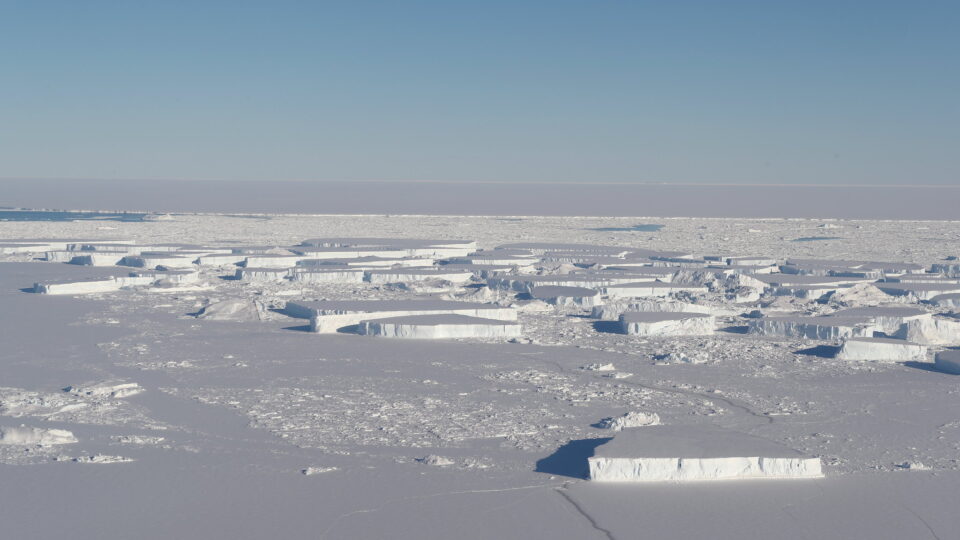
Antarctica’s winter came to a close in September and during that month, the continent reaches its maximum amount of sea ice that grows during the darkest and coldest months.  This year, that maximum occurred on September 10th and turned out to be the lowest on record.

The sea ice around Antarctica reached a maximum extent of 6.5 million square miles according to NASA researchers.  That was nearly 400,000 square miles below the previous record low set in 1986. 

There are several possible causes for the meager growth of Antarctic sea ice this year.  It may be a combination of several factors including El Niño, wind patterns, and warming ocean temperatures.  Recent research indicates that ocean heat is most likely playing an important role in slowing ice growth in the cold season and enhancing ice melting in the warm season.

The record-low ice extent so far this year is a continuation of a downward trend in Antarctic sea ice that has gone on since the ice reached a record high in 2014.  Prior to that year, the ice surrounding the southern continent was actually increasing slightly by about 1% every decade.

Meanwhile, Arctic sea ice reached its minimum extent in September and it was the sixth-lowest level in the satellite record.  Scientists track the seasonal and annual fluctuations of polar sea ice because they shape polar ecosystems and play a significant role in global climate.  Sea ice melting at both poles reinforces global warming because bright sea ice reflects most of the Sun’s energy back to space while open ocean water absorbs 90% of it.

**********

Web Links

Antarctic Sea Ice Sees Record Low Growth  

Photo, posted June 30, 2023, courtesy of Pedro Szekely via Flickr.

Earth Wise is a production of WAMC Northeast Public Radio
The Hottest Summer | Earth Wise

October 13, 2023 By EarthWise Leave a Comment

The hottest summer since global record keeping began

It was a very rainy and relatively cool summer in much of New England as well as in New York’s Capital Region, where Earth Wise originates.  Despite that fact, according to NASA scientists, the summer of 2023 was the Earth’s hottest since global record keeping began in 1880.

The months of June, July, and August taken together were .41 degrees Fahrenheit warmer than any other summer on record as well as being 2.1 degrees warmer than the average summer between 1951 and 1980.

The record summer heat was marked by heatwaves in South America, Japan, Europe, and the US.  The heat exacerbated wildfires in Canada that dumped smoke across much of the northern tier of our country and also led to severe rainfall in Europe.  All sorts of temperature records were set in places across the globe.

According to NASA, exceptionally high sea surface temperatures, fueled in part by the reemergence of El Niño in the Pacific, were a major factor in the summer’s record warmth.

The record-breaking heat of this summer continues a long-term trend of warming.  Scientists around the world have been tracking the warming that is driven primarily by human-caused greenhouse gas emissions.  The combination of this background warming and the marine heatwaves set the stage for new temperature records.  The El Niño was enough to tip the scales. 

In the current environment, heat waves will last longer, be hotter, and be more punishing.  The atmosphere can hold more water producing hot and humid conditions that are harder for the human body to endure.

Scientists are expecting the biggest impacts of El Niño in the early parts of next year.  We can expect to see extreme weather of many kinds over the next year.

**********

Web Links

NASA Announces Summer 2023 Hottest on Record

Photo, posted June 8, 2023, courtesy of Anthony Quintano via Flickr.

Earth Wise is a production of WAMC Northeast Public Radio

Rivers And Climate Change | Earth Wise

October 11, 2023 By EarthWise Leave a Comment

Our planet is heating up.  Scientists have concluded that the changing climate is primarily the result of increased greenhouse gas emissions from human activities.  Some of the effects of global climate change include thawing permafrost, rising seas, intensifying storms and wildfires, and warming oceans.   

According to a new study led by researchers from Penn State University, rivers are warming and losing oxygen even faster than oceans.  The study, which was recently published in the journal Nature Climate Change, found that warming occurred in 87% and oxygen loss occurred in 70% of the nearly 800 rivers studied.

The research team projects that within the next 70 years some river systems, especially those in the American South, will experience such low oxygen levels that the rivers could “induce acute death” for some fish species and threaten the aquatic diversity of river ecosystems. 

The research team used artificial intelligence and deep learning to analyze water quality data from nearly 800 rivers across the U.S. and central Europe.  The researchers found that rivers are warming up and deoxygenating faster than oceans, which could have serious implications for both aquatic life and humans.

While climate change has led to warming and oxygen loss in oceans and lakes around the world, the researchers did not expect to find warming and deoxygenation in shallower, flowing rivers.  Since life in water depends on temperature and dissolved oxygen, the researchers hope this study serves as a wake up call.  Warming and deoxygenating rivers have significant implications for water quality and the health of aquatic ecosystems worldwide.

**********

Web Links

Rivers are rapidly warming, losing oxygen; aquatic life at risk

Photo, posted June 2, 2017, courtesy of Francisco Anzola via Flickr.

Earth Wise is a production of WAMC Northeast Public Radio

Cryopreserving Corals | Earth Wise

October 3, 2023 By EarthWise Leave a Comment

Cryopreserving corals

Recent climate models estimate that if the effects of climate change are not mitigated soon enough, 95% of the world’s corals could die by the mid 2030s.  Given the current rate of greenhouse gas emissions, this is an increasingly likely outcome.  Coral reefs are estimated to have a $10 trillion economic value apart from their essential role in marine ecosystems.

Researchers at the University of Hawaii at Manoa have demonstrated a successful technique for cryopreserving entire coral fragments; in other words, preserving coral using cold temperatures and successfully reviving them.

Existing coral cryopreservation techniques rely on freezing sperm and larvae, which can only be collected during spawning events, which occur only a few days each year for coral species.  This makes it logistically very challenging for researchers and conservationists.

The Hawaiian researchers focused on a process called isochoric vitrification, which is a method of freezing with liquid nitrogen that prevents the formation of ice crystals.  They tested the technique with thumbnail-sized fragments of coral, freezing them in small aluminum chambers which restrict the growth of ice crystals that would otherwise damage delicate polyp tissues.  Once the chambers were warmed, the fragments were transferred to seawater and allowed to recover.  They found that the revived corals behaved the same as those that were never cooled.

The process holds great promise to conserve the biodiversity and genetic diversity of coral.  If the process can be scaled up, it may be possible to preserve as many species of coral as possible by 2030, when it may no longer be viable for them to survive in the warming and acidifying oceans.

**********

Web Links

Cryopreservation breakthrough could save coral reefs

Photo, posted June 2, 2023, courtesy of USFWS – Pacific Region via Flickr.

Earth Wise is a production of WAMC Northeast Public Radio

Lampshades And Indoor Air Pollution | Earth Wise

September 26, 2023 By EarthWise Leave a Comment

Converting indoor air pollution into harmless compounds

We mostly think of air pollution as an outdoor problem.  Common sources of air pollution include emissions from vehicles, byproducts of manufacturing and power generation, and smoke from wildfires.  What we don’t often spend a lot of time thinking about is indoor air quality. 

Indoor air pollution refers to harmful pollutants within buildings and structures, which can lead to a myriad of health issues.  Sources of indoor air pollution include smoke from tobacco products, as well as volatile organic compounds (VOCs), including acetaldehyde and formaldehyde, emitted from things such as paints, cleaning products, plastics, and cooking. 

A team of scientists from South Korea’s Yonsei University has developed a special coating that when applied to lampshades can convert pollutants into harmless compounds.  Composed of titanium dioxide and a small amount of platinum, this thermocatalyst can be applied to the inside surface of a lampshade and is triggered to break down VOCs when warmed by the lamp’s existing incandescent or halogen bulb.

In lab tests, the coating was applied to the inside of an aluminum lampshade, warmed by a halogen bulb, and then placed into a sealed chamber containing air and acetaldehyde gas.  The researchers found that the material quickly converted the gas into acetic acid, then into formic acid, and finally into carbon dioxide and water. The scientists are now looking for ways to extend the pollutant-destroying-lampshade concept to LED lightbulbs. 

The findings offer a promising and eco-friendly solution to improve indoor air quality and reduce the health risks associated with prolonged exposure to VOCs. 

**********

Web Links

Clever coating turns lampshades into indoor air purifiers

Photo, posted March 21, 2009, courtesy of Levent Ali via Flickr.

Earth Wise is a production of WAMC Northeast Public Radio

  • « Go to Previous Page
  • Page 1
  • Page 2
  • Page 3
  • Page 4
  • Page 5
  • Page 6
  • Interim pages omitted …
  • Page 13
  • Go to Next Page »

Primary Sidebar

Recent Episodes

  • An uninsurable future
  • Clean energy and jobs
  • Insect declines in remote regions
  • Fossil fuel producing nations ignoring climate goals
  • Trouble for clownfishes

WAMC Northeast Public Radio
WAMC/Northeast Public Radio is a regional public radio network serving parts of seven northeastern states (more...)

Copyright © 2026 ·