• Skip to primary navigation
  • Skip to main content
  • Skip to primary sidebar

Earth Wise

A look at our changing environment.

  • Home
  • About Earth Wise
  • Where to Listen
  • All Articles
  • Show Search
Hide Search
You are here: Home / Archives for used

used

Repurposing used tires

April 29, 2025 By EarthWise Leave a Comment

Every year, millions of tires from cars and trucks end up in landfills.  Just in the U.S., more than 270 million tires were scrapped in 2021 and more than 50 million of them ended up in landfills.  Discarded tires take up huge amounts of space but, more importantly, create environmental hazards.  They leach chemicals into the environment and are a serious fire hazard.

Some tires are chemically recycled via pyrolysis, which is a high-temperature process to decompose the materials in the tire.  But that process introduces harmful byproducts like benzene and dioxins. 

Researchers at the University of North Carolina Chapel Hill have introduced a new chemical method for breaking down rubber waste.  The process transforms discarded rubber into valuable precursors for epoxy resins.

Rubber – either natural rubber or the synthetic kind used in tires – is made of polymers cross-linked together to form a tough, flexible, and durable material.  These very desirable properties make it difficult to break down rubber.

The new research has led to a two-step chemical process that breaks down the rubber into functional materials that be used to produce epoxy resins.  The method does not require extremely high temperatures, uses aqueous media, and takes only six hours.   It represents an efficient, scalable solution for repurposing rubber waste which, even as many other aspects of motor vehicle are changing for the better, remains a continuing environmental problem associated with driving.

This new research marks a significant step towards greener recycling technologies.

**********

Web Links

A Cleaner Future for Tires: Scientists Pioneer Chemical Process to Repurpose Rubber Waste

Photo, posted May 5, 2011, courtesy of TireZoo via Flickr.

Earth Wise is a production of WAMC Northeast Public Radio

A Green New Year | Earth Wise

December 30, 2022 By EarthWise Leave a Comment

Every year, millions of people around the world make resolutions in hopes of sparking positive changes in the new year.  Popular resolutions include improving health and fitness, traveling more, spending less, and so on.  With the New Year just around the corner, here are seven resolutions we all could make that would collectively have a major impact on the planet: 

1) Eat less meat.  Resource-intensive animal-based foods like meat, dairy, and eggs are one of the chief contributors to climate change. 

2) Get a home energy audit.  It’s a great way to understand your home’s energy footprint and discover ways to improve the energy efficiency of your home. 

3) Buy local whenever possible.  Shopping locally supports the local economy and dramatically cuts down on the carbon emissions associated with shipping.

4) Carry reusable shopping bags on errands. While disposable shopping bags are convenient, they are difficult to recycle and are often thrown away. 

5) Air dry your laundry whenever possible.  Drying clothes outside or using an indoor drying rack can save money and energy.  Americans spend about $9 billion a year on electricity to dry clothing. 

6) Purchase used or pre-owned items.  The market for second-hand items is booming, making it possible to purchase pretty much anything you want at thrift stores or online. 

7) Bring a reusable water bottle everywhere.  According to the EPA, Americans throw away enough plastic bottles each year to circle the earth five times.  Carrying your own bottle helps reduce this waste and will save you money.

As we ring in the new year this weekend, let’s raise our glasses to a cleaner and greener 2023. 

**********

Web Links

10 Sustainable New Year’s Resolutions!

New Year’s Resolutions

Photo, posted December 31, 2014, courtesy of Doug Anderson via Flickr.

Earth Wise is a production of WAMC Northeast Public Radio
A Law To Tackle Climate Change | Earth Wise

September 8, 2022 By EarthWise Leave a Comment

The Inflation Reduction Act signed into law in mid-August is the most comprehensive U.S. legislation addressing climate change ever enacted.   It contains $369 billion in funding for clean energy and electric vehicle tax breaks, domestic manufacturing of batteries and solar panels, and pollution reduction.

The legislation for the most part makes use of carrots rather than sticks to coax American consumers and industry away from reliance on fossil fuels.  Rather than establishing more carbon taxes, mandates, and penalties, the law largely makes use of tax credits to provide incentives for the use of clean energy.

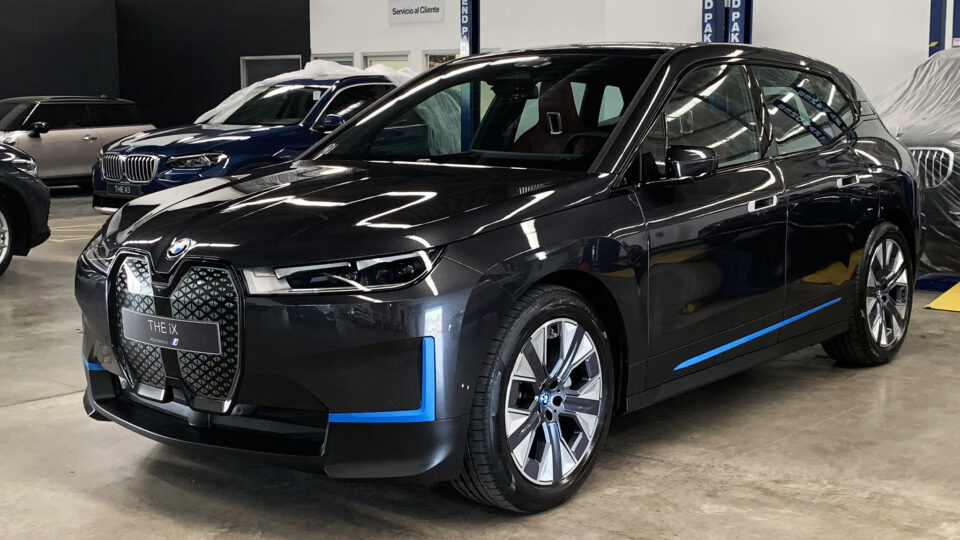
The law provides a large mix of tax breaks intended to bring down the costs of solar, wind, batteries, electric cars, heat pumps, and other clean technology.  For example, consumers will get a $7,500 credit for purchasing many new electric car models and about $4,000 for buying a used vehicle.

On the stick side of the ledger, oil and gas companies that emit methane above certain threshold levels will incur fees that escalate over time.  The law also increases the cost to the oil industry for extracting fossil fuels from public lands.

The act provides $60 billion for overall environmental justice priorities, including $15 billion targeted specifically for low-income and disadvantaged communities. There are many other provisions in the law addressing multiple climate-related issues.

According to three separate analyses by economic modelers, the investments from the Inflation Reduction Act are likely to cut pollution by about 40% below 2005 levels by the year 2030.

**********

Web Links

The US finally has a law to tackle climate change

Photo, posted December 15, 2021, courtesy of Mario Duran-Ortiz via Flickr.

Earth Wise is a production of WAMC Northeast Public Radio.

What Does Conservation Really Mean? | Earth Wise

June 2, 2021 By EarthWise Leave a Comment

Determining the most important species to preserve and protect

There is a great deal of interest in protecting nature and, in many cases, restoring aspects of nature that have been lost.  But what do these things really mean?

What is most important?  Protecting iconic species?  Strengthening nature’s resilience?  Several recent scientific papers address these questions and come up with rather different answers.

It isn’t even clear what constitutes a pristine ecosystem.  According to some experts, ecosystems that have lost most of their large mammal species, for example, cannot be considered intact.  By that standard, only a tiny fraction of the world’s ecosystems remains intact.

Other experts contend that preserving individual species is not what really matters.  Studies have shown that many ecosystems have undergone and continue to undergo massive species shifts over time with frequent extinctions along the way.  Nevertheless, the ecosystems continue to flourish with new species replacing others to perform the various functions required.

Some perspectives consider intact ecosystems to be those devoid of human influence.  But that notion is not universally held.   There is the idea that most of the world’s ecosystems were essentially untouched until perhaps 500 years ago when European exploration expanded greatly.  But the reality is that even 12,000 years ago, nearly three-quarters of terrestrial nature was inhabited, used, and shaped by people.  However, those human interactions were similar to how many indigenous and local peoples across the globe still live, not like the interactions of modern civilization that result in massive changes to ecosystems.

**********

Web Links

Species or Ecosystems: How Best to Restore the Natural World?

Photo, posted November 21, 2003, courtesy of Megan Coughlin via Flickr.

Earth Wise is a production of WAMC Northeast Public Radio.

A Second Life For Electric Car Batteries | Earth Wise

June 17, 2020 By EarthWise Leave a Comment

electric car batteries

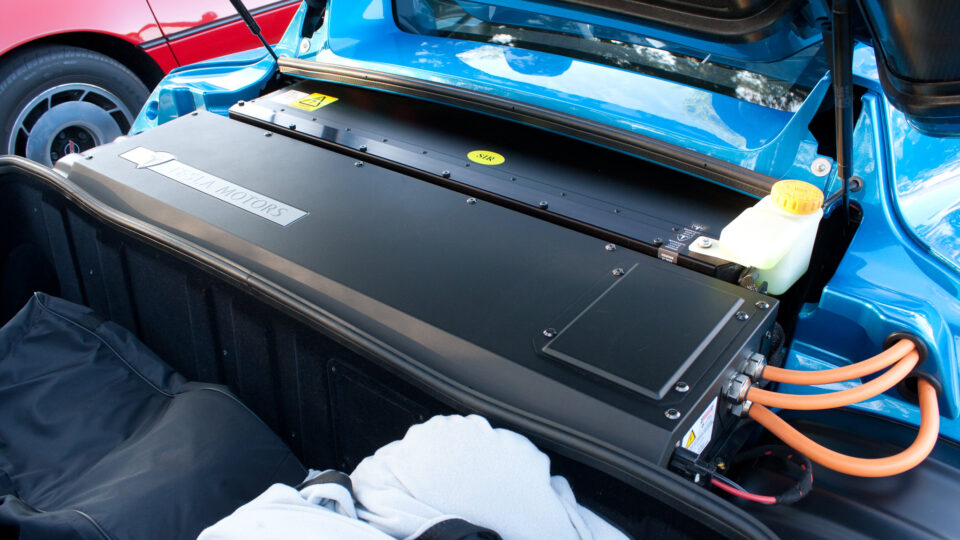
The number of electric cars around the world is growing steadily.  Battery technology continues to improve and the battery packs in the cars can have a long life.  Generally, the batteries are considered to require replacement only when their range has dropped below 80% of its original value.  Many are warranted to last for 8 to 10 years or more than 100,000 miles.  Some seem to do much better than that.

But however long it takes, there will eventually be a wave of used batteries whose performance is no longer deemed sufficient for vehicle use.  A new study, published in the journal Applied Energy, looked at the application of used vehicle batteries as backup storage for grid-scale solar photovoltaic installations where they could perform for more than a decade in this less demanding role.

The study looked at the economics of several scenarios including running a solar farm with no battery back up, running the same farm with brand-new batteries, and running the farm with a battery array made of repurposed vehicle batteries.

They found that the used EV battery array, if managed properly, could be a good, profitable investment provided that the batteries cost less than 60% of their original price.  They looked at the technical issues of screening batteries and combining batteries from different cars to work together.  They also looked at the economics of removing batteries from cars, collecting them, checking them over, and repackaging them.

Overall, they found that reusing vehicle batteries could ultimately meet half the forecasted demand for renewable energy backup storage over the next 10 years and would be both a technical and an economic success story.

**********

Web Links

Solar energy farms could offer second life for electric vehicle batteries

Photo, posted June 10, 2011, courtesy of Nick Ares via Flickr.

Earth Wise is a production of WAMC Northeast Public Radio.

Primary Sidebar

Recent Episodes

  • An uninsurable future
  • Clean energy and jobs
  • Insect declines in remote regions
  • Fossil fuel producing nations ignoring climate goals
  • Trouble for clownfishes

WAMC Northeast Public Radio

WAMC/Northeast Public Radio is a regional public radio network serving parts of seven northeastern states (more...)

Copyright © 2026 ·