• Skip to primary navigation
  • Skip to main content
  • Skip to primary sidebar

Earth Wise

A look at our changing environment.

  • Home
  • About Earth Wise
  • Where to Listen
  • All Articles
  • Show Search
Hide Search
You are here: Home / Archives for us

us

Abandoned farmland and the environment

September 4, 2025 By EarthWise Leave a Comment

Abandoned farmland has been increasing dramatically in recent decades.  Estimates are that a billion acres – an area half the size of Australia – have been relinquished from cultivation globally.  While more and more of the tropics have been cultivated in recent times, the global amount of land used for agriculture has been in decline since 2001.  In the past 30 years, arable land in the United States has declined by almost a sixth.  The situation in Europe is similar.  Huge amounts of the former Soviet Union now lie abandoned. 

Farmland is abandoned for various reasons.  It may suffer from damaged soil so that crop yields are too low to be worth the effort.  Farm owners may become too old or be physically unable to continue farming.  Many younger people head for jobs in the cities and more attractive opportunities.  Wars, natural and man-made disasters, and political turmoil have all contributed.

Another form of largely ignored lands are so-called degraded forests.  These are forests that were logged in the past but are no longer productive and aren’t protected either.  These places also represent unused land with great potential value.

Ecologists point to the potential of these lands as neglected resources for rewilding efforts, improving biodiversity, and for increasing natural ways to capture carbon.  Left to its own devices, nature will usually reclaim abandoned places.  This generally provides benefits for biodiversity and climate.  But mapping, studying, managing, and protecting the increasingly vast tracts of abandoned land could increase their potential to contribute to climate change mitigation and the restoration of species and their habitats.

**********

Web Links

Abandoned Lands: A Hidden Resource for Restoring Biodiversity

Photo, posted January 26, 2023, courtesy of Larry Syverson via Flickr.

Earth Wise is a production of WAMC Northeast Public Radio

Disappearing wetlands

August 21, 2025 By EarthWise Leave a Comment

More than 170 countries gathered recently to discuss how to save wetlands, which are critical ecosystems.  However, the U.S. was a no-show for most of the summit and Russia said it will withdraw from the wetlands treaty.

Wetlands are a crucial element of all life on Earth, supplying fresh water, oxygen, habitat, and food.  The Ramsar Convention, an international treaty focused on the conservation and wise use of wetlands, is the oldest modern global environmental agreement, adopted in 1971. 

Despite this agreement, since 1970 more than 35% of wetlands have been lost or degraded.  A recent report compiled by more than 60 experts from around the world issued a dire warning that the decline of wetlands spells trouble for global food security, climate stability, and even the capacity for life on Earth to persist.

Sadly, geopolitics have overtaken even the instinct for survival.  Because of a prior resolution to monitor Ukranian wetlands harmed during Russia’s ongoing war there, Russia now intends to withdraw from the treaty.  Meanwhile, the U.S. delegate to the wetlands summit only showed up near the end of the meeting to demand that conference documents make no mention of climate change, diversity equity and inclusion, gender, UN sustainable development goals, or zero growth.

Disengagement by the United States from the world’s increasing and shared environmental problems is a global crisis that only worsens existing global crises.

**********

Web Links

Earth’s Wetlands Are Disappearing and Global Efforts to Save Them Are Unraveling

Photo, posted October 8, 2013, courtesy of Marek Kusmin via Flickr.

Earth Wise is a production of WAMC Northeast Public Radio

AI and energy

August 20, 2025 By EarthWise Leave a Comment

AI is consuming vast amounts of energy

MIT recently hosted a symposium on the subject of artificial intelligence being both a problem and a solution for the clean energy transition.

AI-powered computing centers are expanding rapidly, creating an unprecedented surge in electricity demand.  Electricity demand in the US had been relatively flat for decades but now these computing centers consume about 4% of the nation’s electricity.  Some projections say that this demand could rise to 12-15% in the next five years. 

The power required for sustaining some of the AI large-language models is doubling every three months.  The amount of electricity used by a single ChatGPT conversation is as much as it takes to charge a phone and consumes the equivalent of a bottle of water for cooling. 

The MIT symposium focused on the challenges of meeting these growing energy needs but also on the potential for AI to dramatically improve power systems and reduce carbon emissions. 

Research shows regional variations in the cost of powering computing centers with clean electricity.  The central United States offers lower costs due to complementary solar and wind resources but would require massive battery deployments to provide uninterrupted power.

Because of data center demand, there is renewed interest in nuclear power, often in the form of small modular reactors, as well as efforts in long-duration storage technologies, geothermal power, or hybrid approaches.

Artificial intelligence offers both great promise and great peril.  It will take real intelligence to steer it in the right direction.

**********

Web Links

Confronting the AI/energy conundrum

Photo, posted August 31, 2024, courtesy of Jefferson Lab via Flickr.

Earth Wise is a production of WAMC Northeast Public Radio

Geothermal energy may be safe

August 4, 2025 By EarthWise Leave a Comment

The Trump Administration is outwardly hostile to renewable energy, especially solar and wind power.  Federal support for these energy sources that are by far the most rapidly growing energy sources across the globe is being gutted while fossil fuels are being propped up.

There is also renewed enthusiasm for nuclear power and, somewhat surprisingly, geothermal heat.   Geothermal is a renewable and clean energy source that has long been mostly overlooked and underfunded.  The main reasons are its expense and the fact that its large-scale use is unproven. 

Historically, geothermal energy has relied upon naturally occurring features such as hot springs and shallow underground heat sources.  However, technological breakthroughs that began in 2013 have led to enhanced geothermal systems, or EGS.  EGS makes use of the fact that if you drill deep enough into the earth pretty much anywhere, you will encounter substantial amounts of heat.  EGS plants pump water three miles down or more where it encounters rock that reaches over 500 degrees.  The piping hot water is then brought to the surface where it spins turbines to generate electricity.

Several companies are developing EGS in the U.S.  financed by tech companies seeking power for their AI activities, the Defense Department, and even by fossil fuel companies who use comparable drilling technology for fracking.

The so-called Big Beautiful Bill passed by Congress in July that eliminates tax credits for wind and solar energy preserves tax credits for geothermal projects.

**********

Web Links

Why U.S. Geothermal May Advance, Despite Political Headwinds

Photo, posted September 30, 2019, courtesy of Stephen D Strowes via Flickr.

Earth Wise is a production of WAMC Northeast Public Radio

More efficient cooling for data centers

July 22, 2025 By EarthWise Leave a Comment

Engineers are working on a more efficient method to cool data centers

Increasing reliance on digital technologies in general and artificial intelligence in particular are dramatically increasing the energy consumption of data centers.  Data centers consume far more energy per square foot than other commercial buildings.  By the year 2030, data center energy consumption in the US is projected to reach 9% of the country’s electricity generation. 

Computing hardware consumes large amounts of energy and generates large amounts of heat in the process.  Currently, cooling the equipment so it doesn’t burn out accounts for as much as 40% of a data center’s total energy use. 

Engineers at the University of California San Diego have developed a new cooling technology that could significantly improve the energy efficiency of data centers.  The technology makes use of a specially engineered fiber membrane that passively removes heat through evaporation.

The membrane has a network of tiny, interconnected pores that draw cooling liquid across the membrane surface using capillary action.  As the liquid evaporates, it removes heat from the electronics underneath.  No extra energy is required.

Tests of the membrane demonstrated record-breaking performance in removing heat from electronics and being able to withstand very high levels of heat flux.

The researchers say that the technology is still operating well below its theoretical limit, and with additional work, can lead to optimized performance.  The membranes will be integrated into cold plates, which are components that attach to power-hungry computing components to dissipate heat.  The team is also launching a startup company to commercialize the new cooling technology.

**********

Web Links

New Cooling Tech Could Curb Data Centers’ Rising Energy Demands

Photo, posted January 23, 2023, courtesy of Jefferson Lab via Flickr.

Earth Wise is a production of WAMC Northeast Public Radio

Hidden hydrogen

July 15, 2025 By EarthWise Leave a Comment

The idea of using hydrogen as a fuel or an energy source has been around for a long time.  Hydrogen is the most common element in the universe, but most of it is locked up in various chemical compounds, such as water.  Hydrogen is a clean fuel; burning it or using it to generate electricity in a fuel cell produces no greenhouse gas emissions.  But more than 99% of the hydrogen that people current produce is obtained by methods that result in greenhouse gas emissions.

A new study by scientists at the University of Oxford, the University of Durham in the UK, and the University of Toronto looks at geological environments in which naturally occurring hydrogen could be hiding.  According to the study, over the last billion years, the Earth’s continental crust is likely to have produced enough hydrogen to satisfy the energy needs of modern society for 170,000 years.

Much of that hydrogen is likely to have been lost or is inaccessible; most of it is not economically feasible to extract.  But even the relatively small amount of hydrogen left could provide thousands of years of energy for us.  We just have to be able to find it.

The researchers have developed what they call an “exploration recipe” which identifies where natural hydrogen might be located as well as where it could be commercially feasible to extract.  These places with hydrogen have so-called reservoir rocks and geologic formations that prevent the gas from leaking into the atmosphere.

A few such places have already been identified such as one in Albania.  There are various candidates to explore, even including an area in Kansas.  The study’s authors have founded a company whose mission is to find these natural sources of hydrogen.

**********

Web Links

Scientists Say Hidden Hydrogen Could Power the World for 170,000 Years

Photo, posted October 4, 2019, courtesy of Tony Sprezzatura via Flickr.

Earth Wise is a production of WAMC Northeast Public Radio

Climate change and hunger

July 14, 2025 By EarthWise Leave a Comment

Climate change is harder and more expensive to produce food

Worldwide, people are producing more food than ever, but most of that production is concentrated into only a handful of places.  For example, fully one third of the world’s wheat and barley exports come from Ukraine and Russia.  Across the globe, several major crop-growing regions, including some in the United States, are heading towards sharp drops in harvests as a result of climate change.

These forthcoming changes are not only bad news for farmers, but they are also bad news for everyone who eats.  According to a new study published in the journal Nature, it is going to become harder and more expensive to feed a more crowded and hungrier world.

Specifically, under a moderate greenhouse gas emissions scenario, six key staple crops will see an 11.2% decline by the end of the century, compared to a world without warming.  The largest drops won’t be in the poorer, more marginal farmlands, but rather in places that are major food producers.  These are places like the US Midwest that has long benefited by having both good soil and ideal weather for raising crops like corn and soy.

When the weather is not ideal, it can drastically reduce agricultural productivity.  Extreme weather in many places has already damaged crops.  Flooding has destroyed rice in Tajikistan, cucumbers in Spain, and bananas in Australia.  Severe storms in the US this spring caused millions of dollars’ worth of damage to crops.

As the climate changes, rising average temperatures and changing rainfall patterns are likely to diminish yields and extreme weather events like droughts and floods could wipe out harvests more often.  As climate change intensifies, agriculture is the most weather-affected sector of the economy.

**********

Web Links

How climate change will worsen hunger

Photo, posted may 20, 2011, courtesy of Lance Cheung / USDA via Flickr.

Earth Wise is a production of WAMC Northeast Public Radio

It’s only getting warmer

July 2, 2025 By EarthWise Leave a Comment

Global warming continues and the planet cannot withdraw from its consequences

Climate science is not popular with the current administration.  Phrases like “climate crisis”, “clean energy”, and “climate science” itself are prohibited from websites, reports, regulations, and other communications by government employees and federal funding recipients.  Once again, the United States is turning away from climate mitigation efforts and will have a drastically reduced ability to forecast disasters and head off their worst consequences.

Meanwhile, global warming continues, and the planet can’t withdraw from its consequences.

The hottest year in nearly two centuries was recorded in 2024.  According to a new report by the World Meteorological Organization, there is an 80% chance that at least one year over the next four will surpass 2024 as the warmest year on record. 

The consequences of warming will probably vary widely across the world.  But likely occurrences include rapid thawing of Arctic Sea ice, drier seasons in the Amazon, excess rain in places like Alaska, northern Europe, and the Sahel in north-central Africa.  Hotter temperatures lead to more evaporation of water from plants and soil, leading to droughts and failed crop seasons.  The warmer atmosphere holds more moisture, which increases the chance of flooding from downpours and stronger hurricanes.

Ignoring what is going on with the climate or thinking that it will only impact other people in other places is nothing short of foolhardy.  The planet does not care about politics.  What is happening to the climate will be in just about everyone’s backyard soon enough.

**********

Web Links

‘It’s pretty bleak’: A warming planet is poised to get even hotter, forecasters warn

Photo, posted December 1, 2015, courtesy of Adam Matsumoto via Flickr.

Earth Wise is a production of WAMC Northeast Public Radio

Renewables dominate new global power

April 24, 2025 By EarthWise Leave a Comment

Renewable power continues to dominate domestically and globally

The current administration in the United States is adversarial towards renewable energy and highly supportive of the use of fossil fuels.  Unquestionably, this will create rough waters for the clean energy industry and, unfortunately, will throw a monkey wrench into the world’s efforts to mitigate climate change.  But it cannot stop what has become a powerful global trend.

In the words of U.N. Secretary-General António Guterres: “Renewable energy is powering down the fossil fuel age.”

According to a new report from the International Renewable Energy Agency, renewables accounted for 92% of new power capacity worldwide last year.  Solar is by far the fastest-growing form of renewable power, accounting for 77% of new capacity.

In the U.S., renewables accounted for about 90% of new installed capacity in 2024.  The country added nearly 40 GW of solar power capacity as well as 5 GW of wind power.  Renewables now make up about 30% of the country’s large-scale power generating capacity.  Adding in all carbon-free electricity sources (which include nuclear power), nearly 44% of the country’s electricity was carbon-free.

Headwinds against the growth of renewable energy are getting stronger in the US, but the global trend driven by both economics and environmental concerns is powerful and will continue.  For one thing, in much of the world, solar power is simply the cheapest way to produce electricity and that is pretty difficult to ignore. Global trade wars and economic turmoil will impact renewable energy much as they will other industries, but the long-term trend is clear.

**********

Web Links

Renewables Made Up More Than 90 Percent of New Power Installed Globally Last Year

Photo, posted November 23, 2022, courtesy of John Morton via Flickr.

Earth Wise is a production of WAMC Northeast Public Radio

A new way to recycle plastic

April 18, 2025 By EarthWise Leave a Comment

Researchers at Northwestern University have developed a new method for recycling plastic that is safer, cleaner, cheaper, and more sustainable than those currently in use.  The U.S. is the world’s largest plastic polluter per capita, and we only recycle 5% of our plastics.  There is a pressing need for better technologies for processing different types of plastic waste.

The Northwestern method is designed to break down polyethylene terephthalate or PET, which is the most common type of polyester plastic.  PET plastic is used in food packaging and beverage bottles and represents 12% of total plastics used globally.  It does not break down easily and is therefore a major contributor to plastic pollution.  It mostly either ends up in landfills or, over time, degrades into tiny microplastics or nanoplastics that end up almost everywhere. 

The non-toxic, environmentally friendly, solvent-free Northwestern process first uses an inexpensive molybdenum catalyst to break apart the bonds in PET.  Then the broken plastic is exposed to ambient air.  Just from the trace amounts of moisture in air, the broken-down PET is converted into monomers, which are the building blocks of plastic.  The monomers could then be recycled back into PET products or used to make other valuable materials.

The process is fast and effective and takes just a few hours.  The catalyst is durable and recyclable, meaning it can be used over and over again.  It only works on polyesters, which means it can be used for recycling mixed plastics without sorting them since it will select only the PET from its inputs.

**********

Web Links

Plastic recycling gets a breath of fresh air

Photo, posted August 10, 2013, courtesy of Lisa Risager via Flickr.

Earth Wise is a production of WAMC Northeast Public Radio

The American butterfly census

April 15, 2025 By EarthWise Leave a Comment

New butterfly census in the United States reveals butterfly populations are crashing

There has been a great deal of interest in the plight of monarch butterflies in this country.  Monarchs’ population and migratory habits are closely watched, and many people have been planting milkweed in their gardens to help their caterpillars.  But other butterfly species have received much less attention despite the fact that many butterfly populations are in decline.

A groundbreaking new study has provided comprehensive answers about the status of butterflies in America.  Over the past 20 years, the contiguous US has lost 22 percent of its butterflies.

The study is based on over 12 million individual butteries counted in 77,000 surveys across 35 monitoring programs from 2000 to 2020.  Three hundred forty-two butterfly species in total were analyzed.  Thirty three percent showed statistically significant declines while less than 3% displayed statistically significant increases.  Overall, 13 times as many species decreased as increased.

Why are butterfly populations crashing?  Experts point to a combination of factors:  habitat loss as land in converted for agriculture or development, climate change, and pesticide use.  It is not clear which factor is most important and may well vary by location.  Pesticide use – especially neonicotinoids – has been shown to play a particularly lethal role in studies. 

Insects including butterflies play a huge role in supporting life on earth.  They pollinate plants, feed birds and many other creatures in the food web.  Nature collapses without them.  And butterflies are clearly in trouble.

**********

Web Links

See How Butterflies Are Surviving, or Not, Near You

Photo, posted August 9, 2016, courtesy of Rachel Larue/Arlington National Cemetery via Flickr.

Earth Wise is a production of WAMC Northeast Public Radio

Hurricanes and wildfires

April 3, 2025 By EarthWise Leave a Comment

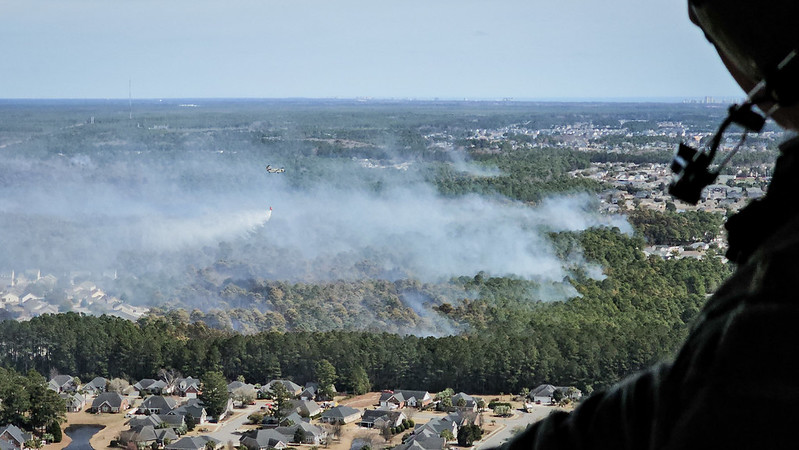
Early March saw more than 200 wildfires break out in the southeastern U.S. – a busy start to the region’s annual fire season.  One fire in the Carolina Forest near Myrtle Beach scorched over 2,000 acres over a two-week period and firefighters were busy containing it and many other blazes.

Strong winds and an unusually long dry period have made fires more likely to ignite and be spread.  Lightning strikes, power line sparking, backyard fire pits and leaf burning all can lead to wildfires under these conditions.

A weather disaster last year may be helping to make this fire season worse than usual.  Hurricane Helene ravaged the Southeast last September, dumping more than a foot of rain in some locations and knocking over hundreds of thousands of acres of trees across the region.

Lots of dead trees lying on the ground allow sunlight to reach the ground and dry out all the biomass, including the trees.  All of this desiccated plant material acts as kindling, providing fuel for wildfires.  Fallen trees can be a fire nuisance for years after a hurricane, especially in the Southeast, where dried out pine needles are highly combustible.  All it takes is an ignition.

In addition, all the fallen trees represent an access issue for firefighters as the logs block roads needed to reach the fires.

Research has shown that climate change is fueling more intense fires in the West.  Whether the changing climate is having a major effect in the Southeast isn’t clear.  But droughts are expected to become more intense and more frequent in the Southeast because of climate change and that isn’t good news for the likelihood of wildfires.

**********

Web Links

How Hurricanes Can Fuel Wildfires in the Southeast

Photo, posted March 5, 2025, courtesy of the U.S. Army National Guard / Roberto Di Giovine via Flickr.

Earth Wise is a production of WAMC Northeast Public Radio

Clean energy in New York

March 14, 2025 By EarthWise Leave a Comment

The New York State Energy Research and Development Authority – NYSERDA – recently issued a report on clean energy progress in the state during 2024.  The report highlighted continued and increased growth in heat pumps, electric vehicles, and solar energy.

Heat pumps, which provide both heating and cooling, have outsold gas furnaces countrywide for three straight years.  Air source heat pumps outsold gas furnaces by 37%.  This does not include ground source heat pumps, also known as geothermal heat pumps. New York offers Clean Heat rebates to offset the cost of installing heat pumps.

2024 was a good year for electric vehicles in New York with 90,221 new registrations.  More than 60 car models are eligible for New York’s Drive Clean state rebates.

New York achieved its Climate Act goal of having 6,000 MW of distributed solar power in October.  The state is expected to have more than 10,000 MW of distributed solar by 2030.

Nationwide, solar energy represented 64% of all the new electricity generation capacity installed in 2024, up from 55.5% in 2023.  Utility-scale solar generation in the lower 48 states was 36% higher in the summer of 2024 than in summer 2023.

NYSERDA’s report points out that converting to clean energy technologies can bring multiple benefits that include energy efficiency, cost savings, and reduced greenhouse gas emissions and air pollution.

**********

Web Links

Heat Pumps, Electric Vehicles, and Solar Scale Up Through 2024

Photo, posted April 6, 2017, courtesy of Stephen Yang / The Solutions Project via Flickr.

Earth Wise is a production of WAMC Northeast Public Radio

Tearing down small dams to restore rivers

March 11, 2025 By EarthWise Leave a Comment

There are more than 31,000 dams in the northeastern United States.  More than 4,000 of them are in the Hudson River watershed.  Most of these dams are quite small and were built in the 19th century to form ponds and to power grist, textile, paper, saw, and other kinds of mills as the region developed its industrial infrastructure.  The nonprofit organization American Rivers estimates that 85% of U.S. dams are unnecessary at best and pose risks to public safety at worst. 

Dam removals have been occurring for over 100 years, but the vast majority have taken place since the mid-2010s and have increased dramatically since the 2021 Bipartisan Infrastructure Law, which provided funding for such projects.

So far, 806 Northeastern dams have come down and hundreds more are in the pipeline.

Dam removals improve aquatic fish passage, water quality, watershed resilience, and habitat for all the organisms in river ecosystem food chains, ranging from insects to fish to otters to eagles.  Small dams have degraded habitat and altered downstream hydrology and sediment flows.  They have created warm, stagnant, low-oxygen pools that trigger algal blooms and favor invasive species.

But removing even small dams is not an easy matter.  Projects range in cost from $100,000 to $3 million and qualifying for funding – whether federal or state – requires projects to meet a variety of requirements including community support.  Not all dams can be removed, but many more should.

**********

Web Links

How Tearing Down Small Dams Is Helping Restore Northeast Rivers

Photo, posted September 20, 2010, courtesy of Doug Kerr via Flickr.

Earth Wise is a production of WAMC Northeast Public Radio

Wave energy in LA

March 6, 2025 By EarthWise Leave a Comment

Ocean waves form as wind blows over the surface of open water.  Globally, waves contain tremendous amounts of energy.  Theoretically, the energy generating potential of waves off the coasts of the U.S. would meet more than 60% of the country’s electricity needs.  There are a variety of methods and technologies for tapping into this energy source, but none have reached the point of commercial adoption to date.  There are many problems that remain to be solved.

Eco Wave Power, a wave energy company, announced that it has received the necessary permit from the U.S. Army Corps of Engineers to operate the first onshore wave energy installation in the United States.  The installation will be at the Port of Los Angeles at the facilities of AltaSea, a public-private ocean institute that conducts research on food and energy supply, climate change, and ocean exploration.

The system will utilize eight of Eco Wave Power’s energy floaters that will be installed on the piles of an existing concrete wharf structure on Municipal Pier One.  The system will also include an energy conversion unit enclosed in two shipping containers and connected to the floaters.  The installation is expected to be completed by the end of the first quarter of this year.

Floaters draw energy from waves by using their rising and falling motion to generate electricity. The bobbing motion of the floaters compresses and decompresses hydraulic pistons.  These transmit hydraulic fluid into land-based accumulators that build up pressure.  The pressure rotates a hydraulic motor, which then operates a generator, producing electricity.

The project is a collaboration on the development of wave energy in the Port of Los Angeles between Eco Wave Power and Shell Marine Renewable Program.

**********

Web Links

Eco Wave Power secures final USACE permit for its first U.S. wave energy project

Photo courtesy of Eco Wave Power.

Earth Wise is a production of WAMC Northeast Public Radio

Climate risks for apple-growing areas

January 31, 2025 By EarthWise 2 Comments

The changing climate is creating challenges for some of the most productive apple growing regions in America.  A study by Washington State University analyzed over 40 years of climate conditions that impact the growth cycle of apple trees.

Many growing areas face increased climate risk, but the top three apple-producing counties are among the most impacted.  Yakima County in Washington is the country’s largest apple producer with more than 48,000 acres of apple orchards.  Kent County in Michigan and Wayne County in New York (located east of Rochester) are the next two largest.

The study looked at six metrics that affect apple production.  Two of these metrics relate to extremes:  extreme heat days (with temperatures above 93 degrees) that can cause multiple problems and warm nights (with minimum temperatures above 59 degrees) that adversely affect coloration.

Other metrics included the number of cold days, the last day of spring frost, and the number of growing degree days, which are the number of days above a certain temperature that are conducive for apples to grow.

Changes to these metrics can impact apple production, change the time when apple flowers bloom, increase risk of sunburn on apples, and affect apple appearance and quality.  In many places, nearly all of these metrics are changing in an undesirable direction.

Apples are the most consumed fruit in the United States.  27,000 American producers supply an industry with a downstream value of $23 billion.  Apples are a big deal.

**********

Web Links

Prime apple-growing areas in US face increasing climate risks

Photo, posted August 8, 2020, courtesy of Sue Thompson via Flickr.

Earth Wise is a production of WAMC Northeast Public Radio

Artificial intelligence and lost oil wells

January 2, 2025 By EarthWise Leave a Comment

Using artificial intelligence to find lost and abandoned oil wells

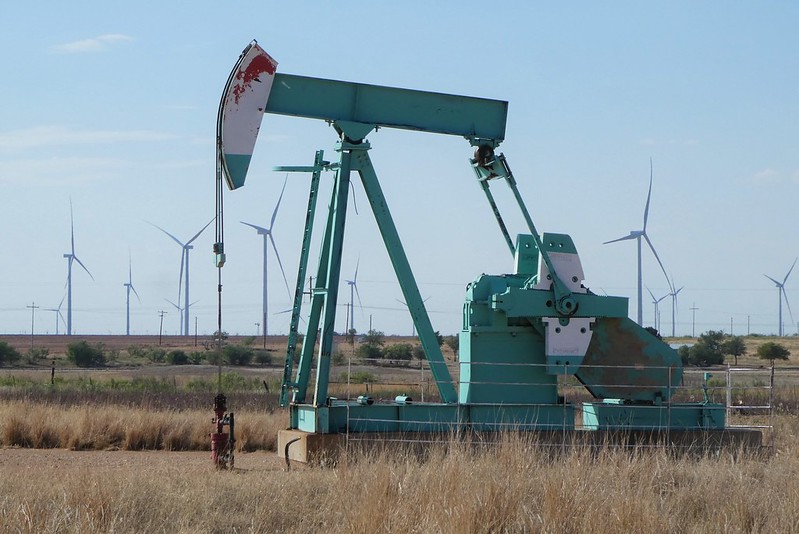
There have been commercial oil and gas wells across the United States for 170 years.  Researchers estimate that there are between two and three million wells that have been abandoned.  There are hundreds of thousands of them, across 27 states, that are “orphaned,” meaning that they are uncapped, unproductive, and nobody is responsible to manage their leakage or pollution.

Many are undocumented orphaned wells – UOWs – that are not listed in formal records and are basically out of sight and out of mind.  Besides having nobody responsible for them, nobody even knows where they are.  But they are potential sources of oil and chemical leaks into nearby water sources and can send toxic substances like benzene and hydrogen sulfide into the air. 

Researchers are using modern tools like drones, laser imaging, and advanced sensors to try to locate UOWs.  But these wells are scattered over an area of more than three million square miles.

To better predict where to look for undocumented wells, researchers are combining historical topographic maps with artificial intelligence. The US Geological Survey has scanned 190,000 topographic maps made between 1884 and 2006.  AI is being used to find the symbols for oil and gas wells on the maps.  People can recognize these symbols easily, but there are just too many maps to look at.  The problem is equivalent to finding a needle in a haystack; there is just an awful lot of hay to look through.

Abandoned wells are a big problem and it will take lots of modern technology to try to solve it.

**********

Web Links

AI Helps Researchers Dig Through Old Maps to Find Lost Oil and Gas Wells

Photo, posted August 16, 2022, courtesy of Larry Syverson via Flickr.

Earth Wise is a production of WAMC Northeast Public Radio

Lithium in Arkansas

November 28, 2024 By EarthWise Leave a Comment

Exploring lithium in Arkansas

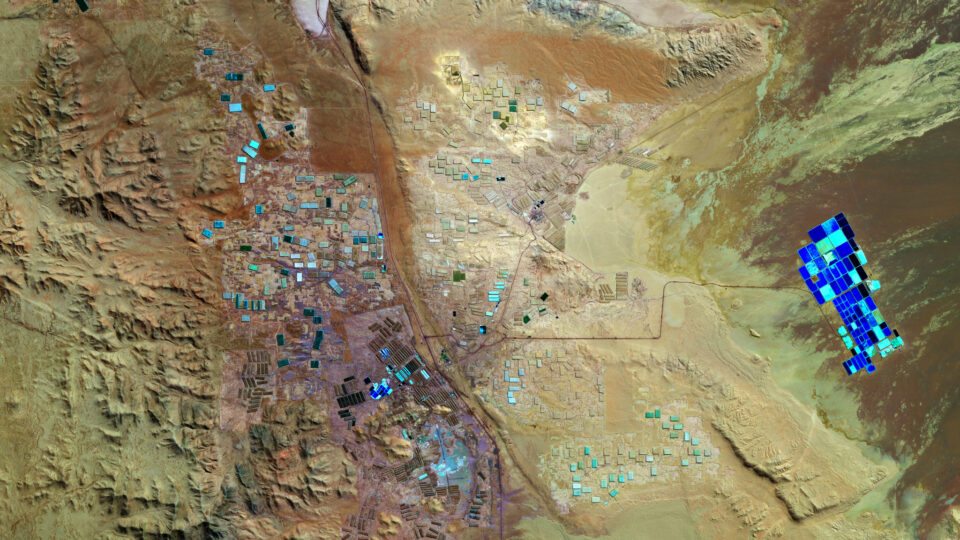
Lithium is the critical raw material in the batteries that power electric cars as well as cell phones, computers, and other gadgets.  The stuff has been nicknamed “white gold” for good reason.  Chile and Australia are the world’s largest producers of the metal, which is mostly extracted from brine in evaporation ponds.  The majority of it is then processed in China.  The energy industry has been increasingly working to produce the raw materials needed to produce lithium-ion batteries in the United States and process those materials domestically.  There are multiple projects at various stages across the country.

Researchers at the US Geological Survey and the Arkansas state government recently announced that they have discovered a vast trove of lithium in an underground brine reservoir in Arkansas.

With a combination of water testing and machine learning, the researchers determined that there could be 5 to as much as 19 million tons of lithium in the geological area called the Smackover Formation.  This is more than enough to meet all the world’s demand for it.

Several companies – including Exxon Mobil, which is covering its bets on the future of oil as an energy source – are developing projects in Arkansas to produce lithium.  If these companies can develop and scale up economical new ways to extract lithium from salty water, the region in Arkansas could become the lithium capital of the world.

Energy and mining companies have produced oil, gas, and other natural resources in the Smackover Formation, which extends from Texas to Florida.  The same brines have long been the source of other valuable substances. 

**********

Web Links

Arkansas May Have Vast Lithium Reserves, Researchers Say

Photo, posted May 22, 2020, courtesy of the European Space Agency via Flickr.

Earth Wise is a production of WAMC Northeast Public Radio

Progress towards electric school buses

November 8, 2024 By EarthWise Leave a Comment

Making progress on electrifying school buses

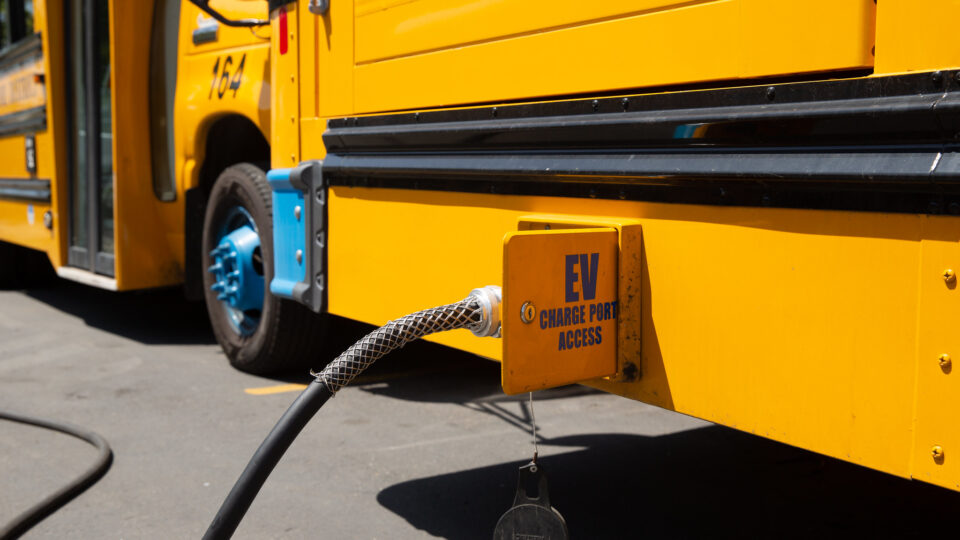
The U.S. has nearly half a million school buses providing daily transportation for about 20 million students.  Most of these buses are powered by diesel engines which not only dump greenhouse gases into the atmosphere but also fill kids’ lungs with harmful fumes.

Thanks to various federal and state incentive programs, this situation is starting to change.  School districts all over the country are beginning to swap out old diesel buses for emissions-free electric-powered school buses.

Electric school buses are finding their way into school districts of all sizes and demographics.  The first district in the country to go fully electric was in Martinsville, Texas, which last year converted its 4-bus fleet.  The first large urban district to go all-electric was the 74-bus fleet in Oakland, California this summer.

The EPA’s $5 billion Clean School Bus program and many state initiatives are providing incentives for the transition.  Five years ago, there were less than 1,000 electric school buses in the U.S.  Now there are about 5,000 and more than 7,000 additional buses are in the pipeline.

Apart from the climate implications, there is urgency to replacing diesel school buses from a health perspective.  Diesel exhaust is classified as a carcinogen by the World Health Organization, and it contains fine particles and nitrogen oxides, both of which are well-documented asthma triggers.

Electric buses are more expensive than diesel buses, but they are much cheaper to operate. School districts need to put in place charging infrastructure.  The transition is not so easy to accomplish, but it is an important step, and more and more school districts are taking it.

**********

Web Links

Slowly but Surely, U.S. School Buses Are Starting to Electrify

Photo, posted May 5, 2021, courtesy of California Energy Commission via Flickr.

Earth Wise is a production of WAMC Northeast Public Radio

Lower carbon emissions in the U.S.

February 7, 2024 By EarthWise Leave a Comment

Carbon emissions in the United States are slowly falling

American greenhouse gas emissions in 2023 fell by 1.9%.  In total, U.S. emissions have now fallen by over 17% since 2005.  The largest factor in the decline has been the reduction in the burning of coal to produce electricity.  Coal-fired generation has fallen to its lowest level in half a century.

There was a huge drop in emissions at the start of the covid pandemic when large segments of the economy shut down.  But then there was a sharp rebound in emissions in the following two years when economic activity resumed.  But over the long term, American emissions have been trending downward as both cars and power plants have become cleaner and greener.

The decline in emissions is a good thing but hasn’t been nearly enough to meet the nation’s goals for trying to slow down global warming.  The U.S. has a goal of reducing emissions by 2030 to half of the 2005 level.  To achieve that goal, annual emissions would have to fall more than three times faster than they did last year for the rest of the decade.

The emissions data used for the current assessment included those from transportation, electricity generation, industry, and buildings.  It did not include pollution from agriculture, which accounts for about 10% of the nation’s greenhouse gases.

The 2022 Inflation Reduction Act provided record amounts of money for low-emissions technologies like solar panels, wind turbines, nuclear reactors, electric vehicles, and hydrogen fuels.  The full impact of these federal investments has yet to be seen, since many companies are still ramping up their efforts in clean energy.  How quickly emissions will fall as these efforts come to fruition remains to be seen.

**********

Web Links

U.S. Carbon Emissions Fell in 2023 as Coal Use Tumbled to New Lows

Photo, posted May 17, 2020, courtesy of Frans Berkelaar via Flickr.

Earth Wise is a production of WAMC Northeast Public Radio

  • Page 1
  • Page 2
  • Go to Next Page »

Primary Sidebar

Recent Episodes

  • An uninsurable future
  • Clean energy and jobs
  • Insect declines in remote regions
  • Fossil fuel producing nations ignoring climate goals
  • Trouble for clownfishes

WAMC Northeast Public Radio
WAMC/Northeast Public Radio is a regional public radio network serving parts of seven northeastern states (more...)
Copyright © 2026 ·