• Skip to primary navigation
  • Skip to main content
  • Skip to primary sidebar

Earth Wise

A look at our changing environment.

  • Home
  • About Earth Wise
  • Where to Listen
  • All Articles
  • Show Search
Hide Search
You are here: Home / Archives for urgent

urgent

A hidden global water crisis

September 10, 2025 By EarthWise Leave a Comment

The globe is losing groundwater at an alarming rate

A major crisis is unfolding beneath our feet: Earth’s continents are losing freshwater at unprecedented rates.  Recent satellite data has uncovered a hidden global water crisis, suggesting the problem is more urgent than previously thought. 

The study, which was led by researchers from Arizona State University, found that since 2002, climate change, unsustainable groundwater use, and extreme droughts have driven dramatic declines in the planet’s freshwater reserves.

The research team found that drying areas on land are expanding at a rate roughly twice the size of California every year.  Additionally, the rate at which dry areas are getting drier now outpaces the rate at which wet areas are getting wetter, reversing long-standing hydrological patterns.   

Approximately 75% of the world’s population lives in countries that have been losing freshwater for more than two decades.  As the availability of freshwater dramatically shrinks, the global population continues to expand. 

The study, which was recently published in the journal Science Advances, identifies four continental-scale “mega-drying” regions, all located in the northern hemisphere, and warns of severe consequences for water security, agriculture, sea level rise, and global stability. 

The researchers identified the type of water loss on land, and for the first time, found that 68% came from groundwater.  Groundwater loss alone now contributes more to sea level rise than melting ice sheets. 

The findings stress the urgent need for sustainable water management, international cooperation, and global policies to slow groundwater loss.

**********

Web Links

Satellites just revealed a hidden global water crisis—and it’s worse than melting ice

Unprecedented continental drying, shrinking freshwater availability, and increasing land contributions to sea level rise

Photo, posted January 16, 2012, courtesy of Kecko via Flickr.

Earth Wise is a production of WAMC Northeast Public Radio

Bananas and climate change

April 17, 2025 By EarthWise Leave a Comment

Bananas are one of the most widely produced fruits globally, with more than 100 million tons grown every year.  They are a key export crop worth approximately $11 billion annually. Bananas are also a staple food in many tropical countries, playing a vital role in both the economies of these nations and in global food security.

The Cavendish variety of banana dominates commercial exports, accounting for nearly 47% of global production. However, the Cavendish banana is highly susceptible to diseases like Panama disease, prompting ongoing efforts to develop disease-resistant alternatives. The spread of these diseases is exacerbated by climate change, which alters growing conditions and weakens banana plants. Additionally, climate change poses further threats to the banana industry by impacting crop yields and distribution patterns.

In fact, a new study led by researchers from the University of Exeter in the U.K. has found that by 2080, rising temperatures will make growing bananas for export economically unsustainable in many regions of Latin America and the Caribbean.  Colombia and Costa Rica will be among the countries most negatively impacted as they are expected to become too hot for optimal banana cultivation. 

The study, which was recently published in the journal Nature Food, found that 60% of the regions currently producing bananas around the world will struggle to grow the fruit unless there are urgent interventions to tackle climate change.  The researchers propose several adaptation strategies, including expanding irrigation systems, developing heat- and drought-resistant banana varieties, and helping banana producers manage climate-related risks.

**********

Web Links

Climate change threatens future of banana export industry

Photo, posted June 26, 2024, courtesy of JJ Musgrove via Flickr.

Earth Wise is a production of WAMC Northeast Public Radio
Species and climate change

July 4, 2024 By EarthWise Leave a Comment

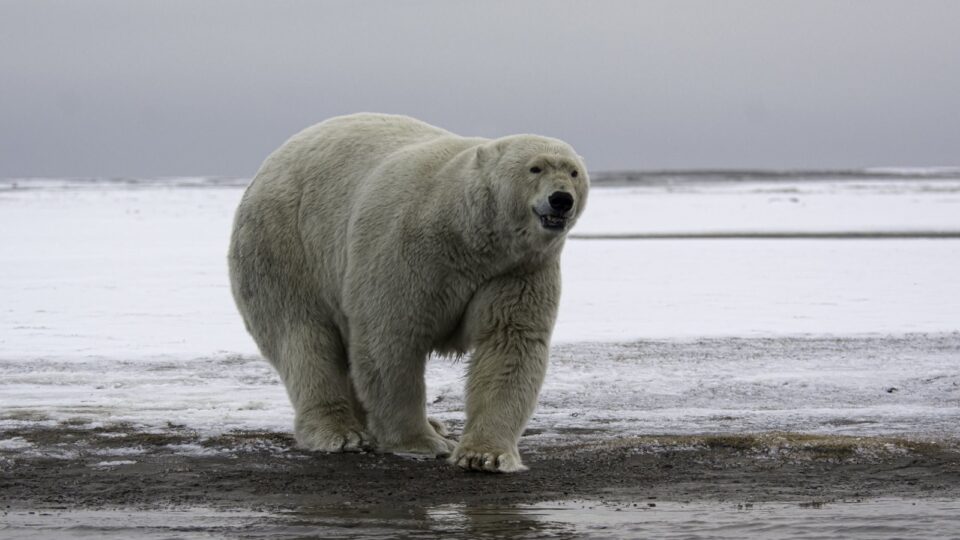
Some species may possess pre-adaptations that could help them better tolerate climate change

Temperature extremes on Earth currently range from a low of -129°F to a high of 134°F.  But these climatic limits have changed throughout history.  In fact, during the last interglacial period 130,000 years ago, temperatures were warmer, resembling what we are projected to experience at the end of this century.

Species that evolved during such periods may possess pre-adaptations that could help them tolerate upcoming changes to the climate.  This factor is often overlooked by traditional statistical models predicting species’ responses to climate change.

But a new model, developed by researchers from Ifremer in France and Lausanne University in Switzerland, has taken this oversight into account, and reassessed the proportion of terrestrial and marine species threatened with extinction by climate change. 

In the study, which was recently published in the journal Nature Ecology and Evolution, the research team applied its model to nearly 25,000 terrestrial and marine species from around the world.  The researchers discovered that 49% of these species live in climate niches near the current climatic limits, and 86% could potentially extend beyond these limits. 

The most surprising result concerns tropical regions. While forecasts from traditional models estimate that the diversity of terrestrial species in tropical areas could decrease by 54% between now and 2041-2060, the new model predicts a more moderate decline of 39%.

The findings confirm the importance of taking urgent measures to mitigate climate change and its impact on biodiversity.

**********

Web Links

Some species may better tolerate climate change than expected

Photo, posted October 23, 2015, courtesy of Anita Ritenour via Flickr.

Earth Wise is a production of WAMC Northeast Public Radio
Record high emissions

January 3, 2024 By EarthWise Leave a Comment

Record high emissions in 2023

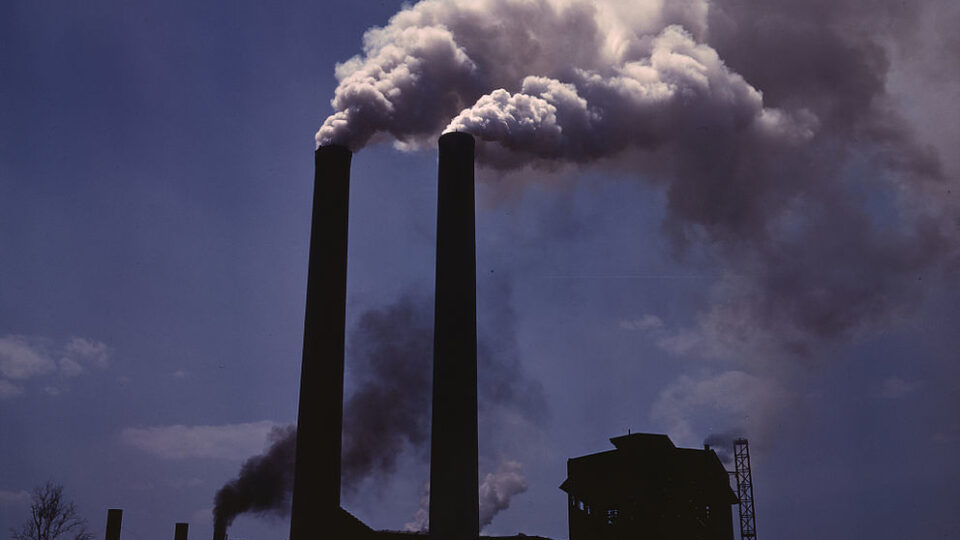
The world is adding solar and wind power to the grid.   We are driving more and more electric cars.  Countries are pledging to cut back fossil fuel use.  There are highly visible international conferences on the climate crisis.   But despite all of these things, global carbon emissions from fossil fuels have risen once again in 2023, reaching all-time record high levels of more than 40 billion tons, about 1.1% more than the previous year.

In some places, including Europe and the U.S., fossil fuel CO2 emissions are falling, but globally, they are still rising.  Emissions continued to increase in India and China.  Global action to cut fossil fuel use is not happening fast enough to prevent the increasingly dangerous effects of climate change.

Global CO2 emissions include both the contributions of fossil fuel use and the effects of land use change.  Adding the two together, in 2023 the total was about 45 billion tons, basically unchanged from last year. 

Adding insult to injury are the emissions from fires.  The extreme wildfire seasons in Canada, Australia, and other places have contributed CO2 emissions much larger than historical averages.

About half of all the carbon dioxide emitted on Earth is absorbed by carbon sinks on land and the oceans.  The other half remains in the atmosphere, where levels are now averaging 419 parts per million, 51% above pre-industrial levels.

Current efforts are simply not profound enough or widespread enough to put global emissions on a downward trajectory.  Some climate policies in some places are proving effective, but much more needs to be done.

**********

Web Links

Fossil CO2 emissions at record high in 2023

Photo, posted December 18, 2013, courtesy of Steve Nelson via Flickr.

Earth Wise is a production of WAMC Northeast Public Radio
Climate Change And Kenya’s Tana River Basin | Earth Wise

September 6, 2021 By EarthWise Leave a Comment

Climate change threatens biodiversity within the Tana River Basin

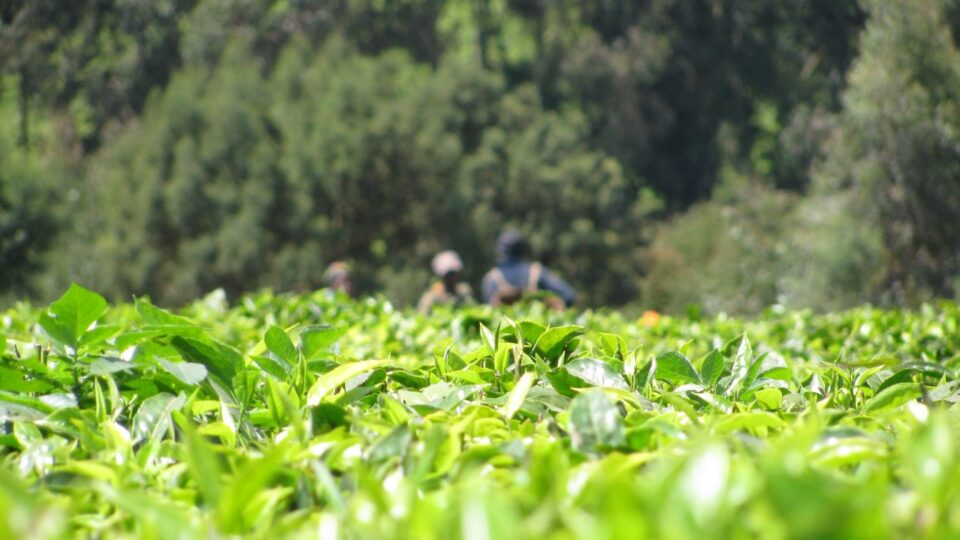
The Tana River is the longest river and most important waterway in Kenya.  It flows 620 miles from its headwaters in the Abderdare mountain range and Mount Kenya to the Indian Ocean.  The Tana River produces approximately half of the country’s electricity, and supplies Nairobi, the capital of Kenya, with 80% of its water.   

According to the United Nations Environment Programme, eight million people live along the Tana River, where coffee, tea, corn and other crops are grown for export, and fishing and cattle grazing help produce food for large portions of the country’s population. 

But the long-term ability of the river to provide these and other essential services is increasingly under threat due to many factors, including pollution, soil erosion, deforestation, and poor land use practices.   

Climate change is also complicating matters.  According to new research from the University of East Anglia, many species within the Tana River Basin will be unable to survive if global temperatures continue to rise at the current pace.  However, the study, which was recently published in the journal PLOS ONE, also found that many of these species could be saved if the world could meet the climate goals of the Paris Agreement. 

Globally, climate and land use changes are the two biggest threats to biodiversity.  According to researchers, 36% of the Tana River Basin has already been converted to agriculture. 

The research team says stronger commitments on climate change are needed from global leaders.  The climate and biodiversity crises can only be solved with urgent action to reduce global greenhouse gas emissions. 

**********

Web Links

The impact of climate change on Kenya’s Tana river basin

Economics of Ecosystem Services of the Tana River Basin

Photo, posted August 19, 2010, courtesy of Luigi Guarino via Flickr.

Earth Wise is a production of WAMC Northeast Public Radio.

One Million Extinctions

June 14, 2019 By EarthWise Leave a Comment

A group of 145 expert authors from 50 countries has produced a report based upon a review of 15,000 scientific and government sources that is the first comprehensive look at the state of the planet’s biodiversity in 15 years.  The conclusions are alarming.

Thanks to human pressures, one million species may be pushed to extinction in the next few years, something with serious consequences for human beings as well as the rest of life on earth.

Based upon scientific studies as well as indigenous and local knowledge, the evidence is overwhelming that human activities are the primary cause of nature’s decline.  The report ranked the major drivers of species decline as land conversion, including deforestation; overfishing; bush meat hunting and poaching; climate change; pollution; and invasive alien species.

The tremendous variety of living species on our plant which number at least 8.7 million and perhaps many more – biodiversity – constitutes a life-supporting safety net that provides our food, clean water, air, energy, and more.

In parts of the ocean, little life remains but green slime.  Some remote tropical forests are nearly silent because insects have vanished.  Many grasslands are becoming deserts.  Human activity has severely altered more than 75% of Earth’s land areas and has impacted 66% of the oceans.  The world’s oceans increasingly are characterized by plastics, dead zones, overfishing, and acidification.

The main message of the 1,500-page report is that transformative change is urgently needed.  In order to safeguard a healthy planet, society needs to shift from a sole focus on chasing economic growth.  This won’t be easy, but we must come to the understanding that nature is the foundation for development before it is too late.

**********

Web Links

One million species at risk of extinction, UN report warns

Photo, posted January 1, 2014, courtesy of Eric Kilby via Flickr.

Earth Wise is a production of WAMC Northeast Public Radio.

Livestock And Antibiotics

January 19, 2017 By EarthWise

https://earthwiseradio.org/wp-content/uploads/2017/01/EW-01-19-17-Livestock-and-Antibiotics.mp3

According to the FDA, approximately three-quarters of all antibiotics used in the U.S. are fed to livestock for non-therapeutic purposes.  This routine administration of antibiotics promotes the development of antibiotic-resistant bacteria, which can spread to animals and humans.   And as antibiotic-resistant bacteria spreads, medicines used to treat human diseases can become less effective. Antibiotic resistant infections kill 90,000 Americans each year.

[Read more…] about Livestock And Antibiotics

Primary Sidebar

Recent Episodes

  • An uninsurable future
  • Clean energy and jobs
  • Insect declines in remote regions
  • Fossil fuel producing nations ignoring climate goals
  • Trouble for clownfishes

WAMC Northeast Public Radio

WAMC/Northeast Public Radio is a regional public radio network serving parts of seven northeastern states (more...)

Copyright © 2026 ·